“There’s only one war that matters. And it is here”.
So reads the caption of HBO’s official trailer for the blockbuster sixth episode of ‘Game of Thrones’ season seven that is scheduled to be aired next week. Even as Daenerys Targaryen’s Unsullied Army took up position outside the walls of King’s Landing, the online leaks of the TV series continued with unfazed pirates threatening not only to up the ransom figures, but also breach more episodes—Khalessi and dragons, notwithstanding.
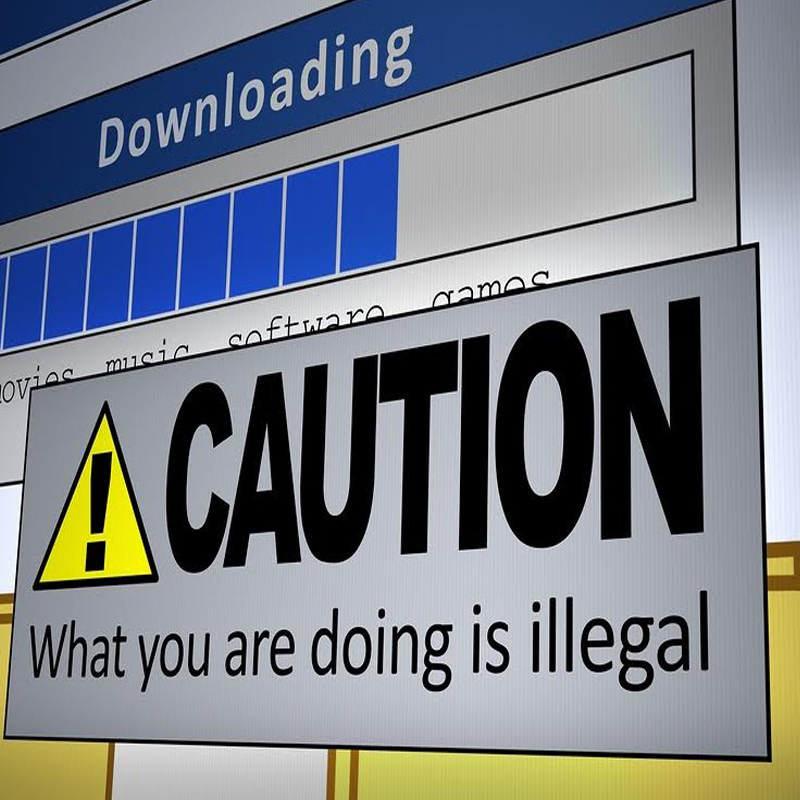
But the caption of the trailer does resonate with the Indian media and entertainment (M&E) industry as well as the government and policy-makers. The war that matters – the battle against online pirates — is certainly here and worth fighting for.
As the online video market grows around the globe, India being no exception, so has the fear of online piracy and loss of revenues to content owners.
The leak of an episode of GOT that recently happened in India, courtesy Prime Focus Tech, Indian host broadcaster Star India’s technology vendor, brought to the fore that the menace is closer home and will grow in coming days. And it happened just in the week – or after Hotstar – started a high decibel media campaign urging viewers to stop downloading torrents and go for originals on the streaming VOD service. The comnsumer – it seemed – was cocking a snook at its suggestions, though the leak happened through its vendor-partner.
Earlier, it was primarily the Indian film industry that was battling online pirates through John Doe court orders and blocking of some websites. But now, it seems, the whole entertainment industry needs to come together with policy makers to put up a joint front against piracy. More importantly, admission of the fact that the scourge has arrived on Indian shores and will spread in the coming years more aggressively, will only help drive anti-piracy initiatives.
It’s not that initiatives against piracy are not taking place, but they are individual acts. “There are various industry bodies operating in the M&E sector in India and since there can’t be divergent views on tackling piracy, it’s high time a single coalition is formed by all industry stakeholders in partnership with government, which will help align business interests in a common mission,” said Viacom18 Media group general counsel and company secretary Sujeet Jain, one of the industry execs at the forefront in the fight against piracy.
Why the fight against online piracy is imperative and India must start taking counter measures to safeguard against revenue losses?
Sample some figures. Singapore-based market research firm Media Partners Asia (MPA) recently estimated that the Indian online video industry generated approximately $ 230 million in total sales in 2016 and could reach approximately $340 million in 2017. Online video revenues, including net advertising and subscription fees, will grow at a 21 per cent CAGR across the Apac region between 2017 and 2022, climbing from US$17.6 billion in 2017 to US$46 billion by 2022, MPA reported.
Data revenues across fixed and mobile networks in Apac will reach $318 billion by 2022 and average mobile broadband penetration will reach 73 per cent per capita by 2022 versus 59 per cent in 2017, with some of the biggest growth coming from India, Indonesia, the Philippines, Thailand and Vietnam.
Indian regulator TRAI’s figures state till May-June this year India had 282 million wireless and 18.33 million wired broadband subs.
While acknowledging the potential of the Indian online video market and its weaknesses for breaches, a TV exec, on the condition of anonymity, pointed out that lack of cohesion and unity is stopping various industry associations to come together under one umbrella for anti-piracy activities. The need for finances to keep such an initiative afloat is an impediment too.
For example, a body called Copyright Force was announced last year with much fanfare with few Indian and foreign industry associations promising to collaborate on anti-piracy measures. But, recently a senior government official in the Ministry of Commerce, which oversees IPR-related policy-making, told indiantelevision.com that he had not heard about Copyright Force, but some individual media companies were in regular touch.
Writing a blog on the need to uphold IPR, Viacom18’s Jain very aptly had pointed out programs such as Digital Bharat may not achieve the desired results if online piracy is not curbed as IPR enforcement for the M&E industry was no less important than IP assets emerging from innovations and R&D from other sectors and for India to be globally successful, it must ensure safeguards against IPR breaches.
While the government admits India is a big and complex market, officials also point out efforts are on to evolve an ecosystem where IPR is respected and online piracy is arrested, if not totally demolished as even more developed markets are finding it difficult to plug such loopholes – leakage of GOT episodes from various parts of the globe being an example.
A senior government official also told indiantelevision.com that the Commerce Ministry is in touch with organizations like the Ministry of Information and Broadcasting, Ministry of Electronics and IT and Ministry of Law to amend some of the existing relevant legislations (The Cinematograph Act, 1952, the IT Act and the Copyright Act, for instance) to update them in the modern context.
However, the government also expects the Indian M&E industry and related industry associations to give it exhaustive and cohesive feedbacks and suggestions to help framing of futuristic legislations to fight piracy and uphold sanctity of IPRs. Probably, such a united approach is not coming forth from the industry, even while piecemeal suggestions are being given to the government.
That raises another question: how is the issue of IPR piracy is being sought to be addressed in other parts of the world?
The UK has PIPCU or the Police Intellectual Property Crime Unit, which is funded by the Intellectual Property Office and run by the City of London Police to combat this criminality, with a special focus on offences committed online. Australia has a controversial, but stringent law against piracy. In Asia, various countries have different standards, but collaborate with media associations like Hong Kong-based CASBAA to crack down on pirates through jointly funded legal recourse and high-pitch anti-awareness campaigns.
In June this year, 30 global content creators and on-demand entertainment companies launched an industry coalition called Alliance for Creativity and Entertainment (ACE) dedicated to protecting the dynamic legal market for creative content and reducing online piracy.The worldwide members of ACE include Amazon, AMC Networks, BBC Worldwide, Bell Canada and Bell Media, Canal+ Group, CBS Corporation, Foxtel, Grupo Globo, HBO, Hulu, Lionsgate, MGM, Millennium Media, NBCUniversal, Netflix, Paramount Pictures, Sky, Sony Pictures Entertainment, Studio Babelsberg, STX Entertainment, Twentieth Century Fox, Univision Communications Inc., Village Roadshow, The Walt Disney Company and Warner Bros Entertainment Inc with Star India being the lone Indian member.
A spokesperson of ACE told indiantelevision.com that though it’d welcome more Indian companies (apart from Star), it has no India-specific initiative on its agenda at the moment. One wonders why not? Certainly ACE with its money and influencing power – some of its supporters do have large business exposure in the Indian market – can contribute a lot in terms of international practices that could help the Commerce Ministry in framing and pushing more effective anti-piracy measures; the existence and contribution of TIPCU or Telengana Intellectual Property Crime Unit or Maharashtra’s online Cyber crime division, notwithstanding.
If, according to MPA, India, Japan, Australia, Korea and Taiwan will emerge as the markets (apart from market leader China) with the most scale in online video revenues and distribution, can the pirates be far behind back home?
Jain conservatively estimated large and medium sized pirate networks in India can generate between $2-6 million per annum, but another Indian M&E industry exec said the loss due to piracy could be in high double digit millions of dollars. Incidentally, the Indian government doesn’t have a figure of revenue losses due to online piracy. If it has, that figure hasn’t been made public.
So, if there’s one war that the Indian M&E industry and the government need to take cognizance of – it’s already here – it could very well be the fight against online piracy.
Certainly, piracy cannot be bandied as an achievement of the government’s much touted Make In India and/or Made In India programmes.
ALSO READ :
Indian online video to grow to US 1.6 bn at 35 percent CAGR by 2022
MPA forecasts Asia Pacific online video opportunity at US$35 billion by 2021
FICCI Frames ’17: Maharashtra to form IP crime unit to fight online piracy
Online pirates beware, Copyright Force on way