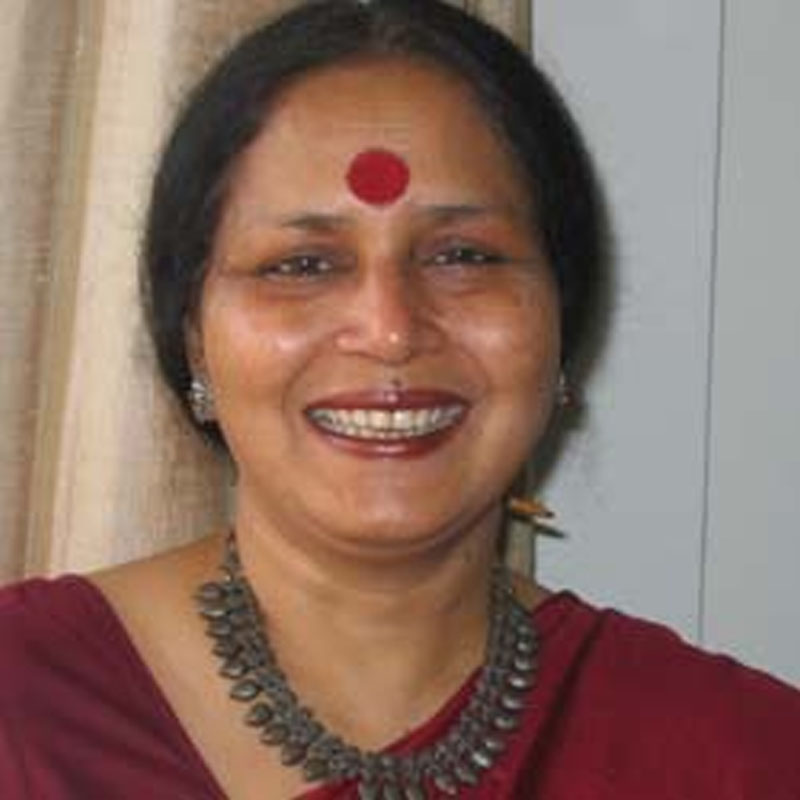
It’s one thing to have a good work ethic. It’s another thing to be a workaholic – a combination of both best describes Doordarshan deputy director general (Marketing) Vijayalaxmi Chhabra. Twenty-six years working at the public broadcaster, of which the last six years have been in this current job, she personifies a woman of talent, grace and humility.
DD’s deputy director general (marketing) Vijayalaxmi Chhabra
Chhabra has been exposed to every possible managerial function in All India Radio. And, in DD, she has gone through the learning curve of creating an entire marketing set up for Doordarshan, channel marketing and management of the DD News channel, combined radio & TV marketing, DTH and to a small extent, the Internet business.
In her transition from AIR to Doordarshan (DD), Chhabra has been able to bring across a range of key learnings, the most critical being her continual drive to perform. She has learnt to never take anything for granted: “The last victory was the last, and what is important now is the next one” is testament to an enviable and indisputable, record of well-honed leadership skills.
Being a driven, results oriented individual is good when harnessed by an honourable purpose. The initial attempts to reinvent the public broadcaster into a commercial player had a lot of critics. Revamping Doordarshan was one thing, following up with a sales blitz was something else altogether. But, Chhabra managed both by taking it up as a challenge and single minded focus to achieve what most thought was a lost cause.
Earliest childhood memories
One among four children, Chhabra hails from Orissa. She grew up in the small but modern and forward looking steel township of Bhilai in what is today’s Chattisgarh. Her father was a reputed senior engineer and part of the team that built the Bhilai Steel Plant. It was the biggest steel plant in Asia at that time and she remembers him returning home every evening, with blueprint designs of the plant and saying, “We are all building modern India.”
“My father believed that building India’s modern steel plant was a step towards building modern India and instilled in me a strong value system which has always stood me in good stead in my professional and personal life,” remembers Chhabra.
“Similarly, my mother is a very liberal and forward looking woman and her family was involved with the freedom movement and their generation was driven by the fact that they were witnessing the birth of independent India. They were hoping to see India self sufficient and belonged to the post independence generation who were full of pride for their country.”
 Chhabra had a privileged childhood, studied in a school run by the management and belonged to an entire young generation in the township, brimming with patriotism and steel in character. “A childhood spent in the Steel City was a fascinating and wonderful experience during a period in which Pandit Nehru, who used to refer to the steel plant as the modern temple of India, often came visiting. We grew up being proud of a nation taking birth.”
The freedom struggle and many other events have shaped her thinking and world view. It was a period of metamorphosis during which the United Nations was unfolding, India had given the world Panchsheel and was on the threshold of signing the Non-Alignment Treaty and the Third World was transforming into a global force.
“I had the opportunity to read Tolstoy, Gorky and Chekov and this exposure to a wide range of literature during my formative years has left a deep impression on my thinking which has been influenced by the 19th century liberalism that was so imprinted in these novels.”
|
What makes you laugh? The daily trials and tribulations of life wherein you spend a greater part of your time traveling to work which is more than your lunch time
|
“The people in and around at that time were not enamoured by the lure of work or study in the US or UK but had a desire to do something tangible for the country. My entire personality has been defined and cast in foundries of idealism, hard work and aspirations and love for the country which are still a driving force for me,” says Chhabra.
Education
Having excelled in her school Board exams, Chhabra got admission into the top three colleges in Delhi. Her father selected Indraprashtha College (IP) because of its incredible history. IP attracted the cream of intelligentsia from all over India. “I owe a lot to the strong groundings at this college which is the oldest women’s college of Delhi founded by Dr Annie Besant, as part of her effort to empower Indian women to spearhead the freedom movement.”
 “The college faculty comprised reputed writers and theatre personalities and educationists like Dr Sheela Uttam Singh, Indu Jain, Aruna Sitesh, Rathi Bartholomew, Aruna Roy and other national personalities who took us beyond books and imparted in us a sense of commitment, sincerity and the inherent pride to be a woman.”
“I acquired a post-graduate Masters in International Relations and was also actively involved in student politics.” She was president of IP College Students Union.
Politics, ICCR & AIR
In Mumbai, one does not see student politics. But in Delhi, it is a must. She feels strongly that every citizen needs to be politically aware, though not necessarily affiliated to any party. “I had a passion for cultural and performing arts. Former foreign secretary JN Dixit selected me as a programming officer at the Indian Council of Cultural Relations.” Her experience there was a stepping stone for what followed next in her life.
It was not by accident that Chhabra stumbled into AIR. She had been an ardent listener of AIR, even as a child. She had always harboured a desire to be a broadcaster. Chabbra was also a well known debater in college and Indu Jain sent her to All India Radio (AIR). “Today’s FM is an old concept for us. Yuvani had just come up and we are all products of it. There were two programmes ‘In The Groove’ and ‘Pandrah Se Satrah’ aired daily, where one could pick any topic to talk on and played songs. Apart from doing these programs for AIR, I was anchoring Yuv Manch on Doordarshan every week.”
“My parents were keen that I appear for the Civil Services exam, and I had to decide on politics or broadcasting, Also, on whether I wanted to remain in Delhi or return to Bhilai,” says Chhabra.
 Why broadcasting? “While politics fascinated me, the studios of All India Radio beckoned my creative instincts and I got very involved with broadcasting. It was an immediate career. I was freelancing whilst studying and yet had made my mark at AIR in a short span as a compere and presenter.”
UPSC advertised for program executives of the Indian Broadcasting Service and she applied for it. She got through the interview with ease and joined AIR immediately after completing college in 1980. That is when she also met her husband, Manoj Chhabra, who is a chartered accountant by profession. They got married in 1981. And, since then, life has taken its own course.
The family shifted to Mumbai in 1987 after her husband was transferred from Larsen and Toubro, Delhi to its Mumbai division. “Here, along with various other programs, I did a series of programs and documentaries for AIR on the rights for children of sex workers. Back then, India had taken up the issue of rights of children and The United Nations had held a convention on this. Though it was India’s initiative, we could not ratify the convention because there were too many isssues on children in India and this segment of the population had no rights in India.”
“I made a documentary ‘Stopped ByThe Redlight’ in 1990 which received the Aakaashwani Annual Award for the best documentary in that year. The only regret I have is that I did not preserve the footage of that radio recording. I thoroughly enjoy doing such programmes. I have worked with AIR in various creative and senior managerial capacities for over 20 years. I have immensely enjoyed creating radio features and documentaries on burning issues.”
“Till today, I remain a very committed public broadcaster. I was groomed by my seniors to know and realize that radio has its social responsibility. One thing is sure, I will never do frivolous broadcasting.”
Commonwealth Fellowship & commercial broadcasting
The Commonwealth Fellowship changed Chhabra’s professional life from a hardcore public broadcaster to a commercial broadcaster. “In 1995, I was awarded the Commonwealth Fellowship and went to London to study commercial broadcasting and its impact on society. Most Indian broadcasters end up doing a project on the BBC. But, on a friend’s suggestion, I did something completely different.
Franchisement was happening in a big way in England especially around FM radio. “At that time there were already 200 FM stations. I found the topic interesting, as I realized that it would happen in India, at some point soon. I stayed back and the entire study was an eye opener.”
 She confesses, “I used to look down on commercial broadcasting till then, but, this study gave me a whole new insight. I learnt what wonderful things could be done if one had a strong support system, how one could make money and in turn, invest it into good programming.
This stint abroad definitely did her good, broadening her horizons, helping her adjust to the speed age, learning how to reap the benefits of the commercial broadcasting when incorporated in the industry.
When she returned from London, the timing was just right for her to take that step forward into commercial broadcasting. FM had just begun happening in India. She was put in charge of AIR’s commercial service and took over Mumbai FM’s radio channel. She was given the task of selling.
She has earned a reputation of being a tough task master but, one who is always approachable. “I had to work hard at learning the ropes in marketing and I enjoyed every bit of it. It was not difficult because I firmly believe that difficult is doing something one does not enjoy. When I left Mumbai FM, it had touched a revenue of Rs 12 crores (120 million),” says Chhabra.
Doordarshan
In a major challenge to satellite channels, beginning 15 August 1999, the government-owned Doordarshan turned its DD-I and DD-II channels into 24-hour affairs. Then, Prasar Bharati’s chief executive officer RR Shah stressed that the choice of programmes would be market-driven, particularly during prime time, and old programmes with poor television rating points, would be removed.
When Shah asked her to set up the marketing division in Doordarshan, its list of negatives were longer than its positives. Among other things, it also lacked professional manangement in marketing of sports and events.
“I was asked to set up Prasar Bharati’s marketing division in September 2000 in Mumbai. This was a major turning point in my professional life. I started this division from scratch, and today, this division has been instrumental for Prasar Bharati’s total revenues of Rs 1200 crores this year,” says Chhabra.
|
Your worst nightmare: I am paranoid about my family’s well being
|
Considered an absolute no-no in government organizations, the management gave Chhabra the freedom to handpick her team. Most of her team is from AIR. “We are all like minded people who don’t think any task is difficult. From a team of seven we are now a team of 20. Being from the radio background, TV and marketing are absolutely new areas for us. DD is a vast organization. Marketing DD, understanding DD, its advertisers, how the market functions – we learnt it all on the job.”
At the time of taking over as head of marketing of Prasar Bharati, Doordarshan was primarily into selling time slots like real estate. Almost or every event/property on the channel was sold by middlemen in the advertising market for whom DD was a faceless identity.
 “It was very tough to get rid of the middlemen who were so deeply entrenched in our system. At that time, DD’s performance was bad, rates had touched rock bottom and there was undercutting everywhere. With complete support from my management and the team, we achieved the impossible. From a hundred faces that DD was once associated with, we have been able to make it a single face.”
How did she counter the lobby that tried knocking her down: “Yes, there was a lobby of middlemen, private market agents who marketed primetime and sports, who tried their level best to stall us. But, once the management understood the root cause, then with their support, we completely weeded out the menace of middlemen from our system.
“Even though DD is a government establishment, it is rewarding to see that in every endeavour to take the channel to new heights and explore new territories, we have not only been able to convince our own management, but also carried the industry along with us to put in place a professional marketing set up in a government broadcasting job.
“The wholehearted support and complete freedom that our CEO KS Sarma and director general Navin Kumar have given us is a major contributor to achieving these results. We got hold of our big properties- cricket, films and then, DD1 primetime as we earned maximum revenue from it. Along with us, there is another team at Mandi House who had to work equally hard to take initiatives to procure good programs.”
Also critical has been Chhabra’s preparedness to start from scratch and face a steep learning curve. “When you come in with open eyes, one is more mentally open to changes and different opportunities.” Besides being pro-active, positive, organized and systematic, Chhabra is also known to be a stickler for perfection and has a sharp eye for detail. She strives for quality and class in everything she takes.
|
Two guests you would love to dine with?
With one of her favourite books being Freedom At Midnight, it is not surprising who she would have loved to dine with. “Go back in time and sit across the dining table with Mahatma Gandhi to understand his mind, behind that childlike face, who led India and turned out the best political theories that brought an empire down. (At the cost of sounding clichéd, I am a Gandhian at heart). Film director Ritwik Ghatak is another person she would have loved to meet. His film Meghe Dhaka Tara is still fresh in her mind. From the current generation, she says author Vikram Seth would make an ideal dining companion.
|
“Selling is an art. Making a program is easier, but, I took it up as a challenge. To sell crass is easy, but it is very difficult to sell a good program. My endeavour is always to sell something good. -eg- Doordarshan’s Friday/Saturday films are blockbuster films which earn a crore plus and its no big deal. But, we realized we could put this money to good use as we owed it to our viewers. We started showing retrospectives of classics.
“Selling classics was difficult as our clients felt that it would not deliver TRPs. But, today, this slot is in competition to my Friday slot, in terms of TRPs. We get lots of mail from DD viewers, thanking us for this initiative as it is not available anywhere else. This is what I mean by combining public with commercial broadcasting. One does not have to produce commercially viable programs to make money,” says Chhabra.
Achievements
Says Chhabra, “The in-house marketing division reversed the trend of slot selling, and today, we market close to 95 per cent of DD prime time inventory in-house which is a far cry from when we started off. There is no slot selling on DD now. DD buys programs through Self Financing Scheme (SFS) and we sell it and pay the producers after 90 days. Earlier, 20 people were selling the same time band and these marketing agents had become mini DDs in the market.”
“Creative producers benefited once these agents were eliminated as now they need not bother about selling their programs, and they earn more money from us than before. Once the system was cleaned up, the clients are happy, DD1 rates have doubled and we are able to put all the money we earn into better programs.”
Even high value properties such as international cricket for which the marketing agents were offering DD a pittance, were taken up as a challenge with astounding results. “My division has had a smooth sailing in international cricket marketing where we have set industry benchmarks. Our revenues have gone up from Rs 50 crores gross revenues in ad sales in the India-West Indies Cricket Series, 2001 to around Rs 180 crores in the India-Pakistan Cricket series, 2005.”
|
Your best trait: Humility combined with aggression
|
DD had also faced rough weather during the marketing of the India-Australia-South Africa Cricket Series, 2003 comprising 30 days of test cricket which really tested its mettle to the fullest with Indian cricket going through its worst patch.
Adds Chhabra, “With the changing times and the skyrocketing international cricket marketing benchmarks, we have turned a new chapter in marketing of events on terrestrial through partnership (with Zee Sports in the marketing of the DLF Cup in Abu Dhabi) which is in fact a recognition of DD’s marketing capabilities and standing in the industry.”
“Once you have a vision of your channel embedded in your mind, a good leader must have the ability to translate this vision on to your core team for executing this vision with proper deadlines and schedules.”
 From a time when the channel was operating on leased inventory through slot marketing today, DD owns the entire IPR for all the programmes being mounted on the channel through SFS. “Under this system, we already have to our credit, mega talent hunt shows like ‘Kalakaarz’ and ‘Wheel Smart Shrimati’.”
The team that works under Chhabra concur that she knows which event will fetch money and it is her brain and planning that runs the team. Several innovative software being marketed in-house and SFS and vertical associations for software is the way forward for the channel. Every slot today on prime time delivers 3 times the revenue as compared to the previous slot selling experience of DD through sponsored programmes.
Adds Chhabra, “Two years back, DD-Metro channel was converted to a 24-hour news channel, and my division was asked to take up the channel marketing of DD-News. Right from day one, we had tied up with major brands for long term association on our news channels and had posted revenues of approximately Rs 24 crores in the first year itself which is a record for the news channel genre.”
“Whether its DD-National or DD-Regional or DD-Sahyadri channel, my division has been able to overhaul the existing marketing systems for these channels and give them a fillip to work in close co-ordination with the industry.”
|
Favourite Holiday Spot: Have travelled all over the world, I have loved time spent in Brazil, but London is a special place that I can keep coming back to again and again. It is my memories of my Commonwealth days that takes me back there
|
“My driving goal has been to take DD’s in-house marketing into new realms in the changing media scenario, explore all the dimensions offered by the television industry and establish a distinct identity for the channel and the division so as to be able to garner the maximum business and respect of the entire media industry.”
To job offers from private broadcasters, she says, “I am very proud of the fact that I work here and at all the opportunities, I have received here. I am indebted to this organization for giving me this huge arena to explore my passion for broadcasting.”
She asks, “Is there any channel as big as DD that can give me the status I have here. If DD can perform, then DD is the biggest and we are all striving to achieve that goal. If I can contribute even an iota to it, I would have made my mark in something I believe in. I have imbibed this sense of pride from my father. My father never left Bhilai steel plant for a private job.”
 The satisfying aspect about her job is definitely the zilch people turnover in his organisation. “The same applies to my team. Most are kids of government officials and they keep getting offers from private firms, But, I don’t think anyone will leave as they come from similar backgrounds like mine and we are all proud of working here. Money is not everything for us. I do not work for money, it’s only my passion that counts. I love my work and I put in long hours, enjoying every moment,” says Chhabra.
Chhabra gives utmost importance to work and has instilled that confidence in the team that there is nothing one can’t do. She appreciates the team’s work and everything is ‘do or die’ situation for her. There is no hierarchy, ego or show of status. She is clear on the goals of the organization and the team follows suit in fulfilling these goals.
On exploring other mediums, Chhabra says, “I am always looking out for challenges in every assignment. One must keep growing and pushing ahead at various frontiers. In an emerging media market, you must have the willingness to adapt as the situation demands.”
“Besides media, teaching is my next biggest interest and I look forward to taking up teaching assignments in the media at a later stage.”
On whether she faced male dominance in the industry, she says, “I was brought up as an equal at home and as I have mentioned earlier my college empowered me as a woman. I was lucky to have joined a government broadcasting platform where your selection is not on the basis of your gender and only merit prevails. I am proud of the fact that in my career spanning 26 years, I have not come across a single incident of being discriminated against.”
 Family: The real challenge for a working woman today is to manage home and the office where the pressure on both ends is very demanding. “Here, I have been lucky to have supportive in-laws and husband who are proud of me being a working woman. They share my duties at home and even the children have rallied around me and take pride in my work.”
“I have always lived in a joint family and will always advise young married working girls to live with this support system so that the kids never come back to an empty house. My family motivates me to work single-mindedly on my job.”
“Inspite of my busy schedule, I made it a point to always find time to teach my children when they were young. My children Mandira (23) and Revant (19) still appreciate the quality time I have spent with them. I consider my family, specially my husband as my pillar of strength.” Her husband is managing director of Prism Cement.
Future look on the medium in these times of more viewer choices & greater audience fragmentation: “No medium captures the imagination of the Indian audience more than television and radio. Radio is being re-defined with the advent of a host of private broadcasters and it is going to be a space to watch out for. Even community radio will impact students lives all over the country. It will impact the needs and aspirations of the listeners and create a lot more job opportunities for youngsters in smaller towns as well as metros.”
“Television is already an extremely crowded medium with more than 200 channels fighting for space. The intense competition will ensure that only the best survive. The time is just right for an Indian concept to take the world by a storm.”
|
Dream Gizmo: Not techno savvy. It is the man behind the machine that matters
|
In the future, we will have programme assessment based on qualitative indices rather than the quantitative numbers of TRPs. The ‘Me Too’ attitude on software among channels will change and the time would come when channels are fighting on the quality front.
DTH is also slated to change the terrestrial, cable and satellite home divide and we would be talking of integrated homes. The scenario looks challenging, with the entire process of buying and selling set to change.
Mentioning the current issues are top of her agenda, Chhabra says, “My single point agenda for my channel is to ensure leadership for DD in all markets that we are operating. Also, we are working to retain terrestrial share and increase the share of revenues and audiences in cable & satellite homes.”
“The objective is also to ensure that DD is constantly innovating to provide good wholesome software to the viewers and to build the channel bouquet on the national band in all categories. We have already been able to increase the average prime band rate and we are in the process of consolidation of rates across time categories.”
 On India, Chhabra says, “I keep telling my children that the best opportunities lie here in India, if you work hard and make the most of your abilities, India is the place to be. India’s absolutely challenging dynamics, its diversity, in terms of the people, language, culture is so fascinating and enervating. The media in India is looking at making the world its platform and making its presence felt almost in every corner of the world.”
A firm believer of ‘Whatever your hand finds to do, do it with all your heart…’, Chhabra looks to experience life but wants the experiences to have meaning beyond the mere event. The greatest symbol of being different in this business is pursuing excellence with integrity. The right blend of old world charm and modernity, Vijayalaxmi Chhabra is a remarkable example of how hard work, honesty and determination can provide the basis for a successful individual.
 |
Stress Buster: Had I not been a broadcaster, I would have been a painter. It’s a stress buster. I paint in my leisure time. And, watching old classics is a passion. I also read a lot and love history. I am also a serious theatre and movie buff. I also manage to take time out and conduct internal training sessions on media, marketing and advertising, which I feel is my small way to give back to the industry some of the experience garnered over the years.
Formula for success: Think big and yes, only dreaming big will not help, it has to be supported with intense hard work in a properly defined direction. I also feel in this ‘Rush Hour’ where everyone is totally isolated within himself, you must develop the ability to ‘listen’ to people, it gives you great insights because organisations are all about people.
|