Tag: All India Radio

  • Broadcasting woes

    Broadcasting woes

    If we are to transform India, a realist or ‘Patelist’ engagement with the rest of the world is what we must implement; engaging the world from strength while recognising reality for what it is, foreswearing hubris and belligerence”, remarked Shiv Shankar Menon during the Patel Memorial Lecture of All India Radio last year. India in effect continues with Sardar Patel appreciation against taking the Kashmir issue to the United Nations and has been successful in averting international manipulation in our internal affairs.  In the recent past, reports appeared in sections of the press that our neighbours are active in rolling controversies and possible resentment for rehabilitating surrendered militants via Nepal. Yasin Bhatkal’s revelation of Nepal remaining the favoured nation for transiting members of the Indian Mujahideen further fuelled diplomatic irritation.


    The most disturbing vilification campaign alleging torture of Nepalese people whipping up local sentiments and a number of FM stations with content paid up by vested interests and mixing attractive Bollywood stuff in Nepal are psy weapons that merit the nation’s intervention. Gorkhas of Nepalese origin have shared triumphs and sorrows battling in all theatres of operations as part of the glorious Indian Army. As of today, there seems to be no coordinated trans-border broadcast policy to air either views or the stand point of the nation. India’s National Public Broadcaster, Prasar Bharati, continues to be sub-optimally utilised.


    After Independence and up to the eighties, the External Services Division of AIR functioned in close coordination with MEA through External Publicity Division with greater interaction between the two keeping in view foreign policy requirements, dynamics of foreign relations, and priorities set from time to time.


    Due to its colonial links with England, AIR entered the domain of external broadcast in 1939 purely as a tool for propaganda for the allies during World War II with service in Pushto language in order to counter German Radio blitzkrieg and complement the efforts of the BBC in this region.  When the theatre of operation expanded to South East Asia and East Asia by 1945, External Services Division had a total of 22 language services.  The importance waned once the War ended, plummeting from 22 to just 10 languages. The capacity of ESD remains to cover 100 countries with coverage of 75% of world population in 16 foreign and 11 Indian languages with a targeted audience of 9 neighbouring countries comfortably.


    But gone are the days of diplomatic bags overflowing with letters addressed by radio audiences from all over the world to External Service Division of AIR. The Urdu Service widely popular among Pakistan and at home is in a state of disarray and listeners’ feedback has become a trickle. Chinese domination in the visual and audio medium is of concern since a substantial Arunachalee tribal population living in East Syong, Tirap, Changlong, Ajnow, Lohit, Upper and Lower Dibang Valleys could access Chinese TV channels of  High Power Transmissions from Chinese territory whereas our own Doordarshan, Itanagar, covers a few kilometres through Low Power Terrestrial Transmission. However there being no impediment to satellite TV through DTH, the case for Set Top Boxes for DD free Dish is indispensable if Prasar Bharati has to prudently cover the North East. It is our national duty to reach inaccessible terrain inhabited by tribal Indians in and around Tawang who witnessed chaotic battle scenes during the 1962 operation and upper reaches near Leh, Ladakh.


    In the changing scenario of popularity of FM channels compared to Medium Wave and Short Wave transmissions, the country needs to shift its primary broadcast to FM radio with relevant content retaining its own and traditionally loyal trans-border audience. There are more than 150 independent Radio Stations operating in Nepal. If India has to retain audience base in Nepal, augmentation of transmission power and number of FM stations is necessary as of yesterday.  As far as Bhutan, English added on to Dzonka could cover the whole population with increased presence of FM.  In times of crisis, it is AIR, BBC or Indian satellite channels which are tuned into in Pakistan for credible news; Maj Gen Mohd Azam Asif of PAK Army observed once, substantiating the relevance of AIR.


    Coverage of regional content, news and current events for external audience could only succeed with local dialect and flavour. There is all round apathy about external radio broadcast of ESD among all stakeholders including MEA, resulting in progressive decline of our broadcast as an instrument of diplomacy relegated to the background, adversely impacting its performance, notwithstanding the historic role played.  It is unfortunate and ironic that our external broadcast is touching the nadir at a time worldwide efforts are on to re-invent the importance of external broadcast expanding and consolidating their position, adopting the newest of technologies including new media to meet the changing realities of international politics.


    Complete dismantling or discontinuation of external broadcast may not be in the larger national interest and may turn out to be throwing the baby with the bucket of water. Credible assessment of external audience indicates decline in short wave and medium wave, suffers clarity due to concrete congestion and sky scrapers in Urban India and the neighbourhood. Simulcasting in FM, web streaming, proliferation in internet and availability in hand held devices would rejuvenate AIR. Unless ESD functions with regular interaction from stakeholders like MEA, MoD, MHA, meeting the needs of foreign policy and priorities, the vast infrastructural wealth of the nation in the hands of Prasar Bharati will continue to be wasted, risking its painful death. The nation has a duty and great opportunity to revisit and formulate an integrated policy on our external broadcast which is in the Government domain.


    (These are purely personal views of the writer and do not represent the official views of Prasar Bharati and indiantelevision.com does not subscribe to these views)
  • Pitroda Committee: Prasar Bharati should be free of govt hold

    Pitroda Committee: Prasar Bharati should be free of govt hold

    NEW DELHI:  A high-level committee under veteran technocrat Sam Pitroda set up to review the working of Prasar Bharati has stressed the need for constituting a Parliamentary Committee, as originally envisaged in the Prasar Bharati Act 1990 to ensure that the pubcaster discharges its duties in accordance with the provisions of the Act and Government defined duties.


    In the report submitted today to the Information and Broadcasting (I&B) Minister Manish Tewari, it has recommended reorganisation of the pubcaster Board to make it a professionally managed body and make it more effective in guiding the organisation.


    Noting that Prasar Bharati’s vision must be to become a genuine ‘public broadcaster’ as against a ‘government broadcaster’, Pitroda told a press meet after submission of the report that he would be meeting both Tewari and I&B Secretary Bimal Julka next week to finalise those steps in the report which can be put into effect immediately.


    The report said there is need to bring in complete transfer of ownership and management of assets and Human Resource to Prasar Bharati ‘to make the organisation administratively and financially autonomous of Government’.


    A Regulatory Body has to be set up to ensure public accountability of Prasar Bharati with respect to all content broadcast on its television and radio networks. The Regulatory Body should be a sub-committee of the Prasar Bharati Board.


    Interestingly, the Committee has suggested setting up of Prasar Bharati Connect (PBC) as the third arm of the public service broadcaster, independent of Doordarshan and All India Radio, to expand the social media. PBC should be mandated to manage the various Social Media initiatives of all the wings of Prasar Bharati. It also wants a Social Media Strategy of Prasar Bharati.


    The Committee was set up on 28 January last year and had decided to put in place eleven working groups on different issues and has come out with a report on eight main areas: governance and organisation, funding, human resource, content, technology, archiving, social media and global outreach.


    It has said that in addition to the public broadcasting function, there is a distinct requirement for the State to broadcast messages and accomplishments of public interest which can be met by using existing Public and Private broadcaster infrastructure.


    The Committee suggests amending the 1990 Act where necessary so as to impart genuine and effective autonomy to the organisation.


    Apart from Pitroda, who is Advisor to the Prime Minister of India on Public Information Infrastructure & Innovation and Chairman of the National Innovation Council, the other members of the committee included additional secretary and nominated Prasar Bharati Board member J S Mathur, National Innovation Council member Shekhar Kapur, former I&B Secretary Asha Swarup, Vikram Kaushik who is a business strategist and brand advisor and part-time member on the Prasar Bharati Board; Prof M P Gupta from the Indian Institute of Technology in Delhi, Dr B K Gairola who is Mission Director (e-Governance), and Prasar Bharati CEO Jawhar Sircar who was the Convenor.


    Pitroda said that about 110 persons gave time to the working groups on various issues. There are 26 main recommendations in the two–volume report.


    Referring to Funding, the report says there is need to undertake a professional study to develop a funding mechanism for Prasar Bharati that addresses the need for autonomy with financial accountability. Such a funding model should include government funding, internal resource mobilisation and private investment. There is need to monetise all available archival and other assets of Prasar Bharati as soon as possible to enhance funding, and augment funding of social messaging through cross-subsidising such content through entertainment-led programming and by co-opting industry through their CSR budgets.


    However, Pitroda said in reply to a question that the time of licensing TV or radio sets as was being done around five decades earlier could not be revived as it was an old concept.


    Referring to Human Resource, he said the pubcaster should be enabled with the power to frame rules and regulations for its employees without seeking prior approval of the Government.


    When it was pointed out that a similar announcement has been made several times since 1997 when the Act was operationalised, Sircar said the pubcaster cannot frame its own rules.


    There was need to undertake a comprehensive manpower audit and HR planning exercise to map workforce requirements for the future in line with Prasar Bharati’s mandate.


    It was necessary to supplement manpower audit with a re-deployment plan that addresses training, re-skilling and promotion of existing manpower through an institutionalised modern appraisal system.


    The committee said there was need to create an effective recruitment system to attract the best talent and allow the hiring of skilled professionals, and encourage and initiate steps for absorption of Government employees as fulltime employees of Prasar Bharati, after an appropriate screening process. The ones who remain in Government may be considered for absorption in other departments within the government as is done in other cases.


    Referring to content, he stressed the need to scale up allocation of funds for content generation to 50 per cent of the total expenditure within a period of 5 to 7 years. The Committee wants a review of all existing channels and content of DD and AIR, based on their relevance, output and viability and phase out those where there is sub-optimal utilisation of resources.


    There should be encouragement of outsourcing of content creation to external producers to attract high quality and diverse programming and creation of distinct brand identities for different TV and Radio channels, and define the content strategy for each.


    Referring to technology, the Committee wants expansion of the satellite and digital cable TV operations to meet the obligation of public service broadcasting. There is need to digitalise the present AM radio system to a new digital radio transmission after due evaluation subject to cost and availability of DRM receivers. In the transition period, FM may be expanded according to demand.


    It stressed the need to selectively digitalise terrestrial TV operations based on commercial viability.


    Any further expansion of and investment in digital terrestrial telecast should be suitably evaluated after field reviews and assessment of developments in the telecom sector, it said.


    Interestingly, the Committee wanted involvement of the private sector to expand the broadcasting market with a view to effectively utilise the infrastructure being built by Prasar Bharati to enable faster growth in the receiver ecosystem.


    On archives, it recommended state-of-the-art digital archives for consolidating and preserving DD and AIR’s content: both existing as well as that being currently generated. There is expansion of scope to make it the National Audio-Visual Archives so as to consolidate and support all other government initiatives.


    The Committee wants the creation of dedicated, multi-platform channels for dissemination of Prasar Bharati’s archival products: for both open access and monetisation.


    Referring to global outreach, it wanted the creation of a world-class broadcasting service benchmarked with the best in the world using next-generation opportunities, technologies, business models and strategies.


    When pointed out that DD India was already working as an international channel, Pitroda said the platform should be designed for new media first and then extended to conventional TV.


    There was need to outline an effective content strategy for Prasar Bharati’s global platforms (TV and Radio) focused on projecting the national view rather than the narrow official viewpoint.


    In a covering note to the Minister, the Committee said: “Today, we have a unique window of opportunity to transform our broadcasting service (both All India Radio and Doordarshan) into a cutting-edge platform capable of delivering its commitment to public service in the best possible manner, while keeping pace with the competitive needs of the 21st Century.  However, as our report suggests, this transformation will require a bold, clear vision, a focus on generational change, and new models and approaches in every aspect of the public service broadcaster’s activities.

  • TRAI seeks industry comments on FM Phase III migration

    TRAI seeks industry comments on FM Phase III migration

    MUMBAI: The Telecom Regulatory Authority of India (TRAI) has released the consultation paper on the migration of FM radio broadcasters from Phase-II to Phase-III. As part of the consultative process, the stake holders have been requested to offer their comments and views by 17 December 2013.


    Accordingly, this Consultation Paper (CP) has been prepared to seek the comments/views of the stakeholders on the date of migration from Phase-II to Phase-III; duration of permission after migration from Phase-II to Phase-III; and the amount of migration fee to be charged from existing operators on their migration from Phase-II to Phase-III.


    It also states that in case of counter-comments it may be submitted by 24 December 2013. The Ministry of Information and Broadcasting (MIB) sent a reference dated 9 April 2013, to TRAI seeking recommendations. The clarifications sought by TRAI were provided by MIB by 22 November, 2013.


    The highlights of the Phase-III policy for FM Radio broadcast will be the validity of license is 15 years from the date of operationalisation of the Channel (10 years in Phase II); FDI limit have been raised to 26 percent in a private FM radio broadcasting company (from 20 per cent in Phase II); and it also allows the permission holder to carry the news bulletins of All India Radio in exactly the same format (unaltered) on such terms and conditions as may be mutually agreed with Prasar Bharati, no other news and current affairs programs will be permitted under the Policy.


    The other salient features of the policy are

    – Permission for the channels shall be granted on the basis of Non-Refundable One Time Entry Fee (NOTEF).


    – NOTEF shall be arrived at through an ascending e-auction process, on the lines followed by DoT in the auction of 3G and BWA spectrum in the year 2010.


    – Reserve Price for new channels in existing FM Phase-II cities, the highest bid price received for that city in Phase-II (Click here for more details); and for new cities, the highest bid price received during FM Phase-II for that category of cities in that region.


    – In case the benchmark from Phase-II for a particular region is not available, the lowest of the highest bid received in other regions for that category of cities.


    – For new cities in border areas with a population less than one lakh, the reserve price shall be Rs 5 lakh.

    – Annual licence fee will be four per cent of gross revenue of its FM radio channel for the financial year or 2.5 per cent of NOTEF for the concerned city, whichever is higher. For the permission holders in the States of North East, J&K and island territories (i.e. Andaman and Nicobar islands and Lakshadweep) – at 2 per cent of gross revenue for each year or 1.25 per cent of NOTEF for the concerned city, whichever is higher, for an initial period of three years from the date from which the annual license fee becomes payable and the permission period of 15 years begins.


    -Each applicant will be allowed to own more than one channel but not more than 40 per cent of the total channels in a city subject to a minimum of three different operators in the city.


    -No entity will be permitted to hold more than 15 per cent of all channels allotted in the country excluding channels located in Jammu and Kashmir, North Eastern States and island territories.


    -Networking of channels will be permissible within a private FM broadcaster’s own network across the country subject to 20 per cent of the total broadcast in a day is in the local language of the city and promotes local content.


    – The permission holder is required to follow the Programme and Advertisement Code as followed by All India Radio as amended from time to time or any other applicable code, which the Central Government may prescribe from time to time.


    In this phase, about 839 additional channels in about 294 cities across the country are being offered for the auction.

  • DD Sahyadri to celebrate Public Service Broadcasting Day

    DD Sahyadri to celebrate Public Service Broadcasting Day

    MUMBAI: Every year, November 12 is celebrated as Public Service Broadcasting Day to commemorate the historic occasion when Mahatma Gandhi visited the Delhi station of All India Radio (AIR) to record a message for grief-stricken refugees in the aftermath of the partition.


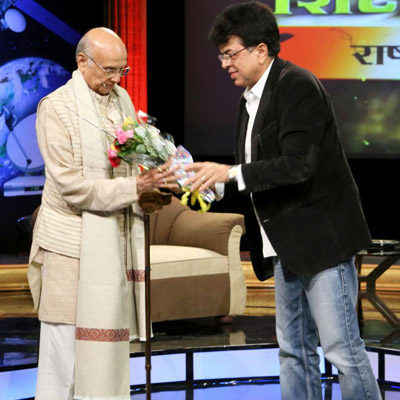
    In keeping with the tradition, this year, Doordarshan’s (DD) Marathi channel DD Sahyadri will air a show titled Shiledar Rashtranirmitiche on 12 November from 10:00 pm to 12:00 pm to honour individuals from different walks of life who’ve contributed significantly to the cause of public service.  


    Conceptualised by Mukesh Sharma and produced by Shrikala Hatangade, the show will felicitate the likes of Chandrashekhar Dharmadhikari, Ameen Sayani, Dr B K Goyal, Yashwant Deo, M N Singh, Karun Shrivastav, Tabassum, Madhukar Bhave, Daksha Mashruwala, Rajan Welukar, Ujjwal Nikam and Kiran Shantaram.


    “I believe that commercial broadcasting is for consumers while public broadcasting is for citizens” says DD Sahyadri director general Mukesh Sharma, highlighting the need for a pubcaster at a time when commercial broadcasting has pipped it at the post.


    Recorded at DD’s plush new studio using five high definition cameras, Shiledar Rashtranirmitiche comprises audio videos created for each of the twelve achievers by program executive Sunita Godbole. These clips have the chosen personalities talking about their achievements in various fields, along with anecdotes from the past.
    In the show, Deo says: “Previously, songs were only meant for the ears, now, a song cannot be heard without watching it as well” while Tabassum revisits her 44 years with Doordarshan and how she evolved from AIR to DD.


    Says public prosecutor Nikam: “I always make sure the DD camera is there when I am speaking after a case because it reaches the remotest corners. It is the only news that gives you correct facts.” Dr Goel too favours DD saying it covers news that is usually left aside by the commercial television channels. “Lots of health issues are brought out through shows on DD that aren’t done by other channels so much,” he says.


    On his part, Singh urges DD to telecast shows that highlight the critical role played by policemen and doctors so that people are aware of how tough their job is rather than simply criticising them. Watch the show at 10pm on 12 November on DD Sahyadri.

  • AIR, DD to beam President’s address and PM flag hoisting on 15 August

    AIR, DD to beam President’s address and PM flag hoisting on 15 August

    NEW DELHI: All India Radio and Doordarshan will beam the message of President Pranab Mukherjee to the nation on the eve of Independence Day on 14 August.


    The flag hoisting ceremony and Prime Minister Manmohan Singh’s message to the nation from the ramparts of Red Fort will also be beamed live on 15 August.


    While the President’s address will be from 7:00 pm on 14 August in English followed by a Hindi translation, the Independence Day programme will commence from 06:25 am.


    AIR will broadcast both the events on all its medium wave channels including the Indraprastha channel and Vividh Bharati, and also on the two FM channels, FM Gold and FM Rainbow, apart from all regional kendras.


    The regional channels will broadcast translations in regional language of the President’s broadcast. Doordarshan will telecast the events on DD National, DD News, DD Bharati, and DD Sports.


    Both AIR and DD will also beam a round-up of the events all over the country later in the evening on 15 August.

  • Ministry of Information and Broadcasting introduces ‘New Media Wing’

    Ministry of Information and Broadcasting introduces ‘New Media Wing’

    NEW DELHI: Almost a year after guidelines were framed for the use of social media by government agencies and citizen engagement for e-governance projects, the proposal for establishing a ‘New Media Wing’ in the Information and Broadcasting Ministry for publicising its initiatives through multiple social media platforms has received the official nod.


    The move has come even as the government is gearing itself for the general elections next year. Both All India Radio and Doordarshan launched its new series yesterday to highlight the initiatives of the government.


    According to the proposal approved by the union cabinet, the new wing to be headed by a joint secretary level officer would address the communication and dissemination requirements of the government on social media platforms. The wing would integrate the communication tools horizontally and vertically through various social media platforms.


    The proposal for establishment of new media wing has been drawn on the basis of the experience of the initiative undertaken by the ministry recently, on a pilot basis to position itself on the social media platforms such as YouTube, Facebook and Twitter.


    The administrative and operational support will be provided by a unit under the ministry – the Research Reference and Training Division – which would be the new wing.


    The expenditure for establishing the wing and the recurring expenditure thereon would cost the exchequer an amount of Rs 22.5 crore during the 12th Five Year Plan (1012-17) which has been approved by the cabinet committee for economic affairs under the development communication and information dissemination plan scheme of the ministry.


    In August last year, the government had issued framework and guidelines to enable the various agencies to create and implement their own strategy for the use of social media. The document was to help them to make an informed choice about the objective, platforms, resources, etc. to meet the requirement of interaction with their varied stakeholders.


    The official statement had then said, “As more and more projects are getting implemented, an increasing need has been felt for wider and deeper participation of an engagement with all stakeholders to ensure that citizen centricity is maintained in all projects. There is now a consensus that citizen participation and civic engagement are the building blocks for good governance and e-governance is a critical component of good governance.


    It had added that, “Media is transforming the way in which people connect with each other and the manner in which information is shared and distributed. While at a personal level, the uptake and usage of social media is gaining rapid popularity, use and utility of such media for official purpose remain ambiguous. Many apprehensions remain including, but not limited to, issues related to authorisation to speak on behalf of department/ agency, technologies and platform to be used for communication, scope of engagement, creating synergies between different channels of communication, compliance with existing legislations etc.”

  • Prasar Bharati’s Rs 280 crore debt to govt agencies

    Prasar Bharati’s Rs 280 crore debt to govt agencies

    NEW DELHI: The empire is striking back. The Indian government today said it is taking action at the appropriate level to recover Rs 279.64 crore that is owed by All India Radio and Doordarshan to different government agencies for usage of transponders on ISRO satellites and also the spectrum during 2011-12 and 2012-13.


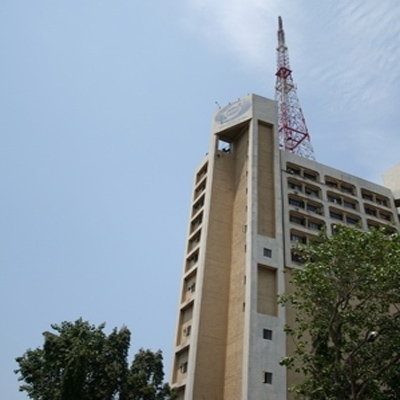
    Prasar Bharati is itself expected to pay the various Central/State/Paramilitary/police organisations the cost of safeguarding the infrastructure, installations, land, buildings of AIR and DD, (such as the Mumbai Kendra pictured here) located across the country


    However, the government has already waived a sum of Rs 1349.54 crore that was due to various agencies till 31 March 2011 following the recommendation of the group of Ministers on Prasar Bharati in September 2011.


    Information and Broadcasting Minister Manish Tewari told Parliament today that Prasar Bharati owes Rs 163.26 crore to the Indian Space Research Organisation for space segment and Rs 116.38 crore to the Communication and Information Technology Ministry as spectrum charges for these two years.


    Of the dues, the share of All India Radio for 2011-12 and 2012-13 is Rs 36.46 crore (Rs 16.26 crore and Rs 20.2 crore respectively) while that of Doordarshan is Rs 243.18 crore (Rs 63.4 crore and Rs 179.78 crore respectively).


    The Minister clarified that the government only meets the full bill for salary of the employees of the public service broadcaster, as recommended by the GoM.


    Prasar Bharati is itself expected to pay the various Central/State/Paramilitary/police organisations the cost of safeguarding the infrastructure, installations, land, buildings of AIR and DD located across the country.


    It also meets the salary and allowances of police and paramilitary personnel engaged by it out of its internal resources.


    The annual dues on account of dues for such services are in the region of Rs 72 crore.


    The Minister said if the pubcaster is unable to make a payment in a certain year, it makes sure this is done in the next financial year.

  • DD, AIR to commence fiction series depicting issues of rural India

    DD, AIR to commence fiction series depicting issues of rural India

    NEW DELHI: Come Thursday and Doordarshan and All India Radio will air fiction shows which highlight the travails of the rural poor and how flagship programmes help them overcome their problems. While DD will showcase Poorva Suhani Aayi Re, the All India Radio will air Priya.


    Poorva Suhani Aayi Re is a 52 episode soap directed by Sanjiv Kaul of Kyunki Saas bhi kabhi bahu thhi fame. Priya is a 12 episode show which will reach audiences pan-India through AIR’s various channels, in 22 languages. The protagonists of both programmes are women – Poorva being a married woman and Priya a poor uneducated girl.


    While the soap on Doordarshan will be aired every Thursday at 10.00 pm, the AIR series will be broadcast on different channels at different times. Produced by AIR Delhi, it will be broadcast every Thursday with effect from 8 August at 6.15 to 6.30 pm from Vividh Bharati MW 219.3 mtr. i.e. 1368 KHz and every Friday from 9 August on FM (Gold) 106.4 MHz at 12.10 pm to 12.25 pm, on FM (Rainbow) 102.6 MHz at 2.45 pm and also on Indraprastha Channel MW 366.3 mtr. – 819 KHz at 12.45 pm to 1.00 pm in Women’s Programme Aadha Akash Hamara.


    Poorva Suhani Aayi Re tells the story of the illiterate village girl Poorva, a highly motivated woman who through her courage and commitment gives a voice to her fellow villagers and makes them aware of the benefits of various welfare schemes and policies and helps them to improve their living standards.


    The serial takes viewers on the journey of Poorva and how slowly she plays a pivotal role in shaping the future of the village/ panchayat, fight for the rights of people and empowering the voiceless. Poorva Suhani Aayi Re, will showcase real life success stories of people who have benefited from the government’s policies, in a fiction format.


    Speaking at a press meet today, Kaul said that the series had been suitably dramatised to ensure viewer interest and aims at being a propagandistic programme. “We want to give the real picture of rural India. TV is not about stars but about the script. Certain actors become stars only because of good scripts.”


    Doordarshan director general Tripurari Sharan said that the series is based on real-life stories of women in different parts of the country, who have come into the vortex of democracy. “Though an element of drama has been added to keep the viewer glued, the stories are based on real experiences,” he informed.


    Denying any allegations on the series being a propaganda for the elections next year he said, “Even series like Hum and Jamuniya dealt with similar subjects.”


    Among the others present in the press meet were deputy director general Ranjan Thakur and Raj Shekhar Vyas. Addressing the media Thakur said, “The role of the public service broadcaster has acquired a new meaning in the past two years.”

  • ABC International to be beamed on the DD Direct Plus

    ABC International to be beamed on the DD Direct Plus

    NEW DELHI: The Australian Broadcasting Corporation (ABC) has decided to hitch on to DD Direct Plus, the country’s only free to air direct-to-home platform. The channel has also decided to collaborate with Prasar Bharati in other fields like archives and indigenous and classical music for both television and radio.


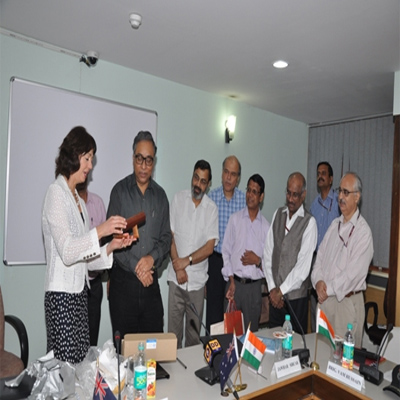
    This was stated by both Prasar Bharati chief executive officer Jawhar Sircar and ABC CEO Lynley Marshall during a discussion prior to the formal signing of a memorandum of understanding with Doordarshan.


    Marshall said: “India has a rich heritage of classical music, and we at ABC can contribute by making available its collection of aboriginal and indigenous music for both Doordarshan and All India Radio.”


    Appreciating the gesture, Sircar said that Indians needed to know more about Australia than what they read in newspapers or saw on foreign television channels.


    The new carriage agreement, Sircar said, “Aims to strengthen the partnership between the two public broadcasters.”


    “With this agreement, ABC International will be available on DD Direct Plus from 1 November,” added Doordarshan director general Tripurari Sharan.


    Australia Network is Australia’s international television service, beaming 24×7 to more than 40 countries across Asia, the Pacific and Indian subcontinent. Its mission is to promote television and digital service that informs, entertains and inspires audience, with a unique Australian perspective.


    The agreement was signed by Marshall and Sircar at a function attended by Sharan, DD News director general S M Khan and additional director general Ranjan Thakur apart from several senior members of both DD and All India Radio.


    With this agreement DD, fulfils a part of its public service mandate to develop knowledge, broaden horizon and showcase the diverse culture of Australia.


    Marshall welcomed the new partnership with Doordarshan, describing it as a significant alignment of the two respected public broadcasters in the Asia-Pacific Region. The partnership between Doordarshan and ABC will open many doors not only for carrying ABC International on DD’s platform, but also to explore specific areas like co-production activities, exchange of TV programmes, exchange of radio and FM (including music), interesting films, audio-visual materials regarding culture, history and geography from both the countries. These steps will help bring people of both the countries understand each other better and forge understanding and empathy.


    Marshall also hopes to strengthen programming for children through this bond. “India will be interested in more news from Australia,” said Sircar.


    Thakur informed Indiantelevision.com that they had earlier also signed an agreement with France 24. “This international english channel will also feature on DD Direct Plus platform from 1 November,” said Thakur.


    At present DD offers 59 channels in its bouquet on DTH platform. “We expect to get the permission to increase the capacity to 97 by December,” he added.

  • Against all odds, Prasar Bharati continues to swim upstream : Brigadier V A M Hussain Member (Personnel) Prasar Bharati

    Against all odds, Prasar Bharati continues to swim upstream : Brigadier V A M Hussain Member (Personnel) Prasar Bharati

    An institution that has been the chronicler and mirror of India‘s history is feeling crippled. With a tenacious CEO under a dynamic Minister of Information & Broadcasting, it is striving to reinvent itself to meet the challenges of contemporary media scenario. Many new experiments are on to change the behemoth called Prasar Bharati that cost the exchequer a whopping Rs 150 crore every month. This public service media organisation is one of the oldest statutory bodies with a hoary past. It is under siege and calls for expeditious intervention to revive the glory of the old faithful that is All India Radio. Doordarshan, the audio-visual arm of Prasar Bharati is always in the public eye with viewers asking for more sumptuous and scintillating fare.

    The Organisation is saddled with a disgruntled work force of about 50,000 who did not get a promotion for decades. To make matters worse, there was no attempt to infuse new blood in the system, either. An out-of-the-box solution is inescapable to break shackles of archaic regulation. The definition of autonomy needs to be revisited to meet the upheavals on the audio- visual landscape, in recent years. Section 33 of the Prasar Bharati Act directs prior government approval for all regulations governing conditions of service. Every employee appointed before October 2007 is considered a government servant on deemed deputation and their promotion is in government ambit. Instead of being a nimble, vibrant media organisation driven by merit, seniority and ‘babudom’ rule the roost. Proposal for a Prasar Bharati Recruitment Board as mandated by the Act of Parliament vide Sections 9 and 10 of The Prasar Bharati Act 1990 is gathering dust in files while government persisted in stalling promotions and new recruitments for two decades now. In effect, Prasar Bharati is like a ship caught in the turbulent waters in the mid sea with none to care on the shore for the SOS of the ship-wrecked crew. Merit and flexible structures are essential for a dynamic and extremely competitive media sector. Meeting the content needs of 750 million people through regional and national infra structure and boosting DTH and terrestrial audience are complex challenges, CEO Jawhar Sircar faces, along with ‘Sarkar‘, the real power.

    A recent experiment showed how independence in Prasar Bharati can make an impact. A truly independent team with young professionals in DD News prime time has rattled the industry with ratings showing an upswing.
    _____****_____

    A recent experiment showed how independence in Prasar Bharati can make an impact. A truly independent team with young professionals in DD News prime time has rattled the industry with ratings showing an upswing. Doordarshan launched a big advertising campaign for the revamped time bands of DD News, DD National and DD Urdu. This was the first such campaign in decades. A little more attention and circumspection are needed at AIR too which got maligned unfortunately by recent media reports of alleged harassment of its women Radio Jockeys. It is staring at a PIL now. FM Gold channel, with practically no permanent staff, earns substantial revenue for the entire AIR network while private FM channels are yearning for popularity with smart young professionals even in small towns and villages. The recently appointed Sam Pitroda Committee has set itself tasks suggesting visible changes for reviving Prasar Bharati. There is a wealth of data and content in archives that can propel AIR to the top of the charts. The expert groups are offering many practical suggestions and initiatives on many fronts including technology, content management, financial independence, government relations and human resources. Dr. Pitroda believes that generational change can be brought about by radical thinking instead of mere cosmetic changes.

    The financial situation continues to be precarious for Prasar Bharati with complex legacies. An unprepared bureaucracy opted for accrual system of accounting and enforced income tax while loans in perpetuity and penal interests soared.The government rescued Prasar Bharati by writing off large sums due as segment hiring and space spectrum charges incurred in the course of broadcasting mandated content, non commercial in nature. Income tax claims stand withdrawn while local bodies continue levying the public broadcaster with huge taxes on property of Union of India but Prasar Bharati has just been permitted use of the government emblem. This is a paradox since 50,000 salaried employees of government are using these assets for functions statutorily assigned by an Act of Parliament. Welcome initiatives of the GOM relieved Prasar Bharati from its financial crystal maze for now by converting loans in perpetuity as grants.

    The need of the hour is to professionalise Prasar Bharati with content-driven channels and professional-driven management owing total allegiance to Prasar Bharati to meaningfully accomplish objectives that were originally dreamt and scripted by the authors of an autonomous public service broadcaster. The dream is worth realising.
    _____****_____

    Apprehensions often raised on the need for a government-funded national public broadcaster are ill-founded. We need an unbiased institution to bench mark initiatives on information, education and entertainment. At the same time, the government needs a media window to show case its policies, initiatives and views by running its own video and audio channels. Government staffing of DD News and AIR News Service Division through Indian Information Service is controlled by the Ministry. The easiest course would be to sever the current nebulous association with Prasar Bharati and declare them government channels on the lines of Lok Sabha and Rajya Sabha TVs and leave Prasar Bharati to professionalise with autonomy.

    The efforts of the government to empower through The Sports Broadcasting Signals (Mandatory Sharing with Prasar Bharati) Act 2007 get breached frequently. Private business houses that own broadcasting rights of World Cricket tours use pre-embedded feeds of commercials and cause losses in hundreds of crore to Doordarshan. Expeditious amendments would help Prasar Bharati and the government. Despite its huge work force, Prasar Bharati has inadequate structure of professionals managing its own security, assets, property, content, new media, revenue and marketing at the highest levels. The need of the hour is to professionalise Prasar Bharati with content-driven channels and professional-driven management owing total allegiance to Prasar Bharati to meaningfully accomplish objectives that were originally dreamt and scripted by the authors of an autonomous public service broadcaster. The dream is worth realising.

    Will the Committee of Sam Pitroda be able to persuade the government to truly empower Prasar Bharati? On thoughts like this, we often remember Baba Amte’s saying “Faith is the promise of tomorrow” while the swimming upstream by Prasar Bharati continues.