Tag: All India Radio

  • Prasar Bharati doesn’t need a Green or White Paper, it needs action & implementation

    Prasar Bharati doesn’t need a Green or White Paper, it needs action & implementation

    If you think you know what your purpose is, but can never seem to gain satisfaction from it, then it’s probably not the purpose you’re destined for.”


    Perhaps these lines by Canadian author who penned the fantasy series Morningstar aptly sums up the confused state of Prasar Bharati, which will be completing two decades in the next two years having been operationalised in 1997.


    For although the Government keeps claiming Prasar Bharati is a fully autonomous public service broadcaster, it interferes whenever it wants including in senior level appointments, which should have been left to the Prasar Bharati Board the moment the Corporation was operationalised in September 1997.  But irrespective of the political party ruling the nation, the state of the public broadcaster has not changed.


    In comparison, the British Broadcasting Corporation (BBC) – arguably having the most diverse, exciting and long history – keeps examining and re-examining its role as a public service broadcaster and independently takes its decisions about changes it wishes to make to reach out to more and more viewers in an era of increasing competition from private broadcasters.


    Once again, the BBC, which will be marking its centenary in 2022 has come out with a Green Paper that examines whether it is failing audiences, whether it should be advertisement-funded or take licence fee as it has been doing, and even whether it should be putting on air certain shows that have drawn the ire of the general public.


    Not merely that, but the 86-page document has been made public for the viewers to react as that would help it to decide its future course.


    In India, although there were some reports on autonomy of the public broadcasters Doordarshan and All India Radio even before the Prasar Bharati Act of 1990, there has been just one report after the pubcaster was operationalized: the Sam Pitroda Committee Report.


    Unfortunately, this report came out with nothing new that was not already being done by the broadcaster or had not been said by the Parliamentary Standing Committee in report after report, year after year. However, the real test is whether the Sam Pitroda Committee’s recommendations have been implemented. And there, sadly, the answer is in the negative. Because the biggest stumbling block to the pubcaster moving ahead is the government, which does not leave it free to move on its own and instead believes in the general principal of he who pays the piper plays the tune.


    If there has been any movement within Prasar Bharati – like the recent appointment of a number of fresh talent to fill the huge number of vacancies or putting some popular radio channels on FM – it has been due to the individual action of the different CEOs or the chairmen of the Board.  


    At a time when the country has around 800 operational television channels and around 245 private FM radio channels – with the auctions for a massive 900+ beginning soon – it is necessary for the pubcaster to wake up and smell the coffee.


    Doordarshan and All India Radio cannot be complacent by just telling themselves that they are the most seen and heard broadcasters in the country – particularly since their viewers are rural and they have failed to make much headway in urban areas, except for the FM radio channels.


    Even after the media keeps pointing out these failures, DD for example has still not been able to ensure that the private DTH players or even its own FreeDish carries the name of the programme and a basic summary – something which the DTH players do for all the major private broadcasters.


    In its report, the BBC has asked whether it is failing audiences and notes, “The BBC remains highly valued and well-used by the majority of people within the UK. But there are variations across different groups and there are particular challenges in reaching black, Asian and minority ethnic audiences and in meeting the needs of younger age groups who increasingly access content online, rather than via the traditional platforms of television and radio. There is also variation across the nations and regions of the UK. Charter Review will consider the extent to which the BBC is meeting the needs of these different segments of the domestic audience.”


    Surely, if the oldest broadcaster is worried by such concerns, the younger pubcasters like Prasar Bharati need to wake up. The Naxal or Marxist movements or separatist movements in some states, could be curbed if the pubcaster played its role well.


    BBC’s Green Paper admits that although there are funding options like advertisement-funded, licence fees, funding through general taxation, or a universal household levy, or mixed public funding and subscription fee, “no funding option is perfect and all involve trade-offs.” The Green Paper even discusses whether licence fee can be shared with private broadcasters.


    Unfortunately, this aspect has never been discussed in detail in India for the simple reason that the majority of Prasar Bharati employees want government funding as that ensures them pensions etc. In India, the concept of licence fee was given up sometime in the late sixties.


    While the Green Paper suggests some core values that the BBC must have, and undoubtedly the Prasar Bharati Act and Programme and Advertising Codes in India also swear by this, the core value that prevails is a rosy picture of the political party in power – at least as far as Doordarshan goes. 


    In fact, the Paper also discusses the issue of whether and how BBC should be regulated. 


    A close look at the Prasar Bharati Act would show that successive governments have deliberately failed to look at the clauses relating to a Broadcasting Council or a Committee of Parliament, as that would not suit the ruling party at the centre.


    Unlike BBC, India has far more complex problems in view of the number of competing private channels, the large number of languages, and the cultural values, which change almost every fifty kilometers.


    However, this does not mean that Prasar Bharati should sit comfortably, waiting for the Ministers or Secretaries to dole out instructions.


    What Prasar Bharati needs is a serious look at the Sam Pitroda Committee recommendations to find out why these recommendations were not implemented when they were under consideration much before the Committee came on the scene, and also to radically examine the relationship of Prasar Bharati with the Government or the ruling party. 


    Additionally, the rule of the Indian Administrative Service babus has to stop with professionals from the Indian Broadcasting (Programme) Service or – since this service never really took off – of the Indian Information Service till the IB(P)S officers can take over!  
  • FM phase III agreement formats with I&B and WPC released

    FM phase III agreement formats with I&B and WPC released

    NEW DELHI: Aiming to expedite the process for FM Radio Phase III, the Government has released the format of the Grant of Permission Agreement (GOPA) for FM Radio in Phase III and the agreement format for those migrating from Phase II.


    The Information and Broadcasting Ministry also placed on its website mib.nic.in the format of the undertaking to be given to the WPC Wing of the Telecom Ministry for frequency assignment.


    This undertaking makes it clear that the spectrum given to the FM operator will be provisional and will be surrendered in the event of the operator getting fresh spectrum after a permanent licence is issued through auction.


    The permission will be valid for a period of 15 years from the effective date and there will be no extension. The permission, unless cancelled or revoked earlier, will automatically lapse and expire at the end of 15 years. Additionally, the permission holder will thereafter have no rights to continue to operate the channel after the expiry date.


    The effective date of the permission period shall be reckoned from 1 April, 2015. The permission will be for free to air broadcasts on main carrier and data on sub-carriers.


    The agreement mentions that the permission holder shall not be competent to grant a sub–permission directly or indirectly. However, the permission holder may resort to outsourcing of content production as well as leasing of content development equipment as long as it does not impact the permission holder’s right as FM broadcaster and enjoys complete control over the channel. The permission holder will be fully responsible for any violations or omissions of the stipulated provisions with regard to the content.

    As per the agreement, the permission holder may hire or lease broadcasting equipments on long-term basis as long as it does not impact permission holder’s right as FM Radio broadcaster and enjoys complete control over the channel. However, the permission holder will be fully responsible for any violation of the stipulated technical parameters.


    The permission holder will not enter into any borrowing or lending arrangement with other permission holders or entities except recognised financial institutions and its related entities, which may restrict its management or creative discretion to procure or broadcast content or its marketing rights.


    It will be the responsibility of the permission holder to ensure that there is no linkage between a party from whom a programme is outsourced and an advertising agency.


    The holder will also have to ensure that no content, messages, advertisement or communication, transmitted in its broadcast channel is objectionable, obscene, unauthorised or inconsistent with the laws of India.


    The Government will have the right to temporarily suspend permission of the permission holder in public interest or for national security for such period or periods as it may direct. The company shall immediately comply with any directives issued in this regard failing which the permission issued shall be revoked and the company disqualified to hold any such permission in future for a period of five years.


    The total direct and indirect foreign investment including portfolio and foreign direct investments into the company has been capped at 26 per cent.


    In the event of the government announcing a new cross-media policy, the permission holder will have to conform to this within six months.


    The permission holder will follow the same programme and advertisement codes as followed by All India Radio (AIR) or any other applicable code, which the Central Government may prescribe from time to time.


    Additionally, the permission holder will be permitted to carry the news bulletins of AIR in the exact same format on such terms and conditions as may be mutually agreed with Prasar Bharati. No other news and current affairs programs have been permitted under the Phase III policy.


    The broadcast pertaining to the categories to be treated as non-news and current affairs broadcast and therefore permissible include information pertaining to sporting events, excluding live coverage. However live commentaries of sporting events of local nature may be permissible. Other coverage includes information pertaining to traffic and weather; coverage of cultural events, festivals; coverage of topics pertaining to examinations, results, admissions, career counseling; availability of employment opportunities; public announcements pertaining to civic amenities like electricity, water supply, natural calamities, health alerts etc. as provided by the local administration; and such other categories not permitted at present, that may subsequently be specifically permitted by the government.

  • Archival Neglect

    Archival Neglect

    It is a matter of prime cultural concern in any nation of heritage to preserve its invaluable assets of antiquity and inherited monuments of fine arts that pass through generations of artistic brilliance.   Traditionally, a culture rich nation plans and preserves its monuments of immense cultural value with pride, adequate funds and a sustainable infrastructure.  Alas! India has hundreds of so-called protected monuments, but in fact have none to actually guard and protect them and prevent unruly defacing of artefacts that once laboriously were sculptured by efficient hands devoting weary long years.


    A population which does not realise the intrinsic value in cultural terms does not even object visitors writing their names or of their loved ones indiscriminately on the walls of our monuments. Our predecessors could not prevent the Portuguese soldiers from using the statues and carvings of immense historic value and elegance as targets for shooting practice in the Elephanta Caves without remorse and defacing cultural treasures on stone preserved for centuries.


    The criminal disintegration and powdering of Bamiyan Buddhas in Afghanistan by Taliban rebels could not be averted even by a well meaning and civilised world community.  Stealing of deities in stone from the sanctum sanctorum of celebrated Indian temples for money continues even today.  India in fact is fortunate to get back its famous dancing Bronze Nataraja Statue of Chola era from the Australian Museum illegally smuggled by cultural traffickers.


    India is replete with examples of events missed in history running to thousands of years due to our national character not giving due importance to preservation of invaluable historic cultural works and monuments for varieties of religious and reasons of cultural conflicts. We owe rediscovery of most of our treasures to British pathfinders and inquisitive soldiers, be it Ajanta, Ellora or so many monuments of Buddhist origin. 


    With preservation of our historical assets not being our national priority and character, we already have lost substantial works of wisdom of our ancestors in Indigenous Medicines, Astronomy, Mathematics and other applied sciences.  But the present scientific tools that enable easy preservation of great monuments through chemical and mechanical means and digitisation of potential audio and video materials are being fruitfully utilized the world over.  The information technology with its current scientific leap has immensely enabled the world community to preserve great works in print through digitisation instead of managing huge libraries of printed books.


    The advent of new media and possibility of preservation of digitised content in cloud form has eased archiving process with excellent networking and retrieval arrangements.  Given the wealth of skilled human resource in IT available in our own country, the delay in archiving assets of audio and video content of Prasar Bharati is inexplicable. 


    The sound archives of All India Radio (AIR) came into existence in April 1954 and can well be termed as the National Audio Archives of the nation being the treasure house of precious recordings in more than 53,000 tapes comprising music and spoken words. 


    The library has invaluable collection of prayer speeches of Mahatma Gandhi recorded in 1947 at Sodepur Ashram, Kolkata and in 1948 at Birla House, Delhi in addition to his famous broadcast from the Broadcasting House, New Delhi on 12.11.1947.  All India Radio has recordings of all the Presidents and Prime Ministers of India besides important voice recordings of eminent personalities like Gurudev Rabindranath Tagore, Constitutional architect, Dr. B.R. Ambedkar, Bismarc of India, Sardar Vallabhbhai Patel and Nightingale of India Ms Sarojini Naidu and many others.


    The library is further enriched with numerous radio drama features, documentaries, memorial lectures and radio autography of eminent personalities from various walks of life.  Although release of archival materials of All India Radio started in April 2002 under the banner ‘Akashvani Sangeet’, only 76 Albums containing legends of Hindustani and Carnatic Classical and light music have been released so far. This despite AIR holding the richest cachet of sound recordings of almost of all genres of Radio Broadcasting including the rare recordings of freedom fighters, unforgettable and resounding voices of great maestros like Bade Ghulam Ali Khan, Abdul Karim Khan, Krishna Rao Shankar Pandit, Begum Akhtar, Siddeshwari Devi, Rasoolan Bai, Ariayakkudi, Chembai Vadyortha Bhagavatar and others.


    On instrumental music, there are invaluable recordings of Pandit Pannalal Ghosh, Dwaram Venkataswamy Naidu, Pandit V.G. Jog, T. Chowdiah, Pandit Nikhil Banerjee and the like preserved for posterity.  There are oral histories which provide direct insight into lives and creative process of great writers and artists.  In the realm of dramatics, the greatest contribution of radio is Radio play which evolved into an independent creative genre in the hands of very eminent directors and writers.


    As of today, AIR has been able to digitize only 6,000 hours since 2002 out of a total of 75,000 hours of archival materials available with Prasar Bharati.  The archives have rare collections of speeches by Quaid-I-Azam Muhammad Ali Jinnah and sensational addresses during ‘Bangladesh Liberation’ by Bangabandhu Sheikh Mujeebur Rahman and Ms Indira Gandhi.


    Doordarshan archives started in 2003 involving digital restoration, preservation, digitisation of the content, creation of meta-data for easy access and retrieval of archived programmes.   The laborious process of cleaning and finally preserving digitised content in file format through Media Assets Management (MAM) saving files on Linear Tape Open (LTO-4) format is on for a very long time.


    Doordarshan has digitised programme in 38 subjects to include animation and puppetry, ballot, documentary series, environment and ecology, fair and festival, game show, interview and conversation, light music, literature and poetry, variety entertainment, etc.  Out of 21,000 hours of digitised content, Doordarshan is able to bring out only 77 DVDs so far.


    The process of digitisation is painfully slow with no technical road map, finalised plan for marketing digitised content as also making free accessibility of speeches by great national leaders to the world at large as decided by Prasar Bharat Board. 


    Other developed nations which have successfully archived their contents like NHK, Japan and Deutche Welle, Germany in High Definition have their Central Archives networked with programme generating facilities dealing with a single or couple of languages with few dialects. But India suffers from a complex need to document archival materials available in multiple languages and hundreds of dialects in stations and kendras spread over the length and breadth of the nation as also link them up.


    Learning from its experience, Prasar Bharati needs to create meta-data at the time of programme production itself, secure produced content online and avoid piracy with a central archive in New Delhi networked with regional centres of rich cultural content.  It would be worthwhile for Prasar Bharati either to create a vertical for archives or expedite digitisation of its archival content of historical and monetary value by outsourcing to reputed media houses or facilities with domain experts without any further delay to save on precious tapes from open wooden shelves and gunny bags exposed to vagaries of adverse weather conditions.


    While Prasar Bharati Board has conceptually cleared creation of a well-networked data house on the programmes of AIR and DD stations all over India, procurement of equipments connected to MAM needs to be compatible.  Piecemeal procurements due to lack of funds should be avoided at all costs and avert resultant obsolescence of technology.  Aggressive strategy and an action plan to promote products released by AIR and DD could earn huge dividends and benefit Prasar Bharati monetarily.


    The revenue receipts of DVDs and footage sale of Doordarshan has declined by 70 per cent in the year 2015.  Despite its rich archival content, Prasar Bharati has been able to earn about only Rs 50 lakh in the last financial year compared to its revenue of Rs 1.5 crore in 2012. 


    Fast tracking of digitisation and archiving of its audio and video content is workable by an active national level steering committee duly monitored by Prasar Bharati Board on monthly basis for speedy accomplishment of digitisation of born content as also legacy content in gramophone records and analogue magnetic tapes.


    Prasar Bharati does not have a recruitment mechanism and in the absence of a statutory body, Prasar Bharati Recruitment Board, there is an emergent need to put dedicated personnel in place to supervise handling of invaluable archival content with inherent security even if outsourced for digitisation to private players.


    Establishing an exclusive web portal for AIR and DD archives with a payment gateway for purchase of archived programmes and expeditiously installing digital kiosks of Prasar Bharati in airports and railway stations to access its popular archival content would enable Prasar Bharati Archives self sustain. Prasar Bharati Board on its part had already cleared development of ‘Leaders of India’ website with facility to download famous video clippings and sound byte free of cost.


    Training of staff at grass root level with proficient archival procedures would enable Prasar Bharati to achieve its archival goals in a shorter duration. The nation could expect speedy action on the archival front especially with an ex-Secretary of Culture, Jawhar Sircar, CEO who initiated the process and is leading from the front. 


    (The views expressed here are purely personal views of Prasar Bharati principal advisor, personnel and administration VAM Hussain and Indiantelevision.com does not necessarily subscribe to them.)

  • Modi to address ‘Mann ki Baat’ on 28 June

    Modi to address ‘Mann ki Baat’ on 28 June

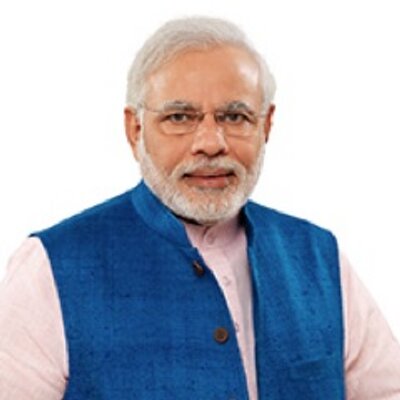
    NEW DELHI: The next installment of Prime Minister Narendra Modi’s ‘Mann ki Baat’ will be broadcast by All India Radio on 28 June.


    This is the ninth edition of the radio programme in which PM shares his thoughts with the citizens.


    The Prime Minister in a message also invited citizens to share their thoughts and ideas for the programme on the Open Forum of MyGov.in: https://mygov.in/group-issue/give-your-inputs-prime-ministers-mann-ki-baat. 


    Different stations of Doordarshan and some private channels are also expected relay the broadcast.

  • Pubcaster breaks bureaucratic shackles; hires new recruits

    Pubcaster breaks bureaucratic shackles; hires new recruits

    NEW DELHI: After struggling for almost 25 years, the public broadcaster Prasar Bharati has finally broken the bureaucratic shackles and started the process of completing 2,367 fresh recruitments for different posts in All India Radio (AIR) and Doordarshan (DD).
     
    The Group of Ministers attached to the Information and Broadcasting Ministry, which had gone into issues relating to the pubcaster had earlier recommended a total of 3,452 posts that needed to be filled on an immediate basis.
     
    Of the total recruits, 120 persons have been shortlisted for immediate training at the National Academy for Broadcast Media set up by Prasar Bharati in north Delhi.
     
    These new recruits were addressed by Prasar Bharati chairman Surya Prakash, eminent communicator Kiran Karnik, Prasar Bharati CEO Jawhar Sircar, and senior advisor VAM Hussain to generally acquaint them with the kind of challenges ahead of them.
     
    Speaking of the role of the public broadcaster, Sircar said that both AIR and DD had helped in knitting the people of the country.
     
    Pubcaster sources told Indiantelevision.com that the new recruits were being given induction training in batches of 55 at a time.
     
    Sources also said that the induction training for each group would last around nine weeks.

  • Prasar Bharati’s funds for content development stopped under 12th Plan

    Prasar Bharati’s funds for content development stopped under 12th Plan

    NEW DELHI: The government funds to Prasar Bharati for content development and dissemination have been stopped from the 12th Plan.


    The pubcaster was getting funds from the government under the 11th Plan for content development and dissemination scheme for both Doordarshan (DD) and All India Radio (AIR), primarily for the Northeast, Jammu and Kashmir, and Urdu.


    The pubcaster will now have to depend on its Internal Extra Budgetary Resources (IEBR) from the 12th Plan.


    Interestingly, Prasar Bharati said this development came at a time when its CEO Jawhar Sircar had asked the Ministry for funds for radio and TV channels in tribal areas and those channels, which are unable to run 24×7 – one example being Shimla.


    Information and Broadcasting Ministry sources told Indiantelevision.com that Prasar Bharati was given Rs 54 crore in 2012-13, Rs 47 crore in 2013-14 and Rs 36 crore in 2014-15.


    Pertinent to note here is that there was a drastic reduction of funds allocated in 2014-15, since the Rs 36 crore also included Rs 25 crore for DD Kisan, which was launched recently on 26 May, 2015.

  • Govt. denies routine transfers of AIR newsreaders, says DD has no permanent newsreaders

    Govt. denies routine transfers of AIR newsreaders, says DD has no permanent newsreaders

    NEW DELHI: While reiterating that there are no permanent newsreaders or news presenters in Doordarshan News, the Government has denied any routine transfers of newsreaders-cum-translators (NRT) in All India Radio (AIR).


    Minister of State for Information and Broadcasting Rajyavardhan Rathore told Parliament that NRTs of different Indian languages are needed for the smooth functioning of news operations in different languages in News Services Division, All India Radio.


    He said there are a total of 27 NRTs working in eleven languages in the News Services Division of AIR. They were all employed in the eighties and nineties and there has been no new appointment after 1999.  


    Meanwhile, DD News sources told Indiantelevision.com that there are no newsreaders at the centre any more. Regional kendras have newsreaders, who work on casual basis for a maximum of seven days in a month.


    At the same time, sources also said that those who read the news at DD News headquarters are either designated as anchors or anchor-correspondents. Most of them are hired on a contractual basis, however, some work on a casual basis.

  • Jaitley stresses need to integrate communication across social media platforms

    Jaitley stresses need to integrate communication across social media platforms

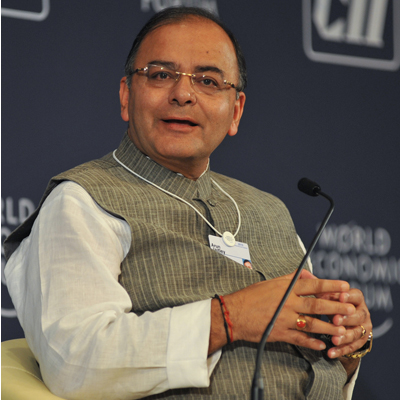
    NEW DELHI: Information and Broadcasting Minister Arun Jaitley today said the “Talkathon” serves as independent interview, which runs live on social media and taken up by all private channels as well.

     
    He added that it offered an opportunity to integrate communication across platforms as well as a direct interface with the audiences.

     
    Addressing a meeting of Consultative Committee of MPs attached to his Ministry to discuss the issue of “Harnessing role of Social Media,” he said the digital mode had become an effective medium to communicate to the wide audience while at the same time it offered opportunities to innovate.

     
    Referring to the Doordarshan (DD) app launched on 7 May, 2015, the Minister mentioned that this initiative provided an opportunity to address the needs of the audience, which followed the dissemination of information on the digital mode.

     
    Jaitley also said efforts would be made to popularize the digital mode of the 100 volumes of Mahatma Gandhi compiled by the Publications Division on the social media platforms of the Ministry. 

    At the meeting, which was also attended by Minister of State Rajyavardhan Rathore, a presentation was made by Secretary (I&B) Bimal Julka giving an overview of the steps and initiatives undertaken so far by the Ministry in harnessing the potential of the social media for disseminating the information relating to the important initiatives of the Government. 

    Members gave suggestions to enhance the reach of the Government coverage through All India Radio (AIR) and DD, especially in areas that required dissemination. It was emphasized that efforts needed to be taken to promote the reach of social media to those segments, which at times suffered due to lack of technological access. It was also suggested that measures need to be taken to facilitate information flow to the young target audience and institutions in rural areas. Members also suggested that content needed to be tailored consistently to address the information needs of the people. 

    Members who attended the meeting Dr. Jayakumar Jayavardhan, Dr. Sanjay Jaiswal, Tapas Paul, V. Sathyabama, Anil Madhav Dave, Jaya Bachchan, Dr. K. Keshava Rao, Madhusudan Mistry, Neeraj Shekhar and Vivek Gupta.

  • Narendra Modi’s Mann ki Baat on 26 April

    Narendra Modi’s Mann ki Baat on 26 April

    NEW DELHI: Prime Minister Narendra Modi’s Mann ki Baat will be aired live on 26 April simultaneously on all channels of All India Radio and Doordarshan. 


    The program will also be live-streamed on the Prime Minister’s official website. 

    In a tweet he said, “Looking forward to ‘Mann Ki Baat’ on the 26th of this month.” This is the seventh edition of the radio program in which PM shares his thoughts with the citizens. 
     

    Modi has already interacted directly with the people in the earlier six editions ofMann Ki Baat. He has dwelt upon several issues close to the hearts of the people such as Swachh Bharat Abhiyan, promotion of khadi, skill development, scholarships for disabled children, infrastructure for educational institutions, menace of drugs and the issues related to farmers.


    In the last edition broadcast on 22 March, he shared the concerns of farmers and said that the government will take proper and prompt steps to resolve their problems and do its level best to help them tide over difficult situation. 
     

    In another earlier edition, Modi urged students to shed their examination stress and develop a positive attitude.


    He also shared the Mann Ki Baat forum with US President Barack Obama during his visit to India in January when the two leaders interacted with the people on a host of issues. 


    Modi has from time to time invited citizens to share their ideas and thoughts on the subject in the Open Forum of MyGov.in. The programme has generated an encouraging response from citizens across the country. 

  • Parliamentary Committee to review Prasar Bharati working, wants feedback from govt

    Parliamentary Committee to review Prasar Bharati working, wants feedback from govt

    NEW DELHI: The Parliamentary Standing Committee will review the working of Prasar Bharati ‘in due course’ particularly with regard to human resource and financial problems. The committee has also asked the pubcaster to apprise it of the action taken so far on the Sam Pitroda Committee recommendations.


    The Parliamentary Standing Committee on Information Technology, which also examines issues relating to Information and Broadcasting Ministry (MIB) has noted in its recent report that it is aware that the Government is also undertaking a study following responses received from various stakeholders to the Sam Pitroda Committee report being placed on the website of the Ministry.


    The Committee noted that Prasar Bharati has been suffering from financial problems as well as human resource related issues ‘for the last so many years’.


    The Sam Pitroda Committee had given its report in January 2014, the Standing Committee noted. Pitroda had submitted 26 recommendations in the areas of (i) Governance and Organisation, (ii) Funding, (iii) Human Resources, (iv) Content, (v) technology, (vi) Archiving, (vii) Social Media and (viii) Global Outreach.


    The recommendations address issues of financial and administrative autonomy of Prasar Bharati to ensure that it is approximately positioned to execute its role as a genuine public broadcaster.


    The Standing Committee also took note of the fact that the MIB had asked Prasar Bharati to prepare an action plan for undertaking certain reviews, studies and audits suggested by the Sam Pitroda Committee, which have a critical bearing on future action plan of the Government. 


    The high-level committee under veteran technocrat Sam Pitroda had stressed the need for constituting a Parliamentary Committee as originally envisaged in the Prasar Bharati Act 1990 to ensure that the pubcaster discharges its duties in accordance with the provisions of the Act and Government defined duties.


    It recommended reorganization of the pubcaster Board to make it a professionally managed body and make it more effective in guiding the organisation.


    Noting that Prasar Bharati’s vision must be to become a genuine ‘public broadcaster’ as against a ‘government broadcaster,’ the report said there is need to effect complete transfer of ownership and management of assets and Human Resource to Prasar Bharati ‘to make the organization administratively and financially autonomous of Government.’


    A Regulatory Body has to be set up to ensure public accountability of Prasar Bharati with respect to all content broadcast on its television and radio networks. The Regulatory Body should be a sub-committee of the Prasar Bharati Board.


    Interestingly, the Committee has suggested setting up of Prasar Bharati Connect (PBC) as the third arm of the public service broadcaster, independent of Doordarshan and All India Radio, to expand the social media. PBC should be mandated to manage the various social media initiatives of all the wings of Prasar Bharati. It also wants Prasar Bharati’s social media strategy.


    The Committee was set up in 28 January, 2013 and had decided to set up 11 working groups on different issues and has come out with a report on eight main areas: governance and organization, funding, human resource, content, technology, archiving, social media and global outreach.


    The Committee suggests amending the 1990 Act where necessary so as to impart genuine and effective autonomy to the organization.


    Referring to funding, the report said that there is need to undertake a professional study to develop a funding mechanism for Prasar Bharati that addresses the need for autonomy with financial accountability. Such a funding model should include government funding, internal resource mobilisation and private investment. There is need to monetise all available archival and other assets of Prasar Bharati as soon as possible to enhance funding, and augment funding of social messaging through cross-subsidising such content through entertainment-led programming and by co-opting industry through their corporate social responsibility (CSR) budgets.


    Pitroda had said in reply to a question after submitting his report that the time of licensing TV or radio sets as was being done around five decades earlier could not be revived at it was an old concept.


    Referring to Human Resource, he said the pubcaster should be enabled with the power to frame rules and regulations for its employees without seeking prior approval of the Government.


    The committee said there was need to create an effective recruitment system to attract the best talent and allow the hiring of skilled professionals and encourage and initiate steps for absorption of Government employees as full-time employees of Prasar Bharati, after an appropriate screening process. The ones who remain in Government may be considered for absorption in other departments within the government as is done in other cases.


    Referring to content, Pitroda stressed the need to scale up allocation of funds for content generation to 50 per cent of the total expenditure within a period of five – seven years. The Committee wants a review of all existing channels and content of DD and AIR, based on their relevance, output and viability and phase out those where there is sub-optimal utilisation of resources.


    There should be encouragement of outsourcing of content creation to external producers to attract high quality and diverse programming and creation of distinct brand identities for different TV and radio channels, and define the content strategy for each.


    Referring to Technology, the Committee wants expansion of the satellite and digital cable TV operations to meet the obligation of public service broadcasting. There is need to digitalise the present AM radio system to a new digital radio transmission after due evaluation subject to cost and availability of DRM receivers. In the transition period, FM may be expanded according to demand.


    It stressed the need to selectively digitalize terrestrial TV operations based on commercial viability.


    Any further expansion of and investment in digital terrestrial telecast should be suitably evaluated after field reviews and assessment of developments in the telecom sector, it said.


    Interestingly, the Committee wanted involvement of the private sector to expand the broadcasting market with a view to effectively utilise the infrastructure being built by Prasar Bharati to enable faster growth in the receiver ecosystem.


    On archives, it recommended state-of-the-art digital archives for consolidating and preserving DD and AIR’s content: both existing as well as that being currently generated. There is expansion of scope to make it the National Audio-Visual Archives so as to consolidate and support all other government initiatives.


    The Committee wants dedicated, multi-platform channels created for dissemination of Prasar Bharati’s archival products: both open access and for monetization.


    Referring to Global Outreach, it wanted the creation of a world-class broadcasting service benchmarked with the best in the world using next-generation opportunities, technologies, business models and strategies.