Tag: All India Digital Cable Federation

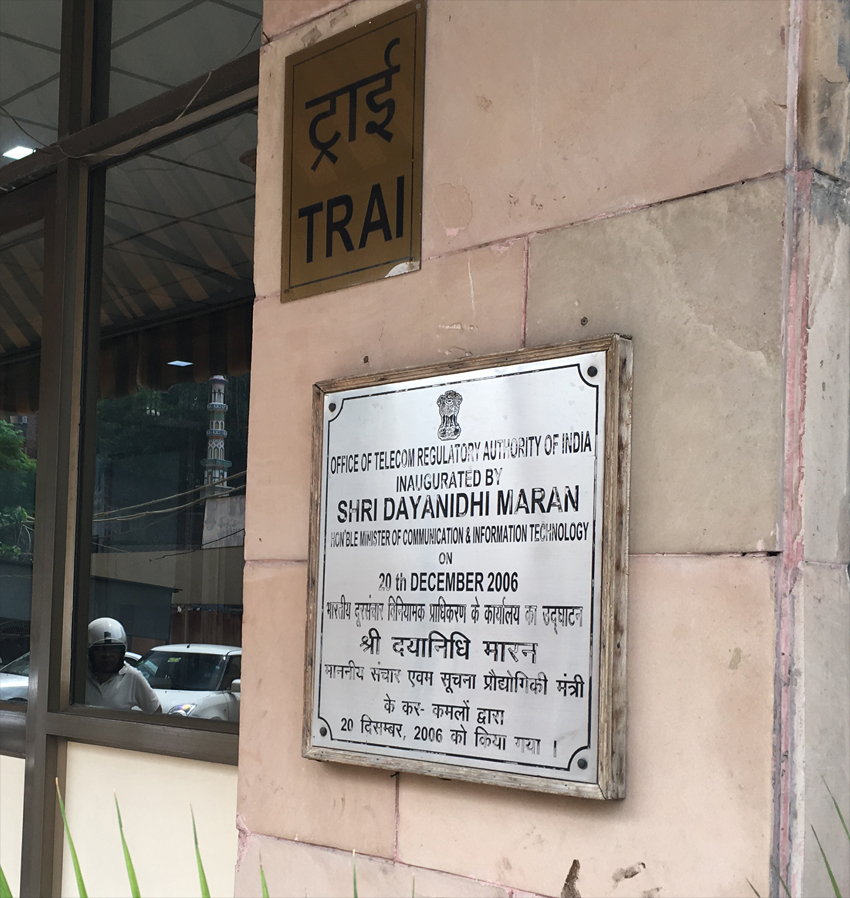
  • Arasu DAS licence: Stakeholders fear flurry of similar requests & permissions

    NEW DELHI: Even as Tamil Nadu state government-backed MSO Tamil Nadu Arasu Cable TV Corp (TACTV) expressed satisfaction at getting the DAS license after “five years of struggle”, some other stakeholders felt this move by the Ministry of Information and Broadcasting may go against a policy recommendations by sector regulator TRAI and, possibly, open up floodgates for similar requests from other local governments.

    TACTV general manager Ramana Saraswathi, while welcoming the development, told indiantelevision.com that the matter about shuttering analogue signals within three months was something that the state government would decide.

    She said that TACTV would await government instructions. Incidentally, the state government in Tamil Nadu state is an ally of the BJP-led NDA coalition that is in power in New Delhi.

    While officially analog has had a sunset on 31 March 2017 in India, MIB’s internal review of the ground situation revealed that full digital play is yet to be a reality. The Andhra Pradesh state government, meanwhile, had exhorted MIB to extend the March 2017 deadline, which had received no official feedback from MIB.

    However, not everybody was as upbeat as Arasu. Most MSOs and LCOs outside Tamil Nadu, contacted by indiantelevision.com, made clear their apprehension saying this might “open the floodgates” and “other state governments may take advantage” of this by regularising or floating MSO companies, which will indirectly help politicians control what all gets aired and what all people can watch.

    One Andhra-based MSO said that an inter-ministerial committee had itself held that the matter was one of policy that should be decided by the MIB. LCO Sky Vision managing director R S Raju said that when TRAI has submitted a series of recommendations on why government or semi-government bodies should not be allowed in TV distribution business, which are awaiting a final decision at MIB, such permissions, conditional or otherwise, send a wrong signal to the industry players.

    Saharsh Damani of the All India Digital Cable Federation (AIDCF) said the organization would study the government order in detail and then give an official reaction.

    In August 2014, TRAI had suggested barring political parties from entering into broadcasting space, while it recommended several restrictions on the corporate houses in this regard.  It had made a similar recommendation in December 2012 and earlier in November 2008.

    “Ownership is a huge concern… how do you know that a TV channel operated out of Bhopal owned by a local MLA or MP is conveying the truth rather than tinted version of the truth. This is one problem with political ownership,” the then TRAI chairman Rahul Khullar had said in 2014 while releasing recommendations on ‘Issues Relating to Media Ownership’.

    TRAI had suggested that entities, including political bodies, religious bodies, central and state government ministries and government funded entities be barred from entry into broadcasting and TV channel distribution sectors.

    The regulator even suggested that surrogates of such entities too “should be barred”.

    TRAI had pushed for enactment of a new legislation through an executive decision for its recommendations to be implemented, while suggesting an exit option should be provided in case permission to any such organizations had already been granted.

    Arasu’s conditional license makes things that much more difficult for MIB and other central government department to take a final decision on the regulator’s suggestions.

    ALSO READ:

    Arasu gets provisional MSO license subject to analogue switch-off in three months

    Can a MSO block a channel airing unfavourable poll survey?

    DAS: MSOs, LCOs give low figure of STB seeding, official sources admit it’s under 80%
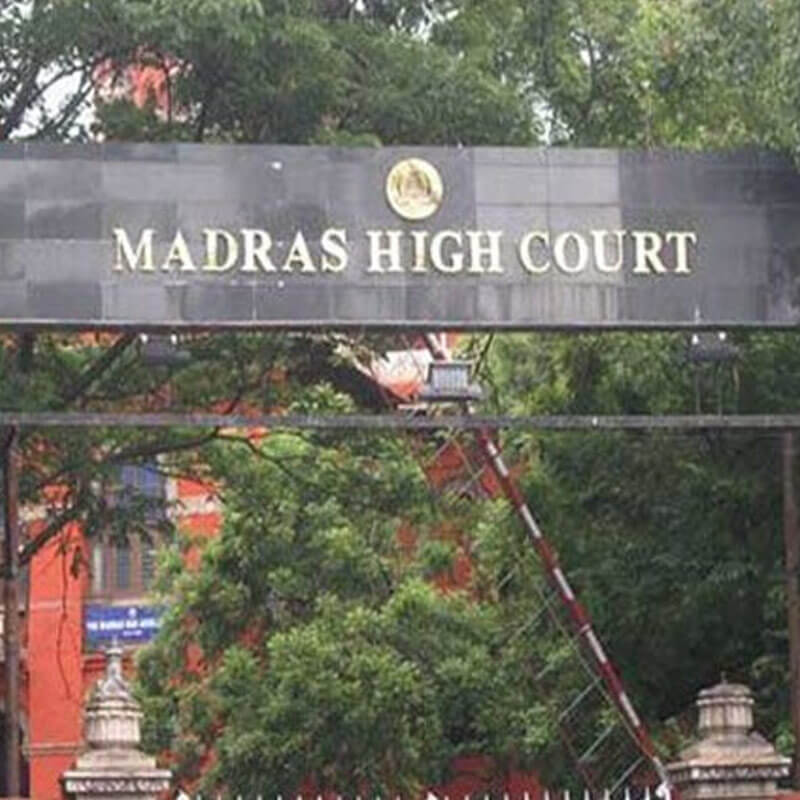
  • TRAI jurisdiction: Madras HC yes to MSOs as interveners, no as impleaders

    NEW DELHI/MUMBAI: The Madras High Court yesterday gave concession to the MSOs allowing them to intervene on matters of law under consideration. But, the court refused to let them implead, via AIDCF, in a case filed by broadcasters (content generators) challenging whether regulator TRAI can have jurisdiction over commercial issues relating to copyright of content.

    Both sides — petitioners Star TV and Vijay TV and All India Digital Cable Federation (AIDCF) — viewed the court stand as a moral victory.

    Star TV and Vijay TV had moved the Madras High Court pleading that Telecom Regulatory Authority of India (TRAI), India’s broadcast carriage and telecoms regulator, didn’t have jurisdiction to issue guidelines that had a bearing on tariff of content, both TV and film, especially if such issues were also governed under the copyright law.

    In an official statement, AIDCF said the court was “pleased to permit AIDCF to participate in the proceedings as (an) intervener” allowing it to “file all relevant material, make oral submissions and file written submissions in the main writ petition.”

    The AIDCF statement, quoting organisation president and Hathway video division CEO TS Panesar, said, “We are delighted to note the decision of the Madras High Court in recognising us as an important stakeholder in this matter.”

    A source close to the petitioners, however, described the court’s decision as “disallowing” MSOs to directly implead in the main writ petition, the same way as it had not allowed Indian Broadcasting Foundation (IBF) to implead itself in the case. “AIDCF can only intervene on the main matters of law under consideration, which is whether TRAI has jurisdiction over copyright issues relating to content,” the source opined.

    TRAI, which has been trying to bring about semblance of order in the broadcast and cable sector in India via various guidelines, could not be reached for comments by indiantelevision.com till the time of writing this report. However, TRAI chairman RS Sharma had told indiantelevision.com in an year-end interview in December 2016 that the regulator’s main aim behind issuing draft guidelines relating to broadcast and cable tariff, quality of service and interconnection was to reduce litigation amongst stakeholders and create a broad playing arena for all players, including the consumers.

    Industry sources had indicated that the MSOs had moved the court as they apprehended viewpoints of distribution platforms of TV services in India, notably the MSOs, may not be heard; especially when they have views that don’t converge with those of the petitioners on all aspects of the petition.

    However, there is lack of clarity on the status of the petition filed by Videocon D2H, a distribution platform, to get impleaded in the aforementioned case being heard by Madras HC. The matter is listed for another round of hearing 7 March, 2017.

    Incidentally, the Supreme Court, petitioned by TRAI, had refused to intervene in the case being heard by Madras HC and had stated in its last hearing few days back that it would wait for the outcome at the high court, listing TRAI appeal for a March-end hearing.

    ALSO READ:

    SC keeps TRAI request on tariff pending till Madras HC completes hearing

    TRAI jurisdiction: IBF plea dismissed, AIDCF impleadment decision on 22 Feb

    MSOs join issues with TRAI tariff plea at Madras HC

    Tariff order: Don’t notify without SC nod, TRAI told; Madras HC case to continue

  • MSOs join issues with TRAI tariff plea at Madras HC

    MSOs join issues with TRAI tariff plea at Madras HC

    MUMBAI: In a fresh twist to a face-off between broadcasters and regulator TRAI over tariff matters vis-a-vis international and Indian copyright laws, country’s MSOs have joined issues requesting Madras High Court to hear their views too.

    According to cable industry sources, All India Digital Cable Federation (AIDCF), India’s apex body for digital multi-system operators (MSOs), has impleaded itself in the case and urged the Madras High Court — hearing a case filed by Star India and Vijay TV filed against Telecom Regulatory Authority of India (TRAI) over draft tariff guidelines — that while disposing off the case it’s viewpoints should also be heard and taken into account.

    The sources indicated that the MSOs had moved the court about 10 days back as they apprehended the viewpoints of  distribution platforms of TV services in India, notably the MSOs, may not be heard; especially when they have views that don’t converge with those of the petitioners on all aspects of the petition.

    Though Indiantelevision.com was not able to get full details of the MSOs’ stand in the court, industry observers explained that the presence of distributors of TV services in Madras HC makes the case interesting as the Indian Broadcasting Foundation (IBF) too has urged to be heard during the hearing of the case.

    After Star India and Vijay TV had moved the Madras High Court appealing against TRAI’s jurisdiction to pass guidelines over tariff and commercial matters where copyrights was involved relating to content, the regulator had moved the Supreme Court seeking succour.

    However the apex court, while  directing TRAI that it could continue with its regulation-framing exercises and seek its nod before mandating guidelines, also observed that the regulatory body should argue its case before the Madras High Court, declining to stay proceedings in the high court.

    The high court had asked TRAI to maintain status quo on tariff guidelines till full hearing of the case filed by Star India and Vijay TV. The next hearing is scheduled middle of this month.

    ALSO READ:

    Tariff order: Don’t notify without SC nod, TRAI told; Madras HC case to continue

    TRAI tariff: Madras HC extends status quo; SC to hear regulator’s appeal on 16 Jan

    Maintain status quo on broadcast guidelines, Madras HC tells TRAI

  • MSOs join issues with TRAI tariff plea at Madras HC

    MSOs join issues with TRAI tariff plea at Madras HC

    MUMBAI: In a fresh twist to a face-off between broadcasters and regulator TRAI over tariff matters vis-a-vis international and Indian copyright laws, country’s MSOs have joined issues requesting Madras High Court to hear their views too.

    According to cable industry sources, All India Digital Cable Federation (AIDCF), India’s apex body for digital multi-system operators (MSOs), has impleaded itself in the case and urged the Madras High Court — hearing a case filed by Star India and Vijay TV filed against Telecom Regulatory Authority of India (TRAI) over draft tariff guidelines — that while disposing off the case it’s viewpoints should also be heard and taken into account.

    The sources indicated that the MSOs had moved the court about 10 days back as they apprehended the viewpoints of  distribution platforms of TV services in India, notably the MSOs, may not be heard; especially when they have views that don’t converge with those of the petitioners on all aspects of the petition.

    Though Indiantelevision.com was not able to get full details of the MSOs’ stand in the court, industry observers explained that the presence of distributors of TV services in Madras HC makes the case interesting as the Indian Broadcasting Foundation (IBF) too has urged to be heard during the hearing of the case.

    After Star India and Vijay TV had moved the Madras High Court appealing against TRAI’s jurisdiction to pass guidelines over tariff and commercial matters where copyrights was involved relating to content, the regulator had moved the Supreme Court seeking succour.

    However the apex court, while  directing TRAI that it could continue with its regulation-framing exercises and seek its nod before mandating guidelines, also observed that the regulatory body should argue its case before the Madras High Court, declining to stay proceedings in the high court.

    The high court had asked TRAI to maintain status quo on tariff guidelines till full hearing of the case filed by Star India and Vijay TV. The next hearing is scheduled middle of this month.

    ALSO READ:

    Tariff order: Don’t notify without SC nod, TRAI told; Madras HC case to continue

    TRAI tariff: Madras HC extends status quo; SC to hear regulator’s appeal on 16 Jan

    Maintain status quo on broadcast guidelines, Madras HC tells TRAI

  • Budget 2017 Wish-list: MSOs demand industry status, rationalisation of entertainment & services taxes

    Budget 2017 Wish-list: MSOs demand industry status, rationalisation of entertainment & services taxes

    NEW DELHI: Annually various sectors of the Indian industry draw wish-list and hope that the government will grant them some relief during the presentation of the annual Budget of the country. MSOs are no exception and the All India Digital Cable Federation (AIDCF) has not only demanded an industry status, which will give it related financial incentives, but also rationalisation of various other taxes, including service and entertainment taxes.

    “Grant us infrastructure status for the (distribution) industry and remove the 8 per cent AGR applicable for MSOs offering broadband via cable,” said AIDCF Secretary-general Saharsh Damani when asked by indiantelevision.com about what the organisation would like Finance Minister Arun Jaitley to announce during his Budget presentation on February 1, 2017.

    AIDCF has also exhorted the government to grant them parity with manufacturing sector vis-a-vis u/s 2A as a disparity between the service and the manufacturing sectors is “adversely affecting” the growth and consolidation of service sector of which the MSOs are part of.

    “The tax benefits under Section 72A of the Income-tax Act, 1961 in respect of amalgamation or demerger (carry forward and set off of accumulated loss and unabsorbed depreciation allowances) are currently limited to industrial undertakings or a ship, hotel, aircraft or banking. The definition of industrial undertaking should be widened to include service industry, broadcasters and content production companies,” Damani said.

    The AIDCF, which is said to be a new and digital avatar of MSO Alliance, would also like removal of dual applicability of service and entertainment taxes on the cable TV.

    According to the apex body of MSOs, till the time GST (Goods and Services Tax) comes in place, entertainment tax paid to a state government may also be made creditable against the service tax liability of the cable TV sector. What does it mean? When a cable TV network, for example, pays an entertainment tax of Rs 100, then it should be able to adjust the same against the service tax payable and get a credit there on, AIDCF said.

    “This will be a short term measure, but will give higher declaration of entertainment tax and will bring in sufficient numbers to ensure that (overall revenue) collection of the government on service tax does not drop,” AIDCF’s Damani explained.

    Originally GST was supposed to have rolled out from April 1, 2017, but because of political wrangling and some states raising doubts on their share of the tax collected under a GST regime, Finance Minister Jaitley, according to media reports, has opined the new tax regime could be rolled out some time middle of 2017.

    Apart from that, AIDCF has also urged the government to rationalise indirect taxes like import duties on network equipment. Further, the organisation has suggested allowing use of USO (Universal Service Obligation) Funds for broadband infrastructure expansion would greatly benefit the industry.

    Also Read:

    Broadcasters bat for parity with print medium under GST

    India, US should resolve IPR issues at earliest: IACC

  • Budget 2017 Wish-list: MSOs demand industry status, rationalisation of entertainment & services taxes

    Budget 2017 Wish-list: MSOs demand industry status, rationalisation of entertainment & services taxes

    NEW DELHI: Annually various sectors of the Indian industry draw wish-list and hope that the government will grant them some relief during the presentation of the annual Budget of the country. MSOs are no exception and the All India Digital Cable Federation (AIDCF) has not only demanded an industry status, which will give it related financial incentives, but also rationalisation of various other taxes, including service and entertainment taxes.

    “Grant us infrastructure status for the (distribution) industry and remove the 8 per cent AGR applicable for MSOs offering broadband via cable,” said AIDCF Secretary-general Saharsh Damani when asked by indiantelevision.com about what the organisation would like Finance Minister Arun Jaitley to announce during his Budget presentation on February 1, 2017.

    AIDCF has also exhorted the government to grant them parity with manufacturing sector vis-a-vis u/s 2A as a disparity between the service and the manufacturing sectors is “adversely affecting” the growth and consolidation of service sector of which the MSOs are part of.

    “The tax benefits under Section 72A of the Income-tax Act, 1961 in respect of amalgamation or demerger (carry forward and set off of accumulated loss and unabsorbed depreciation allowances) are currently limited to industrial undertakings or a ship, hotel, aircraft or banking. The definition of industrial undertaking should be widened to include service industry, broadcasters and content production companies,” Damani said.

    The AIDCF, which is said to be a new and digital avatar of MSO Alliance, would also like removal of dual applicability of service and entertainment taxes on the cable TV.

    According to the apex body of MSOs, till the time GST (Goods and Services Tax) comes in place, entertainment tax paid to a state government may also be made creditable against the service tax liability of the cable TV sector. What does it mean? When a cable TV network, for example, pays an entertainment tax of Rs 100, then it should be able to adjust the same against the service tax payable and get a credit there on, AIDCF said.

    “This will be a short term measure, but will give higher declaration of entertainment tax and will bring in sufficient numbers to ensure that (overall revenue) collection of the government on service tax does not drop,” AIDCF’s Damani explained.

    Originally GST was supposed to have rolled out from April 1, 2017, but because of political wrangling and some states raising doubts on their share of the tax collected under a GST regime, Finance Minister Jaitley, according to media reports, has opined the new tax regime could be rolled out some time middle of 2017.

    Apart from that, AIDCF has also urged the government to rationalise indirect taxes like import duties on network equipment. Further, the organisation has suggested allowing use of USO (Universal Service Obligation) Funds for broadband infrastructure expansion would greatly benefit the industry.

    Also Read:

    Broadcasters bat for parity with print medium under GST

    India, US should resolve IPR issues at earliest: IACC

  • TRAI may moot MRP for bouquet TV channels; no price cap on unbundled premium products

    TRAI may moot MRP for bouquet TV channels; no price cap on unbundled premium products

    MUMBAI: Broadcast carriage regulator Telecom Regulatory Authority of India (TRAI) has lined up a slew of draft guidelines relating to tariff, quality of service and interconnections, including proposing maximum retail price (MRP) for channels being bundled in genre-wise bouquets, freeing unbundled premium channels of  price caps and reining in the last mile cable operator (LCO) from breaching revenue-gravy trail.

    The draft recommendations, outcome of several consultation papers issued by TRAI over the last 12 months, could be discussed in a meeting that the regulator likely to have on Wednesday with stakeholders. Representatives of organisations like All-India Digital Cable Federation (AIDCF), Indian Broadcasting Foundation (IBF) and Ministry of Information and Broadcasting (MIB) are likely to be part of the meeting.

    Other topics for discussion at this meeting may revolve aroundanalogue tariffs to be levied in phase III and phase IV areas until sunset dates.

    Sources in TRAI indicated the regulator is in favour of introducing MRP for TV channels that broadcasters offer in a bouquet to MSOs so the prices could be conveyed to a consumer in a transparent manner for him to make an empowered choice.

    Though broadcasting companies do submit annually a-la-carte rates of their respective channels to TRAI, the regulator is of the opinion that a consumer doesn’t ultimately get to choose the channel of his choice transparently.

    How will the MRP be fixed? TRAI feels that the broadcasters should convey the price themselves as they were the best judge of their products and the same would be conveyed to the consumer. Or, the regulator could moot a formula for fixing the MRP.

    Fully aware that such measures could be termed restrictive and intrusive by industry players, TRAI is likely to dangle sops and suggest that broadcasters were free to price a premium channel at any level, but such channels cannot be part of any bouquet or bundling.

    The draft proposals, being fine-tuned by TRAI officials, are likely to be put out in public domain over the next 7-10 days. As these guidelines pertain to carriage services, the regulator can notify them itself. The likely date from which they would come into effect is April 2017. Unless, of course, somebody moves the court challenging the guidelines.

    Apart from these, TRAI is also toying with the idea of introducing an app with the help of which a consumer can get a TV channel from his distribution platform operator (DPO) after furnishing details like area of residence and area service provider’s name. The details will be get forwarded to the DPO concerned for further action.

    TRAI feels that with over 90 per cent of the areas in Phase 1, II and III already receiving digitised TV services, there would be no dearth of opportunities even if the sunset date of December 2016 for Phase IV or complete digitisation gets pushed by few months into 2017.

    In its consultation paper, issued in January 2016, TRAI had stated broadcast industry in India had been driven largely by satellite TV distribution business and unorganized growth of cable TV. During the early days, broadcasters were directly dealing with the cable operators who aggregated and carried broadcast TV services to end users. The distribution model was, according to the regulator, heavily skewed towards advertisement-driven revenues due to difficulties in maintaining transparency in the flow of subscription revenues across the analog value chain, which have become more transparent with the rollout of digital services or digitisation pushed by MIB andTRAI.

    Though TRAI had mandated a-la-carte availability of broadcast TV channels across the value chain, including subscribers, the a-la-carte tariff is presently structured in such a manner that makes it devoid of value proposition vis-à-vis bundled offerings,TRAI highlighted in its January paper (available at http://www.trai.gov.in/WriteReadData/ConsultationPaper/Document/CP_Tariff_issues_29_Jan_2016_final.pdf ), adding consumer was the “ultimate sufferer” ending up receiving hundreds of TV channels many of which remain confined to his STB and never viewed.

    ALSO READ: TRAI releases consultation paper on tariff issues for TV services

    ALSO READ: TRAI allows more time for reactions on QoS methodology under DAS

  • TRAI may moot MRP for bouquet TV channels; no price cap on unbundled premium products

    TRAI may moot MRP for bouquet TV channels; no price cap on unbundled premium products

    MUMBAI: Broadcast carriage regulator Telecom Regulatory Authority of India (TRAI) has lined up a slew of draft guidelines relating to tariff, quality of service and interconnections, including proposing maximum retail price (MRP) for channels being bundled in genre-wise bouquets, freeing unbundled premium channels of  price caps and reining in the last mile cable operator (LCO) from breaching revenue-gravy trail.

    The draft recommendations, outcome of several consultation papers issued by TRAI over the last 12 months, could be discussed in a meeting that the regulator likely to have on Wednesday with stakeholders. Representatives of organisations like All-India Digital Cable Federation (AIDCF), Indian Broadcasting Foundation (IBF) and Ministry of Information and Broadcasting (MIB) are likely to be part of the meeting.

    Other topics for discussion at this meeting may revolve aroundanalogue tariffs to be levied in phase III and phase IV areas until sunset dates.

    Sources in TRAI indicated the regulator is in favour of introducing MRP for TV channels that broadcasters offer in a bouquet to MSOs so the prices could be conveyed to a consumer in a transparent manner for him to make an empowered choice.

    Though broadcasting companies do submit annually a-la-carte rates of their respective channels to TRAI, the regulator is of the opinion that a consumer doesn’t ultimately get to choose the channel of his choice transparently.

    How will the MRP be fixed? TRAI feels that the broadcasters should convey the price themselves as they were the best judge of their products and the same would be conveyed to the consumer. Or, the regulator could moot a formula for fixing the MRP.

    Fully aware that such measures could be termed restrictive and intrusive by industry players, TRAI is likely to dangle sops and suggest that broadcasters were free to price a premium channel at any level, but such channels cannot be part of any bouquet or bundling.

    The draft proposals, being fine-tuned by TRAI officials, are likely to be put out in public domain over the next 7-10 days. As these guidelines pertain to carriage services, the regulator can notify them itself. The likely date from which they would come into effect is April 2017. Unless, of course, somebody moves the court challenging the guidelines.

    Apart from these, TRAI is also toying with the idea of introducing an app with the help of which a consumer can get a TV channel from his distribution platform operator (DPO) after furnishing details like area of residence and area service provider’s name. The details will be get forwarded to the DPO concerned for further action.

    TRAI feels that with over 90 per cent of the areas in Phase 1, II and III already receiving digitised TV services, there would be no dearth of opportunities even if the sunset date of December 2016 for Phase IV or complete digitisation gets pushed by few months into 2017.

    In its consultation paper, issued in January 2016, TRAI had stated broadcast industry in India had been driven largely by satellite TV distribution business and unorganized growth of cable TV. During the early days, broadcasters were directly dealing with the cable operators who aggregated and carried broadcast TV services to end users. The distribution model was, according to the regulator, heavily skewed towards advertisement-driven revenues due to difficulties in maintaining transparency in the flow of subscription revenues across the analog value chain, which have become more transparent with the rollout of digital services or digitisation pushed by MIB andTRAI.

    Though TRAI had mandated a-la-carte availability of broadcast TV channels across the value chain, including subscribers, the a-la-carte tariff is presently structured in such a manner that makes it devoid of value proposition vis-à-vis bundled offerings,TRAI highlighted in its January paper (available at http://www.trai.gov.in/WriteReadData/ConsultationPaper/Document/CP_Tariff_issues_29_Jan_2016_final.pdf ), adding consumer was the “ultimate sufferer” ending up receiving hundreds of TV channels many of which remain confined to his STB and never viewed.

    ALSO READ: TRAI releases consultation paper on tariff issues for TV services

    ALSO READ: TRAI allows more time for reactions on QoS methodology under DAS