Tag: All India Digital Cable Federation

  • Cable TV lobby urges tax cut to 5 per cent as sector reels under strain

    Cable TV lobby urges tax cut to 5 per cent as sector reels under strain

    NEW DELHI:The All India Digital Cable Federation (AIDCF), the apex body of cable operators, has petitioned information and broadcasting minister Ashwini Vaishnaw and finance minister Ashwini Vaishnaw  to slash goods and services tax on cable television from 18 per cent to 5 per cent.

    The appeal rides on prime minister Narendra Modi’s push for “next-generation GST reforms” and a two-rate structure. The federation argues that cable remains the cheapest mass medium, reaching 64 million households and sustaining 10–12 lakh jobs, yet is under siege from rising costs and unregulated OTT rivals.

    Powered by 852 multi-system operators and 1.6 lakh local cable operators—mostly small entrepreneurs—the sector was even recognised as an “essential service” during the pandemic. But the economics are dire. Broadcaster fees have surged nearly 600 per cent, pushing up subscription costs by 35–40 per cent. With consumers balking at higher tariffs, margins are collapsing.

    “Market dynamics have become unfair for MSMEs in cable TV, as they are bound by tariff regulations while OTTs operate without comparable oversight,” AIDCF wrote.

    The lobby claims a GST cut would restore affordability for households, ease working capital pressures, enable fresh broadband investment under Digital India, and protect lakhs of jobs.

    AIDCF secretary general Manoj P Chhangani urged the government to table the matter at the next GST Council meet: “A reduction will safeguard the viability of MSOs and LCOs and preserve cable’s role in inclusive connectivity.”

    Industry watchers caution that while OTT is growing fast, cable still dominates in small towns and villages. A tax reprieve, they say, could decide whether it remains India’s broadcast backbone—or fades into obsolescence.

  • Cable TV lobby slams TRAI’s DTH licence fee waiver call

    Cable TV lobby slams TRAI’s DTH licence fee waiver call

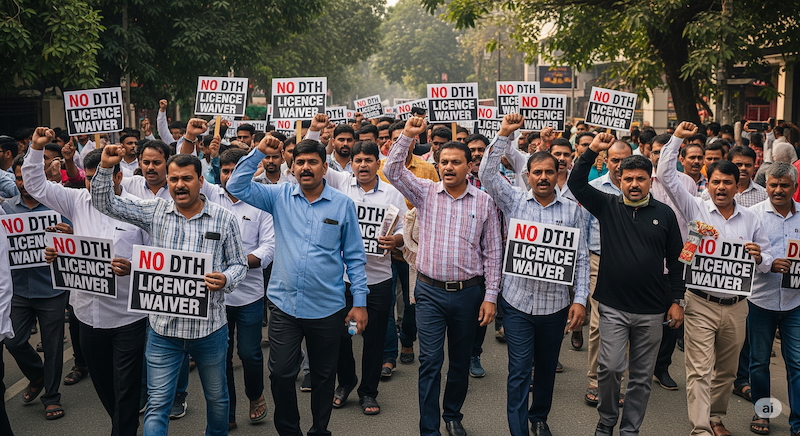
    NEW DELHI – India’s top cable lobby has sounded the alarm over TRAI’s proposal to slash and eventually scrap licence fees for Direct-to-Home (DTH) operators, warning it could wreck the delicate balance in the country’s broadcast distribution ecosystem.

    In a strongly-worded representation to the information and broadcasting ministry, the All India Digital Cable Federation (AIDCF) – which represents over 880 multi-system operators (MSOs) and 1.6 lakh local cable operators (LCOs) – said the move would “deepen regulatory inequality” and “threaten over 10 lakh livelihoods” linked to the cable TV industry.

    The AIDCF accused TRAI of tilting the scales in favour of DTH players who already enjoy “cost-free, administratively allocated spectrum” while cable operators continue to bleed under high Right of Way (RoW) charges and hefty underground infrastructure investments.

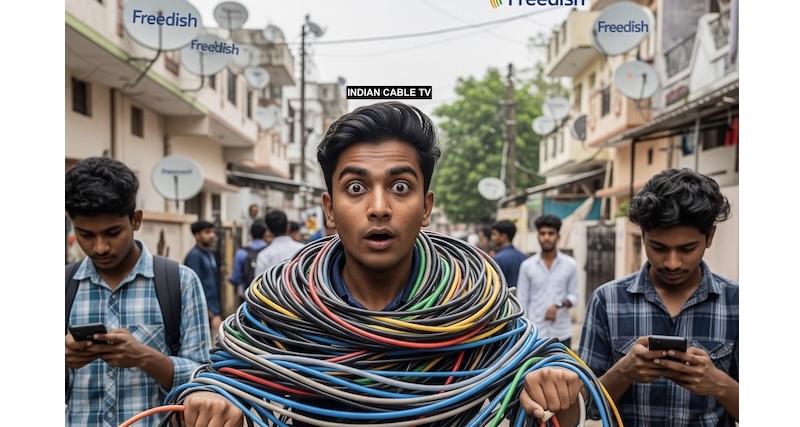
    “A DTH licence fee waiver will distort competition and violate regulatory neutrality,” an AIDCF spokesperson said, adding that any cut would hasten subscriber churn from cable to satellite platforms. The body flagged other disruptors like Free Dish, OTTs, Fast TV and digital DPOs as further stress points for the struggling cable sector.

    Rather than easing licence costs for satellite platforms, AIDCF wants the government to implement a fair cost recovery mechanism across distribution platforms, reflecting the true commercial value of spectrum. It has urged the ministry to junk TRAI’s recommendation in favour of a level playing field that safeguards the sector’s long-term viability.

  • AIDCF elects new leadership: GTPL’s Anirudhsinh Jadeja takes the helm

    AIDCF elects new leadership: GTPL’s Anirudhsinh Jadeja takes the helm

    MUMBAI: The All India Digital Cable Federation (AIDCF), the apex lobby for digital cable operators in India, has named a new leadership team — with GTPL Hathway boss Anirudhsinh Jadeja stepping in as president, replacing outgoing DEN Networks chief executive S.N. Sharma.

    Joining Jadeja at the top are Sankaranarayana, vice chairman of Asianet Satellite Communications, as vice president, and Sanjay Goyal, group CFO at Fastway Transmissions, as treasurer.

    The outgoing Sharma said it was a “privilege” to lead the federation during a transformative phase. “I’m proud of the strides we’ve made in voicing the sector’s concerns with clarity and conviction,” he noted, while wishing the new team “continued success.”

    AIDCF secretary general Manoj Chhangani echoed the sentiment, calling Jadeja and his colleagues a “dynamic and experienced team” poised to strengthen the Federation’s role as the industry’s collective voice.

    A first-generation entrepreneur, Jadeja has over three decades of experience and is credited with building India’s largest multi-system operator. Sankaranarayana, an IIT-IIM alumnus, has steered Asianet since 2006, bringing a blend of engineering prowess and business strategy to the table. Goyal, meanwhile, has worn multiple hats across Jio, Siti Networks and Vishal Retail, and is known for his sharp financial acumen and transformation playbook.

    With this new lineup, AIDCF appears ready to recalibrate its priorities and reassert its relevance in an increasingly streaming-dominated media landscape.

  • EY-AIDCF report: Indian cable TV faces dire times unless government and regulator step in with regulatory reforms

    EY-AIDCF report: Indian cable TV faces dire times unless government and regulator step in with regulatory reforms

    NEW DELHI: India’s cable TV industry is on the ropes, reeling from a perfect storm of digital disruption, regulatory overkill, and changing viewer habits. A blistering new report by EY and the All India Digital Cable Federation (AIDCF) reveals a 40 million plunge in pay TV homes since 2018—down from 151 million to just 111 million in 2024—and warns that the bleeding isn’t over yet.

    By 2030, the figure could drop to as low as 71 million, as Indians flock to OTT, Free Dish, and smart TVs offering slicker content, better tech, and zero monthly bills. The fallout? A staggering 31 per cent collapse in employment across the Local Cable Operator (LCO) network, with up to 1.95 lakh jobs on the chopping block.
    The pay TV playbook, once defined by “kam daam, zyada samaan,” is now buckling under rising channel rates, bundling woes, and what LCOs call a “regulatory regime rigged for broadcasters.”

    A whopping 93 per cent of LCOs surveyed reported a drop in take-home income, with 79 per cent saying their earnings have nosedived by over 20 per cent since 2018.

    * Revenue for major distribution platform operators (DPOs) has shrunk by over 16 per cent since 2018, while EBITDA margins have plunged by 29 per cent.

    * Cable TV subscriptions have halved to 60 million, while smart TVs connected to the internet hit 50 million monthly active sets in 2024.
    * Pay TV now makes up just 58 per cent of the TV pie, down from 81 per cent in 2018, even as India’s TV household base touched 190 million.

    Despite being the backbone of India’s broadcast reach—physically connecting over 500 million people—LCOs remain the industry’s ignored foot soldiers, calling out a “top-heavy system” that allegedly favours deep-pocketed broadcasters and digital players.

    AIDCF proposes radical surgery: from activating over 20 million inactive set-top boxes and offering subsidies in “TV dark” zones, to limiting near-simultaneous OTT releases of pay TV content, and ensuring a level playing field between cable, OTT, Free TV and FAST channels.

    But with TRAI’s piecemeal tariff reforms (NTO 1.0 to 4.0) fuelling more legal duels than industry stability, stakeholders are demanding a full-blown reset. As OTT juggernauts steam ahead and content increasingly lives in the cloud, the cable industry’s survival may hinge not just on policy support but on reinventing itself as a digital services hub, not just a pipe.

    As the report bluntly puts it: without immediate intervention, the sun may set on the 30-year reign of India’s cable TV kings.

  • SN Sharma gets AIDCF responsibilities once again

    SN Sharma gets AIDCF responsibilities once again

    MUMBAI: It’s back to being president of the All India Digital Cable Federation (AIDCF). DEN Networks CEO S.N. Sharma who led the AIDCF from April 2019 to March 2021 as its president has once again been appointed to that post. His term will continue till March 2025 when a new head will hopefully be selected. 

    The AIDCF was set up in 2014 with VD Wadhwa, the then CEO of Siti Networks as its head.

    Sharma, a veteran and popular figure in the cable TV industry, succeeds Fastway CEO Peeush Mahajan, who stepped down from the position in May 2024 due to personal reasons (apparently, he’s migrated to Canada and won’t be coming back). Peeush took over as president in April 2023 and his term was supposed to end in March 2025.

    Sharma had been acting president of the association since then. 

  • Trai issues amendments to the regulatory framework for broadcasting and cable services

    Trai issues amendments to the regulatory framework for broadcasting and cable services

    Mumbai: The Telecom Regulatory Authority of India (Trai) on Tuesday issued the telecommunication services tariff order, 2022 and the telecommunication services interconnection regulations, 2022.

    In consonance with the complete digitisation of the cable TV sector, Trai on 3 March 2017 notified the new regulatory framework for broadcasting and cable services. After passing legal scrutiny in Madras High Court and Supreme Court, the new framework came into effect from 29 December 2018.

    As the new regulatory framework changed quite a few business rules, many positives emerged. However, upon implementation of the new regulatory framework 2017, Trai noticed some inadequacies impacting the consumers. To address certain issues that arose after implementation of the new regulatory framework, after a due consultation process with stakeholders, Trai on 1 January 2020 notified the new regulatory framework 2020.

    Some stakeholders challenged provisions of tariff amendment order 2020, interconnection amendment regulations 2020 and QoS amendment regulations 2020 in various High Courts including in the High Court of Bombay and Kerala. The court upheld the validity of the new regulatory framework 2020 except for a few provisions.

    The provisions related to network capacity fee (NCF), multi-TV homes and long-term subscriptions of new regulatory framework 2020, have already been implemented and due benefits are being passed on to the consumer at large. Every consumer now can get 228 TV channels instead of 100 channels earlier, in a maximum NCF of Rs 130. It has enabled consumers to reduce their NCF for availing a similar number of channels as per 2017 framework, by an estimated cost varying Rs 40 to 50. Additionally, the amended NCF for multi-TV homes has enabled further savings to the consumers to the tune of 60 per cent on second (and more) television sets.

    However, as per RIOs filed by the broadcasters in November 2021, the new tariffs reflected a common trend i.e., the prices of their most popular channels including sports channels were enhanced beyond Rs 19 per month. Complying to the extent provisions, as regards the inclusion of pay channels in a bouquet, all such channels that are priced beyond Rs 12 per month are kept out of the bouquet and are offered only on a-la-carte basis. The revised RIOs as filed indicate a wide-scale changes in composition of almost all the bouquets being offered.

    Immediately after new tariffs were announced, Trai received representations from distribution platform operators (DPOs), associations of local cable operators (LCOs) and consumer organisations. DPOs highlighted difficulties likely to be faced by them in implementing new rates in the system and migrating the consumers to the new tariff regime through the informed exercise of options impacting almost all bouquets, especially due to upward revision in the rates of pay channels and bouquets declared by broadcasters. Therefore, Trai engaged with all the different associations and consumer groups including representatives of LCOs.

    To deliberate on the various issues related to implementation of new regulatory framework 2020 and suggest a way forward, a committee consisting of members from Indian Broadcasting & Digital Foundation (IBDF), All India Digital Cable Federation (AIDCF) & DTH Association was constituted under the aegis of Trai.

    The purpose of the committee was to facilitate discussions among various stakeholders to come out on a common agreed path for smooth implementation of Tariff Amendment Order 2020. Stakeholders were advised to come out with an implementation plan with minimum disruptions and hassles to the consumers while implementing the new regulatory framework 2020.

    The committee listed several issues related to the new regulatory framework 2020 for consideration. The stakeholders, however, requested Trai to immediately address critical issues which could create impediments for smooth implementation of tariff amendment order 2020.

    In order to address the issues as identified by the stakeholders’ committee; Trai issued a consultation paper for seeking stakeholders’ comments on points/issues which are pending for full implementation of the new regulatory framework 2020. The consultation paper sought comments and suggestions from various stakeholders, on issues related to discount given in the formation of the bouquet, ceiling price of channels for inclusion in bouquet, and discount offered by broadcasters to DPOs in addition to distribution fee.

    The authority analysed the comments of the stakeholders and to protect the interests of consumers has notified the amendments to tariff order 2017 and interconnection regulations 2017. The main features of the amendments are as follows:

    a.    Continuance of forbearance on MRP of TV channels

    b.    Only those channels which are having MRP of Rs 19 or less will be permitted to be part of a bouquet.

    c.    A broadcaster can offer a maximum discount of 45 per cent while pricing its bouquet of pay channels over the sum of MRPs of all of the pay channels in that bouquet.

     d.   Discount offered as an incentive by a broadcaster on the maximum retail price of a pay channel shall be based on combined subscription of that channel both in a-la-carte as well as in bouquets.

    All the broadcasters shall report to the authority, any change in name, nature, language, MRP per month of channels, and composition and MRP of bouquets of channels, by 16 December 2022, and simultaneously publish such information on their websites. The broadcasters who have already submitted their RIOs in compliance with the new regulatory framework 2020 may also revise their RIOs by 16 December 2022.

    All the distributors of television channels shall report to the authority, DRP of pay channels and bouquets of pay channels, and composition of bouquets of pay and FTA channels, by 1 January 2023, and simultaneously publish such information on their websites. DPOs who have already submitted their RIOs in compliance with the new regulatory framework 2020 may also revise their RIOs by 1 January 2023.

    All the distributors of television channels shall ensure that services to the subscribers, with effect from 1 February 2023, are provided as per the bouquets or channels opted by them.

    Trai in the present amendments, addressed only those critical issues which were suggested by the stakeholders’ committee to avoid inconvenience to consumers while implementing the tariff amendment order 2020. The stakeholders’ committee also listed other issues for subsequent consideration by Trai. In addition, the authority held multiple meetings with representatives of LCOs including an online meeting which was attended by more than 200 LCOs from across the country. Several issues were put forward during these meetings. Trai has noted the suggestions and may take further suitable measures to address the ensuing issues, if the situation warrants.

  • Trai extends deadline for implementation of new tariff order to February next year

    Trai extends deadline for implementation of new tariff order to February next year

    Mumbai: Telecom Regulatory Authority of India (TRAI) has decided to extend the deadline for implementation of the new tariff order (NTO 2.0) from 30 November 2022 to 28 February 2023.

    As per the regulatory filing, the authority said, “All the distributors of television channels shall ensure that services to the subscribers, with effect from 28 February 2023, are provided as per the bouquets or channels opted by them.”

    Several representations have also been received from the stakeholders requesting an extension of the time limit for implementation of the New Regulatory Framework 2020. According to Trai’s recent notice, it stated, “All the broadcasters shall report any change in name, nature, language, MRP per month of channels, and composition and MRP of bouquets of channels by 30 November 2022, and simultaneously publish such information on their websites,” it stated.

    “The broadcasters who have already submitted their reference interconnect offers (RIO) in compliance with the New Regulatory Framework 2020 may also revise their RIOs by 30 November 2022,” it further added.

    In addition to it, Trai also said, “All distribution platform operators (DPOs) will need to submit their distributor retail price (DRP) of pay channels and bouquets & composition of bouquets of pay and free-to-air channels, by 31 December 2022 to Trai.”  

    The authority further, in compliance with the New Regulatory Framework 2020, asked DPOs to revise their already-submitted RIOs by 31 December 2022. 

    After receiving comments and counter comments from the stakeholders on the consultation paper, TRAI was to conduct an open house discussion (OHD) on 21 July 2022, which is now scheduled to take place on 8 September 2022.

    New Tariff Order

    When NTO was first introduced and gave customers the option to select channels à la carte, the price of entertainment increased, forcing Trai to modify its order. In January 2020, NTO 2.0 was introduced, capping the price of a bouquet channel at Rs 12 as opposed to Rs 19. This was not supported by any logical justification or consumer insight, according to the Indian Broadcasting Digital Foundation (IBDF), a unified representative body of Indian television broadcasters.

    Broadcasters have resisted the new tariff order vigorously and reacted by removing premium channels from bouquets and increasing their prices from Rs 20 to Rs 30 after losing the legal battle to overturn the Trai order in both the Bombay High Court and the Supreme Court.

    Cable operators were compelled to ask the regulator to postpone the implementation of NTO 2.0 as a result of major broadcasters like Star, Zee, Sony, and Viacom18 choosing to raise the MRP of their well-liked channels and keep them out of bouquets. For instance, the All India Digital Cable Federation had urged Trai to reconsider the order’s provisions in light of the sustainability aspect of putting this framework into place.

  • Trai asks broadcasters, DPOs to comply with interconnection agreements regulations

    Trai asks broadcasters, DPOs to comply with interconnection agreements regulations

    Mumbai: The Telecom Regulatory Authority of India (Trai) has asked broadcasters and distributors of TV channels to immediately implement the provisions of the Telecommunication (Broadcasting and Cable) Services Register of Interconnection Agreements and all such other matters Regulations, 2019.

    The regulator has asked broadcasters and distributors to submit the compliance report within 15 days from the date of issue of the letter on 8 December failing which actions would be taken as per provisions of the said regulations and the Trai Act, 1997.

    The regulations were supposed to come into force on 2 January 2020 but were challenged by the All India Digital Cable Federation (AIDCF) in the Kerala high court. The high court in its order dated 9 January 2020 had ordered that no coercive action will be taken by the respondents.

    The court disposed of the said writ petition, in its judgement dated 12 July, and partially set aside the provisions of the said regulations to the extent they require registration of placement/marketing agreements. Thus, all the provisions of the said regulations, except to the extent they require registration of placement/marketing agreements, are in operation.

    The regulator had developed a B&CS integrated portal system (BIPS) for the purpose of filing data/details pertaining to the said regulations. The regulations require broadcasters and DPOs to furnish, via their compliance officer, its reference interconnection offers when the same is published on their websites.

    The regulations are applicable to all commercial and technical arrangements entered into by broadcasters, distributors of television channels and local cable operators for providing broadcasting services. If broadcasters and distributors default in complying with the provisions, then Trai would take action by imposing a financial disincentive.

  • Kerala High Court passes interim order on the placement and LCN clause of NTO 2.0

    Kerala High Court passes interim order on the placement and LCN clause of NTO 2.0

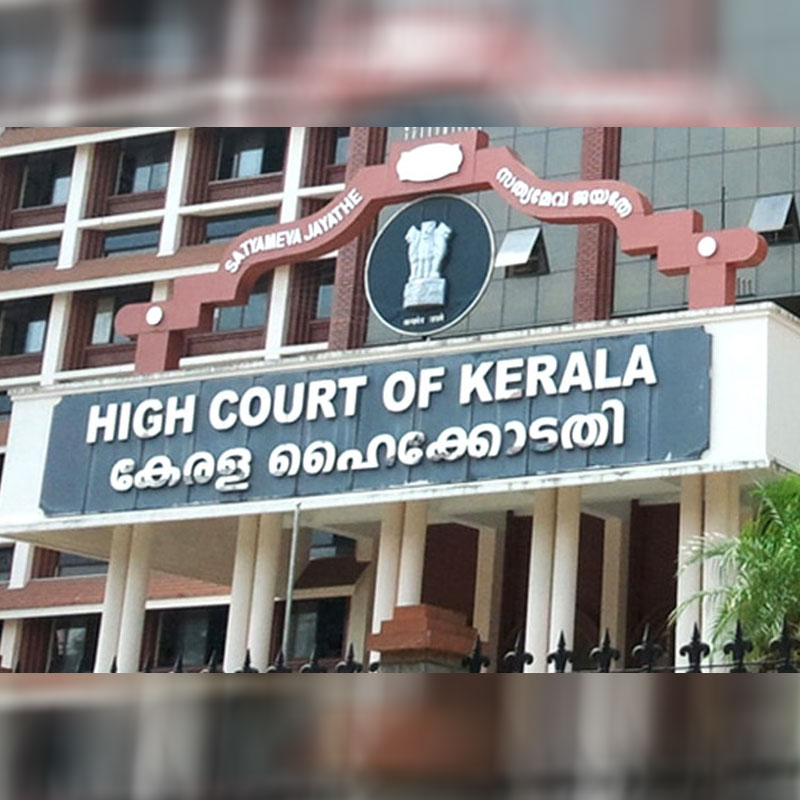
    MUMBAI: The Kerala High Court has passed an interim order on the placement and LCN clause in the case of The Telecom Regulatory Authority of India (TRAI)’s tariff order amendment. However, other provisions will be operational.

    All India Digital Cable Federation (AIDCF) members moved the Kerala High Court challenging certain provisions of TRAI’s amended tariff order and interconnection regulation earlier. While refusing to issue any interim order on any of the other provisions, the single judge asked AIDCF to file representation before TRAI pointing out objections to amendments. A proper consultative process from TRAI shall follow this step.  Till then impugned provisions except the provisions with regards to freezing of placement of channels in perpetuity shall be permitted to be operated.

    TRAI said in the amendment: 

    The channel number once assigned to a particular television channel shall not be altered by the distributor for a period of at least one year from the date of such assignment:

    Provided that this sub-regulation shall not apply in case the channel becomes unavailable on the distribution network:

    Provided further that if a broadcaster changes the genre of a channel then the channel number assigned to that particular television channel shall be changed to place such channel together with the channels of new genre in the electronic programme guide.

  • Den Networks CEO SN Sharma takes over from Hathway’s Rajan Gupta as AIDCF president

    Den Networks CEO SN Sharma takes over from Hathway’s Rajan Gupta as AIDCF president

    New Delhi: All India Digital Cable Federation (AIDCF), the apex body of digital cable television players, announces the appointment of Mr. S N Sharma (CEO – Den Networks Limited) as the new President of the Federation with effect from 1st  April 2019 post expiration of term of Mr. Rajan Gupta – current President.

    Mr. Gupta commented that, “I am delighted to handover the presidency to Mr. Sharma.  It had been an event filled last couple of years at AIDCF, where we successfully migrated into the digital regime and ensured that New Tariff Regime becomes a reality, thereby empowering the consumers. I would like to thank all the members of AIDCF, without whose support this journey would not have been possible” Commenting on his appointment as the new AIDCF President, Mr. S.N. SHARMA said, “It is an honour for me to take the baton of leading AIDCF from Mr. Gupta and carrying it forward in the direction of realizing ‘The dream of Digital India’. All the esteemed members and I will continue to work as a team to resolve the issues and enhance the overall growth of Cable Television. Our priority will be making the new Tariff Regime hassle free so that that there is no inconvenience to the consumers. We will encourage and value the constructive suggestions and feedbacks.