Tag: All India Bakchod

  • AIB launches ad wing with Truly Madly’s ‘Creep Qawwali;’ plans major expansion

    AIB launches ad wing with Truly Madly’s ‘Creep Qawwali;’ plans major expansion

    MUMBAI: The rather (in)famous comedy group All India Bakchod (AIB) has some ambitious expansion plans up their sleeves. The group has launched its advertising wing called Vigyapanti, which kick-started with their latest comic presentation – Creep Qawwali. A keen observer would notice that the video is in fact an advertisement for the start-up dating portal – Truly Madly.


    What’s more, brand AIB isn’t putting a stop to their expansion plan with just Vigyapanti as the group also has plans to foray into long-form content production as well as movie production. 


    Speaking to Indiantelevision.com about the group’s plans for the next couple of years, AIB’s Tanmay Bhat says, “There is no precedent to what we do — from entertainment to working with brands and start-ups. We are soon getting into long form productions and hopefully into movie production by the end of next year.”


    Coming to Vigyapanti, while AIB has taken on embedded branding projects for various established brands, their latest output is a first from their newly conceived advertising wing.


    Bhat says, “One of our copy writers suggested the term. It sounded almost like ‘adgiri,’ which rings close to the way we approach a brand. The name Vigyapanti just fits with brand AIB.”


    Bhat is on a mission to establish a 15 members strong team of copywriters by the start of next year.


    One doesn’t need to look too far in history to notice AIB’s roots in advertising. Bhat has been associated with the advertising industry before. “I was supposed to become a copywriter before AIB and stand-up comedy happened,” says Bhat in his signature comical intonation. So why this call back to advertising? “Because our biggest source of income, even for the YouTube channel, is working brands,” comes his simple answer. “Brands is where the money is.”


    AIB’s ad wing idea didn’t pop out of nowhere. The four team members – Bhat, Gursimran Khamba, Rohan Joshi and Ashish Shakya – were toying with the idea of starting an agency for over eight months now. “We were dwelling on the thought without any copywriters on our team. After meeting a bunch of people for about six months, we were able to get some fine writers onboard with us,” says Bhat, referring to the new additions to the team namely Girish Narayandass, Devaiah Bopanna, Vignesh Raja and Mihir Lele.


    However, it wasn’t until AIB worked with Truly Madly that they locked the idea of using their strength to make start-ups massive. “Working with a start-up is a very refreshing experience. There’s no bureaucracy involved unlike the big brands. So we decided, maybe we should focus on start-ups, which are either getting funded or are looking to get funded,” shares Bhat, adding that the romantic idea of “using our popularity to good use” is part of the appeal.


    A pertinent question here is, how affordable Vigyapanti will be for such start-ups? If they go by their romantic ideologies and lessen the cost, how will this be a profitable business for the brand? To this, Bhat says, “We plan to go about this on a case by case basis. For those who can’t afford us, we might decide to do away with the creative cost and charge them only for the production cost. We are also seriously considering on picking up equities from them as opposed to monetary transactions.”


    This doesn’t however mean that AIB will cut all ties with the mega brands who seek their expertise. They will continue to do promotional videos for sponsors and other established brands through their YouTube channel.


    When quizzed about OML’s (AIB’s managing body) involvement with Vigyapanti, Bhat replies, “OML manages AIB and its business so they are with us on most of the things that we do. Now they have moved on from being just managers to consultants. I like having Vijay and Ajay Nair involved. In fact, the idea of pivoting to start-ups and picking up equities instead is an idea, which came from Vijay Nair. Given his experience, he is someone who can think long term in the ecosystem.”


    While Bhat declines to divulge the names of all the brands Vigyapanti has onboard, he does add that Hotstar is their next client. As was previously reported by Indiantelevision.com, AIB will be doing a news comedy series called On Air with AIB for Star India’s over-the-top (OTT) platform Hotstar. “Vigyapanti has also done promos for AIB’s upcoming show on Hotstar. We will take care of their digital and outdoor promotions as well,” says Bhat.


    Pertinent to note here is that the collaboration with AIB for the show made Hotstar an exception to Vigyapanti’s ‘start-up only’ rule.


    “We are already in talks with four or five start-ups regarding equity and stakes. Hopefully, by the end of the year, we can roll out our client list for the next five to six months,” says Bhat.

  • Star India ropes in AIB for news comedy series

    Star India ropes in AIB for news comedy series

    MUMBAI: Star India has roped in India’s premier comedy collective All India Bakchod (AIB) for new news comedy series called On Air with AIB.


    The show will go on air in October and have 10 English and 10 Hindi episodes. It will first release on Star’s OTT platform Hotstar, followed by weekend airing on Star World and Star Plus.


    All four members of AIB – Gursimran Khamba, Tanmay Bhat, Rohan Joshi and Ashish Shakya synchronously said, “We have no idea why anyone in their right minds would ask us to inflict our views on unsuspecting audiences. Also, we live in such a perfect country where everything is amazing and where the maddening, infuriating and often silly state of affairs is not a comedic goldmine, so why would you have us do news comedy? But we’re doing this because we want to see what it’s like to be on a show that requires us to put on pants.”


    Taking a cue from insult comedy, which AIB is infamous for, Star India CEO Uday Shankar added, “I am told that based on extensive, exhaustive research, AIB are considered mildly entertaining and we should give them a show on our network. I have complete faith that we will regret this in the months to come.”       


    Star India digital head Ajit Mohan said, “We are sort of excited to bring AIB’s brand of mature humor to our platform. This may be the start of a new era of quality content in India, I am told. Janta hamein maaf karein.” 


    On Air with AIB will be a weekly series with English and Hindi episodes dropping simultaneously on Hotstar on Thursdays and on Star World and Star Plus on Sundays.

  • YouTube collaborates with Subhash Ghai’s WWI to create YouTube Space in Mumbai

    YouTube collaborates with Subhash Ghai’s WWI to create YouTube Space in Mumbai

    MUMBAI: India is seeing an emergence of a new generation of YouTube creators who are capturing the color, music, humour, and drama of India more creatively than ever before. In fact, Indian creators are now amongst the top contributors in Asia when it comes to driving time spent on YouTube watching videos. 

    Recently, the country also celebrated milestones for two Indian creators All India Bakchod (AIB) and The Viral Fever (TVF), who reached over one million fans within two years on the platform. To support this increasing community of YouTube creators and foster the next generation of talent, YouTube has partnered with Subhash Ghai’s film school, Whistling Woods International (WWI), to set up a new YouTube Space in Mumbai.

    “Through this collaboration, India’s popular up-and-coming YouTube creators, as well as their students, will have free access to Whistling Woods’ studios, high-end audio, visual and editing equipment, in addition to training programs, workshops and community events. We’re already in advanced stages of setting up the place and we’ll be opening the gates for all creators soon,” said YouTube Spaces Asia Pacific head David Macdonald.

     As of now YouTube Spaces has a presence in Los Angeles, London, Tokyo, New York City, Sao Paulo, and more recently in Berlin. Since the first Space was launched in 2012, creators have visited YouTube Spaces over 100,000 times. “We have had over 800 events and workshops and our partners have created over 11,000 videos. Like all of our production facilities, YouTube Space Mumbai will be a place where creators can collaborate, innovate and experiment with new content for audiences around the world to watch and love,” added Macdonald.

    The YouTube Space Mumbai is a move forward from YouTube to help foster creativity, entrepreneurship and partnership with top video creators in the country and around the world.

    The collaboration between YouTube and WWI will offer opportunities to:

    Learn: From training programs and workshops to master classes, there are opportunities to get hands-on experience from industry leaders, and learn to use high end production equipment, production techniques, and YouTube best practices. 

    Connect: Attend events, meet fellow creators, spark new ideas and share experiences on how to succeed on YouTube.

    Create: This is a space for creators to bring stories to life. They’ll have access, for free, to studios and all the latest audio, visual and editing equipment that will enable them to experiment and create great videos that fans will love. 

  • Net Neutrality: TRAI receives a million mails, Indians awaits judgment day

    Net Neutrality: TRAI receives a million mails, Indians awaits judgment day

    MUMBAI: One of the largest mass movements online in India came to an end as we crossed the 24 April, 2015 deadline day to send online responses to the Telecom Regulatory Authority of India (TRAI).


    The Net Neutrality debate began after Indian telecom operators lobbied to TRAI to change certain rules as per their convenience, which would have a direct impact on the consumer’s pocket. TRAI, in response to the telecos on 27 March, released a 118-page long consultation bulletin, which concluded by asking 20 questions. The last date to respond to that bulletin electronically was 24 April, 2015 while all the counter responses could be sent till 8 May, 2015.


    From 27 March to 24 April there have been certain incidents, which managed to ruffle quite a few big feathers. Many came on record to make a statement.


    Some of the major developments throughout the net neutrality debate tenure are as follows:


    All India Bakchod (AIB) Video


    AIB’s video conveyed the message – “Internet is not a luxury but a utility” and the video ended with a link (www.netneutrality.in), which directed people to the net neutrality home page where all of TRAI’s 20 questions were answered in detail. One could send an email with the pre-written answers by a single click or could edit the replies and send it as well. The video saw the Internet savvy youth getting into action and a complex concept like net neutrality spread through word of mouth as thousands of mails were sent to the Authority.


    Net Neutrality Website


    www.netneutrality.in: After AIB’s video, thousands of people came to the website and mailed TRAI with the pre-written responses. The website also posted all the developments that were happening around the topic, tweets of dignitaries and most importantly the number of mails that were sent. The website also shared their perception which read, “The Internet’s success in fostering innovation, access to knowledge and freedom of speech is in large part due to the principle of net neutrality — the idea that Internet service providers give their customers equal access to all lawful websites and services on the Internet, without giving priority to any website over another.”


    Internet.Org Backout


    Internet.org is a Facebook-led initiative, which aims to bring five billion people online in partnership with tech giants like Samsung and Qualcomm. In India, Facebook partnered with Reliance Communications to provide free Internet access to 33 websites as part of its Internet.org initiative, which came under controversy and raised quite a few eyebrows with free Internet activists saying that it violated the idea of net neutrality. Major participants like Flipkart, Cleartrip, NDTV and Times Network, which had earlier joined this initiative, opted out later as the Net Neutrality debate gathered momentum in India.


    NDTV co-founder Prannoy Roy tweeted, “NDTV is committed to Net Neutrality and is therefore exiting, and will not be part of Facebook’s Internet.org initiative.”


    Mark Zukerberg’s letter


    Facebook founder Mark Zukerberg wrote a note justifying the Internet.org initiative. It read, “In many countries, there are big social and economic obstacles to connectivity. The Internet isn’t affordable to everyone, and in many places awareness of its value remains low. Women and the poor are most likely to be excluded and further disempowered by lack of connectivity. This is why we created Internet.org, our effort to connect the whole world. By partnering with mobile operators and governments in different countries, Internet.org offers free access in local languages to basic Internet services in areas like jobs, health, education and messaging. Internet.org lowers the cost of accessing the Internet and raises the awareness of the Internet’s value. It helps include everyone in the world’s opportunities.”


    He further added, “We fully support Net neutrality. We want to keep the Internet open. Net neutrality ensures network operators don’t discriminate by limiting access to services you want to use. It’s an essential part of the open Internet, and we are fully committed to it. But Net neutrality is not in conflict with working to get more people connected. These two principles — Net neutrality and universal connectivity — can and must coexist.”


    TRAI chairman Rahul Khullar’s statement


    “There are passionate voices on both sides of the debate. And if that was not enough, there’s a corporate war going on between a media house and a telecom operator, which is confounding already difficult matters,” Khullar told The Indian Express. “They have a moral anchor… Equally, there are others on the opposite side. But there are many others in between that one should not ignore despite the passionate nature of the debate between the two extremes. We need a democratic debate on the issue, not shrill voices,” he added


    Sabka Internet Campaign


    The battle for net neutrality in India saw an interesting twist after the Cellular Operators Association of India (COAI) launched a campaign called Sabka Internet. The Sabka Internet initiative was launched to counter the net neutrality campaign. The campaign communicated the positives of the zero Internet venture, where one gets whatever they pay for.


    Million Mail Mission


    In a span of 12 days, a million emails were sent and the ‘million mails’ mission of Netneutrality.in was accomplished before the due date. That sums up the entire net neutrality voyage.


  • YouTube readies to conquer India in 2015

    YouTube readies to conquer India in 2015

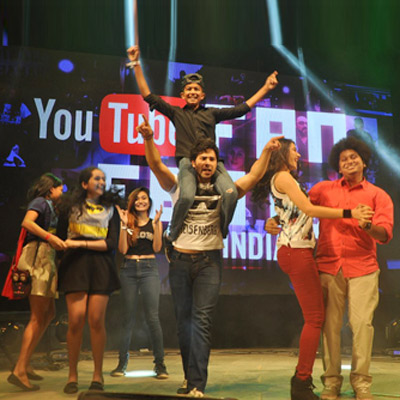
    roar fills the swanky indoor stadium of the National Sports Club of India (NSCI) in central Mumbai. It is followed by screams, and a scampering across numerous rows as hordes of ‘screenagers’ scramble to get a view of a tiny young woman clad in jeans, a T-shirt and a cap worn the wrong way on stage. She opens her mouth to speak, and the screams get even louder. She shushes the audiences, exalting them to allow her to speak, but the decibel levels refused to go down. The pandemonium goes on for three minutes or more with the screeches and screams getting louder.

    But speak she has to, which she does. The 4,000-odd crowd has been waiting to listen to her, get a glimpse of her and her alone for a good four hours.

    “I am so glad to be in Mumbai,” she gushes, amidst shushes targeted at the crowds. “I could not resist it when I was invited once again. I had promised you that I would be explaining what the hashtag #AT2UI means which I had revealed on my Twitter account over this week. Well, let me make the big announcement: #AT2UI is A Trip to Unicorn Island and I am embarking on a world tour with it, beginning with India next month.”

    Before she even finishes making the statement, the crowd goes berserk once again with ecstasy. The screams rise to a crescendo and refuse to die down. “OMG,” says a young thing, six rows ahead of us. “I can’t believe it. She is coming here for a tour. I can’t believe it.” The tears roll down her cheeks and she raises her hand heavenwards, saying ‘Thank you! Thank you!’

    No. No. It is not Madonna on stage. Nor is it Lady Ga-Ga. Nor is it Selena Gomez or Taylor Swift or One Direction. Nor is it a bible thumping preacher or a spiritual Hindu Guru.

    The young lass is Lily Singh aka IISuperWomanII, a 27 year Indo-Canadian, who appears to have surpassed the fan love showered on even Bollywood’s and Hollywood’s biggest stars. This kind of mania was probably something that was reserved for the Beatles in the sixties and seventies.

    Excepting IISuperWomanII is a star born of the digital era. Her fan following is totally digital in origin. She is a YouTube star with more than 5.3 million subscribers. Her Twitter handle has around 847,000 followers, whereas 1.7 million track her on Instagram. Her fans mainly are girls between 8-28, but don’t be surprised if you find a young man of 19 there too. Those are the kind of numbers mainstream broadcasters would love to boast of for their channels. But Lily Singh is a young creator, who is the star attraction at the Second YouTubeFanFest (#YTFF) in Mumbai.

    “Never let anyone tell you what to do or not to do. Be yourself,” she tells the screeching fans at the NSCI. “Go out in the sun, have fun. It does not matter if your skin gets tanned. Whether you are dark or fair. You have to live your life. Not just be a housewife.”

    It’s exactly what young girls; women in India have been wanting to hear. And IISuperwomanII has piped into that desire.

    Others have too. And they have built audiences. The Viral Fever – which started as a branded content creator – today has more than a million subscribers. All India Bakchod (AIB), which flew into controversy and some legal wrangles courtesy a roast it did a couple of months ago, too boasts a following of a million. Prior to that, it was mainstream entertainment companies such as Bollywood producers, music labels, broadcasters, who were attracting viewers on the online video streaming site started by Chad Hurley. T-Series, Star India, Sony Entertainment, Eros, Rajshri were all the rage. But the majors such as Star and Sony pulled out a majority of their content to concentrate on their own streaming apps. T-Series, Eros and Rajshri still have followings running into multiple millions and most of the video consumption on their channels is coming courtesy traditional Bollywood content.

    However, over the past couple of years an ecosystem of independent video content creators is being built up – addressing almost every genre. Kids (through Chu Chu TV), cooking (Vah-Chef), Comedy (SNG Comedy, TVF, AIB, East India Company), Education, Travel, and what have you.

    Of course revenues on YouTube are not something you would write to Mom about. Estimates are that the streaming service is on course to do about Rs 160-170 crore in ad revenues this year. That’s probably what would be just one month’s earning for a general entertainment channel. But with smart phones proliferating and bandwidth rates dropping, video consumption – both in terms of time spent viewing and number of viewers – through outlets like YouTube and Dailymotion is only going to rise. Advertisers no doubt will follow in the hope of catching consumers’ eyeballs. Estimates are that YouTube revenues will likely skyrocket to about Rs 1,500 crore by 2018.

    And of course who else will benefit but independent content creators. Estimates are that PewDiePie – the world’s top YouTuber with 35.5 million subscribers to his gaming channel – takes home about $4-5 million a year. Along with it come endorsements, live gigs, and of course superstardom status.

    But most of the YouTube stars started their video journeys with very basic gear, filming with their computer cameras, or digital cameras or even their smart phones. For edits they used Windows movie maker or iMovie, self-learning to use Adobe Premier Pro or Apple final cut pro.

    “My first videos were done with simple video cameras,” says Bethany Mota, who has more than 8.4 million followers on YouTube in just about six years since she uploaded her first video. . “And I kept waiting for views. I remember how excited I was when I touched 100 views for my videos.”

    Mota has a super following in India too. At the YouTubeFanFest, she probably drew the second highest cheers after IISuperWomanII.

    Standup comic Abish Matthew in fact did a sketch during the YTFF about the difficulties that YouTube stars face, especially in terms of getting their video blogs online. “You film, you edit and then you wait for the video to render. Time goes by. Then you wait to upload, you wait and wait and wait. The bandwidth here is limited. And then you wait for the views to come in. You wait and you wait,” he said.

    AIB, on its part, believes in producing videos of high quality. “We love to experiment with cameras and with great equipment,” says Gursimran Khamba.

    “We want our videos to be of a particular standard and even though it is all about the content, we also want it to look good,” adds Tanmay Bhat. He further says that there are ways to get your videos done cheap and cheerful, yet maintaining quality. “We reach out to our friends, acquaintances who then help us reach out to the talent we want to work on our videos,” he says. “And then we request them to work with us at low or almost no budget. We find they are willing to do it. Then there is talent available in media colleges in every city, who will work with you just to get the experience.”

    Most of the YouTubers believe in communicating with almost everyone messaging them on their social media and video posts. “I respond to almost everyone I can online,” says fashion icon Scherzarde Shroff. “I like to connect with them.”

    IISuperWomanII was at her hyperactive best through her handle on Twitter before the YouTubeFanFest giving away free VIP passes to the event and messaging her followers, thanking them for their following her. While initially it was only she who did it, these days it is teams who share that responsibility.

    But some like Rohan Joshi of AIB talk to their followers directly – a couple of the YouTube stars call their followers as friends – even today. “I like to put out what I want to myself. It reflects who I am,” he says. “I have a social strategy: I need two types of followers – those who agree with me and those who don’t. For every two people who agree with me, I need one who does not. That allows for healthy debates and conversations whenever I post something on Twitter.”

    The Viral Fever – run by Arunabh Kumar – began by making branded viral digital video content for clients such as Airtel, Flipkart, Colgate, Head and Shoulders – today boasts more than a million subscribers on YouTube, becoming the first independent original content maker outside of Bollywood to cross that landmark. Its parody of Times Now’s Arnab Goswami’s ‘The Nation Wants to Know’ has attained online cult status. And that was followed by India’s first fictional web series Permanent Roommates, which was funded by commonfloor.com.

    “Working with brands has helped us develop another layer of revenue for the company, which has allowed us to go further,” says Kumar . In fact, the TVF’s viral work has led to the company getting work on television too with a show on Bindass and numerous promos for TV channels.

    Kumar says that he and his team are careful about their creative freedom when working with brands on videos. “We value our independence and our clients trust us,” he says. “We know how to engage with our audiences, and brands rely on us to do that as long as we keep their messaging in mind.”

    In fact cola giant Pepsi has taken to YouTube in a big way. As part of its global Pepsi Challenge campaign, it has launched a ‘Crash The IPL’ initiative wherein it has asked consumers to shoot a 30 second ad film showing their love for the beverage. The entries have to be uploaded on youtube.com and the link submitted to www.crashthepepsiipl.com. These will be judged, and finalists chosen, entitling them a cash award of Rs 100,000, VIP tickets to the IPL matches, and the winning ads will be aired on TV between 8 April and 24 May 2015, replacing the agency created ads.

    Pepsi has also partnered with the Singapore based Music Matters festival for its Music Accelerator Programme. As part of this, a band or an artiste from India will be flown to Singapore to participate in the Music Matters Conference, be mentored at the Music Matters Academy and also perform at Music Matters Live to an audience of about 8,000. Music Matters’ Indian partner for this initiative is Pepsi MTV Indies.

    “Most of the great creative work, which has come on air is when we were having fun,” says PepsiCo India senior director market social beverages Ruchira Jaitly. “We want creators to have fun too and create ads for us. And that’s what’s extremely exciting for us.”

    YouTube, on its part, believes that 2015 is going to be the year of India on the online streaming network. Says YouTube’s David Powell, “We believe that Indian creators are going to break out this year. The time has come.”

    YouTube director global content operations Sara Mormino adds, “We are eager to work with newer Indian creators and who knows… another superstar like PewDiePie might emerge from India. India is a very vibrant young country.”

    Towards this end, it conducted its second Academy in India in mid-March, organsied the YouTubeFanFest in partnership with Branded, which was attended by Indian creators and thousands of fans. And it is also organizing workshops with different communities like ad filmmakers, schools and TV producers. 

    To its advantage is the fact that it has first mover advantage in this space. Star’s hotstar.com is only carrying its own content and it has managed only 10 million or so downloads. Others such as Dailymotion.com are just about getting its feet into India. And Reliance Jio – which is developing its own streaming app – is some time away.

    Keeping that in mind, YouTube.com might well become the Indian consumer’s own content tube.

  • Centre’s opinion sought on YouTube uploads; notice issued on AIB case

    Centre’s opinion sought on YouTube uploads; notice issued on AIB case

    NEW DELHI: The Bombay High Court has asked the Information and Broadcasting Ministry’s opinion on the screening mechanism of YouTube uploads.


    This followed a public interest litigation (PIL) against the AIB Roast programme by law professor Sharmila Ghuge, who sought guidelines for a screening mechanism to keep a check on obscene and vulgar videos uploaded on YouTube.


    AIB (All India Bakchod) filed an intervention application in the matter. “We oppose this petition. It was a humorous show for a private audience. None of the private audience found it offensive. The language was excessive, but within the bounds of humour,” AIB’s senior counsel Mahesh Jethmalani told the division bench of Justices V.M. Kanade and Revati Mohite Dere.


    The court admitted the intervention plea. AIB will file a reply, if any, to the petition within the next two weeks. The Union of India too has been directed to file its opinion within two weeks. The court will hear the matter next on 3 March.


    Along with the PIL, the petitioner also submitted a copy of the CD about the programme, which was conducted in Mumbai in December last year. Its videos were uploaded on YouTube later. The petitioner also transcribed the excerpts of the show, and told the court that the content was objectionable.


    When the court said that only those who are defamed can file a defamation suit, Ghuge’s advocate Shyam Dewane said, “This (programme) has crossed the limits of morality. The language used is such that it crosses the limit of decency. It is obscene to the core, and it particularly affects the minds of the youths.”


    In the PIL, Ghuge said, “Whereas, the film stars have made a deliberate attempt to lower the dignity of women by showing their insensitive attitude towards the most heinous crime of rape by passing several jokes on rape and gang rape enjoying the flavour of humour for the most unfortunate act any women can ever face in her life. Not only this, cracking jokes on gays, race, rape, ebola and making homophobic jokes is an absolute insult to not only to women but all the individuals.”


    She has said such remarks will adversely affect the youth of the country. “That such a rapid augmentation of audience to this video is unquestionably aiming to adversely affect the youth of this nation. Particularly the sway and influence of these film stars is beyond imagination on the youth. These celebrities are youth icons and the young generation blindly follows them which indeed is misleading and disgraceful for the nation in such incidences.”


    Dewane said there was need for a mechanism to filter out vulgar and obscene videos from YouTube. The court thereafter sought Union government’s say on the matter.


    “That the video of the AIB show, which has been uploaded on 28 January, 2015 has not been verified by any of the authorities, whether the content of the video is suitable to be thrown open to public at large. The said video has been uploaded by the organisers of the AIB show as evident from the titles of the video. Neither the organisers nor the respondents felt the need and importance of verifying the content before putting the video on air, which needless to state has gone viral amongst people, more particularly youths,” the PIL has stated. 

  • AIB roast controversy exposes holes in Indian democracy

    AIB roast controversy exposes holes in Indian democracy

    W H Davis started his poem ‘Leisure’ by saying, “What is life if full of care, we have no time to stand and stare.” Is India today becoming too careful? Is satire losing its relevance in the nuclear dominated world? A caricature of a religious figure results in brutal decimation of creative journalists and an innocuous comical piece gets scrutinized by the entire law making fraternity. What’s next?        


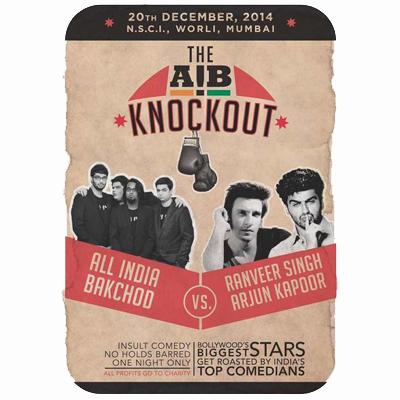
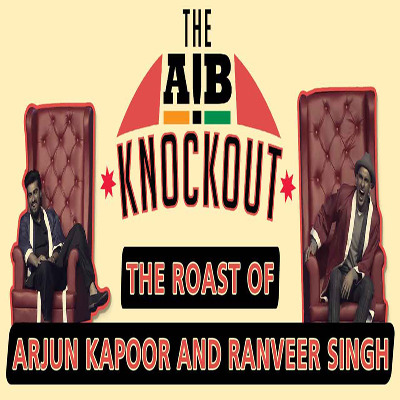
    All India Bakchod (AIB), India’s online comedy producers’ recent piece called ‘Knockout’ has irked the sentiments of many lawmakers and resulted in legal investigations. The entire performance was staged for a gathering of 4000 people in Mumbai, which included Bollywood celebrities like Soni Razdan, Deepika Padukone, Alia Bhatt, Sonakshi Sinha and Anurag Kashyap amongst others. All was well till the group uploaded the video on YouTube. In a span of hours the video went viral garnering millions of hits and started trending on social media.


    The video starts with a statutory warning, where it clearly defines itself to be an adult product, Karan Johar starts the video by saying, “It is going to be filthier and if you get easily offended or even hardly offended you should leave right now.” The content of the comedy orchestrated by the group was indeed derogatory; they were making fun of whoever they wanted to, irrespective of their status and position, cast and creed.


    Soon after the video went viral an unusual scenario developed on Twitter, wherein two hash tags started trending – ‘We stand for AIB’ and ‘AIB National Shame.’ Various dignitaries from different profession started tweeting their opinion.


    Maharashtra Chief Minister Devendra Fadnavis ensured an enquiry into the same even as series of FIRs were filed against filmmaker Karan Johar, actors Arjun Kapoor and Ranveer Singh, who participated in the show. Eventually the video was taken off YouTube by AIB. “Have taken down AIB Knockout for now. We will speak soon” is what AIB uploaded on its Twitter handle.


    Tweets and opinions from respectable public voices made the issue a substantial debate, supportive gesture came from journalist Barkha Dutt as she tweeted, “Show of AIB Roast (I am yet to see) pulled down. Shireen Dalvi hounded. Perumal silenced. Wah India. World’s largest democracy.”


    Film maker Pritish Nandy was also supportive of the comical presentation as he tweeted, “I support the AllIndiaBakchod roast. We need more such. Those who disapprove need not watch them.”


    Balaji creative director Nivedita Basu threw light on the issue of freedom crisis of a writer. Speaking to Indiantelevision.com, Basu said, “The freedom of a writer has gone for a toss in India. It was very sporting of Ranveer and Arjun to volunteer in something like this and also whoever they were digging at and making fun of were present in the audience. We keep comparing Indian comedy with the western roast where they make fun of one and all and at the end of the day, it’s all satire. Though I think a few extra abusive words could have been avoided, the fact that legal investigation has been called for even though the show was not aired on television where one has to practise censorship, is a bit of an exaggeration.”  


    If we have freedom of expression, can we express whatever we want, if not, then who draws the line? Are we getting overdriven by the thrive for popularity? Is YouTube safe to be left uncensored? Is India ready for toilet humour? These are the relevant counter questions that made the debate interesting.


    Among the flurry of tweets, prominent filmmaker and Censor Board of Film Certification (CBFC) member Ashoke Pandit’s tweet got a lot of brick backs. He tweeted saying, “Karan Johar could have easily shown his position while performing sex to his mom at home instead of making it public.#AIB Porn Show.” The tweet resulted in huge controversy and was criticized by all throughout.


    When questioned about his tweet, Pandit didn’t deny his words. Justifying his tweet he told Indiantelevision.com, “Insulting or hurting someone’s emotion cannot be a freedom of expression. We have huge admirers of Karan Johar and I am among them. He is someone who has always portrayed family unity and family drama on the big screen and people love him for that. How can he show his sex position in public? What if tomorrow all his followers start doing that on the middle of the road? I would have been least bothered if Karan, Ranveer or Arjun were not there, the fact that they were present the episode became a matter of public discussion.”


    He added, “I am against banning of things but abusing Farida Jalal or Reema Lagoo is not satire… satire is R K Laxman, satire is Sharad Joshi. And Maharashtra Government is equally responsible for what has happened. Before giving the auditorium they should have enquired what is going to happen there. Why are they proposing a probe now, when they didn’t do anything while it was happening?”


    Award winning writer Gajra Kottary opined, “We as a country are still not ready for such content. During award shows, we see hosts making fun of the audience present in the auditorium, they are humorous and they are understandable. But involving veterans like Farida Jalal, who gave a huge part of her life to the industry is highly derogatory and cannot be tolerated. And frankly speaking I am not a very big fan of toilet humour and we need to understand there is a big world beyond sex.”


    When raised the point of the content being available only on internet, she stated, “That’s the worst part, it’s not censorable and easily accessible. Youth admire Karan as a film maker and many idolize Ranveer and Arjun, hence the youth will repeat what they are doing.”


    “I won’t be surprised if actions are taken against them, they must not be jailed but a lesson needs to be taught, and intervention to the freedom of expression in these circumstances cannot be termed as a violation to Article 19 of Indian Constitution,” added Kottary.


    Celebrity writer Chetan Bhagat was found on a contradictory ground. While his first tweet read, “Frankly the potholes on Mumbai roads offend me more than the AIB roast.” This was followed by, “I don’t support hounding of people who make dirty jokes. But that doesn’t mean I find making dirty jokes cool. Clean humour is always greater than dirty humour.”


    Others on social media, came out in full support of AIB. Ship of Theseus director Anand Gandhi tweeted, “I hope our humour gets sharper, our dissent more rigorous, our satire more offensive — and till we arrive there, we stand by AIB Knockout!”


    Alia Bhatt, who was the butt of some of the jokes on the AIB Knockout roast, tweeted, “Some ‘not taking life so seriously’ lessons are needed. DESPERATELY!!!!”


    There were speculations if AIB removed the video by getting scared of the situation and if they did they should not have uploaded it on a public platform in the first place. But AIB in one of its official statement denied the speculation of being pressured. The statement read, “First things first; no one person or force forced us to take this video down. This is not something that’s happened because of a 3 am phone call or a morcha at our front door or a gunman on a grassy knoll. Under the circumstances, this is us being pragmatic.”


    AIB went on to say that their attempt to push the envelop of comedy in India backfired. “Things got to a point where people who have supported us, people who work hard to make what we do come to life, were put in a position where things could get deeply unpleasant for them. And that’s a problem. We can live with abuse, hate, anger, fury, rage, ignorance, bigotry and perhaps even bullying. But we don’t want anybody to get hurt because of us. And we do mean anybody,” AIB said.


    While one can understand these sentiments, the removal of the videos, however does announce the defeat of ‘We Stand by AIB Knockout’ supporters. Also a point to be noted here is that AIB’s decision to remove the videos came without any verdict or pressure from the judiciary. It seems as if moral policing has once again reared its ugly head in the country and this time round a bunch of celebrities and comedians have been the targets. In a way, it does mark the defeat of democracy and the victory of gunda raaj.


    Responding to the outrage over the AIB roast, Karan Johar tweeted, “Not your cup of tea…don’t drink it!!!” And that just about sums it all up.


  • YouTube 2014 Rewind: Year of Bollywood stars

    YouTube 2014 Rewind: Year of Bollywood stars

    MUMBAI: 2014 is winding up and YouTube has already given us its top trending videos of the year in India. Videos that people chose to watch repeatedly, shared and made them the most popular ones of the lot.
    This year seemed to be the year of Bollywood celebrities, embracing YouTube as a means to connect with fans, do something madcap and establish their positions as youth icons. Whether it was the ice bucket challenges or film promotional strategies, celebrities have greatly benefited from YouTube in 2014!

    Taking the top spot with over 8.8 million views is the episode of Comedy Nights with Kapil which featured sultry adult movie star Sunny Leone and producer Ekta Kapoor promoting Ragini MMS 2. Not surprisingly, Leone’s music video “Baby Doll” is also graded by YouTube as the top trending Indian music video of 2014 with nearly 40 million views. 

    Alia Bhatt made a stellar debut on YouTube this year when she paired up with All India Bakchod (AIB) and made the hysterical “Genius of the Year” mockumentary which garnered over 6.8 million views. That is not all – Bhatt’s unplugged version of “Samjhawan” highlighted her singing capabilities and increased curiosity for the film, Humpty Sharma Ki Dulhania. The video was watched by more than 16 million people.


    Closely following Bhatt and Leone’s popularity meter on YouTube is Bollywood actor Ranveer Singh. As part of the promotion for his upcoming movie ‘Bang Bang’, actor Hrithik Roshan dared Singh to a challenge on the streets of Mumbai. In his usual feisty spirit, Singh danced to the popular “Main Aisa Kyon Hoon” in the Krissh get up.  His fanatical “Bang Bang Dare” video acquired over 3 million views.  
    2014 also saw innovative and effective content that sought to entertain the audience while at the same time, sending out valuable messages to the viewers. For instance, Nestlé India’s “Good food, Good Life” advertisement, which ranks in the top 10 trending videos of India with over 6 million views, is truly a moving commercial that teaches us the joy of sharing. The public service announcement video entitled “SeatBelt Crew” received close to 4.7 million views.  The unique concept featured a group of transgenders delivering a lesson in safe driving that motorists will carry for the rest of their lives.


    Independent video creators like The Viral Fever and AIB, also took YouTube by storm this year with their spoof parodies and original content.  Their popular videos “Bollywood Aam Aadmi Party – Arnab’s Qtiyapa” and “Nayak2: The Common Man Rises” attracted over 4 million and 3 million views respectively.


    Other trending YouTube videos In India include Aap Ki Adalat’s episode feature Narendra Modi with over 4 million views, “Lion shows tourists why you must stay inside your car”, “Top 50 English Nursery Rhymes” and “Wheels on the Bus”. Amongst the music videos, “Chaar Botal Vodka” featuring Yo Yo Honey Singh takes the second most popular spot with over 28 million views. This is followed by “Tu Meri” from the movie Bang Bang, Rahat Fateh Ali Khan’s “Zaroori Tha”, “Yaar Naa Miley” from Kick, “Tune Maari Entriyaan” from Gunday and “Jumme Ki Raat” from Kick.

  • The Content Hub: Education in comedy doesn’t exist in India

    The Content Hub: Education in comedy doesn’t exist in India

    MUMBAI: With the soaps and dramas ruling the Indian television screens, comedy to some extent has taken a backseat. A session on ‘Comedy Fix’  moderated by Indiantelevision.com’s founder, CEO and editor in chief Anil Wanvari and panellists Neela Telefilms director Asit Modi, Optimystix Entertainment producer Vipul D Shah and All India Bakchod (AIB) co-founder and member Tanmay Bhat sought to find if the TV industry is seeing a dearth of writing talent.

    Modi said that in the field of comedy there is not only shortage of writers but producers as well. “Our industry is not ready for new writers. We have a closed mindset when it comes to new writers and tend to only work with a particular set of experienced ones. We don’t give an opportunity to explore,” he said.

    Bhat went on to reason why new writers are not accepted by the industry and what today’s writing lacks. According to him the current state of television writing is very generic. “Right from actors to producers to writers, I have seen ‘just-get-it-done’ kind of attitude where originality doesn’t matter but copy pasting does.  In my early days, when I used to meet television writers  one common thing that I noticed amongst them was that they all had a set pattern of writing in a number of shows,” he elaborated.  

    All the panellists felt that in today’s time everything is scripted and agreed that the attitude towards writing is very poor which needs to be changed.

    Shah highlighted right from the beginning there were no new writers created for TV but the ones making the films ended up writing for the small screen too. According to him, it is difficult to get innovative story writers because it is demanding. “Today, television writing, whether fiction or non-fiction, has a set of dos and don’ts because a channel can demand a change in the plot anytime and we as writers have to be also on our toes to fix it.”

    He went on to say that western formats can never be adopted in India. “Our humour is completely different from the genre abroad. We can’t present dirty comedy here because it will never be accepted. So, to bring the humour, which can be accepted by Indian audiences, we have to create our own talent, which is again very difficult.”

    According to Modi, whose Taarek Mehta Ka Ooltah Chashmah has been running successfully for more than six years, writing a daily comedy is not only a challenge but a task. It is not only the writer’s responsibility to make the show going but the entire teams. “You not only need a good writer but a good performer also. And after getting a good performer/actor, one needs a good producer who can bridge the gap.”

    Showing the silver lining in the cloud, Bhat said that thankfully now humour has started getting the respect it deserves. According to him, comedy education doesn’t exist in India. “We compare ourselves to the shows in the US. But we also have to look at the kind of education and training they have gone through. All writer/comedians one sees in their shows have all gone through a certain level of training. This doesn’t exist in India.”

    The panellists agree that Indian television has always accepted family comedies and this is what will continue in the future as well. From shows like Dekh Bhai Dekh to Khichdi to Sarabhai vs. Sarabhai, they all have catered to the masses.  

    Is there fatigue coming in comedy? “No, not at all,” said both Modi and Shah. “There will be always space for comedy. Shows like Comedy Nights with Kapil, Comedy Circus, are making everyone laugh today. And everyone loves to laugh, so comedy is and will always be audience’s first choice,” added Modi.

    Wanvari further delved to find out that apart from family comedies if there is a room for sitcoms on television? “It will change, because comedy has just started its journey.  I am seeing a lot of scope as more comedy channels are being launched. In comedy more than the story, character development is important. So once the characters are developed, the task will be simple,” said Modi.

    According to Shah, whose Comedy Circus ran for seven and half years, a show never feels the fatigue. “Yes, at times a few episodes works and a few don’t. Comedy sometimes backfires as well. But overall as a genre, there is no fatigue coming in,” he further said.

    Coming from a digital background, Bhat feels that television needs to start catering to the youth a lot more. “They are still catering to the families and not the youth. So, young people will stop watching television at some point of time unless channels keep re-inventing.”

    As for Bhat, re-invention should start from the writers’ room. “I don’t see enough young people picked up from the colleges and groomed. It is essential to grab someone at 16 and groom them to get good comedy in place. Any college kid would want to write for television but there are no platforms.”

  • YouTube is the platform to be on, says AIB’s Tanmay Bhat

    YouTube is the platform to be on, says AIB’s Tanmay Bhat

    MUMBAI: The 6th edition of MixRadio Music Connects provided a pivotal platform for the discussion of Indian multi channel networks (MCNs) and how YouTube has helped artists in building a strong viewership, new content and audiences.  When it comes to MCNs, India has a large digital video market and the younger audiences today are more likely to watch digital videos than television.

    Moderated by Music Matters president and Branded co founder and CEO Jasper Donat, the panelists included All India Bakchod (AIB) co founder Tanmay Bhat,  Qyuki Digital Media co founder and managing director Samir Bangara, Ping Network co-founder and director Rajeshree Naik,  Digital Quotient (HT Media) business head entertainment Parmeet Lamba and YouTube India head of content operations Satya Raghavan. The session discussed the advent of MCNs and the rising players who are creating content online.

    As the co-founder of one of India’s leading YouTube channels, Bhat spoke about how it all began for him. He said, “Well, we began as a comedy podcast and then sometime last year, we started doing sketch comedy on YouTube. Our YouTube channel became the fastest growing channels in India. We now also make content for brands”.   

    Raghavan expressed that he was delighted with the fresh content emerging on YouTube. He commented, “Earlier, I used to only watch YouTube for movie trailers but all of a sudden I am finding myself watching unique content on channels like AIB. It’s truly been a fascinating year for YouTube”.  

    Speaking of the business model of YouTube, Raghavan further elaborated, “YouTube is platform where you see online videos. Advertising is our primary source of revenue and we share more than half of that with the creators”.

     
    Bangara added on the role of MCN in today’s market, “We are like the new-age label. We do what record labels did for musicians in the traditional market. Today, you do not have to be in a bar to discover new music talent. YouTube does that for you”.

    Talking about the rise of MCNs, Donat pointed out, “This is an area where there is some serious money. Companies are being bought for hundreds of millions of dollars. One of the biggest MCN deals had Disney acquiring Maker Studios for $500 million plus $400 million earn out”.

    Bangara responded, “We are in the broadcast network creation space and monetization on that is two-fold. Ad monetisation on YouTube is not sufficient. As a MCN, we bring a lot of branded content to the table. We take talent, package them and promote them to brands. Our business model is a mix of brand monetization as well as CPM ad monetisation”.

    Naik agreed with Bangara and further added, “This business is eventually going to be based on relationships. The technology platform is YouTube but the MCN is purely a service business. It’s all about understanding the ecosystem and helping the artists benefit”.

    Parmeet Lamba commented, “It is also important that we help individual artistes in monetizing and distributing their content.  In the regional space, a lot of Punjabi music has been coming up. We build talent and they become popular. There are a lot of deals and collaborations happening in the market. A lot of brands are approaching us to feature their products for the artists’ next videos. The brands offer to sponsor these artists. And with the gained popularity, these performing artists get more live gigs”.

    Elaborating on how YouTube helped him in his popularity meter, Bhat said, “When we attended the YouTube fanfest this year, it was a very overwhelming experience. People were watching us on their phones. It was a different level of engagement altogether. YouTube is the platform to be on!”

    Adding on to that, Raghavan added, “There are a lot of cover singers who are becoming popular. We also get to see original content in the music space. Being on YouTube definitely gets you more gigs and it is an amazing platform for the common man to express himself. However, one needs to constantly put up content. Fans love to see the passion you have for your craft and the engagement level needs to be high. The creator needs to be disciplined and also focus on interacting with his or her fans. 2015 is going to be the year of music!”

     While speaking on the potential of YouTubers breaking into the mainstream music scene, Naik opined, “If you were a musician about 20 years ago, you would have sung for about 5 years and then made a video. Today if you want to be a musician, you need to begin with the video. Today, you have that platform that can help you get noticed. That pretty much sums up why digital videos are so important for musicians”.