Tag: Alibaba

  • UK’s MirriAd concentrates on India after striking video ad deal in China

    UK’s MirriAd concentrates on India after striking video ad deal in China

    MUMBAI: Television or online viewers react badly to having their shows interrupted with ad breaks. They are uncomfortable when a battery of ads interrupts, also owing to the resurgence of high-value content.

    A UK-based advertising company may soon enjoy the first fruits of a significant video streaming deal (VoD) with a group owned by Alibaba, the Chinese technology giant. The company MirriAd has now concentrated its efforts on the US, Brazil, Germany and India, but without signing up clients in the UK.

    MirriAd is working with Alibaba after striking the deal with Youku, the Chinese streaming platform (OTT), which the Alibaba’s Jack Ma bought for around $4 billion.

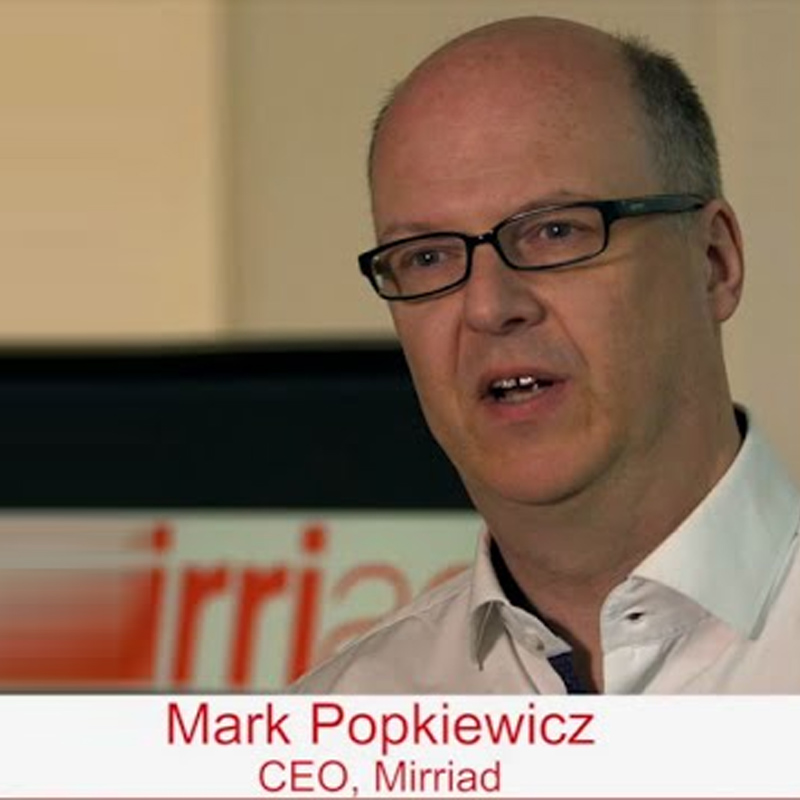
    Mark Popkiewicz, the CEO of MirriAd, which hired Google’s Bharat Vijay Zende as its general manager – India in July 2017, said the company was formed in response to the explosion in quality online television programming.

    Mirriad, together with Alibaba, has announced the launch of native-in-video advertising (NIVA) CPM in China. Tangeche is the first brand to run a NIVA CPM campaign with Alibaba/Youku and Mirriad.

    Youku viewers may soon be seeing programmes with brands, such as a realistic soft drink can on a coffee table, superimposed or digitally inserted episodes by MirriAd, in which India’s ZEEL wrote off its Rs 330 million investment in August 2016.

    Running until January 30, 2018, the Tangeche campaign features signage and product ad unit insertions using the brand’s mascot. The first flight will cover approximately 300-500 episodes of a variety of dramas and variety/reality shows. The campaign will be managed for viewability and verification in partnership with third party tracking.

    Tangeche parent Hangzhou Souche Automotive Services VP Chen Qi said, “Besides cost-effective brand exposure, Tangeche attracted the attention of younger users, and communicated a new way for buying cars, thanks to its subtle messaging in scenes that featured urban mainstream working and living.”

    Mirriad MD – APAC Mike Rees says: “As a brand that typically purchases OOH, Tangeche is utilising NIVA as a supplement with powerful ad tech and tracking capabilities that feature high quality integrations that deliver high relevancy, reach and efficiency.”

    Alibaba Digital Media & Entertainment Group – Youku COO Shen Wei said, “Advertisers can now leverage hot IPs for increasing brand exposure and enhancing brand association, as well as generating more opportunities for content marketing.”

  • Martin Sorrell on how WPP is combating ad world slowdown

    Martin Sorrell on how WPP is combating ad world slowdown

    MUMBAI: It’s been sometime that we have got to listen to advertising heavyweight and guru Martin Sorrell’s unique insights. For those who have missed him, he’s still at his vintage best. The WPP CEO shared his worldview on what’s impacting the advertising business and how the industry is combating with the slowdown in a fireside chat with Goldman Sachs analyst Lisa Yan at the 26th Goldman Sachs Communacopia Conference held last week.

    Sorrell pointed out that the advertising industry has been generally  going through a slow growth-pace for a while now, though it has seen some upward movements for a short period. The reasons: low-economic growth, low-inflation, very little pricing power, and focus on cost, amongst clients. “That’s been tolerable, certainly up until, I would say the end of 2016,” expressed Sorrell. “What we started to see, a little bit of softness…certainly in Q4 of last year.”

    What caused this slowdown? Sorrell gave at least three hypotheses that could have contributed, and could continue to do so, and industry will have to have adequate responses to them.

    The first being consulting firms who have been looking at generating cost savings for bottomline-focused corporations, and the first expense they have been scratching out is advertising.  

    “I think you can build the case, so that consultants, it’s not just an Accenture or Deloitte or BCG or McKinsey or Bain, go into client and say you’re spending too much money generally, your costs are too high, we’ll see if we can do something about it, and that fans out from there,” said Sorrell.

    The second hypothesis is that increasingly agencies and brands have been diverting spends towards Google and Facebook. “Google and Facebook have become significant  destinations… we are the most significant customer with  the two – on behalf of our clients,” he said. “If Google was $5 billion, Murdoch $2.25 billion and Facebook $1.7 billion last year, this year the figures are Google $5.5 billion-$6billion, Facebook $2.5 billion, and Murdoch $2.25 billion.”

    Sorrel labeled the two digital giants as frenemies, though he acknowledged that they have become friendlier than last year, especially Google.

    The third hypothesis – which he called the most plausible reason for the impact this year – “is that in an era of cheap capital, a zero cost — or close to zero-cost capital, there are pools of capital which fund zero-based budgeting approaches or private equity activist approaches that are putting tremendous pressure on particularly packaged goods companies,” said Sorrell. “Their approach has get rid of R&D spending, get reduced marketing spending and its running across sectors…Beyond tech and pharma, top-line growth is very hard to come by. And, I think that’s the central issue. So, as long as there’s cheap capital, as long as there is this very significant pressure of a zero-based budgeting and an activist later, you’re going to see pressure.”

    Sorrell does not expect the era of cheap capital to go away quickly thanks to Hurricane Harvey and the tragedies in Houston and Florida. “The results of this is indices rise, the fed probably is going to keep interest rates down lower longer,” he expressed.

    WPP has been responding to these challenges, he pointed out, through what it calls horizontality – basically integrating the  company in a much more aggressive, seamless, efficient manner.

    The second response has been zooming in on the high growth markets of Asia, Latin America, Africa, Middle East and central and eastern Europe. “That continues. That’s a third of our business; it continues to be a high level of focus,” he said.

    WPP, has got a razor sharp eye on digital which is 40 per cent of its business. “It is very much in the target range that we identified three, four, five years ago. It doesn’t stop at 40 per cent, 41 per cent, which it was in the first half of the year; it has to go beyond that, so probably to the extent where ultimately everything is permeated in one way or another by digital. But that’s some way off, but getting closer,” highlighted Sorrell.

    “Making data, the centre or a significant part of the centre of what we do is critically important, particularly when you have disintermediation in retail from the likes of Amazon or Alibaba or Tencent or JD.com or others where the battlefield will ultimately be about who controls the data,” he added.   He, however, mentioned that the growth of data has not been as good as the industry would like to see it but that doesn’t diminish its importance in relation to horizontality.

    Sorrell expressed his worry that what’s happening in the packaging goods industry could have worrying implications as a whole for the ad business.

    “My hypothesis would be that cheap money is chasing packaged goods and driving up the valuations. And those last three quarters, if you look at revenue growth at 2.4 per cent, it’s mainly price, very little volume. And those of you know how packaged goods companies function know that the moment the volumes stutter and stagnate or even fall, which is the case with a number of packaged goods companies, the trouble starts. If you have fewer consumers, fewer customers,  that’s when the trouble starts. So, I come back to this, and it’s fundamental obviously, it’s our lifeblood, I come back to this thing that investing in innovation and brand is key, and that’s the heart of it,” the WPP chief elaborated.

    WPP has lost out on a lot of business (AT&T and VW) in recent times, and Sorrell stated that competition will always stay but it’s a question of price. “I’ve never heard any of our people say to me it was because we didn’t do a good job, they’ve always said it’s because somebody else discounted and we lost the business on the basis of price. Sometimes, that maybe the case but I think mainly it’s due to the qualitative side of the offer. But, I think we’ve got our act together much better on integration,” he added.

    Google is the biggest destination for WPP’s media spend for their clients. “It is by definition currently the most powerful media channel that you can find, search being the primary product. Boycotting that, not accessing it, I think is a mistake. Working with Google to improve the way that they manage the process is the way to go,” he said.

    Sorrell also mentioned that WPP will be changing its regional management approach encouraging more integration on shared client work across agencies. “Well, with the growth of technology, with the rise of the BRICs — Brazil, Russia, India and China should not be regional reports, they should be direct to the center. Even if that upsets regional managers,” he quipped.

    He said that he saw Amazon becoming a very serious threat to Google on search with 55 per cent of product searches in the US  emanating from it. “Amazon now has a voice activated device. Every one of the Fearsome Five has a voice activated device. What that means for brands is very serious.”

     

  • Govt steps helping APEJ STB market, global sales may expand at 7.5pc CAGR

    Govt steps helping APEJ STB market, global sales may expand at 7.5pc CAGR

    MUMBAI: Owing to increase in penetration of television and TV services within rural areas as well as urban areas, the set-top box market will receive a boost all across the APEJ region. Disposable incomes are on a rise in India and China, and this is helping the set-top box (STB) market turnover to grow, according to Reportlinker study. In China and India respectively, governments have taken initiatives to focus on HD pictures, HD channels and decline in TV prices. This has led to the growth of the set-top box market in the APEJ region.

    The global set-top box market is estimated to be valued at US$ 22,269 million in 2017 and is projected to reach US$ 46,091 Mn by 2027 end. Sales revenue is expected to increase at a CAGR of 7.5 per cent during the forecast period (2017–2027), the Reportlinker report added.

    Increasing demand for TVs from rural areas boosting the set-top box market in the APEJ region: Due to increase in penetration of television and TV services within rural areas as well as urban areas, the set-top box market will receive a boost all across the APEJ region. In the Asia Pacific region, consumers are more aware about the features, quality and pricing of the set-top box, helping the market achieve greater growth and acceptability.

    Increasing demand for IPTV STBs is fuelling the market for set-top boxes in North America: Increasing demand of 4K TVs is expected to provide support to the growth of the set-top box market in North America. It has been observed that the demand for IPTV based services has increased by 12 per cent and operators are viewing IP-based services as an opportunity to differentiate their products. IP transmission recording features and higher storage specifications are anticipated to support steady revenue growth of the North America set-top box market.

    Domestic production and low-cost products hampering the market growth in APEJ: In the Asia Pacific region, domestic production of set-top boxes by local companies is leading to an increase in price competition with global set-top box manufacturers. Emerging companies are acting as competitors to the established players in the market, thus making the smooth operation of this market difficult.

    Focus on HD videos and powerful interfaces with technology a growing trend in the global set-top box market: It has been observed that set-top box vendors are focussed on supporting devices that enable seamless rendering of high-quality video on a powerful user interface and set-top box vendors have started manufacturing operation systems and app based set-top boxes. The global market is moving towards the 4K android customised set-top box and smart set-top boxes. It has been observed that in the past few years, set-top box manufacturers have shipped a large number of 4K set-top boxes in the APEJ region, and consumers are more aware about the technology and features of set-top boxes in this region.

    Flexible policies and government support encouraging the use of set-top boxes in the APEJ regional market: In November 2015, the Chinese government banned 81 third party apps that allow users to turn television sets into internet streaming devices. The Chinese State Administration of Press, Publication, Radio, Film and Television proposed a rule for governing set-top boxes. In China and India respectively, governments have taken initiatives to focus on high definition pictures, towards HD channels and decline in TV prices. This has led to the growth of the set-top box market in the APEJ region. Manufacturers in this region have also utilised e-commerce retailers such as Alibaba, Ali Express, Amazon, Flipkart etc., and this has propelled the growth of this market.In terms of value, the North America set-top box market is projected to be the most attractive regional market in the global set-top box market during the forecast period

    However, the APEJ market is also poised to register high Y-o-Y growth rates throughout the forecast period. In terms of value, APEJ is anticipated to register a CAGR of six per cent during the forecast period. In 2016, the APEJ market was valued at US$ 6,067.4 Mn and is expected to witness sustained growth in terms of revenue throughout the forecast period.

  • Alibaba enters Indian internet space with investment in ticketing

    NEW DELHI: The Chinese infotainment giant Alibaba Group’s entertainment arm Alibaba Pictures Group Limited has invested Rs 1.2 billion to acquire a majority stake in Chennai-based online ticketing platform TicketNew.

    This will enable TicketNew to strengthen its position and expand its services across India.

    This is Alibaba Pictures’s first acquisition outside China in internet ticketing industry.

    TicketNews presently has around 3,000 screens in its network across India with an average ticket booking history of 100.000 per day, it is learnt.
    With the partnership in place, the company hopes to take its network to cover 300,000 in the next eight months, the source added.

    TicketNew Founder Ramkumar Nammalvar while TicketNew has a strong base in the South, especially in the neighbourhood theatres in tier-II and tier-III cities, it does not have much presence beyond that.

    Nammalvar said the company wanted to reach wider audience and expand to other cities, which requires substantial financial and technological resources.

  • Digital ad investment will surpass TV in five more countries: GroupM’s Interaction 2017

    MUMBAI: GroupM has published Interaction 2017, a state of the union assessment of digital advertising worldwide with forecasts on technology developments, media marketplace trends and evolving consumer behaviors informed by experts from WPP’s worldwide network of communications, marketing and data companies. 

    The report offers in-depth insights underpinning digital advertising growth forecasts in 46 markets. Topics covered include ad fraud and marketplace integrity, fake news, privacy, ad blocking, artificial intelligence, augmented and virtual reality, video competition across platforms, live video, advanced television, streaming and on-demand audio, and much more.  In the report, GroupM’s global chief digital officer Rob Norman and Futures Director Adam Smith, also share views on media pricing, the consolidation of economic value in media among a small group of companies, and media consumption and ecommerce trends.

    As reported in its “This Year, Next Year,” worldwide media and marketing forecast, GroupM predicts that digital advertising will capture 77 cents of every new ad dollar in 2017; TV will capture 17 cents. Despite challenges around standards, measurement and supply chain integrity, digital advertising continues to grow rapidly as marketers follow consumers to the media destinations where they spend their time, and increasingly transact for goods and services. Digital investment has already surpassed TV in ten markets* and another five will cross this bar in 2017 (France, Germany, Ireland, Hong Kong and Taiwan), GroupM predicts.

    As the competition for consumer attention and advertiser investment escalates, people worldwide are spending more time with media. On a population-weighted average, the overall time spent with media (the ‘media day’) grew by nine minutes to eight hours in 2016, but time spent with online media grew by 14 minutes. This is attributable to the greater access to media that mobile technologies provide. Mobile similarly contributed to the growth of adult internet users to 2.34B in 2016.

    However, GroupM’s data shows that for now, TV is still king with advertisers when global data is aggregated. TV’s share of advertising investment was largely stable at 42% in 2016; GroupM predicts a share decline to 41% in 2017. TV rode a five-year peak share at 44% from 2010-2014, with only minimal share shedding since then.

    Still, linear TV demographics continued shifting in 2016, with the loss of the 16-24 year-old demographic remaining one of its biggest challenges. Though the global population of 16-24 year-olds only decreased 1% 2014-2016, the average “tonnage” of the 16-24 linear TV audience shrank 16%, with some markets reaching numbers closer to 30%. GroupM clarifies that some of this loss is exacerbated by TV’s other big challenge – the inadequate measurement of TV’s total audience across platforms. GroupM continues to advocate measurement improvements to better evaluate television across all devices in markets across the globe. The absence of close substitutes means that for now, those advertisers seeking this young adult TV audience can be willing to bear price inflation in proportion to its rising scarcity.

    In the report, GroupM also examines the coalescing of economic value among six global companies who hold the lion’s share of digital ad spending, with Google and Facebook at the forefront. GroupM notes that these companies have very different business models than the owners of linear TV, and they also attract different advertisers. Advertisers accounting for 90% of TV advertising revenue represent between 30% and 40% of the revenue earned by the digital giants. The other 70% of their revenue comes from a combination of small and local businesses, often ones that trade in digital products or services. This bifurcation among classes of advertisers is subject to change as television becomes more data-fueled and targeted (more like digital) and as video content on digital platforms continues to be enhanced with greater quality (more like TV).

    “Google and Facebook attracted the vast majority of incremental digital ad investment growth in 2016,” said Smith. “In 2017, the industry will be watching closely to see how Snapchat or Amazon may creep into Facebook’s and Google’s value chain, and if the stronghold that ‘BAT’ (Baidu, Alibaba, Tencent) has in China can expand to international markets.”

    Interaction 2017 also looks at consumer purchase behaviors. In 2016, ecommerce totaled USD 1.874 trillion, globally, fully 20% more than the USD 1.558 trillion logged in 2015. GroupM forecasts 18% growth for ecommerce in 2017, surpassing the two-trillion mark to USD 2.205 trillion.  On average, online shopping per user is projected at USD 869 in 2017. The U.K. remains home to the most active online shoppers, predicted to average USD 4,000 per user in 2017. Combined, Amazon and Alibaba represent more than half of all e-commerce (excluding the travel category).

    “Last year, we were cautious in our estimation of the rate of change, but this year we are less so in the face developments in hardware and software technologies that are advancing us from the information age to the intelligence age,” said Norman. “To help shape our thinking and speculation in this year’s Interaction, we invited more than 20 partners** to discuss AI, augmented and virtual reality, video competition, advanced and data-driven TV, streaming and on-demand audio, the Google/Facebook digital duopoly, live video, ecommerce, marketplace integrity and fake news. The result is both one of the most comprehensive pieces on the state of digital we’ve ever written and also a springboard for marketers to think long and hard about their future. We invite debate that will undoubtedly ensue.”

    (* Australia, Canada, China, Denmark, Finland, the Netherlands, New Zealand, Norway, Sweden, United Kingdom.)

    {** Amazon, AppNexus, comScore, DoubleClick, eMarketer, ESPN, Facebook, Google, Hulu, IAB, IBM, LinkedIn, NBCU, Pandora, Pinterest, The New York Times, Snapchat, Turner, Twitter, Vox Media, YouTube.}

    public://global-002.jpg

  • Alibaba’s UC news registers 100m active users, browser has 43% share in India

    MUMBAI: UCWeb, an Alibaba Mobile Business Group company, today announced that its latest product, UC News, has crossed 100 Million Monthly Active Users (MAUs) in India and Indonesia. With 100 million daily article views, UC News has rapidly grown in India & Indonesia market since its launch in June 2016. UCWeb is augmenting its focus on digital content aggregation and distribution in the world’s second largest internet market, India.

    Talking on the latest milestone, Alibaba Mobile Business Group president-overseas business Jack Huang said “We are experiencing a fast rise in the average time spent on UC News. As of this quarter, an average user spends over 23 minutes on UC News. Users are embracing diverse digital content and their appetite for such content is being met by UC News. Going forward, we are also targeting more diversified and localised content on our platform by end of 2017 to make the local content ecosystem stronger. With over 100 million MAUs, UCWeb envisions itself as powerful as Google and Facebook and aims to bring the global mobile internet to an era of ‘GUF’ (Google, UCWeb and Facebook).”

    Leading the user-generated content ecosystem in India, UC News recently announced The We-Media Reward Plan 2.0 for self-publishers, bloggers & independent writers with an initial investment of 50 Million INR. UCWeb is investing 2 Billion INR for driving content distribution in India over the next two years. With the changing mobile internet landscape, UCWeb has adopted a strategy of becoming a content distribution platform from being a browsing tool by engaging and aggregating diverse form of content on its platforms – UC Browser and UC News. UC Browser is now the preferred option for mobile browsing and an ideal platform for accessing different kinds of content.

    In a recently released report, UC Browser has achieved the highest browser market share in India, according to leading web analytics firm StatCounter. UC Browser is now the most popular browser in India in terms of internet usage across all platforms combined (Mobile, Desktop, Tablet, Console) with a market share at 43.31% followed by Chrome at 36.07% and Opera at 8.34%. UC Browser is also the dominant browser for mobile internet in India with over 100 mn Monthly Active Users (as of Sept 2016).

    Indians are amongst the world leaders in terms of internet usage on mobile phones. According to StatCounter, internet usage in India by desktop and tablet fell from 33.2% in January 2016 to 21% this year. Mobile internet usage jumped from 66.8% to 79% over the same time period.

  • Paytm Marketplace files complaint against ‘fraudulent’ users

    Paytm Marketplace files complaint against ‘fraudulent’ users

    MUMBAI Ever since Prime Minister Narendra Modi brought down the surgical strike against black money in the form of demonetization in November 8, the Alibaba backed online wallet service PayTM found itself in news, and its usage growing by leaps and bounds.

    It was further enhanced when the common rhetoric of demonetization shifted from ‘curbing black money’ to promoting a cash less economy in India, in line with the PM’s digital India dream.

    In fact, within hours of the Prime Minister’s announcement, the company registered a 200 per cent hike in number of app downloads and 250 per cent surge in number of overall transactions and transaction value.

    The number of Saved Cards also grew by 30 per cent, pointing at a strong set of repeat customers the platform has now acquired. The company has noted 1000 per cent growth in money added to the wallet and 400 per cent growth in transaction value of offline payments.

    If that wasn’t enough, the service was in news after releasing an advertisement that belittled the sufferings of those affected by demonetization. It complied with the netizens with a revised advertisement that was later well received.

    With usage on the platform reaching it all time high owing to the current slow influx of liquidity in the market, the company had arranged for a number of consumer friendly policies to make it easy for its users. The policies extended, not just for its online wallet and money transfer service but its digital market place as well.

    According to an official statement from the ecommerce/ e wallet player, “Paytm has identified about 48 fraudulent users in the physical goods marketplace business, who were trying to game the company’s consumer friendly practices.”

    “Paytm regularly monitors its marketplace business to identify any fraudulent or suspicious behaviour. This is a part of the company’s security practices to ensure that genuine users are able to continuously avail the benefits brought to it by Paytm marketplace,” a statement from the company reads.

    Paytm marketplace has robust risk management practices and regularly reports users who try to game the company’s fair usage policies.”

    Considering the current series of developments arround PayTM, whether it is through paid campaigns or organic, demonetisation has plummeted PayTM’s brand recall effortlessly.

  • Paytm Marketplace files complaint against ‘fraudulent’ users

    Paytm Marketplace files complaint against ‘fraudulent’ users

    MUMBAI Ever since Prime Minister Narendra Modi brought down the surgical strike against black money in the form of demonetization in November 8, the Alibaba backed online wallet service PayTM found itself in news, and its usage growing by leaps and bounds.

    It was further enhanced when the common rhetoric of demonetization shifted from ‘curbing black money’ to promoting a cash less economy in India, in line with the PM’s digital India dream.

    In fact, within hours of the Prime Minister’s announcement, the company registered a 200 per cent hike in number of app downloads and 250 per cent surge in number of overall transactions and transaction value.

    The number of Saved Cards also grew by 30 per cent, pointing at a strong set of repeat customers the platform has now acquired. The company has noted 1000 per cent growth in money added to the wallet and 400 per cent growth in transaction value of offline payments.

    If that wasn’t enough, the service was in news after releasing an advertisement that belittled the sufferings of those affected by demonetization. It complied with the netizens with a revised advertisement that was later well received.

    With usage on the platform reaching it all time high owing to the current slow influx of liquidity in the market, the company had arranged for a number of consumer friendly policies to make it easy for its users. The policies extended, not just for its online wallet and money transfer service but its digital market place as well.

    According to an official statement from the ecommerce/ e wallet player, “Paytm has identified about 48 fraudulent users in the physical goods marketplace business, who were trying to game the company’s consumer friendly practices.”

    “Paytm regularly monitors its marketplace business to identify any fraudulent or suspicious behaviour. This is a part of the company’s security practices to ensure that genuine users are able to continuously avail the benefits brought to it by Paytm marketplace,” a statement from the company reads.

    Paytm marketplace has robust risk management practices and regularly reports users who try to game the company’s fair usage policies.”

    Considering the current series of developments arround PayTM, whether it is through paid campaigns or organic, demonetisation has plummeted PayTM’s brand recall effortlessly.

  • MIP China Hangzhou to be held in May next year

    MIP China Hangzhou to be held in May next year

    PARIS: Reed MIDEM, the organiser of MIPTV/MIPCOM, has launched MIP China Hangzhou, the first ever MIP in China. The new event is designed to foster content development between Chinese and international production companies, as well as provide an intensive educational forum for Chinese media professionals to learn more about international TV markets and trends.

    MIP China Hangzhou will run May 23-25, 2017, in Hangzhou, the lakeside city that hosted the G20 Summit in September 2016.

    MIP China Hangzhou is organised in partnership with China Media Management Inc (CMM-I), the official representative for MIPTV/MIPCOM in China, and Zhejiang MegaMedia, organiser of the Zhejiang Provincial pavilion at the MIP markets in Cannes.

    MIP China Hangzhou will combine two formats into one event. The Partnership Forum will bring together leading executives from up to 40 international television production and distribution companies with 40 senior level Chinese media executives for pre-scheduled, 1-to-1 meetings devoted to forging partnerships for global content development and production.

    The attendees of the Partnership Forum will also have the opportunity to visit production studios based in and around Hangzhou – a major production and media centre in China that is home to companies such as Alibaba, Huace TV & Film.

    The second element of the event will be a gold-standard professional training conference to share best practices in creating international TV and online hits, international distribution, and to explore content development in new entertainment sectors such as Online Video and Virtual Reality. 150 delegates are expected to attend the conference.

    “MIP China Hangzhou will provide a much-needed platform for international programme professionals to meet with their counterparts from companies throughout China,” notes Dong Yue, Hangzhou mayor’s representative.

    “Cross-border content development is more than ever a strategic choice for entertainment production companies looking to capture local and global audiences,” adds Reed MIDEM chief executive Paul Zilk.

    Founded in 1963, Reed MIDEM is an organiser of professional, international markets that are essential business platforms for key players in the sectors concerned. Reed MIDEM is a division of Reed Exhibitions, the world’s leading event organiser, with over 500 events in 43 countries.

  • MIP China Hangzhou to be held in May next year

    MIP China Hangzhou to be held in May next year

    PARIS: Reed MIDEM, the organiser of MIPTV/MIPCOM, has launched MIP China Hangzhou, the first ever MIP in China. The new event is designed to foster content development between Chinese and international production companies, as well as provide an intensive educational forum for Chinese media professionals to learn more about international TV markets and trends.

    MIP China Hangzhou will run May 23-25, 2017, in Hangzhou, the lakeside city that hosted the G20 Summit in September 2016.

    MIP China Hangzhou is organised in partnership with China Media Management Inc (CMM-I), the official representative for MIPTV/MIPCOM in China, and Zhejiang MegaMedia, organiser of the Zhejiang Provincial pavilion at the MIP markets in Cannes.

    MIP China Hangzhou will combine two formats into one event. The Partnership Forum will bring together leading executives from up to 40 international television production and distribution companies with 40 senior level Chinese media executives for pre-scheduled, 1-to-1 meetings devoted to forging partnerships for global content development and production.

    The attendees of the Partnership Forum will also have the opportunity to visit production studios based in and around Hangzhou – a major production and media centre in China that is home to companies such as Alibaba, Huace TV & Film.

    The second element of the event will be a gold-standard professional training conference to share best practices in creating international TV and online hits, international distribution, and to explore content development in new entertainment sectors such as Online Video and Virtual Reality. 150 delegates are expected to attend the conference.

    “MIP China Hangzhou will provide a much-needed platform for international programme professionals to meet with their counterparts from companies throughout China,” notes Dong Yue, Hangzhou mayor’s representative.

    “Cross-border content development is more than ever a strategic choice for entertainment production companies looking to capture local and global audiences,” adds Reed MIDEM chief executive Paul Zilk.

    Founded in 1963, Reed MIDEM is an organiser of professional, international markets that are essential business platforms for key players in the sectors concerned. Reed MIDEM is a division of Reed Exhibitions, the world’s leading event organiser, with over 500 events in 43 countries.