Tag: algorithms

  • GoaFest 2025: Future Tense Rishad Tobaccowla urges leaders to rewrite the rules before AI does  

    GoaFest 2025: Future Tense Rishad Tobaccowla urges leaders to rewrite the rules before AI does  

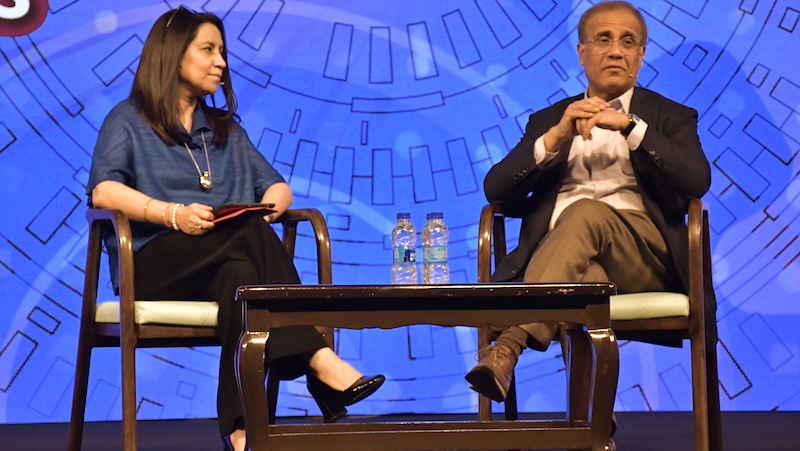
    GOA: Change sucks, but irrelevance sucks harder. With that disarming one-liner, author and Publicis Groupe senior advisor Rishad Tobaccowala had the GoaFest 2025 crowd hooked. In a sharp and soul-searching fireside chat with Publicis Groupe CEO of  South Asia Anupriya Acharya Tobaccowala offered a crash course in survival and soul in an era increasingly dominated by algorithms, automation and AI anxieties.

    Tobaccowala’s core thesis was clear: AI won’t replace you, someone using AI better will. But the real danger isn’t the technology, it’s complacency. “Too many companies are trying to use AI to make their broken models slightly more efficient,” he warned. “You don’t just want faster printing presses you want a new way to communicate entirely.”

    To prove the point, he spotlighted the New York Times, a legacy media brand that reinvented itself from a print-first paper to a digital-first platform with 12 online subscribers for every print one. Today, 35 per cent of its revenue comes not from news, but from games, recipes, and other lifestyle content. “They don’t call themselves a newspaper anymore, they’re an entertainment brand with a news vertical,” he quipped.

    Referencing Andy Grove’s classic Only the Paranoid Survive, Tobaccowala argued that the age of paranoia has passed. In its place? Dual thinking. “Successful companies must run two business models at once, one for today, and one for tomorrow,” he said.

    His advice: Spend five to 10 per cent of your money and 20–25 per cent of your best talent building the future. “Don’t assign tomorrow’s strategy to the person you don’t know what to do with,” he warned. “That’s like watering your grandfather’s grave instead of feeding your kids.”

    “I worked 37 years in one company, lived 45 years in the same city, and met my wife 53 years ago,” he said. “So when I say I hate change, I mean it. But irrelevance? That’s worse.”

    He dismantled the sugar-coated corporate approach to transformation. “Telling people change is good is a lie. It’s painful. It makes you look stupid. It scrapes your knees like learning to ride a bike.” What works instead? A three-part formula: incentives, training, and personal relevance. “Tell employees what’s in it for them, not just what’s in it for the company,” he urged.

    Tobaccowala didn’t mince words about leadership either. “We’ve entered the age of de-bossi-fication. Nobody wants a boss. They want a leader.”

    Monitoring, allocating, and measuring won’t cut it anymore. Today’s leaders must inspire, create, and mentor. If you’re not spending at least 50 per cent of your time leading instead of managing, he warned, “you’ll be retired by machines or Gen Z sooner than you think.”

    Tobaccowala also had sharp advice for younger professionals: “You’re in a 50-year career. Stop thinking in 6-month cycles.” He urged them to chase growth over glam, pick the right boss, and resist jumping ship just because the grass looks greener. “The grass is greener because it’s fertilised with… well, you know what,” he joked.

    Despite all the AI hype, Tobaccowala believes the machines may help us rediscover what makes us human. In 2023, the most popular AI tools weren’t just about productivity, they were about relationships, purpose, and self-growth.

    “AI will amplify your creativity, but it can’t replace your conviction,” he said. “It’s not about resisting AI. It’s about partnering with it without outsourcing your soul.”

    As he signed off, Tobaccowala reminded the audience of something many forget. “India is not the future. It is the present. Publicis gets 65 per cent of its workforce and a growing chunk of its global revenue from India, China, and the US,” he noted. “You’re not a footnote. You’re a headline.”

    He ended with a final, cheeky mic-drop about his book’s global release: “My publisher didn’t want to launch in India first. Said it wouldn’t sell. Now India is the only place it’s sold out twice.”

  • ‘Algorithms’ shortlisted for Britain’s Grierson Awards

    ‘Algorithms’ shortlisted for Britain’s Grierson Awards

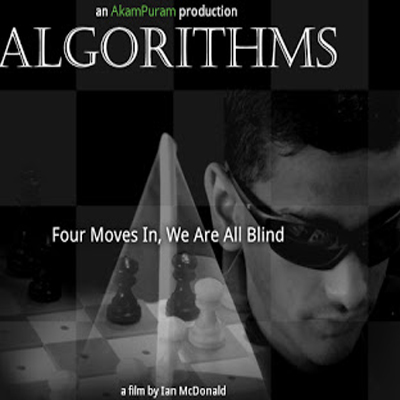
    NEW DELHI: Algorithms, Ian McDonald’s award-winning documentary on India’s young blind chess players, is among films shortlisted for the prestigious Grierson Award in the Best newcomer documentary category.


    The final nominations for the Grierson awards will be announced on 16 September prior to the awards ceremony in London on 3 November.


    Excited about the nomination, the British filmmaker said, “We are really thrilled to make the shortlist. It is a great honour and it also means it will bring the story of India’s blind chess community to the attention of an audience in the UK and beyond.”


    Directed by McDonald and produced by Indian producer Geetha J, the documentary has been screened at over twenty international film festivals and won six awards, including Best Film at Film SouthAsia in Kathmandu.  It is the first ever feature documentary on Blind Chess. 


    Filmed over three years from just before the World Junior Blind Chess Championship in Sweden in 2009 to just after the next championship in Greece in 2011, it follows three talented boys from different parts of India and a totally blind player turned pioneer, who not only aims to situate India on a global stage but also wants all blind children to play chess


    The New York based First Run Features, a leading distributor of independent films in America, acquired the North American rights to the film early this year.


    Established in 1972, the Grierson Awards commemorate the pioneering Scottish documentary filmmaker John Grierson, widely regarded as the father of the documentary.

  • Largest number of shorts in Film Southasia from India

    Largest number of shorts in Film Southasia from India

    NEW DELHI: A total of 15 shorts from India – the highest – are to be screened at the Film Southasia 2013 Festival of South Asian Documentaries.

    The festival will be held from 3 to 6 October in Kathmandu and will feature 34 shorts in all.

     Film Southasia (FSA) is a biennial festival that was set up in 1997 with the goal of popularising the documentary.

    The Indian films contain Celluloid Man, a bio-documentary by Shivendra Singh Dungarpur about the veteran P K Nair who set up the first film archives in South Asia – the National Film Archives in Pune.

    The other Indian films are: A Prayer For Aliyah (by Zorawar Shukla); Algorithms (Ian McDonald); Big in Bollywood(Kenny Meehan and Bill Bowles); CHAR…No Man’s Island (Sourav Sarangi); Elemental Gayatri Roshan, Emmanuel Vaughn Lee); Fire In The Blood (Dylan Mohan Gray); Gaur in My Garden (Rita Banerji); Give Us This Day Our Daily Bread (Satchith Paulose); Immoral Daughters (Nakul Singh Sawhney); Voice of God (Bernd Lützeler); Invoking Justice (Deepa Dhanraj); Salma (Kim Longinotto); Sama (Shazia Khan);  and The Human Factor (Rudradeep Bhattacharjee).

    There are three films from Afghanistan: Expecting; How To Build an Afghan Box Camera; and No Burqas Behind Bars.

    Pakistan has sent My Punjabi Love For You; Transgender – Pakistan’s Open Secret; and Saving Face.

    The films from Bangladesh are:  Hombre Maquina; Life Begins with Tears; Shunte Ki Pao; and The Strike.

    The Sri Lankan films are: Broken; No Fire Zone – The Killing Fields of Sri Lanka, and The Story of One.

    The films from Myanmar (Burma) are: Miss Nikki and the Tiger Girls; No. 62, Pansodan Street, and The Old Photographer.

    The three shorts from the host country are: Playing with Nan; Who Will Be a Gurkha; and Yomari Ya Bakhan.