Tag: Alan Isaac

  • N Srinivasan confirmed as ICC chairman

    N Srinivasan confirmed as ICC chairman

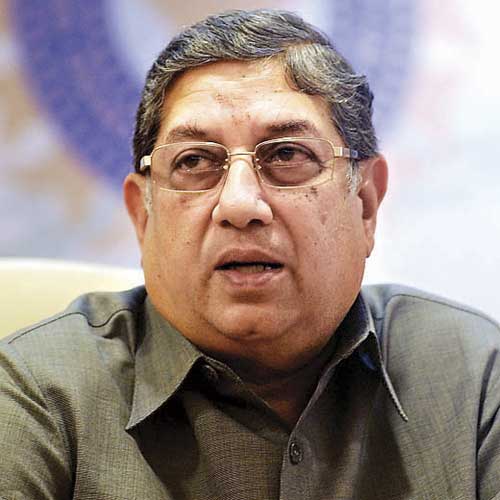
    MUMBAI: Narayanaswami Srinivasan has been confirmed as the International Cricket Council (ICC) chairman after the 52-member full council approved amendments to the ICC’s Memorandum and Articles of Association at the annual conference in Melbourne.

    Srinivasan was nominated by the Board of Control for Cricket in India (BCCI) for the top position and will assume charge following the conclusion of the ICC annual conference week.

    The approval of the constitutional changes, which flowed from an ICC Board resolution taken in Singapore on 8 February and finalised on 10 April, also means that a new executive committee was formed, which will report to the ICC Board.

    The initial chair of the executive committee will be Cricket Australia’s chairman, Wally Edwards, while the chair of the ICC’s finance and commercial affairs committee (F&CA) will continue to be England and Wales Cricket Board’s chairman, Giles Clarke.

    Srinivasan said it was an honour to become ICC chairman and promised that the ICC will continue to play a leading role in the promotion and development of the global game.

    “It is an honour to be confirmed as the chairman of the International Cricket Council,” said Srinivasan, adding: “I will leave no stone unturned in trying to strengthen the pillars and foundations of our sport, both on and off the field. I want to ensure that cricket retains and grows its popularity, and that the ICC plays a leading role in this global growth.”

    “I want to see more strong teams in international cricket. For this to be achieved, we all need to work hard to develop local talent in our countries. Naturally, there will be more support to those who first show they can help themselves. The ICC is a members’ organisation and the pathway is now there for any member to play test cricket or in the major ICC events if it performs well enough over a sustained period of time.”

    Srinivasan congratulated outgoing ICC president Alan Isaac for his contribution.” Isaac has been an inspirational president of the ICC. He provided guidance to everyone during his two-year term and all three international formats remain incredibly popular. The game is unquestionably stronger than it was at the start of his term,” he said.

    The annual conference also saw Mustafa Kamal become the eleventh president of the ICC.

    Kamal said: “This is a memorable and historic day for Bangladesh cricket. On this day 14 years ago, Bangladesh became the tenth test playing country. Today, a Bangladeshi becomes the eleventh president of the International Cricket Council. Thank you for bestowing this honour on Bangladesh and me.”

  • ICC honchos meeting culminates in Dubai

    ICC honchos meeting culminates in Dubai

    MUMBAI: The International Cricket Council met on Wednesday at the ICC headquarters in Dubai for the second of its scheduled quarterly meetings of 2014. The Board discussed a range of issues, including reports from the ICC chief executives’, audit, finance and commercial affairs, among other plans.

    The two day meeting that ended today resulted in some very important announcements regarding the schedule for 2014 as well as the coming years.

    Meritocratic pathway for Test cricket

    The ICC Board approved the introduction of an ICC Test Challenge which will take place every four years between the lowest ranked Test team and the winner of the ICC Intercontinental Cup.

    The proposal is that the 10th ranked side on the Reliance ICC Test Team Rankings on 31 December 2017, or at the conclusion of any series in progress at that time, will play two five-day matches at home and two five-day matches away against the winner of the upcoming ICC Intercontinental Cup, with the inaugural Challenge scheduled to take place during 2018.

    In the next eight years, two ICC Intercontinental Cup tournaments are planned with the first to run from 2015 to 2017 and the second to be held between 2019 and 2021.  The second ICC Test Challenge is scheduled for 2022.

    ICC chief executive David Richardson said: “The ICC Test Challenge now opens the door for Associate Members to play Test cricket and in doing so gives even greater context to the ICC Intercontinental Cup which will now be a pathway to Test cricket.”

    ICC reform of governance and financial models

    Further to the resolutions passed at the ICC Board meeting in Singapore on 8 February 2014, the ICC Board members agreed a long-term work plan to support the implementation of those resolutions which do not require constitutional change.

    At the same time the ICC Board authorised the drawing up of the necessary constitutional amendments which will be placed before the Full Council at the ICC Annual Conference to be held in Melbourne at the end of June.

    One of the cornerstones of the new financial model is an extended Future Tours Programme (FTP) which will now run until 2023.

    Richardson explained: “The FTP is a very important piece of work as it gives Members long-term certainty in relation to both their playing schedule and financial planning. Significant progress has been made but there is still work to be done to develop a balanced calendar of tours and finalise these agreements.”

    ICC World Twenty20 Bangladesh 2014

    The ICC Board thanked the Bangladesh Cricket Board (BCB) for the successful staging of the ICC World Twenty20 Bangladesh 2014 and praised the Bangladesh government, security agencies and the general public for their contributions and support. The ICC Board also congratulated Sri Lanka for winning the men’s title and Australia’s women for completing a hat-trick of titles.

    ICC president Alan Isaac said: “The ICC World Twenty20 Bangladesh 2014 was an extremely successful event which was thoroughly enjoyed by the players, officials, spectators and media. A lot of credit must be given to the Bangladesh Cricket Board (BCB) and the ICC team for putting up a memorable show.”

    “The event helped Bangladesh enhance its infrastructure in Dhaka and Chittagong and develop a new international venue in Sylhet.  Sri Lanka’s triumph means the event has produced five different men’s champions in as many editions. The encouraging performances of the Associate Members and their successes over the Full Members clearly reflect that the ICC World Twenty20 is the most open tournament on the ICC calendar,” he added.

    Format and qualification process for the ICC World Twenty20 2016

    Following the success of the ICC World Twenty20 Bangladesh 2014, the ICC Board agreed that the same format be retained for the ICC World Twenty20 events in 2016, which will be staged in India.

    For the 2016 event, the top eight Full Members on the Reliance ICC T20I Team Rankings as on 30 April 2014 will automatically qualify for the second round, while the ninth and 10th ranked Full Members will get automatic places in the first round. The six qualifiers will progress from the 14-team ICC World Twenty20 Qualifier 2015, which will be staged in Ireland and Scotland from 9 July to 2 August 2015 during which a total of 51 matches will be played.

    ICC Cricket Committee

    The Board ratified the appointment of Australia coach Darren Lehmann and the West Indies coach Ottis Gibson as the representatives of national coaches on the ICC Cricket Committee following the completion of former India and South Africa coach Gary Kirsten’s term.

    Other updates

    The ICC Board also considered a general update on anti-corruption and integrity while the IDI Board received a report from the Finance & Commercial Affairs Committee which included updates on the commercial rights post-2015, Host and Members’ Participation Agreements for the next commercial rights cycle, online piracy, event forecasts and audited financial statements for 2013.

    The next ICC and IDI Board meetings will take place during the ICC Annual Conference week in Melbourne in June 2014.

  • BCCI, ECB and CA on course to play ball for ICC

    BCCI, ECB and CA on course to play ball for ICC

    MUMBAI: A change is gonna come, wrote one of the most revered R&B artists, Sam Cooke, in 1963.


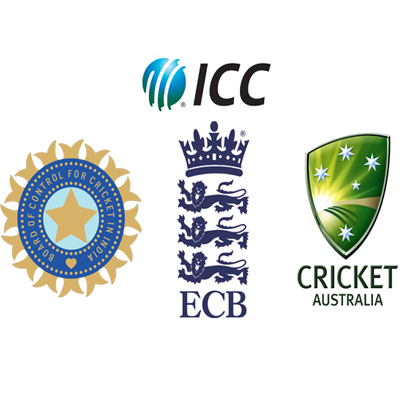
    Possibly singing the same tune today is the triumvirate of India, Australia and England, what with reports of the ‘Position Paper’ – which gives decision making powers to the Board of Control for Cricket in India (BCCI), Cricket Australia (CA), and England and Wales Cricket Board (ECB) – soon coming into effect. Buzz is the trio may well be on its way to securing the necessary votes for revamping the global cricket governing body, ICC, even as other member nations lose their grip on the situation.


    “Around July last year, I encouraged CA, ECB and the BCCI to work together and develop conditions to which all the member countries can come to terms with,” ICC president Alan Isaac said in a recent press conference. “We have currently drawn up the principles but the detailing needs to be done after conducting discussions. The idea was to get the three of the biggest and strongest boards together in one room and come up with a strong plan of action.”


    At the same press conference, ICC CEO Dave Richardson added: “There were numerous negotiations going on with all the member countries, but at the end of the negotiations, we saw that there were only these three nations that had those sticky points which we were looking out for.”


    Neither of the other boards has released an official statement but top officials on the executive board of ICC have gone on record in approving the proposed changes that give the trio complete freedom in the way cricket will be played 2015 onward as well as revenue shared in accordance to the brand value a test-playing nation is worth.


    Among the first ones to point out detrimental flaws in the BCCI-drafted ‘Position Paper’ were the cricket boards of South Africa, Sri Lanka, Pakistan and Bangladesh. Thereafter, the trio tweaked a few clauses to get other member boards to agree to the terms with West Indies, New Zealand and minnows Bangladesh having already given the go-ahead. The biggest hurdle the trio faces is that for the ‘Position Paper’ to come into effect, they need eight out of the 10 member nations to give their nod. Apparently, they are just one vote away from the three-fourths majority required to push the proposal through. And the financially crippled Pakistan cricket board is likely to be the one to bite the bullet. Not only has the country been struggling to maintain cricketing ties, given the prevailing political conditions, it hasn’t been able to host an international match since early 2009. This may be just the opportunity for the nation to have bilateral series under long-term contracts with the trio.


    That said, the proposal put forth in the ‘Position Paper’ appears fundamentally flawed as it assumes members have a proprietary interest in the money their respective economies generate for ICC events.


    Fact is broadcasters buy cricket rights because it appeals to their customers, drives subscriptions and advertising revenues. Similarly, sponsors use cricket to promote their products and services.


    While values are generally greater when the broadcasting country is playing, not all of it can be attributed to the country’s cricket board. The opposition too has a great bearing on the value cricketing boards receive for their media rights.


    Indian broadcasters would prefer broadcasting ICC events and Star Sports would stand to earn brownie points, having acquired the broadcast rights for Indian cricket for a price of Rs 3,851 crore, which covers over 96 matches between 2012-2018 including internet and mobile rights.


    That BCCI generates nearly 80 per cent of the world’s cricket earnings is a given. The only way most other boards can maintain a reasonably plump bottom line is from the massive broadcast rights acquired from a tour by India. Not surprisingly, weaker boards such as West Indies and Bangladesh would jump at the opportunity where they are guaranteed no relegation from test cricket plus the possibility of India touring more frequently to help generate revenue.


    So, it’s just a matter of time before the trio start officially throwing around their weight in terms of decisions regarding the scheduling of bilateral ties, especially involving either of the three.

  • First day of ICC Board meeting concludes with unanimous support for key principles

    First day of ICC Board meeting concludes with unanimous support for key principles

    DUBAI: The first day of the International Cricket Council’s Board meetings concluded in Dubai on 28 January with unanimous support for a set of principles relating to the future structure, governance and financial models of the ICC.


    The ICC Board unanimously supported the following principles: 


    * There will be an opportunity for all Members to play all formats of cricket on merit, with participation based on meritocracy; no immunity to any country, and no change to membership status.  


    * A Test Cricket Fund paid equally on an annual basis to all Full Members (except the Board of Control for Cricket in India, Cricket Australia and the England and Wales Cricket Board) will be introduced to encourage and support Test match cricket.


    * A larger percentage from the increasing Associate Members’ surplus will be distributed to the higher performing non-Full Members.


    * Mutually agreed bi-lateral FTP Agreements which will be legally binding and bankable and will run for the same period as the ICC commercial rights cycle (2015-2023).


    * Recognition of the need for strong leadership of the ICC, involving leading Members, which will involve BCCI taking a central leadership responsibility.


    * A need to recognise the varying contribution of Full Members to the value of ICC events through the payment of ‘contribution costs’.


    * The establishment of an Executive Committee (ExCo) and Financial & Commercial Affairs Committee (F&CA) to provide leadership at an operational level, with five members, including BCCI, CA and ECB representatives. Anybody from within the Board can be elected to Chair the Board and anybody from within ExCo and F&CA can be elected to Chair those Committees. With the ICC undergoing a transitional period that includes a new governance structure and media rights cycle, this leadership will be provided for two years from June 2014 by: a BCCI representative to Chair the ICC Board, a CA representative to Chair the ExCo and an ECB representative to Chair the F&CA.  


    * A new company will be incorporated to tender future commercial rights for ICC events.  There will be three major ICC events in each four-year cycle, including the ICC Champions Trophy which will replace the ICC World Test Championship.


    * ICC will utilise a more efficient operating model for all ICC events, with a simplified accounting model across ICC income and expenditure to help better manage ICC administrative and event costs.


    ICC President Alan Isaac said: “This is an important time for world cricket and it is extremely encouraging that the ICC Board has unanimously supported a set of far-reaching principles that will underpin the long-term prosperity of the global game.


    “These principles emphasise the primacy of Test cricket and that for the first time in cricket’s history participation will be based entirely on meritocracy, giving everyone powerful incentives to play better cricket and develop better cricketers. 


    “There is more work to be done by the Members in developing their schedules of bilateral cricket while at the ICC we need to work through the detail of the manner in which these principles will be implemented.


    “Extensive work will now be undertaken in advance of a follow-up Board meeting next month.”


    Isaac also expressed his disappointment with the misconceptions that had been created as a result of a draft position paper produced by three ICC Members being leaked.


    “Several months ago I encouraged BCCI, CA and ECB to enter into a constructive dialogue together to help resolve some of the key commercial and governance issues facing the game. These leading cricket nations have worked tirelessly to produce a document which provided the basis for the past few weeks of extremely constructive discussions.


    “It is obviously very disappointing that a draft position paper from these Members was leaked as this prompted a debate that ignored the ongoing negotiations between all Members and led to unwarranted criticism of many of those involved in the process.


    “The principles agreed today provide clear evidence that through the course of further discussions over the coming weeks we can be increasingly confident in achieving consensus.”


    David Richardson, the ICC Chief Executive, added: “An enormous amount of effort has gone into developing a comprehensive set of proposals that include input from all Members.


    “The Board has held some very constructive, inclusive, wide-ranging and far-reaching discussions and I am looking forward to bringing to fruition some of the principles that have been proposed and accepted in relation to the cricketing structures of the global game.” 


    The ICC Board consists of the chairman or president from each of the 10 Full Members plus three elected Associate Member representatives. Also present at ICC Board meetings is the ICC President, who chairs proceedings, the ICC Chief Executive and the ICC Vice-President.


    Alan Isaac                                                      ICC President

    Mustafa Kamal                                               ICC Vice-President

    David Richardson                                          ICC Chief Executive


    Zaka Ashraf                                                     Pakistan

    Dave Cameron                                                 West Indies

    Peter Chingoka                                                Zimbabwe

    Giles Clarke                                                     England and Wales

    Jayantha Dharmadasa                                      Sri Lanka

    Wally Edwards                                                  Australia

    Nazmul Hassan                                                Bangladesh

    Imran Khwaja                                                   Associate Member Representative

    Chris Nenzani                                                   South Africa

    Keith Oliver                                                      Associate Member Representative

    Martin Snedden                                                New Zealand

    Neil Speight                                                      Associate Member Representative

    Narayanaswami Srinivasan                               India