Tag: Akhil Jain

  • Jain Amar stitches a new chapter with Akhil Jain as MD & CEO

    Jain Amar stitches a new chapter with Akhil Jain as MD & CEO

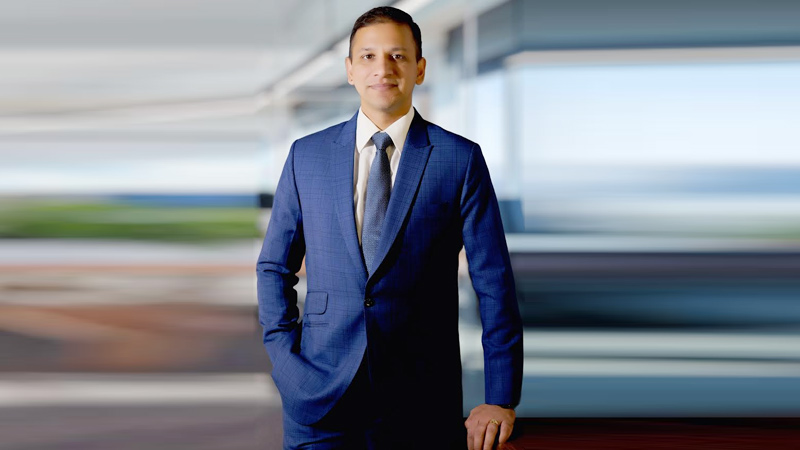
    MUMBAI: In the fast-paced world of fashion, it takes more than just good tailoring to survive—it takes a visionary with the swagger of a brand builder and the precision of a CFO. Jain Amar, the powerhouse behind Madame, Camla Barcelona, and Msecret, just handed the reins to one such sharp dresser: Akhil Jain. As of April 2025, he takes over as MD & CEO.

    And this isn’t a ceremonial title change tucked into an HR memo. It’s a strategic style reboot. The announcement came hot off the ramp at the Jain Amar Leadership Summit 2025, attended by the top 25 leaders including board members and HODs. The agenda? Growth, governance, and getting IPO-ready by 2027. No pressure.

    Akhil is no rookie parachuted in for optics. A scion of the promoter family and a NIFT alum with an executive toolkit from IIM-A and Harvard, he’s been grinding across the brand’s verticals for over 20 years. Until now, he served as executive director, overseeing brand strategy, tech integration and retail reinvention—basically turning buzzwords into bottom lines.

    In his new role, Akhil is tasked with driving growth across online and offline channels, creating a unified brand voice, and embedding DAR (Decision-Action-Responsibility) frameworks across operations. Oh, and let’s not forget tighter budget controls and investing in people power.

    “This is not just a new role—it’s a new rhythm. We’re moving from isolated departments to a single unified movement. I believe Jain Amar’s next era will be defined by how well we align people, process, and purpose. I’m grateful for the trust placed in me and excited to lead this extraordinary team into the future,” said Akhil.

    The board, for its part, seems anything but nervous. Instead, they called Akhil’s elevation “timely”, especially in a landscape where fashion brands are juggling digital disruption, fickle consumer behaviour, and the existential crisis known as AI.

    With an IPO on the horizon and a generational leader at the wheel, Jain Amar is clearly done playing dress-up. Now, it’s game on.

  • Madame expands in J&K with exclusive brand outlet at Srinagar airport

    Madame expands in J&K with exclusive brand outlet at Srinagar airport

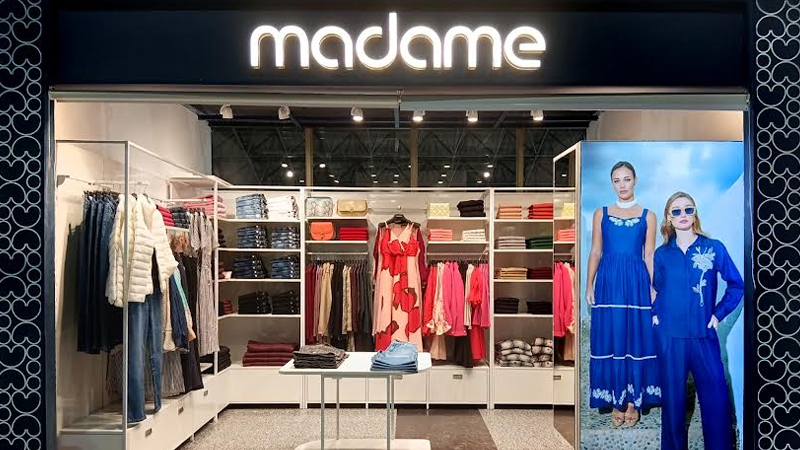
    MUMBAI: Madame, has launched its latest Exclusive Brand Outlet (EBO) at Srinagar International Airport, further strengthening its footprint in Jammu & Kashmir. Located at AAI Terminal 1, first floor, this stylish new store joins Madame’s existing city outlets, bringing travel-friendly fashion to jet-setting customers.

    Designed for modern travellers, the store showcases a curated selection of apparel and accessories, including trendy shackets, jackets, shirts, cardigans, sling bags, perfumes, and stoles. With this launch, Madame extends its successful airport retail presence, following stores at Mumbai and Pune airports.

    Jain Amar executive director Akhil Jain stated, “The opening of our store at Srinagar airport is a significant milestone in our journey to enhance the travel retail experience. With a unique mix of stylish apparel and accessories, we aim to provide travellers with convenient and fashionable choices on the go.”

    Madame is rolling out exclusive time-sensitive promotions aligned with flight schedules, offering instant gratification to shoppers in the fast-paced airport retail environment. 

  • India’s GDP contracts, revival of demand will be a gradual process

    India’s GDP contracts, revival of demand will be a gradual process

    NEW DELHI: Recording the worst slump since India started releasing quarterly GDP data in 1996, the Indian economy contracted by 23.9 per cent in the month of June 2020. According to experts, the country has lost Rs 13 lakh crore of income in Q1. The downturn, which was quite evident from the previous few quarters was catalysed by the lockdown and is expected to last beyond the pandemic.

    DAN CEO APAC & chairman India Ashish Bhasin said, “It is quite obvious that GDP numbers are not going to be good because as we know the most significant part of the industry and economy was virtually in a lockdown. It has set us back 2- 2.5 years.”

    Madame executive director Akhil Jain noted, “Primarily fear for the future has led to chaos. The industry is in the expansion and development stage and was already working on thin margins with a huge dependency on financial institutions etc. Poor support has led to either suspension of manufacturing operations or reduction. E.g. the moratorium hasn’t helped anyone much as it will increase the burden in the future. Had there been a waiver on interest for a quarter – it would have corrected the downfall to a great extent.”

    Speaking about the advertising industry, Bhasin noted that he doesn’t see advertising coming to 2019 levels even in 2021 but perhaps by 2022. “There are severe challenges, including liquidity crisis, that a significant part of the economy is facing. Therefore the revival of demand will be a gradual process. It is not going to be a sudden V-shape recovery. It will keep improving gradually, month on month.” 

    The advertising industry faced massive losses during the first half of the year, firstly because of NTO 2.0 and then by Covid2019 lockdown. DAN India CEO Anand Bhadkamkar had shared in an earlier interaction, “Certain economists are predicting that the GDP growth (that was estimated at about 4.5 per cent) may dip up to 1.5-1.9 per cent. If that happens, we will be slipping down by more than half almost. We just have to wait and watch how things pan out.”

    Now, the industry estimates for the yearly GDP stands at negative 15-20 per cent as shared by Bhasin, indicating much bigger losses that the industry had expected in the earlier months. 

    Ethinos Digital Marketing executive director & joint MD Benedict Hayes shared, “We saw an immediate 40 per cent reduction in marketing investments and spends across in the first month of lockdown, by month 2 that touched 65 per cent. It has recovered somewhat of late, but by no means back to where it was. Less expendable income and shopper sentiment mean conversion rates to sales will drastically drop below normal. This means media spends have to be more efficient and this is where we have seen technology make a big difference. Some industries like entertainment, healthcare, gaming, EdTech have seen a positive, but generally, everyone has taken a hit.”

    Industries like travel, tourism, manufacturing, and construction are expected to face the worst of the brunt in the coming months, which will further impact the GDP. The retail sector will also face some struggle to get up from here. 

    Jain shared, “We are expecting the demand to reach 100 per cent only by the second quarter of the next financial year. This FY, we are expecting to reach 65-70 per cent of last financial numbers.”

    However, the industry is seeing the silver lining in a few sectors.  

    Bhasin noted, “On the positive side, the rains have been good, and the demand should start picking up. The festive season’s start should also help in bringing things back to normal. The rural areas and tier 3-tier 4 towns are likely to have more money in consumers’ pocket, which is a good sign because the rains have been good and rural demand should pick up.”

    Arya Collateral MD Prasanna Rao, however, added that just the agri sector and rural spending might not be the best antidote to the ailing economy. “If we look minutely into the data just released, agriculture alone has shown positive growth with a share of 18 per cent in GDP. The only bright spot was the rural economy, where the farm sector grew at 3.4 per cent year-on-year in the quarter. The agriculture, the farm sector is still growing, but it might not be enough to pull out the economy from this stagnation. There is no alternative to public spending in these trying times, people are locked inside their houses and only spending on essentials.”   

    BYJU's head of marketing Atit Mehta says, "According to UNESCO – nationwide closures of educational institutes during this crisis are impacting over 90 per cent of the world’s student population, which is around 1.5 billion learners across 186 countries. Online learning platforms have become almost a necessity in today’s scenario to ensure learning and education for kids around the world is not impacted."

    Mehta further adds that with students now completely depending on online learning to fulfill their daily learning needs, the Covid2019 crisis has caused a paradigm shift, making online learning a vital part of mainstream learning. "It has put the spotlight on the ed-tech sector. At BYJU’S, we introduced several new programs to help students continue learning even during this difficult time. From introducing courses in vernacular languages to launching more subjects, our teams worked diligently to keep bettering our learning programs. We also launched ‘BYJU’S Classes’ – a comprehensive online tutoring program to offer students a platform to solve their doubts instantly. We have received an overwhelming response with almost 3X increase in the number of students accessing our app. Earlier students used to spend 2-3 days per week on our platform. As a result of the lockdown, they are using the platform on a daily basis and spending an average of 100 mins per day. We saw over 20 million new users access our platform. There has also been a significant behavioral shift in the parents’ mindset towards online learning as they have witnessed their children benefiting from it in person and seen how this format of learning can serve as an enabler in their growth. We believe it adds even more responsibility on us to provide exceptional home learning opportunities to students today. Every crisis presents an opportunity and this is that inflection point for education, where we expect the rise of a blended model of education. The proliferation of smart devices coupled with the democratisation of the internet will fasten this process. Screens have become the primary mode of content consumption for the new generation. This will further boost the adoption of the new model of learning," adds Mehta.

    Another sector that is expecting a positive upturn from here is the logistics sector. LetsTransport CEO & co-founder Pushkar Singh highlighted, “The booking volumes on our platform have picked up mostly due to e-commerce and home deliveries picking up. In the initial months of the lockdown, it was very difficult for enterprises to continue operating with traditional companies using archaic processes. We saw enterprises transition to working with more organized logistics players as the focus was on reliability in the supply chain. While the overall economy has contracted affecting every sector, it will certainly push the logistics sector to innovate and adapt faster. Going forward, logistics capabilities will prove to be a key differentiator for brands, all of whom are trying to reach their customers more quickly and more efficiently.”

    The industry has no hopes for the market to revive this year and is expecting it to reach 2019 levels by 2022. 

    Hayes noted, “Honestly, I feel the road to recovery will be long and will stretch until the second half of next year. We are witnessing something that has not happened before and will see a lot more fallout before recovery is complete as well. Restaurants, travel, and hospitality companies are in absolute dire straits, as well as high street retail, automotive, and real estate. Without support, I feel a lot of big businesses will be under extreme pressure. It looks like some economies such as the UK steamrolled into a full-blown recession, and the ripples of the western markets will definitely be felt here.”

    Jain highlighted the need for better economic stimulus from the government stating that the earlier packages did not fare well for the industry at the ground level, “The package didn’t help the MSMEs at all. The upgrade in the limits was an eyewash, e.g. the limit for benefits was increased to 250, but the investment and bank limits weren’t touched making it non-utilisable for a lot of MSMEs.”

    Rao suggested, “The only way possible from here are stimulus announcement and public expenditure outlay in infrastructure, which may bring in the channelisation of economic fundamentals required for the country's growth."