Tag: Akash Banerji

  • Voot guns for 100mn MAU with barrage of Originals, branded content innovation

    Voot guns for 100mn MAU with barrage of Originals, branded content innovation

    MUMBAI: Viacom18’s digital video-on-demand streaming service VOOT is celebrating its third anniversary with 100+ billion minutes of watch time. With a commitment to offer quality and differentiated content in the digital ecosystem backed with technology and insights, VOOT now aims to reach 100 million monthly active users within the fiscal year. 

    As part of its future growth strategy, the platform also announced the further scaling of its current content library with a robust line-up of over 30+ VOOT Originals across genres and languages, to be launched this fiscal. Law and Honour, Naaz, Love All, The Raikar Case, Kaisi Yeh Yaariaan – Season 4, Marzi and Asura are few of the VOOT Originals that will be launched shortly. 

    “India will have an online consumer base of more than million by 2022. Of this, more than 3/4th will be consuming video content. While technological advancements allow us to personalise content consumption, growth for the category will come from our ability to segment our offerings to multiple consumer segments accelerated by the three A’s – accessibility, availability and affordability”, said Viacom18 group CEO and MD Sudhanshu Vats, before adding, “VOOT has crossed the 100 billion watch minutes’ mark in three years and we are now targeting 100 million monthly active users within this financial year. Additionally, we are segmenting the VOOT business into four uniquely focussed propositions – the existing AVOD model and the upcoming freemium offering, VOOT Kids and VOOT International.” 

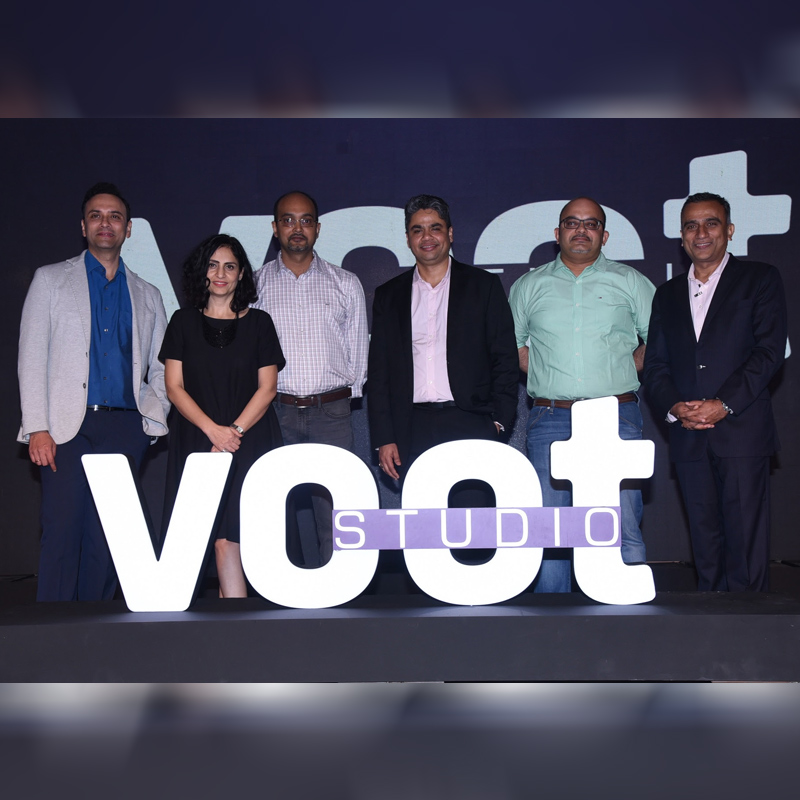
    Institutionalising the branded content play, VOOT announced the launch of VOOT Studios – a business performance-oriented content tech solution for advertisers looking to connect with digital audiences with branded shows, sponsorships, interactive formats in addition to other bespoke solutions.

    Speaking about the branded content play for VOOT – , Head – AVOD Business Akash Banerji said, “Brands today realise regular ad spot while important is not sufficient to drive resonance with the consumer. Branded content solutioning is hence the way forward given that it allows for bespoke content curation and subtle communication embedded into the narrative of the show. VOOT Studios will allow brands to bring the world of story-telling, data and tech all together to deliver the brand message and the ROI effectively for the business.”

    With the proliferation of digital content and its increasing consumption across mediums, understanding consumer behaviour now plays a critical role. VOOT’s consumer insights product MAVARIC is built to help advertisers identify the right audience thus ensuring high impact via communication. MAVARIC helps advertisers with consumer insights as well as target their messaging beyond simple demographic profiles and instead focuses on enhanced insights around online behaviour, purchase behaviour, affinity and interest and more. 

    Insights clubbed with interactivity solutions will allow brands to provide immersive brand engagements. Reinforcing the importance of interactivity on OTT platforms, VOOT will strengthen its current offering with the addition of five new programmes in the next few months which will fuel further growth and attract users to the platform. 

    Now available on iOS, Android, Web, and Amazon Fire TV, and built on a robust technology backbone, VOOT further strengthens its technology and distribution system by announcing over 20+ new distribution partners across the travel, broadband and mobile ecosystem as well as with OEMs. The OTT platform has partnered with smart TV manufacturer like CloudWalker,  ShareIt , Act Fibrenet and travel network company OLA, amongst the others. 

    Currently driven by an advertising supported video-on-demand model, VOOT will continue to build scale by soon diversifying from one business model of AVOD to four – VOOT AVOD, VOOT Kids, VOOT International and VOOT Freemium.

  • Voot’s target is the entire 250-300 million video viewer base: Akash Banerji

    Voot’s target is the entire 250-300 million video viewer base: Akash Banerji

    MUMBAI: When digital platforms emerged, long-form content got a boost. But given today’s limited attention span of people, short form content is also in vogue. Spotting the need, media conglomerate Viacom18’s digital arm Voot has forayed into original short films segment. The OTT platform has come up with 12 short films under Voot Originals 'SHORTCUTS' label produced by Viacom 18’s in-house digital-focused studio Tipping Point.

    Five short films Derma, Googly, Joy Ride, Bauma and Chacha and Cheetah’s Trip already went live on 8 February. Four other short films – Glitch, Grey, Aun and Teaspoon will go live on 15 February which will be followed by Maya, On the Road and Red Velvet on 22 February. All the content pieces will be available for free for consumers since Voot till now works on AVOD model only.

    Talking about the new property, Viacom18 Digital Ventures marketing and partnerships head Akash Banerji said that any decision to keep them behind a paywall will be taken later. Earlier Viacom18 group CEO Sudhanshu Vats said it is working on Voot’s premium model.

    “We still believe and are strongly of the opinion that this country with the kind of appetite it has to watch content, is still very clearly in the category creation phase at this juncture and this category creation phase is very important to make content available and accessible in the most hurdle free manner. Hence, content that is free on AVOD platform is very surely here to stay and we will continue to double down our efforts on that,” Banerji also added.

    On the sideline of the launch, he spoke to Indiantelevision.com on several topics including marketing and the target audience of the new label, the platform’s ambitious plan for 2019 and other industry issues. Here are the edited excerpts from the interview:

    What is the target audience of the new short films?

    Gone are the days, when you will define this target audience based on certain demography, geography or gender. We are targeting the entire 250-300 million odd video viewer base in this country that has a huge appetite to watch great storytelling. We are a story-first OTT brand, we are not an 18-24 age first brand, male first brand, we clock close to 7-10 billion minutes of watch time. That certainly can’t come in on the back of a certain TG. We believe in scale.

    Will digital dominate your marketing effort?

    We are also going to do outdoor marketing for this specific content piece. What it allows us to do is to drive immediate perception and draw the attention of the consumers that is supposed to drive a lot of awareness and consideration. On digital, the focus will be to drive conversions to our platforms. It is going to be a blend of outdoor, networks promotion along with huge focus on digital.

    Why did you pick up this genre? Did you notice any particular trend?

    We are not a copier of a trend, we are a trendsetter. Not everything that’s out there needs to be replicated by us. Our bigger focus is always to create such interesting things so that it gets copied by others. We believed that we have a vast library of long-form content on our platform. That has a huge advantage because on the back of that we get massive watch time. This made us the number one OTT platform in the country with respect to the average time spent per day per viewer which is close to 50 minutes. We also believe this is a fast world where a consumer may not have all the time in the world to watch longer form content and to stay committed to a content piece that is episodical. Hence, we are experimenting with this format which is not the episodic but standalone content piece but also snacky in nature so we are able to get that kind of consumers whose behaviour and need may be very different from the kind of consumer we may have acquired before.

    How does the year 2019 look like for Voot?

    Maddening, crazy and exciting. We are doubling down our efforts in terms of blockbuster content, hero content pieces that are supposed to drive massive acquisition for us. We are doubling down our strategy to go very deep in vernacular markets because at Voot if we are seeing 3x growth in Hindi content, vernacular content gives us 6x growth. There is a huge demand but the supply still is actually limited. By partnering and collaborating very closely with Viacom18 network whether it’s Colors Kannada, Colors Marathi, Colors Bangla, we can very clearly unlock the little need that’s there. The other big thing which we will continue to do is invest heavily in the product experience. In today’s world, a great piece of content may not be enough to get sticky consumers or to drive retention. What is equally important is to double down on the product experience so that consumers are able to discover the content of their choice without thinking about technical issues.

    Voot’s UK launch was supposed to take place last November. If you could share the update..

    We are getting a firmer date. Between this month or next month at best we will be doing a big press announcement. Formally the international launch will start off and we are closer than ever to launching into the UK market.

    Will OTT platforms be benefitted from TRAI’s tariff order?

    It remains to be seen how consumers eventually respond to this tariff order, whether it finally ends up changing their deep habit of having access to 300 or 400 odd channels suddenly overnight. These are TV watching and having access to so many different channels is a long form habit that has developed over the years. And it would be naive on our part to start thinking and predicting that it will change and OTT platform per se will start building quick result out of it. The only thing that we need to be clear of and that we are preparing for if this change happens, we should be ready to give an equally good experience to a lot of new consumer acquisition that will happen on OTT. As a network, our ambition, of course, will be very to ensure that the watch time and the consumer size and the scale do not go down at a network level and only keeps growing up.

  • IDOS 2017: OTT is here to stay but may not replace pay TV

    IDOS 2017: OTT is here to stay but may not replace pay TV

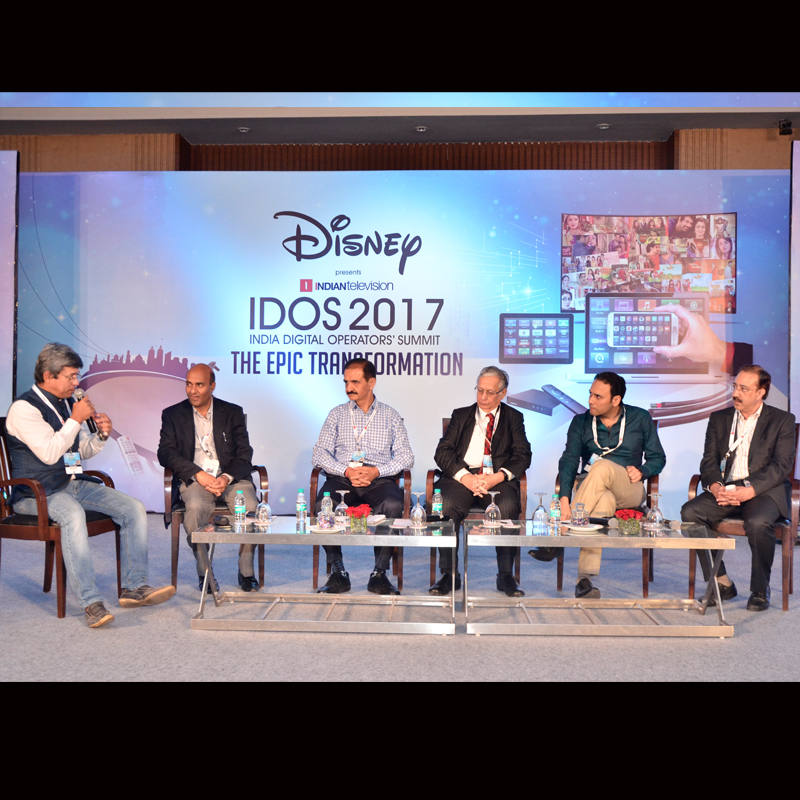
    NEW DELHI: The over-the-top (OTT) medium is here to stay and cannot be put down, but the television medium will continue to survive in the face of this challenge in India.

    The stressful life of today and the relationship built by the local cable operator are other reasons for the survival and well-being of the television medium. These were some of the views expressed at a discussion on the OTT Challenge to Pay TV at the Indian Digital Operators Summit organised by indiantelevision.com and moderated by the latter’s founder, CEO and editor-in-chief Anil Wanvari.

    Viacom 18 Digital Ventures’ senior vice-president and head of marketing Akash Banerji said that OTT would fundamentally change the scenario but admitted that “we over-estimate the short term, and under-estimate the long term.” He felt that the impact of OTT on pay TV may begin to show some change by 2020-21, but not immediately.

    Clearly, he said, some disconnect with the cable operators had led to the growth of OTT. Secondly, OTT was providing the content relevant to the individual viewer. Thirdly, he said that Viacom 18 was for the first time indulging in a B2C model where the consumer had the last word. He, however, admitted that the long-term survival of OTT lay in the medium moving to a subscriber-based scenario.

    Shaji Mathews, who has recently joined as the CEO of Kerala Cable Communicators in Kochi, said that OTT was no challenge, and (on the contrary) it would augment TV. He was confident that wired technologies will continue to dominate even as wireless technologies attempt to make inroads.

    He also felt that there was no level playing field for OTT at present, and so growth will take time.

    DEN Networks CEO S N Sharma said that the MSOs had entered the field of OTT in an attempt to provide a platform to various OTT players only to reach the consumer, realising that the consumer habits are changing. DEN had made inroads as far as fee-to-air OTT was concerned, and was only amalgamating the OTT players. The aim was to move with technology.

    Ashok Mansukhani of Hinduja Media Group admitted that OTT was a gigantic disruptor of the entire value chain but felt it would take some years to make inroads.

    Vynsley Fernandes of CastleMedia felt that the growth of OTT would largely depend on who has the TV remote in the home.

    Sisir Pillai of Lukup Media was confident that whatever the medium, it would survive if it had adequate content.

  • We aim at building a parent-approved, kids’ favourite brand, says Voot’s Akash Banerji

    MUMBAI: Viacom18’s VOOT is all set roll out a hi-decibel campaign for its kids content segment – Voot Kids. The campaign will have two TVCs in three languages — Hindi, Kannada and Marathi, depicting six situations.

    “To amplify the campaign, we are going heavy on the Viacom18 network including Nickelodeon. We are also going out of our network, and buying spots on Discovery and Turner Network. On the digital and social media platforms, we would be be releasing the campaign on Youtube and Facebook,” Viacom18 digital ventures head – marketing & partnerships Akash Banerji told Indiantelevision.com in a telephonic conversation.

    “We want to be perceived as the platform which aggregates the best and the most premium stack of kids content,” he added.

    Voot Kids has been a key differentiator and a big driving force behind the platforms viewership acceleration and engagement growth. With over 2000+ hours of content, 8000+ videos and 125+ characters, Voot Kids claims to have the largest digital repository of premium kid’s content, since the platform’s launch a year ago. The primary brands on board are — Kinder Joy, Colgate, Mattel Toys and Amazon Kindle.

    Banerji said, “Kids live in a universe of their own – their toys, favourite toons, games/activities with their friends, their possessions, etc. make up a large part of the world they relate to. The concept of #NoMoreAtakoing (I will no longer be stuck in uncomfortable situations) is fundamentally rooted in the compulsions of nuclear families and the resulting situations where kids find themselves in dull and unrelatable situations; Voot Kids swoops in to save the day and make them smile.

    “We’ve delivered this message through an ‘anthem’ and several relatable situations. Our endeavour is to ensure that entertainment and development continues unhindered for kids through engaging characters and immersive storytelling,” Banerji emphasised. “Parents should get on the guilt-ridden trip in a very endearing manner to bring a smile on the child’s face,” he added.

    On the peak hours and the growth in viewership, he said “Unlike linear TV, the peak viewership happens at 9pm on Voot Kids because children get their hands on the mobile phones as the family is busy in traditional entertainment. We have had a peak on 18 June because everyone was watching India versus Pakistan final, which might not be interest to a 4-9 years old child.,” Banerji said. “In the last 6-7 months since Voot Kids’ launch in November, we have witnessed a 15X growth in viewership,” Banerji informed.

    The engaging kid’s entertainment destination has now rolled out an immersive campaign “Bachche ab no more atko’ing” as a solution for parents who inadvertently place their children in the midst of boring situations — while they go about their daily chores. The campaign conceptualised by Mullen Lintas is poised to amplify engagement for Voot Kids.

    Voot Kids understands empowers both, kids and parents, by becoming the kids’ best friend, transporting them into an entertaining and imaginary world brimming with excitement and delight. This message has been delivered through a creative film that will captivate both parents and kids.

    Watch video here :

    The music video depicts the everyday stories of kids stuck in awkward situations in the adult world. A young boy yawning behind his father in a hair salon, another awesomely bored boy stuck in a saree shop with his mom, then there’s this girl who finds herself out of place in her sister’s pre-engagement function.

    The campaign will witness a marketing outreach that will include home as well as cross channel promotions, digital platforms and innovative social media outreach (for the parents) and amplification initiatives.

    Speaking about the creative process, Mullen Lintas EVP Ayyappan Raj, “Voot is one of the leading brands in the Digital Video space and we are very proud to be associated with it. The brief for this campaign was based on a simple but powerful insight of ‘kids being stuck in an adult world’. “No more Atakoing…” is all about, a jolly anthem of kids being stuck in different situations.” Mullen Lintas ECD Garima Khandelwal said, “Kids being lost in their own creative world is, any day, more fun than they being trapped in ours, was the starting point of this brand film. We used a simple mnemonic of a rotating chair to tie together all the normal and everyday places for adults, but boring places for kids to be in.”

  • Voot turns kids ‘goody goody’ with unique TVC

    Voot turns kids ‘goody goody’ with unique TVC

    MUMBAI: Kids are the ready and excited end-consumers of Voot Kids but parents often scale down their enthusiasm by being gatekeepers. The journey of any marketer to promote a product like this and growing from zero to 50+ advertisers is not easy.

    Encouraging the kids to access such a platform as well as making parents comfortable with handing over their phones to them remains crucial. And, how better can this gap be bridged with lucid storytelling and a catchy musical anthem that grabs the attention of kids and parents alike.

    Banking on three things- television content, kids and originals- this OTT platform observes 15 per cent share of the overall traffic coming from kids. Riding high on kids content behind it’s viewership and user growth, Voot has launched a new TVC capturing how kids from across India have taken to the new way of life and turned ‘goody goody’ in their ultimate quest to earn Voot time.

    “The loyalty factor from kids is very high. They are obsessive about characters. So, everything has to revolve around the character that they like. The amount of money parents spent on these characters is huge. We looked at the top 10 characters that the kids like and we built on that,” said Viacom18 Digital Ventures COO Gaurav Gandhi.

    The special anthem Bachche Hum Goody Goody Banenge, Voot Kids Ke Liye Kuch Bhi Karenge! will roll out across all major kids channels and digital  platforms on 30 September.

    With 10 characters to be added to its 100+ character library, the platform will focus more on originals in 2017.

    The time spent by kids on Voot is approximately 30 minutes on an average while they spend close to 45 minutes on weekends and 25 minutes on weekdays. Unlike the traditional, linear from of content consumption wherein the peak viewing of kids content happens during the early evening; Voot Kids in contrast witnesses a peak that coincides with the prime time on national GECs wherein the mobile gets passed onto the kids as the parents take control over the remote. “The primetime for kids on our platform is 9 pm. Adding to that, Sundays are huge for us wherein the consumption just jumps upto 40 per cent compared to any other day,” added Gandhi.

    “Kids are the masters of negotiations. They know what they want and how to get it. But the catch is that the parents know these antics and are willing to evolve the kids if they see a good behaviour being displaced by them. The communication that we have created was to showcase this varied but interesting dynamics between the parents and their kids. You will see the kids doing ‘goody goody’ things in this film. The music and anthem of the campaign is something each one of us can relate to as we have grown up listening to this popular song,” adds Viacom18 head marketing and partnerships Akash Banerji.

    The advertisers too are lapping up this opportunity on Voot Kids with open arms as they seek to connect and engage with this mobile-first generation who are the influencers of today and the decision makers of tomorrow. It has close to 50+ advertisers on board out of which 10 are especially for Voot Kids. Targeted at an age group of 1-12, Voot plans to launch a tablet app in a week’s time followed by a campaign on the same.

    “We feel that this segment is only set to grow, both in size and influence, and we want to be the default digital platform of choice for kids entertainment. Our endeavour is to build a parent-approved kids-favourite brand, and we will continue to develop exciting campaigns and dial up engagement with this community even further,” added Gandhi.

    The campaigns will be promoted across Viacom18 network and will be heavily leveraged on social media.

    About the campaigns: The campaign comprises multiple TVCs featuring lots of kids. The films depict kids’ heroics as they happily embrace the very tasks that kids are usually known for not doing willingly.

    The films showcase a range of situations where the kids turn to their ‘goody goody’ best – a boy getting out of the bed in the night to brush his teeth unprompted, another young boy with spiky hair combing it vigorously to turn it into a good-boy hairstyle, a cute little girl goes onto finishing the very last drop of milk from a glass, a young girl wiping clean the wall that once was her canvas, another boy is seen tidying up his bed and surprisingly a boy denying potato chips being offered while sitting on a park bench. What follows is a happy smiley parent handing over their mobile phone to their kid for a well-deserved Voot time. In the background of each of the two films you hear the chorus of kids singing this catchy Voot Kids anthem and reciting their favourite characters for whom they’re turning to this new way of life. The closing line captures the core thought very aptly – Bachche Hum Goody Goody Banenge, Voot Kids Ke Liye Kuch Bhi Karenge!

    TVC:

    Link1: https://youtu.be/55AVLumuWEY

    Link2: https://youtu.be/vrcDmXDnRxM

  • Voot turns kids ‘goody goody’ with unique TVC

    Voot turns kids ‘goody goody’ with unique TVC

    MUMBAI: Kids are the ready and excited end-consumers of Voot Kids but parents often scale down their enthusiasm by being gatekeepers. The journey of any marketer to promote a product like this and growing from zero to 50+ advertisers is not easy.

    Encouraging the kids to access such a platform as well as making parents comfortable with handing over their phones to them remains crucial. And, how better can this gap be bridged with lucid storytelling and a catchy musical anthem that grabs the attention of kids and parents alike.

    Banking on three things- television content, kids and originals- this OTT platform observes 15 per cent share of the overall traffic coming from kids. Riding high on kids content behind it’s viewership and user growth, Voot has launched a new TVC capturing how kids from across India have taken to the new way of life and turned ‘goody goody’ in their ultimate quest to earn Voot time.

    “The loyalty factor from kids is very high. They are obsessive about characters. So, everything has to revolve around the character that they like. The amount of money parents spent on these characters is huge. We looked at the top 10 characters that the kids like and we built on that,” said Viacom18 Digital Ventures COO Gaurav Gandhi.

    The special anthem Bachche Hum Goody Goody Banenge, Voot Kids Ke Liye Kuch Bhi Karenge! will roll out across all major kids channels and digital  platforms on 30 September.

    With 10 characters to be added to its 100+ character library, the platform will focus more on originals in 2017.

    The time spent by kids on Voot is approximately 30 minutes on an average while they spend close to 45 minutes on weekends and 25 minutes on weekdays. Unlike the traditional, linear from of content consumption wherein the peak viewing of kids content happens during the early evening; Voot Kids in contrast witnesses a peak that coincides with the prime time on national GECs wherein the mobile gets passed onto the kids as the parents take control over the remote. “The primetime for kids on our platform is 9 pm. Adding to that, Sundays are huge for us wherein the consumption just jumps upto 40 per cent compared to any other day,” added Gandhi.

    “Kids are the masters of negotiations. They know what they want and how to get it. But the catch is that the parents know these antics and are willing to evolve the kids if they see a good behaviour being displaced by them. The communication that we have created was to showcase this varied but interesting dynamics between the parents and their kids. You will see the kids doing ‘goody goody’ things in this film. The music and anthem of the campaign is something each one of us can relate to as we have grown up listening to this popular song,” adds Viacom18 head marketing and partnerships Akash Banerji.

    The advertisers too are lapping up this opportunity on Voot Kids with open arms as they seek to connect and engage with this mobile-first generation who are the influencers of today and the decision makers of tomorrow. It has close to 50+ advertisers on board out of which 10 are especially for Voot Kids. Targeted at an age group of 1-12, Voot plans to launch a tablet app in a week’s time followed by a campaign on the same.

    “We feel that this segment is only set to grow, both in size and influence, and we want to be the default digital platform of choice for kids entertainment. Our endeavour is to build a parent-approved kids-favourite brand, and we will continue to develop exciting campaigns and dial up engagement with this community even further,” added Gandhi.

    The campaigns will be promoted across Viacom18 network and will be heavily leveraged on social media.

    About the campaigns: The campaign comprises multiple TVCs featuring lots of kids. The films depict kids’ heroics as they happily embrace the very tasks that kids are usually known for not doing willingly.

    The films showcase a range of situations where the kids turn to their ‘goody goody’ best – a boy getting out of the bed in the night to brush his teeth unprompted, another young boy with spiky hair combing it vigorously to turn it into a good-boy hairstyle, a cute little girl goes onto finishing the very last drop of milk from a glass, a young girl wiping clean the wall that once was her canvas, another boy is seen tidying up his bed and surprisingly a boy denying potato chips being offered while sitting on a park bench. What follows is a happy smiley parent handing over their mobile phone to their kid for a well-deserved Voot time. In the background of each of the two films you hear the chorus of kids singing this catchy Voot Kids anthem and reciting their favourite characters for whom they’re turning to this new way of life. The closing line captures the core thought very aptly – Bachche Hum Goody Goody Banenge, Voot Kids Ke Liye Kuch Bhi Karenge!

    TVC:

    Link1: https://youtu.be/55AVLumuWEY

    Link2: https://youtu.be/vrcDmXDnRxM

  • Decoding the Indian online video watchers remains an enigma

    Decoding the Indian online video watchers remains an enigma

    MUMBAI: Perhaps the biggest challenge for programmers on online media is to define and segregate the online viewers who will take to OTT mediums in India.

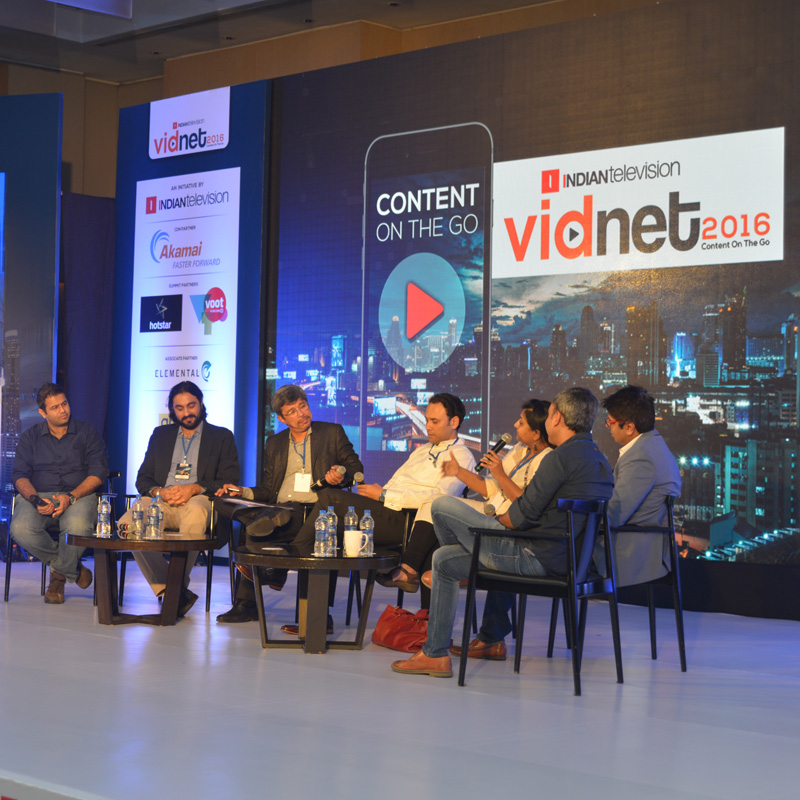
    Following the presentation on OTT trends in the APAC region by Media Partners Asia executive director Vivek Couto at VidNet, this question expectedly assumed importance.

    Indian Television Dot Com’s founder CEO and editor in chief Anil Wanvari flagged off the discussion by asking Isobar India MD Shamsuddin Jasani to define who is a customer for him?

    “A person who is consuming digital content through any medium be it TV, mobile, YouTube, Facebook, etc is my customer. I would spend dollars on a person who is consuming content via digital platforms, what is he consuming, time spent on that piece of content,” said Jasani.

    Adding his perspective on defining a digital customer was FoxyMoron co-founder Suveer Bajaj. He seconded the definition of an OTT consumer and added that he was one who migrated to the digital medium. “I have come across consumers who are consuming three hours on digital. There is a very powerful change that we are seeing right now. These people are plunging on digital than TV.”

    Citing example from his own personal experience, Jasani highlighted how his 6-year old kid consumes around six to seven hours of video content on various platforms like Voot, YouTube, etc. He opined that this is a powerful change that he is witnessing from TV which happens through demand. Bajaj further added that it is not just on demand but also on the go.

    dittoTV business head Archana Anand strongly believed on the platform’s subscription model. Underlining the success of ditto TV’s campaign and aggressive pricing, Anand believed that she and her team had grown the pie by reaching out to people who are not internet savvy audience and is very clear on not getting content for free. “We have marked the people who perhaps are not typical OTT audience to whom TV is being provided at a subscription of Rs 20. There is a huge audience who is alien to OTT in India and we are trying to get them on board by handholding them throughout the entire procedure of getting our app by just a missed call.

    Arre co-founder Ajay Chacko was sure he did not intend to become an OTT platform. “The way we are defining our consumers is not just through access and comfort but by creating new forms of content to drive change.”

    Voot, the AVOD platform from Viacom18 which is often credited with bolstering kids and originals apart from content from the various channels falling under the network, has targeted their digital natives. Their Head marketing and partnerships Akash Banerji dissected consumers into different categories depending upon-access and comfort, demographics and content business offers.

    Discussing the first point, he explained that there are 180 million TV households in India with an average of at least two persons in every house, meaning 350 million subscribers on Internet who are not necessarily active users. “In India, we have 120 video consumers out of which 20-30 million are native digital who are consuming videos online. It is up to a platform whether they are targeting digital natives or getting internet consumers who are not consuming videos or are looking at growing the pie of digital.”

    The discussion went a notch up with the panelists enlightening the audience on the regional content that the content providers have created so far.

    Even the consumers come from varied backgrounds. At the base of the pyramid is the young, college or office going people who are mostly from the metropolitans. The older males and women who are consuming on mobile and desktop are not consuming high velocity content like the youth comprise the mid level. Banerji said that in the past 18-24 months, he has also seen consumers evolving from tier 2 and tier 3 markets primarily consuming content on mobiles. “Rural consumers which are about 200 million i.e 80 per cent of India are also coming up on board in the next few years.”

    Voot follows clear cut understanding of content and is leveraging on its popular content library of TV shows from market. Kids content and Voot originals are the other two important key factors for the platform. “Our Voot originals do not have to follow any format or template. They have to resonate with the consumers”, he added.

    Banerji strongly believes that it is a myth for any business to chase app download numbers. “The players should work on active users and the video watch time.”

    With the second most important driver being content, focusing on just the demographics is not enough. Yash Raj Films Head of content and development Nikhil Taneja said the digital audience is primarily between the ages of 18 to 34. “We are not targeted at providing entertainment to the audiences through effective storytelling and providing emotions through content.”

    He also spoke about the different gender differences by sharing some interesting statistics about the traction and viewership of YRF’s shows. The platform, being a YouTube channel, manages to get some revenue from their channel but also has various other ways to make money. “We launch our own talent and if that talent gets picked by an advertiser, we are benefitted. Our show Love Shots has been picked up by airlines. It is definitely early for advertisers to invest but that does not stop us from creating good quality content.”

    Adding to that, Jasani said, “The customers are agnostic in accessing content and consume digital data through Wi-fi and other services available to them. The offline viewing space is also brewing up rapidly in India. If we are putting an advertiser on every stage of digital consumption, there is no need for him to be on TV.” With various service providers launching 4G, Jasani opined that within 18 months the data is going to become cheap. “Adding to cheap data rates is the launch of smartphones for Rs 2,000 which is also going to grow in the future.”

    Banerji also shed light on how the viewing dynamics are changing and why that change is happening. “With consumers in control of what they consume and content being the king, the need for quality content is just going to grow. The illusion that most of us have on the content that can go on a digital platform has to be broken”.

    The panel discussion also concentrated on the discovery of content in various languages which is currently difficult. The players said they were collectively working on the challenge.

    One thing that all the panelists accepted was to keep innovating and experimenting with content.

    Anand spoke of how asked how she is facing a challenge from payment gateways as they are in English which majority of the Indians do not understand. “Even if there is a potential customer, he has to be guided to pay for my subscription and so.80 per cent of my potential subscribers cannot be captured.” She opined that all the players in the eco-system and various payment platforms have to think in this direction.

    But are there advertisers willing to get on board? Bajaj said that it is no more about ads but content. Selective content will attract specific advertisers.

    “Advertisers are squeamish to put money. We decide after evaluating how it will help the brand after a year. We are no more selling a product but brand through its content,” said Taneja.

    “We are not finicky about not putting ads on dittoTV. There is an ad replacement technology through which I can have two different ads on TV and digital for the same content,” added Anand.

    Jasani said the digital advertising pie is small as the major audience is not yet online. The consumers are not ready to pay for content but the fact that innumerable content creators are evolving cannot be sidelined. With both AVOD and SVOD having their own perks and challenges, there is no tangible answer that any player can provide currently.

    It is an exciting space where everyone is experimenting and innovating. The panel discussion concluded by citing that both the models will co-exist at least for 10 years down the line.
  • Decoding the Indian online video watchers remains an enigma

    Decoding the Indian online video watchers remains an enigma

    MUMBAI: Perhaps the biggest challenge for programmers on online media is to define and segregate the online viewers who will take to OTT mediums in India.

    Following the presentation on OTT trends in the APAC region by Media Partners Asia executive director Vivek Couto at VidNet, this question expectedly assumed importance.

    Indian Television Dot Com’s founder CEO and editor in chief Anil Wanvari flagged off the discussion by asking Isobar India MD Shamsuddin Jasani to define who is a customer for him?

    “A person who is consuming digital content through any medium be it TV, mobile, YouTube, Facebook, etc is my customer. I would spend dollars on a person who is consuming content via digital platforms, what is he consuming, time spent on that piece of content,” said Jasani.

    Adding his perspective on defining a digital customer was FoxyMoron co-founder Suveer Bajaj. He seconded the definition of an OTT consumer and added that he was one who migrated to the digital medium. “I have come across consumers who are consuming three hours on digital. There is a very powerful change that we are seeing right now. These people are plunging on digital than TV.”

    Citing example from his own personal experience, Jasani highlighted how his 6-year old kid consumes around six to seven hours of video content on various platforms like Voot, YouTube, etc. He opined that this is a powerful change that he is witnessing from TV which happens through demand. Bajaj further added that it is not just on demand but also on the go.

    dittoTV business head Archana Anand strongly believed on the platform’s subscription model. Underlining the success of ditto TV’s campaign and aggressive pricing, Anand believed that she and her team had grown the pie by reaching out to people who are not internet savvy audience and is very clear on not getting content for free. “We have marked the people who perhaps are not typical OTT audience to whom TV is being provided at a subscription of Rs 20. There is a huge audience who is alien to OTT in India and we are trying to get them on board by handholding them throughout the entire procedure of getting our app by just a missed call.

    Arre co-founder Ajay Chacko was sure he did not intend to become an OTT platform. “The way we are defining our consumers is not just through access and comfort but by creating new forms of content to drive change.”

    Voot, the AVOD platform from Viacom18 which is often credited with bolstering kids and originals apart from content from the various channels falling under the network, has targeted their digital natives. Their Head marketing and partnerships Akash Banerji dissected consumers into different categories depending upon-access and comfort, demographics and content business offers.

    Discussing the first point, he explained that there are 180 million TV households in India with an average of at least two persons in every house, meaning 350 million subscribers on Internet who are not necessarily active users. “In India, we have 120 video consumers out of which 20-30 million are native digital who are consuming videos online. It is up to a platform whether they are targeting digital natives or getting internet consumers who are not consuming videos or are looking at growing the pie of digital.”

    The discussion went a notch up with the panelists enlightening the audience on the regional content that the content providers have created so far.

    Even the consumers come from varied backgrounds. At the base of the pyramid is the young, college or office going people who are mostly from the metropolitans. The older males and women who are consuming on mobile and desktop are not consuming high velocity content like the youth comprise the mid level. Banerji said that in the past 18-24 months, he has also seen consumers evolving from tier 2 and tier 3 markets primarily consuming content on mobiles. “Rural consumers which are about 200 million i.e 80 per cent of India are also coming up on board in the next few years.”

    Voot follows clear cut understanding of content and is leveraging on its popular content library of TV shows from market. Kids content and Voot originals are the other two important key factors for the platform. “Our Voot originals do not have to follow any format or template. They have to resonate with the consumers”, he added.

    Banerji strongly believes that it is a myth for any business to chase app download numbers. “The players should work on active users and the video watch time.”

    With the second most important driver being content, focusing on just the demographics is not enough. Yash Raj Films Head of content and development Nikhil Taneja said the digital audience is primarily between the ages of 18 to 34. “We are not targeted at providing entertainment to the audiences through effective storytelling and providing emotions through content.”

    He also spoke about the different gender differences by sharing some interesting statistics about the traction and viewership of YRF’s shows. The platform, being a YouTube channel, manages to get some revenue from their channel but also has various other ways to make money. “We launch our own talent and if that talent gets picked by an advertiser, we are benefitted. Our show Love Shots has been picked up by airlines. It is definitely early for advertisers to invest but that does not stop us from creating good quality content.”

    Adding to that, Jasani said, “The customers are agnostic in accessing content and consume digital data through Wi-fi and other services available to them. The offline viewing space is also brewing up rapidly in India. If we are putting an advertiser on every stage of digital consumption, there is no need for him to be on TV.” With various service providers launching 4G, Jasani opined that within 18 months the data is going to become cheap. “Adding to cheap data rates is the launch of smartphones for Rs 2,000 which is also going to grow in the future.”

    Banerji also shed light on how the viewing dynamics are changing and why that change is happening. “With consumers in control of what they consume and content being the king, the need for quality content is just going to grow. The illusion that most of us have on the content that can go on a digital platform has to be broken”.

    The panel discussion also concentrated on the discovery of content in various languages which is currently difficult. The players said they were collectively working on the challenge.

    One thing that all the panelists accepted was to keep innovating and experimenting with content.

    Anand spoke of how asked how she is facing a challenge from payment gateways as they are in English which majority of the Indians do not understand. “Even if there is a potential customer, he has to be guided to pay for my subscription and so.80 per cent of my potential subscribers cannot be captured.” She opined that all the players in the eco-system and various payment platforms have to think in this direction.

    But are there advertisers willing to get on board? Bajaj said that it is no more about ads but content. Selective content will attract specific advertisers.

    “Advertisers are squeamish to put money. We decide after evaluating how it will help the brand after a year. We are no more selling a product but brand through its content,” said Taneja.

    “We are not finicky about not putting ads on dittoTV. There is an ad replacement technology through which I can have two different ads on TV and digital for the same content,” added Anand.

    Jasani said the digital advertising pie is small as the major audience is not yet online. The consumers are not ready to pay for content but the fact that innumerable content creators are evolving cannot be sidelined. With both AVOD and SVOD having their own perks and challenges, there is no tangible answer that any player can provide currently.

    It is an exciting space where everyone is experimenting and innovating. The panel discussion concluded by citing that both the models will co-exist at least for 10 years down the line.
  • Government & private initiatives required to achieve ambitious goal of Digital India

    Government & private initiatives required to achieve ambitious goal of Digital India

    MUMBAI: According to Akamai’s 2015 Asia Pacific Survey, India had the lowest average broadband speeds of 2.5 Mbps. As 3G speeds increase and 4G adoption is still nascent; the quality of internet access and affordability in terms of data tariffs and on 3G/4G enabled devices continue to remain a challenge to deliver consumer value. On the regulatory side, there have been a lot of discussions on net neutrality and licensing of OTT services. These will have a significant impact on how digital media evolves in the future.

    Sony Pictures Networks India Pvt Ltd. head – marketing & analytics, digital business Abhishek Joshi strongly believes that content is where you stream it and the government has the a say in it. “The OTT industry has graduated from the innovators stage to the early adopters stage within the innovation diffusion curve, based on distinguished product strategies by players in the market. However to cross the chasm to gain the majority market, policy makers will have to play a very big role. Infrastructure and regulatory policies are going to be the biggest differentiators for industry growth for the next 18 months.”

    While on the other hand, Ping Networks co-founder Rajeshree Naik is of the opinion that the government should not play any role in an individual’sprivacy. “That is a grey area. The government should rather focus on the infrastructure, companies coming up, partnerships, investments, etc rather than on content. Infrastructure does not bother pay because I know it is going to get better soon. The thing that scares me are the two terms related to digital i.e. no censorship and payment methods. Though, the beauty of digital is having no regulations, collective responsibility is to be taken ensuring that the government stays away.”

    Supporting Joshi on government interference was VOOT head, marketing and partnerships Akash Banerji. “Short form of content is not the solution. “These are early days for OTT in India. Players are either following the AVOD or SVOD model today. Both are profitable but for now what concerns me about the SVOD model is that why should a consumer pay for subscription when he is already paying a lot for mobile data. “

    Banerji adds, “There also is limitation of vast content on platforms. 80-90 percent of content is with the top players and a minuscule number of hours of great quality content is curated. For a new entrant for eg VOOT, it is difficult to drive money immediately after it rolled out.”

    Whereas Joshi thinks that even the consumers are not inclined to pay. “There is no inclination to pay. They will pay for content that has some value for them. They want quality content, expect HD, streamless service, etc.”

    Hungama.com COO Siddharth Roy opined that transactions have worked. “There is massive copyright infringement. The government needs to have a robust and strong IPR. Branded entertainment is the driver of this entire eco-system. Branded IP makes money.”

    “Value comes from the content and the way it is consumed. The business needs a lot of clarity. Government and all the players should work together to come to a concrete conclusion. In the end, crows is the king,” asserts Banerji.

    Naik believes that videos and original content will co-exist and that content will keep evolving.

    With global players like Netflix and Amazon Prime in India, the players present in the panel are looking forward to the global entrants. “If Netflix is a success in India, the creators will have more chance to put their content on the digital platforms. It is investing plenty on producing original content here and will be a good example. Viewers will love to pay for quality content that can entertain them.”

    Joshi is also excited with the entry of this global player and India and thinks that it is only going to be good for the business.

    Sharing his thoughts on the future of India’s burgeoning digital market, Technicolor’s country head for India Biren Ghose, in his valedictory remarks, said, “Content is assuming new life in the emerging digital economy. Technology enables innovations in imagery that could hitherto neither be produced nor consumed. FICCI and LA India Film Council need to be complimented on encouraging the conversation for the Indian agenda in this space.”

    Panelists at FICCI Knowledge Series 2016 for the Regulatory and Infrastructural Challenges for Digital Media, concluded that a combination of government and private initiatives would need to be rolled out to achieve the ambitious goal of a truly Digital India.

  • Government & private initiatives required to achieve ambitious goal of Digital India

    Government & private initiatives required to achieve ambitious goal of Digital India

    MUMBAI: According to Akamai’s 2015 Asia Pacific Survey, India had the lowest average broadband speeds of 2.5 Mbps. As 3G speeds increase and 4G adoption is still nascent; the quality of internet access and affordability in terms of data tariffs and on 3G/4G enabled devices continue to remain a challenge to deliver consumer value. On the regulatory side, there have been a lot of discussions on net neutrality and licensing of OTT services. These will have a significant impact on how digital media evolves in the future.

    Sony Pictures Networks India Pvt Ltd. head – marketing & analytics, digital business Abhishek Joshi strongly believes that content is where you stream it and the government has the a say in it. “The OTT industry has graduated from the innovators stage to the early adopters stage within the innovation diffusion curve, based on distinguished product strategies by players in the market. However to cross the chasm to gain the majority market, policy makers will have to play a very big role. Infrastructure and regulatory policies are going to be the biggest differentiators for industry growth for the next 18 months.”

    While on the other hand, Ping Networks co-founder Rajeshree Naik is of the opinion that the government should not play any role in an individual’sprivacy. “That is a grey area. The government should rather focus on the infrastructure, companies coming up, partnerships, investments, etc rather than on content. Infrastructure does not bother pay because I know it is going to get better soon. The thing that scares me are the two terms related to digital i.e. no censorship and payment methods. Though, the beauty of digital is having no regulations, collective responsibility is to be taken ensuring that the government stays away.”

    Supporting Joshi on government interference was VOOT head, marketing and partnerships Akash Banerji. “Short form of content is not the solution. “These are early days for OTT in India. Players are either following the AVOD or SVOD model today. Both are profitable but for now what concerns me about the SVOD model is that why should a consumer pay for subscription when he is already paying a lot for mobile data. “

    Banerji adds, “There also is limitation of vast content on platforms. 80-90 percent of content is with the top players and a minuscule number of hours of great quality content is curated. For a new entrant for eg VOOT, it is difficult to drive money immediately after it rolled out.”

    Whereas Joshi thinks that even the consumers are not inclined to pay. “There is no inclination to pay. They will pay for content that has some value for them. They want quality content, expect HD, streamless service, etc.”

    Hungama.com COO Siddharth Roy opined that transactions have worked. “There is massive copyright infringement. The government needs to have a robust and strong IPR. Branded entertainment is the driver of this entire eco-system. Branded IP makes money.”

    “Value comes from the content and the way it is consumed. The business needs a lot of clarity. Government and all the players should work together to come to a concrete conclusion. In the end, crows is the king,” asserts Banerji.

    Naik believes that videos and original content will co-exist and that content will keep evolving.

    With global players like Netflix and Amazon Prime in India, the players present in the panel are looking forward to the global entrants. “If Netflix is a success in India, the creators will have more chance to put their content on the digital platforms. It is investing plenty on producing original content here and will be a good example. Viewers will love to pay for quality content that can entertain them.”

    Joshi is also excited with the entry of this global player and India and thinks that it is only going to be good for the business.

    Sharing his thoughts on the future of India’s burgeoning digital market, Technicolor’s country head for India Biren Ghose, in his valedictory remarks, said, “Content is assuming new life in the emerging digital economy. Technology enables innovations in imagery that could hitherto neither be produced nor consumed. FICCI and LA India Film Council need to be complimented on encouraging the conversation for the Indian agenda in this space.”

    Panelists at FICCI Knowledge Series 2016 for the Regulatory and Infrastructural Challenges for Digital Media, concluded that a combination of government and private initiatives would need to be rolled out to achieve the ambitious goal of a truly Digital India.