Tag: Akamai

  • Indian players have an edge over global OTT platforms: Akamai’s Sidharth Pisharoti

    Indian players have an edge over global OTT platforms: Akamai’s Sidharth Pisharoti

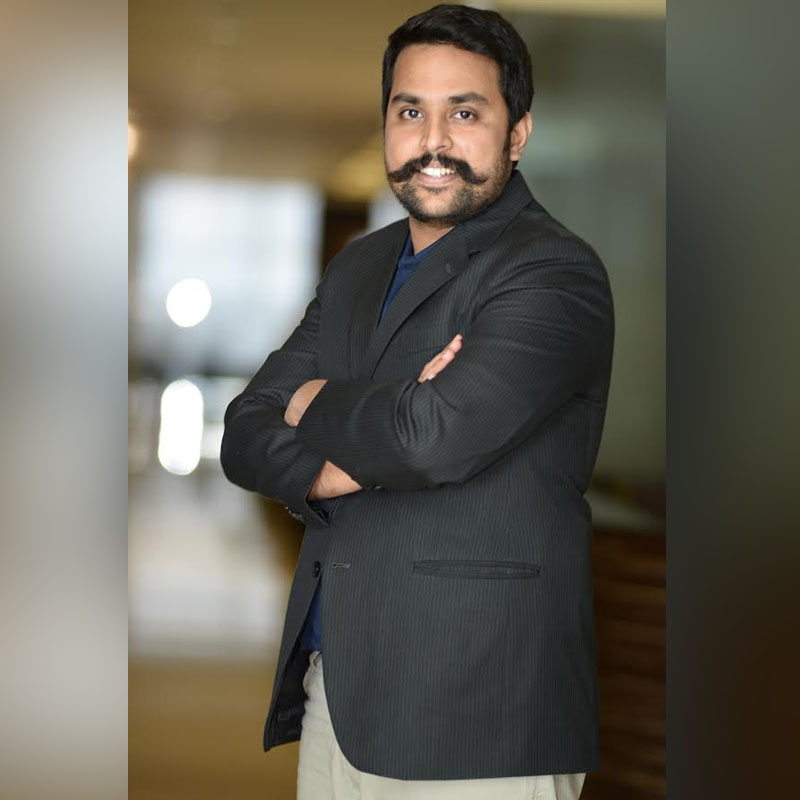
    Starting from one of the biggest Information Technology companies, Wipro Technologies, as a technical facilitator, he pursued young professionals program in general management from Indian Institute of Management, Calcutta. Soon after attaining a degree, he joined American content delivery network (CDN) and cloud services provider Akamai Technologies, Inc. as a relationship manager of emerging customer group in December 2006. Presently serving the company as the regional VP for media in APAC and Japan, Sidharth Pisharoti is a goal-oriented professional known for his alertness in innovating and bringing in new ideas to improve business processes.

    In an interview with indiantelevision.com’s Megha Parmar, Pisharoti shares interesting insights on a variety of topics, including the growing OTT space in India, impact of 4G, changing consumer behavior and the way forward for the entire digital eco-system. Edited excerpts from the interaction:

    Akamai Technologies, Inc. is an American content delivery network (CDN) and cloud services provider headquartered in Cambridge, Massachusetts. The company’s advanced web performance, mobile performance, cloud security and media delivery solutions are said to be revolutionizing how businesses optimize consumer, enterprise and entertainment experiences for any device, anywhere.

    Edited excerpts from the interview:

    Q: Akamai provides several products like web performance, cloud security, media delivery, etc. In a country that’s increasingly getting digital, who would be your Indian customers and how are each of these products faring?

    Akamai is very focussed on India. We are the largest content delivery platform in the world, which also applies to India. We have 3000+ servers, 59 networks across 14 cities in India. If you look at our customer base, we probably have 265 customers here and these are across different industry verticals. We have the customers who are amongst the top five IT services, media services, commerce services segments, apart from top three three stock exchanges in the country. So, whether you talk about IT, media and entertainment, e-commerce, retail or finance, we have customers across all these verticals.

    Q: Over The Top (OTT) is the new buzzword in India as the number of players, both global and local, grows. What is your take on it?

    If we focus on the media and OTT space, it is growing at   fast pace in India. If you look at the number of OTT platforms that are providing content, it is increasing by the day and so are the audience. The good news here is that not just the services are available, but the consumer pattern, behaviour and the adoption too are growing by the day. Earlier, there was a notion that mostly sports, cricket and live cricket are in demand. But that notion has changed a lot in the recent past. It’s not just live content but also on-demand content, episodic content and anytime content that is available out there which is being consumed by the users.

    Q: What could be the reasons for this change in consumer behaviour and consumption patterns?

    What is happening now is that there are more smart phones being available in the market. Even at Akamai, a big chunk of our delivery is happening to smart phones apart from the traditional internet devices. There are two major developments in India.

    First, the smart phone market has changed and accessibility has improved. Today, you can get a decent Android device at Rs 4,000, which is pretty affordable as compared to what it was four-five years ago. Second, the overall infrastructure has improved. Not just launch of Reliance Jio has spurred on other players, but availability of 4G across the different networks has improved too as compared to what it was one year ago. Today, 4G is available almost throughout the country and with Jio’s arrival the reach has further improved.  

    Both the factors are equally important for any kind of content to be consumed, especially when you are talking about OTT, which is primarily consumed by personal computing devices. The screen size is getting smaller and the consumers are increasing. We are moving away from demography of people who believed in the family viewing experience to having a personal single screen for each member in the house.

    Q:When you say more people are consuming more on smart phones, is the time spent on viewing too increasing? If yes, who are these people and what are they watching?

    The viewing time is definitely increasing. If we look at purely episodic content as video on demand (VOD), the viewing time has increased from what it was 18 months ago.  The average time spent was 5-7 minutes, but it has gone up to as high as about 18-20 minutes now. This is a three-fold jump than what the average session brings in. We are seeing an improvement in the viewing time because of these two reasons. Content providers are ready to provide good quality videos without any buffering or start time. That is the experience the consumer wants — he wants a television-like experience. Because content creators are able to provide uninterrupted content, the viewership is going up. It is not yet as big as TV’s, but it is getting there.

    People are watching from across various demographics though we are yet to nail down a particular type of individual watching. We are having difficulty in pinpointing that as of now, but consumers from tier 2 and tier 3 cities and towns are increasing and are coming to our platform.

    Q: What do you think will be the impact of 4G in India? Do you think it will open up choked and inadequate availability of bandwidth?

    Absolutely. We are already seeing 4G’s effects. More and cheaper bandwidths are available with consumers that are improving consumptions. The consumption was not that great earlier because of two factors. One, the availability and affordability of good quality phones and, second, data costs were high. Even four month back, before the launch of Jio, we were talking about Rs 200/ GB. Today we are talking about Rs 50 per GB. I think, in a year from now even this is going to substantially come down. Data has to become like any other affordable commodity. When it becomes the new normal for the consumers, the industry is obviously going to be impacted.

    Q: While players are still experimenting with their models, what, according to you, will stay in long term?

    See, you have to shift the deal. The consumer will either pay for content or for data. Expecting them to pay for both the things is pushing it a bit too much. Today, the reason behind content creators predominantly offering ad-driven content is because they can’t charge for it as the consumer is already paying for the data. When data becomes cheaper, that is when these creators or broadcasters with their platforms can charge for the content.

    To answer your question, it has to be a dual approach. There has to be content that is available on the `freemium’ model with some part being free of cost, that is advertising-supported, and some behind the pay wall for which the subscribers will need to pay. The Indian consumers will adapt to this model slowly. The day data becomes cheaper and easily accessible, that day content providers can make lot more earnings from subscription perspective.

    Q: When you talk about `freemium’ model, payment gateways remain a crucial part. Will making payments online become easier with ongoing digitization and government push towards cashless transactions in the aftermath of currency demonetisation?

    If you had asked me that question a month ago, I would have said this is definitely a challenge. But, now with demonetization happening and the country trying to moving to a cashless economy, cajoled by the PM Modi government to increase of digital wallets, etc, the scenario is undergoing a change. That is good news for all the online players. Not just OTT, but anyone who is selling or buying online benefits from these changes.

    I think in the medium to long term, the problem will resolve, but, right now, not many consumers are comfortable transacting online. It’s less of being comfortable or paying than choosing what they should pay for. For them, paying for data and content is like a double whammy. With data becoming cheaper, consumers will be willing to pay for content. With the new norms that the government is pushing, it will be easier for the consumers to pay through digital wallets.

    Q: A lot of online content creators are betting big on the kids’ space with original content. Do you think there’s demand for kids’ content in India?

    I think it’s a very good genre to be in. If you remove T-Series and Eros content, some of the biggest YouTube channels in India focus on kids’ content and would definitely have large subscriber base. Such channels have original content created by small companies who are purely creating it for kids. So people who are producing kids’ content are going to be benefitted. It is a big genre, which is has eluded the focused of big OTT players.

    Q: What about the regional markets in India?

    Not many players have looked at it separately and are primarily providing content in Hindi or English. If you look at the OTT space today, some of the big players do have regional content, but their catalogue of regional content is not as complusive as their Hindi catalogue. Though a small quantity of original regional content is being produced, OTT platforms are also syndicating it content from some of the south  Indian media houses. Eventually, each of these markets, for example states of Kerala,  Andhra Pradesh or Tamil Nadu, will have one local OTT player who will be the biggest local player in that market with local content. And, there will be cross syndication. So the national players will definitely syndicate content of all languages, but local players will focus on content of their region’s language and will syndicate content from other languages. I think that is the future. Just like the television space where there a few national level TV channels and many in local languages.

    We will have one or two big OTT players — we are already seeing the emergence of two very big ones platforms at a national level — and then we will see each of the Indian states having one big local player.

    Q: But will that not clutter the space or confuse the consumers? What if they want international as well as their regional content together on one platform?

    The current and future generations are the new subscribers or consumers who are getting online. They are already digital and understand only the digital language.  For many of these consumers TV or cable is non-existent as most of their video consumption is online. Unlike in the US, where there are two large players who are catering to the whole market, the scenario in India is different because in the West primarily there is one language (English) that is popular. We have a huge population with different cultures, speaking different languages and dialects and, hence, there is space for more than just two local players.

    Q: Apart from infrastructure problem, what are the other challenges in the current digital space?  

    Another challenge is to put together the video eco-system. Most of these OTT  companies or the media houses are used to broadcast business because that is their bread and butter. In the last 20 years, they have been working on broadcast and they know that after the content is ready, they have to push it through satellite or cable to people’s homes. But digital is a different ball game. Once the content is prepared, it has to go through its own video platform for it to be ready for a satellite or mobile phone. The biggest challenge is the digital media workflow. The first step is content preparation, which basically means that once you get content that’s to be broadcast, you have to encode it or convert it into a format that can be consumed digitally. Then, you have to re-package it to ensure that it fits all the different softwares on different devices.

    The next step is to transport it to all these formats, repackage it again to make sure storage is proper for a content management system and then send it to a content delivery platform. Then you have to get it on your video player and how do you plan to use it in your analytics and reports. This entire media platform workflow is not easy to manage and is a big challenge when lot of people move from traditional broadcast or regular online streaming to a pure OTT platform. The complexities are very high and that is a challenge.

    Q: Online video consumption has also increased digital piracy. Isn’t this a big challenge for content owners too?

    The good news is that there are lot of companies, including us, who offer security services. Using these services combined with DRN, content protection is possible. Security is like insurance. Can someone give you a 100 percent security? No. But, can you give 99.9 per cent security? Yes. Simply because technology is available today. Whether it is securing your application or data centre or media content, Akamai has a a range of security offerings, which help the media customers to help the customers.

    Second, I also believe that piracy exists when there is non-availability of content or when it is expensive to acquire or view. It happens when someone finds some content at a cheaper price than the legal content. But, today content providers are either giving it for free or are offering it at a very nominal price. Hence, they are killing piracy by making content more accessible. People who are involved in digital piracy are not succeeding because that content is anyway available in high quality on a particular device at affordable rates. So, why would a person go and buy pirated content? This is the case for majority of content. Digital piracy is slowly getting killed. The only problem is movies. But again with platforms like Hotstar, they are releasing movies within four-five weeks of a movie’s release.

    Q: Different mix of companies have got into digital space with even DTH operators now active in this space. Who will be the next bunch of customers for them? What is the scenario there?

    It’s an interesting proposition. I believe you will probably have only one leader in that space too. On one hand, you have folks like Tata Sky who have already moved to that model and are leading in that space. On the other hand, you have dittoTV , which offers you a TV-kind of a service. And, then you have telcos like Reliance Jio, which gives similar kind of service. It will be interesting to see how that plays out. I think there will be a consolidation eventually. I don’t think that for a pure play of a bouquet of channels service,  like each of these players are offering, you can have three to four players.

    It’s about curated content, original content and watching content from wherever the consumer wants. As the market is so fragmented, some of the content syndication deals will be interesting. But, I think they will all reach a point wherein they will realise that rather than syndicating the content, it is better to have it under own network as it is more lucrative. When this happens, you will stop seeing content syndication as well. We have to wait and watch. From DTH point of view, we can have more than one large player.

    Q: Do you see Netflix becoming successful in India? Should the Indian platforms worry about its entrance?

    Netflix, as of right now, is a very urban Indian phenomenon. It produces some original content and some premium content that is consumed by a certain section of the population. It can also turn out that their content strategy for India changes in the longer run. As of now, Netflix is not eating into the viewership base of a Hotstar or a Voot. Both these platforms have their separate viewership base, but that might change when the content that they offer changes or gets popular in India.

    I think these Indian players air some of the shows on their platform first before they go on TV. They air some shows before 24-hour of its TV release. Though it is premium subscription, it is available. So, it is not catch-up television. Their strategy is if-you-want-content-before-TV- we-are-providing-it. Eventually, consumers will start accepting that. That is the plan — consumers should first come to a digital platform and then move on to traditional TV broadcast.

    In the longer run, unless global players have a different content strategy for India, I don’t think they can have (subscriber) numbers like some of these local players do. I think the local players have a big edge over Netflix or any other global platform. Incidentally, globally too Netflix has changed its strategy and has started producing original content. It could be either the studios have stopped giving them content or are giving content at a that makes it difficult for content to be monetised by the OTT platform. So, Netflix has started becoming a media house itself. Same thing has to be India specific.

    Q: What are your predictions for the digital eco-system in the year 2017?

    The future should see is decent amount of consolidation.  In terms of pure play Indian content, I think the players who are leading, will continue to lead at a national level. Locally, there is space for few players that will cater to certain languages. Over the next two to three years, content syndication will go down as each of these platforms will get more consumers and, in turn, generate revenues through subscription. Global players will definitely enter India and will get only a handful of subscribers unless their content strategy is different. To achieve that, they will have to spend a lot of energy, resources and money in India. We can probably have maximum of 10 OTT players — three at national level, two global and couple of local providers.
  • Indian players have an edge over global OTT platforms: Akamai’s Sidharth Pisharoti

    Indian players have an edge over global OTT platforms: Akamai’s Sidharth Pisharoti

    Starting from one of the biggest Information Technology companies, Wipro Technologies, as a technical facilitator, he pursued young professionals program in general management from Indian Institute of Management, Calcutta. Soon after attaining a degree, he joined American content delivery network (CDN) and cloud services provider Akamai Technologies, Inc. as a relationship manager of emerging customer group in December 2006. Presently serving the company as the regional VP for media in APAC and Japan, Sidharth Pisharoti is a goal-oriented professional known for his alertness in innovating and bringing in new ideas to improve business processes.

    In an interview with indiantelevision.com’s Megha Parmar, Pisharoti shares interesting insights on a variety of topics, including the growing OTT space in India, impact of 4G, changing consumer behavior and the way forward for the entire digital eco-system. Edited excerpts from the interaction:

    Akamai Technologies, Inc. is an American content delivery network (CDN) and cloud services provider headquartered in Cambridge, Massachusetts. The company’s advanced web performance, mobile performance, cloud security and media delivery solutions are said to be revolutionizing how businesses optimize consumer, enterprise and entertainment experiences for any device, anywhere.

    Edited excerpts from the interview:

    Q: Akamai provides several products like web performance, cloud security, media delivery, etc. In a country that’s increasingly getting digital, who would be your Indian customers and how are each of these products faring?

    Akamai is very focussed on India. We are the largest content delivery platform in the world, which also applies to India. We have 3000+ servers, 59 networks across 14 cities in India. If you look at our customer base, we probably have 265 customers here and these are across different industry verticals. We have the customers who are amongst the top five IT services, media services, commerce services segments, apart from top three three stock exchanges in the country. So, whether you talk about IT, media and entertainment, e-commerce, retail or finance, we have customers across all these verticals.

    Q: Over The Top (OTT) is the new buzzword in India as the number of players, both global and local, grows. What is your take on it?

    If we focus on the media and OTT space, it is growing at   fast pace in India. If you look at the number of OTT platforms that are providing content, it is increasing by the day and so are the audience. The good news here is that not just the services are available, but the consumer pattern, behaviour and the adoption too are growing by the day. Earlier, there was a notion that mostly sports, cricket and live cricket are in demand. But that notion has changed a lot in the recent past. It’s not just live content but also on-demand content, episodic content and anytime content that is available out there which is being consumed by the users.

    Q: What could be the reasons for this change in consumer behaviour and consumption patterns?

    What is happening now is that there are more smart phones being available in the market. Even at Akamai, a big chunk of our delivery is happening to smart phones apart from the traditional internet devices. There are two major developments in India.

    First, the smart phone market has changed and accessibility has improved. Today, you can get a decent Android device at Rs 4,000, which is pretty affordable as compared to what it was four-five years ago. Second, the overall infrastructure has improved. Not just launch of Reliance Jio has spurred on other players, but availability of 4G across the different networks has improved too as compared to what it was one year ago. Today, 4G is available almost throughout the country and with Jio’s arrival the reach has further improved.  

    Both the factors are equally important for any kind of content to be consumed, especially when you are talking about OTT, which is primarily consumed by personal computing devices. The screen size is getting smaller and the consumers are increasing. We are moving away from demography of people who believed in the family viewing experience to having a personal single screen for each member in the house.

    Q:When you say more people are consuming more on smart phones, is the time spent on viewing too increasing? If yes, who are these people and what are they watching?

    The viewing time is definitely increasing. If we look at purely episodic content as video on demand (VOD), the viewing time has increased from what it was 18 months ago.  The average time spent was 5-7 minutes, but it has gone up to as high as about 18-20 minutes now. This is a three-fold jump than what the average session brings in. We are seeing an improvement in the viewing time because of these two reasons. Content providers are ready to provide good quality videos without any buffering or start time. That is the experience the consumer wants — he wants a television-like experience. Because content creators are able to provide uninterrupted content, the viewership is going up. It is not yet as big as TV’s, but it is getting there.

    People are watching from across various demographics though we are yet to nail down a particular type of individual watching. We are having difficulty in pinpointing that as of now, but consumers from tier 2 and tier 3 cities and towns are increasing and are coming to our platform.

    Q: What do you think will be the impact of 4G in India? Do you think it will open up choked and inadequate availability of bandwidth?

    Absolutely. We are already seeing 4G’s effects. More and cheaper bandwidths are available with consumers that are improving consumptions. The consumption was not that great earlier because of two factors. One, the availability and affordability of good quality phones and, second, data costs were high. Even four month back, before the launch of Jio, we were talking about Rs 200/ GB. Today we are talking about Rs 50 per GB. I think, in a year from now even this is going to substantially come down. Data has to become like any other affordable commodity. When it becomes the new normal for the consumers, the industry is obviously going to be impacted.

    Q: While players are still experimenting with their models, what, according to you, will stay in long term?

    See, you have to shift the deal. The consumer will either pay for content or for data. Expecting them to pay for both the things is pushing it a bit too much. Today, the reason behind content creators predominantly offering ad-driven content is because they can’t charge for it as the consumer is already paying for the data. When data becomes cheaper, that is when these creators or broadcasters with their platforms can charge for the content.

    To answer your question, it has to be a dual approach. There has to be content that is available on the `freemium’ model with some part being free of cost, that is advertising-supported, and some behind the pay wall for which the subscribers will need to pay. The Indian consumers will adapt to this model slowly. The day data becomes cheaper and easily accessible, that day content providers can make lot more earnings from subscription perspective.

    Q: When you talk about `freemium’ model, payment gateways remain a crucial part. Will making payments online become easier with ongoing digitization and government push towards cashless transactions in the aftermath of currency demonetisation?

    If you had asked me that question a month ago, I would have said this is definitely a challenge. But, now with demonetization happening and the country trying to moving to a cashless economy, cajoled by the PM Modi government to increase of digital wallets, etc, the scenario is undergoing a change. That is good news for all the online players. Not just OTT, but anyone who is selling or buying online benefits from these changes.

    I think in the medium to long term, the problem will resolve, but, right now, not many consumers are comfortable transacting online. It’s less of being comfortable or paying than choosing what they should pay for. For them, paying for data and content is like a double whammy. With data becoming cheaper, consumers will be willing to pay for content. With the new norms that the government is pushing, it will be easier for the consumers to pay through digital wallets.

    Q: A lot of online content creators are betting big on the kids’ space with original content. Do you think there’s demand for kids’ content in India?

    I think it’s a very good genre to be in. If you remove T-Series and Eros content, some of the biggest YouTube channels in India focus on kids’ content and would definitely have large subscriber base. Such channels have original content created by small companies who are purely creating it for kids. So people who are producing kids’ content are going to be benefitted. It is a big genre, which is has eluded the focused of big OTT players.

    Q: What about the regional markets in India?

    Not many players have looked at it separately and are primarily providing content in Hindi or English. If you look at the OTT space today, some of the big players do have regional content, but their catalogue of regional content is not as complusive as their Hindi catalogue. Though a small quantity of original regional content is being produced, OTT platforms are also syndicating it content from some of the south  Indian media houses. Eventually, each of these markets, for example states of Kerala,  Andhra Pradesh or Tamil Nadu, will have one local OTT player who will be the biggest local player in that market with local content. And, there will be cross syndication. So the national players will definitely syndicate content of all languages, but local players will focus on content of their region’s language and will syndicate content from other languages. I think that is the future. Just like the television space where there a few national level TV channels and many in local languages.

    We will have one or two big OTT players — we are already seeing the emergence of two very big ones platforms at a national level — and then we will see each of the Indian states having one big local player.

    Q: But will that not clutter the space or confuse the consumers? What if they want international as well as their regional content together on one platform?

    The current and future generations are the new subscribers or consumers who are getting online. They are already digital and understand only the digital language.  For many of these consumers TV or cable is non-existent as most of their video consumption is online. Unlike in the US, where there are two large players who are catering to the whole market, the scenario in India is different because in the West primarily there is one language (English) that is popular. We have a huge population with different cultures, speaking different languages and dialects and, hence, there is space for more than just two local players.

    Q: Apart from infrastructure problem, what are the other challenges in the current digital space?  

    Another challenge is to put together the video eco-system. Most of these OTT  companies or the media houses are used to broadcast business because that is their bread and butter. In the last 20 years, they have been working on broadcast and they know that after the content is ready, they have to push it through satellite or cable to people’s homes. But digital is a different ball game. Once the content is prepared, it has to go through its own video platform for it to be ready for a satellite or mobile phone. The biggest challenge is the digital media workflow. The first step is content preparation, which basically means that once you get content that’s to be broadcast, you have to encode it or convert it into a format that can be consumed digitally. Then, you have to re-package it to ensure that it fits all the different softwares on different devices.

    The next step is to transport it to all these formats, repackage it again to make sure storage is proper for a content management system and then send it to a content delivery platform. Then you have to get it on your video player and how do you plan to use it in your analytics and reports. This entire media platform workflow is not easy to manage and is a big challenge when lot of people move from traditional broadcast or regular online streaming to a pure OTT platform. The complexities are very high and that is a challenge.

    Q: Online video consumption has also increased digital piracy. Isn’t this a big challenge for content owners too?

    The good news is that there are lot of companies, including us, who offer security services. Using these services combined with DRN, content protection is possible. Security is like insurance. Can someone give you a 100 percent security? No. But, can you give 99.9 per cent security? Yes. Simply because technology is available today. Whether it is securing your application or data centre or media content, Akamai has a a range of security offerings, which help the media customers to help the customers.

    Second, I also believe that piracy exists when there is non-availability of content or when it is expensive to acquire or view. It happens when someone finds some content at a cheaper price than the legal content. But, today content providers are either giving it for free or are offering it at a very nominal price. Hence, they are killing piracy by making content more accessible. People who are involved in digital piracy are not succeeding because that content is anyway available in high quality on a particular device at affordable rates. So, why would a person go and buy pirated content? This is the case for majority of content. Digital piracy is slowly getting killed. The only problem is movies. But again with platforms like Hotstar, they are releasing movies within four-five weeks of a movie’s release.

    Q: Different mix of companies have got into digital space with even DTH operators now active in this space. Who will be the next bunch of customers for them? What is the scenario there?

    It’s an interesting proposition. I believe you will probably have only one leader in that space too. On one hand, you have folks like Tata Sky who have already moved to that model and are leading in that space. On the other hand, you have dittoTV , which offers you a TV-kind of a service. And, then you have telcos like Reliance Jio, which gives similar kind of service. It will be interesting to see how that plays out. I think there will be a consolidation eventually. I don’t think that for a pure play of a bouquet of channels service,  like each of these players are offering, you can have three to four players.

    It’s about curated content, original content and watching content from wherever the consumer wants. As the market is so fragmented, some of the content syndication deals will be interesting. But, I think they will all reach a point wherein they will realise that rather than syndicating the content, it is better to have it under own network as it is more lucrative. When this happens, you will stop seeing content syndication as well. We have to wait and watch. From DTH point of view, we can have more than one large player.

    Q: Do you see Netflix becoming successful in India? Should the Indian platforms worry about its entrance?

    Netflix, as of right now, is a very urban Indian phenomenon. It produces some original content and some premium content that is consumed by a certain section of the population. It can also turn out that their content strategy for India changes in the longer run. As of now, Netflix is not eating into the viewership base of a Hotstar or a Voot. Both these platforms have their separate viewership base, but that might change when the content that they offer changes or gets popular in India.

    I think these Indian players air some of the shows on their platform first before they go on TV. They air some shows before 24-hour of its TV release. Though it is premium subscription, it is available. So, it is not catch-up television. Their strategy is if-you-want-content-before-TV- we-are-providing-it. Eventually, consumers will start accepting that. That is the plan — consumers should first come to a digital platform and then move on to traditional TV broadcast.

    In the longer run, unless global players have a different content strategy for India, I don’t think they can have (subscriber) numbers like some of these local players do. I think the local players have a big edge over Netflix or any other global platform. Incidentally, globally too Netflix has changed its strategy and has started producing original content. It could be either the studios have stopped giving them content or are giving content at a that makes it difficult for content to be monetised by the OTT platform. So, Netflix has started becoming a media house itself. Same thing has to be India specific.

    Q: What are your predictions for the digital eco-system in the year 2017?

    The future should see is decent amount of consolidation.  In terms of pure play Indian content, I think the players who are leading, will continue to lead at a national level. Locally, there is space for few players that will cater to certain languages. Over the next two to three years, content syndication will go down as each of these platforms will get more consumers and, in turn, generate revenues through subscription. Global players will definitely enter India and will get only a handful of subscribers unless their content strategy is different. To achieve that, they will have to spend a lot of energy, resources and money in India. We can probably have maximum of 10 OTT players — three at national level, two global and couple of local providers.

  • OTT players have many content, technical challenges to overcome: Akamai’s Dev Gupta

    OTT players have many content, technical challenges to overcome: Akamai’s Dev Gupta

    MUMBAI: More and more ‘OTT players’ are entering India’s fast churning online video ecosystem in a bid to make something out of the double digit growth rates in digital ads in India. If one were to go by industry estimates some thirty odd new digital video services will launch in this market by the next financial year. Those jumping the gun to make fast money in all this disruption fail to realise the challenges that this new media poses in the long run.

    How will all these players co exist and be self-sustaining without a well defined USP when there is only a limited space for apps in smart devices? Which ones will get loyal users and which one will be forgotten in a pile of uninstalled apps?

    The key to having an edge over the rest out there is to see the larger picture and build an ecosystem around content, network and technology — something that technology based companies such as LeEco have realised and already implementing through their massive web of CDNs or Content Delivery Networks. While big players have the financial and technological backbone to support CDNs, the emerging players thus turn to media solutions providers such as Akamai to build this ecosystem for them.

    Speaking at indiatelevision.com initiative ‘Vidnet 2016′, Akamai’s global VP for Media Solutions Services, Dev Gupta, laid down the fundamentals of what an aspiring or existing OTT player must heed to if it planned to survive in the market till when the space becomes revenue generating.

    Global trends such as growing audience size, longer watch hours spent on online videos, and preference for higher bit rate videos or inclination towards high quality streaming point towards the fact that the consumer is not only giving significant time to digital videos but also is picky about the content and how it is served to him or her, pointed out Gupta.

    “Add to that the growing number of connected devices options in the market, and the OTT player has already found itself challenged to deliver the right type of content for the right type of device and operating system, in the right format. Easier said than done,” Gupta reiterates.

    Gupta insisted it is essential for each player to get the basics right to ensure a seamless service for the end user. ‘It starts with securing the content for the consumers which includes getting the rights and licenses of the content in place, ensuring your distribution channels be it for offline or online viewing and theft proofing the entire content flow from content producer to the audience from end to end,” he stated.

    The next important step in ensuring a profitable future in this business is to position oneself as a trustworthy brand that includes protecting the audience’s privacy and their payment information. “If you have content sitting in your servers or clouds, without a doubt there will be people trying to hack into it. Similarly, if you have databases with credit card information of millions of customers, who have put faith in your service by sharing delicate information with you, it needs to be protected as dearly as the content,” Gupta advised.

    Having a clear brand strategy in communication is also a must, according to Gupta.

    Players with AVOD business model have to especially make sure the advertisement do not dilute the experience of the content. Gupta further added that every player must be ready to handle multiple fold challenges, including different operating systems, devices and formats.

    Gupta aptly concluded with a final advice: be nimble.

  • OTT players have many content, technical challenges to overcome: Akamai’s Dev Gupta

    OTT players have many content, technical challenges to overcome: Akamai’s Dev Gupta

    MUMBAI: More and more ‘OTT players’ are entering India’s fast churning online video ecosystem in a bid to make something out of the double digit growth rates in digital ads in India. If one were to go by industry estimates some thirty odd new digital video services will launch in this market by the next financial year. Those jumping the gun to make fast money in all this disruption fail to realise the challenges that this new media poses in the long run.

    How will all these players co exist and be self-sustaining without a well defined USP when there is only a limited space for apps in smart devices? Which ones will get loyal users and which one will be forgotten in a pile of uninstalled apps?

    The key to having an edge over the rest out there is to see the larger picture and build an ecosystem around content, network and technology — something that technology based companies such as LeEco have realised and already implementing through their massive web of CDNs or Content Delivery Networks. While big players have the financial and technological backbone to support CDNs, the emerging players thus turn to media solutions providers such as Akamai to build this ecosystem for them.

    Speaking at indiatelevision.com initiative ‘Vidnet 2016′, Akamai’s global VP for Media Solutions Services, Dev Gupta, laid down the fundamentals of what an aspiring or existing OTT player must heed to if it planned to survive in the market till when the space becomes revenue generating.

    Global trends such as growing audience size, longer watch hours spent on online videos, and preference for higher bit rate videos or inclination towards high quality streaming point towards the fact that the consumer is not only giving significant time to digital videos but also is picky about the content and how it is served to him or her, pointed out Gupta.

    “Add to that the growing number of connected devices options in the market, and the OTT player has already found itself challenged to deliver the right type of content for the right type of device and operating system, in the right format. Easier said than done,” Gupta reiterates.

    Gupta insisted it is essential for each player to get the basics right to ensure a seamless service for the end user. ‘It starts with securing the content for the consumers which includes getting the rights and licenses of the content in place, ensuring your distribution channels be it for offline or online viewing and theft proofing the entire content flow from content producer to the audience from end to end,” he stated.

    The next important step in ensuring a profitable future in this business is to position oneself as a trustworthy brand that includes protecting the audience’s privacy and their payment information. “If you have content sitting in your servers or clouds, without a doubt there will be people trying to hack into it. Similarly, if you have databases with credit card information of millions of customers, who have put faith in your service by sharing delicate information with you, it needs to be protected as dearly as the content,” Gupta advised.

    Having a clear brand strategy in communication is also a must, according to Gupta.

    Players with AVOD business model have to especially make sure the advertisement do not dilute the experience of the content. Gupta further added that every player must be ready to handle multiple fold challenges, including different operating systems, devices and formats.

    Gupta aptly concluded with a final advice: be nimble.

  • Government & private initiatives required to achieve ambitious goal of Digital India

    Government & private initiatives required to achieve ambitious goal of Digital India

    MUMBAI: According to Akamai’s 2015 Asia Pacific Survey, India had the lowest average broadband speeds of 2.5 Mbps. As 3G speeds increase and 4G adoption is still nascent; the quality of internet access and affordability in terms of data tariffs and on 3G/4G enabled devices continue to remain a challenge to deliver consumer value. On the regulatory side, there have been a lot of discussions on net neutrality and licensing of OTT services. These will have a significant impact on how digital media evolves in the future.

    Sony Pictures Networks India Pvt Ltd. head – marketing & analytics, digital business Abhishek Joshi strongly believes that content is where you stream it and the government has the a say in it. “The OTT industry has graduated from the innovators stage to the early adopters stage within the innovation diffusion curve, based on distinguished product strategies by players in the market. However to cross the chasm to gain the majority market, policy makers will have to play a very big role. Infrastructure and regulatory policies are going to be the biggest differentiators for industry growth for the next 18 months.”

    While on the other hand, Ping Networks co-founder Rajeshree Naik is of the opinion that the government should not play any role in an individual’sprivacy. “That is a grey area. The government should rather focus on the infrastructure, companies coming up, partnerships, investments, etc rather than on content. Infrastructure does not bother pay because I know it is going to get better soon. The thing that scares me are the two terms related to digital i.e. no censorship and payment methods. Though, the beauty of digital is having no regulations, collective responsibility is to be taken ensuring that the government stays away.”

    Supporting Joshi on government interference was VOOT head, marketing and partnerships Akash Banerji. “Short form of content is not the solution. “These are early days for OTT in India. Players are either following the AVOD or SVOD model today. Both are profitable but for now what concerns me about the SVOD model is that why should a consumer pay for subscription when he is already paying a lot for mobile data. “

    Banerji adds, “There also is limitation of vast content on platforms. 80-90 percent of content is with the top players and a minuscule number of hours of great quality content is curated. For a new entrant for eg VOOT, it is difficult to drive money immediately after it rolled out.”

    Whereas Joshi thinks that even the consumers are not inclined to pay. “There is no inclination to pay. They will pay for content that has some value for them. They want quality content, expect HD, streamless service, etc.”

    Hungama.com COO Siddharth Roy opined that transactions have worked. “There is massive copyright infringement. The government needs to have a robust and strong IPR. Branded entertainment is the driver of this entire eco-system. Branded IP makes money.”

    “Value comes from the content and the way it is consumed. The business needs a lot of clarity. Government and all the players should work together to come to a concrete conclusion. In the end, crows is the king,” asserts Banerji.

    Naik believes that videos and original content will co-exist and that content will keep evolving.

    With global players like Netflix and Amazon Prime in India, the players present in the panel are looking forward to the global entrants. “If Netflix is a success in India, the creators will have more chance to put their content on the digital platforms. It is investing plenty on producing original content here and will be a good example. Viewers will love to pay for quality content that can entertain them.”

    Joshi is also excited with the entry of this global player and India and thinks that it is only going to be good for the business.

    Sharing his thoughts on the future of India’s burgeoning digital market, Technicolor’s country head for India Biren Ghose, in his valedictory remarks, said, “Content is assuming new life in the emerging digital economy. Technology enables innovations in imagery that could hitherto neither be produced nor consumed. FICCI and LA India Film Council need to be complimented on encouraging the conversation for the Indian agenda in this space.”

    Panelists at FICCI Knowledge Series 2016 for the Regulatory and Infrastructural Challenges for Digital Media, concluded that a combination of government and private initiatives would need to be rolled out to achieve the ambitious goal of a truly Digital India.

  • Government & private initiatives required to achieve ambitious goal of Digital India

    Government & private initiatives required to achieve ambitious goal of Digital India

    MUMBAI: According to Akamai’s 2015 Asia Pacific Survey, India had the lowest average broadband speeds of 2.5 Mbps. As 3G speeds increase and 4G adoption is still nascent; the quality of internet access and affordability in terms of data tariffs and on 3G/4G enabled devices continue to remain a challenge to deliver consumer value. On the regulatory side, there have been a lot of discussions on net neutrality and licensing of OTT services. These will have a significant impact on how digital media evolves in the future.

    Sony Pictures Networks India Pvt Ltd. head – marketing & analytics, digital business Abhishek Joshi strongly believes that content is where you stream it and the government has the a say in it. “The OTT industry has graduated from the innovators stage to the early adopters stage within the innovation diffusion curve, based on distinguished product strategies by players in the market. However to cross the chasm to gain the majority market, policy makers will have to play a very big role. Infrastructure and regulatory policies are going to be the biggest differentiators for industry growth for the next 18 months.”

    While on the other hand, Ping Networks co-founder Rajeshree Naik is of the opinion that the government should not play any role in an individual’sprivacy. “That is a grey area. The government should rather focus on the infrastructure, companies coming up, partnerships, investments, etc rather than on content. Infrastructure does not bother pay because I know it is going to get better soon. The thing that scares me are the two terms related to digital i.e. no censorship and payment methods. Though, the beauty of digital is having no regulations, collective responsibility is to be taken ensuring that the government stays away.”

    Supporting Joshi on government interference was VOOT head, marketing and partnerships Akash Banerji. “Short form of content is not the solution. “These are early days for OTT in India. Players are either following the AVOD or SVOD model today. Both are profitable but for now what concerns me about the SVOD model is that why should a consumer pay for subscription when he is already paying a lot for mobile data. “

    Banerji adds, “There also is limitation of vast content on platforms. 80-90 percent of content is with the top players and a minuscule number of hours of great quality content is curated. For a new entrant for eg VOOT, it is difficult to drive money immediately after it rolled out.”

    Whereas Joshi thinks that even the consumers are not inclined to pay. “There is no inclination to pay. They will pay for content that has some value for them. They want quality content, expect HD, streamless service, etc.”

    Hungama.com COO Siddharth Roy opined that transactions have worked. “There is massive copyright infringement. The government needs to have a robust and strong IPR. Branded entertainment is the driver of this entire eco-system. Branded IP makes money.”

    “Value comes from the content and the way it is consumed. The business needs a lot of clarity. Government and all the players should work together to come to a concrete conclusion. In the end, crows is the king,” asserts Banerji.

    Naik believes that videos and original content will co-exist and that content will keep evolving.

    With global players like Netflix and Amazon Prime in India, the players present in the panel are looking forward to the global entrants. “If Netflix is a success in India, the creators will have more chance to put their content on the digital platforms. It is investing plenty on producing original content here and will be a good example. Viewers will love to pay for quality content that can entertain them.”

    Joshi is also excited with the entry of this global player and India and thinks that it is only going to be good for the business.

    Sharing his thoughts on the future of India’s burgeoning digital market, Technicolor’s country head for India Biren Ghose, in his valedictory remarks, said, “Content is assuming new life in the emerging digital economy. Technology enables innovations in imagery that could hitherto neither be produced nor consumed. FICCI and LA India Film Council need to be complimented on encouraging the conversation for the Indian agenda in this space.”

    Panelists at FICCI Knowledge Series 2016 for the Regulatory and Infrastructural Challenges for Digital Media, concluded that a combination of government and private initiatives would need to be rolled out to achieve the ambitious goal of a truly Digital India.

  • Countdown to the eighth ‘NT AWARDS’ speeds up!

    Countdown to the eighth ‘NT AWARDS’ speeds up!

    MUMBAI: It’s epic! And nothing could get bigger! There are less than 24 hours left for the eighth edition of biggest and most credible news television awards, indiantelevision.com’s News Television Awards to begin!

    The Who’s who and the movers & shakers of the Indian news television fraternity will assemble under one roof in New Delhi’s The Lalit on 29 June. The fabulous night will commence from 7pm onwards.

    The NT Awards 2016 received over 900 entries across 43 categories from more than 30 news channels operating in the space of English, Hindi, Telugu and Marathi. A stellar jury — consisting of senior print and television news professionals – completed the judging process recently. Price Waterhouse Coopers is the tabulator for the awards process. Top domestic mobile handset maker Gionee has come on board as title sponsor for indiantelevision.com’s Eighth NT Awards.

    “Over the years Indiantelevision.com’s NT Awards have emerged as ‘the memorable honour’ for those operating in the news television business. The judges are industry peers, and, we are the only ones that have taken this route for commemorating the truly vibrant Indian News Television ecosystem,” says Indiantelevision.com group founder, CEO & editor in chief Anil Wanvari. “Our partnership with mobile manufacturer Gionee for the awards indicates the tremendous amount of respect the the company has for those operating in the news TV sector in an evolving scenario. The judging is over and we look forward to a fabulous evening with all the professionals from the news television business.”

    Owners, directors and CEOs’ of media companies and TV channels, politicians, editors, reporters, technicians, celebrities and sportsmen are expected to attend the function, which will be anchored by noted stand-up comedians Sorabh Pant and Angad Singh Ranyal.

    The Spotlight Partners include CNNNEWS18, IBN7, Silver Partners include ABP ASMITA, ABP LIVE, Akamai, Support Partners include CNBC Awaaz, CNBC TV18, TV9. Tellychakkar.com and Radioandmusic.com are the Online Media Partners. The event is executed and produced by indiantelevision.com’s ITV 2.0 Productions.

    So who will win the coveted Best Anchor Award, who will go home with Best The News Reporter recognition? For answers, stay logged on as we will update the winner list post the event. Till then, keep reading indiantelevision.com and as they say, all roads lead to the NT Awards!

  • Countdown to the eighth ‘NT AWARDS’ speeds up!

    Countdown to the eighth ‘NT AWARDS’ speeds up!

    MUMBAI: It’s epic! And nothing could get bigger! There are less than 24 hours left for the eighth edition of biggest and most credible news television awards, indiantelevision.com’s News Television Awards to begin!

    The Who’s who and the movers & shakers of the Indian news television fraternity will assemble under one roof in New Delhi’s The Lalit on 29 June. The fabulous night will commence from 7pm onwards.

    The NT Awards 2016 received over 900 entries across 43 categories from more than 30 news channels operating in the space of English, Hindi, Telugu and Marathi. A stellar jury — consisting of senior print and television news professionals – completed the judging process recently. Price Waterhouse Coopers is the tabulator for the awards process. Top domestic mobile handset maker Gionee has come on board as title sponsor for indiantelevision.com’s Eighth NT Awards.

    “Over the years Indiantelevision.com’s NT Awards have emerged as ‘the memorable honour’ for those operating in the news television business. The judges are industry peers, and, we are the only ones that have taken this route for commemorating the truly vibrant Indian News Television ecosystem,” says Indiantelevision.com group founder, CEO & editor in chief Anil Wanvari. “Our partnership with mobile manufacturer Gionee for the awards indicates the tremendous amount of respect the the company has for those operating in the news TV sector in an evolving scenario. The judging is over and we look forward to a fabulous evening with all the professionals from the news television business.”

    Owners, directors and CEOs’ of media companies and TV channels, politicians, editors, reporters, technicians, celebrities and sportsmen are expected to attend the function, which will be anchored by noted stand-up comedians Sorabh Pant and Angad Singh Ranyal.

    The Spotlight Partners include CNNNEWS18, IBN7, Silver Partners include ABP ASMITA, ABP LIVE, Akamai, Support Partners include CNBC Awaaz, CNBC TV18, TV9. Tellychakkar.com and Radioandmusic.com are the Online Media Partners. The event is executed and produced by indiantelevision.com’s ITV 2.0 Productions.

    So who will win the coveted Best Anchor Award, who will go home with Best The News Reporter recognition? For answers, stay logged on as we will update the winner list post the event. Till then, keep reading indiantelevision.com and as they say, all roads lead to the NT Awards!

  • Hotstar and Akamai renew web streaming partnership

    Hotstar and Akamai renew web streaming partnership

    NEW DELHI: Video streaming platform Hotstar and content delivery network Akamai Technologies Inc. today announced the renewal of their partnership to support Hotstar in delivering live sports content and the expected surge in viewership with the help of Akamai’s Intelligent Platform.

    Hotstar which was launched in February last year claims 65 million downloads and a content portfolio that covers local and international drama, movies and sports. Live sports in particular has seen a huge surge in viewership on Hotstar, especially as audiences turn to mobile as the primary screen for cricket updates and streaming.

    The partnership between Hotstar and Akamai announced in Bangalore plans for an expected surge in viewership over the next 18 months especially in light of the 2016 ICC World Twenty20 tournament in India, which saw a peak of 1.55 million concurrent video streams, and an average concurrency close to 350,000. The peak traffic for this event almost doubled from 655 Gbps in 2015 to 1.3 Tbps this year, highlighting the growing demand for live streaming online, across devices.

    Star and Hotstar delivered more than 23 million hours of live sporting video over the course of the T20 World Cup with the help of Akamai’s Media Delivery Solutions. The two companies are currently working to deliver the 2016 season of the Indian Premier League, which has also seen a surge in viewership over the last 2 years.

    “The Internet has become an important source for accessing global sporting events, and Akamai has consistently helped deliver events of scale around the world. Hotstar is a valued partner for Akamai and one that is consistently setting new benchmarks in video streaming and live sports consumption in particular. We are extremely proud of this successful partnership,” said Akamai Technologies Vice President, Media, APJ Parimal Pandya.

    “Since the launch of Hotstar in February 2015, we have seen a 10x increase in online viewership for sporting events. Planning for concurrency in live sports is a big part of delivering an outstanding uninterrupted experience for our users and Akamai has been an instrumental partner in helping us scale numbers that are very rarely seen online globally,” said Hotstar CEO Ajit Mohan.

    As Hotstar continues to develop and bring to market world class events, including movie premieres and live sports such as the ongoing Indian Premier League and the upcoming 2016 Summer Olympics in Rio, the two companies are working together to introduce new features and innovations on the video streaming front.

  • Hotstar and Akamai renew web streaming partnership

    Hotstar and Akamai renew web streaming partnership

    NEW DELHI: Video streaming platform Hotstar and content delivery network Akamai Technologies Inc. today announced the renewal of their partnership to support Hotstar in delivering live sports content and the expected surge in viewership with the help of Akamai’s Intelligent Platform.

    Hotstar which was launched in February last year claims 65 million downloads and a content portfolio that covers local and international drama, movies and sports. Live sports in particular has seen a huge surge in viewership on Hotstar, especially as audiences turn to mobile as the primary screen for cricket updates and streaming.

    The partnership between Hotstar and Akamai announced in Bangalore plans for an expected surge in viewership over the next 18 months especially in light of the 2016 ICC World Twenty20 tournament in India, which saw a peak of 1.55 million concurrent video streams, and an average concurrency close to 350,000. The peak traffic for this event almost doubled from 655 Gbps in 2015 to 1.3 Tbps this year, highlighting the growing demand for live streaming online, across devices.

    Star and Hotstar delivered more than 23 million hours of live sporting video over the course of the T20 World Cup with the help of Akamai’s Media Delivery Solutions. The two companies are currently working to deliver the 2016 season of the Indian Premier League, which has also seen a surge in viewership over the last 2 years.

    “The Internet has become an important source for accessing global sporting events, and Akamai has consistently helped deliver events of scale around the world. Hotstar is a valued partner for Akamai and one that is consistently setting new benchmarks in video streaming and live sports consumption in particular. We are extremely proud of this successful partnership,” said Akamai Technologies Vice President, Media, APJ Parimal Pandya.

    “Since the launch of Hotstar in February 2015, we have seen a 10x increase in online viewership for sporting events. Planning for concurrency in live sports is a big part of delivering an outstanding uninterrupted experience for our users and Akamai has been an instrumental partner in helping us scale numbers that are very rarely seen online globally,” said Hotstar CEO Ajit Mohan.

    As Hotstar continues to develop and bring to market world class events, including movie premieres and live sports such as the ongoing Indian Premier League and the upcoming 2016 Summer Olympics in Rio, the two companies are working together to introduce new features and innovations on the video streaming front.