Tag: Akamai Technologies

  • Akamai Tech & AVIA partner for Asia Pacific Media Summit

    MUMBAI: Where do you get 20 of the brightest minds in the media and gaming industry under one umbrella? Well, come 23 Jun 2021, they will be converging at the second virtual APAC Media Summit, which global cloud technology and security leader, Akamai Technologies, is producing in association with the Asian Video Industry Association (AVIA). 

    “It’s an event that both Akamai and Industry leaders look up to ever since we started in 2019. We had a phenomenal debut when we kicked it off in Mumbai, and we are happy that the journey did not stop because of the pandemic,” said Akamai India, Solutions engineering lead, Deepa Parikh. “2021 is going to be an interesting year. The pandemic has led to increase in digital adoption and increase in digital transformation, across industry sectors and especially in media. In that context, this APAC summit gains significance because the region has so much in common in terms of the operating environment, learnings and outlook.”

    The event will include a keynote conversation around content and monetization strategies and the future of streaming and an overview of the APAC media and gaming industry which has been growing by leaps and bounds. It will also focus on the innovations and tools that could help media houses and esports organizations to secure and protect their content and connect with key players.

    Registered users will get a chance to hear the experiences of industry leaders such as Disney+ Hotstar, president & head, Sunil Rayan; Seven West Media, Technology director, Scott Favelle; Rooter, founder and CEO, Piyush Kumar ; Kayo Sports & Binge, CEO, Julian Ogrin; IQyi, head of international business development, Anna Pak Burdin; Viettel Media, CEO, Vo Thanh Hai; Viacom18 Digital Ventures, COO, Gourav Rakshit; Akamai Technologies, vice president sales, and MD APJ, Parimal Pandya; Sky TV New Zealand, head of information and media security, Steve Lang; Akamai Technologies, APAC marketing director, Sheng Thong Hsin; Akamai Technologies, Regional VP sales APJ, Sid Pisharoti; Mobile Premier League, senior vice-president, strategy and operations, Naman Jhawar and Picture Board Partners, founder, Unmish Parthasarathi among many others. 

    Some of the key issues that are to be discussed during the summit include 

    • The future of video and its impact on business strategies 

    • Securing your content and customers – How is the ecosystem adapting together?

    • Protecting your video consumption journey – Is your bottom line protected? 

    • Creating esports experiences during Covid and beyond – What are some of the recent/popular moats in enhancing gaming experiences whilst staying protected?

    The Indian media houses have been going through a digital transformation for a long time now and Akamai has been a long-term partner to many of them in India, right from being their technical infrastructure partner to being a trusted advisor helping them accelerate this evolution online and through their digital transformation journey. 

    Through this event, both Akamai and AVIA hope to highlight how some of the new trends in the video industry will play out over the coming year in the Asia Pacific region and how media organisations can position themselves for greater success in the new normal.

    “Over the last year, the pandemic gave another push to help these media houses further this digital transition. It has forced media houses to diversify, to pivot to new revenue streams and to secure their content and data. In addition, Akamai has also enabled Media houses to transition seamlessly to working remotely,” said Parikh adding that a lot of these digital media houses have been innovating their new revenue models and moving towards more subscription-based services and having new products bundled in.

    “They are not just relying on ad revenue but exploring other newer formats like podcasts, video reportage, webinars, and Artificial Reality/Virtual reality to enrich their information delivery. Another key trend has been growing vernacular language content consumption both digital print and video largely due to the growing mobile user base,” added Parikh, discussing some of the new trends that have shaped the industry over the last decade.

    This digital transformation has also been accompanied by the rapid growth of streaming video services, especially over the last six years. . According to a report by Media Partners Asia (MPA), the Asia Pacific online video industry grew revenue by 14 per cent to reach $30.5 billion in 2020, mainly due to the lockdown which scaled the adoption of online services. Total online video revenues are projected to reach $54.5 billion by 2025.

    With the rise in engagement during the pandemic, a lot of new data was generated by publishers, OTT providers, and social media platforms, which faced emerging issues around privacy, content scraping, and large-scale cyberattacks.

    “Content lies at the heart of any digital media platform. In today’s digital age, cyber-threats are common and happening in all different forms all across the globe. The most common form of attack on corporate enterprise networks is phishing and the presence of malware. The third layer that needs protection is the End-user data, which can come under threat of credential stuffing attacks and account takeovers. We, at Akamai, feel that digital publishers need to adopt a multi-layered approach and rely on a zero-trust framework to protect themselves from various cybersecurity attacks, ransomware, phishing, advanced persistent threats, identity frauds, web skimming and content encryption to keep them away from content piracy,” added Parikh.

    Some of these issues and topics will also take centre stage at the upcoming event. To know more about how these and other challenges can be addressed by Media companies, interested participants can register at https://www.tickettailor.com/events/mediasummitapac/524244/r/indianongamingnc

    “The attendees can really benefit from the collective insights of industry veterans, analysts, and thought leaders from across the APAC region. We look forward to hosting the summit this year,” she added.

  • Creative content, diversity, smart recommendation engine & community building are key to UGC platform growth

    Creative content, diversity, smart recommendation engine & community building are key to UGC platform growth

    MUMBAI: While the last few years have seen the rise of online premium content, several consumers have also emerged as creators. The boom of user-generated content (UGC) has led to the adoption of a plethora of apps other than traditional video-streaming platforms. UGC platforms are here to stay but those need to focus more on personalisation, user information security, smarter recommendation engine and scaled up technology.

    Under The Content Hub Tech Series umbrella Indaintelevision.com hosted a virtual roundtable on the topic which saw Firework head of content and strategic partnerships Sudarshan Kadam, Roposo co-founder and VP product management Glance Avinash Saxena, Samosa Labs founder and ex-CEO Abhilash Inumella, Bolo Indya co-founder and CEO Varun Saxena, Akamai Technologies director of products – APJ Media Rishi Varma, Zee5 business head expansion projects and head of products Rajneel Kumar, moderated by Indiantelevision.com founder, CEO and editor in chief Anil Wanvari.

    The moderator started the session by charting out basic differences between over-the-top (OTT) platforms and UGC platforms. Akamai’s Verma pointed out that the biggest difference between UGC and OTT is the amount of content where the former trumps. He stated that on an average day, some of their UGC consumers individually can have 25,000-30,000 concurrent people broadcasting at any given point in time. While it comes to short videos, they are to the tune of a few millions every minute. 

    Bolo Indya’s Avinash Saxena said that one of the fundamental difference is the users holding power when it comes to UCGs. Along with showcasing talents, users can create multiple opportunities for themselves, even taking financial capital out of it. Inumella mentioned that the proliferation of smartphones has made it easier for common people to create content, leading to a boom in UGC. However, the panellists also noted that having different use cases, OTTs and UGCs can’t be looked at as contenders.

    Interestingly, one of the largest OTT platforms in India, Zee5, will soon venture into UGC. It is prepping itself for its entry into the segment through Hypershots. ZEE5’s Kumar said that the platform has been moving away from two primary types of content, catch up TV and original content in several categories like music videos, live TV and news, consistently over the last year. He noted that it's gaming platform partnered with Gameloft has seen upto six sessions a day per user each eight-minutes long, cementing its decision to work on UGC. 

    One of the major concerns for UGC platforms is content processing and monitoring content so it does not offend anyone. Firework’s Kadam said that it has AI, ML and human moderation for any content goes up on the platform. He added that whenever they see content is flagged by their system or moderation team, they go through the content to see that it is not hurting anyone’s sentiment. Since the platform is available across countries, it also keeps track of country-specific guidelines and sometimes opts for geo-blocking. Bolo Indya’s Avinash Saxena and Roposo’s Varun Saxena also spoke of multi-layered content monitoring. The former added that if the content is flagged they may not necessarily always remove from the platform but restrict to a certain community. 

    The experts agreed that content security is not a big concern for UGCs as they want to grow by getting their content shared across multiple platforms. However, impersonation and manipulation of content can be damaging for the platform. As the platforms have a long run ahead, experts believe more creativity of content, smart recommendation engine, diversity and community building will be key to growth. Even UGC platforms can look at the subscription model if they can add value to basic service while Firework already experimented with such a model.

  • Indiantelevison.com-Akamai webinar explores what makes UGC platforms tick

    Indiantelevison.com-Akamai webinar explores what makes UGC platforms tick

    MUMBAI: When Chad Hurley. Steve Chen and Jawed Karim created YouTube in 2005, little did they know their brainchild would spawn the phenomenon of user-generated video content. Today, more than 300 hours of video are uploaded by users on Youtube every minute resulting in billions of views per year. Ditto with social media outlets such as Twitter, Facebook, Twitter and hundreds of new entrants such as TikTok, Firework, Roposo etc.

    What is the technical architecture that goes into making a successful UGC video service? What is their business model? How have they fared during the pandemic and what kind of challenges are they continuing to face?  What are the practices business executives and tech professionals have put in place to optimise and provide a best in class service? 

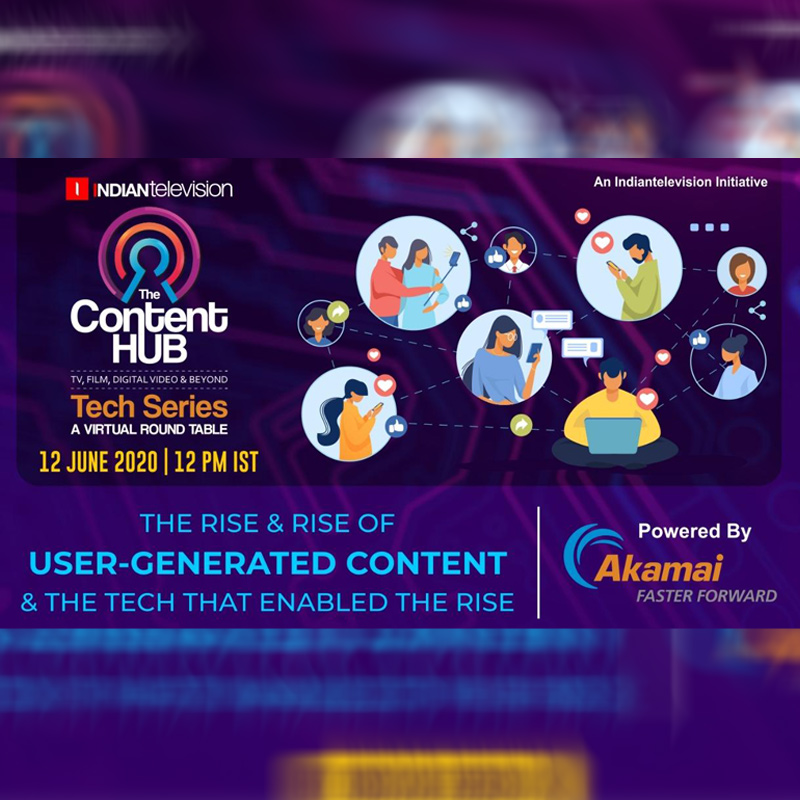
    These and many other such questions will be answered by a stellar panel of executives who will be coming together for a virtual round table “The rise and rise of user-generated content and the tech that enabled the rise” organised by indiantelevision.com in partnership with CDN and security provider Akamai Technologies. 

    Under The Content Hub Tech Series umbrella, it will feature industry’s top practitioners such as  Firework head of content & strategic partnerships Sudarshan Kadam, Roposo co-founder and VP product management Glance Avinash Saxena, Samoso Lab founder and ex-CEO Abilash Inumella, Bolo Indya cofounder and CEO Varun Saxena, Akamai Technologies director of products – APJ Media Rishi Varma, Zee5 business head expansion projects and head of products Rajneel Kumar. The virtual roundtable which is taking place on zoom and streamlined lined on indiantelevision.com social outlets will be moderated by Indiantelevision.com founder, CEO and editor in chief Anil Wanvari.

    Users can log onto indiantelevision.com’s  Facebook page (@ITVNewz)  today at noon to watch the interesting chat live as Wanvari gets the senior professionals to get as candid as they can get about this burgeoning vertical.

    Indiantelevision.com has over the past year  initiated and pioneered a series of virtual round tables in partnership with leading video tech suppliers and video content industry practitioners to help in spreading an understanding of tech and business challenges and solutions around them.

    Today’s session is a continuation of that initiative.

    Session: Indiantelevision.com’s The ContentHub Tech Series Virtual Rountable powered by Akamai Technologies. “The rise and rise of user-generated content and the tech that enabled the rise.”

    Date and Time:12 June 12 noon IST

    Registration link: https://lnkd.in/gtzp_DD

    Simulcast live on Zoom and Facebook 

  • Global video streaming market forecast to reach $184.3 billion by 2027

    Global video streaming market forecast to reach $184.3 billion by 2027

    MUMBAI: The global video streaming market size is expected to reach $184.3 billion by 2027, registering a CAGR of 20.4 per cent from 2020 to 2027. Rising technological advancements such as the implementation of block-chain technology in video streaming and the use of artificial intelligence (AI) to improve content quality are expected to boost market demand over the forecast period. Furthermore, growing adoption of cloud-based streaming solutions to increase the reach is directly influencing market growth. This trend is observed in numerous parts of North America and Asia Pacific. Factors behind the growth of these regional markets include rapid digitalization, increasing use of mobiles and tablets, and growing popularity of online viewing.

    Globally, the rising demand for on-demand video and extensive growth of online video are key drivers of the market. Moreover, increasing demand for high-speed internet connectivity acts as an advantage for the market. The growing acceptance of smartphones in combination with an extensive range of high-speed internet technologies such as 3G, 4G, and LTE has substantially led to the trend of online broadcasts. In addition, the growing demand for devices that can support digital media is helping consumers' access media content anywhere in the world.

    Key findings from the report:

    Increasing usage of videos in corporate training and in the education sector are anticipated to drive the market

    The over-the-top (OTT) segment held the largest revenue share and is also expected to grow at the fastest pace over the forecast period

    Asia Pacific is expected to witness significant growth over the forecast period, majorly due to increasing demand for high-speed internet connectivity and on-demand video streaming

    Key players in the video streaming market include Akamai Technologies, Amazon Web Services, Inc., Apple Inc., Cisco Systems, Inc., Google, Kaltura, Inc., Netflix, International Business Machine Corporation (IBM Cloud Video), Wowza Media Systems, LLC, AT&T Intellectual Property, and Hulu.

  • SonyLIV banked on Akamai to leverage ad insertion for India-SA series

    SonyLIV banked on Akamai to leverage ad insertion for India-SA series

    MUMBAI: SonyLIV, which provides multi-screen engagement to users on all devices, leveraged Akamai’s dynamic ad-insertion capabilities during the India-South Africa cricket series held over January and February 2018.

    Akamai Technologies regional VP, media Asia Pacific and Japan Sidharth Pisharoti said, “SonyLIV has a vast library of original content. However, in India, few entertainment options have the capability to attract mass audiences like cricket. While the challenge on the one hand is to keep audiences engaged with a TV-like experience, the equally hard part is ensuring that advertisers see value in leveraging digital platforms to drive views and consequently, revenue through advertisements. With Akamai’s capabilities, we were able to successfully deliver what audiences and advertisers wanted over the course of the India-South Africa series.”

    SonyLIV was the official and exclusive mobile and internet broadcaster for the India tour of South Africa series and delivered it to millions of users seamlessly across a variety of devices. Digital advertisers gained the most through the course of the series with Akamai’s dynamic ad insertion delivering targeted advertisements during the live stream. With this partnership, SonyLIV achieved a near 100 per cent ad fill rate without compromising on the viewing experience for users.

    Commenting on the partnership, SonyLIV EVP and business head Uday Sodhi said, “The India Tour of South Africa series was a huge success for SonyLIV and our audiences had a seamless experience throughout. We partnered with Akamai and leveraged their technology and added it to our already existing capabilities. The series was a huge hit with all the brands we associated with.”

    Pitch Madison’s Advertising Report for 2018 projects advertising spend on digital platforms to reach Rs 11,629 crore in 2018, representing a 19.5 per cent increase over the Rs 9,303 crore spent in 2017. In 2017, the spend on mobile was 78 per cent (Rs 7,256 crore) of the total digital outlay. Video represented 35 per cent (Rs 3,300 crore) of the total spend. This indicates a strong reflection of growing consumer trends in the country. A report by MoMagic Technologies found that 40 per cent of Indians prefer to watch advertisement videos on their mobile phones over other media. Additionally, as per IDC, India is the fastest growing smart phone market globally with a total of 124 million units shipped in 2017.

    Powered by advertising technology expert Yospace, Akamai’s dynamic ad insertion is designed to help content providers offer greater monetisation opportunities through online advertising, while maintaining a TV-like experience for viewers at scale.

    Also Read:

    2017: The year OTTs went regional in India

    Regional OTT content more than just catch-up TV    

    Sports fans power 35-40% of traffic on SonyLiv

  • Just 11% video viewership is on OTT: Akamai’s Reddy

    MUMBAI: Video viewership is growing at about eight and a half hours a month at present, and is expected to double or triple over the next year. However, 89 per cent of video viewership is on YouTube and Facebook, and only 11 per cent is shared among OTT players in India, according to Akamai Technologies country sales manager Sandeep Reddy.

    Reddy was the keynote speaker at the Vidnet 2017 meet organised by indiantelevision.com. The theme of Vidnet 2017 was: Will Indian OTT/SVOD live up to its promise?

    Revealing more inputs, Reddy said there are 150 million estimated online viewers at a time when the country ‘is in the middle of this revolution’ and this is bound to grow. The current estimate is that 60 to 65 per cent viewers watch online video in 28 Tier-III cities, and deployment is improving but not at the level of Mumbai, Delhi or Bangalore. “There is a challenge of reach,” he said.

    Building a brand, partnership, reach, scale, and economy are the quintessential parameters to make a successful OTT.

    Speaking on OTT and deployment of connectivity, Reddy who has been with Akamai for eleven years, shared his experiences noting that there was deployment only in 25 centres over 15 years.

    While referring to the limitations of traditional broadcasting in TV, he said the turning point would be in 2020 when there would be more online viewership than on traditional broadcast TV. Broadcast TV was headed towards online viewership, he said.

    The rise of affordable Chinese smartphones in India led to cheaper data plans and reduced the entry barrier, he said, and added: “we are talking about buying smartphones and seeing telecommunication providers increasing their deployments. We are observing huge connectivity, huge deployment, and we are seeing the race going up for the state of internet according to the report what we have published. The speed of the internet is about 2 Mbps in India. We are still lagging behind globally but it is growing and there are 40 per cent viewers over 4 Mbps and that is a sweet spot where you can deliver reasonable video and that’s why people are watching for longer hours”, he said. In this context, he referred to the example of Jio which came with low rate data plans.

    Because the number of users was growing, he said there was better connectivity and there were likes of Alt Balaji and Netflix using content specifically made for this audience, resulting in more and more users and that was the opportunity for broadcasters.
    With respect to OTT players, he said there were some key success facts for those sitting on the fence. Referring to a previos speaker who had spoken of how Indians will pay, he said they will pay if the content is appealing and engaging. The Indian population/users was ready to pay and that had been seen from the growth of TV, cable TV, and DTH where the subscription is Rs 600 to Rs 700 per month. “One can watch television when a show is being aired but the internet costs much less and one still gets all the content”, he added.

    There was a lot of scope to make a good business model here, he said, as with traditional broadcast one did not really know, did not really connect, and used it directly. ”When you are online you have the players that are tracking your every activity, you know which videos are being viewed, you know where exactly the users are stopping, you know exactly how to monetize, where to place your ads. So fabulous monetization models are available’, he told broadcasters and distributors.

    Making a point on scale and quality, Reddy said, “We are talking about competing with broadcast television where you have a signal from a tower beaming signal to millions of users. There are no issues, satellites are not strained, but on the internet single user places a load on his system. When you talk about prime time audiences you are talking about India vs Pakistan match at 7pm on Internet. The whole nation is tuned in and so that is a load on the system and there is a challenge one has to deal. Similarly you can offset the system as VOD users are watching at their convenience”.

    When competing with TV broadcasters, “Internet works just on the box, the video is clear, it plays perfectly well and it is not so simple as you cannot click on a video, and it needs to play perfectly otherwise it is going to lose the user”. He added that In the United States, “we are seeing about less than 1 second startup time of the video and the estimate is that if the startup time is 3 seconds you are going to lose the audience and we want to be sure that startup time is good. In India we are lagging behind America and Europe. We have got less than 4-5 per cent rebuffer or more than five per cent for our views delivered. So quality, reach, and economy are the factors impacting the success in OTT.”

    Hotstar is leading the revolution, he said. They took the plunge and they invested the big bucks, they went out and bought rights for undisclosed amount. The streaming content provider ALT produces its own shows. Sun TV launched its ‘SunNxt’ app a month ago growing some phenomenal numbers,

    “The message I want you to leave with is content, which needs to be unique and engaging. Content is king is a cliché but it is true. It is about the brand right now. Anybody in the screen, anybody in the train can watch and their choice is Hotstar. That is the brand proposition they have built.”

  • Hotstar, powered by Akamai, establishes high online viewership during India-England series

    MUMBAI: Hotstar, one of India’s leading premium video streaming platform, leveraged Akamai Technologies, Inc., a global leader in content delivery network (CDN) services, to establish several new online viewership records on its platform for live sporting events during the recently concluded India-England series. On the second One-Day International (ODI) held on the 19thof January, more than 25 million users watched the match on the platform, accounting for a majority of the Internet traffic from India on that day. The viewership peaked at more than 3 million concurrent viewers on the platform during the final T20 match of the England series, establishing a new high in the Asia Pacific region.

    India’s emergence as the world’s second largest smartphone market[2] is reflected in the dramatic growth in traffic witnessed by Hotstar, backed by Akamai’s Intelligent Platform, which saw more than 75 percent of viewers streaming the match from mobile networks.

    Hotstar, an Akamai customer since its launch in February 2015, delivers millions of hours of sporting and general entertainment content backed by Akamai’s Media Delivery Solutions every week.

    “We are seeing dramatic growth in our viewership every month, including in cricket. As millions of new users embrace Hotstar as a way of life, the platform is seeing new highs in sports viewership as well. As data costs fall dramatically, and users increasingly look to their mobile as the primary screen, we are starting to see the emergence of Hotstar as the primary destination in cities with more than a million in population. This trend will accelerate in the next few months, especially during IPL, and we rely on Akamai’s solutions to ensure that we are able to scale in line with this vertical growth in demand,” said Ajit Mohan, CEO, Hotstar.

    “Globally, the smartphone is becoming a key instrument to viewing live sporting events. We saw a significant majority of users accessing content via mobile for this ODI between India and England, making it the largest audience for a sporting event on the Akamai Platform, in Asia. Hotstar is truly leading the change in this paradigm shift in India, and we are proud to partner with Hotstar to bring new features and innovations to provide an unparalleled end user experience,” said Parimal Pandya, Vice President, Media, APJ, Akamai Technologies.

    As the Internet becomes faster and more accessible in India, brands can expect app downloads and usage to surge. Per a recently released App Annie report[3], Android users in India spent close to 150 billion hours on apps in 2016, leading app usage in the world. Indian users also downloaded apps over six billion times, surpassing America, the previous world leader.

  • NDTV records highest traffic for Indian website on Election results day

    NDTV records highest traffic for Indian website on Election results day

    On May 16, on the counting day of the LokSabha Elections, NDTV.com set a new record for the highest traffic on an Indian website, on a single day.


    NDTV registered over 13 billion hits in a single day, as per Akamai Technologies, Inc. (NASDAQ: AKAM), the leading cloud platform for media and content delivery to NDTV and almost all other media companies in the country.


    Speaking on this, Suparna Singh, Managing Editor and CEO, NDTV Convergence Limited said – “ndtv.com had committed to delivering the fastest results on air and online and we spent months gearing up for what we knew would be unprecedented traffic. Elections is in our DNA and we were determined to give Indian users a seamless, in-depth and complete experience.”


    Kawaljit Singh Bedi, Chief Technology Officer, NDTV Convergence, said, “We are committed to providing our viewers with real time information be it online or offline. For an event as big as the Election, it was important that our viewers had access to fast, real-time information. During the Election results, we received over 13 billion hits, the highest for any site on a single day in India, and we were able to provide exceptional site performance on web and mobile without any hindrance. This was possible with the support of Akamai as they absorbed 99% of our traffic on to the Akamai Intelligent Platform.”


    Sidharth Malik, Managing Director and Vice President, India, Akamai Technologies said “On May 16th, counting day for Indian elections, Indian News sites witnessed the highest ever internet traffic. NDTV partnered with Akamai on this day to provide reliable and scalable solutions to support this high traffic volume. We are happy to report that NDTV got over 13 billion hits across its digital properties that day, which is the highest ever traffic any Indian website has got on a single day.  We at Akamai technologies are very pleased to have played a part in providing NDTV with a scalable and robust infrastructure on such an important day for the company”


    NDTV also had new records being set for its digital properties including concurrent users hitting an all-time high of over 500,000 users as per Google Analytics. Some other single day statistics as per Google Analytics –


    · 11.6 million unique visitors across all platforms, the highest ever in a single day.

    · 117.7 million Pageviews across platforms, the highest single day ever

    · 19.6 million video streams with an average viewing time of about 9 minutes

    · Over 200000 concurrent users watching video on the website


    NDTV was also the number 1 app on iOS across all categories in India and the WAP site registered its all-time highest concurrent users further strengthening the group’s belief that India is going to be a Mobile first digital economy

  • Akamai to acquire ‘Nine Systems’

    Akamai to acquire ‘Nine Systems’

    MUMBAI: Akamai Technologies, Inc. and Nine Systems Corp., Inc. have announced that the two companies have signed a definitive agreement for Akamai to acquire Nine Systems in a merger transaction.

    The closing of the transaction, which is subject to customary closing conditions, including the approval of Nine Systems’ stockholders, is expected by year-end. The acquisition is expected to be accretive to Akamai earnings on a normalised, diluted per share basis in 2007, asserts an official release.

    Akamai plans to integrate Nine Systems’ stream OS, a suite of configurable rich media management tools that enable easy production and publishing of content online, into the global Akamai network.

    Akamai president and CEO Paul Sagan said, “We are excited about offering a new and comprehensive solution for the delivery, management, and control of online media assets.”

    “Nine Systems has established itself as a leader in the creation of powerful Web-based tools for businesses to easily produce, publish, and distribute their streaming and downloadable media. Integrating Stream OS into our delivery network will allow Akamai to more fully support asset control, rights management, and media reporting to better enable our customers’ digital media businesses,” he added.

    Nine Systems president and CEO Troy Snyder said, “Nine Systems’ rich media publishing and management tools already power the online media experience for some of today’s best known companies in the music, broadcast, sports, entertainment, inspirational, advertising, education, and government markets. By joining forces with Akamai, our customers will have access to the leader in accelerating content and applications online, supported by a combination of the most experienced teams in the industry.”

    Under terms of the agreement, Akamai will acquire all of the outstanding common stock, preferred stock, and vested and unvested stock options of Nine Systems by issuing approximately 3.1 million shares of Akamai common stock and approximately $7 million in cash, subject to certain closing adjustments. The merger transaction is expected to be accounted for by Akamai under the purchase method of accounting, further adds the release.