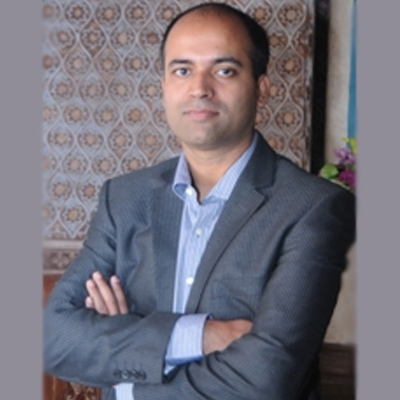
Tag: Ajit Thakur

  • Life OK to showcase Mallika’s Magic

    Life OK to showcase Mallika’s Magic

    MUMBAI: The countdown to Life OK’s much anticipated show The Bachelorette India has begun. Starting 7 October, every Monday to Friday from 9.30 pm to 10.30 pm, all eyes will be on Mallika Sherawat as she hunts for the perfect mate from among 30 eligible bachelors, who will pull out all stops to win the sexy siren’s heart… and hand.

    People will either hate it or love it believes Ajit Thakur

    “You will either hate it or love it,” says Life OK general manager Ajit Thakur about the non-fiction show.

    Scheduled to run for five weeks with 28 hours of total content, 40 to 50 per cent of shooting has already been canned in the City of Lakes. Produced by SOL Productions with Lux Inferno and Ghadi Detergent as co-presenting sponsors, the show is in keeping with Life OK’s promise to add an Indian flavour to the much awaited reality series. As for Mallika, she is a magnet for publicity, whatever she does.

    But why make the show a week day property? “This kind of content is universal in nature. If you view from a concept perspective, on other GECs, a week day concept is all about soaps and the emotional content is very high. So love is the corner stone for everything that happens on a GEC from Monday to Friday. Considering this fact, we thought this was the best time,” says Life OK marketing head Pratik Seal.

    Marketing-wise, several activities have been planned. Digitally speaking, Life OK has organised a ‘live tweeter outdoor’ at Delhi University North Campus, where people can come and tweet their wishes to Mallika. “It’s a mood meter. Mallika’s mood changes on how you tweet. For example, if you criticise, she becomes grumpy; if you praise her, she is all happy. This activity is still on and students there are enjoying it,” explains Seal. Special tabs, games and apps, and video leaks on YouTube have been built into the digital activity.

    Secondly, throughout the five weeks, Life OK will have a video diary, also known as a regular video blog, on YouTube that will be updated regularly.

    Thirdly, there will be a live tweeter hastens during the show, where people can tweet about their favourite moments.

    Fourthly, Life OK has undertaken on-ground activations in over 38 cities. Add to that, colleges in UP, Delhi and Gujarat will celebrate Rose Day as a prelude to the show. A Google hangout with the lady on 7 October is also in the pipeline.

    Fourthly, Life OK has undertaken on-ground activations in over 38 cities. Add to that, colleges in UP, Delhi and Gujarat will celebrate Rose Day as a prelude to the show. A Google hangout with the lady on 7 October is also in the pipeline.

    Radio and television activations have been undertaken on a huge scale and TV promos of the show have received a good response.

    Speaking about hoardings, Seal says: “We did Phase I and Phase II of the campaign. The first phase was about selling the concept of war while the second phase was about showcasing love.”

    There will be people coming, who want a break from Hindi GECs, says a confident Pratik Seal

    Of the entire show budget, the channel is learnt to have spent around eight to ten per cent on marketing the upcoming show.

    Will the show grab enough eye balls in the face of such stiff competition? “Our attempt was to reach out beyond the GEC audience. We want to target more youth, more men, and more family as a unit; that has been our objective. If we manage to do that, half of our job is done. So there will be people coming, who want a break from Hindi GECs, to see what new biryani is cooking,” says Seal confidently.

    But comparisons with NDTV Imagine’s Swayamvar are inevitable and the industry isn’t too gung-ho about Life OK’s experiment with a similar format. “We’ve already seen enough of Rahul Mahajan, Rakhi Sawant and Ratan Rajput’s Swayamvar. What new is the show going to add? Just by changing the face of the person does not mean that the show is going to catch the attention of the viewers,” says a director.

    “Forget the daily soaps on other GECs. I think Bigg Boss is going to be the show’s biggest competitor. I am watching Bigg Boss since three weeks and I am already glued to it. I would not like to switch to any other channel for that one hour,” says an industry professional.

  • Afternoon slot: Siesta time for GECs?

    Afternoon slot: Siesta time for GECs?

    Back in the nineties, afternoon shows enjoyed their heyday when women, once done with household chores, settled down, lunch in hand, sometimes maid in tow, to watch their favourite serials including Shanti and Itihaas.  

    Two decades later, the once-popular afternoon slot seems to have lost its relevance, with a majority of broadcasters choosing to air re-runs of prime-time shows rather than focus on fresh content.

    The decline of this slot can be attributed to a number of reasons. Firstly, while there’s now a rash of channels, there seems to be precious little to excite a large section of women post their morning routine. Secondly, many more women are now at their workplace at this time of the day. Thirdly, several news channels may be airing more interesting shows at the same time.

    While this is broadly it, indiantelevision.com decided to look closer at the changing trends of the past two decades to get a better idea whether it’s really curtains for the afternoon slot.

    Popularity graph

    It is not that there is no potential in the afternoon slot. But, its about priority. There is more scope for improvement if we try to capture viewers in the prime time slot, says Nikhil

    Madhok

    In 1994, Shanti and Swabhimaan – two serials aired on Doordarshan – captured a nation’s imagination, catapulting the afternoon slot into the limelight. This was when cable television had just arrived on Indian shores and private satellite channels were focused on building their primetime band as also building viewership in the afternoons.

    In 2000, Sony tried to dominate the afternoon turf with Ghar Ek Mandir, which lasted for a good two years. Meanwhile, most other channels stuck to re-runs during that time band.

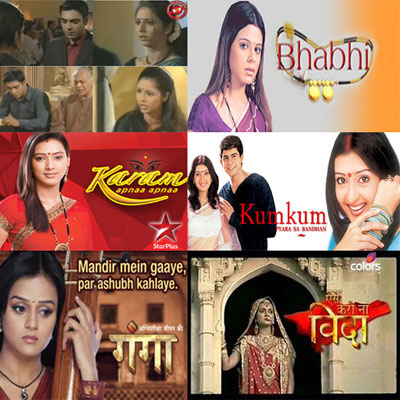
    The channels however soon woke up to the fact that it was the homemaker who had the potential to draw advertisers. With this realisation came the game of one-upmanship among Hindi GECs. Around the same time, a slew of shows mushroomed including Kumkum – Ek pyaara sa bandhan (2002 – 2009), Bhabhi (2002 – 2008), Karam apna apna (2006 – 2009) and Humari Devrani (2008 – 2012). They came to be known as the K shows and saw a long innings with increasing visibility year-on-year.

    Another landmark came in the form of Zee Woman, Zee’s pioneering effort to bring a women’s magazine on television. Launched on 12 July, 2004, Zee Woman revolved around the homemaker and occupied the 12:30 pm to 3:00 pm slot. It offered everything a women’s magazine does – features and tips on beauty, interiors, cookery, good house-keeping and the latest fashion trends.

    We are the service providers. If broadcasters need that service, we will be happy to bring alive that slot, says Sudhir Sharma

    Three years later, Zee Woman suffered a blow from two shows – Meri Doli Tere Angana (2:00 pm) and Rakhi (1:30 pm) – both having fresh content. By contrast, GECs like SAB and Life OK preferred to play re-runs of their most popular shows.

    In February 2010, Colors too jumped onto the bandwagon. The channel produced two shows – Agnipareeksha Jeevan Ki… Ganga (1:30 pm) followed by Aise Na Karo Vida (2:00 pm), packaging the duo as Saanjhi Dopahar. While the shows got a good viewership in the first week, there was a dip in viewership, second week onward.

    All say, the afternoon slot was created mostly for women, especially homemakers. With a majority of soaps revolving around women and their issues, the shows found instant connect. In fact, some of the afternoon shows fared better than their prime-time counterparts. For example, Kumkum which ranked fourth among Star Plus’s top ten shows of all time and was the country’s fourth-longest running serial as well.

    It was sometime after 2010 that Hindi GECs started losing interest in making new shows for the afternoon slot. Television channels including Sab, Sahara One, Life OK and Zee went back to airing re-runs of prime-time soaps in the afternoon.

    Why did the afternoon slot die?

    Today, we dont have enough good writers and ideas for us to put content for the afternoon slot, says Ajit Thakur

    The reason, according to Colors weekday programming head Prashant Bhatt is: “Afternoon slots were extremely popular when there were not many GECs. Fewer channels meant fewer options for people to choose from the available shows aired across channels. This gave channels an opportunity to air fresh content in the afternoon slot. But the scenario has changed now.

    Viewers have an option to watch eight programs during prime time but end up watching only one. So channels telecast re-runs of their prime time shows in the afternoon, so viewers can catch up on them.”

    Examples of this are Balika Vadhu on Colors, which is repeated five times in a day and accounts for 25 per cent of the channel’s viewership and Sony, which aired re-runs of its crime fiction series CID (1998 till the present) for four to five hours in the afternoon slot.

    According to Bhatt, there’s so much original programming in terms of prime time shows that there’s no need for original programs in the afternoon. With re-runs of prime time shows during the afternoon, audiences get to catch up with what they haven’t been able to watch.

    With too many GECs comes growing competition among them. This means they might focus on the marketing and promotion of evening prime time shows that bring more viewership and consequently, more money.

    The afternoon slot should have more dramas that appeal to women. The content should include more of romance and cast eye candy men, says JD Majethia

    So have producers and directors lost interest in producing shows for the afternoon slot?

    “Definitely not,” shoots back Sunshine Productions owner Sudhir Sharma, adding: “If broadcasters see the need, if broadcasters do any business henceforth, then we will be ready to do it. We are the service providers. If they need that service, we will be happy to bring alive that slot.”

    According to Star India vice president marketing Nikhil Madhok, the channel is first trying to strengthen its evening slot rather than bring fresh content in the afternoon. “In Star Plus, we have initiated expansion of our programming time with the launch of Ek Ghar Banaunga during early prime time at 6:30 pm,” he says. : “It is not that there is no potential in the afternoon slot. But, it’s about priority. There is more scope for improvement if we try to capture viewers in the prime time slot. Also, it is more important from a financial perspective and viewership availability,” he adds.

    Afternoon slots still hold promise, but it is a bit risky proposition as the shows need to generate sizably better ratings than the repeat ones, says Navin Khemka

    Madhok is also quick to point out that the channel is open to innovative ideas and experiments with different time slots. “We had filmed Satyamev Jayate at the 11:00 am slot when we found potential in that. It was followed by Lakhon Mein Ek, which ran for certain number of weeks and then we didn’t follow up. We have also opened up the weekend 7:00 pm slot, where we air content related to our reality shows,” he says.

    For a newly launched channel like Life OK however, fresh programming in the afternoon slot does sound interesting. “Yes! Definitely! But, it is about funding.  And if there is already enough good content that can be picked up from the prime time and aired in the afternoon, there is no point in airing fresh content. Also today, we don’t have enough good writers and ideas for us to put content for the afternoon slot,” says Life OK general manager Ajit Thakur.
    Thakur though did say it was an important slot and it was just a matter of time before it would come back.

    What about DD, which in a sense, pioneered the afternoon slot? Says Doordarshan director general (programming) Mukesh Sharma: “In DD National, our afternoon slot is flooded with strong Hindi programming. Though we air repeats, it is doing extremely well for us. To be practical, viewers don’t watch all the shows that are aired on television during prime time. Taking that into consideration during afternoon, mostly women who have missed out on their favourite shows have an option of watching it in the afternoon. And this works perfectly for us.”

    Afternoon slots were extremely popular when there were not many GECs. Fewer channels meant fewer options for people to choose from the available shows aired across channels, says Prashant Bhatt
    Speaking about DD’s big properties like Saraswatichandra, Tum Dena Saath Mera, Aur Ek Kahani and Hari Mirchi Lal Mirchi that are well adapted by the audiences in the afternoon, Sharma says:

    “These soaps are doing well on the track as the target audience is women (housewives).”

    ZenithOptimedia senior vice president Navin Khemka has a different view. “If any Hindi GEC launches afternoon show/s, it will definitely work as there is a good chunk of audience sitting there and FMCG advertisers want to dominate this slot and would like to invest in full force.

    Afternoon space should focus more on family and drama series that adds value to the content.

    Afternoon slots still hold promise, but it is a bit risky proposition as the shows need to generate sizably better ratings than the repeat ones,” he says.

    So if the afternoon slot were to be reconsidered by broadcasters, what kind of content would work? Says Hats Off Productions owner and actor/director JD Majethia: “The show’s topic, subject, and the small aspects should all be women-oriented. The afternoon slot should have more drama that appeals to women. The content should include more of romance and cast eye candy men. These are things women cannot watch during the evening time with their family. The content can also be inspirational and designed differently to attract the audience during the afternoon slot.”

    In most cases women who have missed out on their favourite shows have an option of watching it in the afternoon, says Mukesh Sharma

    Apart from broadcasters not giving enough importance to the afternoon slot, the other reasons for its decline include the rise of shows like Saas Bahu Saazish on news channels. While the then Star News (now ABP News) started the trend of airing ‘behind the screen’ gossip from various shows, other news channels too caught on. Soon enough, women were glued onto these shows, many a times preferring these to daily soaps.

    While there are different views on the relevance of the afternoon slot and whether broadcasters should reconsider fresh content during afternoons, whether channels will ever get back to brand new content in this time slot, only time will tell.

  • Life OK claws back to number four

    Life OK claws back to number four

    MUMBAI: The war for ‘the best among the rest‘ continues even as the top three positions see no change in week 37 of TAM TV ratings.

    Life OK, a sister channel of Star Plus is the highest gainer this week and is back at the number four position with 322,364 GVTs (276,290). As reported earlier by indiantelevision.com, Life OK general manager Ajit Thakur had said that in the coming weeks the channel plans to aggressively invest in content promising its viewers a never-seen-before experience. Well this attitude has worked wonders for the channel.

    Other GECs saw a drop in their viewership. Star Plus continues to rule the chart with 477,029 GVTs (494,732). Not quite far behind is Colors which continues to maintain its number two position recording 463,869 GVTs (452,851). Zee TV holds its no three spot with 398,993 GVTs (410,774).

    Sab, a sister channel of Sony maintains its number five position as it rated 312,053 GVTs (322,392). Sony takes the back seat at number six with 292,852 GVTs (346,122). Sahara One continues to be at the bottom scoring 28,749 GVTs (28,742).

    Back to the chart topper, Star Plus channel‘s popular show Diya aur Baati Hum saw a drop in its ratings and rated 8,803 TVTs (9,765). Another prime time show, Yeh Rishta Kya Kehlata Hai scored 6,144 TVTs (7,261). Pyar Ka Dard Hai reported 6,930 TVTs (6,840) and Saathiya registered 6,002 TVTs (6,079). Reality show Junior Master Chef lost its audiences witnessing a drop 2,160 TVTs (2,370).

    Colors‘ popular celebrity dance reality show Jhalak Dikhhla Jaa aired its grand finale on 14 September and registered 8,822 TVTs. Long running fiction series Balika Vadhu saw a huge growth and rated 6,278 TVTs (5,912), Madhubala – Ek Ishq Ek Junoon scored 4,442 TVTs (4,847) and Uttaran reported 4,154 TVTs (4,450). The comedy show Comedy Nights with Kapil garnered 7,215 TVTs (7,983).

    Zee TV‘s reality dance show DID Super Moms aired its grand finale on 8 September and scored 6,087 TVTs. Its fictional offering Qubool Hai witnessed a drop recording 5,956 TVTs (6,380). Pavitra Rishta generated 4,280 TVTs (5,163). It‘s long running series Sapne Suhane Ladakpan Ke scored 5,362 TVTs (4,785). The channel‘s historical show Jodha Akbar seems to attract audiences by its interesting track taking its tally to 6,981 TVTs (7,259). Drama series Do Dil Bandhe Ek Dori Se registered 5,047 TVTs (5,946). Its new offering Buddha did not mangae to grab attention of the viewers and socred 1,450 TVTs.

    Fourth placed, Life OK‘s top series Mahadev rated 2,585 TVTs (2,511). Do Dil Ek Jaan stood at 2,585 TVTs (2,511), Savdhan India rated 2,734 TVTs (2,651), whereas Shapath generated 3,410 TVTs (3,339) and Gustakh Dil rated 1,444 TVTs (1,333).

    Fifth placed, Sab‘s fiction show Taarak Mehta Ka Ooltah Chashmah continues to be the channel leader with 6,816 TVTs (6,751). Chidiya Ghar has propped up this week as it scored 3,430 TVTs (3,064). Lapataganj reported 2,347 TVTs (2,062). FIR rated 2,055 TVTs (2,209). Other fictional shows witnessed marginal rise and fall as well.

    Sixth placed, Sony‘s long running crime series CID witnessed a drop recording 5,391 TVTs (5,941) and Crime Petrol saw a healthy rise scored 3,739 TVTs (3,418). The channel‘s historical show Maharana Pratap generated 3,151 TVTs (3,354). KBC saw a drop in its ratings as it rated 5,049 TVTs (8,950), 6,027 TVTs (8,460) and 6698 TVTs on Friday, Saturday and Sunday respectively. Comedy Circus garnered 3,409 TVTs. Other fiction shows either held on to their viewership or dipped marginally during the week.

    In the movie channel genre, Zee Cinema reported 191,359 GVTs (206,038); Star Gold witnessed a slight rise to182,350 GVTs (176,904) and Movies OK rated 100,401 GVTs (105,357). On the other hand, new entrant &pictures garnered 67,774 GVTs (57,197). Max saw a healthy rise when it scored 192,416 GVTs (179,760).

    Well, it seems the GECs are having a good roller coaster ride. Let‘s see what’s in-store for the GECs in the coming weeks.

  • The Bachelorette India Mere Khayalon ki Mallika creates a stir online!

    The Bachelorette India Mere Khayalon ki Mallika creates a stir online!

    NEW DELHI: India’s fastest growing GEC, has yet again broken all realms of success. Days before the official launch of the on-air promos, the channel has gone ahead and released the video online, ensuring over 1,34,000 unique views (on youtube)


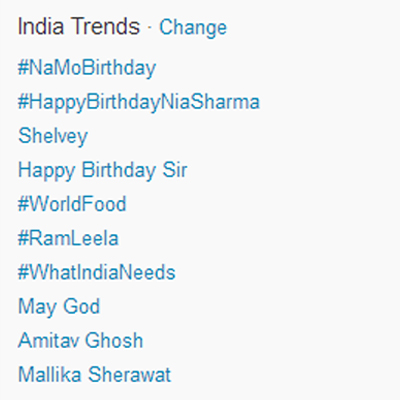
    Social media platforms like Facebook and Twitter have also been utilized. Mallika Sherawat wishing Narendra Modi on his birthday has gone viral.  The keywords ‘Mallika Sherawat’ are trending on Twitter increasing the recall for the Bollywood Diva.


    Previously, during a recent press gathering, Mallika announced that Narendra Modi is the most eligible bachelor. This piece of news had the digital and social platforms buzzing with discussions about Mallika Sherawat. This led to a sizeable volume of people discussing Mallika and the show which led to Mallika Sherawat trending on 7th and 8th September, 2013.


    On 7th September, 2013 there was a web exclusive release of the launch promo of The Bachelorette India. The promo got a lot of organic traction on YouTube and has more than 1,34,433 views, from the release (Digital release – 8th September)  till date. (17th September, 2013) Said Ajit Thakur, General Manager, Life OK, “The idea was to engage people on the social media platform. Whether it is in the form of a video or tweet, the online conversations have created a strong mass anticipation around the show”.


    Social media was twittering, creating high recall factor for Mallika, leading to a high curiosity level for the show.

  • Festive fervour on Life OK

    Festive fervour on Life OK

    MUMBAI: The festive season is already upon us and Life OK, Star Plus’s sister channel, is going all out to meet the celebratory mood head on. The channel, which plans to aggressively invest in content in the coming months, has a set of brand new shows up its sleeve, promising viewers a never-before-seen experience.

    As we all are aware, in this January when LC1 got added to the measurement, everybody crashed. In April, when digitisation phase II happened, the channel was down to 110GRPs. If we further break it down, from January onwards the ratings have increased in both the categories – men and women. For men, the viewership ratings witnessed a rise by 50 per cent and a similar rise of 25 per cent for women.

    The recently launched Ek Boond Ishq – BBC Worldwide’s first daily fiction series in India – offers a flavour of the kind of programming to follow on the channel.

    This tale of a girl who realises she is about to tie the knot in a prison cell, is telecast every week, Monday to Friday, at 8:30pm. One wonders however if airing such a show at a time slot when most other GECs boast strong programming, poses a risk more than an opportunity for the channel?

    “Definitely not!” shoots Life OK general manager Ajit Thakur, confident their modest attempt at providing quality entertainment will be appreciated.

    “What sells more is content. If the content is good, viewers will come anyway and watch the show,” he adds.

    Another show the channel has lined up as part of its festival bouquet is Katha Mahadev Putra Bal Ganesh Ki, a spin-off of its flagship property Mahadev, which airs on 14 September. The 16-episode series to be telecast every Saturday and Sunday at 7:00 pm, showcases the adventures of Lord Ganesh as a child, and is part of Life OK’s larger mission to replicate the success of Star Plus.

    It’s a show targeted at the entire family, particularly kids. “It’s a finite show. No other GEC has original content at this particular time slot. So we thought of taking advantage of that and occupying the slot. We not only aim to target women but also children with this show,” explains Thakur.

    Adding to the fresh batch of programming is Shakuntalam Telefilms’ edgy thriller titled Rakshak, which launches end of this month. To be aired every Saturday and Sunday at 11:00 pm, it goes without saying the limited series faces tough competition from the likes of Crime Petrol (Sony), Comedy Nights with Kapil Repeats (Colors), Star Verdict Repeats (Star Plus), Fear Files (Zee TV), Taarak Mehta ka Oolta Chashma Repeats on Saturdays and Lapataganj – Ek Baar Phir on Sundays.

    Yet another feather in the channel’s programming cap is the new reality series, SOL Productions’ The Bachelorette India featuring Bollywood actor Mallika Sherawat. As reported by this website earlier, the non-fiction show will see 30 eligible bachelors battling it out to win the sex siren’s heart… and hand.

    With the concept derived from an earlier show named Swayamvar on NDTV Imagine, comparisons between the two are inevitable. Especially since the likes of Rakhi Sawant (who ended up separating from her partner post the series) and Rahul Mahajan, who participated in Swayamvar. The Bachelorette India is not the first of the channel’s trysts with reality shows. An earlier attempt, Welcome – Baazi Mehmaan Nawazi Ki, failed badly at winning the hearts of its audience.

    While the channel has pinned high hopes on these programs, whether they will succeed is a separate story altogether. Says a highly placed media planner (name withheld on request): “I don’t think the channel is doing something new in terms of content. Viewers have already seen all this. It depends on the channel how they modify and show it to audiences. If viewers are interested, it might be a green signal for them. Talking about the upcoming shows, one will have to wait and see how they fare as it is too early to predict.”

    Many other media planners though agreed the channel has been innovating and launching new shows time and again to sustain viewership and maintain numbers.

    All said, it’s now up to the viewers to decide whether they like Life OK’s bag of goodies…

  • Life’s OK digitally

    When Harvard wizkid Mark Zuckerberg launched facebook in 2004, he never imagined it would ignite a revolution in terms of the way people communicate and share information.

    Indeed, social networks have emerged as the next big thing after email and the Internet, and not just individuals and communities but even our television channels are happily jumping onto them for bettering their ‘connect‘ with the audience.

    After demystifying the digital strategies of Sony Entertainment TelevisionStar PlusColorsand Zee TVindiantelevision.com trains its lens on the endeavours of Life OK – Star India‘s sister channel – in this space.

    For starters, Life OK‘s Facebook page boasts 1,293,603 likes and more than 63,600 people talking about it simultaneously.

    We also have efficient partners that understand the nuances of social media engagement and help spread marketing ideas across digital and social platforms, says Ajit Thakur

    The page is kept up-to-speed with pictures, videos, polls and all the hot gossip, and shares links with the official pages of various shows aired on the channel.

    In a day and age when 140-character tweets more than news make headlines, the plots of Life OK‘s many soaps are also tweaked through fan tweets. The official twitter handle of the channel @LifeOKTV is abuzz with nearly 20,840 tweets from over 16,555 followers at the time of writing. With instant reactions and feedback the staple of twitter, Life OK makes the most of this platform with timely tweets and re-tweets.

    To cite an example, the channel created, #ThePerfectBachelor, for its upcoming reality show The Bachelorette India – Mere Khayalon Ki Mallika and garnered more than seven million impressions. So much so, the hash tag found its way to the numero uno spot on India trends, that too within half an hour of the beginning of the contest. It was only the second Indian show to trend for 21 hours.

    #ThePerfectBachelor hash tag garnered more than seven million impressions

    Life OK is aware that for a general entertainment channel, video uploads draw the most traffic. And so, it launched its official YouTube channel in December 2011, and has since uploaded 5,000-odd videos. Viewers can watch the latest episodes of top-rated properties like Mahadev, Shapath andSavdhaan among others.

    To top it all is Life OK‘s official website http://www.lifeok.com/. As the channel‘s mainstay, the website aims to use all its other platforms to draw more and more traffic.

    It is easily the hub of Life OK‘s online activities with web exclusive content including live streaming, picture gallery, video uploads, show trivia and a concert section. There‘s also the shows schedule for those who want to know what time their favourite show will be telecast during the day.

    Says Life OK general manager Ajit Thakur: “Social media platforms are a great place to directly engage and interact with consumers. The idea is to leverage the various platforms to drive engagement and increase affinity towards our content. We also provide additional content specific to digital platforms for users who have supported us, or in facebook terms, ‘liked‘ us.”

    The official Facebook page keeps its page up-to-date with pictures, videos, latest buzz and polls

    This is not to say Life OK‘s engagement with its audience stops at social platforms. “We are constantly trying to connect with our audiences, be it through dialogue on social media platforms or sneak previews of our content. With every show and channel marketing campaign, our digital spends supplement the print and TV mentions, thus creating a 360 degree surround across media,” provides Thakur.

    A shining example of the channel‘s 360-degree approach is the way it created the Laajo Ki Diary blog on four platforms including wordpress, blogspot, tumblr and Rediff before the launch of its show Gustakh Dil. The blog gets updated with new posts on a day-to-day basis, keeping viewers abreast of what‘s happening on it.

    The website is decked up with web exclusive content including live streaming, picture gallery, video uploads, show trivia and a concert section

    But how does the channel promote its online presence? “We have a dedicated digital content and marketing team, who focus their energies on creating interesting content for the digital audience. We also have efficient partners that understand the nuances of social media engagement and help spread marketing ideas across digital and social platforms,” replies Thakur.

    Just in case you‘re wondering which platform gets the most traction, Thakur isn‘t very helpful. “Each platform delivers a specific objective while facebook is a great place for fans to engage with us, consume rich media content and share with friends; twitter being much more time-sensitive, helps create buzz about relevant topics and shows at the right time. YouTube on the other hand is a great platform for users to sample our content (mostly short form content) and also drives digital monetisation,” he says.

    Well, talk about the channel being omnipresent in the digital space…

  • What keeps Life Ok ticking…?

    What keeps Life Ok ticking…?

    MUMBAI: In December 2011, when Star India launched its second Hindi GEC christened Life OK, the network made a promise to its viewers that through the channel they will see not only different but also out-of-the-box content.


    And keeping to it, the channel is launching a new show wherein the wife is the “other” woman. Gustakh dil portrays the life of a simpleton (Laajo) from a village whose husband (Nikhil) continues to be madly in love with his childhood sweetheart (Ishana).


    Commenting on how the show stands apart from the rest Life OK general manager Ajit Thakur asserts, “Disruption has always been a key thrust for us at Life OK and with Gustakh Dil we are aiming to bring out the other side of a love triangle. We are confident that people will accept this unique storyline and will appreciate our modest attempt at providing quality entertainment.”


    This is not for the first time that the channel has tried to do something different. In the past too, the channel has tried to grab eyeballs through it shows. It recently launched a reality crime-based show Police Dial 100 where the channel took a completely different track. Here, the team from Endemol follows policemen in Delhi, as they attempt to solve crimes and face different situations.


    “Police Dial 100 is Life OK’s effort to delve deeper into the functioning of law enforcing agencies and capturing on camera the highly stressful lives of our police forces lead”, Thakur had expressed earlier during the show’s launch in Delhi.


    Apart from it, another major property by the channel has been Savdhan India. However, one cannot deny that the crime based shows have done well for the genre.


    On the other hand, unlike the other channels which have failed to garner ratings and viewership through mythology, the channel struck gold with its mythological show – Mahadev – which is the most popular show on the channel.


    HavasMedia, MD, Mohit Joshi emphasis on it and adds, “Mahadev has set the grounding for the channel. And with good production quality and new shows every now & then, the channel has been able to grow significantly as well as make a mark for itself in the market. What even sets it apart from sister-concern Star Plus is the fact that it’s more contemporary.”


    What is interesting is that the channel not only brings out innovative shows but also has interesting FPCs. On 23 June, the channel showed non-stop 12 hours of fresh content comprising of crime, terror, mythology programming and Bollywood movies. Life OK plans to make it a regular initiative at least once a month as it feels that such kind of experimentation will make it a game changer. Before baara-se-baara, it had experimented with 6 a.m. – 6 p.m. and that too had worked well with the channel.


    Moreover, Life OK has acquired the format of the popular US reality dating game show The Bachelor and has commissioned the Zodiak owned SOL Productions to produce the Indian version – The Bachelorette India – Mere Khayalon ki Mallika which is expected to be on-air in September.


    “The series will strengthen Life OK’s programming and set another benchmark in quality entertainment”, states Thakur optimistically.


    However, Helios Media MD Divya Radhakrishnan resounds, “Though Life OK has been taking a lot of initiatives to make a name for itself among the leading Hindi GECs, it still has to do a lot more. Today the Hindi GEC cluster is leaving no stone unturned to come up with new shows, but are not moving any boulders. It’s just like any other GEC.”

  • ‘We want to be the No. 1 channel in two years’ : Sony Entertainment Television business head Ajit Thakur

    ‘We want to be the No. 1 channel in two years’ : Sony Entertainment Television business head Ajit Thakur

    Struggling to jump into the top Hindi GEC league, it was a year back when Sony Entertainment Television decided to undergo a complete overhaul. New programmes were introduced and a new association was inked with the biggest film production house, Yash Raj Films, to produce soaps that were different both in narration and production value. While not all could fetch the requisite numbers for Sony, they did help the channel cover quite a distance – from a 80 GRP mark to a peak of 180 GRPs.


    Now as Sony enters into its next phase of growth, it is betting big on the decade-old KBC, helmed by Bollywood legend Amitabh Bachchan. Sony believes that the property, infused with fresh innovations,will do more than just getting the numbers: it will help the channel change its fortunes.


    In an interview with Indiantelevision.com‘s Anindita Sarkar, Sony Entertainment Television business head Ajit Thakur speaks about the channel‘s programming plans at large.


    Excerpts:
     

    How challenging has been the last one year for you at Sony?

    Sony is a great brand but in the last couple of years it had not lived up to its potential. Now as I look back one year from the time I joined, we have achieved a lot and the credit goes to the brand. It has always been so strong that every time we do something that is targeted at our audience right, we always get results.

     
    So what has been the focus for Sony?

    The focus in the last one year has been on three things. The first one of these has been research. Audience taste in this country is shifting every 1-2 years and, therefore, we were very clear that everything that we do has to be supported by rigorous consumer testing and extensive research to enhance our consumer focus. And research is not just to track but also to forecast the future trends.


    The second focus for the channel has been to strengthen as pioneers in new programming. We got in a wide variety of shows ranging from the Yash Raj banner which were very diverse in terms of content and production value to something like Crime Patrol. We also made Aahat into a daily and Indian Idol, which had been traditionally a weekend property, was shifted to weekdays to give audiences a new experience. Also, no other channel has a daily thriller like CID.


    The third very important and conscious thing that we are concentrating on is to produce content that entertains the entire family – and is not just exclusive to women or men or kids. Also, the content should do more than just entertainment.

     
    But even after so many launches in the past one year, the channel is still perceived to be synonymous with CID while also deriving ratings from Indian Idol. Why so?

    Yes, CID is our flagship property and has been doing very well for us. So, if we have a strong property, why not build on it? We have extended the property to CID gallantry awards and we are thinking of CID comics towards the end of the year.


    Meanwhile, the growth has not come just from one property. We are slowly and steadily expanding on our properties. Now we have Indian Idol, then we will have KBC and we will be building one property at a time.


    Our other shows – Aahat, Crime Patrol and Boogie Woogie – are also fairing well for the channel. Baat Hamari Pakki Hai is picking up. And if you see, none of our shows is similar to the other. 


    But you still weak on fiction as compared to the rest of the competitors…

    Look, it has been a very conscious part of our strategy to give audience differentiated content. So, if you see, our programmes are very different from what is happening on all the other four channels. The fact is that from last June to this June we have seen an almost 100 per cent growth. Also, our primetime GRPs have grown from 40-75 GRPs. Meanwhile, in DTH households, we are the number two channel already. And DTH is a controlled environment where everything is in place and it is no more a Bombay-Delhi phenomenon. This shows that our content has future potential.
     

    Does that mean you do not want a successful soap on the channel?

    We do want to do a successful daily soap and build more on fiction but it has to be unifying and should be carrying a message. Also, we will not look at dragging a soap just for the sake of TRPs. We will look at finite properties that will help build the brand Sony and stand for it. We are expected to bring variety and target younger people. India has a lot more people below the age of 35 and Sony has a very high skew towards this audience segment. 

     
    ‘Now that it is time to enter the second phase of our growth, we want to kickstart it with KBC ‘

     
    Then why is it that even after bringing in young and differentiated content with the YRF shows and some other new ones too, it did not do much well for the channel?

    When we launched YRF, Seven and Mahi Way did fairly well. But all of them were not up to the expectations that the market wanted. However, when we went for it we actually knew that the content is ahead of its time in comparison to current television in terms of narrative as well as treatment. So we were the early adopters and the ratings did not come in the first season. But we have learnt that they will work if we be at it for some time and bring back new seasons.


    Also, another learning for us is that we shouldn‘t launch multiple properties together. Which is why this time we will bring back the shows one by one so that the audiences grow on them.
     

    When do you plan to bring back the new YRF shows?

    We will be launching two new shows from the YRF stable by the end of this year and the new seasons of two more properties will be launched next year. Apart from these, we will also be launching two other fiction properties by the year-end. 


    Why did you decide to bring back KBC despite it being an old property?

    The difference between reality shows and game shows are that reality shows are often very edgy and not suitable for the whole family. And since we are targeting the entire family, we knew it was time to bring back a game show on the channel.


    When we did our testing for KBC, everyone said that they would watch the show because it has knowledge, entertainment and Mr Bachchan. So they encapsulated the show for us very well and that has a huge implication for us. We are sure that apart from numbers, the show is going to generate huge eyeballs for the channel.


    Also, now that it is time to enter the second phase of our growth, we wanted to kickstart it with KBC. 

     
    What is your scheduling strategy? Which time bands do you concentrate on?

    Because a lot of our focus is on research, our scheduling strategy is pretty much about what is happening in the household. So we start our early primetime with soaps that are for the regular family and then as we go through the day, we move into non-fiction that is Indian Idol. Towards the end of the day, there is Crime Patrol, Aahat and CID as there is more of older audiences and men coming into the channel.


    Also, we are trying to keep as much of content on the channel to keep the family together. Earlier, it was just the weekends that would look at keeping everybody together – but now it‘s weekdays too.


    And the third thing is that while a lot of the channels are doing afternoons, we have opened up the late primetime at 11 pm as an original time band.

     
    What are your movie plans?

    We are actually looking at doing less and less of movies. About a year back, we were doing 4-5 movies a week. But now we are doing only two movies a week. And within this, we are looking at interesting titles. We have about eight programmes on the channel and we will repeat that during off primetime. We are also looking more at events.  


    What are the challenges and opportunities for Sony in this cluttered market?

    We want to maintain a steady growth curve upwards. We want to take optimal decisions in terms of investments and programming and don‘t want to take away the positioning of the channel. Our daily worry is what is the next new innovative programming that we need to bring in and what is the next new insight we need to catch from the consumers.


    The challenge for us will be to continue retaining our present viewers while getting in new audiences. We will also have to continue to build on our youth base – more from the smaller towns.
     

    So is there a GRP or position you have in mind?
    We want to be the number one channel in two years.
     

  • ’80 to 180 in 2009. And miles to go…’ -Sony Entertainment Television business head Ajit Thakur

    ’80 to 180 in 2009. And miles to go…’ -Sony Entertainment Television business head Ajit Thakur

    MUMBAI: I still distinctly remember the year 2007 when over a coffee table conversation in London, my friend started talking about Indian Idol 3 and CID and that if we are not watching it, we are missing out on good television. I immediately made it a point to watch Idol and was hooked from the word go.

    I remember writing to the producer of the series then on what a great show it was, thanking everyone involved in making the show (I didn’t know anyone at Sony then, for that matter hardly knew anyone in the industry). And an immediate strong bond with Sony Entertainment Television was formed – there is something about the brand that over the years has maintained strong affinity with viewers despite the usual ups and downs… a sentiment many peers echo in the industry.

    And when I was asked to write the yearender on Sony Entertainment Television, I felt both excited and nervous. Nervous because I have been around for just six months at Sony (and broadcasting) and the other contributors are industry stalwarts. Excited because it’s been such an eventful year for us and there is so much to share. So here it goes…

    We started the year at about 80 GRPs and had slipped to No. 5 amongst the GECs (general entertainment channels). We ended the year at about 180 GRPs and much closer to the top GECs than we had been in the last 12 months. We beat everyone’s expectations including some of our own. And this, when we have unleashed only a part of our strategic plans. So that holds a lot more promises for the year ahead (will come to that in a bit). Through the year we launched a number of shows and every time the audience gave us a fair chance. With some we succeeded, with others we faltered but the overriding Sony Entertainment Television brand equity ensured that we kept gaining from strength to strength.

    Through the year we continued to raise the bar on content innovation bringing in fresh, sometimes bold and brave ideas into the rather undifferentiated menu that’s dished out daily. Iss Jungle Se Mujhe Bachao and Dance Premier League were clutter breaking reality shows mounted on a scale never seen before and both created tremendous buzz.

    Entertainment Ke Liye Kuch Bhi karega started a new genre of talent shows and popular demand drove us to a second edition within months of the first edition. Ladies Special was one of the most appreciated daily soaps getting rave reviews from almost everyone we know. Baytaab Dil Ki Tamanna hai and Jeet Jayenge Hum dealt with bold social themes.

    And we started 2010 with the most differentiated slate of shows from YRF. Whether it’s the coming of age Sci fi thriller Seven or the modern look at matrimonial agencies in Rishta.com or the ultimate cops vs. crime thriller, Powder, or the refreshingly “that could be my story” world of Mahi or the super stars show with a purpose , Lift kara De – each one has set new benchmarks in Hindi entertainment content. Not all of these shows lived upto our ratings expectations but every single one stood out amongst the mass menu pushing the envelope every time.

    This was also the year when we revisited our history and brought back shows that have enjoyed tremendous popularity over the years. Aahat season 4 was a runaway success creating a new original programming slot at 11 pm. Comedy Circus 3 ka Tadka definitely had viewers asking for more. Dus Ka Dum continued to be popular in its second season. And yes, the much talked about CID was a key pillar of our plan.

    We put together a plan to further strengthen the footprints of the brand which included bringing back the best cases from CID archives as CID Classic Cases as well as announced the CID Gallantry Awards amongst other ideas that we continue to work on. We got an overwhelming response from audience and CID is today amongst the most popular shows on Hindi GEC. After all, how many shows have enjoyed an uninterrupted run for 12 years!

    Last but not the least has been our focus on people and sharper audience understanding. In this continuously evolving market and changing audience preferences, we have spent a lot more time understanding whats happening out there. And we are building a team of only the best professionals. In total, 2009 was a year of accelerated growth based on a robust mix of innovative content, focus back on existing properties, fixing basics and building foundations for the future.

    The next three years starting 2010 will be about sustainable and profitable growth. We will look to consolidate our position on the back of a formidable content pipeline that we are already building and with a sharper understanding of the ever evolving audience.

    There are plenty of opportunities for Sony as we embark upon this journey. The big one is the tremendous opportunity we have on weekdays and with the daily soap launches lined up in the next six months, we are more confident than ever before.

    Equally important is the fast growing DTH homes. Early data already indicates that Sony enjoys a proportionately larger following within DTH homes which will be a competitive advantage for us. We also have a growth opportunity by extending our hours of original programming vis a vis the competitive set.

    In an extremely competitive scenario, the challenges are no fewer. There are the usual threats from existing competition who are all very formidable as well as newer threats from the emerging entertainment channels like Sab and Bindass. And the biggest challenge will continue to be to never underestimate what the audience demands and deserves.

    So is there a GRP or position we have in mind? We do. However, at this stage its suffice to say that we have a plan and a team that is committed to deliver this growth taking Sony Entertainment Television to a leadership position again.
     

  • ‘Going global is a key part of our TV content scale up plan’ : Ajit Thakur – UTV Television COO

    ‘Going global is a key part of our TV content scale up plan’ : Ajit Thakur – UTV Television COO

    With industry pundits expecting the television content industry to explode from Rs 14 billion to Rs 30 billion over the next two years, UTV Software Communications is laying the foundation to ride on this boom.

    Having slipped in the television content production business over the years, UTV’s revival strategy includes holding IPR rights for some of the content that it creates, working out a genre-specific approach, and striking partnerships with other production houses.

    The Ronnie Screwvala promoted company, which has set the pace for the Bollywood industry, is readying to develop formats and content that can travel across the globe.

    In an interview with Indiantelevision.com’s Sibabrata Das & Anindita Sarkar, UTV Television COO Ajit Thakur explains how the company plans to scale up its content business.

    Excerpts:

    Why is it that UTV’s television content production business slipped over the years?
    A few years back, production houses started emerging as specialist content providers. While Hats Off Productions mastered comedies, Fire Works started working on thrillers and Synergy specialised in format shows.

    UTV did not take steps in this direction. We didn’t have a genre-specific approach, but continued to do a number of things. Also, good talent was lacking in the industry.

    Is UTV going to focus on specific genres as part of its revival strategy?
    Our key focus now is to specialise in different genres and develop formats for which we can hold the IPR. We have identified a need gap in reality formats and have gone into it. We are also looking at formats and content that can travel in the global marketplace. We are clear that we want to hold the rights to some of our content. That is what keeps international content companies like Endemol and FremantleMedia in strong financial health; about 70 per cent of their turnover comes from 3-4 big shows.

    Which is why you are interested in creating a property like Gandhi?
    Exactly. If you do not hold the IPR to the big properties that you create, you will never be able to cushion yourself from the cyclic downturns that every creative content company goes through. The current structure of the broadcasting business is such that there is no value model for the production houses. We are out to change that. As part of that ambition, we are producing Gandhi for India as well as the world.

    How much will the fund requirement be for this project and are you planning to strike a deal with an international broadcaster ahead of production as a de-risk strategy?
    We will have to get there, no matter what it takes. We are creating an internal research team and will have a panel of Indian and international historians. Most of the creative team will not be from the television but the film industry. We will have writers from Bollywood and the West. Since we are sure that the content will travel, we are producing it in Hindi as well as in the English language. We are in talks with US and UK broadcasters.

    Will you hold the IPR for the Indian market as well?
    We will hold the global rights while selling the Hindi version of the drama series to an Indian broadcaster. Once we have a definite fix on the story board and zero in on the cast, we will know about the costs. We haven’t worked out the budget yet but are prepared to spend on the project. It is easy to go to the Middle East and South East Asian markets. We want our content to travel to the US, UK and European markets.

    If content firms do not hold the IPR, they will never be able to cushion themselves from cyclic downturns

    How will the basic revenue flow from the content supply to local broadcasters be taken care of?
    There is a business opportunity in soaps, reality, mythology and fantasy content. For starters, we have hit on the reality genre. We have set up the team for it and have produced EK Se Badhkar Ek for Zee TV. We will be replacing it with another reality show for the same channel. We will have Ek Khiladi Ek Hasina, a weekly dance reality show which has six leading cricketers as participants, on Colors. The game show, Cash Cab, has been developed by us on a licensed format, originally produced by Lion Television for ITV. Bindaas will be airing it from 15 September.

    We see the reality genre having the potential to travel to overseas markets as well. Our aim is to produce six reality shows by the end of this fiscal.

    Our next look will be in fiction and we will take a genre-specific approach. In fact, every six months we will get into a new genre and consolidate in that space.

    What are the genres that carry an opportunity for UTV and could be tapped?
    We are definitely not looking at the saas-bahu genre as the audience for this segment is steadily diminishing. There are thriller, comedy, fantasy and mythology genres. There is enough scope for period dramas too.

    UTV has got into co-production partnerships with different local production houses. Isn’t this the beginning of a new trend, much like what has happened in the movie business?
    Our aim is to be among the top two TV content producers in the Indian market. One way of getting there is by creating partnerships with other production houses who have a distinct content flavour. We have equal joint ventures with three players and are looking at other proposals. We have JVs with Smriti Irani Television Ltd (SITL), Windmill Entertainment with Shekhar Suman, and another with Rajesh Beri. On the Gandhi project, we are doing it with SITL.

    Going global, of course, is a key part of the scale up plan. We have another big project coming up which we feel we can take to the global arena.

    Hasn’t UTV recently started getting into TV content production in the southern languages?
    We were earlier doing only airtime sales for the Sun TV network. But recently we have got into production as well and are doing a show for Sun TV (Tamil) and Gemini (Telugu). It is not a big revenue earner for us, but is more of strategic value. Since we were doing airtime sales, it was a logical step for us to integrate it with our creative resources. Once we have 5-6 shows on Sun, it can be a big step for us.

    In a unique deal, UTV paid a minimum guarantee to NDTV Imagine for Ramayan and syndicated it to the Sun TV network of channels. Will we see more such deals?
    We are close to signing up with a broadcaster for another mythology and syndicating that content down south.