Tag: Ajit Pai

  • MSL India announces new appointments to key leadership roles

    MSL India announces new appointments to key leadership roles

    MUMBAI: Publicis Groupe’s strategic communications and engagement firm, MSL India has announced three key leadership appointments, including MSL Bengaluru lead, head of Talent & Culture, and Mumbai lead for FinComm practice. The leadership hires include Ajit Pai as MSL Bengaluru- vice president and lead, Shreela Roy as MSL Mumbai vice president & lead – FinCom practice, and Rajesh Narwankar as MSL India vice president & head of talent & culture.

    The strategic hires signify the firm’s continued endeavour to strengthen client relations and build a dynamic workplace that allows growth for all colleagues, said the company in a statement.

    Commenting on the appointments,  MSL South and South East Asia CEO Amit Misra said, “I am delighted to welcome Ajit, Rajesh and Shreela to MSL. Their collective experience, talent and expertise will be a core ingredient in building a dynamic business environment and furthering our growth. I am confident that their addition to the team will compliment our operations and help us continue enhancing impact for our clients & colleagues.”

    Ajit Pai joins MSL with over 17 years of experience in the PR domain. He will be leading MSL Bengaluru and will be responsible for strengthening client relations in the South. Prior to joining MSL, Pai worked with leading PR consultancies such as Adfactors PR, Edelman, APCO Worldwide and BCW.  

    Shreela Roy brings an extensive 15+ years of experience and knowledge in driving multi-stakeholder integrated communications campaigns across banking, financial services & insurance, private equity, real estate, infrastructure & professional services. Prior to this appointment, Roy was director for corporate & financial practice at Genesis BCW. A few clients that Roy has managed include organisations such as Citigroup, Goldman Sachs, Kotak, ICICI Group, DBS, HDFC Life, ICICI Prudential Mutual Fund, JP Morgan, KPMG, Boston Consulting Group, and Vodafone PLC.

    With 15 years of experience in Human Resources, Rajesh Narwankar will lead resource management at MSL and enforce innovative talent movement processes to create a sustainable people infrastructure. His domain expertise lies in talent engagement, HR analytics, performance management and HR Operations. This will be his second stint within the Publicis Groupe ecosystem, as he previously led the same role at Leo Burnett. He has also worked with other organisations including PwC, Edelman & BMR Advisors.

  • 5G stole the limelight at IMC 2018 Day 1, with Live Demonstrations

    5G stole the limelight at IMC 2018 Day 1, with Live Demonstrations

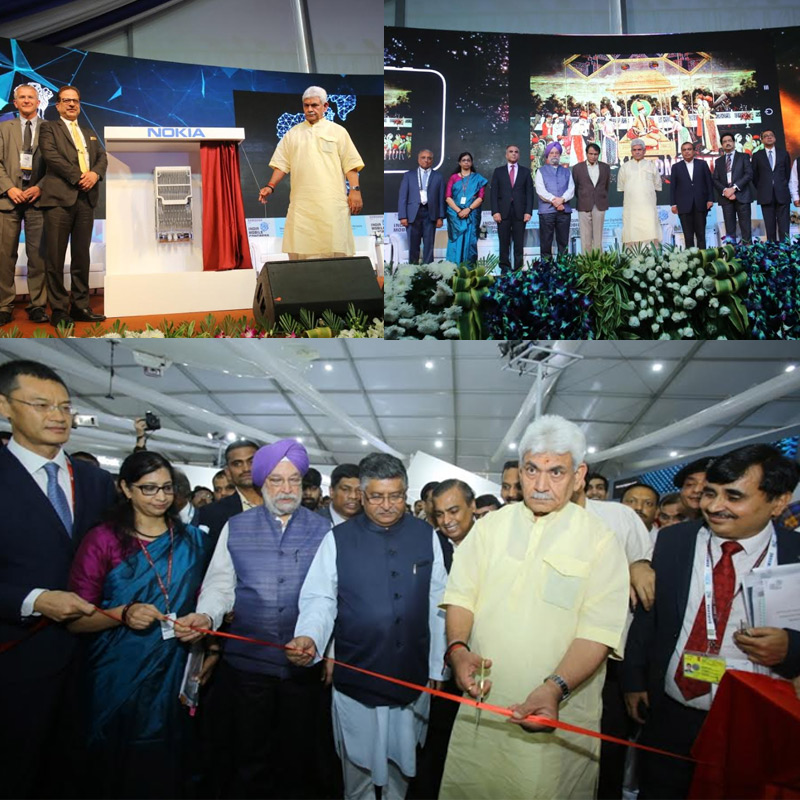
    New Delhi : India Mobile Congress 2018 (IMC 2018), South Asia’s biggest Mobile, Internet and Technology event, kicked-off today amidst much fan-fare at Aerocity, New Delhi. Chief Guest, Shri Manoj Sinha, Hon’ble Minister of State (Independent Charge) for Communications and Minister of State for Railways, inaugurated the event, which is jointly organised by the Department of Telecommunications and COAI. The event witnessed the presence of more than 15,000 people including international exhibitors, media, global speakers and other notable delegates, including several established and budding entrepreneurs.

    While addressing the gathering, Hon’ble Minister Shri Manoj Sinha, stated that the Government would leave no stone unturned in extending its support to India’s ICT and TMT sectors. Apart from showcasing India’s rich technology heritage and the road ahead, the three day event highlighted India’s massive ICT innovation potential and brought to light, several game-changing technologies that will shape India’s digital future in the coming times. The event, themed “New Digital Horizons: Connect, Create, Innovate”, witnessed exemplary participation and support from global information and communications technology companies. The platform saw an impressive international presence with over 300 exhibitors, 2000 CXOs and 190 global speakers.

    Key Highlights of the Day-1

    On Day 1, a number of exhibitors including Reliance Jio Infocomm, Intel, Nokia and Qualcomm participated in 5G trials. This was the first time people could get a glimpse of what is to be expected from 5G in the years to come and how it can affect the scope and development of futuristic technologies. A number of discussions were pivoted around how such technologies will shape India’s digital future. The sessions showcased India’s 5G potential and the numerous unique use cases 5G will have in India. There were live 5G demonstrations by companies such as Nokia, Ericsson, Qualcomm, Reliance Jio infocomm and the like.

    The introductory panel discussion, around the theme – The India Story (Stack 3.0) – Connect, Create, Innovate, was the pick of the conference sessions. The second-half of the day saw a number of interesting and vital discussions on The Evolving Regulatory Landscape in the New Digital Ecosystem-Regulatory Brief, Enabling Futuristic Networks – Reducing complexity to Redefine connectivity, Digital Identity – A revolution or a threat, Connecting the Unconnected – Building Next-Gen ICT Infrastructure for the Masses, Gadgets of Tomorrow – Connected Intelligence, graced by speakers such as Mr. Ajit Pai, Chairman, U.S. Federal Communications Commission, Mr. David Hammarwall, Head of Product Line 5G RAN, Product Area Networks, Ericsson, Mr. Vinayak Godse, Senior Director, Data Security Council of India, Mr. Bimal Dayal, CEO, Indus Towers and Mr. Jonathan Wood, Senior Director, Intel Next Generation and Standards, Intel.

    IMC 2018 also hosted the ASEAN & BIMSTEC Conclave which was addressed by delegates including Shri Manoj Sinha, Hon’ble Minister of State (Independent Charge) for Communications and Minister of State for Railways and 16 other Ministers from ASEAN & BIMSTEC Countries, H.E. Mr. Pichet Durongkaveroj, Hon’ble Minister of Digital Economy and Society, Govt. of Thailand, H.E. Khennavong Bounsaleumsay, Vice Minister, Ministry of Posts and Telecommunications (MPT), Lao PDR, H.E. Thant Sin Maung, Hon'ble, Union Minister of Transport and Communications, Govt. of Myanmar, H.E. Chea Manit, Under Secretary of State, Ministry of Posts & Telecommunications (MPTC), H.E. Tram Iv Tek, Minister of Posts and Telecommunication, H.E. M Shahidul Islam, Secretary General, BIMSTEC. A number of topics curated for consumer interest garnered excitement and enthusiastic participation from the delegates. One such session involved a discussion on “Smart Cities: Automating the way we live”.

    Key highlights of the day:

    Nokia

    Nokia’s state-of-the-art manufacturing unit in Chennai has started manufacturing 5G New Radio (NR) based on the 3GPP 5G New Radio Release 15 standard. It is the factory to start manufacturing 5G radio equipment in India. The Chennai plant is one of the largest telecom equipment manufacturing plant in the country, recently reaching the 4 million units annual production milestone of 2G, 3G and 4G units. It serves both domestic as well as global customers, shipping to over 100 countries.  As part of an on-going program, known as the ‘Conscious** factory’, the Nokia Chennai plant recently implemented the first 'real-world' Smart Manufacturing application of Industry 4.0 in India leveraging solutions such as Augmented and Virtual Reality (AR/VR), connected Robotics, Artificial Intelligence, Big Data Analytics, and Internet of Things to enhance operations and increase productivity.  The plant is equipped with cutting-edge manufacturing technologies, such as the state-of-the-art surface mounting technology, with a capacity of 12.8 billion components every year, 3D automated optical inspection and X-Ray inspection capability.

    Huawei

    Huawei Reiterates Commitment to Bringing 5G to India with Full Range End-to-End Technology Showcase at IMC 2018 – Conducting industry’s first 5G use case demos in partnership with Airtel, Huawei paves ROADS to a fully connected and intelligent world.

    Mr. Randeep Sekhon, Chief Technology Officer, Bharti Airtel said, “Ubiquitous high speed networks will open doors to a digital world that will be full of exciting digital innovations. Having conducted India’s first in-lab 5G test with Huawei, we are delighted to extend our partnership to demonstrate cutting edge AR and VR based use cases for 5G.”

    Follow updates on #IMC2018

    For more information please visit us at www.indiamobilecongress.com

    For more updates please visit:

    Twitter: @exploreIMC

    Instagram: @exploreIMC

    Facebook: http://www.facebook.com/IndiaMobileCongress

    YouTube: https://goo.gl/UcZhCP

  • FCC outvotes 2015 net neutrality rules

    FCC outvotes 2015 net neutrality rules

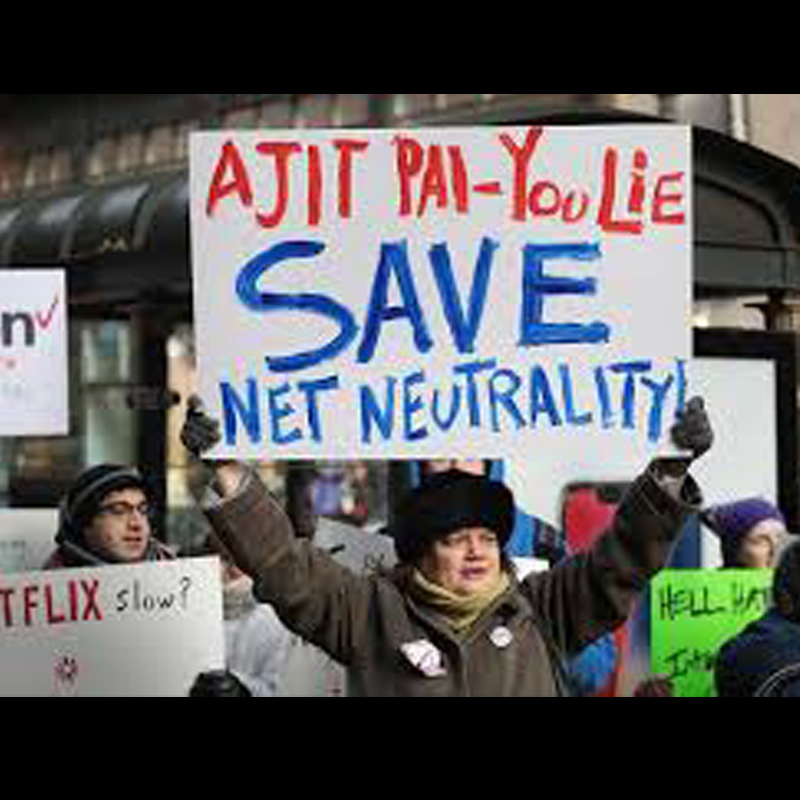
    NEW DELHI: American telecoms and broadcast regulator FCC on Thursday voted out the 2015 Obama government’s regulations relating to net neutrality, which, some critics said, put too much power in the hands of broadband companies to influence consumers’ online experiences.

    According to the FCC, it voted to restore the “longstanding, bipartisan light-touch regulatory framework” that had fostered rapid internet growth, openness, and “freedom for nearly 20 years”.

    Following detailed legal and economic analysis, as well as extensive examination of comments from consumers and stakeholders, the commission reversed the FCC’s 2015 “heavy-handed utility-style regulation” of broadband internet access service, which imposed substantial costs on the entire internet ecosystem.

    “In place of that heavy-handed framework, the FCC is returning to the traditional light-touch framework that was in place until 2015.  Moreover, the FCC today also adopted robust transparency requirements that will empower consumers as well as facilitate effective government oversight of broadband providers’ conduct,” the commission said in a statement, adding, “In particular, the FCC’s action today has restored the jurisdiction of the federal trade commission to act when broadband providers engage in anticompetitive, unfair, or deceptive acts or practices.

    “The framework adopted by the commission today will protect consumers at far less cost to investment than the prior rigid and wide-ranging utility rules. And restoring a favourable climate for network investment is key to closing the digital divide, spurring competition and innovation that benefits consumers.”

    New York Times, which has often criticised FCC chief Ajit Pai’s stand on some issues, including net neutrality, reported Mignon Clyburn, one of the Democratic commissioners who voted against the action, accused the three Republican commissioners of defying the wishes of millions of Americans. She was quoted by the newspaper as saying, “I dissent because I am among the millions outraged. Outraged because the FCC pulls its own teeth, abdicating responsibility to protect the nation’s broadband consumers.”

    Brendan Carr, a Republican commissioner, was quoted as having said it was a “great day” and dismissed “apocalyptic” warnings.

    Before the voting on net neutrality took place, Pai said, “We are helping consumers and promoting competition. Broadband providers will have more incentive to build networks, especially to underserved areas.”

    What do the FCC’s new rules mean, as and when they come into effect? In simple terms: it would allow walled garden of content and also help broadband companies and telcos to prioritise services and have different price structures for services.

    Tech magazine Wired observed that broadband providers say the public has nothing to worry about and that AT&T, Comcast and Verizon, among others, have promised not to block or throttle content. But those promises leave internet providers with quite a bit of room to prioritise their own content, or from their partners, the magazine commented.

    “AT&T, for example, already allows its DirecTV Now video-streaming service to bypass mobile subscribers’ data limits. Verizon does much the same with its Go90 video service. Sling TV and Netflix, on the other hand, still count towards customers’ data caps. The end of the FCC’s current rules will allow companies to expand the ways they prioritise certain services over others,” Wired said.

    However, some observers in the US, including the NYT, also were categorical that in the new year the FCC regulation most likely will be challenged in courts.

    The full text of the FCC statement could be accessed at https://www.fcc.gov/document/fcc-takes-action-restore-internet-freedom.

    ALSO READ:

    TRAI releases recommendations on Net Neutrality

    TRAI & FCC sign agreement on accelerating broadband deployment

    Restoring Net freedom: FCC seeks public participation

  • Indian-American Ajit Pai reappointed FCC chairman in US Senate split vote

    Indian-American Ajit Pai reappointed FCC chairman in US Senate split vote

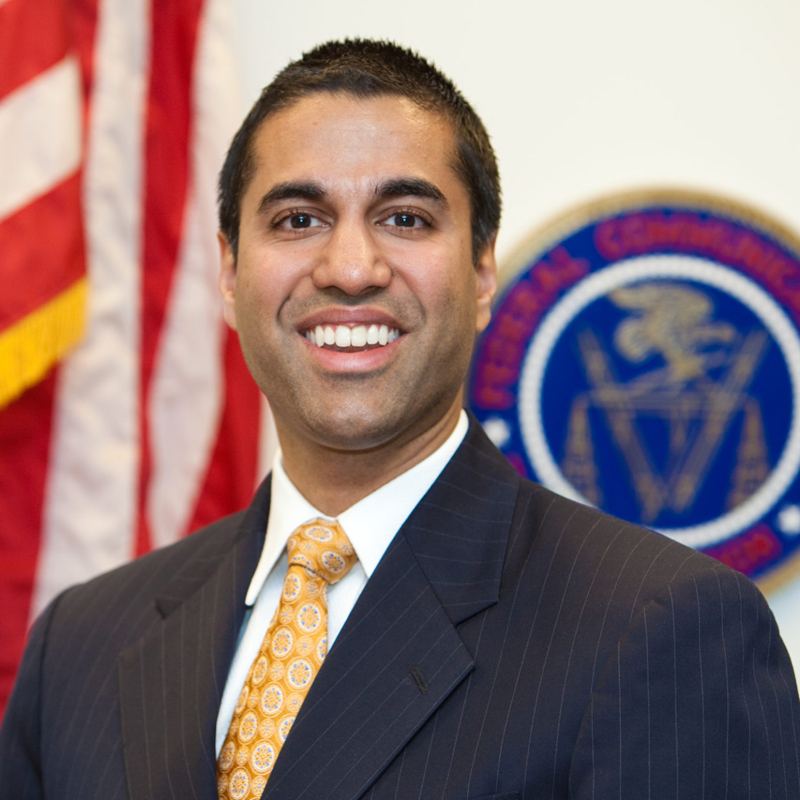
    MUMBAI: The US Senate has confirmed the nomination of Indian-American Ajit Pai as the Federal Communications Commission (FCC) chairman for the second time despite complaints that he will undermine net neutrality. Pai, whose term was to end later this year, was reappointed for a five-year term after getting a majority of 52-41, with most of the Democrats voting against him.

    Pai was designated chairman by the President Donald J. Trump in January 2017. He had previously served as the commissioner at the FCC.

    Pai’s regulatory philosophy is informed by a few simple principles. Rules that reflect these principles will result in more innovation, more investment, better products and services, lower prices, more job creation, and faster economic growth.

    Senate minority leader Chuck Schumer accused Pai of establishing a record of favouring big corporations at the expense of consumers, innovators and small businesses. Pai, he said, supported Congressional attempts to reverse the FCC’s 2016 broadband privacy rule, which would have prevented big cable and internet companies from profiting off of personal internet data.

    He complained that internet service providers no longer have to obtain consumer consent before they sell or share sensitive personal data.

    Pai, he alleged, is now attempting to dismantle the Open Internet Order, the net neutrality rules under which millions of consumers currently have access to a free and open internet.

    Defending his work, Pai said: “Since January (2017), the FCC has focused on bridging the digital divide, promoting innovation, protecting consumers and public safety, and making the FCC more open and transparent.”

  • Restoring Net freedom: FCC seeks public participation

    MUMBAI: With the opening of a new proceeding on Restoring Internet Freedom, the Commission (FCC) anticipates significant public engagement and a high volume of filings. The Consumer and Governmental Affairs Bureau provides this guidance to facilitate public participation and to make commenting easy:

    “Those who wish to file individual comments may submit them electronically via the Electronic Comment Filing System (ECFS) at https://www.fcc.gov/ecfs/. However, we anticipate that some may wish to submit a large number of comments from multiple individuals, each with the same or similar content. We strongly encourage parties who seek to file a large number of comments or “group” comments to do so through the public API or the Commission’s electronic inbox established for this proceeding, called Restoring Internet Freedom Commentsat https://www.fcc.gov/restoring-internet-freedom-comments. We also ask parties who anticipate submitting group comments to contact us in advance so that we can assist with a smooth filing process. You can reach us at ECFSHelp@fcc.gov and (202) 418-0193.

    We expect that filing group comments through the inbox will be simpler than filing through ECFS. We ask commenters to be patient, as there may be some lag time between when filings are made and when they appear in ECFS. We assure all timely filers, though, that their submissions will be part of the record in this proceeding.

    By using the public API or inbox and contacting us in advance of large filings, parties can help us ensure that ECFS functions normally during periods of high volume submissions. Based on past experience, we anticipate that during some periods of the comment cycle, ECFS may experience much higher volumes of traffic, and that some of this traffic may be malicious in nature. Our commercial cloud service is limited in the amount of input it can receive at any one time. Thus, if group filers do not wish to use the inbox above for group filings, we recommend that they use the ECFS function for a single file to be uploaded with the ability to note the number of individuals represented by the filing. This will minimize the possibility that the system will be overwhelmed and unable to take other filings.

    We will continue to monitor ECFS and take steps to minimize any impacts on parties attempting to file and view comments. We appreciate the public’s help, as we want to ensure that all voices are heard in this proceeding.

    We remind the public that the Commission’s ex parte rules apply and that presentations (including comments, filings, and other submissions) are subject to “permit-but-disclose” ex parte rules. See, e.g., 47 CFR §§ 1.1206, 1.1200(a). Participants in this proceeding should familiarize themselves and comply with the Commission’s ex parte rules, including the general prohibition on presentations (written and oral) on matters that are listed on the Commission’s Sunshine Agenda, which is typically released a week prior to a Commission meeting. See 47 CFR §§ 1.1200(a), 1.1203.

    ACCESSIBLE FORMATS: To request materials in accessible formats for people with disabilities (Braille, large print, electronic files, audio format), send an e-mail to fcc504@fcc.gov or call the Consumer and Governmental Affairs Bureau at 202-418-0530 (voice) or 202-418-0432 (TTY).”

  • Ajit Pai to serve second term at FCC

    MUMBAI: US president Donald Trump has nominated Indian-American Ajit Pai for serving another term at Federal Communications Commission.  Trump had designated Pai, who was previously the FCC commissioner, as FCC’s acting chairman soon after becoming the US president. 

    On being nominated, Pai said, “I am deeply honored to have been nominated by President Trump to serve a second term on the Federal Communications Commission.  If I am fortunate to be confirmed by the Senate, I will continue to work with my colleagues to connect all Americans with digital opportunity, foster innovation, protect consumers, promote public safety, and make the FCC more open and transparent to the American people.” 

    Before joining FCC, Pai was a Partner at Jenner & Block, LLP, from 2011 until 2012, and Deputy General Counsel, Associate General Counsel, and Special Advisor to the General Counsel at the FCC from 2007 until 2011. The son of immigrants from India, Pai grew up in Parsons, Kansas. 

    “There is a real and growing digital divide in America. In wealthier, metropolitan areas, 4G LTE is ubiquitous, and gigabit fixed service is expanding. But, many rural areas are being left behind,” Pai said in his testimony before the Senate Commerce, Science and Transportation Committee. 

    Also Read:

    TRAI & FCC sign LoI on accelerating broadband deployment & aligning spectrum policy

  • FCC gets Indian origin Ajit Pai as its chairman

    FCC gets Indian origin Ajit Pai as its chairman

    MUMBAI: Indians are familiar with Ajit Pai who addressed Ficci Frames as a keynote speaker just three years ago. But Pai is the point man designated by US president Donald Trump as the 34th chairman of the Federal Communications Commission (FCC) who will be drawing up communications policy in one of the most highly networked and communications heavy nations on earth.

    Pai, a senior republican on the FCC, was appointed as a commissioner in 2012 by the then President Barack Obama and later confirmed by the senate. He replaces outgoing chairman Tom Wheeler.

    “I look forward to working with the new administration, my colleagues at the Commission, members of Congress and the American public to bring the benefits of the digital age to all Americans,” Pai said in a statement.

    Ajit Pai had credited his family for his successful rise as communications regulator during his Ficci Frames speech: Said he: “I was born and brought up in the United States, but my family’s roots are here in India. My mother grew up in Bangalore, and my father was raised in Hyderabad. In 1971, they came to the United States with just a radio and ten dollars in their pockets. Now, forty-three years later, here I am, in the country of my forefathers, speaking to you as the first Indian-American to serve on the FCC. The credit for this goes to my parents, who, like many immigrants, sacrificed to give me opportunities not available to them as children. It goes to my grandparents, who instilled in my parents the value of hard work and the vision to dream big.”

    According to the FCC website Pai’s rules on communication regulations are as follows:

    * Consumers benefit most from competition, not preemptive regulation. Free markets have delivered more value to American consumers than highly regulated ones.

    * No regulatory system should indulge arbitrage; regulators should be skeptical of pleas to regulate rivals, dispense favors, or otherwise afford special treatment.

    * Particularly given how rapidly the communications sector is changing, the FCC should do everything it can to ensure that its rules reflect the realities of the current marketplace and basic principles of economics.

    * As a creature of Congress, the FCC must respect the law as set forth by the legislature.

    * The FCC is at its best when it proceeds on the basis of consensus; good communications policy knows no partisan affiliation.

    Pai as the commissioner had proposed a:

    * Comprehensive plan to promote broadband deployment to all Americans. The federal government must make it easier to for broadband providers to retire increasingly obsolete copper lines in favor of next-generation technologies like fiber.”

    • It must enable rural residents to have the same choice for stand-alone broadband typically found in cities.

    • It must create a roadmap for state and local governments so that companies that want to compete in the broadband market don’t have to jump through unnecessary regulatory hoops in order to lay fiber to consumers.

    • It must promote common-sense policies like “Dig Once” and reform pole attachment rules to reduce the costs of building digital networks.

    • It must streamline the process for deploying wireless infrastructure, from big towers to small cells.

    • It must free up more licensed spectrum for use by wireless carriers and more unlicensed spectrum for things like Wi-Fi.

    • And it must preserve Internet freedom here and abroad, so that the online world can flourish free from heavy-handed government intervention.

    Additionally, Pai ai was the first member of the FCC in over two decades to call for revitalizing the AM radio band; the basic reforms he proposed were adopted in 2015. He also urged the FCC to create a task force to study the “Internet Protocol Transition” and report on obsolete rules that could be repealed; that task force was created.

    He is likely to undo the net neutrality regime that the FCC had been pursuing under outgoing chairman Wheeler.

  • FCC gets Indian origin Ajit Pai as its chairman

    FCC gets Indian origin Ajit Pai as its chairman

    MUMBAI: Indians are familiar with Ajit Pai who addressed Ficci Frames as a keynote speaker just three years ago. But Pai is the point man designated by US president Donald Trump as the 34th chairman of the Federal Communications Commission (FCC) who will be drawing up communications policy in one of the most highly networked and communications heavy nations on earth.

    Pai, a senior republican on the FCC, was appointed as a commissioner in 2012 by the then President Barack Obama and later confirmed by the senate. He replaces outgoing chairman Tom Wheeler.

    “I look forward to working with the new administration, my colleagues at the Commission, members of Congress and the American public to bring the benefits of the digital age to all Americans,” Pai said in a statement.

    Ajit Pai had credited his family for his successful rise as communications regulator during his Ficci Frames speech: Said he: “I was born and brought up in the United States, but my family’s roots are here in India. My mother grew up in Bangalore, and my father was raised in Hyderabad. In 1971, they came to the United States with just a radio and ten dollars in their pockets. Now, forty-three years later, here I am, in the country of my forefathers, speaking to you as the first Indian-American to serve on the FCC. The credit for this goes to my parents, who, like many immigrants, sacrificed to give me opportunities not available to them as children. It goes to my grandparents, who instilled in my parents the value of hard work and the vision to dream big.”

    According to the FCC website Pai’s rules on communication regulations are as follows:

    * Consumers benefit most from competition, not preemptive regulation. Free markets have delivered more value to American consumers than highly regulated ones.

    * No regulatory system should indulge arbitrage; regulators should be skeptical of pleas to regulate rivals, dispense favors, or otherwise afford special treatment.

    * Particularly given how rapidly the communications sector is changing, the FCC should do everything it can to ensure that its rules reflect the realities of the current marketplace and basic principles of economics.

    * As a creature of Congress, the FCC must respect the law as set forth by the legislature.

    * The FCC is at its best when it proceeds on the basis of consensus; good communications policy knows no partisan affiliation.

    Pai as the commissioner had proposed a:

    * Comprehensive plan to promote broadband deployment to all Americans. The federal government must make it easier to for broadband providers to retire increasingly obsolete copper lines in favor of next-generation technologies like fiber.”

    • It must enable rural residents to have the same choice for stand-alone broadband typically found in cities.

    • It must create a roadmap for state and local governments so that companies that want to compete in the broadband market don’t have to jump through unnecessary regulatory hoops in order to lay fiber to consumers.

    • It must promote common-sense policies like “Dig Once” and reform pole attachment rules to reduce the costs of building digital networks.

    • It must streamline the process for deploying wireless infrastructure, from big towers to small cells.

    • It must free up more licensed spectrum for use by wireless carriers and more unlicensed spectrum for things like Wi-Fi.

    • And it must preserve Internet freedom here and abroad, so that the online world can flourish free from heavy-handed government intervention.

    Additionally, Pai ai was the first member of the FCC in over two decades to call for revitalizing the AM radio band; the basic reforms he proposed were adopted in 2015. He also urged the FCC to create a task force to study the “Internet Protocol Transition” and report on obsolete rules that could be repealed; that task force was created.

    He is likely to undo the net neutrality regime that the FCC had been pursuing under outgoing chairman Wheeler.

  • US-based FCC seeks to open up FDI norms for broadcasting

    US-based FCC seeks to open up FDI norms for broadcasting

    MUMBAI: Are the winds of change blowing in probably what is the most hypercompetitive and protected media market in the world after China? It looks likely that they are.


    The US Federal Communications Commission announced over the weekend that it is considering relaxing foreign investment norms in broadcast TV and radio stations in the US. Current norms restrict foreign holdings in companies holding broadcast licences at 25 per cent.


    The FCC is scheduled to have an open discussion on this when it meets on 14 November under Acting Chairwoman Mignon Clyburn. Clayburn says once its proposal is approved, the FCC will take decisions on proposals on a case by case basis. An official statement quoted her saying: “I circulated a declaratory ruling that clears the way for increased access to capital and potential new investors for the broadcast sector. Approval of this item will clarify the Commission’s intention to review, on a case-by-case basis, proposed transactions that would exceed the 25 per cent benchmark that restricts foreign ownership in companies holding broadcast licenses.”


    FCC Commissioner Ajit Pai added while speaking to a wire service that there is a great disparity in the fact that foreign companies can indirectly invest more than 25 per cent in wireless telecom, internet, cable TV ventures while draconian restrictions continue to hamper the flow of capital in the US broadcast sector which is going through turbulent times.


    The proposal has been welcomed by many in the broadcast sector including the National Association of Broadcasters and The Minority Media and Telecommunications Council (MMTC), which has in the past stated that the rules framed in 1912 need to be changed.


    In a statement, MMTC explained its advocacy for the measure: “MMTC, along with over 50 national civil rights, intergovernmental, entrepreneur, and professional groups, has petitioned the Commission to amend the rules for eight years. The organisations have cited the lack of domestic investment in diverse radio stations and the relief foreign investment capital would provide to American broadcasters, especially minority entrepreneurs. The move would also facilitate American broadcasters’ reciprocal entry into diverse overseas markets hungry for African-American, Hispanic-American, and Asian-American music and culture.”


    It may be recalled that News Corp boss Rupert Murdoch had to become an American citizen and give up his Australian citizenship in September 1985 in order to buy a network of independent television stations. He went to buy 50 per cent of 20th Century Fox Film Corp. (21st Century Fox) and had plans to purchase Metromedia, the nation’s largest group of independent television stations, including KTTV in Los Angeles.


    The change in thinking brings to mind the fact that TRAI has been recommending a freeing up of foreign investment norms in cable TV, television – news and current affairs channel (in the uplinking guidelines may be increased from 26 per cent to 49 per cent through the FIPB route), radio (the FDI limits may be enhanced from 26 per cent to 49 per cent through FIPB route for the FM radio sector), DTH, and putting it on par with telecom. Hopefully, there will finally be some movement in that direction.


    We don’t know if Indian firms are smelling opportunity, but it well could be. Zee TV already owns a wellness TV service in the US under the brand of Veria and several other Indian broadcasters have launched versions of their Indian channels and delivered them to south Asian diaspora via satellite in the US. Sure, it will provide India’s going-global media firms a chance to put in investments and acquire broadcasting firms – even though they may be local TV stations – in the US. Yes, it will take big money, but for the risk takers the rewards will be big too when they work out.