Tag: Ajay Mittal

  • Improved tech & states role; curbs on Peace TVs, cable sans DD in new integrated policy: Naidu

    Improved tech & states role; curbs on Peace TVs, cable sans DD in new integrated policy: Naidu

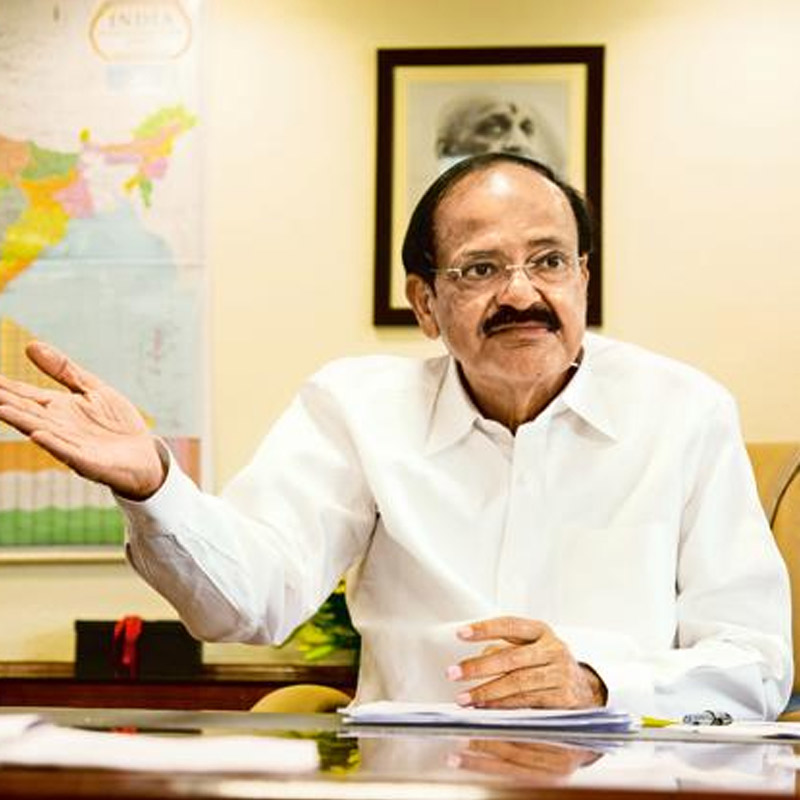
    NEW DELHI: Information and broadcasting minister M Venkaiah Naidu today laid emphasis for evolving a comprehensive “national information and communication policy” to provide citizens “enhanced access to information.”

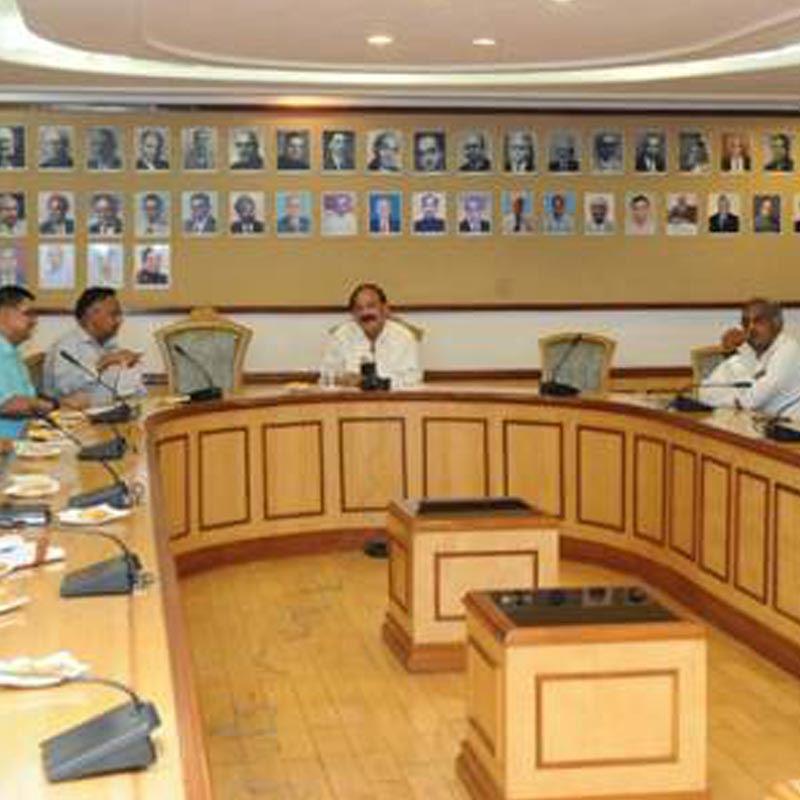
    Addressing the 28th state Information Ministers Conference (SIMCON) here, Naidu said the Centre and the states should work together in various areas, including in dissemination of effective information, to push integrated development.

    “We need an integrated and holistic approach and coordination between the centre and states is essential,” Naidu said.

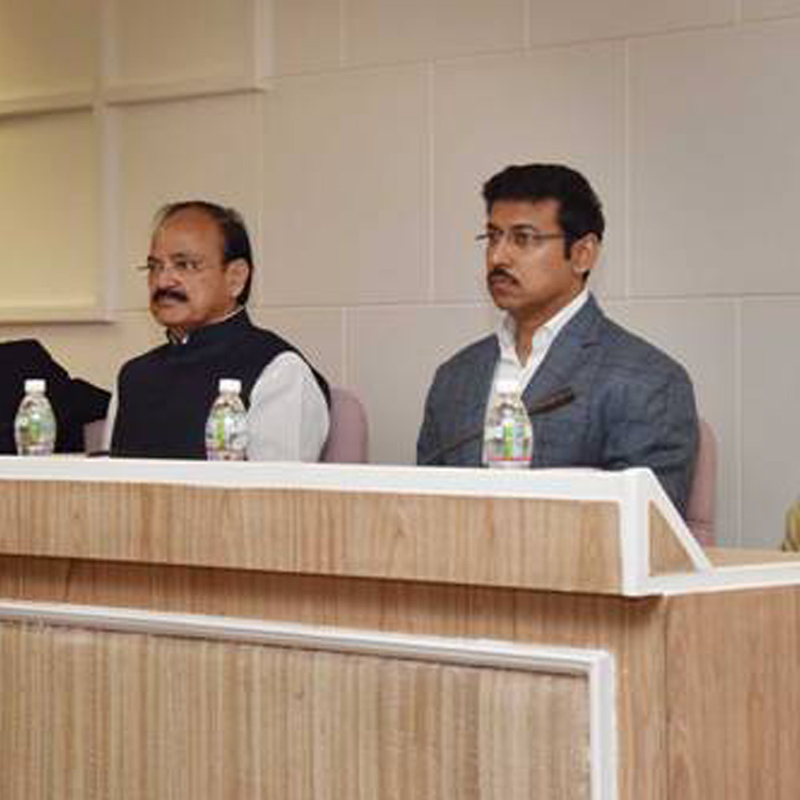
    The meet was attended by minister of state for information and broadcasting Rajyavardhan Rathore, secretary Ajay Mittal and other senior officials of the ministry apart from representatives of different states.

    The proposed policy would be prepared in consultation with states in the spirit of cooperative federalism and the principle of Team India which the prime minister firmly believed in, Naidu added.

    Elaborating on the proposed contours of the policy, Naidu said the broad objectives should be to enhance access to information and communication infrastructures and new technologies, especially in rural areas; to promote national dialogue on development issues by all citizens and facilitate informed participation of people in setting development agenda and its execution.

    The policy should rationalise multi-sectoral investments in information and communication hardware and software through their consolidation and appropriate integration in development plans and planning structures; to ensure timely, orderly and effective growth of information and communication institutions and professions through standards setting, capacity building and human resource development; and broadly define the roles of different governments at various levels and other stakeholders.

    It should preserve national cultural identity and enhance the development of cultural and artistic capabilities and institutions, while enabling productive regional and international exchanges and support national and local development initiatives, and to improve the quality of life of the people, by facilitating systematic and effective use and coordination of communication and information strategies and outcomes.

    The challenge before such a policy was to analyse the ingredients of the communication environment including competencies and resources that are critical.

    The minister further stated that the initiation of such a policy would integrate development communication, development agendas linking planners, beneficiaries and implementers of development actions. It was the endeavour of the proposed policy to make people informed participants in decision-making and development planning process. Such a communication approach also enabled policy makers to look at people as part of a solution.

    Naidu said all-round and integrated development cannot materialise without effective dissemination of information. “People have the right to information,” he said.

    While the country has evolved policies on various subjects like environment and health, there is no such policy for communication and information dissemination.

    “The centre and the state should work together to evolve the communication policy,” he said, adding that Ajay Mittal and senior officials have been directed to work with the states to work on a draft policy at the earliest. “It should also work to preserve national cultural identity,” Naidu added.

    Naidu said India has unique strength in its cultural richness and its heritage. “Any Tom, Dick and Harry came and conquered…They ‘might have’ robbed our wealth, but they could not take away our heritage,” he said.

    Naidu referred to the prime minister Narendra Modi’s repeated emphasis on ‘Sabka Saath Sabka Vikas (development with all and development for all)’ and said even leaders such as B R Ambedkar and Deen Dayal Upadhyay had laid emphasis on the development of ‘Antyodhaya’ – the last man in the queue.

    The minister said the states should take advantage of the reach of public broadcasters — All India Radio and Doordarshan, and give them “preferential treatment.” These organisations do not run with commercial considerations, he emphasised. He said that strict action should be taken against those cable operators who do not show DD News.

    Naidu said with regard to violation of cable TV operators laws, the states should appoint designated officers in all districts to ensure that no major violation like the Peace TV episode is repeated. He would be writing to chief ministers again in this regard, the minister said. (‘Peace TV’ of Zakir Naik had allegedly telecast various programmes which instigated youths towards radical thinking.)

    Speaking earlier, Mittal gave an overview of the deliberations of the first day’s meeting highlighting some of the key discussion points across sectors and suggestions received from the States. During the course of the deliberations, the separate wings of the ministry, films, broadcasting, information and Prasar Bharti (AIR & DD) made presentations regarding the policy initiatives and issues for discussions and convergence with states.

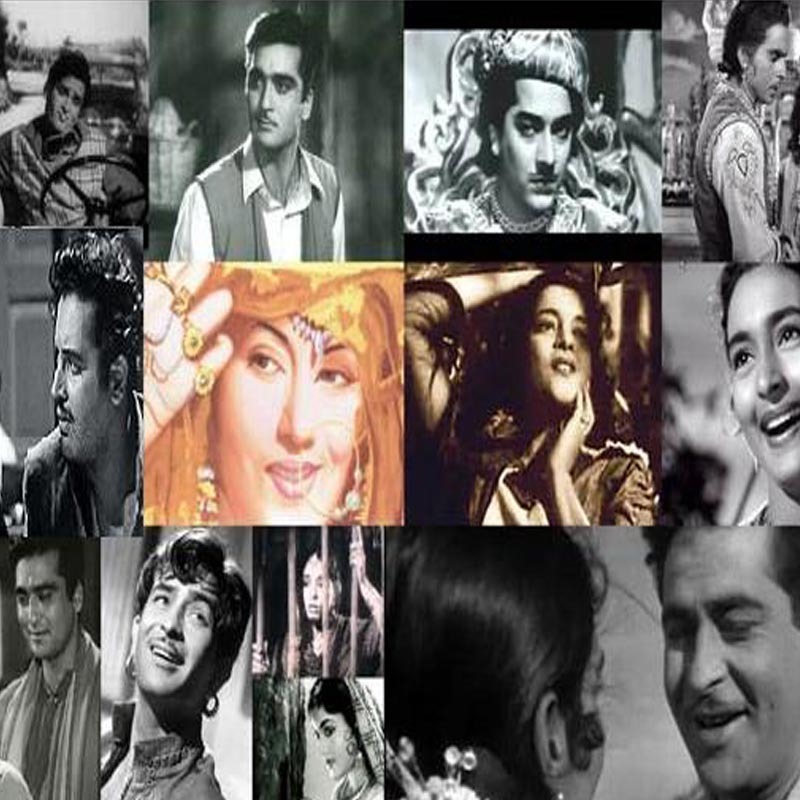
    The minister also visited the various stalls and multimedia exhibitions showcased by the media units of the ministry namely, National Film Archives of India, which organised the multimedia exhibition on the theme ‘Azaadi 70 Saal- Yaad Karo Qurbani’. The exhibition showcases the film industry’s contribution to Independence and was organised to celebrate 70th year of India’s Independence. The three themes covered include ‘Rise and Revolt: Cinema of Social Reform’, ‘Our Freedom Fighters-Through the lens of Cinema’ and ‘Saluting our Soldiers’.
  • Encourage cashless transactions, Naidu urges officials

    Encourage cashless transactions, Naidu urges officials

    NEW DELHI: M Venkaiah Naidu, who holds the dual charge of the ministries of information & broadcasting, and urban development and housing & urban poverty alleviation, yesterday urged officials in both the ministries to facilitate cashless economy and encourage digital and online transactions.

    Addressing the officers regarding the steps being taken by the government, he said the attempt was to prevent delays through seamless transactions and end the menace of corruption and black money.

    Naidu mentioned that the government’s JAM (Jan Dhan, AADHAR & Mobile) initiative would also facilitate this transformation. In this context, he reiterated the prime minister’s JAM vision which would ensure maximum penetration of technology among the masses and maximum empowerment for the poor.

    Naidu urged all officers to provide counselling to their staff to move and adapt to a cashless and digital transactions reducing the role of physical money in day-to-day transactions. This exercise could also be conducted at the homes by officers and staff with the people associated in their day to day life as part of social responsibility. The minister also mentioned few platforms available for digital transactions including Unified Payment Interface and Mobile Wallets.

    Minister of state for information & broadcasting Rajyavardhan Rathore, ministry secretary Ajay Mittal, urban development secretary Rajiv Gauba, housing and urban poverty secretary Dr. Nandita Chatterjee, senior officers from the ministries, were also present in the meeting held at Vigyan Bhawan, NewDelhi.

    A presentation on “Government – Citizen Transactions towards less cash economy including different platforms and methods of transaction” was also made by Team NITI Ayog. The presentation was followed by a Question & Answer session, where doubts were cleared and queries answered.

  • Encourage cashless transactions, Naidu urges officials

    Encourage cashless transactions, Naidu urges officials

    NEW DELHI: M Venkaiah Naidu, who holds the dual charge of the ministries of information & broadcasting, and urban development and housing & urban poverty alleviation, yesterday urged officials in both the ministries to facilitate cashless economy and encourage digital and online transactions.

    Addressing the officers regarding the steps being taken by the government, he said the attempt was to prevent delays through seamless transactions and end the menace of corruption and black money.

    Naidu mentioned that the government’s JAM (Jan Dhan, AADHAR & Mobile) initiative would also facilitate this transformation. In this context, he reiterated the prime minister’s JAM vision which would ensure maximum penetration of technology among the masses and maximum empowerment for the poor.

    Naidu urged all officers to provide counselling to their staff to move and adapt to a cashless and digital transactions reducing the role of physical money in day-to-day transactions. This exercise could also be conducted at the homes by officers and staff with the people associated in their day to day life as part of social responsibility. The minister also mentioned few platforms available for digital transactions including Unified Payment Interface and Mobile Wallets.

    Minister of state for information & broadcasting Rajyavardhan Rathore, ministry secretary Ajay Mittal, urban development secretary Rajiv Gauba, housing and urban poverty secretary Dr. Nandita Chatterjee, senior officers from the ministries, were also present in the meeting held at Vigyan Bhawan, NewDelhi.

    A presentation on “Government – Citizen Transactions towards less cash economy including different platforms and methods of transaction” was also made by Team NITI Ayog. The presentation was followed by a Question & Answer session, where doubts were cleared and queries answered.

  • Prasar Bharati CEO Jawhar Sircar officially seeks early retirement

    Prasar Bharati CEO Jawhar Sircar officially seeks early retirement

    MUMBAI: Prasar Bharati CEO Jawhar Sircar has been known to not pull any punches. Last month, he had expressed his desire to resign from his post to the media as he was not getting anywhere with the organisaton and neither was Prasar Bharati. Now, he has written to the ministry of information & broadcasting secretary (MIB) Ajay Mittal stating that he would like to resign prematurely from 4 November, says a PTI report.

    He has also written to I&B minister Venkaiah Naidu, expressing his desire to resign from his position post-Diwali – that is after 30 October. The report goes on to state that he would like to relocate to Kolkata.

    Sircar was yanked out of his position as secretary, culture, and installed as the Prasar Bharati CEO by an eminent panel led by the then Indian vice-president and a Supreme Court judge during the UPA government’s tenure in 2012. He serves as the vice-president of the Asia Pacific Broadcasting Union, which is a club of broadcasters from 67 countries. He has also had two short stints MIB secretary during his career.

  • Prasar Bharati CEO Jawhar Sircar officially seeks early retirement

    Prasar Bharati CEO Jawhar Sircar officially seeks early retirement

    MUMBAI: Prasar Bharati CEO Jawhar Sircar has been known to not pull any punches. Last month, he had expressed his desire to resign from his post to the media as he was not getting anywhere with the organisaton and neither was Prasar Bharati. Now, he has written to the ministry of information & broadcasting secretary (MIB) Ajay Mittal stating that he would like to resign prematurely from 4 November, says a PTI report.

    He has also written to I&B minister Venkaiah Naidu, expressing his desire to resign from his position post-Diwali – that is after 30 October. The report goes on to state that he would like to relocate to Kolkata.

    Sircar was yanked out of his position as secretary, culture, and installed as the Prasar Bharati CEO by an eminent panel led by the then Indian vice-president and a Supreme Court judge during the UPA government’s tenure in 2012. He serves as the vice-president of the Asia Pacific Broadcasting Union, which is a club of broadcasters from 67 countries. He has also had two short stints MIB secretary during his career.

  • Jawhar Sircar sets 12-point action plan before early retirement

    Jawhar Sircar sets 12-point action plan before early retirement

    NEW DELHI: Prasar Bharati Chief Executive Officer Jawhar Sircar wants to ride into the sunset slightly before his tenure ends officially first quarter 2017, but in his trademark  style — feisty, frank and fearless — has started a raging debate in media and political circles nevertheless.

    “No, I have not threatened to quit (but) have just expressed a desire to relinquish (duties) a few months before tenure (ends). I do not see any controversy in that,” Sircar told indiantelevision.com.

    Sources in Ministry of Information and Broadcasting (MIB) confirmed on Sunday that Sircar has not resigned yet, but has informally expressed desire to leave Prasar Bharati few months before his five-year tenure ends officially early 2017.

    A source in Prasar Bharati, while agreeing with the MIB line, informed this website that Sircar has drawn a 12-point list of things he would like to accomplish before relinquishing office. The source, however, declined to spell out the action points.

    Interestingly, in a Facebook post on his timeline Saturday, Sircar did say that he wants to go from Prasar Bharat, also alluding to the time-frame. “Since news is out today: I will clarify. I hope to be back in Kolkata by NOV. After 41+ years (of) service, I want to retire: just to read, write and relate,” he wrote. One presumes by NOV, he mean November of 2016.
    Sircar, who took office in mid-February 2012 and has been at odds at times with MIB and even the Prasar Bharati Board, told  indiantelevision.com, “The Information and Broadcasting Ministry and Prasar Bharati Board are in sync and supportive…. No issues there.”

    public://ScreenShot of Jawhar Sircar FB Post.jpg

    Pointing out that the present MIB Secretary Ajay Mittal had been “supportive” as also his immediate predecessor, Sunil Arora, who’s now an advisor to Prasar Bharati, Sircar described the speculation regarding his quitting the pubcaster as “playing in non-troubled waters”.

    According to the feisty former bureaucrat, relationship with MIB “improved dramatically” after Arora took over as Secretary in 2014.

    On being asked about the media reports and resultant debate on his quitting Prasar Bharati as he was “tired”, Sircar cryptically said he had not wanted to speak to anyone but was compelled to reply to some “charged SMS from some newspersons” when he was in Benaras or Varanasi recently. He refused to elaborate any further.

    A go-getter bureaucrat who took retirement from active government service to take up the top, but challenging, job at India’s pubcaster, managing Doordarshan and All India Radio (AIR), Sircar had told indiantelevision.com few months back in an interview that Prasar Bharti’s “monopolistic-era mind-set had to change” if it has to make itself relevant in today’s vastly changed India broadcasting scenario or come anywhere near BBC’s standards.

    Not only critical of his own Board of Directors, Sircar had, from time to time, taken on the political establishment too in India, accusing it of using Prasar Bharati as a fiefdom for government propaganda.

    In recent times, he has been criticised within Prasar Bharati for proposing to auction time-slots on DD to gain good programming and additional revenue. However, due to bureaucracy and vested interests at play, the scheme failed to get the desired results, failing to take off in the first place.

    Still, Sircar has been able to break new grounds and introduce digital technologies and cut down obsolescence at Prasar Bharat. He has also given a new push to digitization of the huge archives of AIR and DD and has received three awards for this in three years.

    He has also been elected as Vice-President of the world’s largest public broadcasting service TV and radio organization, Asia Pacific Broadcasting Union, on which 67 nations are represented.

    Sircar’s name had been cleared after a three-member selection panel in 2012, headed by Vice-President Hamid Ansari and comprising the Press Council of India Chairman and MIB Secretary, recommended his name for the CEO’s post at Prasar Bharati. The appointment of the CEO is done by the President of India on the recommendation of the selection panel, which will, probably, have to start deliberations soon.

    Born on 22 March 1952, Sircar belongs to the 1975 batch of Indian Administrative Service from West Bengal. After the retirement of MIB Secretary Raghu Menon in September 2011, Sircar had been asked to hold additional charge of the ministry as a stop-gap measure, apart from his Secretary’s responsibilities at the Culture Ministry.

    Sircar holds two post-graduate degrees in Ancient Indian History and Culture and in Sociology with Social Anthropology. He has served at various senior positions in the Central and State Governments.

    Sircar is actively associated with several cultural and academic bodies like the Asiatic Society, Victoria Memorial, Centre for Archaeological Studies, Kolkata Museum of Modern Art and the Indian Anthropological Society. He took the lead in establishing the annual Kolkata Film Festival as an international event and has published several articles and research papers on history, culture and society. In the last decade, he has focused his research on specific aspects of popular culture, folk religion and on the development of socio-religious identities.

    Sircar studied at St Xavier’s School, Presidency College and Calcutta University in Kolkata and at the Universities of Cambridge and Sussex.

    ALSO READ:

    Prasar Bharati’s monopolistic-era mind-set has to change: CEO Jawhar Sircar


  • Jawhar Sircar sets 12-point action plan before early retirement

    Jawhar Sircar sets 12-point action plan before early retirement

    NEW DELHI: Prasar Bharati Chief Executive Officer Jawhar Sircar wants to ride into the sunset slightly before his tenure ends officially first quarter 2017, but in his trademark  style — feisty, frank and fearless — has started a raging debate in media and political circles nevertheless.

    “No, I have not threatened to quit (but) have just expressed a desire to relinquish (duties) a few months before tenure (ends). I do not see any controversy in that,” Sircar told indiantelevision.com.

    Sources in Ministry of Information and Broadcasting (MIB) confirmed on Sunday that Sircar has not resigned yet, but has informally expressed desire to leave Prasar Bharati few months before his five-year tenure ends officially early 2017.

    A source in Prasar Bharati, while agreeing with the MIB line, informed this website that Sircar has drawn a 12-point list of things he would like to accomplish before relinquishing office. The source, however, declined to spell out the action points.

    Interestingly, in a Facebook post on his timeline Saturday, Sircar did say that he wants to go from Prasar Bharat, also alluding to the time-frame. “Since news is out today: I will clarify. I hope to be back in Kolkata by NOV. After 41+ years (of) service, I want to retire: just to read, write and relate,” he wrote. One presumes by NOV, he mean November of 2016.
    Sircar, who took office in mid-February 2012 and has been at odds at times with MIB and even the Prasar Bharati Board, told  indiantelevision.com, “The Information and Broadcasting Ministry and Prasar Bharati Board are in sync and supportive…. No issues there.”

    public://ScreenShot of Jawhar Sircar FB Post.jpg

    Pointing out that the present MIB Secretary Ajay Mittal had been “supportive” as also his immediate predecessor, Sunil Arora, who’s now an advisor to Prasar Bharati, Sircar described the speculation regarding his quitting the pubcaster as “playing in non-troubled waters”.

    According to the feisty former bureaucrat, relationship with MIB “improved dramatically” after Arora took over as Secretary in 2014.

    On being asked about the media reports and resultant debate on his quitting Prasar Bharati as he was “tired”, Sircar cryptically said he had not wanted to speak to anyone but was compelled to reply to some “charged SMS from some newspersons” when he was in Benaras or Varanasi recently. He refused to elaborate any further.

    A go-getter bureaucrat who took retirement from active government service to take up the top, but challenging, job at India’s pubcaster, managing Doordarshan and All India Radio (AIR), Sircar had told indiantelevision.com few months back in an interview that Prasar Bharti’s “monopolistic-era mind-set had to change” if it has to make itself relevant in today’s vastly changed India broadcasting scenario or come anywhere near BBC’s standards.

    Not only critical of his own Board of Directors, Sircar had, from time to time, taken on the political establishment too in India, accusing it of using Prasar Bharati as a fiefdom for government propaganda.

    In recent times, he has been criticised within Prasar Bharati for proposing to auction time-slots on DD to gain good programming and additional revenue. However, due to bureaucracy and vested interests at play, the scheme failed to get the desired results, failing to take off in the first place.

    Still, Sircar has been able to break new grounds and introduce digital technologies and cut down obsolescence at Prasar Bharat. He has also given a new push to digitization of the huge archives of AIR and DD and has received three awards for this in three years.

    He has also been elected as Vice-President of the world’s largest public broadcasting service TV and radio organization, Asia Pacific Broadcasting Union, on which 67 nations are represented.

    Sircar’s name had been cleared after a three-member selection panel in 2012, headed by Vice-President Hamid Ansari and comprising the Press Council of India Chairman and MIB Secretary, recommended his name for the CEO’s post at Prasar Bharati. The appointment of the CEO is done by the President of India on the recommendation of the selection panel, which will, probably, have to start deliberations soon.

    Born on 22 March 1952, Sircar belongs to the 1975 batch of Indian Administrative Service from West Bengal. After the retirement of MIB Secretary Raghu Menon in September 2011, Sircar had been asked to hold additional charge of the ministry as a stop-gap measure, apart from his Secretary’s responsibilities at the Culture Ministry.

    Sircar holds two post-graduate degrees in Ancient Indian History and Culture and in Sociology with Social Anthropology. He has served at various senior positions in the Central and State Governments.

    Sircar is actively associated with several cultural and academic bodies like the Asiatic Society, Victoria Memorial, Centre for Archaeological Studies, Kolkata Museum of Modern Art and the Indian Anthropological Society. He took the lead in establishing the annual Kolkata Film Festival as an international event and has published several articles and research papers on history, culture and society. In the last decade, he has focused his research on specific aspects of popular culture, folk religion and on the development of socio-religious identities.

    Sircar studied at St Xavier’s School, Presidency College and Calcutta University in Kolkata and at the Universities of Cambridge and Sussex.

    ALSO READ:

    Prasar Bharati’s monopolistic-era mind-set has to change: CEO Jawhar Sircar


  • Naidu urges officers to take to modern technology in the age of social media

    Naidu urges officers to take to modern technology in the age of social media

    NEW DELHI: In a meet that was meant to convey sarkaari farmaan as well as admonish, Information & Broadcasting Minister M Venkaiah Naidu today told his officers today that the focus of communication strategy should be to incorporate innovative and out of the box ideas in order to keep pace with the changing communication paradigm.

    In a meeting with senior Indian Information Service officers, he said the communication approach of the Ministry should strive for empowerment of people, by informing them regarding key initiatives of the Government in order to take Prime Minister Narendra Modi’s vision of “Reform, Perform and Transform” forward.

    Technology played a critical part in defining the communication approach especially with the enhanced role of different media platforms.Secretary Ajay Mittal was also present on the occasion.

    The Minister said there is an urban-rural divide in the country and the communication managers should design appropriate strategies to address the vast cross section living in rural areas, marginalized communities and focus on the empowerment of the women.

    Naidu said it is important to engage with the people through innovative products, creative messages and a language which is easily comprehendible. The Minister cited the example of Prime Minister’s Mann ki Baat broadcasts on All India Radio as an innovative approach to reach out to the people. It is also a challenge for Government communication managers to re-examine their approach towards critical issues and schemes such as Goods and Services Tax, Jan Dhan Yojana, Neem coated urea etc.

    The Minister stressed on the need for IIS officers to learn and adapt to the new technologies, tools, techniques to enhance reach of the government especially in the age of social media. The social media perspective had changed the way communication and governance was conducted in the present day. This provided challenges and opportunities for the officers. In his interaction, the Minister emphasized on the need to be progressive in thought and take pride in the role and responsibility assigned to each officer. He specifically mentioned the initiative taken by the Ministry to institutionalize capacity building through appropriate training programs at different career levels.

  • Naidu urges officers to take to modern technology in the age of social media

    Naidu urges officers to take to modern technology in the age of social media

    NEW DELHI: In a meet that was meant to convey sarkaari farmaan as well as admonish, Information & Broadcasting Minister M Venkaiah Naidu today told his officers today that the focus of communication strategy should be to incorporate innovative and out of the box ideas in order to keep pace with the changing communication paradigm.

    In a meeting with senior Indian Information Service officers, he said the communication approach of the Ministry should strive for empowerment of people, by informing them regarding key initiatives of the Government in order to take Prime Minister Narendra Modi’s vision of “Reform, Perform and Transform” forward.

    Technology played a critical part in defining the communication approach especially with the enhanced role of different media platforms.Secretary Ajay Mittal was also present on the occasion.

    The Minister said there is an urban-rural divide in the country and the communication managers should design appropriate strategies to address the vast cross section living in rural areas, marginalized communities and focus on the empowerment of the women.

    Naidu said it is important to engage with the people through innovative products, creative messages and a language which is easily comprehendible. The Minister cited the example of Prime Minister’s Mann ki Baat broadcasts on All India Radio as an innovative approach to reach out to the people. It is also a challenge for Government communication managers to re-examine their approach towards critical issues and schemes such as Goods and Services Tax, Jan Dhan Yojana, Neem coated urea etc.

    The Minister stressed on the need for IIS officers to learn and adapt to the new technologies, tools, techniques to enhance reach of the government especially in the age of social media. The social media perspective had changed the way communication and governance was conducted in the present day. This provided challenges and opportunities for the officers. In his interaction, the Minister emphasized on the need to be progressive in thought and take pride in the role and responsibility assigned to each officer. He specifically mentioned the initiative taken by the Ministry to institutionalize capacity building through appropriate training programs at different career levels.

  • Centre mulls giving financial help to states to help preserve cinema culture

    Centre mulls giving financial help to states to help preserve cinema culture

    NEW DELHI: The Information and Broadcasting Ministry is exploring possibilities of extending financial and technical support to State Governments in their efforts to safeguard the country’s film heritage, as Secretary Ajay Mittal said “the objective of preserving the country’s cinematic heritage has to be achieved in collaboration with state governments.”

    Speaking on the sidelines of a High Level Committee meeting on National Film Heritage Mission held in National Film Archives of India in Pune today, Mittal said the Committee had taken some major decisions to expand the horizons of the National Film Heritage Mission.

    “The mission would ensure not only the preservation of filmic heritage but also its dissemination and access to the last mile. This would create awareness amongst youth and children about our rich cultural heritage” he observed.

    Appreciating the efforts of officers at NFAI in implementing the Mission, Mr Mittal said all necessary steps are being undertaken to involve International organizations and institutions to ensure project’s implementation as per global standards. He further added that NFAI’s facilities would be augmented by creating new state-of-the-art vaults in its premises.

    Laying thrust on the need for enhancing research on Indian cinema, Mittal said the government is exploring the possibility of extending NFAI’s research fellowship to the University level through formal institutional mechanisms.

    “NFAI would reach out to major Universities for short and long term courses in the area of film studies incorporating subjects of film archiving and preservation. This would ensure building of skilled manpower in the niche area of film preservation”, Mittal added.

    The High Level Committee meeting was attended by senior officers of the Ministry which included Additional Secretary ad Financial Adviser Subhash Sharma, Joint Secretary (Films) Sanjay Murthy, Films Division Director General Mukesh Sharma, NFAI Director Prakash Magdum, officer on special duty in NFHM Santosh Ajmera, along with filmmakers Jahnu Barua and Rajeev Mehrotra.

    National Film Heritage Mission is a prestigious project of the Government for digitization, restoration, preservation and conservation of country’s rich filmic heritage. The mission has budgetary outlay of Rs. 597.41 crore and is to be implemented till 2021. NFAI is the implementing agency for the mission. The High Level Committee chaired by Secretary I&B has been mandated to oversee project’s implementation as per envisaged objectives of the Mission.