Tag: Ajay Mittal

  • NK Sinha takes charge as MIB secy from Ajay Mittal

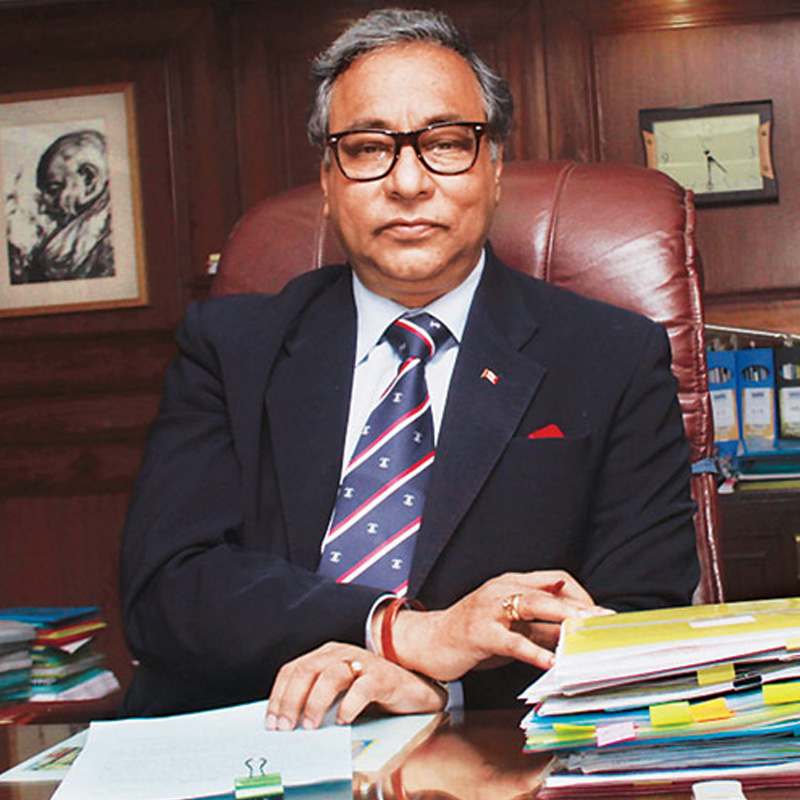
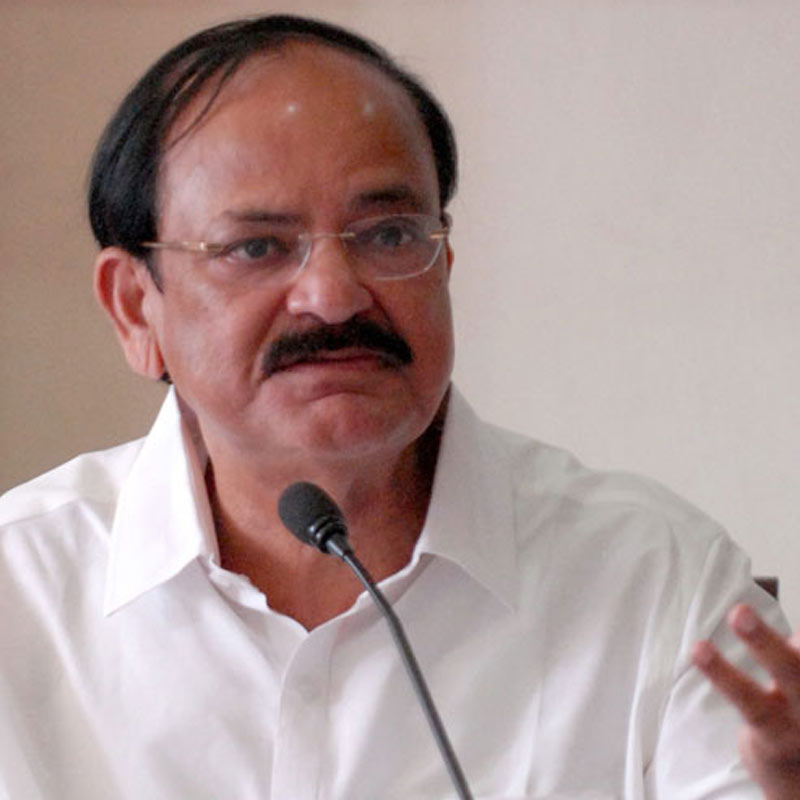
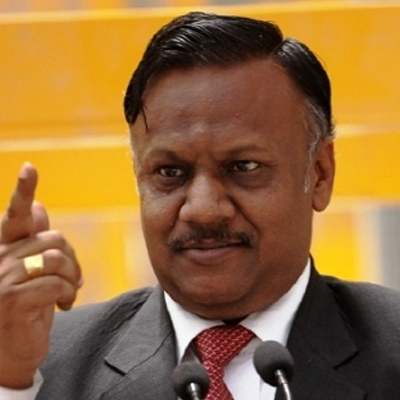
    NEW DELHI: Senior Indian Administrative Service officer Narendra Kumar Sinha (NK Sinha) (Bihar:1980) has assumed charge as the secretary in the ministry of information & broadcasting after the transfer of Ajay Mittal, IAS. Prior to his appointment, Sinha was the secretary in the culture ministry.

    During a career span of more than 35 years, Sinha has held various field postings and has worked from grassroots to the higher levels of governance in both State and Central Governments. Prior to being Secretary, Culture, Sinha served as Principal Secretary, Information Technology Department, Bihar. He has served as Additional Secretary in the Department of Higher Education, Ministry of Human Resource Development.

    He has conducted a number of lectures and participated in innumerable workshops, symposiums and public functions to connect with experts, stakeholders and general public to explain them government schemes, elicit their response on various government policies and social issues. He has travelled widely within the country as well as abroad and has been part of many government delegations during national and international meetings, negotiations and events as a senior member.

    Sinha is an M.E (Electrical) from IISc, Bengaluru. He also has an MBA from Southern Cross University, Australia and is a Fellow of Institution of Engineers (India).

  • NK Sinha moves to I&B, Garg & Sundarajan are economic affairs & telecom secys

    MUMBAI: The Indian government, in a crucial move, has announced that the senior Bihar cadre IAS officer and culture secretary N K Sinha will take over as the secretary in the ministry of information and broadcasting. Sinha will take over in the ministry headed by union minister M Venkaiah Naidu while the incumbent Ajay Mittal will be shifted as secretary DoPT, PTI reported.

    Fifteen new secretaries have been appointed to various central departments as part of a major bureaucratic reshuffle. Subhash Chandra Garg, who is the executive director of the World Bank, will take over as the secretary of the department of economic affairs from Shaktikanta Das — who has retired.

    The other major appointments, approved by the Appointments Committee of the Cabinet, include Aruna Sundarajan, a Kerala cadre IAS officer, as the telecom secretary, and Ajay Kumar Bhalla, an Assam-Meghalaya cadre IAS officer, as Power Secretary. While Sundarajan was Secretary, Electronics and Information Technology, Bhalla is currently Director-General, Foreign Trade.

    The committee also gave its nod for the appointment of Rajiv Gauba, a Jharkhand cadre IAS officer, as the next Home Secretary. He will take over from Rajiv Mehrishi on August 30. Until then Gauba will serve as Officer on Special Duty in the Home Ministry.

    Meanwhile, Ajay Prakash Sawhney, an Andhra Pradesh cadre IAS officer, will be the new Electronics & IT Secretary. He was earlier Additional Secretary in the Petroleum Ministry. Yudhvir Singh Malik, a 1983 Haryana batch IAS officer, will be the new Road Transport and Highways Secretary. He was earlier NHAI’s Chairman.

  • Ex-Infosys executive Shashi Shekar Vempati appointed as Prasar Bharati CEO

    NEW DELHI: The executive vacuum at the top of India’s public service broadcaster Prasar Bharati has been filled. A three member committee consisting of India’s vice-president Hamid Ansari, Press Council of India chairman Justice Chandramauli Kumar Prasad and ministry of information & broadcasting secretary Ajay Mittal (representing the President of India) decided to appoint Prasar Bharati part time member and technocrat Shashi Shekar Vempati as its CEO.
     
     The appointment is for a period of five years from the time Vempati assumes charge of his office.
     
    As part time member, Vempati served as chairman of the audit committee, member of finance & accounts committee, technology committee and sports rights committee, apart from HR committee.
     
    An alumnus of the Indian Institute of Technology in Mumbai, Vempati has over two decades of experience as a technocrat with specialization in corporate management, technology consulting and digital media.
     
    He also served for more than 16 years with Infosys as product strategist and digital innovator in North America. He has two patents in his name: real time business event monitoring, tracking and execution architecture” and “system and method of monitoring and management of inventory of products and assets in real time”.:.

    He spent three years as CEO of Niti Digital and was responsible for the News Media Platform NitiCentral.com – India’s first center right digital news media platform, the data and analytics platform IndiaVotes.com – India’s largest public database of electoral data and the digital campaign platform India272.com which played a pivotal role for Narendra Modi’s Mission 272+ during the 2014 Indian general elections.
     
    He has authored many books including ‘Broadcasting Technologies in India’, ‘National Digital Security Architecture in India’, and ‘Creating a Global Media Platform out of India.”
     
    Earlier in February this year, Prasar Bharati chairman Surya Prakash wrote to the government to expedite the selection for a new CEO and member (personnel) in the pubcaster.
     
    A high-level committee headed by Vice President Hamid Ansari has to – as per protocol – meet to select a new CEO and other members.
    .
    The previous CEO Jawhar Sircar resigned prematuredly (his terms was to end in February 2017) with effect from 4 November 2016. Since then, two different officials – member (finance) Rajeev Singh and before him then member personnel Suresh C Panda (since retired) held interim charge of the post.
     

  • Steps to encourage ease of doing film business under way

    NEW DELHI: Information and broadcasting secretary Ajay Mittal has said the Ministry has initiated a series of measures to promote ease of doing business and reiterated government’s commitment to work closely with the film industry.

    Mittal was speaking at a function where megastar Amitabh Bachchan inaugurated the new office premise of the Central Board of Film Certification (CBFC) in Mumbai yesterday.

    A number for film personalities including former CBFC Chairman Anupam Kher, Ramesh Sippy, Raveena Tandon, Sonu Sood, Pritish Nandy, Manmohan Shetty, Gajendra Chauhan, Kiran Shantaram, Mukesh Sharma were among those present.

    CBFC, which had been functioning from the Bharat Bhavan in the White House Complex on Walkeshwar Road since 1950s, was facing severe space constraint against drastic increase in work load.

    Mumbai, being the centre of the Hindi, Marathi, Bhojpuri and Punjabi film industry, accounts for nearly 60% of all certification work of CBFC. During 2015-16, it certified over 11,000 films of various duration including 787 Indian feature films and 690 foreign films for theatrical release in India.

    Faced with an acute space constraint, lack of parking facility for visitors, CBFC moved a proposal for allocation of space in the Films Division Complex for a modern, digitally enabled office. It may be recalled that the online film certification system of CBFC was launched by Information & Broadcasting Minister M Venkaiah Naidu in New Delhi last week.

    Ramesh Sippy welcomed the online film certification system saying it would facilitate quicker certification of films.

    The Civil Construction Wing of Prasar Bharati has refurbished the new office, which houses the chambers of the Chairman, CEO as well as the Mumbai Regional Office. CBFC, besides its own preview facilities, can now utilize additional preview theatres of Films Division as well to quicken the process of film certification.

    The Films Division Complex now houses the offices of Films Division, Children’s Film Society of India, CBFC and also the upcoming National Museum of Indian Cinema, which is expected to promote synergy among different institutions of the I &B Ministry.

  • Photographs with social media become powerful tools for Information: Naidu

    Photographs along with Social Media had been a potent combination in today’s digital world as influential mediums to spread awareness and ensure Good Governance, Information and Broadcasting Minister M.Venkaiah Naidu has said.

    The ‘Selfie with Daughters’ campaign launched by Prime Minister Narendra Modi came out to be a powerful instrument of social change. This way of posting photos created a powerful impact on societal behaviour and ingrained cultural traditions.
    The Minister was speaking at the 6th National Photography Awards ceremony here, in the presence of Minister of State for I and B Rajyavardhan Rathore and Ministry secretary Ajay Mittal.

    On the role of fast changing technology in communication domain, Naidu said the Internet had brought out the resurgence of visual image into our everyday communication. Digital cameras and cell phones with integrated cameras have generated an explosion of images into everyone’s lives. Social Media has provided a new platform to people to Share, Communicate and inform through photographs.

    Naidu conferred the Life Time Achievement Award to eminent photographer Raghu Rai, Professional Photographer of the year award to K K Mustafah and Amateur Photographer of the year award to Ravinder Kumar.

    The theme for this year’s awards for Professional category was “Skilled India”, while in the Amateur category the topic was “Swatch Bharat”.

  • FICCI Frames 2017: Stakeholders feel regulations cripple monetization

    MUMBAI: In keeping with the tone set in the morning about the changing scenario as far the political climate and censorship were concerned, every participant was keen to hear what the Government had to say about this on day one of the FICCI FRAMES meet here.

    Clearly not wanting to disappoint the M and E sector, Information and Broadcasting Ministry Secretary Ajay Mittal said the Ministry was conscious of these issues and was working on them.

    He expressed optimism that the entertainment industry will soon get an effective solution to their complaints, though he said he was not liberty at present to give more details about this. But the Government appreciated that “Creativity is a great thing, is the soul of society and it should not be affected”.

    Earlier in the same session, film producer Siddharth Roy Kapoor said, “I would strongly urge the government when it comes to the sub-titling and the litigation of the businesses, these issues must be left to the industry. The maximum support from the government should come from the tax regime, infrastructure sector and censorship.”

    Even as everyone appreciates the growth of the sector over the year, the ‘Do the Lions still roar: a reality check for the M&E industry’ was largely devoted to exploring whether the players in the content ecosystem have done their part to address the industry’s shortcomings or has the plot got lost in translation.

    The M&E industry has been a steady contributor to national revenues, employment growth and socio-economic development; it has shown a trajectory of growth over the past 15 years, been at the real cusp of ‘Make in India’ while promoting Indian culture and its soft power globally. And yet, it was largely dismissed as a glamour hub rather than a serious economic nerve centre.

    Of late, the industry has seen a battle of wits between stakeholders and the Government, thus preventing the sector from realizing its full potential. But the question sought to be explored in the session was whether the industry had done enough to highlight its own story.

    Moderated by The Times of India consulting editor and South Asian History and Culture senior fellow, IDF and editor Nalin Mehta, the session was attended by Union Department of Commerce joint secretary Sudhanshu Pandey, the Film and Television Producers Guild of India president Siddharth Roy Kapur, BAG Films & Media chairman and managing director Anurradha Prasad, Harvard Business School Professor of Business Administration Bharat Anand, Viacom 18 Colors CEO Raj Nayak, TataSky MD and CEO Harit Nagpal, and UFO Moviez India Ltd joint managing director Kapil Agarwal among the panelists.

    Asked about the impact of digitization of content and on the business, Nayak said, “People say that the data is the new oil but my philosophy is that the content is the new water. Digitization is no longer a new word. It is just that the number of pipes delivering the content has multiplied in different platforms. If I look at digitization, what is happening is that people have the choice of watching content wherever they want to. But the television audience today is 180 million households and still expected to grow by 80 billion households.”

    He added, “When we look at the monetization, 85 per cent is between Google and Facebook.Of the balance 15 per cent, the growth may be 30 to 35 per cent but it is so fragmented that everybody is losing money. Even when Netflix came, it came via television. If some breaking news is happening people will watch it, if there is some live speech going on or may be for sports, people will watch it on their television sets. As we evolved, we wanted bigger screens to watch television sets that show reality. For content creators, it is a great thing and it is not a golden but a diamond era for them. But the problem is when it comes to monetization because there is so much fragmentation I really doubt how most of these platforms will survive unless of course you are able to get subscription. If you are not able to make the right subscription revenue model, a lot of digital platforms will find it difficult to survive.”

    Asked whether the DTH players were making money from the content, Nagpal said, “People consume content in different ways. Some will spend Rs 20 on the content and some might take different channels in a bundling. So there are different segments. But the purpose of television digitization is to create the infrastructure which is digital and the customer can make his choice. We created a box between the customer and the television, but is that addressable? Officially, DAS Phase 1 and 2 are digitized. We were also supposed to bring transparency. The Government is one stakeholder, the broadcaster is the other stakeholder and the platform that distributes is the third one and the money is divided between the three of us.”

    Nagpal said, “DTH took 33 per cent of phase1 and phase 2 market and two-thirds is sitting with cable. On the service and entertainment tax, this 33 per cent component of digitization would be paying 80 to 90 per cent entertainment tax and 66 per cent of the digital cable sector is paying 10 to 20 per cent of the taxes. Is that addressability? So let not the government waste its time in deciding how I should be pricing myself. They should be making sure whether the digital transparent addressable platform that has been created rightfully.”

    Prasad asked, “Do we still roar? Sorry to say we don’t roar, we don’t have a voice. We have so many issues and for every issue we are going to the court. The stakeholders and the policy makers have divested their power and authority in the organization called TRAI and they vote themselves as they do not know how to move forward. Content needs to be curated, you have to be innovative and for that you need to spend money. You don’t have money flowing back to the system. So the money is getting divested. We don’t get the money back.”

    Sudhanshu Pandey said the service sector in India largely remained unorganized and had to find its own way to develop and grow. Fair market practices have to come in, and the finances should be there for that industry to grow. Some sectors regulators have come but there are many sectors without regulators.

    Agarwal asked: “How do you monetize the film content? The first window of monetization of the film content is theatre, then it goes to the satellite channel and then to other platforms. As a country we need more than 20,000 screens. The capital is there, the facilitation is there but it is restricted by regulations because at least 40 approvals are required. Today the screens are growing only by 2 per cent per annum. When we move from regulation to facilitation, the growth will start and the growth will just not come from the multiplexes but has to happen all over the country. The multiplex sector is very expensive.”

  • MIB’s Ajay Mittal allays media industry fears, paints positive picture

    MUMBAI: Ministry of Information and Broadcasting (MIB) secretary Ajay Mittal today expressed faith in the strength of Indian institutions to withstand the challenges in the Indian media sector that have arisen out of fringe elements at play.

    Pointing out that MIB and the other government departments have taken several positive initiatives for the upliftment of the Indian media and entertainment sector, Mittal said, “Have faith in the strength of the Indian Constitution and various institutions to take on the challenges created by fringe groups (on creative freedom).”

    His comments on informal and fringe censorship issues came about as they were raised by Star India Chairman and CEO and Ficci Entertainment & Media Committee chairman Uday Shankar in his theme address earlier. Shankar criticized the fringe elements trying to bring about parallel censorships and media curbs in a modern India and which was detrimental to realizing the dream of Digital India.

    Mittal, who was delivering the Inaugural Address at the 18th edition of the Ficci-Frames 2017 here, said that while the country’s rich traditions have ample scope to provide base for varied content, it’s time for distribution and monetization of content to step in and take industry’s growth to the next level.

    The Indian M&E sector’s CAGR of 14.3 per cent by 2020 would be “almost double the growth” of global trends, Mittal reeled out some figures in his address, saying that the government is fully aware of the importance of the digital media that has shown a growth of 35 per cent.

    The secretary also pointed out that to further ease doing business in India, the government has created a separate category of visas for foreigners under ‘film visa’ so more films, etc could be shot in India.

    Dwelling on IPR and taxation issues, two vexed matters of the media industry, Mittal said that the government’s endeavor was to work with various stakeholders so IPR could be adequately and effectively protected. “Apart from IPR, we have also held discussions with various State governments on tax matters,” he added.

    As part of MIB initiatives, Mittal listed out work on digitization, radio FM, incentivizing film production, streamlining government support for print medium, amongst many other achievements, firmly adding that the government’s effort to “liberalize” media industry “cannot be denied.”

  • Mittal wants self-regulation for new media, Rathore says IT Act adequate

    Mittal wants self-regulation for new media, Rathore says IT Act adequate

    NEW DELHI: Even as Minister of State for Information and Broadcasting Rajyavardhan Rathore categorically told Parliament earlier this month that his Ministry was not contemplating any regulatory framework for censorship of content appearing on the internet, Secretary Ajay Mittal has said the Centre is concerned about new media in the absence of a regulatory framework.

    Speaking in Kolkata at the Merchants’ Chamber of Commerce and Industries (MCCI), Mittal said

    “An important area of challenge in the new media is that there is unfortunately no regulatory framework. What you cannot see on TV or hear on your radio, it is all possibly up there in open access.”

    Mittal said much more was needed to be done to prepare the government and its officers to deal with the “completely new paradigm of digital media”.

    He said the Ministry was discussing with the state governments and “we are now going to train their people in the information sector so that they can deal with the challenges created by new media that is causing a whole lot of concern.”

    Mittal said questions have also been raised in Parliament on “this issue of digital media without any boundaries. We are very clear that in the media space the best form of regulation is self regulation and the government would like to keep away as far as possible.”

    Rathore had said in reply to a question about censoring new platforms for publication and broadcasting of media content like social networks and online video services that Section 69A of the Information Technology Act 2000 provides for blocking access to information under specific conditions. He said the Act has provisions for removal of objectionable online content.

    The Information Technology (Intermediary Guidelines) rules 2011 require that the Intermediaries shall observe due diligence while discharging their duties and shall inform the users of computer resources not to host, display, upload, modify, publish, transmit, update or share any information that is harmful, objectionable, affects minors and is unlawful in any way.

    As far as OTT was concerned, sources in the ministry told indiantelevision.com that this was still a new subject, and the government would take action in the event of any complaints from viewers and subscribers.

    The Ministry, sources said, has no control over films appearing online as this falls in the ambit of the IT Act which is administered by IT Ministry.

  • Mittal wants self-regulation for new media, Rathore says IT Act adequate

    Mittal wants self-regulation for new media, Rathore says IT Act adequate

    NEW DELHI: Even as Minister of State for Information and Broadcasting Rajyavardhan Rathore categorically told Parliament earlier this month that his Ministry was not contemplating any regulatory framework for censorship of content appearing on the internet, Secretary Ajay Mittal has said the Centre is concerned about new media in the absence of a regulatory framework.

    Speaking in Kolkata at the Merchants’ Chamber of Commerce and Industries (MCCI), Mittal said

    “An important area of challenge in the new media is that there is unfortunately no regulatory framework. What you cannot see on TV or hear on your radio, it is all possibly up there in open access.”

    Mittal said much more was needed to be done to prepare the government and its officers to deal with the “completely new paradigm of digital media”.

    He said the Ministry was discussing with the state governments and “we are now going to train their people in the information sector so that they can deal with the challenges created by new media that is causing a whole lot of concern.”

    Mittal said questions have also been raised in Parliament on “this issue of digital media without any boundaries. We are very clear that in the media space the best form of regulation is self regulation and the government would like to keep away as far as possible.”

    Rathore had said in reply to a question about censoring new platforms for publication and broadcasting of media content like social networks and online video services that Section 69A of the Information Technology Act 2000 provides for blocking access to information under specific conditions. He said the Act has provisions for removal of objectionable online content.

    The Information Technology (Intermediary Guidelines) rules 2011 require that the Intermediaries shall observe due diligence while discharging their duties and shall inform the users of computer resources not to host, display, upload, modify, publish, transmit, update or share any information that is harmful, objectionable, affects minors and is unlawful in any way.

    As far as OTT was concerned, sources in the ministry told indiantelevision.com that this was still a new subject, and the government would take action in the event of any complaints from viewers and subscribers.

    The Ministry, sources said, has no control over films appearing online as this falls in the ambit of the IT Act which is administered by IT Ministry.

  • Improved tech & states role; curbs on Peace TVs, cable sans DD in new integrated policy: Naidu

    Improved tech & states role; curbs on Peace TVs, cable sans DD in new integrated policy: Naidu

    NEW DELHI: Information and broadcasting minister M Venkaiah Naidu today laid emphasis for evolving a comprehensive “national information and communication policy” to provide citizens “enhanced access to information.”

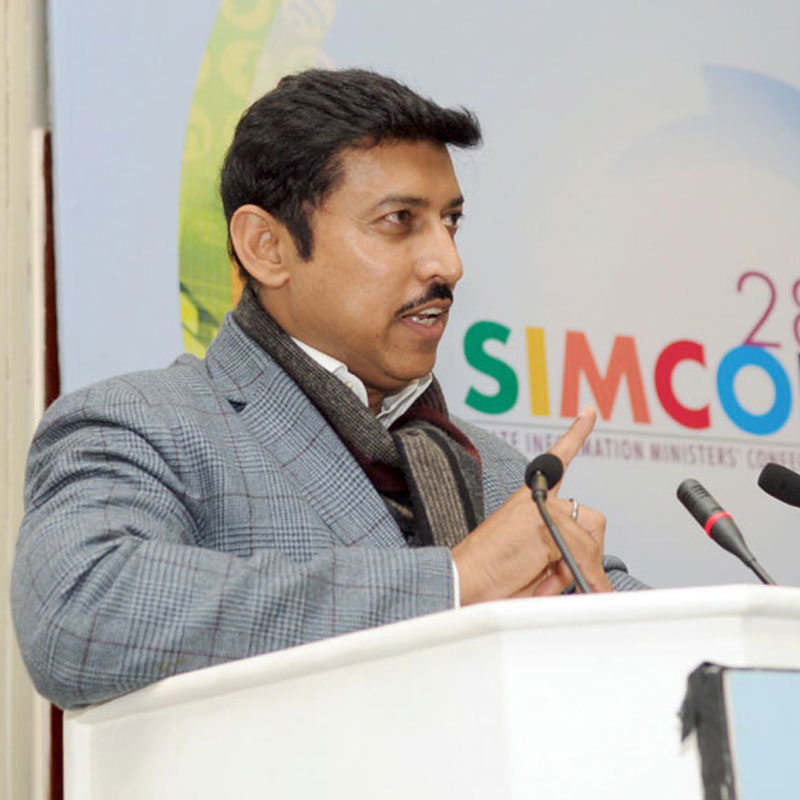
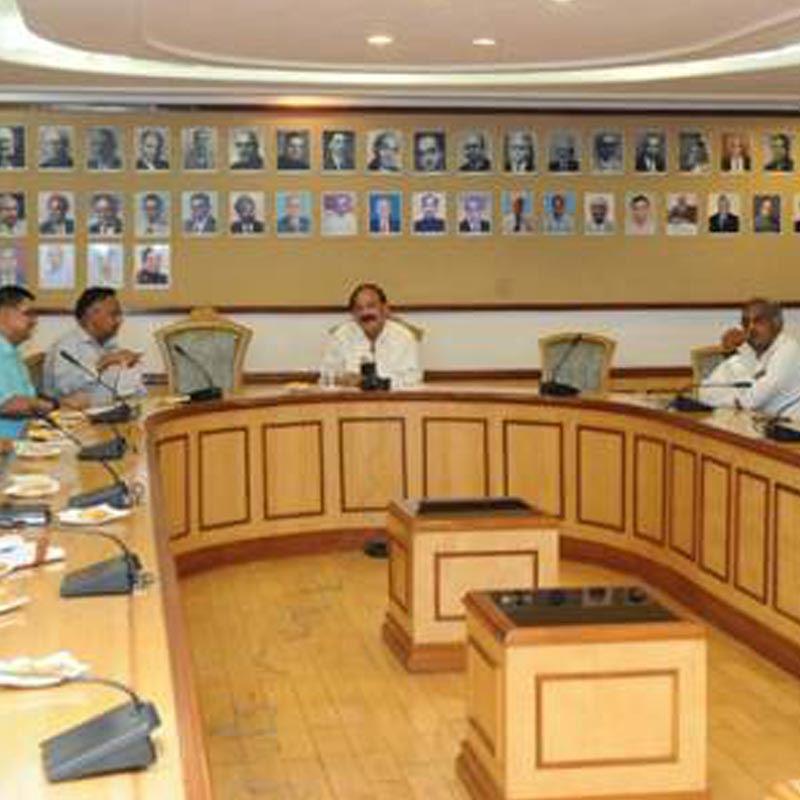
    Addressing the 28th state Information Ministers Conference (SIMCON) here, Naidu said the Centre and the states should work together in various areas, including in dissemination of effective information, to push integrated development.

    “We need an integrated and holistic approach and coordination between the centre and states is essential,” Naidu said.

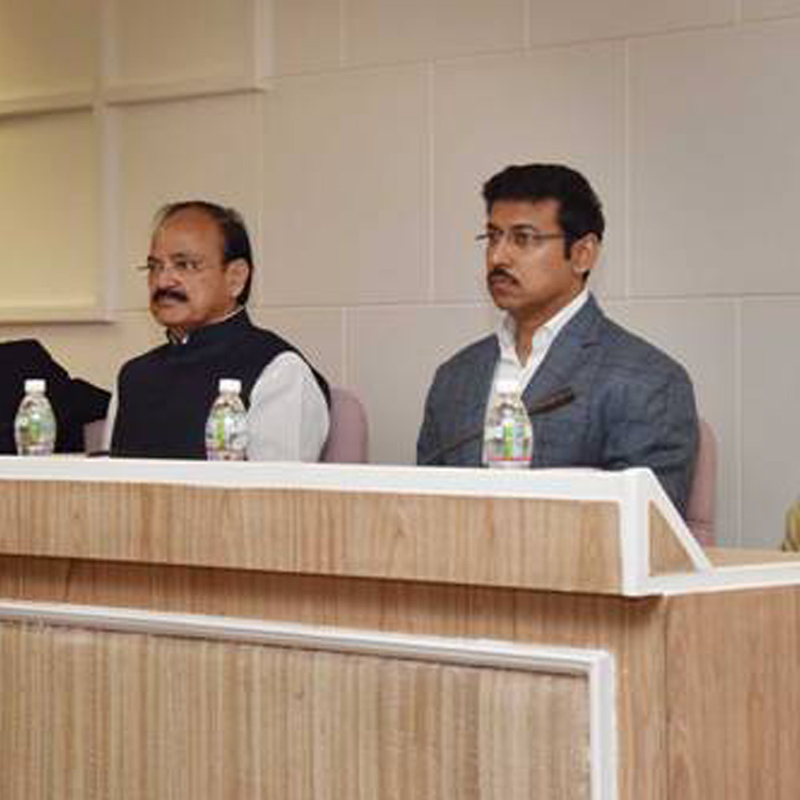
    The meet was attended by minister of state for information and broadcasting Rajyavardhan Rathore, secretary Ajay Mittal and other senior officials of the ministry apart from representatives of different states.

    The proposed policy would be prepared in consultation with states in the spirit of cooperative federalism and the principle of Team India which the prime minister firmly believed in, Naidu added.

    Elaborating on the proposed contours of the policy, Naidu said the broad objectives should be to enhance access to information and communication infrastructures and new technologies, especially in rural areas; to promote national dialogue on development issues by all citizens and facilitate informed participation of people in setting development agenda and its execution.

    The policy should rationalise multi-sectoral investments in information and communication hardware and software through their consolidation and appropriate integration in development plans and planning structures; to ensure timely, orderly and effective growth of information and communication institutions and professions through standards setting, capacity building and human resource development; and broadly define the roles of different governments at various levels and other stakeholders.

    It should preserve national cultural identity and enhance the development of cultural and artistic capabilities and institutions, while enabling productive regional and international exchanges and support national and local development initiatives, and to improve the quality of life of the people, by facilitating systematic and effective use and coordination of communication and information strategies and outcomes.

    The challenge before such a policy was to analyse the ingredients of the communication environment including competencies and resources that are critical.

    The minister further stated that the initiation of such a policy would integrate development communication, development agendas linking planners, beneficiaries and implementers of development actions. It was the endeavour of the proposed policy to make people informed participants in decision-making and development planning process. Such a communication approach also enabled policy makers to look at people as part of a solution.

    Naidu said all-round and integrated development cannot materialise without effective dissemination of information. “People have the right to information,” he said.

    While the country has evolved policies on various subjects like environment and health, there is no such policy for communication and information dissemination.

    “The centre and the state should work together to evolve the communication policy,” he said, adding that Ajay Mittal and senior officials have been directed to work with the states to work on a draft policy at the earliest. “It should also work to preserve national cultural identity,” Naidu added.

    Naidu said India has unique strength in its cultural richness and its heritage. “Any Tom, Dick and Harry came and conquered…They ‘might have’ robbed our wealth, but they could not take away our heritage,” he said.

    Naidu referred to the prime minister Narendra Modi’s repeated emphasis on ‘Sabka Saath Sabka Vikas (development with all and development for all)’ and said even leaders such as B R Ambedkar and Deen Dayal Upadhyay had laid emphasis on the development of ‘Antyodhaya’ – the last man in the queue.

    The minister said the states should take advantage of the reach of public broadcasters — All India Radio and Doordarshan, and give them “preferential treatment.” These organisations do not run with commercial considerations, he emphasised. He said that strict action should be taken against those cable operators who do not show DD News.

    Naidu said with regard to violation of cable TV operators laws, the states should appoint designated officers in all districts to ensure that no major violation like the Peace TV episode is repeated. He would be writing to chief ministers again in this regard, the minister said. (‘Peace TV’ of Zakir Naik had allegedly telecast various programmes which instigated youths towards radical thinking.)

    Speaking earlier, Mittal gave an overview of the deliberations of the first day’s meeting highlighting some of the key discussion points across sectors and suggestions received from the States. During the course of the deliberations, the separate wings of the ministry, films, broadcasting, information and Prasar Bharti (AIR & DD) made presentations regarding the policy initiatives and issues for discussions and convergence with states.

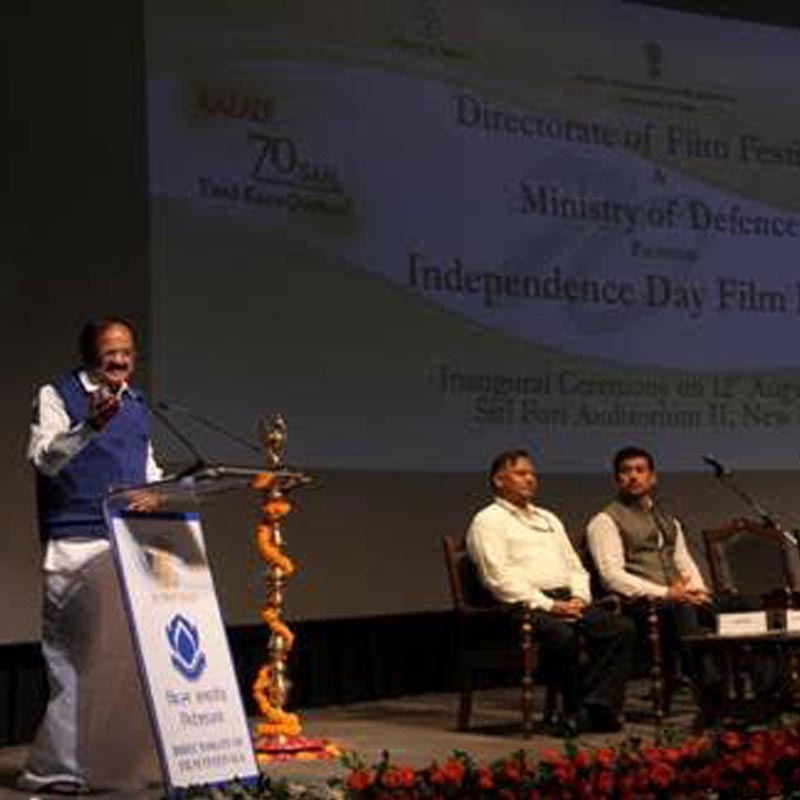
    The minister also visited the various stalls and multimedia exhibitions showcased by the media units of the ministry namely, National Film Archives of India, which organised the multimedia exhibition on the theme ‘Azaadi 70 Saal- Yaad Karo Qurbani’. The exhibition showcases the film industry’s contribution to Independence and was organised to celebrate 70th year of India’s Independence. The three themes covered include ‘Rise and Revolt: Cinema of Social Reform’, ‘Our Freedom Fighters-Through the lens of Cinema’ and ‘Saluting our Soldiers’.