Tag: Ajay Chacko

  • Decoding the Indian online video watchers remains an enigma

    Decoding the Indian online video watchers remains an enigma

    MUMBAI: Perhaps the biggest challenge for programmers on online media is to define and segregate the online viewers who will take to OTT mediums in India.

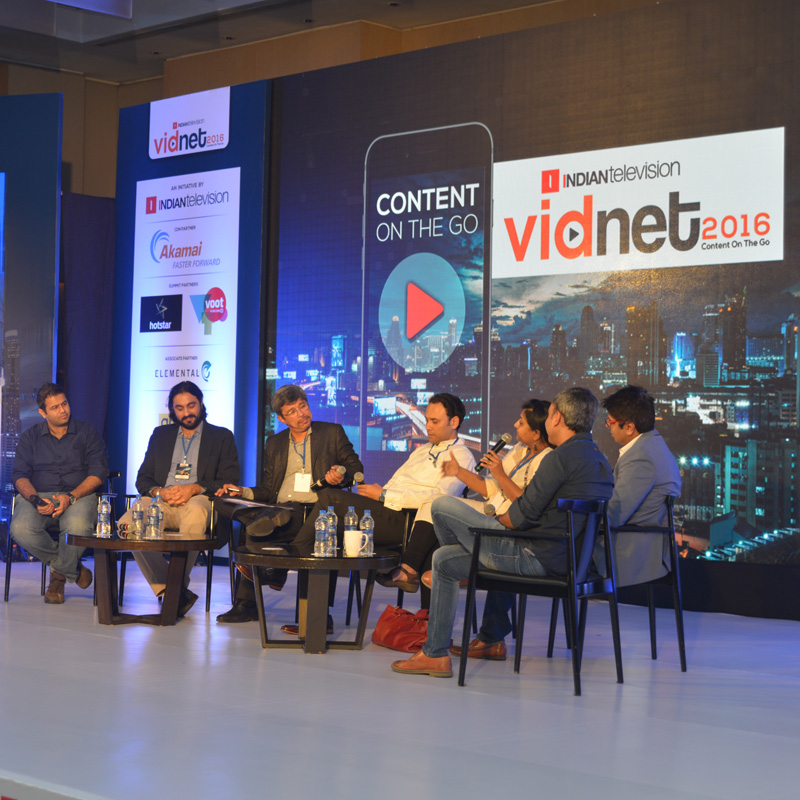
    Following the presentation on OTT trends in the APAC region by Media Partners Asia executive director Vivek Couto at VidNet, this question expectedly assumed importance.

    Indian Television Dot Com’s founder CEO and editor in chief Anil Wanvari flagged off the discussion by asking Isobar India MD Shamsuddin Jasani to define who is a customer for him?

    “A person who is consuming digital content through any medium be it TV, mobile, YouTube, Facebook, etc is my customer. I would spend dollars on a person who is consuming content via digital platforms, what is he consuming, time spent on that piece of content,” said Jasani.

    Adding his perspective on defining a digital customer was FoxyMoron co-founder Suveer Bajaj. He seconded the definition of an OTT consumer and added that he was one who migrated to the digital medium. “I have come across consumers who are consuming three hours on digital. There is a very powerful change that we are seeing right now. These people are plunging on digital than TV.”

    Citing example from his own personal experience, Jasani highlighted how his 6-year old kid consumes around six to seven hours of video content on various platforms like Voot, YouTube, etc. He opined that this is a powerful change that he is witnessing from TV which happens through demand. Bajaj further added that it is not just on demand but also on the go.

    dittoTV business head Archana Anand strongly believed on the platform’s subscription model. Underlining the success of ditto TV’s campaign and aggressive pricing, Anand believed that she and her team had grown the pie by reaching out to people who are not internet savvy audience and is very clear on not getting content for free. “We have marked the people who perhaps are not typical OTT audience to whom TV is being provided at a subscription of Rs 20. There is a huge audience who is alien to OTT in India and we are trying to get them on board by handholding them throughout the entire procedure of getting our app by just a missed call.

    Arre co-founder Ajay Chacko was sure he did not intend to become an OTT platform. “The way we are defining our consumers is not just through access and comfort but by creating new forms of content to drive change.”

    Voot, the AVOD platform from Viacom18 which is often credited with bolstering kids and originals apart from content from the various channels falling under the network, has targeted their digital natives. Their Head marketing and partnerships Akash Banerji dissected consumers into different categories depending upon-access and comfort, demographics and content business offers.

    Discussing the first point, he explained that there are 180 million TV households in India with an average of at least two persons in every house, meaning 350 million subscribers on Internet who are not necessarily active users. “In India, we have 120 video consumers out of which 20-30 million are native digital who are consuming videos online. It is up to a platform whether they are targeting digital natives or getting internet consumers who are not consuming videos or are looking at growing the pie of digital.”

    The discussion went a notch up with the panelists enlightening the audience on the regional content that the content providers have created so far.

    Even the consumers come from varied backgrounds. At the base of the pyramid is the young, college or office going people who are mostly from the metropolitans. The older males and women who are consuming on mobile and desktop are not consuming high velocity content like the youth comprise the mid level. Banerji said that in the past 18-24 months, he has also seen consumers evolving from tier 2 and tier 3 markets primarily consuming content on mobiles. “Rural consumers which are about 200 million i.e 80 per cent of India are also coming up on board in the next few years.”

    Voot follows clear cut understanding of content and is leveraging on its popular content library of TV shows from market. Kids content and Voot originals are the other two important key factors for the platform. “Our Voot originals do not have to follow any format or template. They have to resonate with the consumers”, he added.

    Banerji strongly believes that it is a myth for any business to chase app download numbers. “The players should work on active users and the video watch time.”

    With the second most important driver being content, focusing on just the demographics is not enough. Yash Raj Films Head of content and development Nikhil Taneja said the digital audience is primarily between the ages of 18 to 34. “We are not targeted at providing entertainment to the audiences through effective storytelling and providing emotions through content.”

    He also spoke about the different gender differences by sharing some interesting statistics about the traction and viewership of YRF’s shows. The platform, being a YouTube channel, manages to get some revenue from their channel but also has various other ways to make money. “We launch our own talent and if that talent gets picked by an advertiser, we are benefitted. Our show Love Shots has been picked up by airlines. It is definitely early for advertisers to invest but that does not stop us from creating good quality content.”

    Adding to that, Jasani said, “The customers are agnostic in accessing content and consume digital data through Wi-fi and other services available to them. The offline viewing space is also brewing up rapidly in India. If we are putting an advertiser on every stage of digital consumption, there is no need for him to be on TV.” With various service providers launching 4G, Jasani opined that within 18 months the data is going to become cheap. “Adding to cheap data rates is the launch of smartphones for Rs 2,000 which is also going to grow in the future.”

    Banerji also shed light on how the viewing dynamics are changing and why that change is happening. “With consumers in control of what they consume and content being the king, the need for quality content is just going to grow. The illusion that most of us have on the content that can go on a digital platform has to be broken”.

    The panel discussion also concentrated on the discovery of content in various languages which is currently difficult. The players said they were collectively working on the challenge.

    One thing that all the panelists accepted was to keep innovating and experimenting with content.

    Anand spoke of how asked how she is facing a challenge from payment gateways as they are in English which majority of the Indians do not understand. “Even if there is a potential customer, he has to be guided to pay for my subscription and so.80 per cent of my potential subscribers cannot be captured.” She opined that all the players in the eco-system and various payment platforms have to think in this direction.

    But are there advertisers willing to get on board? Bajaj said that it is no more about ads but content. Selective content will attract specific advertisers.

    “Advertisers are squeamish to put money. We decide after evaluating how it will help the brand after a year. We are no more selling a product but brand through its content,” said Taneja.

    “We are not finicky about not putting ads on dittoTV. There is an ad replacement technology through which I can have two different ads on TV and digital for the same content,” added Anand.

    Jasani said the digital advertising pie is small as the major audience is not yet online. The consumers are not ready to pay for content but the fact that innumerable content creators are evolving cannot be sidelined. With both AVOD and SVOD having their own perks and challenges, there is no tangible answer that any player can provide currently.

    It is an exciting space where everyone is experimenting and innovating. The panel discussion concluded by citing that both the models will co-exist at least for 10 years down the line.
  • Can OTT players leverage market opportunities & rationalize rising content costs?

    Can OTT players leverage market opportunities & rationalize rising content costs?

    MUMBAI: In a bid to grab eyeballs, spending on digital advertising is on the increase, but this increase also comes with challenges, if KPMG is to be believed.

    KPMG director Girish Menon said that digital advertisement is likely to cross Rs 25,500 crore in 2020, but digital ads do not come without challenges with major concerns being inability to track mobile activity, ad fraud, ad blocking and measurement.

    Making a presentation at an event organised by FICCI here yesterday, Fast Track India: Bolstering Growth in the Digital Content, Menon added, “OTT video is likely to become the holy grail in digital media. The advent of OTT services and on-the-go content, aided with competitive tariffs and falling average retail price of smartphones, has helped to drive video consumption in India.”

    According to him, approximately 40 per cent of mobile data traffic is being driven by video and audio consumption.

    The Indian market is highly price sensitive and broadcast services are well accepted, making the growth and profitability of OTT video players an uphill task. As digital media consumption grows in the country, content owners and delivery platforms need to reflect on innovative ways of monetizing digital content. OTT players need to leverage market opportunities while rationalizing rising costs of acquiring or producing digital content.

    “Profitability still continues to be a major challenge coupled with infrastructure and affordability of data tariffs and payments models. It is imperative for the OTT players to address these concerns through innovative means to achieve the medium’s full potential,” added Menon.

    Discussing future trends to grow this market, through effective monetization of content, while delivering consumer value, in addition to evaluating various payment models at FICCI Knowledge Series 2016 were Film Producer Vishesh Bhatt, DittoTV business head Archana Anand, Arre co-founder and CEO AJay Chacko and Eros Digital COO Karan Bedi.

    Sparking the discussion was Bhatt who observed how this conversation flagged off last year with everyone talking about content that has come to a point where it’s annoying. He is of the opinion that serious content makers fuelling the various platforms have to first understand the ecosystem. “In my opinion, even the platforms have not taken initiatives to educate the content makers. The ecosystem currently is extremely poor. The content makers have to understand the economics first or open my own platform to air content and then make money out of it.”

    Various content monetization options are being explored with the rapid adoption of digital platforms. Ad remains the major source of advertising. Short format made-for-digital content is being leveraged for immediate monetization opportunity. Existing content is being repackaged and delivered across digital platforms owned and 3rd party (YouTube, Mobile Apps, etc.). Existing content infrastructure is being leveraged to create purpose built content (interactive shows, online polls, etc.).

    The focus has now shifted to original/exclusive content for digital media, to drive subscription revenues

    Enlightening the audience further, Chacko pointed out how the content consumption medium has evolved from print to broadcast and now to digital. While there is 70 per cent investment in content creation for digital, the showdown does not stop there. “Investing more on content is the rule.”

    Citing the example of Pokemon Go, Bedi asserted how the game is earning roughly 1.6 million per day which is just 10 per cent of what they can make if monetised properly. “The cost of data, infrastructure, etc, remains an issue for us. We are definitely not there yet with the subscription model, but it’s not far.”

    Anand though strongly surmises that platforms need to set their strategies right. “You have to establish with masses first to get subscribers. We followed the consumer behaviour trend on mobile and made it affordable for them. Like anyone else, we never told them to download our app, rather gave them the option to give a miss call to download it. To solve bandwidth constraints, we tied up with Telcos and payment wallets and the usage has been phenomenal.”

    dittoTV has a clear road map set wherein it has first focused on getting eyeballs to its platform. Anand also opined that the platform does not have to necessarily follow a linear model in future.

    But how will the value change make money? Answering that, Bedi said that the three levers- revenue generation, content creation and marketing acquisitions. “Netflix does not invest on marketing acquisitions. In the end, it depends on the platform to decide what model it wants to follow and it has to make it work right.”

    “SVOD also allows multiple things to be done. There is an inherent ability to share piece of profit with partners by tying up with various partners”, added Anand.

    With various global players like Netflix, Amazon Prime Video, etc, entering India, the players will have to focus on producing original quality content to drive viewers. But is it beneficial to the creators here to put their content on the different platforms. Bhatt strongly affirmed that the West has made its content makers worth. It’s no more only about money but about environment.

  • Can OTT players leverage market opportunities & rationalize rising content costs?

    Can OTT players leverage market opportunities & rationalize rising content costs?

    MUMBAI: In a bid to grab eyeballs, spending on digital advertising is on the increase, but this increase also comes with challenges, if KPMG is to be believed.

    KPMG director Girish Menon said that digital advertisement is likely to cross Rs 25,500 crore in 2020, but digital ads do not come without challenges with major concerns being inability to track mobile activity, ad fraud, ad blocking and measurement.

    Making a presentation at an event organised by FICCI here yesterday, Fast Track India: Bolstering Growth in the Digital Content, Menon added, “OTT video is likely to become the holy grail in digital media. The advent of OTT services and on-the-go content, aided with competitive tariffs and falling average retail price of smartphones, has helped to drive video consumption in India.”

    According to him, approximately 40 per cent of mobile data traffic is being driven by video and audio consumption.

    The Indian market is highly price sensitive and broadcast services are well accepted, making the growth and profitability of OTT video players an uphill task. As digital media consumption grows in the country, content owners and delivery platforms need to reflect on innovative ways of monetizing digital content. OTT players need to leverage market opportunities while rationalizing rising costs of acquiring or producing digital content.

    “Profitability still continues to be a major challenge coupled with infrastructure and affordability of data tariffs and payments models. It is imperative for the OTT players to address these concerns through innovative means to achieve the medium’s full potential,” added Menon.

    Discussing future trends to grow this market, through effective monetization of content, while delivering consumer value, in addition to evaluating various payment models at FICCI Knowledge Series 2016 were Film Producer Vishesh Bhatt, DittoTV business head Archana Anand, Arre co-founder and CEO AJay Chacko and Eros Digital COO Karan Bedi.

    Sparking the discussion was Bhatt who observed how this conversation flagged off last year with everyone talking about content that has come to a point where it’s annoying. He is of the opinion that serious content makers fuelling the various platforms have to first understand the ecosystem. “In my opinion, even the platforms have not taken initiatives to educate the content makers. The ecosystem currently is extremely poor. The content makers have to understand the economics first or open my own platform to air content and then make money out of it.”

    Various content monetization options are being explored with the rapid adoption of digital platforms. Ad remains the major source of advertising. Short format made-for-digital content is being leveraged for immediate monetization opportunity. Existing content is being repackaged and delivered across digital platforms owned and 3rd party (YouTube, Mobile Apps, etc.). Existing content infrastructure is being leveraged to create purpose built content (interactive shows, online polls, etc.).

    The focus has now shifted to original/exclusive content for digital media, to drive subscription revenues

    Enlightening the audience further, Chacko pointed out how the content consumption medium has evolved from print to broadcast and now to digital. While there is 70 per cent investment in content creation for digital, the showdown does not stop there. “Investing more on content is the rule.”

    Citing the example of Pokemon Go, Bedi asserted how the game is earning roughly 1.6 million per day which is just 10 per cent of what they can make if monetised properly. “The cost of data, infrastructure, etc, remains an issue for us. We are definitely not there yet with the subscription model, but it’s not far.”

    Anand though strongly surmises that platforms need to set their strategies right. “You have to establish with masses first to get subscribers. We followed the consumer behaviour trend on mobile and made it affordable for them. Like anyone else, we never told them to download our app, rather gave them the option to give a miss call to download it. To solve bandwidth constraints, we tied up with Telcos and payment wallets and the usage has been phenomenal.”

    dittoTV has a clear road map set wherein it has first focused on getting eyeballs to its platform. Anand also opined that the platform does not have to necessarily follow a linear model in future.

    But how will the value change make money? Answering that, Bedi said that the three levers- revenue generation, content creation and marketing acquisitions. “Netflix does not invest on marketing acquisitions. In the end, it depends on the platform to decide what model it wants to follow and it has to make it work right.”

    “SVOD also allows multiple things to be done. There is an inherent ability to share piece of profit with partners by tying up with various partners”, added Anand.

    With various global players like Netflix, Amazon Prime Video, etc, entering India, the players will have to focus on producing original quality content to drive viewers. But is it beneficial to the creators here to put their content on the different platforms. Bhatt strongly affirmed that the West has made its content makers worth. It’s no more only about money but about environment.

  • Arré to launch ‘Re-Gender’, ‘Official Chukyagiri’ & ‘Abbas-Mastan’

    Arré to launch ‘Re-Gender’, ‘Official Chukyagiri’ & ‘Abbas-Mastan’

    MUMBAI: UDigital’s digital media brand, Arré has been in the news for its bold content after announcing its first digital reality series based on social experiment Ho Ja Re- Gender. The ten months old brand is all set to take entertainment level a notch higher with its two more series Official Chukyagiri and Abbas-Mastan.

    Co-founded by Ronnie Screwvala, B. Saikumar and Ajay Chacko in October 2015, the platform saw the exit of Screwvala in April 2016. The other two founders viz. B. Saikumar, Ajay Chacko along with Enam group acquired the residual stake held by Unilazer Ventures and Screwvala.

    Ho Ja Re-Gender has 20 episodes with the first episode to go on- air from July 23. It is the series is India’s first digital reality series based on a social experiment where six young people find out what it’s like to be the opposite sex. Three men and women will undergo the experience of a lifetime by transforming themselves into the opposite gender. Complete with prosthetics, makeup and clothes, they will role play the other gender through various everyday tasks and special missions inside and outside the house they live in.

    The series is about understanding what it truly means to be male or female in our times and what better way to understand it than becoming the opposite sex?

    Re-Gender, based on a licensed international format from Armoza Formats, comes to India after a successful run in Iran and Germany and will be hosted in India by popular television celebrity Ranvijay Singha and his wife. It also features Rithvik Dhanjani, Karan Wahi, Raghu Ram and Bharti Singh.

    Another series Official Chukyagiri is a slice-of-life fiction web series that is an emotionally charged yet humorous take on life in corporate India viewed through the eyes of an intern.

    Speaking about the content strategy, Arre founder and managing director B. Saikumar said, “We wanted to launch Arré with a differentiated property, one that was entertaining, contextual and clutter-breaking. I am happy that A.I.SHA was the right show to launch with, since the viewer response has been overwhelming and it has set a good benchmark for our upcoming shows. We’re excited about Season 2 and hopefully will pack in enough thrills and chills for our viewers.”

    Third series, Abbas-Mastan is a show about two peace loving terrorists who are also movie buffs. Also producer of A.I.SHA, Raghu Ram, Founder of Monozygotic announced the launch of the show’s season two.

  • Arré to launch ‘Re-Gender’, ‘Official Chukyagiri’ & ‘Abbas-Mastan’

    Arré to launch ‘Re-Gender’, ‘Official Chukyagiri’ & ‘Abbas-Mastan’

    MUMBAI: UDigital’s digital media brand, Arré has been in the news for its bold content after announcing its first digital reality series based on social experiment Ho Ja Re- Gender. The ten months old brand is all set to take entertainment level a notch higher with its two more series Official Chukyagiri and Abbas-Mastan.

    Co-founded by Ronnie Screwvala, B. Saikumar and Ajay Chacko in October 2015, the platform saw the exit of Screwvala in April 2016. The other two founders viz. B. Saikumar, Ajay Chacko along with Enam group acquired the residual stake held by Unilazer Ventures and Screwvala.

    Ho Ja Re-Gender has 20 episodes with the first episode to go on- air from July 23. It is the series is India’s first digital reality series based on a social experiment where six young people find out what it’s like to be the opposite sex. Three men and women will undergo the experience of a lifetime by transforming themselves into the opposite gender. Complete with prosthetics, makeup and clothes, they will role play the other gender through various everyday tasks and special missions inside and outside the house they live in.

    The series is about understanding what it truly means to be male or female in our times and what better way to understand it than becoming the opposite sex?

    Re-Gender, based on a licensed international format from Armoza Formats, comes to India after a successful run in Iran and Germany and will be hosted in India by popular television celebrity Ranvijay Singha and his wife. It also features Rithvik Dhanjani, Karan Wahi, Raghu Ram and Bharti Singh.

    Another series Official Chukyagiri is a slice-of-life fiction web series that is an emotionally charged yet humorous take on life in corporate India viewed through the eyes of an intern.

    Speaking about the content strategy, Arre founder and managing director B. Saikumar said, “We wanted to launch Arré with a differentiated property, one that was entertaining, contextual and clutter-breaking. I am happy that A.I.SHA was the right show to launch with, since the viewer response has been overwhelming and it has set a good benchmark for our upcoming shows. We’re excited about Season 2 and hopefully will pack in enough thrills and chills for our viewers.”

    Third series, Abbas-Mastan is a show about two peace loving terrorists who are also movie buffs. Also producer of A.I.SHA, Raghu Ram, Founder of Monozygotic announced the launch of the show’s season two.

  • Arre to launch new series ‘A.I.SHA – My Virtual Girlfriend’

    Arre to launch new series ‘A.I.SHA – My Virtual Girlfriend’

    MUMBAI: Arre, the digital media brand co-founded by Ronnie Screwvala, B. Saikumar and Ajay Chacko will premiere a new sci-fi thriller series titled A.I.SHA – My Virtual Girlfriend. The platform has associated with Gillette Flexball for the series which will release on 9 April 2016.

    The web series is the story of a relationship between a man and woman…only, the woman is the first-of-its-kind Artificial Intelligence Simulated Humanoid Assistant (A.I.SHA), created by the show’s protagonist, Sam.

    Tech geek and coder Sameer Luthra (Sam) is frustrated with life and his soul-sucking boss (Sid, played by Raghu Ram). A.I.SHA, his secret project, is what keeps him going. A.I.SHA is the best thing that ever happened to Sam. A.I.SHA is beautiful, A.I.SHA is smart. A.I.SHA is also crazy. Can A.I.SHA redeem or ruin Sam’s life? Do we truly understand the power of Artificial Intelligence (AI)? What if AI was to become self-aware? Is it man and machine or man versus machine?

    Produced by Raghu Ram and Rajiv Laxman through their first production venture, Monozygotic, Ram will also be seen playing a pivotal role in the show. “I’m very excited to step into creating fiction for the first time in my career with A.I.SHA. With the arrival of a new-age digital media destination like Arré, there is a scope for telling fresh, new, and edgy stories for young people that’ll never be told on TV. I hope the new viewers like what we’ve worked so hard to create,” said Ram.

    Commenting on the association and the initiative, Gillette India country marketing manager Karthik Srivatsan said, “Gillette is extremely proud to collaborate with Arré in launching, A.I.SHA, India’s first digital sci-fi thriller web series. The partnership resonates the core belief at the heart of Arré and Gillette. While Gillette’s core philosophy has always been to innovate, to serve evolving consumer needs, Arré has come up with this modern-age content destination in line with evolving viewership patterns. While, with the recent launch of Gillette FlexBall, Gillette has rebuilt the modern man’s shaving with the revolutionary FlexBall technology that has been specifically engineered to provide a three dimensional motion for the ultimate shaving experience, A.I.SHA is the first-of-its-kind clutter-breaking online series, which we are sure will keep the audience glued.”

    To bring technical authenticity, the series has also partnered with Palo Alto Networks, the next-generation security company,as the cyber security advisers and Dell as the technology partner.

    Watch the trailer of the web series:

    A.I.SHA #MyVirtualGirlfriend Trailer | An Arre Original Web Se…

    Sam is a 26-year-old app developer, a loner and a loser, until he creates the most beautiful app of his life. His revenge on his bullying boss, Sid, is his magnum opus – A.I.SHA. But all is not perfect with his perfect creation. What happens when the app gets a mind of her own? Sam can run, but can he hide from his Virtual Girlfriend? #MyVirtualGirlfriend

    Posted by Arre on Tuesday, April 5, 2016

  • Arre to launch new series ‘A.I.SHA – My Virtual Girlfriend’

    Arre to launch new series ‘A.I.SHA – My Virtual Girlfriend’

    MUMBAI: Arre, the digital media brand co-founded by Ronnie Screwvala, B. Saikumar and Ajay Chacko will premiere a new sci-fi thriller series titled A.I.SHA – My Virtual Girlfriend. The platform has associated with Gillette Flexball for the series which will release on 9 April 2016.

    The web series is the story of a relationship between a man and woman…only, the woman is the first-of-its-kind Artificial Intelligence Simulated Humanoid Assistant (A.I.SHA), created by the show’s protagonist, Sam.

    Tech geek and coder Sameer Luthra (Sam) is frustrated with life and his soul-sucking boss (Sid, played by Raghu Ram). A.I.SHA, his secret project, is what keeps him going. A.I.SHA is the best thing that ever happened to Sam. A.I.SHA is beautiful, A.I.SHA is smart. A.I.SHA is also crazy. Can A.I.SHA redeem or ruin Sam’s life? Do we truly understand the power of Artificial Intelligence (AI)? What if AI was to become self-aware? Is it man and machine or man versus machine?

    Produced by Raghu Ram and Rajiv Laxman through their first production venture, Monozygotic, Ram will also be seen playing a pivotal role in the show. “I’m very excited to step into creating fiction for the first time in my career with A.I.SHA. With the arrival of a new-age digital media destination like Arré, there is a scope for telling fresh, new, and edgy stories for young people that’ll never be told on TV. I hope the new viewers like what we’ve worked so hard to create,” said Ram.

    Commenting on the association and the initiative, Gillette India country marketing manager Karthik Srivatsan said, “Gillette is extremely proud to collaborate with Arré in launching, A.I.SHA, India’s first digital sci-fi thriller web series. The partnership resonates the core belief at the heart of Arré and Gillette. While Gillette’s core philosophy has always been to innovate, to serve evolving consumer needs, Arré has come up with this modern-age content destination in line with evolving viewership patterns. While, with the recent launch of Gillette FlexBall, Gillette has rebuilt the modern man’s shaving with the revolutionary FlexBall technology that has been specifically engineered to provide a three dimensional motion for the ultimate shaving experience, A.I.SHA is the first-of-its-kind clutter-breaking online series, which we are sure will keep the audience glued.”

    To bring technical authenticity, the series has also partnered with Palo Alto Networks, the next-generation security company,as the cyber security advisers and Dell as the technology partner.

    Watch the trailer of the web series:

    A.I.SHA #MyVirtualGirlfriend Trailer | An Arre Original Web Se…

    Sam is a 26-year-old app developer, a loner and a loser, until he creates the most beautiful app of his life. His revenge on his bullying boss, Sid, is his magnum opus – A.I.SHA. But all is not perfect with his perfect creation. What happens when the app gets a mind of her own? Sam can run, but can he hide from his Virtual Girlfriend? #MyVirtualGirlfriend

    Posted by Arre on Tuesday, April 5, 2016

  • Arré’s first digital sitcom ‘I Don’t Watch TV’ to launch in March

    Arré’s first digital sitcom ‘I Don’t Watch TV’ to launch in March

    MUMBAI: UDigital’s digital media brand Arré, which is co-founded by Ronnie Screwvala, B. Saikumar and Ajay Chacko, is all set to launch a wild comedy on the evolving TV entertainment industry in March this year. 

    The trailer of the web series titled I Don’t Watch TV was launched on YouTube on 11 February, while the five episodic weekly series will kick-start in March on YouTube as well as on Arré.

    As was reported earlier by Indiantelevision.com, the show is produced by Nakul Mehta’s Timbuktu Films and features other eminent actors from the industry like Drashti Dhami, Karan Wahi, Karan Patel, Rithvik Dhanjani, Kritika Kamra, Rajeev Masand, Disha Parmar, Aneri Vajani, Riddhi Dogra, Mishkat Verma, Mukesh Chhabra and Sana Sheikh in never seen before avatars.

    The link of the trailer is: 

    Directed by Ajay Singh, the show gives a close personal look at the daily soap’s world through Mehta’s eyes.

    When contacted, actor turned producer Mehta voiced, “I Don’t Watch TV is something that I have enjoyed working for. I wanted to share this with the audiences for a long time as it is personal and quite intense in a lot of ways. The show has its own language and will cater to its own audience. I produced it because I would love to watch such content. Television makes you laugh at their expense while on digital you can laugh at your expense, which is what makes me happy about the fact that IDWT is going on a platform like Arré.”

    According to information available with this website, the show’s per episode cost is approximately in the region of Rs 16-18 lakh.

    When asked about the new show, Arré co-founder Ajay Chacko added, “The need of the hour is social relevance and we not only churn out radical content but also play around with it within the social context. The show features extremely talented actors who have the advantage of taking up adventurous content with more experimental characterisation. This is new content with new talent. Digital gives you the opportunity to create different tones of content, be experimental and maybe also give form to the next big cliché. We don’t think we want to move to TV with this type of content; we are comfortable with what we have.”

    Arré had also launched a digital reality show, based on the Israeli format Re-Gender with the same name in India exploring the relationship between the sexes. The series was a social experiment that broke down the rules of gender perception and stereotypes defined by the society and the challenges faced.

    With a possibility of a second season of I Don’t Watch TV, the digital media company also has three more web series in the pipeline, which will be rolled out in the next couple of months.

  • Arré’s first digital sitcom ‘I Don’t Watch TV’ to launch in March

    Arré’s first digital sitcom ‘I Don’t Watch TV’ to launch in March

    MUMBAI: UDigital’s digital media brand Arré, which is co-founded by Ronnie Screwvala, B. Saikumar and Ajay Chacko, is all set to launch a wild comedy on the evolving TV entertainment industry in March this year. 

    The trailer of the web series titled I Don’t Watch TV was launched on YouTube on 11 February, while the five episodic weekly series will kick-start in March on YouTube as well as on Arré.

    As was reported earlier by Indiantelevision.com, the show is produced by Nakul Mehta’s Timbuktu Films and features other eminent actors from the industry like Drashti Dhami, Karan Wahi, Karan Patel, Rithvik Dhanjani, Kritika Kamra, Rajeev Masand, Disha Parmar, Aneri Vajani, Riddhi Dogra, Mishkat Verma, Mukesh Chhabra and Sana Sheikh in never seen before avatars.

    The link of the trailer is: 

    Directed by Ajay Singh, the show gives a close personal look at the daily soap’s world through Mehta’s eyes.

    When contacted, actor turned producer Mehta voiced, “I Don’t Watch TV is something that I have enjoyed working for. I wanted to share this with the audiences for a long time as it is personal and quite intense in a lot of ways. The show has its own language and will cater to its own audience. I produced it because I would love to watch such content. Television makes you laugh at their expense while on digital you can laugh at your expense, which is what makes me happy about the fact that IDWT is going on a platform like Arré.”

    According to information available with this website, the show’s per episode cost is approximately in the region of Rs 16-18 lakh.

    When asked about the new show, Arré co-founder Ajay Chacko added, “The need of the hour is social relevance and we not only churn out radical content but also play around with it within the social context. The show features extremely talented actors who have the advantage of taking up adventurous content with more experimental characterisation. This is new content with new talent. Digital gives you the opportunity to create different tones of content, be experimental and maybe also give form to the next big cliché. We don’t think we want to move to TV with this type of content; we are comfortable with what we have.”

    Arré had also launched a digital reality show, based on the Israeli format Re-Gender with the same name in India exploring the relationship between the sexes. The series was a social experiment that broke down the rules of gender perception and stereotypes defined by the society and the challenges faced.

    With a possibility of a second season of I Don’t Watch TV, the digital media company also has three more web series in the pipeline, which will be rolled out in the next couple of months.

  • Arré to launch provocative docu-reality series on gender-swap

    Arré to launch provocative docu-reality series on gender-swap

    MUMBAI: Come January 2016 and the Indian digital landscape is poised to get a new player Arré, which is the brainchild of media veteran Ronnie Screwvala and his A-Team B Saikumar and Ajay Chacko.

    The Arré digital media brand housed under UDigital, has already chalked up its content strategy and is looking at disrupting the Indian digital ecosystem by launching the first digital reality series. The provocative docu-reality series, which is based on the Israeli format Re-Gender distributed by Armoza Formats, gives men and women a chance to experience life as the opposite gender.

    While Arré has not yet zeroed in on the title of the show in India, it will begin shooting the series in two – three weeks’ time at Chhatarpur in Delhi.

    In Re-Gender  six men and women will explore their own nature and the other gender ‘s as well. The series is modeled on a psychological-social experiment, dealing with the essence of the male and female experience, through the other gender’s eyes . The show is a daring social experiment that breaks down the rules of gender perception and challenges society-defined gender stereotypes. In the series, men will become women and the women, men. Through their assignments out in the real world as well as through dynamics with each other in the house, where they will live cut off from the world for a month, the contestants will discover certain not-so-obvious truths about the opposite sex.

    The six participants will undergo intense gender training as well as emotional and physical transformations. Each participant will make a personal journey on the show to better understand themselves and their relationships.

    Armoza Formats founder and CEO Avi Armoza said, “We’re extremely excited about this venture with Arré and to see Re-Gender become the flagship series for this fresh new platform. The issues that the show deals with not only make for riveting viewing but also provoke important discussions in our society.”

    UDigital co-founder and managing director B. Sai Kumar added, “We are hoping to break new ground with a show like Re-Gender on digital media, in India. The definition of gender roles and expectations are evolving everyday and is a much talked about and debated subject in India. We wish to bring our lens to the topic through a first of its kind entertainment series with elements of drama, reality, emotion, new experiences with social learnings all rolled into one.”