Tag: Airtel

  • Reliance Jio maintains lead, gains 4.7 million users in April: TRAI

    Reliance Jio maintains lead, gains 4.7 million users in April: TRAI

    New Delhi: Reliance Jio’s reign over the market continues, as the telecom major added 4.7 million mobile subscribers in April, according to the latest data released by Telecom Regulatory Authority of India (TRAI). Its subscriber base has now reached 427.6 million across the country.

    The Mukesh Ambani-led company had earlier doubled the net mobile user additions in March compared to February.

    However, its rival Vodafone Idea lost 1.8 million customers in April, after gaining 1.08 million subscribers in March. Its subscriber base has now dropped to 281.9 million in April.

    Bharti Airtel also recorded a decline in the number of net subscriber additions. The company added 0.51 million wireless customers in April, compared to 4.05 million subscribers in March. Its user base rose marginally to 352.9 million.


    x`Overall, the number of telephone subscribers in India increased from 1,201.20 million at the end of March to 1,203.47 million at the end of April, showing a monthly growth rate of 0.19 per cent over the previous month. “The monthly growth rates of urban and rural telephone subscription were 0.08 per cent and 0.32 per cent, respectively, during the month of April,” said the regulatory body.

    The overall tele-density in India increased from 88.17 per cent at the end of March to 88.27 per cent at the end of April. The share of urban subscribers in the total number of telephone subscribers at the end of April was 55.20 per cent, while it was 44.80 per cent for the rural areas.

    As per the reports received from 438 operators in the month of April, 2021, the number of broadband subscribers increased from 778.09 million at the end of March to 782.86 million at the end of April with a monthly growth rate of 0.61 per cent, said TRAI.

    The top five service providers constituted 98.8 per cent market share of the total broadband subscribers at the end of April. These included- Reliance Jio Infocomm (430.47 million), Bharti Airtel (194.18 million), Vodafone Idea (122.54 million), BSNL (24.52 million) and Atria Convergence (1.87 million).

  • Zee Media appoints Abhishek Nigam as chief operating officer for digital business

    Zee Media appoints Abhishek Nigam as chief operating officer for digital business

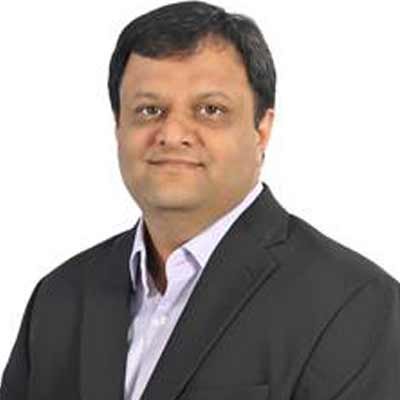
    Mumbai: Zee Media has announced the appointment of Abhishek Nigam as its chief operating officer for the digital business. He was previously associated with Airtel as product head for its B2C platform.

    Nigam will be responsible for the entire digital operations that include 20 brands across 12 languages touching more than 300 million viewers across digital replicas of Zee Media’s 14 linear news channels along with websites such as  India.com, BGR.in, BollywoodLife.com, TheHealthsite.com, and CricketCountry.com, the company said in a statement.

    Commenting on the appointment, Zee group chief strategy and innovation officer Bibek Agarwala said, “Irrespective of the prevailing challenges, Zee Digital has reported exponential growth within last few years through strategic communications and technological advancements. With extensive experience and knowledge in the technology, product, and sales domain, Abhishek Nigam will definitely add value to the company’s vision and the overall implementation and development trajectory.”

    “Moving ahead, we are looking forward to an aggressive growth roadmap that will help achieve a differentiated and sustainable competitive positioning for Zee Media’s digital assets in this dynamically changing digital ecosystem”, he added.

    Commenting on his new role, Nigam shared, “I am delighted to join hands with India’s most diversified digital publishing group. It would be an honour to work with the highly knowledgeable leadership. My endeavour would be to help Zee Media scale new heights across the globe by aligning all the Digital assets and bringing in synergies through strategic measures and latest technological innovations.”

    As a seasoned professional with 15 years of experience, Nigam has worked with Times Internet and Jagran Group across product leadership roles. He also holds expertise in handling the vernacular language market. An IIT-Delhi alumnus, Nigam holds a B. Tech and M. Tech degree. His educational qualification also includes a senior management program from IIM, Calcutta, and AI professional program from Stanford University.

  • Airtel Business appoints Harish Laddha as CEO-emerging business

    Airtel Business appoints Harish Laddha as CEO-emerging business

    Mumbai: Airtel Business, the B2B unit of Bharti Airtel, announced the appointment of Harish Laddha as chief executive officer for emerging business. He will report to Ajay Chitkara, director and CEO – Airtel Business, the company said in a statement.

    Laddha will be responsible for identifying and leveraging growth opportunities in emerging categories such as the small and medium business (SMB) segment. He will lead a dedicated team to bring to market highly differentiated offerings for these emerging segments, it added.

    Welcoming Laddha on board, Chitakara said, “As the Indian economy evolves over the next decade, the SMB segment, in particular, offers a massive opportunity to enable the digital transformation of tens of millions of traditional businesses. Airtel Business with its end-to-end portfolio is well-positioned to serve the requirements of these businesses. I am delighted to welcome Harish on board and am confident that under his leadership we will create sharper focus on the emerging growth opportunities.”

    Laddha comes with over 25 years of experience, having worked in companies like Ingram Micro, Tata Communications, and Tech Pacific. He is an alumnus of Narsee Monjee Institute of Management and holds a bachelor’s degree in electronics and telecommunication from MIT, Pune.

  • Airtel reports growth for DTH, home broadband segment in Q4

    Airtel reports growth for DTH, home broadband segment in Q4

    KOLKATA: Airtel Digital TV, Bharti Airtel’s direct-to-home (DTH) segment has reported Rs 767.3 crore revenue in q4 FY21 compared to Rs 603.5 crore in the corresponding quarter of the previous financial year, clocking a 27 per cent year-on-year growth.

    The DTH segment has raked in Rs 248.3 crore profit in the quarter, up from Rs 152.8 crore in the same quarter a year ago. However, both profit and revenue have declined compared to the third quarter of FY21. The company deployed Rs 369 core capex for the quarter compared to 251.4 crore in Q4 FY20.

    Airtel Digital TV witnessed a decline in customer base by 156 K during the quarter from 17.9 million in Q3 to 17.7 million in Q4, despite a growth of 6.6 per cent from 16.6 million in the corresponding quarter last year. ARPU for the quarter was at Rs 144 as compared, down from Rs 154 in the corresponding quarter last year.

    Homes business segment witnessed revenue growth of five per cent year-on-year to reach 128.8 crore. The company’s focus on re-calibrated offerings and launch of Xstream bundles, with content and unlimited internet, to accelerate penetration has resulted in the highest ever net addition of 274K to reach a total base of 3.07 million, it stated. On a year-on-year basis, the customer base increased by 27 per cent.

    For the quarter, revenues from Homes operations were Rs 600.9 core as compared to Rs 572.5crore in the corresponding quarter last year and Rs 567.4 in the previous quarter.

    Overall, Airtel’s consolidated revenue stood at Rs 25,747 core, with India revenues at Rs 18,338 crore.

    “It is this relentless focus on customer obsession that has allowed us to deliver another consistent quarter in terms of performance. Our mobile revenues grew at 19.1% YoY backed by 13.7 Mn 4G customer additions. We are seeing strong momentum in our home business with 274k net adds. The Enterprise segment delivered double-digit growth. Our digital assets continue to scale and we are beginning to see strong traction in monetisation of these assets,” said Airtel India and South Asia MD & CEO Gopal Vittal

  • Telco gear maker HFCL posts PAT of Rs 84.67 crore in Q4

    Telco gear maker HFCL posts PAT of Rs 84.67 crore in Q4

    NEW DELHI: Homegrown telecom gear maker HFCL reported net profit of Rs 86.47-crore for the quarter ended 31 March 2021, a 1.6 per cent increase over the previous quarter’s Rs 85.11 crores.

    In its earnings reports, the company mentioned it will continue to focus on next-generation and 5G portfolios, following which it has firmed up plans to design 5G small and micro cells.

    HFCL’s current order book stands at Rs 6,875 crore while posting total income of Rs 1,391.4 crore in Q4, as against Rs 1,277.4 crore in Q3. In terms of year-on-year performance, PAT has surged 1364.88 per cent from Rs 5.78 crores for the period ended 31 March 2020. Consolidated income recorded a manifold increase as well, up 109.24 per cent from Rs 668.07 crores at the end of FY20.

    The optic fibre-to-night-vision devices maker reported a total income of Rs 4459.09 crore and net profit of Rs 239 crore during the 12 months period ended 31 March 2021 .

    The company attributed growth mainly to its in-house designed and developed products, in line with the Atmanirbhar Bharat initiative which is adding to its overall profitability.

    The domestic fibre maker works closely with telecom giants like Reliance Jio and Bharti Airtel; both telcos are going aggressive on increasing the FTTH network footprint in large cities for triple-play services. As India moves closer to 5G commercial rollouts, HFCL believes that more relevant business opportunities will soon knock on their doors.

  • Madhu Malhotra joins Edelweiss General Insurance as chief technology officer

    Madhu Malhotra joins Edelweiss General Insurance as chief technology officer

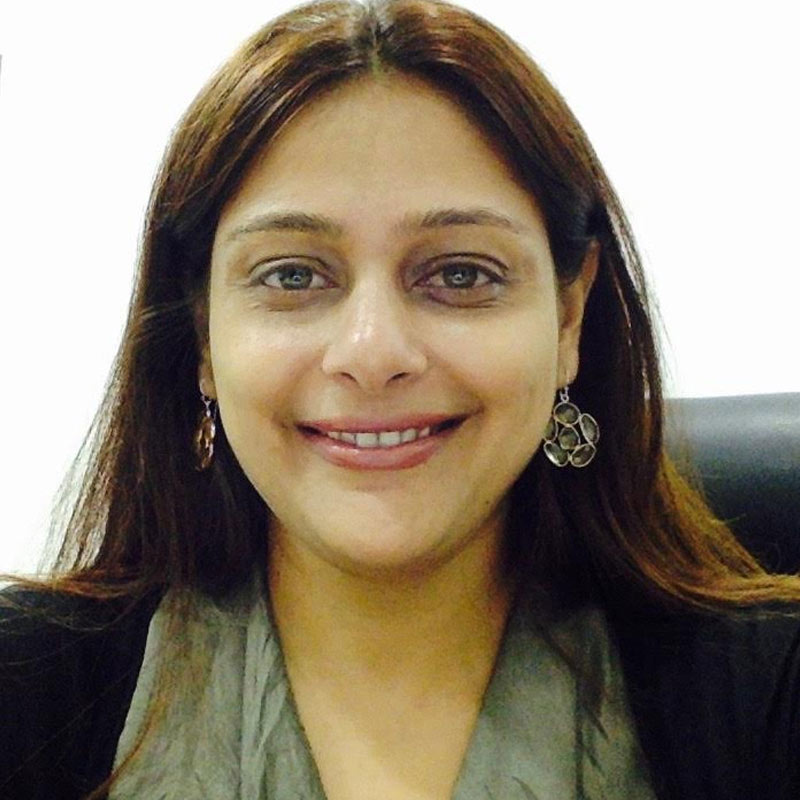
    Mumbai: Digital insurer Edelweiss General Insurance (EGI) has onboarded Madhu Malhotra as its chief technology officer. She will spearhead the technology function at EGI and drive digital innovation in line with the brand’s strategy of transforming the insurance landscape in India through tech driven solutions and offerings.

    Malhotra is an eminent technology leader who brings with her two decades of rich experience across fintech and telecom domains. She has a proven track-record in leading digital innovations, engineering modernisations and transformations and streamlining cloud initiatives.

    Prior to her new role, Malhotra was head of technology at Spectra. She was also associated with Airtel for 10 years and held many leadership positions there. While at Airtel Bank, she led the launch of the first payments bank of India, headed the financial inclusion vertical to deliver large scale customer impact and drove agile adoption and transformation.

    Edelweiss General Insurance executive director & CEO Shanai Ghosh said, “Technology has proved to be a game changer for the Insurance industry, with the potential to transform the entire service ecosystem and enhance customer experience. At EGI, we are well placed to leverage this transformation, given our digital operating model. I am excited to welcome Madhu to be part of our digital journey and lead this strategic business function for us. Her experience and expertise will help build a robust technology function that will help drive our business strategy. I wish her the very best for an enriching career with us.”

    Malhotra added, “As CTO my focus will be to create future ready digital platform and products offering state of the art digital experience and capabilities to our customers. I will strive for a culture of innovation to make the customer experience simple and transparent. I am incredibly excited to play a key role in accelerating this digital journey in the growth of EGI that Shanai has envisioned.”

  • Amid pandemic, GECs take lion’s share of brands’ TV advertising budget

    Amid pandemic, GECs take lion’s share of brands’ TV advertising budget

    As the entire country is battling the second wave of coronavirus outbreak, advertisers asserted that they will continue advertising on television as it is the most effective medium to flaunt their product before Indian audiences. In the recent Tele-Wise Kannada panel discussion organised by Indian Television Group in association with Colors Kannada, industry experts debated whether regional channels were the next frontier for Indian advertisers to advertise their products. The discussion was moderated by Indiantelevision.com’s founder, CEO & editor-in-chief Anil Wanwari. 

    Television continues as the most preferred medium

    During the event, ITC head of marketing Aishwarya Pratap Singh stated that his company trusts television as the most effective medium of advertising, as it offers 96 per cent penetration rate. According to him, television and print are ITC’s most preferred mediums to advertise their products, especially in Karnataka. 

    “As long as the market is there, lockdown or no lockdown, we will continue to invest in TV,” added Singh. 

    Airtel vice president – media Archana Agarwal said, “Television remains the highest reach medium. We may look at other options if we are to focus on specialised local markets, but for the entire state, TV is the medium.” 

    Parle Products sr category head Krishnarao Buddha revealed that they did not have much chance to experiment on advertisements, as their stocks were shrinking due to increased demand. However, the consumer goods major trusted television as its primary advertising medium, and advertised their products across channels. 

    “Last year, there was not much possibility for us to advertise. But, we stitched a new creative from our old creatives. We also went out of our way to support broadcasters, like Star Sports and news channels,” he said. 

    Setbacks faced during pandemic times

    Krishnarao admitted that Parle had faced a setback, especially in the confectionery segment due to the Covid2019 pandemic. 

    “We have deferred some of our launches due to the pandemic. Overall, the confectionery category has been impacted. Children always buy confectionaries in mono packs. As schools remain closed, the sale of mono packs has been impacted. But we have seen an increase in the sale of salty snacks as people now confined to their homes,” he elaborated. 

    ITC’s Pratap Singh said, “Noodle businesses are stable, in fact, a little more, as people tend to eat more while being at the home. We were able to grow even in Covid times. During these pandemic times, we focus more on quick selling products rather than spending time on slow-moving products.”

    Challenges faced by advertisers in Karnataka

    Industry experts who attended the virtual summit unanimously agreed that the multifaceted culture in Bengaluru is one of the main challenges they face while delivering region-specific ad campaigns. 

    “In Karnataka, 60 per cent of TV viewership comes from Kannada channels, and 15 per cent from Hindi speaking channels, so a lot depends on the language. But when it comes to Bengaluru, only 53 per cent of TV viewership comes from Kannada channels. For advertising, a drop of seven per cent cannot be ignored. So, instead of creating region-centric ad campaigns, we always roll out national ad campaigns in Karnataka too,” detailed Airtel’s Agarwal. 

    Pratap Singh further explained why exclusively Kannada campaigns may not work in Bengaluru. “There is a lot of Tamil and Telugu-speaking population in Bengaluru. Due to the staggering amount of Tamil-speaking people in Bengaluru, Tamil channels are also faring big in Bengaluru.” 

    “We have not experimented a lot with Karnataka specific campaign. We typically use an entire south Campaign or an all India campaign,” remarked Krishnarao when asked about Parle’s marketing strategy for the region. 

    Favourite genres for advertisers 

    The overarching consensus among the talking heads at the Tele-Wise Kannada panel discussion was that general entertainment channels (GEC) are the best option to reach consumers. The reason is simple – it’s the category that offers the biggest reach.

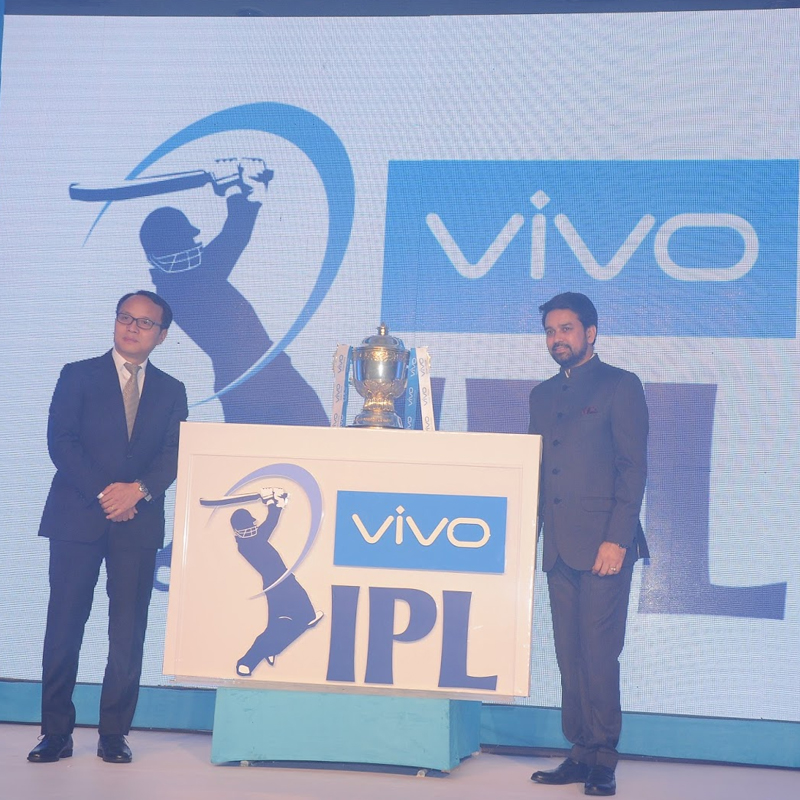
    “In most cases, we prefer GECs and sports. Movies play a big role, especially when there’s no fresh content on TV during the lockdown. News channels do not give us high reach somehow. Sports, yes, we are on IPL. We strongly believe in the power of cricket. It is quite expensive but it’s worth investing there,” said Pratap Singh. 

    Agarwal revealed that Airtel has not invested much in reality shows. 

    “Most of the reality shows are on similar lines. But, we haven’t sponsored any show in the last two or three years in any market, except for Kerala,” she said. 

    Krishnarao explained, “The reality shows come at a premium. So we have to evaluate our needs. But, we have associated with a few channels, and we are continuously on the lookout for more impact.” 

  • Bharti Airtel restructures to focus on digital assets

    Bharti Airtel restructures to focus on digital assets

    NEW DELHI: Telecom giant Bharti Airtel has tweaked its corporate structure in a bid to sharpen its focus on digital opportunities while enabling it to unlock value. 

    Under the new structure, Airtel Digital will merge with the listed entity Bharti Airtel, and it will now house all digital assets of the company including Wynk Music, Airtel X stream, Airtel Thanks, Mitra Payments platform used by a million retailers, Airtel Ads, Airtel IQ, Airtel Secure, Airtel Cloud and all future digital products and services. 

    The move is expected to be instrumental in attracting strategic and financial investors as well as scale up the digital business. With this, the company has set its sights on ramping up digital business revenue to more than Rs 1,000 crore from Rs 100 crore now.

    From now, the telecom business of the company will be housed in a new entity, Airtel Limited – a wholly-owned subsidiary of Bharti Airtel Ltd. Bharti Telemedia, the arm operating DTH services of the company, will be housed alongside Airtel Limited. 

    On the other hand, Airtel Payments Bank will remain a separate entity under Bharti Airtel. The conglomerate’s infrastructure businesses that include Nxtra and Indus Towers will continue to remain separate entities as they are now. 

    "The new structure sets the exciting future course for Bharti Airtel and provides focus on the four distinct businesses – digital, India, international and infrastructure, each, in a razor-sharp way,” said Bharti Airtel chairman Sunil Mittal in a statement. “We believe this will provide agility, expertise, and operational rigour to serve our customers brilliantly while providing flexibility to unlock value for our shareholders. This structure will serve us well over the coming years and is a win-win for all stakeholders."

    The statement from Airtel revealed that the company is intending to "eventually fold the DTH business into Airtel Limited to move towards the NDCP vision of converged services to customers." 

  • Jio maintains lead in wired broadband subscriber addition

    Jio maintains lead in wired broadband subscriber addition

    KOLKATA: The growth of home broadband users in India continues as it gains 3.8 lakh (0.38 million) subscribers in January 2021 to reach a base of 22.67 million. Among the top players, Mukesh Ambani-led Jio has maintained its lead in subscriber addition with 1.8 lakh new users, according to telecom subscription data published by the Telecom Regulatory Authority of India (TRAI).

    Currently, Jio has 2.25 million subscribers overall, narrowing the gap with rival Airtel. Considerably, Jio recently launched seven tariff plans for micro, small, medium enterprises (MSMEs). Its new tariff plans can address 15-20 million customer base among 50 million underserved small enterprises, the Bank of America (BofA) said earlier.

    Airtel has also expanded its subscriber base adding 90,000 (0.09 million) subscribers in the month to reach 2.90 million base.  “Home broadband category is at the cusp in terms of growth. Ever since the Covid2019 crisis and growth of work from home, study from home, there has been an explosion of home broadband. The increased penetration of streaming services has also resulted in acceleration of home broadband,” Bharti Airtel India and South Asia MD & CEO Gopal Vittal said in an earnings discussion.

    State-run BSNL has again lost subscribers, down to 7.69 million subscribers. Two other leading private players – Atria Convergence Limited (ACT) and Hathway – have also gained 20,000 and 10,000 new subscribers respectively.

    The wired broadband segment saw adequate growth in 2020 by adding 31.5 lakh new subscribers to reach an overall 22.29 million subscribers in December 2020.

  • 2020: An eventful year for DTH

    2020: An eventful year for DTH

    KOLKATA: Over the past year all the direct-to-home (DTH) operators in India have embraced the change in the ecosystem. The industry has started reinventing its offerings in a big way to combat the threat posed by OTT players. Throughout 2020, leading DTH operators struck partnerships with OTTs big and small, expanded value-added service portfolio, rolled out several offers to keep consumers hooked.

    The sector currently has 70.58 million subscribers as of 30 June 2020, according to the latest data shared by the Telecom Regulatory Authority of India (TRAI). While the industry lost two million subscribers in 2019, it has added around six lakh subscribers in the first half of the year. In addition to that, a Crisil report has projected four-six per cent revenue growth for FY21 reaching Rs 22,000 crore.

    After the first quarter, the progress of the industry has been murkier. Although traditional TV consumption surged due to Covid2019, with some benefit for distribution platforms, lack of fresh content, migration post-lockdown, closure of commercial establishments led to churn later. Many consumers also degraded their subscription packages due to the absence of new episodes of daily soaps and live sports.  

    “DTH subscribers surged initially in lockdown but over time consumers started optimising channel subscriptions due to limited fresh content. Subscribers expected to increase by six to seven per cent as fresh content has returned to TV and cable TV subscribers move to DTH,” a CII-BCG report said. According to industry estimates, the operators’ consumer acquisition started coming back to normal since late July.

    Expanding content portfolio to retain, acquire subscribers:

    As a response to the unprecedented crisis, the DTH companies not only took steps like incentive bundles, new free platform services, but kept innovating. Hybrid set top boxes turned out to the buzzword for DTH sector this year as all the players have upped their efforts in this segment. Then the pandemic gave a pronounced nudge to the demand for hybrid boxes. Market leader Tata Sky aggressively promoted its new box Tata Sky Binge+ throughout the year. The company has even brought down the price to Rs 2,999 from Rs 5,999 – at a time when fixed broadband and smart TV segment are seeing rapid growth in India.

    Its rival Airtel has also been pushing cross-platform content strategy since the launch of Airtel Xstream in late 2019. The surge in video consumption has boosted its uptake massively, leading to 50 per cent viewership increase in the early part of lockdown. On the other hand, Dish TV is going big not only on Android box connected devices Dish SMRT Hub and d2h Stream, but also its OTT platform Watcho for Dish TV and d2h users. Watcho crossed five million subscribers during the lockdown. However, the player causing major disruption is Reliance’s Jio TV+ for JioFiber set-top box users. Along with aggregating content from 12 leading OTT players, it offers a single sign-in support.

    Hybrid set-top boxes were introduced a few years ago but did not get much traction. With consumption going up both on linear TV and OTT, the demand for these devices has been on the upswing. But the demand is till now limited to the top 15 cities, the top tier of the market.

    In 2020, DTH operators focused on further bolstering their value added services. One of the major areas has been educational content, perhaps in reaction to classes being conducted online in India. Apart from that, fitness services and cinematic experiences were also expanded by these players, especially Dish TV and Tata Sky.

    Manufacturing moves to India:

    To streamline set top box manufacturing and delivery, DTH players have decided to shift a significant portion to the country. Tata Sky partnered with Technicolor to develop STBs for the Indian market that will be manufactured and distributed locally. Dish TV, too, intends to shift its production to India by the first quarter of 2021. Additionally, it plans to start manufacturing major components of the STB as well as its accessories in India. Both players claimed that it would push the government’s Make in India vision. For long, local STB manufacturers have complained that Chinese companies have taken away their business. The move has shone a ray of optimism for them.

    Regulations impacting the sector:

    As the industry woke up to the amended new tariff order (NTO 2.0) at the beginning of 2020, the DTH players had to adjust network capacity fee, multi-TV connection charges. During the Covid2019 crisis, TRAI recommended that all DTH and cable STBs provided to customers must support interoperability and urged the ministry of information and broadcasting (MIB) to make it mandatory by introducing the requisite provisions. In response to TRAI’s consultation paper, industry leaders such as TataSky, Dish and Reliance Jio opposed it. The viability of the move was questioned and stakeholders warned that it would be a very high-cost operation.

    The cloud over license fee lifts:

    But the year has ended on a positive note, with the MIB issuing a much-awaited clarification on the matter of licence fee. DTH license will be issued for 20 years and license fee will be collected quarterly. Further, the period of license may be renewed by 10 years at a time. The annual fee has been revised from 10 per cent of GR to eight per cent of AGR. Sharing of infrastructure between DTH operators and 100 per cent FDI have also been approved by the cabinet, among other amendments. 

    The industry believes clarity over license fee will bring certainty in terms of planning and investment. In a very recent communication, the MIB has stated that the existing licensees are required to clear pending dues before applying afresh for a license to provide DTH services,.

    DD Free Dish’s revival:

    Prasar Barati-run free-to-air DTH platform DD Free Dish also had its moments this past year. All the four major broadcasters that had pulled out of DD Free Dish in 2019 after the new tariff order was implemented returned to the platform in 2020. Star Utsav, Sony Pal, Zee Anmol, Colors Rishtey and Zee Anmol Cinema had successfully bid on the 45th e-auction for placement. Many new channels have come on board, including three movie channels in the recent auction.