Tag: Airtel

  • Decongestion: Jio hails Airtel’s fair practice

    Decongestion: Jio hails Airtel’s fair practice

    MUMBAI: Reliance Jio has welcomed Airtel’s decision to provide moreB points of interconnection in line with fair business practices and Trai regulations. Bharti Airtel Limited has indicated its decision in its press statement.

    RJIL has been writing regularly to Airtel and other incumbent operators regarding its requirement for interconnection capacity over the last few months. Necessary details have been provided to Airtel from time to time, highlighting the urgency of the requirement and the impact on Quality of Service parameters. However, no action was taken over the last several weeks, resulting in non-compliance of Trai regulation on quality of service which mandates that POI congestion should not affect more than one call in every 200 calls made.

    The situation deteriorated significantly in the last few weeks, with over 75 calls failing out of every 100 call attempts. In last 10 days alone, over 22 crore calls on the Airtel network failed, while 52 crore calls failed cumulatively on the networks of the three incumbent operators viz. Airtel, Vodafone India Ltd and Idea Cellular Ltd.

    While RJIL has rolled out a state-of-the-art network, the benefits of superior voice technology have been denied to Indian customers due to the POI congestion. Indian customers have not been able to enjoy RJIL’s free voice offer as a result of such anti-competitive behaviour of incumbent operators.

    RJIL has been raising the issue of insufficient POIs as anti-competitive aimed at hindering the entry of a new operator. Such hurdles result in poor experience for RJIL customers who are trying to make calls to incumbent operators’ networks. “We have repeatedly appealed to the incumbent operators to create a fair and reciprocal framework of coopetition that is good for India and Indian customers,” RJIL stated.

    On the unsubstantiated apprehension regarding asymmetric voice traffic raised by Airtel, RJIL clarified that the voice traffic on its network is in line with industry trends and as expected for any new operator. When a new operator begins its operations, its customer base is understandably low and a large proportion of these are new numbers that are not yet in the address book with whom they communicate. Therefore, in the early days of operations of any new operator, there are more outgoing calls than incoming calls. Over time, as the customer base grows, this asymmetry reduces and the traffic becomes symmetric.

    RJIL’s outgoing traffic is less than two calls per customer per hour even during peak traffic period, which requires only a reasonable number of POIs. These calls are not to one operator but distributed over all the operators. Incumbent operators are describing such a modest call rate as a Tsunami of traffic from RJIL.

    Moreover, asymmetry of traffic has absolutely nothing to do with the number of POIs required, which is based on the total traffic in both directions and not just in one direction. The equipment required for POI are two-way trunks, which means that the same equipment is used for both directions. No additional equipment is needed for handling the calls coming from RJIL to the other operator. It is therefore in customer interest to have adequate interconnection capacity irrespective of direction of traffic.

    RJIL hoped that Airtel as well as other incumbent operators would enhance the PoIs sufficient to meet their license obligation of QoS with immediate effect and maintain these parameters on an ongoing basis.

  • Decongestion: Jio hails Airtel’s fair practice

    Decongestion: Jio hails Airtel’s fair practice

    MUMBAI: Reliance Jio has welcomed Airtel’s decision to provide moreB points of interconnection in line with fair business practices and Trai regulations. Bharti Airtel Limited has indicated its decision in its press statement.

    RJIL has been writing regularly to Airtel and other incumbent operators regarding its requirement for interconnection capacity over the last few months. Necessary details have been provided to Airtel from time to time, highlighting the urgency of the requirement and the impact on Quality of Service parameters. However, no action was taken over the last several weeks, resulting in non-compliance of Trai regulation on quality of service which mandates that POI congestion should not affect more than one call in every 200 calls made.

    The situation deteriorated significantly in the last few weeks, with over 75 calls failing out of every 100 call attempts. In last 10 days alone, over 22 crore calls on the Airtel network failed, while 52 crore calls failed cumulatively on the networks of the three incumbent operators viz. Airtel, Vodafone India Ltd and Idea Cellular Ltd.

    While RJIL has rolled out a state-of-the-art network, the benefits of superior voice technology have been denied to Indian customers due to the POI congestion. Indian customers have not been able to enjoy RJIL’s free voice offer as a result of such anti-competitive behaviour of incumbent operators.

    RJIL has been raising the issue of insufficient POIs as anti-competitive aimed at hindering the entry of a new operator. Such hurdles result in poor experience for RJIL customers who are trying to make calls to incumbent operators’ networks. “We have repeatedly appealed to the incumbent operators to create a fair and reciprocal framework of coopetition that is good for India and Indian customers,” RJIL stated.

    On the unsubstantiated apprehension regarding asymmetric voice traffic raised by Airtel, RJIL clarified that the voice traffic on its network is in line with industry trends and as expected for any new operator. When a new operator begins its operations, its customer base is understandably low and a large proportion of these are new numbers that are not yet in the address book with whom they communicate. Therefore, in the early days of operations of any new operator, there are more outgoing calls than incoming calls. Over time, as the customer base grows, this asymmetry reduces and the traffic becomes symmetric.

    RJIL’s outgoing traffic is less than two calls per customer per hour even during peak traffic period, which requires only a reasonable number of POIs. These calls are not to one operator but distributed over all the operators. Incumbent operators are describing such a modest call rate as a Tsunami of traffic from RJIL.

    Moreover, asymmetry of traffic has absolutely nothing to do with the number of POIs required, which is based on the total traffic in both directions and not just in one direction. The equipment required for POI are two-way trunks, which means that the same equipment is used for both directions. No additional equipment is needed for handling the calls coming from RJIL to the other operator. It is therefore in customer interest to have adequate interconnection capacity irrespective of direction of traffic.

    RJIL hoped that Airtel as well as other incumbent operators would enhance the PoIs sufficient to meet their license obligation of QoS with immediate effect and maintain these parameters on an ongoing basis.

  • June 16: ACT continues to lead wireline broadband subscriber additions

    June 16: ACT continues to lead wireline broadband subscriber additions

    BENGALURU: Atria Convergence Technologies Private Limited (ACT, ACT Broadband) continued to lead wireline broadband internet (wireline broadband) subscribers in the calendar year 2016 with 1.6 lakh subscribers added between 1 January 2016 and 30 June. As per the Telecom Regulatory Authority of India (TRAI) data, ACT had 8.6 lakh subscribers as on 31 December 2015 (December 15, or 1 January 2016), and it closed with 10.2 lakh subscribers on 30 June, 2016 (June 16).

    Further, as per TRAI data, the top five players in India in the wireline broadband internet space in pecking order are the public sector Bharat Sanchar Nigam Limited (BSNL), Bharti Airtel Limited (Airtel), public sector Mahanagar Telephone Nigam Limited (MTNL), ACTand You Broadband (You BB).

    Among these these, only BSNL and Airtel could be termed as national players at present. BSNL, Airtel and MTNL also provide wireline telephony voice and data and mobile services while Airtel also has a direct to home (DTH) segment. ACT started off as an MSO with operations concentrated in a few major cities and towns located mainly in South India. It started internet services (ACT Broadband) a little later and has grown its broadband internet subscriber base over time thorough organic as well as acquisition growth, to the extent that it is quite likely the biggest private wireline broadband player in South India. You BB offers broadband operations in a few cities in Maharashtra, Gujarat, the NCR region, Andhra Pradesh and Karnataka.

    ACT was followed by Airtel which added 1.5 lakh subscribers in the calendar year 2016 until June 16. Airtel had 16.7 lakh wireline broadband subscribers on 1 January, 2016. In June 16, it had 18.2 lakh subscribers. Among the top five wireline broadband players in India, You Broadband (You BB) was the next with 50 thousand subscriber added during the corresponding period. The other two players among the top five – the public sector telecom companies – reported a decline in subscribers in the same period.

    You BB began the year with 5.1 lakh subscribers and, as on 30 June 2016, it had 5.6 lakh subscribers. BSNL, the largest wireline broadband player in India, opened 2016 with 99.2 lakh subscribers, but lost 40,000 subscribers until 30 June 2016. MTNL lost 20,000, and had a tally of 11 lakh subscribers until 30 June, 2016.

    Please refer to figure 1 below for wireline broadband subscriber data of the top five players:

    Overall, the top five wired broadband players added three lakh subscribers (37.04 percent of the total wireline broadband subscriber additions) between 1 January 2016 and 30 June as opposed to the overall growth of 8.1 lakh subscribers during the same period. Please refer to Fig 2 below:

    In March 16, the largest-ever number of wired broadband subscribers were added – in absolute numbers as well as in month-over-month (m-o-m) percentage terms. In all, 2.3 lakh wired broadband subscribers were added, with m-o-m growth of 1.37 percent in March 16. The combined subscription numbers of the top five wired broadband players also had the largest-ever subscriber additions in terms of absolute numbers at 1 lakh and at 0.71 percent in terms of m-o-m growth in March 16.

    June 16 has seen the second-largest growth in terms of number of wireline broadband subscribers in the current calendar year to date with a m-o-m growth of 0.93 percent and addition of 1.6 lakh subscribers. The top five players saw a m-o-m growth of 0.43 percent
    in June 16.

    The subscriber numbers share of the top five wired broadband players has reduced from 87.62 percent in March 15 to 83.03 percent as on June 16. During the same period, the all-India wireline internet subscriber base has grown 11.60 percent from 155.2 lakh to 173.2 lakh. The combined numbers of the top five players have increased by less than half of that in percentage terms — by 5.43 per cent from 136.4 lakh to 143.8 lakh. The top five have added 7.4 lakh subscribers during these 16 months, with ACT and Airtel contributing a major chunk to the growth.

    Other wireline broadband players in India

    MSOs in India have started providing internet services on the back of their television cable networks using DOCSIS technology. In general, they have started reporting double-digit YoY increase in internet subscribers and revenue. The television cable players see broadband services improving their Average Revenue Per User (ARPU) numbers. Three of the major MSOs and a regional MSO — Hathway, Siti Cable, Den Networks, Ortel Communications, respectively, whose results are available in the public domain have been showing steady growth in their broadband segment over the past few quarters. All the four have been reporting growth in ARPU.

    Overall broadband subscriber numbers for June 2016 including wireless and mobile

    Overall, as per the reports received by TRAI from the service providers, the number ofbroadband subscribers (including wireless, mobile, dongles) increased from 159.76 million (15.976 crore) at the end of May 16 to 159.80 million (15.98 crore) with a monthly growth rate of 0.03 percent at the end of June 16. Wireless broadband subscriber numbers that use mobiles and dongles for internet access have dropped m-o-m by 0.09 percent to 141.94 million (14.194 crore) in June 16 from 142.06 million (14.206 crore) in May 16. Fixed wireless subscribers that access the internet through wi-fi, wi-max, point-to-point radio and VSAT have increased 0.83 percent in June 16 to 0.55 million (5.5 lakh) from 0.54 million (5.4 lakh) in May 16.

    The top five service providers constituted 84.38 percent market share of the total broadband subscribers at the end of May 16. These were Airtel (40.61 million or 4.061 crore), Vodafone (32.28 million or 3.228 crore), Idea Cellular (27.02 million 2.702 crore), BSNL (20.56 million 2.056 crore) and Reliance Communications Group (14.38 million 1.438 crore).

    TRAI’s definition of broadband is internet download speeds greater than or equal to 512 Kpbs.

    Comments
    ACT must have equalled or replaced the public sector MTNL as the third largest wireline broadband services provider in the country at the time of writing of article. However, the Reliance Jio disruption is bound to happen. Also, given the fact that the public sector telecom giant and largest wireline broadband services provider, BSNL, plans to take Jio head-on with attractive offers for broadband consumers, the wireline broadband ecosystem is in for interesting upheavals in the near future.

    As mentioned above, the Cable MSO and LCO fraternity has been banking on higher ARPUs that broadband internet carried on its cable network can offer. Investments into Docs is 2.x and 3.x have been made, and the number of users subscribing to these services has been growing, as is evident from the quarterly results of some of the listed players. The cable TV industry has still to learn to make profits, and is riding on the hope that cable internet is one of the paths to healthy top and bottom lines.

    The consumer will probably become king for the first time since internet services were introduced in the country at the fag-end of the previous century.

    Notes:(1) The unit of currency in this report is the Indian rupee – Rs (also conventionally represented by INR).The Indian numbering system or the Vedic numbering system has been used to denote money values. The basic conversion to the international norm would be:
    (a) 100,00,000 = 100 lakh = 10,000,000 = 10 million = 1 crore.
    (b) 10,000 lakh = 100 crore = 1 arab = 1 billion.

    (2) TRAI reports indicate data in millions of numbers up to 2 decimal places. Hence it is assumed in this report that a figure of 0.47 million (4.7 lakh) subscribers for You BB for July 2015 would be granular to the nearest 10,000. While percentages have been mentioned up to two decimal places, the accuracy may vary, depending upon the exact number.
    (3) Industry sources say that TRAI numbers in the case of ACT for May 2015 are incorrect at 0.66 million and the correct number would be 0.693 million. This paper considers the number as 6.93 lakh or 0.693 million.
    (4) MSOs have a number of subsidiaries and alliances, hence broadband numbers are split as applicable. The consolidated subscription numbers of these entities could be larger. Hathway is a case in point.

  • June 16: ACT continues to lead wireline broadband subscriber additions

    June 16: ACT continues to lead wireline broadband subscriber additions

    BENGALURU: Atria Convergence Technologies Private Limited (ACT, ACT Broadband) continued to lead wireline broadband internet (wireline broadband) subscribers in the calendar year 2016 with 1.6 lakh subscribers added between 1 January 2016 and 30 June. As per the Telecom Regulatory Authority of India (TRAI) data, ACT had 8.6 lakh subscribers as on 31 December 2015 (December 15, or 1 January 2016), and it closed with 10.2 lakh subscribers on 30 June, 2016 (June 16).

    Further, as per TRAI data, the top five players in India in the wireline broadband internet space in pecking order are the public sector Bharat Sanchar Nigam Limited (BSNL), Bharti Airtel Limited (Airtel), public sector Mahanagar Telephone Nigam Limited (MTNL), ACTand You Broadband (You BB).

    Among these these, only BSNL and Airtel could be termed as national players at present. BSNL, Airtel and MTNL also provide wireline telephony voice and data and mobile services while Airtel also has a direct to home (DTH) segment. ACT started off as an MSO with operations concentrated in a few major cities and towns located mainly in South India. It started internet services (ACT Broadband) a little later and has grown its broadband internet subscriber base over time thorough organic as well as acquisition growth, to the extent that it is quite likely the biggest private wireline broadband player in South India. You BB offers broadband operations in a few cities in Maharashtra, Gujarat, the NCR region, Andhra Pradesh and Karnataka.

    ACT was followed by Airtel which added 1.5 lakh subscribers in the calendar year 2016 until June 16. Airtel had 16.7 lakh wireline broadband subscribers on 1 January, 2016. In June 16, it had 18.2 lakh subscribers. Among the top five wireline broadband players in India, You Broadband (You BB) was the next with 50 thousand subscriber added during the corresponding period. The other two players among the top five – the public sector telecom companies – reported a decline in subscribers in the same period.

    You BB began the year with 5.1 lakh subscribers and, as on 30 June 2016, it had 5.6 lakh subscribers. BSNL, the largest wireline broadband player in India, opened 2016 with 99.2 lakh subscribers, but lost 40,000 subscribers until 30 June 2016. MTNL lost 20,000, and had a tally of 11 lakh subscribers until 30 June, 2016.

    Please refer to figure 1 below for wireline broadband subscriber data of the top five players:

    Overall, the top five wired broadband players added three lakh subscribers (37.04 percent of the total wireline broadband subscriber additions) between 1 January 2016 and 30 June as opposed to the overall growth of 8.1 lakh subscribers during the same period. Please refer to Fig 2 below:

    In March 16, the largest-ever number of wired broadband subscribers were added – in absolute numbers as well as in month-over-month (m-o-m) percentage terms. In all, 2.3 lakh wired broadband subscribers were added, with m-o-m growth of 1.37 percent in March 16. The combined subscription numbers of the top five wired broadband players also had the largest-ever subscriber additions in terms of absolute numbers at 1 lakh and at 0.71 percent in terms of m-o-m growth in March 16.

    June 16 has seen the second-largest growth in terms of number of wireline broadband subscribers in the current calendar year to date with a m-o-m growth of 0.93 percent and addition of 1.6 lakh subscribers. The top five players saw a m-o-m growth of 0.43 percent
    in June 16.

    The subscriber numbers share of the top five wired broadband players has reduced from 87.62 percent in March 15 to 83.03 percent as on June 16. During the same period, the all-India wireline internet subscriber base has grown 11.60 percent from 155.2 lakh to 173.2 lakh. The combined numbers of the top five players have increased by less than half of that in percentage terms — by 5.43 per cent from 136.4 lakh to 143.8 lakh. The top five have added 7.4 lakh subscribers during these 16 months, with ACT and Airtel contributing a major chunk to the growth.

    Other wireline broadband players in India

    MSOs in India have started providing internet services on the back of their television cable networks using DOCSIS technology. In general, they have started reporting double-digit YoY increase in internet subscribers and revenue. The television cable players see broadband services improving their Average Revenue Per User (ARPU) numbers. Three of the major MSOs and a regional MSO — Hathway, Siti Cable, Den Networks, Ortel Communications, respectively, whose results are available in the public domain have been showing steady growth in their broadband segment over the past few quarters. All the four have been reporting growth in ARPU.

    Overall broadband subscriber numbers for June 2016 including wireless and mobile

    Overall, as per the reports received by TRAI from the service providers, the number ofbroadband subscribers (including wireless, mobile, dongles) increased from 159.76 million (15.976 crore) at the end of May 16 to 159.80 million (15.98 crore) with a monthly growth rate of 0.03 percent at the end of June 16. Wireless broadband subscriber numbers that use mobiles and dongles for internet access have dropped m-o-m by 0.09 percent to 141.94 million (14.194 crore) in June 16 from 142.06 million (14.206 crore) in May 16. Fixed wireless subscribers that access the internet through wi-fi, wi-max, point-to-point radio and VSAT have increased 0.83 percent in June 16 to 0.55 million (5.5 lakh) from 0.54 million (5.4 lakh) in May 16.

    The top five service providers constituted 84.38 percent market share of the total broadband subscribers at the end of May 16. These were Airtel (40.61 million or 4.061 crore), Vodafone (32.28 million or 3.228 crore), Idea Cellular (27.02 million 2.702 crore), BSNL (20.56 million 2.056 crore) and Reliance Communications Group (14.38 million 1.438 crore).

    TRAI’s definition of broadband is internet download speeds greater than or equal to 512 Kpbs.

    Comments
    ACT must have equalled or replaced the public sector MTNL as the third largest wireline broadband services provider in the country at the time of writing of article. However, the Reliance Jio disruption is bound to happen. Also, given the fact that the public sector telecom giant and largest wireline broadband services provider, BSNL, plans to take Jio head-on with attractive offers for broadband consumers, the wireline broadband ecosystem is in for interesting upheavals in the near future.

    As mentioned above, the Cable MSO and LCO fraternity has been banking on higher ARPUs that broadband internet carried on its cable network can offer. Investments into Docs is 2.x and 3.x have been made, and the number of users subscribing to these services has been growing, as is evident from the quarterly results of some of the listed players. The cable TV industry has still to learn to make profits, and is riding on the hope that cable internet is one of the paths to healthy top and bottom lines.

    The consumer will probably become king for the first time since internet services were introduced in the country at the fag-end of the previous century.

    Notes:(1) The unit of currency in this report is the Indian rupee – Rs (also conventionally represented by INR).The Indian numbering system or the Vedic numbering system has been used to denote money values. The basic conversion to the international norm would be:
    (a) 100,00,000 = 100 lakh = 10,000,000 = 10 million = 1 crore.
    (b) 10,000 lakh = 100 crore = 1 arab = 1 billion.

    (2) TRAI reports indicate data in millions of numbers up to 2 decimal places. Hence it is assumed in this report that a figure of 0.47 million (4.7 lakh) subscribers for You BB for July 2015 would be granular to the nearest 10,000. While percentages have been mentioned up to two decimal places, the accuracy may vary, depending upon the exact number.
    (3) Industry sources say that TRAI numbers in the case of ACT for May 2015 are incorrect at 0.66 million and the correct number would be 0.693 million. This paper considers the number as 6.93 lakh or 0.693 million.
    (4) MSOs have a number of subsidiaries and alliances, hence broadband numbers are split as applicable. The consolidated subscription numbers of these entities could be larger. Hathway is a case in point.

  • Raj TV to launch mystical thriller ‘Kaakha Kaakha

    Raj TV to launch mystical thriller ‘Kaakha Kaakha

    MUMBAI: Tamil entertainment television channel, Raj TV is all set to launch its new mystical-thriller series titled Kaakha Kaakha. Starting from 5 September, it will be 30 minutes show from Monday- Saturday at 6.30 pm time slot.

    Produced by DI Films, the series has the right mix of thriller, mystery, drama and devotional elements weaved into a gripping screenplay to glue the audience to the TV sets. The show is produced by Ajay Krishna. To start off with the show will have 312 episodes.

    Kaakha Kaakha, is about the story that revolves around mystical power of Lord Murugan’s Vel protecting their devotees from evil forces.

    The story takes place in Sri Lanka, where Srinivasan, a wealthy industrialist is expecting her daughter Karthika’s return from London after her graduation. Karthika is the only daughter of Srinivasan, who has spent most of her life in London. On the day of his daughter’s arrival to Sri Lanka, Srinivasan incidentally meets a saint who warns him to send his daughter back to a place far, as there are evil forces awaiting to cause threat to Karthika’s life. What she unfolds about the mysteries surrounding the evil forces targeting her and her family forms the rest of the story.

    The channel has roped in Pepsi Slice as the title sponsorship, Godrej Hit as powered by, Women’s Horlicks as the co- presenter and Saravana Stores and Airtel as associate sponsors.

    Raj TV owns 13 television channels under its umbrella group ‘Raj Television’ catering to wide range of audience across the country who speak different languages.

  • Raj TV to launch mystical thriller ‘Kaakha Kaakha

    Raj TV to launch mystical thriller ‘Kaakha Kaakha

    MUMBAI: Tamil entertainment television channel, Raj TV is all set to launch its new mystical-thriller series titled Kaakha Kaakha. Starting from 5 September, it will be 30 minutes show from Monday- Saturday at 6.30 pm time slot.

    Produced by DI Films, the series has the right mix of thriller, mystery, drama and devotional elements weaved into a gripping screenplay to glue the audience to the TV sets. The show is produced by Ajay Krishna. To start off with the show will have 312 episodes.

    Kaakha Kaakha, is about the story that revolves around mystical power of Lord Murugan’s Vel protecting their devotees from evil forces.

    The story takes place in Sri Lanka, where Srinivasan, a wealthy industrialist is expecting her daughter Karthika’s return from London after her graduation. Karthika is the only daughter of Srinivasan, who has spent most of her life in London. On the day of his daughter’s arrival to Sri Lanka, Srinivasan incidentally meets a saint who warns him to send his daughter back to a place far, as there are evil forces awaiting to cause threat to Karthika’s life. What she unfolds about the mysteries surrounding the evil forces targeting her and her family forms the rest of the story.

    The channel has roped in Pepsi Slice as the title sponsorship, Godrej Hit as powered by, Women’s Horlicks as the co- presenter and Saravana Stores and Airtel as associate sponsors.

    Raj TV owns 13 television channels under its umbrella group ‘Raj Television’ catering to wide range of audience across the country who speak different languages.

  • SAB TV aims to change female-male skew with HD launch

    SAB TV aims to change female-male skew with HD launch

    MUMBAI: Hoping to redefine the abbreviation of HD from high definition to happiness ka destination is Sony Pictures Networks Television India (SPN) comedy channel Sab TV. The channel is all geared up to launch its HD feed by 5 September.

    Mirroring the prime time programming line-up from its SD channel, the new HD version is to be made available on Tata Sky, Airtel, Dish TV and on cable operators across the country.

    But why did a channel which was launched in 2005 take six years to roll out its HD version? Answering that is Sab TV senior EVP and business head Anooj Kapoor who asserts that it took sometime to launch an HD version as they were upgrading the quality in terms of looks, costumes, sets, etc. Says he, “We did not see any compulsion to get into HD. We wanted to be ready with a string of shows before launching HD. Consistent efforts really ensured that best technical equipment are used for HD which looks good as the rest of the competition. The process is complete now. A different definition of HD, according to me, is very logical as our shows provide comedy and warmth which ultimately brings smiles and happiness to our audience”

    With the male- female skew being 52:48, most of the shows will see female protagonists, says Kapoor. Continuing to resonate the core brand promise Asli Mazaa Sab Ke Saath Aata Hai, the channel has lined up the launch of four to five shows in the next couple of months.

    The male balance will continue. The shows are tailored in such a way that these appeal to males as well. “We will not erode our core audience of males,” says Kapoor. “We are trying to add to that by wooing some GEC watching audience who somehow have this fixation in head that unless it is led by a female protagonist it is not for females. We are trying to get them on board using that mindset which is a big target audience.”

    He further mentions, “The audiences are mildly skewed towards males which gave us the confidence to increasing the female ratio from 48.”

    The differentiator between the two channels is that the HD version will have certain shows, talk shows, things werein people will be invited to provide information about comedy or the genres that were explored successfully.

    The packaging of the HD version of the channel will also be at its premium best. The swish and swirl of the threads in the shades of blue and purple will give a very fresh look to the channel. The threads signify coherence in the audience’s lives, it’s the thread of relations and love, which bind us all together. This new packaging will also be introduced on the SD feed corresponding to the launch HD channel.

    Attempting to be different and innovative, the channel will launch a show titled Iccha Pyaari Naagin Ki on 27 September at 8 pm. It will present a erstwhile concept of the entire idea of naagin (snake woman) that has been seen so far. It will break all the perceptions about naags and naagins that we have seen on the small screen, reveals Kapoor. Iccha is a sweet and charming character who is sent to Earth for rectifying the negative image of snakes made by humans. The show is been produced by Siddharth Malhotra which will be his first production post his exit from Cinevistaas Ltd.

    The other show that will be launched is Dil Deke Dekho which is a mix of male and female protagonists. It is a romantic comedy of three generations. “We might shoot the title song for our show from the original song in the movie Dil Deke Dekho,” said the channel head while singing the same song. The show will launch on 18 October and is produced by Manish Goswami.

    Parivaar 007 will see two daughter-in-laws and sister-in-laws appear sweet but otherwise are RAW agents with the father-in-law being the boss. The show will be a combination of thrill, action and domestic comedy. Slated to launch on 2 November, it is being produced by Sonali Jaffar.

    The channel is also working with Manish Popat from Saregama for a show titled Gupp Chupp.

    “We are not only working on several concepts but are also giving opportunities to several new producers to come on board with us,” adds the channel head.

    But does that mean its long running shows on the channel like Taarak Mehta Ka Ooltah Chashmah, Chidiya Ghar and Bal Veer will come to an end? Certainly not. According to Kapoor, if the ratings are being delivered consistently and if there is a consistent audience, they will continue. “Certain level of ratings is reached through these shows which also makes the advertisers happy as they get their audience and invest more. So there is no point pulling it out. As revenues and ratings go hand in hand, certain shows see a downfall which shall be relooked.”

    Sab TV primarily being an urban centric channel, will certainly target people who view HD and subscribe to HD channels. “We will target the audience who belong to certain strata within the urban audience. HD specifically caters to this certain segment,” he further adds.

    The advertising on both the channels will be dedicated and differentiated from each other. Advertising will be seen not in the first month but post the channel getting stable the ad push will start. “Once we have gained certain availability, we will have advertisers on board for Sab TV HD. There is a certain pattern with high-end advertising in our mind,” voices Kapoor.

    With several OTT/VOD players coming into the picture with major shows in the rom-com genre, is Sab TV seeing any danger from them? “Digital is a revolution across the world. Any channel is similarly under threat like us. You can’t stop it. Till now limited segments are consuming it which is not threatening the overall business model. There are long term challenges post its penetration but I think the solutions will also be available till that time.”

  • SAB TV aims to change female-male skew with HD launch

    SAB TV aims to change female-male skew with HD launch

    MUMBAI: Hoping to redefine the abbreviation of HD from high definition to happiness ka destination is Sony Pictures Networks Television India (SPN) comedy channel Sab TV. The channel is all geared up to launch its HD feed by 5 September.

    Mirroring the prime time programming line-up from its SD channel, the new HD version is to be made available on Tata Sky, Airtel, Dish TV and on cable operators across the country.

    But why did a channel which was launched in 2005 take six years to roll out its HD version? Answering that is Sab TV senior EVP and business head Anooj Kapoor who asserts that it took sometime to launch an HD version as they were upgrading the quality in terms of looks, costumes, sets, etc. Says he, “We did not see any compulsion to get into HD. We wanted to be ready with a string of shows before launching HD. Consistent efforts really ensured that best technical equipment are used for HD which looks good as the rest of the competition. The process is complete now. A different definition of HD, according to me, is very logical as our shows provide comedy and warmth which ultimately brings smiles and happiness to our audience”

    With the male- female skew being 52:48, most of the shows will see female protagonists, says Kapoor. Continuing to resonate the core brand promise Asli Mazaa Sab Ke Saath Aata Hai, the channel has lined up the launch of four to five shows in the next couple of months.

    The male balance will continue. The shows are tailored in such a way that these appeal to males as well. “We will not erode our core audience of males,” says Kapoor. “We are trying to add to that by wooing some GEC watching audience who somehow have this fixation in head that unless it is led by a female protagonist it is not for females. We are trying to get them on board using that mindset which is a big target audience.”

    He further mentions, “The audiences are mildly skewed towards males which gave us the confidence to increasing the female ratio from 48.”

    The differentiator between the two channels is that the HD version will have certain shows, talk shows, things werein people will be invited to provide information about comedy or the genres that were explored successfully.

    The packaging of the HD version of the channel will also be at its premium best. The swish and swirl of the threads in the shades of blue and purple will give a very fresh look to the channel. The threads signify coherence in the audience’s lives, it’s the thread of relations and love, which bind us all together. This new packaging will also be introduced on the SD feed corresponding to the launch HD channel.

    Attempting to be different and innovative, the channel will launch a show titled Iccha Pyaari Naagin Ki on 27 September at 8 pm. It will present a erstwhile concept of the entire idea of naagin (snake woman) that has been seen so far. It will break all the perceptions about naags and naagins that we have seen on the small screen, reveals Kapoor. Iccha is a sweet and charming character who is sent to Earth for rectifying the negative image of snakes made by humans. The show is been produced by Siddharth Malhotra which will be his first production post his exit from Cinevistaas Ltd.

    The other show that will be launched is Dil Deke Dekho which is a mix of male and female protagonists. It is a romantic comedy of three generations. “We might shoot the title song for our show from the original song in the movie Dil Deke Dekho,” said the channel head while singing the same song. The show will launch on 18 October and is produced by Manish Goswami.

    Parivaar 007 will see two daughter-in-laws and sister-in-laws appear sweet but otherwise are RAW agents with the father-in-law being the boss. The show will be a combination of thrill, action and domestic comedy. Slated to launch on 2 November, it is being produced by Sonali Jaffar.

    The channel is also working with Manish Popat from Saregama for a show titled Gupp Chupp.

    “We are not only working on several concepts but are also giving opportunities to several new producers to come on board with us,” adds the channel head.

    But does that mean its long running shows on the channel like Taarak Mehta Ka Ooltah Chashmah, Chidiya Ghar and Bal Veer will come to an end? Certainly not. According to Kapoor, if the ratings are being delivered consistently and if there is a consistent audience, they will continue. “Certain level of ratings is reached through these shows which also makes the advertisers happy as they get their audience and invest more. So there is no point pulling it out. As revenues and ratings go hand in hand, certain shows see a downfall which shall be relooked.”

    Sab TV primarily being an urban centric channel, will certainly target people who view HD and subscribe to HD channels. “We will target the audience who belong to certain strata within the urban audience. HD specifically caters to this certain segment,” he further adds.

    The advertising on both the channels will be dedicated and differentiated from each other. Advertising will be seen not in the first month but post the channel getting stable the ad push will start. “Once we have gained certain availability, we will have advertisers on board for Sab TV HD. There is a certain pattern with high-end advertising in our mind,” voices Kapoor.

    With several OTT/VOD players coming into the picture with major shows in the rom-com genre, is Sab TV seeing any danger from them? “Digital is a revolution across the world. Any channel is similarly under threat like us. You can’t stop it. Till now limited segments are consuming it which is not threatening the overall business model. There are long term challenges post its penetration but I think the solutions will also be available till that time.”

  • Ambani unveils Jio launch, rollout and tariffs

    Ambani unveils Jio launch, rollout and tariffs

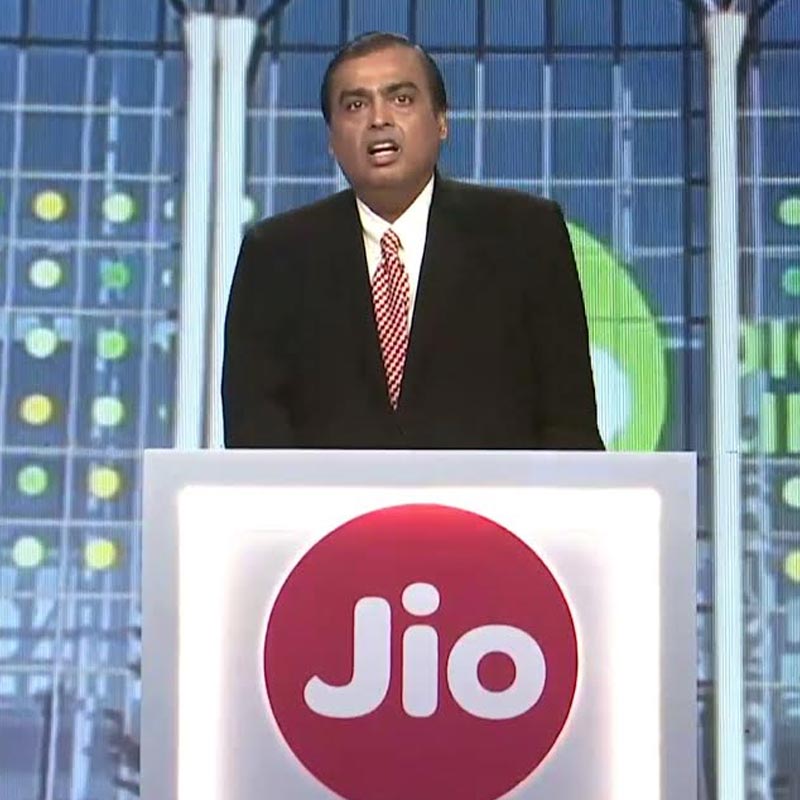
    MUMBAI: It promised a lot and it delivered. Reliance Industries Ltd’s 39th annual general meeting saw chairman Mukesh Ambani unveil the roadmap ahead for what is hoped will be the most significant change agent for India’s telecom, broadband business.

    Amongst the most significant was the announcement that it will be a voice-free-low data cost provider of 4G LTE services geared for video delivery.

    “All over the world operators charge for either data or voice. We have decided to make our voice services free and will never charge for it anytime now or in the future. Jio makes India the highest quality lowest data rates country in the world,” he said.

    While other telcos like Airtel, Vodafone, have been offering data plans at Rs 250 per GB, Ambani said Jio’s data plans will be delivered at Rs 50 per GB. “And these will go down the more data you consume,” he informed RIL’s enamoured and enthusiastic shareholders at Mumbai’s Biral Matushree Auditorium this morning. “Your apps and downloads can be happening when you sleep at night at no cost to you.”

    He also stated that data will be free on its 4G LTE network at night.

    Only 10 plans ranging from Rs 19 to 4999 offering free voice calls and 100 MB to 75 GB a month respectively are on offer. “There are more than 22,000 plans on offer across India from the various telcos. It’s very confusing for the consumer. We wanted to keep it simple – hence just 10 plans,” said Ambani.

    Reliance Jio says that it is looking at simplifying billing, sign ups to its services. “We have reengineered the sign up process to e-KYC and it will be linked to your Aadhar card. The process will take a customer 15 minutes and you will walk away with your active connection,” said Ambani.

    He also announced that subscription to Reliance Jio’s apps – valued at Rs 15,000 – was being given away to subscribers free until 31 December 2017 .

    Students would also have an offer which will provide them with 25 per cent more data at the same price. Ambani said Jio was in the process of connecting a majority of India’s schools and colleges so that students could have access to broadband wifi in their classrooms. The company was in the process of setting up a million wifi hot spots across the country.

    Ambani pointed out that Jio was being officially launched from 5 September 2016 with a welcome offer that all of Jio services will be available to Indians free until 31 December 2016. One of the reasons for this, he expressed, was that the company had been surprised by the way villagers had taken to the internet. And he wanted India’s rural heartlands to experience mobile broaband on 4G LTE for a few months.

  • Ambani unveils Jio launch, rollout and tariffs

    Ambani unveils Jio launch, rollout and tariffs

    MUMBAI: It promised a lot and it delivered. Reliance Industries Ltd’s 39th annual general meeting saw chairman Mukesh Ambani unveil the roadmap ahead for what is hoped will be the most significant change agent for India’s telecom, broadband business.

    Amongst the most significant was the announcement that it will be a voice-free-low data cost provider of 4G LTE services geared for video delivery.

    “All over the world operators charge for either data or voice. We have decided to make our voice services free and will never charge for it anytime now or in the future. Jio makes India the highest quality lowest data rates country in the world,” he said.

    While other telcos like Airtel, Vodafone, have been offering data plans at Rs 250 per GB, Ambani said Jio’s data plans will be delivered at Rs 50 per GB. “And these will go down the more data you consume,” he informed RIL’s enamoured and enthusiastic shareholders at Mumbai’s Biral Matushree Auditorium this morning. “Your apps and downloads can be happening when you sleep at night at no cost to you.”

    He also stated that data will be free on its 4G LTE network at night.

    Only 10 plans ranging from Rs 19 to 4999 offering free voice calls and 100 MB to 75 GB a month respectively are on offer. “There are more than 22,000 plans on offer across India from the various telcos. It’s very confusing for the consumer. We wanted to keep it simple – hence just 10 plans,” said Ambani.

    Reliance Jio says that it is looking at simplifying billing, sign ups to its services. “We have reengineered the sign up process to e-KYC and it will be linked to your Aadhar card. The process will take a customer 15 minutes and you will walk away with your active connection,” said Ambani.

    He also announced that subscription to Reliance Jio’s apps – valued at Rs 15,000 – was being given away to subscribers free until 31 December 2017 .

    Students would also have an offer which will provide them with 25 per cent more data at the same price. Ambani said Jio was in the process of connecting a majority of India’s schools and colleges so that students could have access to broadband wifi in their classrooms. The company was in the process of setting up a million wifi hot spots across the country.

    Ambani pointed out that Jio was being officially launched from 5 September 2016 with a welcome offer that all of Jio services will be available to Indians free until 31 December 2016. One of the reasons for this, he expressed, was that the company had been surprised by the way villagers had taken to the internet. And he wanted India’s rural heartlands to experience mobile broaband on 4G LTE for a few months.