Tag: Airtel

  • Consumers may get 60-day notice from unprofessional telcos

    Consumers may get 60-day notice from unprofessional telcos

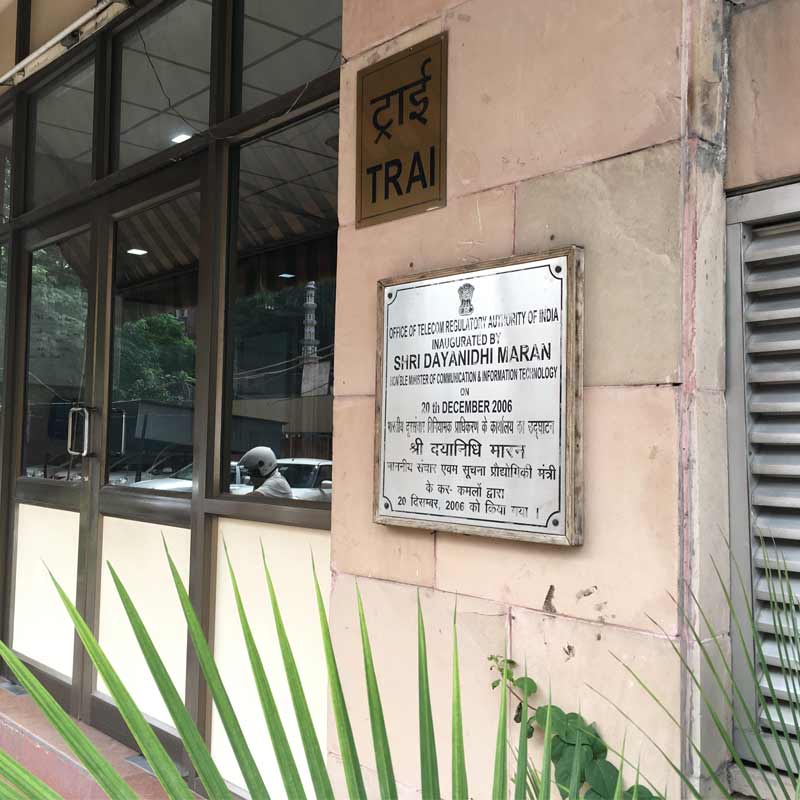
    MUMBAI: The latest consultation paper of the Telecom Regulatory Authority of India (TRAI) is about issues related to closure of mobile phone services. TRAI seeks to extend the time mobile users get to change their service-provider if a particular company is shutting shop or selling its spectrum.

    The paper titled ‘Closure of Access Service” will seek feedback from telecom eco-system stakeholders to set up a framework to give an extended time and more options to users facing termination of services. A licence coming to fruition or failure of the service provider to bag spectrum or spectrum trading are normally the reasons behind an entity shutting shop.

    TRAI took note of three significant instances. Reliance Communications stopped CDMA services and migrated to LTE. Airtel acquired spectrum from Aircel and Videocon through trading deals. In some cases, operators do not renew the spectrum and stop offering services in a particular area. Tata Docomo has lost subscribers due to such non-renewal.

    The paper follows complaints from the subscribers who said they did not receive adequate notice or communication from their service-provider and their mobile number was disconnected. If TRAI has its way, cell-phone users will get more time to change their company in such a case.

    A mobile user currently gets 30 days to change its service-provider but this has been found to be far less than expected. The law requires the company to give the department of telecommunications (DoT) a 60-day notice in such a scenario.

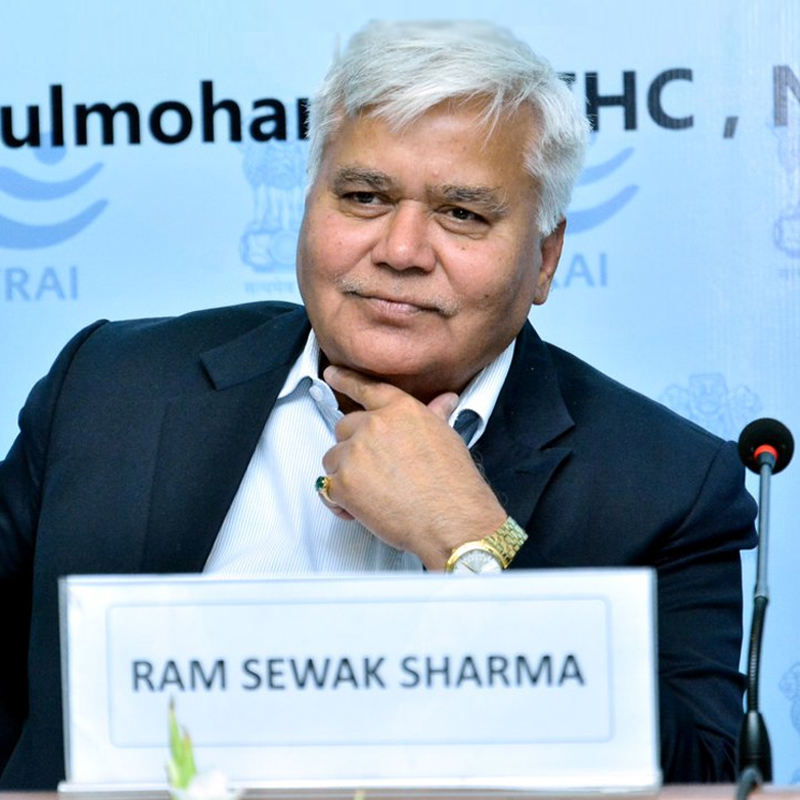
    India’s low broadband penetration is a matter of concern and the government needs to do a lot more work in the field to go up in the global ladder, TRAI chairperson RS Sharma said.

    Addressing Assocham summit, Sharma said that, according to an ITU paper, the penetration in India was only 7%. He said the report stated that India was even behind countries such as Singapore, Thailand and Malaysia.

    TRAI has recommended to the government on using cable television network for broadband delivery. In developed US and in Europe, around 50-60 per cent broadband comes from Digital Cable TV, he added.

    Foreign direct investment (FDI) attracted by the telecom sector in India meanwhile has jumped to more than US$10 billion in the first eight months of 2016-17 registering a 6-7 fold increase as compared to 2014-15 and 2015-16, telecom secretary JS Deepak said at the summit.

    Considering about 97% of population was covered by the 2G telecom network provided mostly by private telecom operators, there was a need to both popularise and simplify USSD (unstructured supplementary service data), he added. There was a need to work on a push USSD rather than a pull USSD, merchants should be able to push in a message to feature phone users where-in one just has to okay it for a transaction, he said.

  • Consumers may get 60-day notice from unprofessional telcos

    Consumers may get 60-day notice from unprofessional telcos

    MUMBAI: The latest consultation paper of the Telecom Regulatory Authority of India (TRAI) is about issues related to closure of mobile phone services. TRAI seeks to extend the time mobile users get to change their service-provider if a particular company is shutting shop or selling its spectrum.

    The paper titled ‘Closure of Access Service” will seek feedback from telecom eco-system stakeholders to set up a framework to give an extended time and more options to users facing termination of services. A licence coming to fruition or failure of the service provider to bag spectrum or spectrum trading are normally the reasons behind an entity shutting shop.

    TRAI took note of three significant instances. Reliance Communications stopped CDMA services and migrated to LTE. Airtel acquired spectrum from Aircel and Videocon through trading deals. In some cases, operators do not renew the spectrum and stop offering services in a particular area. Tata Docomo has lost subscribers due to such non-renewal.

    The paper follows complaints from the subscribers who said they did not receive adequate notice or communication from their service-provider and their mobile number was disconnected. If TRAI has its way, cell-phone users will get more time to change their company in such a case.

    A mobile user currently gets 30 days to change its service-provider but this has been found to be far less than expected. The law requires the company to give the department of telecommunications (DoT) a 60-day notice in such a scenario.

    India’s low broadband penetration is a matter of concern and the government needs to do a lot more work in the field to go up in the global ladder, TRAI chairperson RS Sharma said.

    Addressing Assocham summit, Sharma said that, according to an ITU paper, the penetration in India was only 7%. He said the report stated that India was even behind countries such as Singapore, Thailand and Malaysia.

    TRAI has recommended to the government on using cable television network for broadband delivery. In developed US and in Europe, around 50-60 per cent broadband comes from Digital Cable TV, he added.

    Foreign direct investment (FDI) attracted by the telecom sector in India meanwhile has jumped to more than US$10 billion in the first eight months of 2016-17 registering a 6-7 fold increase as compared to 2014-15 and 2015-16, telecom secretary JS Deepak said at the summit.

    Considering about 97% of population was covered by the 2G telecom network provided mostly by private telecom operators, there was a need to both popularise and simplify USSD (unstructured supplementary service data), he added. There was a need to work on a push USSD rather than a pull USSD, merchants should be able to push in a message to feature phone users where-in one just has to okay it for a transaction, he said.

  • Aug-16: ACT largest private wireline broadband player in South India?

    Aug-16: ACT largest private wireline broadband player in South India?

    BENGALURU: The wireline broadband internet (broadband) subscriber base in the country grew by 7.03 percent (by 11.6 lakh or 1.6 million) in the period between 31 December 2015 (Dec-15) or 1 January 2016 until 31 August 2016 (Aug-16), from 165.1 lakh to 176.7 lakh. In calendar year 2015, the growth rate had been higher at 7.77 percent. Telecom subscription data released by Telecom Regulatory Authority of India (TRAI) for Aug-16 reveals that the top five players’ growth was just 4 lakh new subscribers or 2.84 percent growth in the current calendar year until Aug-16 (CY-16).

    Leading the growth were private wired broadband players Bharti Airtel (Airtel) and regional player Atria Convergence Technologies Pvt Ltd (ACT) with additions of 2.4 lakh and 2.3 lakh subscriber additions respectively in CY-16 until Aug-16.Airtel’s wired broadband subscriber base grew 14.37 percent, while ACT’s base grew by 26.74 percent during the same period (CY-16 until Aug-16). In CY-15 (1 January 2015 to 31 December 2015), Airtel had added 2.6 lakh wired broadband subscribers and grown by 18.44 percent, while ACT added 2.5 lakh subscribers and had grown at a blazing 40.98 percent. Hence, by the end of 2016, the two players should add a lot more subscribers than they did in CY-15.

    While Airtel is a national level player, ACT is a regional player with operations in South India, hence probably making ACT the largest private wireline broadband player in South India. ACT has replaced the public sector Mahanagar Telecom Nigam Limited (MTNL) at third place, pushing the latter to fourth spot in Aug-16 in terms of number of subscribers.

    Another private player among the top five – You Broadband (You BB) has added 60,000 subscribers (11.76 percent growth) in the current year until Aug-16. The two public sector players have lost subscribers during the same period and hence dampened the subscriber growth rate among the top five wired broadband internet players.

    Among the 5 top wireline broadband internet players in India, the public sector telecom player Bharat Sanchar Nigam Limited (BSNL) leads by far with 98.4 lakh total number of wireline broadband subscribers as on Aug-16. However, BSNL has seen its broadband subscriber base shrink by 80,000 in CY-16 until Aug-16. The largest private sector wireline broadband internet services player Airtel had 19.1 lakh subscribers as on 31 August 2016, ACT with 10.9 lakh subscribers was next and was followed by another public sector player – Mahanagar Telephone Nigam Limited (MTNL) with 10.7 lakh subscribers. You Broadband (You BB) with 5.6 lakh subscribers was the fifth. MTNL has also seen a reduction of 50,000 subscribers in CY-16. Please refer to Fig 1 below for wireline subscriber data in CY-16 until Aug-16.

    As mentioned above, the top five players have had a slower rate of growth as compared to the all India growth in CY-16 until Aug-16. The share of the top five players among all India wired broadband subscriber addition has fallen in CY-16 from 85.28 percent as on 1 January 2016 to 81.95 percent as on 31 August 2016. The share of these players was 88.45 percent as on 1 January 2015.

    public://Untitled-2_4.jpg

    Among these 5, only BSNL and Airtel could be termed as national players at present. BSNL, Airtel and MTNL also provide wireline telephony voice and data and mobile services while Airtel also has a direct to home (DTH) segment. ACT started off as an MSO with operations concentrated in a few major cities and towns located mainly in South India. It started internet services (ACT Broadband) a little later and has grown its broadband internet subscriber base over time through organic as well as acquisition growth, to the extent that it is quite likely the biggest private wireline broadband player in South India. You BB offers broadband operations in a few cities in Maharashtra, Gujarat, the NCR region Andhra Pradesh and Karnataka.

    Month-on-month (m-o-m), the all India wired broadband subscriber base witnessed the second highest growth in CY-16 until Aug-16 at 1.03 percent. The top 5 players had a growth of 0.28 percent during the same period. Please refer to figure 2 below.

    public://Untitled-2_5.jpg

    Other wireline broadband players in India

    MSOs’ in India have started providing internet services on the back of their television cable networks using DOCSIS technology. In general, they have started reporting double and triple digit year-over-year (y-o-y) increase in internet subscribers and revenue. The television cable players see broadband services improving their Average Revenue per User (ARPU) numbers. Three of the major MSOs and a regional MSO – Hathway, Siti Networks Limited, Den Networks Limited , Ortel CommunicationsLimited respectively whose results are available in the public domain have been showing steady growth in their broadband segment over the past few quarters.

    Among the MSOs’ (besides ACT), Hathway has shown the highest subscriber additions in the year. Its consolidated broadband subscription revenue as per IND AS for the quarter ended 31 September 2016 (Q2-17) at Rs 120.3 crore (37.5 percent of Total Income from Operations or TIO) was higher than its consolidated CATV subscription revenue of Rs110.4 crore (34.4 percent of TIO). Its consolidated broadband revenue in Q2-17 quarter as per IND AS increased 67 percent y-o-y.

    Hathway’sconsolidated broadband subscriber base increased to 8 lakh in Q2-17 from 7 lakh in the immediate trailing quarter (Q1-17). Broadband ARPU in the current quarter increased to Rs 643 from Rs 616 in the corresponding quarter of the previous year, but declined from Rs 670 in the immediate trailing quarter.

    Siti Networks broadband revenue increased 167.7 percent y-o-y (more than doubled) to Rs 24.9 crore (8.6 percent of TIO) in Q2-17 from Rs 9.3 crore (4 percent of TIO) in Q2-16.Siti has added about 28,000 subscribers in Q2-17 taking its subscriber base to 195,000 from 167,000 subscribers in Q1-17. It had a broadband subscriber base of 91,450 in Q2-16.

    Overall broadband subscriber numbers for August 2016 including wireless and mobile

    Overall, as per the reports received by TRAI from the service providers, the number ofbroadband subscribers (including wireless, mobile, dongles) grew 4.75million  or 47.5 lakh to 17.171 million (17.171 crore) in Aug-16 from 166.96 million (16.696 crore) inJul-16. Wireless broadband subscriber numbers that use mobiles and dongles for internet access have increased m-o-m by 3.01 percent in Aug-16 to 153.45 million (15.345 crore) from 148.93 million (14.893 crore) in Jul-16. Fixed wireless subscribers that access the internet through Wi-Fi, Wi-Max, Point-to-point radio and VSAT have increased 8.65 percent in Aug-16 to to0.59 million (5.4 lkh) from 0.54 million in Jul-16.

    The top five service providers constituted 85.16 percent (84.83 percent in Jul-16)market share of the totalbroadband subscribers at the end of Aug-16. These service providerswere Bharti Airtel (45.35 million or 4.535 crore), Vodafone (35.01 million or 3.501 crore), Idea Cellular(29.58 million 2.958 crore), BSNL (21.04 million 2.104 crore) and Reliance Communications Group (15.24 million 1.524 crore).

    Decline in telephone subscribers in August 2016

    It must however be noted that the total wireless subscriber basedeclined from 1,034.23 million (103.423 crore) at the endof Jul-16 to 1,028.88 million (102.888 crore) at the end ofAug-16, thereby registering a monthlydecline rate of 0.52 percent. Wireless subscription in urban areas declinedfrom 589.61 million (58.961 crore) at the end of Jul-16to 585.89 million (58.589 crore) at the end of Aug-16,and wireless subscription in rural areasdeclined from 444.63 million  (44.463 crore) to 442.99million (44.299 crore) during the same period. Themonthly decline rates of urban and ruralwireless subscription were 0.63 percent and0.37 percent respectively.

    The overall wireless tele-density in Indiadeclined from 81.11 at the end of Jul-16to 80.62 at the end of Aug-16. The urban wireless tele-density declinedfrom 148.00 at the end of Jul-16 to146.84 at the end of Aug-16, and rural wireless tele-density also declined from 50.72 to 50.50 during the same period.The share of urban and rural wirelesssubscribers in total number of wirelesssubscribers was 56.94 percent and 43.06 percent respectively at the end of Aug-16.

    TRAI’s definition of broadband is internet download speeds greater than or equal to 512 Kpbs.

    Notes:(1) The unit of currency in this report is the Indian rupee – Rs (also conventionally represented by INR).The Indian numbering system or the Vedic numbering system has been used to denote money values. The basic conversion to the international norm would be:
    (a) 100,00,000 = 100 lakh = 10,000,000 = 10 million = 1 crore.
    (b) 10,000 lakh = 100 crore = 1 arab = 1 billion.

    (2) TRAI reports indicate data in millions of numbers up to 2 decimal places. Hence it is assumed in this report that a figure of 0.51 million (5.1 lakh) subscribers for You BB for Dec-2015 would be granular to the nearest 10,000. While percentages have been mentioned up to two decimal places, the accuracy may vary, depending upon the exact number.
    (3) MSOs’ have a number of subsidiaries and alliances, hence broadband numbers are split as applicable. The consolidated subscription numbers of these entities could be larger. Hathway is a case in point.
  • Aug-16: ACT largest private wireline broadband player in South India?

    Aug-16: ACT largest private wireline broadband player in South India?

    BENGALURU: The wireline broadband internet (broadband) subscriber base in the country grew by 7.03 percent (by 11.6 lakh or 1.6 million) in the period between 31 December 2015 (Dec-15) or 1 January 2016 until 31 August 2016 (Aug-16), from 165.1 lakh to 176.7 lakh. In calendar year 2015, the growth rate had been higher at 7.77 percent. Telecom subscription data released by Telecom Regulatory Authority of India (TRAI) for Aug-16 reveals that the top five players’ growth was just 4 lakh new subscribers or 2.84 percent growth in the current calendar year until Aug-16 (CY-16).

    Leading the growth were private wired broadband players Bharti Airtel (Airtel) and regional player Atria Convergence Technologies Pvt Ltd (ACT) with additions of 2.4 lakh and 2.3 lakh subscriber additions respectively in CY-16 until Aug-16.Airtel’s wired broadband subscriber base grew 14.37 percent, while ACT’s base grew by 26.74 percent during the same period (CY-16 until Aug-16). In CY-15 (1 January 2015 to 31 December 2015), Airtel had added 2.6 lakh wired broadband subscribers and grown by 18.44 percent, while ACT added 2.5 lakh subscribers and had grown at a blazing 40.98 percent. Hence, by the end of 2016, the two players should add a lot more subscribers than they did in CY-15.

    While Airtel is a national level player, ACT is a regional player with operations in South India, hence probably making ACT the largest private wireline broadband player in South India. ACT has replaced the public sector Mahanagar Telecom Nigam Limited (MTNL) at third place, pushing the latter to fourth spot in Aug-16 in terms of number of subscribers.

    Another private player among the top five – You Broadband (You BB) has added 60,000 subscribers (11.76 percent growth) in the current year until Aug-16. The two public sector players have lost subscribers during the same period and hence dampened the subscriber growth rate among the top five wired broadband internet players.

    Among the 5 top wireline broadband internet players in India, the public sector telecom player Bharat Sanchar Nigam Limited (BSNL) leads by far with 98.4 lakh total number of wireline broadband subscribers as on Aug-16. However, BSNL has seen its broadband subscriber base shrink by 80,000 in CY-16 until Aug-16. The largest private sector wireline broadband internet services player Airtel had 19.1 lakh subscribers as on 31 August 2016, ACT with 10.9 lakh subscribers was next and was followed by another public sector player – Mahanagar Telephone Nigam Limited (MTNL) with 10.7 lakh subscribers. You Broadband (You BB) with 5.6 lakh subscribers was the fifth. MTNL has also seen a reduction of 50,000 subscribers in CY-16. Please refer to Fig 1 below for wireline subscriber data in CY-16 until Aug-16.

    As mentioned above, the top five players have had a slower rate of growth as compared to the all India growth in CY-16 until Aug-16. The share of the top five players among all India wired broadband subscriber addition has fallen in CY-16 from 85.28 percent as on 1 January 2016 to 81.95 percent as on 31 August 2016. The share of these players was 88.45 percent as on 1 January 2015.

    public://Untitled-2_4.jpg

    Among these 5, only BSNL and Airtel could be termed as national players at present. BSNL, Airtel and MTNL also provide wireline telephony voice and data and mobile services while Airtel also has a direct to home (DTH) segment. ACT started off as an MSO with operations concentrated in a few major cities and towns located mainly in South India. It started internet services (ACT Broadband) a little later and has grown its broadband internet subscriber base over time through organic as well as acquisition growth, to the extent that it is quite likely the biggest private wireline broadband player in South India. You BB offers broadband operations in a few cities in Maharashtra, Gujarat, the NCR region Andhra Pradesh and Karnataka.

    Month-on-month (m-o-m), the all India wired broadband subscriber base witnessed the second highest growth in CY-16 until Aug-16 at 1.03 percent. The top 5 players had a growth of 0.28 percent during the same period. Please refer to figure 2 below.

    public://Untitled-2_5.jpg

    Other wireline broadband players in India

    MSOs’ in India have started providing internet services on the back of their television cable networks using DOCSIS technology. In general, they have started reporting double and triple digit year-over-year (y-o-y) increase in internet subscribers and revenue. The television cable players see broadband services improving their Average Revenue per User (ARPU) numbers. Three of the major MSOs and a regional MSO – Hathway, Siti Networks Limited, Den Networks Limited , Ortel CommunicationsLimited respectively whose results are available in the public domain have been showing steady growth in their broadband segment over the past few quarters.

    Among the MSOs’ (besides ACT), Hathway has shown the highest subscriber additions in the year. Its consolidated broadband subscription revenue as per IND AS for the quarter ended 31 September 2016 (Q2-17) at Rs 120.3 crore (37.5 percent of Total Income from Operations or TIO) was higher than its consolidated CATV subscription revenue of Rs110.4 crore (34.4 percent of TIO). Its consolidated broadband revenue in Q2-17 quarter as per IND AS increased 67 percent y-o-y.

    Hathway’sconsolidated broadband subscriber base increased to 8 lakh in Q2-17 from 7 lakh in the immediate trailing quarter (Q1-17). Broadband ARPU in the current quarter increased to Rs 643 from Rs 616 in the corresponding quarter of the previous year, but declined from Rs 670 in the immediate trailing quarter.

    Siti Networks broadband revenue increased 167.7 percent y-o-y (more than doubled) to Rs 24.9 crore (8.6 percent of TIO) in Q2-17 from Rs 9.3 crore (4 percent of TIO) in Q2-16.Siti has added about 28,000 subscribers in Q2-17 taking its subscriber base to 195,000 from 167,000 subscribers in Q1-17. It had a broadband subscriber base of 91,450 in Q2-16.

    Overall broadband subscriber numbers for August 2016 including wireless and mobile

    Overall, as per the reports received by TRAI from the service providers, the number ofbroadband subscribers (including wireless, mobile, dongles) grew 4.75million  or 47.5 lakh to 17.171 million (17.171 crore) in Aug-16 from 166.96 million (16.696 crore) inJul-16. Wireless broadband subscriber numbers that use mobiles and dongles for internet access have increased m-o-m by 3.01 percent in Aug-16 to 153.45 million (15.345 crore) from 148.93 million (14.893 crore) in Jul-16. Fixed wireless subscribers that access the internet through Wi-Fi, Wi-Max, Point-to-point radio and VSAT have increased 8.65 percent in Aug-16 to to0.59 million (5.4 lkh) from 0.54 million in Jul-16.

    The top five service providers constituted 85.16 percent (84.83 percent in Jul-16)market share of the totalbroadband subscribers at the end of Aug-16. These service providerswere Bharti Airtel (45.35 million or 4.535 crore), Vodafone (35.01 million or 3.501 crore), Idea Cellular(29.58 million 2.958 crore), BSNL (21.04 million 2.104 crore) and Reliance Communications Group (15.24 million 1.524 crore).

    Decline in telephone subscribers in August 2016

    It must however be noted that the total wireless subscriber basedeclined from 1,034.23 million (103.423 crore) at the endof Jul-16 to 1,028.88 million (102.888 crore) at the end ofAug-16, thereby registering a monthlydecline rate of 0.52 percent. Wireless subscription in urban areas declinedfrom 589.61 million (58.961 crore) at the end of Jul-16to 585.89 million (58.589 crore) at the end of Aug-16,and wireless subscription in rural areasdeclined from 444.63 million  (44.463 crore) to 442.99million (44.299 crore) during the same period. Themonthly decline rates of urban and ruralwireless subscription were 0.63 percent and0.37 percent respectively.

    The overall wireless tele-density in Indiadeclined from 81.11 at the end of Jul-16to 80.62 at the end of Aug-16. The urban wireless tele-density declinedfrom 148.00 at the end of Jul-16 to146.84 at the end of Aug-16, and rural wireless tele-density also declined from 50.72 to 50.50 during the same period.The share of urban and rural wirelesssubscribers in total number of wirelesssubscribers was 56.94 percent and 43.06 percent respectively at the end of Aug-16.

    TRAI’s definition of broadband is internet download speeds greater than or equal to 512 Kpbs.

    Notes:(1) The unit of currency in this report is the Indian rupee – Rs (also conventionally represented by INR).The Indian numbering system or the Vedic numbering system has been used to denote money values. The basic conversion to the international norm would be:
    (a) 100,00,000 = 100 lakh = 10,000,000 = 10 million = 1 crore.
    (b) 10,000 lakh = 100 crore = 1 arab = 1 billion.

    (2) TRAI reports indicate data in millions of numbers up to 2 decimal places. Hence it is assumed in this report that a figure of 0.51 million (5.1 lakh) subscribers for You BB for Dec-2015 would be granular to the nearest 10,000. While percentages have been mentioned up to two decimal places, the accuracy may vary, depending upon the exact number.
    (3) MSOs’ have a number of subsidiaries and alliances, hence broadband numbers are split as applicable. The consolidated subscription numbers of these entities could be larger. Hathway is a case in point.

  • TRAI’s CDR idea rejected; Govt to look into Rs 3050 cr penalty

    TRAI’s CDR idea rejected; Govt to look into Rs 3050 cr penalty

    MUMBAI: The telecom ministry has formed a committee to look into TRAI’s penalty suggestion on Vodafone, Airtel and Idea as they allegedly failed to provide sufficient inter-connect points (PoI) to Reliance Jio, leading to severe call drops.

    Telecom operators across GSM and CDMA platforms meantime turned down TRAI’s recommendation of computing call drop rates through a meta data analysis of CDRs (call detail records). This, TRAI asserted, has been designed for billing purpose only, and not for checking quality of service. Such an analysis, the operators said, would project a flawed picture as abnormal call disconnects/terminations could be triggered by handsets getting turned off due to other errors, or due to battery draining out or a subscriber moving to an underground building or a station.

    Cellular Operators Association of India (COAI) represented the operators, the Economic Times reported.

    On the the hand, the union telecom minister Manoj Sinha said the ministry has formed the committee to look into the regulator’s recommendation on the proposed Rs 3,050 crore penalty, Business Standard reported. Last month, the regulator had proposed the penalty on the three telcos.

    Lately however Reliance Jio has been allegedly limiting all voice calls to 30 minutes. As a part of Jio’s free Welcome Offer, users were allowed unlimited voice calls. However, lately, the calls were being abruptly disconnected after a duration of 30 minutes, which is not an isolated case.

    The regulator had earlier sent a letter to the Department of Telecommunications recommending a charge of Rs 50 crore per circle for 21 service areas, except for Jammu & Kashmir, for Airtel and Vodafone. For Idea Cellular, TRAI suggested penalty for 19 circles.

    At the meeting of BRICS Ministers of Communications, Sinha said that the committee would give its considerations on the TRAI suggestion.

    The regulator’s suggestion came after Reliance Jio complained that more than 75 per cent of the calls on its network were dropping since the incumbent operators were not giving sufficient PoIs. The regulator stated that the incumbents went “against public interest.”

  • TRAI’s CDR idea rejected; Govt to look into Rs 3050 cr penalty

    TRAI’s CDR idea rejected; Govt to look into Rs 3050 cr penalty

    MUMBAI: The telecom ministry has formed a committee to look into TRAI’s penalty suggestion on Vodafone, Airtel and Idea as they allegedly failed to provide sufficient inter-connect points (PoI) to Reliance Jio, leading to severe call drops.

    Telecom operators across GSM and CDMA platforms meantime turned down TRAI’s recommendation of computing call drop rates through a meta data analysis of CDRs (call detail records). This, TRAI asserted, has been designed for billing purpose only, and not for checking quality of service. Such an analysis, the operators said, would project a flawed picture as abnormal call disconnects/terminations could be triggered by handsets getting turned off due to other errors, or due to battery draining out or a subscriber moving to an underground building or a station.

    Cellular Operators Association of India (COAI) represented the operators, the Economic Times reported.

    On the the hand, the union telecom minister Manoj Sinha said the ministry has formed the committee to look into the regulator’s recommendation on the proposed Rs 3,050 crore penalty, Business Standard reported. Last month, the regulator had proposed the penalty on the three telcos.

    Lately however Reliance Jio has been allegedly limiting all voice calls to 30 minutes. As a part of Jio’s free Welcome Offer, users were allowed unlimited voice calls. However, lately, the calls were being abruptly disconnected after a duration of 30 minutes, which is not an isolated case.

    The regulator had earlier sent a letter to the Department of Telecommunications recommending a charge of Rs 50 crore per circle for 21 service areas, except for Jammu & Kashmir, for Airtel and Vodafone. For Idea Cellular, TRAI suggested penalty for 19 circles.

    At the meeting of BRICS Ministers of Communications, Sinha said that the committee would give its considerations on the TRAI suggestion.

    The regulator’s suggestion came after Reliance Jio complained that more than 75 per cent of the calls on its network were dropping since the incumbent operators were not giving sufficient PoIs. The regulator stated that the incumbents went “against public interest.”

  • India poised to emerge as lucrative market for UHD STBs

    India poised to emerge as lucrative market for UHD STBs

    MUMBAI: The growing inclination of people towards ultra-high definition video viewing can be attributed as a major reason for the 4K Set-Top Box’s (STB) market growth. According to a report by Grand View research, the global 4K STB market size is projected to reach US$7.18 billion by 2024.

    The demand for media-rich home entertainment services among consumers is increasing and is anticipated to fuel market growth. Improved standard of living owing to increased purchasing power is positively impacting the industry growth. The growth is further fostered by favorable government initiatives, large-scale digitization programs, and mandatory installation of set top boxes.

    Valued at at over US$ 50 million in 2015, the is projected to witness high growth over the next eight years, especially in countries such as Korea, Taiwan, and China.

    India is poised to emerge as a lucrative market for UHD STBs with the country expected to witness a CAGR substantially higher than the regional average. DTH operators like Tata Sky, Videocon, Airtel, etc have launched UHD STBs and are attempting to achieve a higher rural penetration with affordable regional packages.

    The increasing penetration of 3D and 4K TVs and escalating demand for large screen displays are fueling the demand for Ultra High-Definition (UHD) STBs. Smart features such as STB operability through voice commands given by Remote Control Unit (RCU) is garnering high potential.

    Internet Protocol Television (IPTV) 4K STBs accounted for over 20 per cent of the market share in 2015 and are expected to witness considerable growth over the forecast period. Increasing broadband penetration can be attributed as the major reason for the rise in the market share of IPTV 4K Set-top Box devices. The IPTV set top box product segment is projected to gain traction owing to benefits such as integration of TV, PC, home phone, and wireless devices offering a high quality of viewing experience to the end-users.

    Key industry participants include ZTE Corporation, SAGEMCOM, Arion Technology, Roku Inc., and Infomir LLC. Manufacturers are emphasizing on UHD STBs incorporated with interactive 4K content to gain a competitive edge in the industry.

    Technology giants such as Apple Inc. have managed to make their mark in this competitive industry. The Apple TV device aids the streaming of OTT content and other videos over the internet. The launch of advanced OTT devices such as Google Inc.’s Chromecast media streaming device and Amazon’s Fire TV STBs have opened up new avenues in the industry.

  • India poised to emerge as lucrative market for UHD STBs

    India poised to emerge as lucrative market for UHD STBs

    MUMBAI: The growing inclination of people towards ultra-high definition video viewing can be attributed as a major reason for the 4K Set-Top Box’s (STB) market growth. According to a report by Grand View research, the global 4K STB market size is projected to reach US$7.18 billion by 2024.

    The demand for media-rich home entertainment services among consumers is increasing and is anticipated to fuel market growth. Improved standard of living owing to increased purchasing power is positively impacting the industry growth. The growth is further fostered by favorable government initiatives, large-scale digitization programs, and mandatory installation of set top boxes.

    Valued at at over US$ 50 million in 2015, the is projected to witness high growth over the next eight years, especially in countries such as Korea, Taiwan, and China.

    India is poised to emerge as a lucrative market for UHD STBs with the country expected to witness a CAGR substantially higher than the regional average. DTH operators like Tata Sky, Videocon, Airtel, etc have launched UHD STBs and are attempting to achieve a higher rural penetration with affordable regional packages.

    The increasing penetration of 3D and 4K TVs and escalating demand for large screen displays are fueling the demand for Ultra High-Definition (UHD) STBs. Smart features such as STB operability through voice commands given by Remote Control Unit (RCU) is garnering high potential.

    Internet Protocol Television (IPTV) 4K STBs accounted for over 20 per cent of the market share in 2015 and are expected to witness considerable growth over the forecast period. Increasing broadband penetration can be attributed as the major reason for the rise in the market share of IPTV 4K Set-top Box devices. The IPTV set top box product segment is projected to gain traction owing to benefits such as integration of TV, PC, home phone, and wireless devices offering a high quality of viewing experience to the end-users.

    Key industry participants include ZTE Corporation, SAGEMCOM, Arion Technology, Roku Inc., and Infomir LLC. Manufacturers are emphasizing on UHD STBs incorporated with interactive 4K content to gain a competitive edge in the industry.

    Technology giants such as Apple Inc. have managed to make their mark in this competitive industry. The Apple TV device aids the streaming of OTT content and other videos over the internet. The launch of advanced OTT devices such as Google Inc.’s Chromecast media streaming device and Amazon’s Fire TV STBs have opened up new avenues in the industry.