Tag: Airtel

  • Sujay Ray rises up the ranks at L’Oréal India as CX champ with content crown

    Sujay Ray rises up the ranks at L’Oréal India as CX champ with content crown

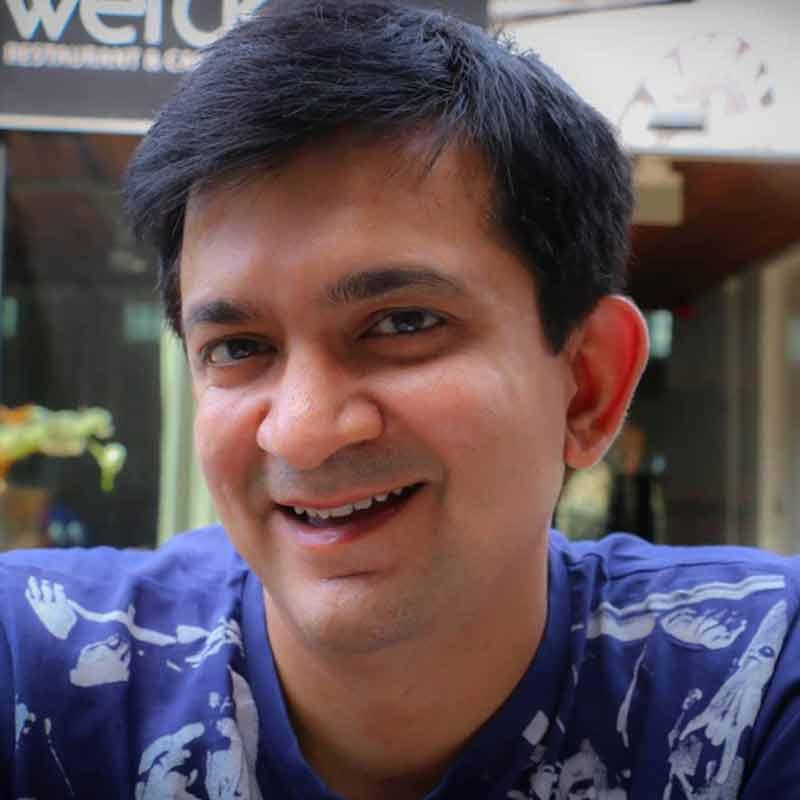
    MUMBAI: From spritzing Axe campaigns in Manila to stirring up Mauka Mauka magic back home, Sujay Ray’s marketing playbook has always mixed brains, buzz and bold moves. Now, the man with the digital Midas touch has levelled up at L’Oréal India.

    After a high-glam 3.5-year stint as chief digital officer for the Professional Products Division (PPD), Sujay has been handpicked to lead consumer experience, content and advocacy across L’Oréal’s multi-division powerhouse under the CDMO team.

    In May 2021, when the opportunity first came knocking, Sujay famously joked about being the “devil in beauty land.” 

    But that devil’s now wearing Prada —and steering everything from D2C & B2B strategies to DDX, CARE and CX. He credits the rise to strong leadership, a rockstar team, and partners who brought the glow-up.

    Before the world of shampoos and serums, Sujay was media royalty—scripting iconic digital runs at Star Sports (remember #LePanga?), AB InBev, Airtel and Mindshare. He’s sold sports, beer, bandwidth and even deodorants. And let’s not forget his early innings at ET and TimesJobs.com, where the pixels were as powerful as the prose.

    With this new move, Sujay’s mission is simple: craft experiences that don’t just sell beauty, but feel beautiful. 

    As L’Oréal doubles down on consumer-first innovation, expect Ray’s roadmap to deliver more punch than a Pro-Kabaddi slam. #OnwardsAndUpwards indeed.

  • Indian mobile count goes up as does broadband: TRAI data Jan 2025

    Indian mobile count goes up as does broadband: TRAI data Jan 2025

    MUMBAI: India’s telecom sector added a modest 2.1 million net subscribers in January 2025, nudging the total count to 1.19 billion, according to the Telecom Regulatory Authority of India’s monthly data release. But it wasn’t all smooth signal—wireline connections tanked, dropping over 10 per cent as TRAI shifted 5G Fixed Wireless Access (FWA) from wired to wireless accounting.

    Mobile still rules the roost, with 1.16 billion users riding the wireless wave, including 5.7 million FWA users. Urban India continued to drive growth, adding over 5 million new mobile connections. Meanwhile, rural areas quietly chipped in with just under a million more.

    Broadband subscriptions inched up 0.04 per cent to 945.16 million—an uninspiring climb, considering Reliance Jio and Bharti Airtel hold over 80 per cent of the market. Wireline broadband, meanwhile, shrank slightly as users cut the cord in favour of FWA.
    MARKETSHAREDATAMobile Number Portability (MNP) remained red-hot with 14.14 million requests in Jan alone—pushing the all-time tally past 1.09 billion. Uttar Pradesh (East) and Maharashtra topped the charts for most switched loyalties.
    The market remains firmly in private hands, with Jio and Airtel leading across broadband and mobile. 

    Government-owned players like BSNL and MTNL continue to struggle, holding just 8 per cent of wireless subscribers and less than a quarter of the wireline market.

    Tele-density stood at 84.54 per cent—Delhi being the most connected with an eye-popping 274 per cent, while Bihar lagged behind at 56.6 per cent.

    And while fixed lines may be flatlining, India’s telecom story continues to be a mostly wireless wonder.

  • Airtel and Blinkit team up for 10-minute SIM delivery, KYC in your home

    Airtel and Blinkit team up for 10-minute SIM delivery, KYC in your home

    MUMBAI: Bharti Airtel and Blinkit have cooked up a speedy new service, delivering SIM cards to customers’ doorsteps in a mere 10 minutes. This ground breaking partnership, a first for any Indian telco, is now live in 16 cities, promising to get customers  connected quicker than a rabbit out of a hat.

    “Simplifying customer lives is central to everything we do at Airtel.Today we are thrilled to partner with Blinkit for 10-minute SIM card delivery to customers’ homes across 16 cities and in due course of time we plan to expand this partnership to additional cities.” declared Airtel CEO Siddharth Sharma, CEO – connected homes and director of marketing, Airtel.

    For a paltry Rs 49 convenience fee, customers can choose between prepaid or post paid plans, or even port their existing number to Airtel. Once the SIM arrives, a quick Aadhaar-based KYC process gets them up and running, all from the comfort of their own homes.

    “To save customers time and hassle, we’ve collaborated with Airtel to deliver SIM cards directly to customers in select cities, with delivery in just 10 minutes. Blinkit takes care of the delivery, while Airtel makes it easy for customers to complete self-KYC, activate their SIM, and choose between prepaid or post paid plans. Customers can also opt for number portability, all at their convenience,” said Blinkit founder & CEO Albinder Dhindsa.”No more queuing in shops, no more waiting around. We deliver the SIM, and Airtel handles the self-KYC. It’s a win-win.”

    The service is currently available in major cities like Delhi, Mumbai, and Bangalore, with plans to expand further. And if customers get stuck, Airtel’s help centre is just a tap away on the Airtel Thanks App, or a quick call to the support line. But, they better be quick, the SIM needs to be activated within 15 days.

  • Indian households embrace the telecom multiplay game

    Indian households embrace the telecom multiplay game

    MUMBAI: India’s appetite for bundled telecoms services shows no signs of slowing, with multiplay service revenue expected to waltz from $2.4bn in 2024 to a handsome $3bn by 2029, growing at a steady 4.2 per cent annually, according to analytics firm GlobalData.

    The country’s telecoms operators are engaged in a fierce tango for customers, laying fibre-optic cables faster than monsoon flooding as they tempt households with bundled services that promise both convenience and cost savings.

    Double-play packages—typically pairing broadband with unlimited voice calls—currently dominate the landscape, accounting for a hefty 78.4 per cent of multiplay subscriptions. Triple-play bundles trail at 12.2 per cent, with the premium quad-play offerings taking a modest 9.4 per cent slice of the pie.

    “Double-play services is currently the largest multiplay service category,” notes Sarwat Zeeshan, telecom analyst at GlobalData. “All major operators—Airtel, Jio and BSNL—are bundling unlimited telephony along with their basic fibre broadband plans.”

    Reliance Jio, for instance, offers unlimited calls along with unlimited data at speeds up to 30Mbps for a mere Rs 399 monthly—a proposition that has helped it shimmy into market leadership.

    While double-play will maintain its dominant position through 2029, triple-play subscriptions are expected to fox-trot ahead at a sprightly 16.6 per cent annually. Operators are wooing India’s vast pay-TV audience with packages that marry television, broadband and voice services, often throwing in access to streaming platforms as a  bonus.

    Bharti Airtel’s Rs 699 “Black” plan exemplifies this trend, bundling fibre broadband with television channels worth Rs 260, subscriptions to more than 18 streaming apps, and unlimited landline calls—a veritable smorgasbord of digital delights.

    In this high-stakes dance of telecommunications, Reliance Jio currently leads the pack, with Bharti Airtel following closely behind. Jio’s dominance stems largely from its extensive fibre network, which allows it to transition customers to bundled services with the smoothness of a well-rehearsed ballroom routine.

    As India’s digital transformation continues its merry jig, the multiplay market appears poised for a lively performance in the years ahead.

  • Dhruv Dhawan checks in at The Trade Desk to power adtech growth in India

    Dhruv Dhawan checks in at The Trade Desk to power adtech growth in India

    MUMBAI: In a move that’s set to make waves in the adtech space, Dhruv Dhawan is joining The Trade Desk as vice president for revenue. With over two decades of expertise spanning communications, digital transformation, and consulting, Dhawan’s appointment signals a strategic push to strengthen The Trade Desk’s position in the Indian market.

    From Google to Disney+ Hotstar, Airtel to Accenture, Dhawan’s career has been a masterclass in building brands, driving sales, and shaping digital-first strategies. At Google, where he spent nearly a decade, Dhawan worked across multiple industries including telecom, financial services, FMCG, automotive, e-commerce, and retail helping businesses leverage digital tools for both online and offline growth. His most recent role as head of ads at Disney+ Hotstar saw him navigating the rapidly evolving streaming landscape, further solidifying his expertise in media and advertising.

    Beyond his industry credentials, Dhawan is also known for his passion for people development, having spearheaded sales training initiatives and workplace culture programmes focused on psychological safety and team dependability. His diverse skill set spanning product management, marketing, and consulting makes him a formidable addition to The Trade Desk’s leadership team.

    With programmatic advertising in India witnessing unprecedented growth, Dhawan’s appointment comes at a pivotal time. His vast experience in ad sales, digital evangelism, and data-driven marketing will be instrumental in driving revenue growth, forging new partnerships, and further establishing The Trade Desk as a leader in the adtech ecosystem.

  • Airtel signs up with SpaceX to bring Starlink services to India

    Airtel signs up with SpaceX to bring Starlink services to India

    MUMBAI; In a dramatic move set to shake up India’s telecommunications landscape, Airtel has today inked an agreement with Elon Musk’s SpaceX to bring Starlink’s lightning-fast internet services to the subcontinent.
    The landmark deal—the first of its kind in India—hinges on SpaceX securing regulatory approvals  to peddle Starlink services in the country. Once green-lit, the partnership promises to dramatically expand high-speed connectivity to even the most far-flung corners of India.

    Under the ambitious arrangement, Airtel shops could soon display Starlink equipment, whilst the telecom giant will offer Starlink services to its business customers. The collaboration aims to connect remote communities, schools and health centres currently languishing in digital darkness.

    Airtel and SpaceX will also explore how Starlink could help expand and enhance the Airtel network, as well as SpaceX’s ability to utilise and benefit from Airtel’s ground network infrastructure and other capabilities in India.

    Airtel managing director Gopal Vittal  hailed the partnership as a “significant milestone” in the company’s quest to deliver “world-class high-speed broadband to even the most remote parts of India.”

    “This collaboration enhances our ability to ensure that every individual, business, and community has reliable internet,” Vittal declared. “Starlink will complement and enhance Airtel’s suite of products to ensure reliable and affordable broadband for our Indian customers—wherever they live and work.”

    “Technology is always evolving and we’re committed to staying at the forefront of innovation so that we can continue to bring the best connectivity experience for our customers. This includes collaborating with global leaders like SpaceX to extend our reach and add new coverage to customers throughout all of India.”

    SpaceX’s President Gwynne Shotwell matched Vittal’s enthusiasm, stating: “We are excited to work with Airtel and unlock the transformative impact Starlink can bring to the people of India. We are constantly amazed by the incredible and inspiring things that people, businesses and organizations do when they are connected via Starlink. The team at Airtel has played a pivotal role in India’s telecom story, so working with them to complement our direct offering makes great sense for our business.”

    The deal represents a clever strategic move for Airtel, which already boasts over 550 million customers across 15 countries. By adding Starlink to its portfolio alongside existing partner Eutelsat OneWeb, Airtel strengthens its position as India’s largest integrated communications solutions provider.

    Starlink, which operates the world’s first and largest low Earth orbit satellite constellation, delivers broadband internet capable of supporting streaming, gaming and video calls to users worldwide. The service is engineered and operated by SpaceX, the world’s leading rocket launch provider.

    The collaboration signals a new chapter in India’s digital transformation saga, potentially bridging the stubborn digital divide that has long hampered the nation’s development ambition

  • Sabu Jose appointed creative director at Identical Brains

    Sabu Jose appointed creative director at Identical Brains

    Mumbai: Post facility Identical Brains has announced the appointment of Sabu Jose as creative director, a strategic move aimed at strengthening the company’s post-production services for feature films, OTT, and advertising content. He will also play a key role in advancing its renowned visual effects division.

    With over two decades of experience in the film and advertising sectors, Jose has an extensive portfolio featuring collaborations with leading brands such as Pepsi, Coca-Cola, Samsung, Tata Motors, Airtel, Lakmé, and Garnier. His career includes leadership roles at prestigious studios, including Famous Studios, Prime Focus Ltd, Studio Mirage, and VC Studiioz.

    In his new role, Jose will oversee creative direction, digital content creation, and post-production consulting. Identical Brains is set to expand its DI colour grading services using advanced technologies like Baselight and Resolve, alongside bolstering audio post-production capabilities with Dolby Atmos and 5.1 mixing for immersive sound experiences.

    Previously, Jose served as COO and creative head at VC Studiioz, where he led post-production and brand services. He also founded ClearFX in 2024, offering visual design and filmmaking consultancy. His journey began as a 3D animator at Crest Communication, later progressing to roles as a senior editor and VFX artist at Famous Studios and Prime Focus.

  • GTPL: Investing in Q3 FY 2025 for growth

    GTPL: Investing in Q3 FY 2025 for growth

    MUMBAI: It has been a challenging year for the cable TV industry, with increasing pressure on their broadband operations from wireless operators like Jio, Airtel, and Vi. Cord-cutting continues to grow, alongside the rise of cord-nevers. This trend is likely to be reflected in the financial results of listed MSOs and DTH operators.
    Some of these challenges are evident in the results of one of India’s top MSOs, GTPL Hathway, although the company is investing for growth.

    The Anirudhsinh Jadeja-led group reported a 7.64 per cent growth in revenue for the third quarter ended 31 December 2024, reaching Rs 565.16 crore, compared to Rs 521.69 crore in the corresponding period of the previous year. The company spent Rs 14.93 crore on the purchase of project material (nil in Q3 ended 31 December 2023). Operating expenses rose significantly to Rs 441.70 crore (Rs 364.22 crore), while finance costs increased to Rs 6.6 crore (Rs 4.4 crore). These higher costs impacted the profit before exceptional items and tax (PBEIT), which declined to Rs 14.24 crore (Rs 25.91 crore).

    Despite a lower tax outgo of Rs 3.58 crore (Rs 13.83 crore), net profit fell to Rs 10.66 crore (Rs 19.13 crore). Total comprehensive income also decreased to Rs 10.69 crore (Rs 19.21 crore).

    The company declared in its investor presentation that its active cable TV subscribers and paying subscribers were at 9.6 million and 8.9 million in Q3 FY25 as against 9.4 million  and 8.7 million in Q3FY24 respectively. Its subscription income from CATV fell six per cent in Q3FY25 to Rs 211.2 crore (Rs 225.1 crore in Q3FY24), while its placement income rose 21 per cent to Rs 308 crore (Rs 254.2 crore in Q3FY24).

    Its content costs climbed 14 per cent  to Rs 382.4 crore in Q3FY25 from Rs 335.1 crore. GTPL Hathway’s EBITDA fell 14 per cent to Rs 65.4 crore in Q3FY25 from Rs Rs 75.7 crore in Q3FY24. 

    On the broadband front, its active subscriber base at 1,042,000  in Q3 FY25 showed an increase of 37,000 over the previous year’s corresponding quarters. Average revenue per user too rose by Rs 5 to Rs 465 in the same period. Its home passes were higher by 350,000 touching 5.95 million by 31 December 2024. 

    On a nine-month basis ending 31 December 2024, GTPL Hathway reported total income of Rs 1653.37 crore, up from Rs 1545.56 crore in the same period the previous year. However, expenditure on project material rose to Rs 21.70 crore (Rs 0 in the previous year’s comparative period). Higher operating expenses at Rs 1196.57 crore (Rs 1087.1 crore) and increased finance costs (Rs 15.61 crore vs Rs 11.55 crore) led to a lower PBEIT of Rs 53.48 crore (Rs 90.07 crore). Net profit after tax fell to Rs 39.65 crore, compared to Rs 66.29 crore.

    During the current quarter, GTPL sold its entire 61 per cent  equity stake (12,200 shares) in its subsidiary GTPL Bansidhar Telelink for Rs 0.12 million. Additionally, it entered into a share transfer agreement to acquire the remaining 49 per cent stake (1,00,000 equity shares of Rs 10 each) in its subsidiary GTPL Vision Services from existing shareholders for Rs 1131 per share, totaling Rs 113.10 million.

    The company clarified that revenue from operations includes projects executed by the group, amounting to Rs 7.6 crore for the quarter and nine months ended 31 December 2024, compared to Rs 41.64 crore for the same periods in the previous year and the year ended 31 March 2024.

  • Honasa Consumer chief business officer Zarius Master puts in his papers

    Honasa Consumer chief business officer Zarius Master puts in his papers

    MUMBAI: It’s time for Zarius Master. to say goodbye. The chief business officer of D2C FMCG innovator  Honasa Consumer Ltd resigned from  the company on 2 January.  His resignation becomes effective 28 February 2025.

    Zairus, according to his linkedin profile, was responsible for lower funnel management to capture demand and translate to revenue; for  leading the evolution of an omni channel, multi brand organisation to drive profitable growth by gaining shares across categories in beauty and personal care and  for creation of a business plan through investment allocation choices across categories, brands, and channels to optimise for growth and profitability.

    Honasa co-founder & CEO Varun Alagh,  like Zarius, cut his teeth in FMCG with Hindustan Unilever and  this is what encouraged the latter to join him.

    Zarius joined the company in August 2021 from recruitment portal Shine.com where he worked for nearly eight years and rose to become its CEO. Prior to that he had stints in sales, marketing, and category leadership with some of the crème de la crème of corporations: Hindustan Unilever, Nokia, and Airtel.

    An  economic arts graduate, Zarius completed his diploma in marketing and topped that with an MBA in marketing from IIM, Lucknow.

    Honasa which counts MamaEarth, The Derma Co, BBlunt, Dr Sheth’s, Aqualogica, Staze9to9 and the Bblunt Salons in its brand portfolio was founded in 2016 by Ghazal and Varun Alagh. It reported revenues of Rs 462 crores in Q2 FY 2025 while the half year 2025 revenues were at Rs 1016 crore. It reported a loss of Rs 19 crore in the quarter and a profit of Rs 22 crore for the half year. 

  • Indian DTH subscriber base drops further to 59.9 million in June-Sept ’24 quarter

    Indian DTH subscriber base drops further to 59.9 million in June-Sept ’24 quarter

    MUMBAI: Almost every leading TV executive – whether Uday Shankar or Punit Goenka or Gaurav Banerjee – has spoken about his or her belief that television  in India has legs. No doubt they have to speak optimistically. Linear television revenues are what are currently funding their hard-pressed-for-earnings streaming businesses.

    That television is under further duress has become even clearer from the latest Telecom Regulatory Authority of India (TRAI) quarterly report of telecom performence indicators for the period Jul y 2024 to September 2024.

    The continued drop in DTH  active subscriptions is alarming: the figure for end September 2024 is 59.9 million. The comparative figure for June 2024 was 62.17 million subscribers. In September 2023, there were 64.18 million active subs

    With four DTH operators in operation,  it’s not as if they are doing nothing to retain customers. They have been giving customers the freedom to create their own packs, they have slashed prices for their set top boxes, they have been offering easier payment terms and HD services, they have been doling out value-added services for cheap, and they have started OTT aggregator services,  broadband is being offered by them  at reasonable prices.

    But lo and behold, nada, nothing seems to be halting the slide of consumers dumping their satellite TV dishes.

    A few thoughts to ponder  for DTH operators:  

    When will the law of diminishing returns come into play as subscribers drop off? 

    At what level will the business become unviable? 40 million subs, 30 million, to service the well-spread-out India? 

    When will there be a major shakeup? 

    And what will lead to one or two players falling off the treadmill?

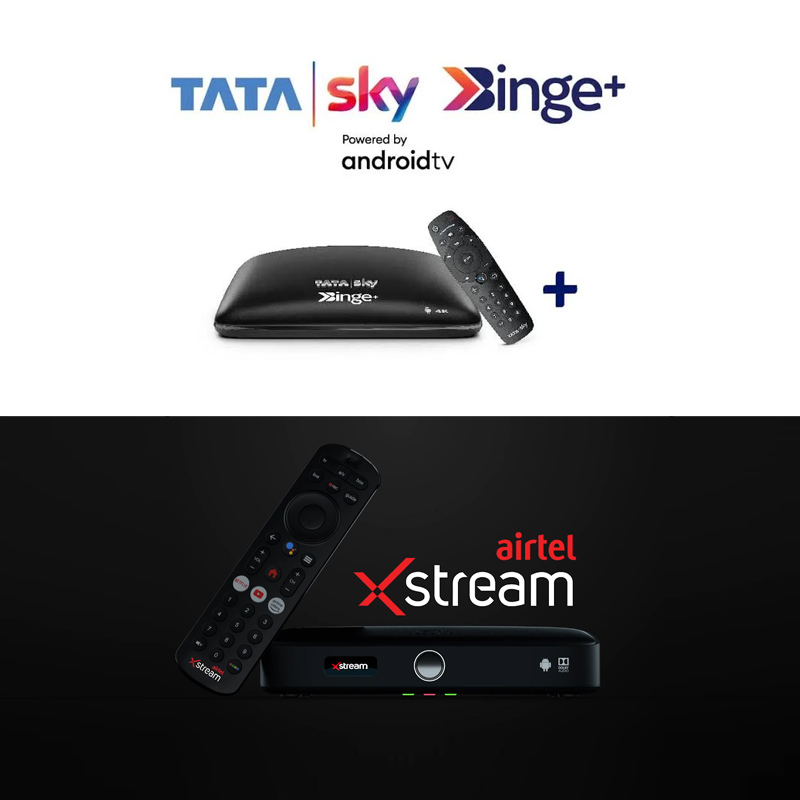
    Already, reports keep popping up that talks are continuing between Tata Play and Airtel for the latter to acquire the former. When and if it does happen, we’ll be down to three DTH operators.

    Also, solutions need to be evolved to stop the slide –   complaining about the gold rush towards DD Free Dish is not the best answer.

    2025 is a new year.

    A chance to relook at the business.

    A chance to see if Tata Play’s white-label-service model can be replicated and monetised by licensing it to other  players  in less developed markets to keep revenues coming in.

    A chance to experiment on how customers can be retained..

    Is customer service of the platinum class a good bait?  

    This has been talked about ad nauseum for quite some time; service can be the big differentiator.

    Convenience  be brought in and, if possible, local programming which can be picked up from the more advanced cable TV MSOs and retransmitted.

    There will come a time when subscribing to a nice plateful of streamers will become too expensive. Already some complaints are being voiced about the OTT bundles in the US. The commonly heard plaint is that they are  as – if not more – expensive than the pay TV bundles

    In India, we don’t have to wait for that to happen – Indian pay TV is cheap – very cheap. More than 400 linear channels are available in India for as low as Rs 300-350  on DTH and cable TV. An OTT aggregator will have to struggle to offer as much content at that price.

    The reality is both free TV and OTTs are here to stay. The question is: is India’s pay TV?

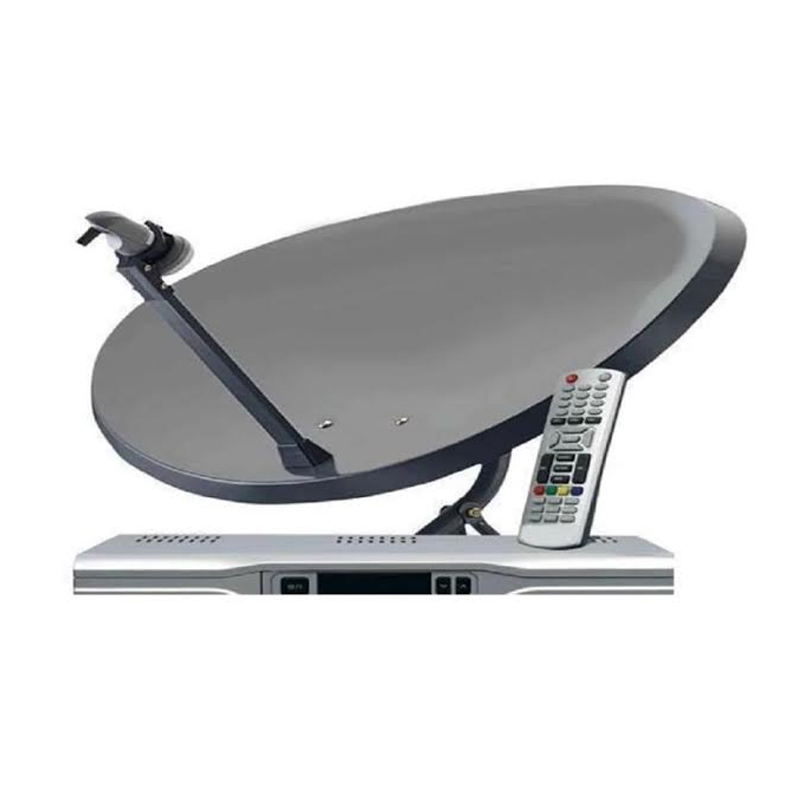
    (Picture of Dishes atop house courtesy Dish TV India)