Tag: Airtel Digital TV

  • Now learn cooking with Airtel Digital TV

    Now learn cooking with Airtel Digital TV

    MUMBAI: One Take Media Co., leading content production and Value Added Service provider company based in Mumbai, today announced that it has partnered with Airtel Digital TV, the DTH arm of Bharti Airtel to launch a new cooking channel – Aapki Rasoi.

    With a collection of the finest Indian recipes and Celebrity Chef Based Cooking Shows, Aapki Rasoi will enable customers to learn unique recipes. The channel will be available to customers on channel number 407 on Airtel Digital TV for a nominal subscription fee of of Rs. 45/- per month.

    Richa Kalra, Product Head– Airtel Digital TV added, “We are delighted to launch an unique cooking channel for our customers. We promise to continue adding innovative content to our portfolio enabling customers to make the most of their television time.”

    Mr. Anil Khera, Founder & CEO – One Take Media Co. said “Aapki Rasoi” every episode is a clutter breaking show by internationally acclaimed Celebrity Master Chefs from India and abroad who takes the audience on a journey taking humble, home grown Indian dishes and elevating it to new heights by adding an international twist.”

    The list of Celebrity chefs on the channel include Vicky Ratnani, Ajay Chopra, Aditya Bal, Harpal Singh Sokhi, Nilesh Limaye, Bhairav Singh amongst others. Customers have to simply give a missed call to 9109454545 to activate the service.

  • Airtel Digital TV & JOP Network partner to launch ‘Hollywood Masala’ – a collection of blockbuster Hollywood movies in Hindi

    Airtel Digital TV & JOP Network partner to launch ‘Hollywood Masala’ – a collection of blockbuster Hollywood movies in Hindi

    MUMBAI: Airtel Digital TV, the DTH arm of Bharti Airtel and JOP Network Pvt Ltd, India’s leading content house, today joined hands to launch an innovative channel – Hollywood Masala, which offers a collection of premium Hollywood movies dubbed in Hindi. The first-of-its-kind channel will enable customers to enjoy Hollywood blockbusters in Hindi.

    The ad free service will be available on channel number 188 on Airtel Digital TV at just Rs. 45/- per month. The channel will showcase movies from across genres including Action, Comedy, Romance, Sci – Fi, Drama and Horror, catering to the unique preferences of customers.  Airtel DTH customers can now enjoy popular Hollywood movies like Da Vinci Code, Social Network, The Smurfs, Batman Vs Superman, The Adventures of Tintin et al. amongst others, in Hindi.

    Urvi Agarwal – Director, JOP Network Pvt Ltd, said “We are glad to launch Hollywood Masala – a service that showcases premium Hollywood blockbuster movies on a platform like Airtel Digital TV, one of the largest DTH players in our country. The service is targeted at the Indian masses of all age groups who enjoy watching Hollywood movies but in their preferred language – Hindi!”

    Richa Kalra, Product Manager – DTH, Bharti Airtel said, “At Airtel, customer delight is pivotal for us and we are always innovating for newer ways to enrich their lives. The launch of Hollywood Masala is in line with this endeavor and aims to offer customers the joy of watching their favorite Hollywood blockbusters in Hindi without any language hindrance.”

  • Airtel Digital TV numbers improve as parent company numbers fall again

    Airtel Digital TV numbers improve as parent company numbers fall again

    BENGALURU: The Sunil Mittal-led Indian telecom major with operations in 16 countries, Bharti Airtel Ltd (Airtel) reported a year on year (y-o-y) drop in numbers for the quarter ended 30 September 2018 (Q2 2019, period or quarter under review) as compared to the corresponding year ago quarter (Q2 2018). At the same time, its Digital TV services segment which contributes just about 9 percent or so to the overall numbers, had a 9 percent and 13 percent y-o-y increase in operating revenues and operating profit (EBITDA) during the period under review.  The results for the quarter under review of both – Airtel overall and its Digital TV segment are subdued versions of the previous quarter. The company’s board has declared an interim dividend of Rs 2.5 per share, which is a complete pass through of dividend received from its subsidiary

    Airtel reported a y-o-y increase in its overall as well Airtel Digital TV subscriber base along with an increase in mobile data traffic. However, the competitive environment has ensured y-o-y subduction of India mobile services and home services segment financials. Hence, the improved numbers from Airtel’s Digital TV services, its B2B – Airtel business services, its tower infrastructure services and its African operations numbers are reasons for cheer for the telecom behemoth.

    Overall, Airtel’s total revenues declined 6.2 percent y-o-y in Q2 2019 to Rs 20,422 crore from Rs 21,777 crore, while EBITDA declined 20.7 percent y-o-y to Rs 6,343 crore from Rs 8,004 crore. Net income declined to almost a third (down 65.4 percent) y-o-y to Rs 119 crore from Rs 343 crore. The company had a negative operating cash flow of Rs 1,341 crore in Q2 2019 as compared to a positive Rs 520 crore in Q2 2018.

    Airtel Digital TV

    As mentioned above, for its Digital TV segment, Airtel reported 9 percent y-o-y increase in operating revenues for Q2 2019 at Rs 1,024.2 crore as compared to Rs 936.9 crore. Airtel Digital TV Services EBITDA grew 13 percent y-o-y in the period under review to Rs 396 crore from Rs 351.7 crore. The company’s subscriber base increased by 1.33 lakh (0.133 millon, 0.0133 crore) in Q2 2019 to 147.79 lakh (14.779 million, 1.4779 crore) from 146.46 lakh (14.646 million, 1.4646 crore) in the immediate trailing quarter. In Q2 2018, the company had reported 135.21 lakh (13.521 million, 1.3521 crore) Digital TV subscribers.

    ARPU in the quarter under review increased by Rs 3 to Rs 232 as compared to Rs 229 in the immediate trailing quarter (Q4 2018) but was Re 1 lower than the Rs 233 in the corresponding year ago quarter. The US dollar has been rising with respect to the Indian rupee, hence in US$ terms, ARPU declined to US$ 3.3 in Q2 2019 from US$ 3.4 in Q1 2019 and declined 8.8 percent form the US$ 3.6 in Q2 2018. Churn increased to 1.3 percent in Q2 2019 as compared to 0.7 percent in Q1 2019, but was lower than the 1.4 percent in Q2 2018.

    Company speak

    Airtel MD and CEO of India and South Asia operations Gopal Vittal said, “Led by our focus on quality customers through simplified pricing and content partnerships, ARPU decline has moderated in this quarter. We remain focused on driving quality base growth with value adding propositions for our customers. We also remain committed to investing in enhanced capacities and have  deployed 27K+ broadband sites during the quarter, enabling a 239 per cent YoY growth in mobile data volumes.”

    Airtel MD and CEO of Africa operations Raghunath Mandava said, “Airtel Africa’s Gross Revenue grew by 11 per cent on a Y-o-Y basis. Data traffic grew by 53 percent, Voice minutes increased by 36 percent and Airtel Money throughput grew by 31 percent on a Y-o-Y basis. Consequently, EBITDA margin has expanded by ~4 percent Y-o-Y and stood at 37.1 percent for the quarter. We have stepped up our capex spends during the quarter to build a formidable LTE network. This positions us well to expand our profitable growth journey by enhancing customer experience with best in class network and products. This quarter also marks the first time where we are disclosing our region and product wise performance as it provides a more holistic view of our operations across the continent.”

  • DTH subscriber growth slow in first half of 2018

    DTH subscriber growth slow in first half of 2018

    BENGALURU: Growth of direct to home (DTH) subscriber base of private players in India was the slowest in five half-years for the half year ended 30 June 2018 (HY 2018, half year under review) as per Telecom Regulatory Authority of India (TRAI). The good news is that the quarter ended 30 June 2108 saw a reversal of fortunes. From a loss of about 30,000 (0.003 crore, 0.3 million, 0.3 lakh) subscribers in the quarter ended 31 March 2018 (Mar-18), DTH subscriber growth was positive 18.4 lakh (0.184 crore, 1.84 million) for the quarter ended 30 June 2018 (Jun-18, quarter under review).

    The figure below shows a q-o-q growth of DTH subscribers between the period Mar-16 and Jun-18.It may be noted that Mar-16 growth of 25.5 lakh (0.255 crore, 2.55 million) is with respect to Dec-15.

    According to TRAI data, the overall private DTH active subscriber base grew by 0.419 crore or 4.19 million (7.8 percent) in calendar year (CY 2017) to 4.19 million or 67.56 million from 6.256 crore or 62.65 million in CY 2016. Comparatively, in 2016, the overall private DTH active subscriber base grew by 6.67 million or 0.667 crore (11.9 percent) from 55.98 million or 5.598 crore in CY- 2015.

    Please refer to the figure below for the DTH subscriber numbers as per Trai data:

    The merger between Dish TV and Videocon d2h that was effective since October 2018 has created the largest DTH services company in India and the second largest globally in terms of number of active subscribers. Please refer to the three figures below for approximate market share of the private DTH players in India in CY 2017, CY 2017 and CY 2018:

    It must also be mentioned that the government’s FreeDish DTH service is the largest DTH player by far in terms of subscribers with an estimated 22 million or 2.2 crore subscribers in 2016 as per the KPMG-FICCI Indian Media and Entertainment Industry Report 2017 (KPMG-FICCI M&E Report 2017) titled Media for the Masse: The Future Unfolds. It must however be noted that an exact number for registered or active subscribers is not available since this is a free DTH service. Also, the merger of Videocon d2h with Dish TV will create the largest private television carriage player in India and quite likely the second largest in the world, be it cable, internet television or DTH or any other.
     

  • Trai vs. Star case: next SC hearing on Sept. 18

    Trai vs. Star case: next SC hearing on Sept. 18

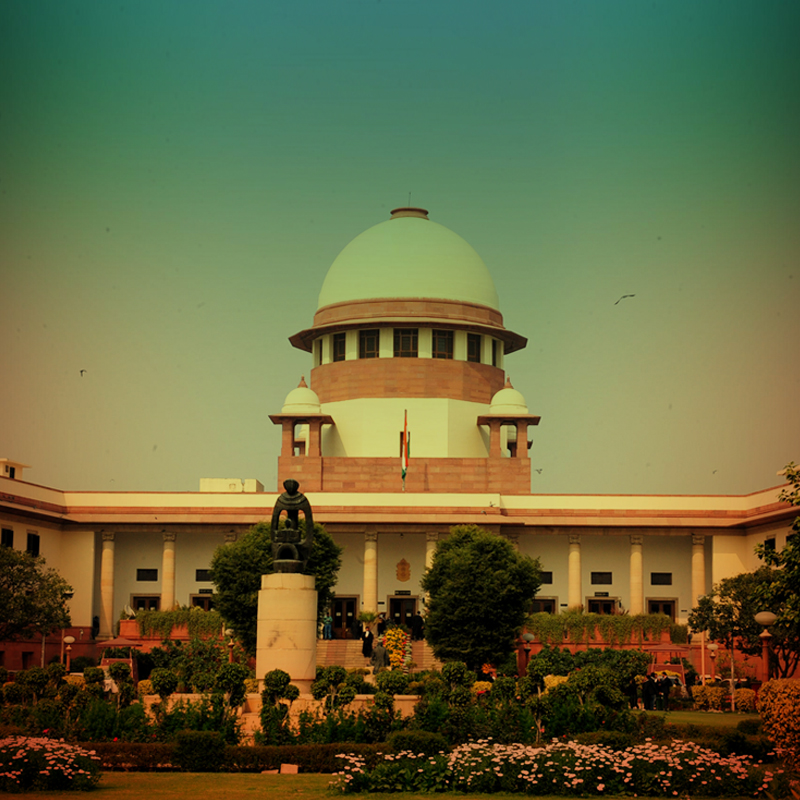
    MUMBAI: The Supreme Court has deferred the hearing of Star India’s petition against TRAI tariff and inter-connect order to 18 September 2018 due to insufficient time. This is the fourth time in this month that the hearing has been deferred. Despite the impending ruling, several broadcasters have already published their RIOs.

    Zee Entertainment Enterprises Ltd (ZEEL) was first out of the blocks in publishing the RIO, declaring the MRP and nature of channels in connection with its tariff order , which had a 31 August deadline. The Punit Goenka-led company was followed by TV18 Broadcast Limited ( TV18), Sony Pictures Networks India Private Limited (SPNI), who adhered to the regulator’s directive on September 4. Later, Disney India, Turner India International, Sun TV Networks have also published their RIOs in compliance with the order.

    All the broadcaster have stuck to a maximum 15 per cent MRP discount to distributors. Earlier, Madras High Court chief justice did not uphold TRAI’s proposal of allowing highest 15 per cent cap on discounts despite giving the go-ahead to all other proposals. As any clarification did not come from TRAI, all the broadcasters are adhering to the order to avoid any further confusion.

    The TRAI tariff orders, first contested in Madras High Court by the petitioners, were cleared by the Chennai court with certain riders after hearings that continued almost over 16 months in front of two benches of the court.

    Though the petitioners were unable for comments, a legal eagle explained that the very fact the Supreme Court has allotted a day for hearing the petition of Star India and Vijay TV, which basically revolves around copyright and why the regulator doesn’t have jurisdiction over such issues, highlights the fact that the judge doesn’t want to take a decision in a hurry.

    After the Madras HC had given a thumb up to TRAI tariff order, and both the petitioners and the defendant (TRAI) had filed caveats in the Supreme Court, the regulator had bowled a googly saying that its tariff order would come into effect from 3 July 2018 () as all judicial compliances had been completed.

    “Having complied with  the  judicial  mandates  in  the  matter,  the Telecommunication (Broadcasting and Cable) Services (Eighth) (Addressable Systems)  Tariff   Order, 2017 and  the Telecommunication (Broadcasting and Cable) Interconnection (Addressable Systems) Regulations, 2017 as upheld by the Hon’ble Madras High  Court and the Telecommunication (Broadcasting and Cable) Services Standards  of   Quality  of  Service and  Consumer  Protection (Addressable Systems) Regulations, 2017 come into effect from 3rd July 2018,” the regulator had said in a statement pointing out that all timelines mentioned in the original order should be adhered to immediately.

    According to TRAI, implementation of the new regulatory framework will “bring in transparency”, enable provisioning of affordable broadcasting and cable TV services for the consumer and, at the same time, “would lead to an orderly growth of the sector”.

  • SC adjourns Star India’s petition on TRAI tariff order to 13 September

    SC adjourns Star India’s petition on TRAI tariff order to 13 September

    MUMBAI:  The Supreme Court has deferred the hearing of Star India’s petition against TRAI tariff and inter-connect order to 13 September 2018 due to insufficient time. This is the third time in this month that the hearing has been deferred. Despite the impeding ruling, several broadcasters have already published their RIOs.

    Zee Entertainment Enterprises Ltd (ZEEL) was first out of the blocks in publishing the RIO, declaring the MRP and nature of channels in connection with its tariff order, which had a 31 August deadline. The Punit Goenka-led company was followed by TV18 Broadcast Limited ( TV18), Sony Pictures Networks India Private Limited (SPNI), who adhered to the regulator’s directive on September 4. Later, Disney India, Turner India International, Sun TV Networks have also published their RIOs in compliance with the order. 

    All the broadcaster have stuck to a maximum 15 per cent MRP discount to distributors. Earlier, Madras High Court chief justice did not uphold TRAI’s proposal of allowing highest 15 per cent cap on discounts despite giving the go-ahead to all other proposals. As any clarification did not come from TRAI, all the broadcasters are adhering to the order to avoid any further confusion. 

    The TRAI tariff orders, first contested in Madras High Court by the petitioners, were cleared by the Chennai court with certain riders after hearings that continued almost over 16 months in front of two benches of the court.
    Though the petitioners were unable for comments, a legal eagle explained that the very fact the Supreme Court has allotted a day for hearing the petition of Star India and Vijay TV, which basically revolves around copyright and why the regulator doesn’t have jurisdiction over such issues, highlights the fact that the judge doesn’t want to take a decision in a hurry.

    After the Madras HC had given a thumb up to TRAI tariff order, and both the petitioners and the defendant (TRAI) had filed caveats in the Supreme Court, the regulator had bowled a googly saying that its tariff order would come into effect from 3 July 2018 as all judicial compliances had been completed.

    “Having complied with  the  judicial  mandates  in  the  matter,  the Telecommunication (Broadcasting and Cable) Services (Eighth) (Addressable Systems)  Tariff   Order, 2017 and  the Telecommunication (Broadcasting and Cable) Interconnection (Addressable Systems) Regulations, 2017 as upheld by the Hon’ble Madras High  Court and the Telecommunication (Broadcasting and Cable) Services Standards  of   Quality  of  Service and  Consumer  Protection (Addressable Systems) Regulations, 2017 come into effect from 3rd July 2018,” the regulator had said in a statement pointing out that all timelines mentioned in the original order should be adhered to immediately.

    According to TRAI, implementation of the new regulatory framework will “bring in transparency”, enable provisioning of affordable broadcasting and cable TV services for the  consumer and, at the  same time, “would lead to an orderly growth of the sector”

  • SC adjourns Star India’s petition on TRAI tariff order to 12 September

    SC adjourns Star India’s petition on TRAI tariff order to 12 September

    MUMBAI: The Supreme Court has deferred the hearing of Star India’s petition against TRAI tariff and inter-connect order to 12 September 2018 due to unavailability of time.  Last week also, the hearing was deferred to 11 September for the same reason.

    Zee Entertainment Enterprises Ltd (ZEEL) was first out of the blocks in publishing the RIO, declaring the MRP and nature of channels in connection with its tariff order, which had a 31 August deadline. The Punit Goenka-led company was followed by TV18 Broadcast Limited ( TV18), Sony Pictures Networks India Private Limited (SPNI), who adhered to the regulator’s directive on September 4. Later, Disney India, Turner International India, Sun TV Networks have also published their RIOs in compliance with the order. 

    All the broadcaster have stuck to a maximum 15 per cent MRP discount to distributors. Earlier, Madras High Court chief justice did not uphold TRAI’s proposal of allowing highest 15 per cent cap on discounts despite giving the go-ahead to all other proposals. As any clarification did not come from TRAI, all the broadcasters are adhering to the order to avoid any further confusion. 

    The TRAI tariff orders, first contested in Madras High Court by the petitioners, were cleared by the Chennai court with certain riders after hearings that continued almost over 16 months in front of two benches of the court.

    Though the petitioners were unable for comments, a legal eagle explained that the very fact the Supreme Court has allotted a day for hearing the petition of Star India and Vijay TV, which basically revolves around copyright and why the regulator doesn’t have jurisdiction over such issues, highlights the fact that the judge doesn’t want to take a decision in a hurry.

    After the Madras HC had given a thumb up to TRAI tariff order, and both the petitioners and the defendant (TRAI) had filed caveats in the Supreme Court, the regulator had bowled a googly saying that its tariff order would come into effect from 3 July 2018 as all judicial compliances had been completed.

    “Having complied with  the  judicial  mandates  in  the  matter,  the Telecommunication (Broadcasting and Cable) Services (Eighth) (Addressable Systems)  Tariff   Order, 2017 and  the Telecommunication (Broadcasting and Cable) Interconnection (Addressable Systems) Regulations, 2017 as upheld by the Hon’ble Madras High  Court and the Telecommunication (Broadcasting and Cable) Services Standards  of   Quality  of  Service and  Consumer  Protection (Addressable Systems) Regulations, 2017 come into effect from 3rd July 2018,” the regulator had said in a statement pointing out that all timelines mentioned in the original order should be adhered to immediately.

    According to TRAI, implementation of the new regulatory framework will “bring in transparency”, enable provisioning of affordable broadcasting and cable TV services for the  consumer and, at the  same time, “would lead to an orderly growth of the sector”.

  • SC adjourns Star India’s petition on TRAI tariff order to 11 September

    SC adjourns Star India’s petition on TRAI tariff order to 11 September

    MUMBAI: The Supreme Court has deferred the hearing of Star India’s petition against TRAI tariff and inter-connect order to 11 September 2018.

    Zee Entertainment Enterprises Ltd (ZEEL) was first out of the blocks in publishing the RIO, declaring the MRP and nature of channels in connection with its tariff order, which had a 31 August deadline. The Punit Goenka-led company was followed by TV18 Broadcast Limited ( TV18), Sony Pictures Networks India Private Limited (SPNI), who adhered to the regulator’s directive on September 4.

    The TRAI tariff orders, first contested in Madras High Court by the petitioners, were cleared by the Chennai court with certain riders after hearings that continued almost over 16 months in front of two benches of the court.

    After the Madras HC had given a thumb up to TRAI tariff order, and both the petitioners and the defendant (TRAI) had filed caveats in the Supreme Court, the regulator had bowled a googly saying that its tariff order would come into effect from 3 July 2018 as all judicial compliances had been completed.

    “Having complied with  the  judicial  mandates  in  the  matter,  the Telecommunication (Broadcasting and Cable) Services (Eighth) (Addressable Systems)  Tariff   Order, 2017 and  the Telecommunication (Broadcasting and Cable) Interconnection (Addressable Systems) Regulations, 2017 as upheld by the Hon’ble Madras High  Court and the Telecommunication (Broadcasting and Cable) Services Standards  of   Quality  of  Service and  Consumer  Protection (Addressable Systems) Regulations, 2017 come into effect from 3rd July 2018,” the regulator had said in a statement pointing out that all timelines mentioned in the original order should be adhered to immediately.

    According to TRAI, implementation of the new regulatory framework will “bring in transparency”, enable provisioning of affordable broadcasting and cable TV services for the   consumer and, at the  same time, “would lead to an orderly growth of the sector”.

  • SC defers hearing of Star India petition on TRAI tariff order to 5 September

    SC defers hearing of Star India petition on TRAI tariff order to 5 September

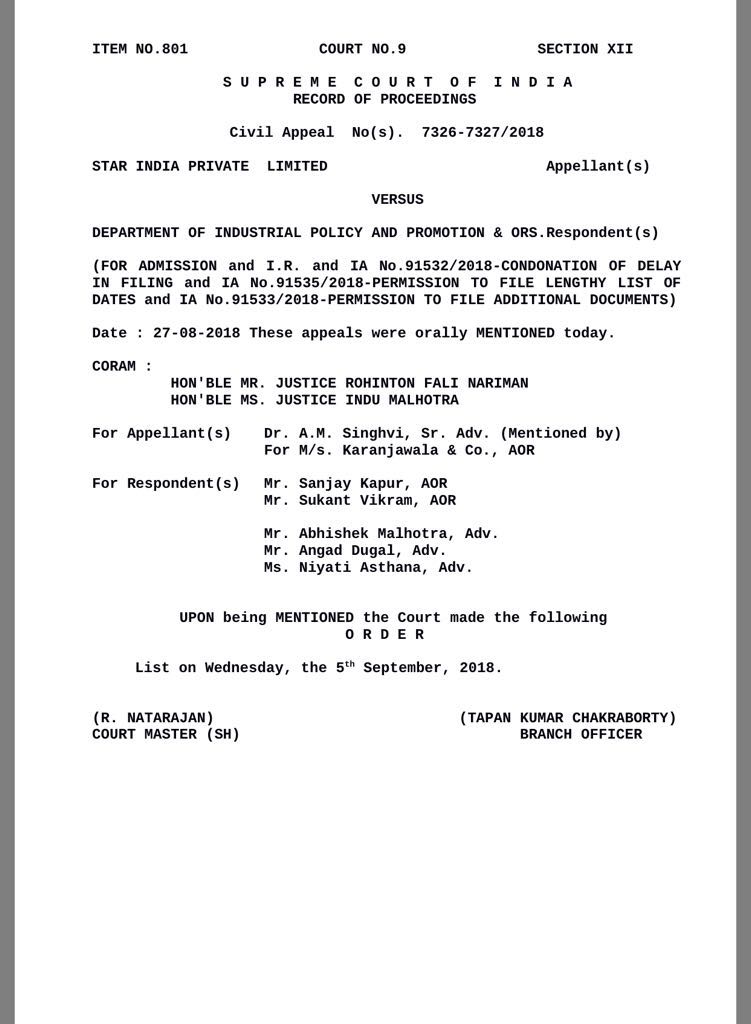
    NEW DELHI: The Supreme Court has deferred the hearing of Star India’s petition filed against TRAI tariff and inter-connect order to 5 September, 2018.  The order had been given a go-ahead by the Madras High Court.

    The TRAI tariff orders, first contested in Madras High Court by the petitioners, were cleared by the Chennai court with certain riders after hearings that continued almost over 16 months in front of two benches of the court.

    Though the petitioners were unable for comments, a legal eagle explained that the very fact the Supreme Court has allotted a day for hearing the petition of Star India and Vijay TV, which basically revolves around copyright and why the regulator doesn’t have jurisdiction over such issues, highlights the fact that the judge doesn’t want to take a decision in a hurry.

    However, ahead of 31 August 2018 deadline for publishing TV channel prices in a new format Zee Entertainment Enterprises Ltd  (ZEEL) has made public its channel prices in line with the tariff order, setting an example for owners of other TV channels.

    All ZEEL channels will be available on a-la-carte basis, as required by regulations, and the consumers will also have the option to choose from specifically created bouquets for Hindi speaking markets (HSM) and different regional language markets like Marathi, Bangla, Odia, Bhojpuri, Tamil, Telugu, Kannada and Malayalam.

    After the Madras HC had given a thumb up to TRAI tariff order, and both the petitioners and the defendant (TRAI) had filed caveats in the Supreme Court, the regulator had bowled a googly saying that its tariff order would come into effect from 3 July 2018 as all judicial compliances had been completed.

    “Having complied with  the  judicial  mandates  in  the  matter,  the Telecommunication (Broadcasting and Cable) Services (Eighth) (Addressable Systems)  Tariff   Order, 2017 and  the Telecommunication (Broadcasting and Cable) Interconnection (Addressable Systems) Regulations, 2017 as upheld by the Hon’ble Madras High  Court and the Telecommunication (Broadcasting and Cable) Services Standards  of   Quality  of  Service and  Consumer  Protection (Addressable Systems) Regulations, 2017 come into effect from 3rd July 2018,” the regulator had said in a statement pointing out that all timelines mentioned in the original order should be adhered to immediately.

    According to TRAI, implementation of the new regulatory framework will “bring in transparency”, enable provisioning of affordable broadcasting and cable TV services for the   consumer and, at the   same time, “would lead to an orderly growth of the sector”.

  • SC to hear Star India petition on TRAI tariff order late August

    SC to hear Star India petition on TRAI tariff order late August

    NEW DELHI: The Supreme Court today listed for 28 August the special leave petition filed by Star India and Vijay TV against a tariff and inter-connect orders of regulator TRAI that had been given a go-ahead by the Madras High Court.

    The TRAI tariff orders, first contested in Madras High Court by the petitioners, were cleared by the Chennai court with certain riders after hearings that continued almost over 16 months in front of two benches of the court.

    Though the petitioners were  unavailable for comments, a legal eagle explained that the very fact the Supreme Court has allotted a day for hearing the petition of Star India and Vijay TV, which basically revolves around copyright and why the regulator doesn’t have jurisdiction over such issues, highlights the fact that the judge doesn’t want to take a decision in a hurry.

    The next date of hearing of the case in the apex court on 28 August 2018 is few days before the deadline kicks in for filing of new inter-connect agreements by stakeholders of the Indian broadcast industry.

    After the Madras HC had given a thumb up to TRAI tariff order, and both the petitioners and the defendant (TRAI) had filed caveats in the Supreme Court, the regulator had bowled a googly saying that its tariff order would come into effect from 3 July 2018 as all judicial compliances had been completed. 

    “Having complied with the judicial mandates in the matter,  the Telecommunication (Broadcasting and Cable) Services (Eighth) (Addressable Systems) Tariff Order, 2017 and the Telecommunication (Broadcasting and Cable) Interconnection (Addressable Systems) Regulations, 2017 as upheld by the Hon'ble Madras High  Court and the Telecommunication (Broadcasting and Cable) Services Standards  of   Quality  of  Service and  Consumer  Protection (Addressable Systems) Regulations, 2017 come into effect from 3rd July 2018,” the regulator had said in a statement pointing out that all timelines mentioned in the original order should be adhered to immediately.

    According to TRAI, implementation of the new regulatory framework will “bring in transparency”, enable provisioning of affordable broadcasting and cable TV services for the consumer and, at the same time, “would lead to an orderly growth of the sector”.

    Keep tuned in for another episode of this legal saga, which started to air sometime in 2016.