Tag: Airtel Digital TV

  • Airtel reports growth for DTH, home broadband segment in Q4

    Airtel reports growth for DTH, home broadband segment in Q4

    KOLKATA: Airtel Digital TV, Bharti Airtel’s direct-to-home (DTH) segment has reported Rs 767.3 crore revenue in q4 FY21 compared to Rs 603.5 crore in the corresponding quarter of the previous financial year, clocking a 27 per cent year-on-year growth.

    The DTH segment has raked in Rs 248.3 crore profit in the quarter, up from Rs 152.8 crore in the same quarter a year ago. However, both profit and revenue have declined compared to the third quarter of FY21. The company deployed Rs 369 core capex for the quarter compared to 251.4 crore in Q4 FY20.

    Airtel Digital TV witnessed a decline in customer base by 156 K during the quarter from 17.9 million in Q3 to 17.7 million in Q4, despite a growth of 6.6 per cent from 16.6 million in the corresponding quarter last year. ARPU for the quarter was at Rs 144 as compared, down from Rs 154 in the corresponding quarter last year.

    Homes business segment witnessed revenue growth of five per cent year-on-year to reach 128.8 crore. The company’s focus on re-calibrated offerings and launch of Xstream bundles, with content and unlimited internet, to accelerate penetration has resulted in the highest ever net addition of 274K to reach a total base of 3.07 million, it stated. On a year-on-year basis, the customer base increased by 27 per cent.

    For the quarter, revenues from Homes operations were Rs 600.9 core as compared to Rs 572.5crore in the corresponding quarter last year and Rs 567.4 in the previous quarter.

    Overall, Airtel’s consolidated revenue stood at Rs 25,747 core, with India revenues at Rs 18,338 crore.

    “It is this relentless focus on customer obsession that has allowed us to deliver another consistent quarter in terms of performance. Our mobile revenues grew at 19.1% YoY backed by 13.7 Mn 4G customer additions. We are seeing strong momentum in our home business with 274k net adds. The Enterprise segment delivered double-digit growth. Our digital assets continue to scale and we are beginning to see strong traction in monetisation of these assets,” said Airtel India and South Asia MD & CEO Gopal Vittal

  • DTH segment expands its subscriber base by 1.01 mn in 2020

    DTH segment expands its subscriber base by 1.01 mn in 2020

    KOLKATA: The direct-to-home (DTH) subscriber base in India has reached a base of around 70.99 million in 2020, according to the Indian Telecom Services Performance Indicator Report October-December 2020 published by the Telecom Regulatory Authority of India (TRAI). This points to an addition of around one million subscribers in the year.

    While the total active DTH subscriber base stands at 70.99 million as of 31 December 2020, the segment had reported a base of 69.98 million for the last quarter of 2019.

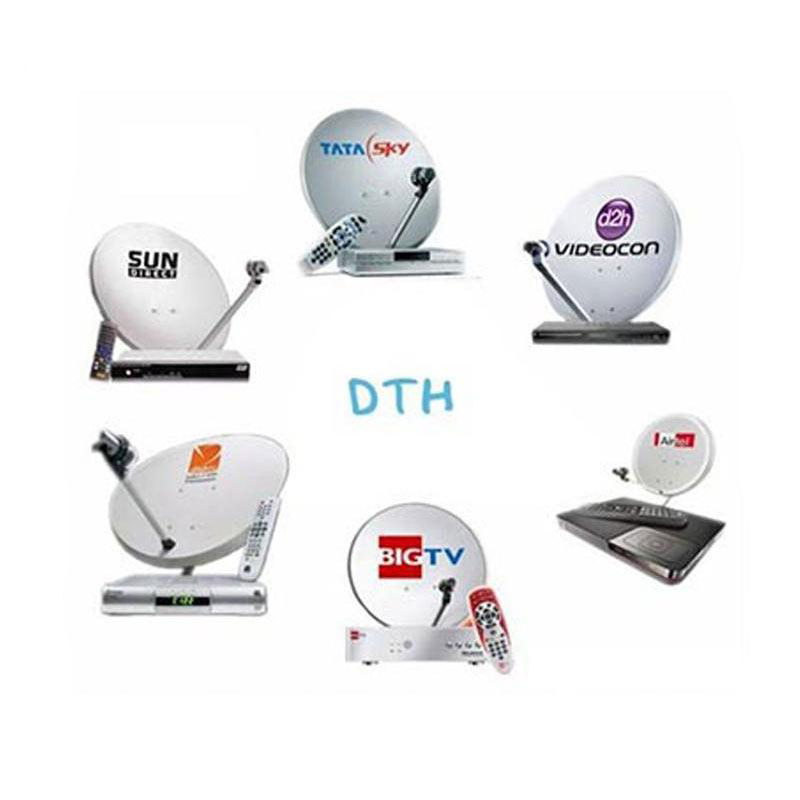
    Tata Sky is leading the DTH segment with 33.03 per cent market share. It has marginally increased its market share of 32.58 per cent from July-September (2020) quarter. Airtel’s DTH arm has almost closed its gap with Dish TV with the former holding 25.17 per cent market share, and the latter gaining 25.45 per cent market share. Sun TV’s DTH arm has also improved its position with 16.35 per cent market share compared to 15.83 per cent in the previous quarter.

    As on 31 December 2020, there are 1,704 MSOs registered with the ministry of information and broadcasting (MIB), as against 1,613 multi-system operators (MSO) at the end of 2019. There were 1,697 MSOs including two provisional MSOs at the end of the previous quarter. Further, TRAI data indicates that there are 12 MSOs and one HITS operator who have subscriber bases greater than one million. Siti Networks, GTPL Hathway and Hathway are the top three players in this category.

    A total of 907 private satellite TV channels have been permitted by MIB for uplinking, downlinking, as on 31 December 2020. There are 326 pay TV channels including 233 SD channels and 93 HD channels and 581 free-to-air channels.

  • Revised guidelines bring a note of positivity for DTH sector

    Revised guidelines bring a note of positivity for DTH sector

    KOLKATA: The government has finally clarified the uncertainties in DTH licensing norms. According to new guidelines, DTH licenses will now be issued for a period of 20 years. Although the latest move may not be game changing for the operators, it has definitely brought a sense of positivity to the sector.

    “We are grateful to Shri Javadekar for resolving the long standing impasse on the DTH License policy which will provide certainty to the sector. We look forward to a level playing field via parity of Licence Fee with Cable TV which too is Licensed by MIB and follows the same prices and margins as regulated by TRAI’s NTO,” Tata Sky MD& CEO Harit Nagpal said.

    I&B minister Prakash Javadekar stated on Wednesday that changes have been approved for 100 per cent foreign direct investment (FDI) in the DTH sector which was limited to 49 per cent. He also added that the decision was taken earlier by the ministry of commerce and industry but the sector could not avail the benefits due to existing MIB guidelines.

    Moreover, DTH license will be issued for 20 years and license fee will be collected quarterly. Further, the period of license may be renewed by 10 years at a time. The cabinet has also approved the sharing of infrastructure between DTH operators. Distributors of TV channels will be permitted to share the common hardware for their subscriber management system (SMS) and conditional access system (CAS) applications. Javadekar said that the decision has been taken to create level playing field.

    Another expert from a DTH company who preferred to be anonymous added that the latest decision would streamline license agreements. He added that anybody who would like to invest in the DTH companies would get a sense of certainty with the longer license period which was getting affected with the 10-year license term. A senior industry expert added that the FDI has been allowed because the sector is dying as the companies are turning into loss-making entities, with streaming of video taking off exponentially in India. Says he: "Internationally companies which invested in DTH platforms are today saddled with diminishing returns on their investments. They are looking at buyers – whether Sky in the UK or Direct TV in the US.  Here, theIndian  government hopes to eject some equity in the DTH sector so as to stimulate investment and hence growth,  in the sector "

    “Overall it's better for the DTH sector, which plays a big role in digitising India. Giving them a certainty for licensc that it would be there for 20 years, will help them to invest more and grow the market. Also, the saving of two per cent AGR, will help them to improve their profitability,” EY India partner and media & entertainment leader Ashish Pherwani said.

    Moreover, license fee has been revised from 10 per cent of GR to 8 per cent of AGR. Elara Capital VP research analyst (media) Karan Taurani added that it is mild positive due to reduction in license revenue. He also added that Dish TV may find its potential buyer post-announcement.

    India’s DTH subscriber base grew by 3.2 lakh during the April-June quarter, as per the Indian Telecom Services Performance Indicators April-June 2020 by the Telecom Regulatory Authority of India (TRAI). The sector saw better, albeit marginal growth compared to the January-March quarter. Currently, pay DTH subscriber stands at 70.58 million, compared to 70.26 million in the previous quarter. At the end of 2019, pay DTH subscriber base was 69.98 million.

  • Pay DTH subscriber base perks up a bit

    Pay DTH subscriber base perks up a bit

    BENGALURU: The latest DTH subscriber numbers released by Telecom Regulatory Authority of India (TRAI) must bring cheer to the private television direct to home (DTH) industry. TRAI recently published quarterly subscriber data as on 30 June 2020. According to the data, the number of pay DTH subscribers using services provided by private DTH operators had declined from a peak of 72.44 million as on 31 March 2019 to a low of 68.92 million during the very next quarter end date – 30 June 2019 because of a change in the way of reckoning active DTH subscribers. Till March 2019, the subscription figure of the total active subscribers included inactive and temporarily suspended subscribers for not more than the last 120 days. However, as per new regulatory framework of Broadcasting and Cable TV Services, the total active subscribers are now counted to include only those subscribers who are inactive/ temporarily suspended for not more than the last 90 days. 

    Since 30 June 2019, the number of pay DTH subscribers using services provided by private DTH service providers has been increasing slowly until 30 June 2020. As on 30 June 2020, the number of pay DTH subscriber using services provided by private DTH service providers stood at 70.58 million. This is in addition to the subscribers of DD Free Dish (free DTH services of Doordarshan). 

    Please refer to the chart below:

    Further, as on March 2019, the number of private DTH subscribers had fallen to four from five previously. Also, TRAI commenced publication of break up of market share to an accuracy of two decimal percentage places from the quarter ended 30 September 2019 onward. Extrapolating the overall number of pay DTH subscribers using services provided by private DTH operators with the total number of pay DTH subscribers (provided in millions, to two decimal places) and the share percentage of the service providers reveals that except for Dish TV, the other three providers had seen subscriber numbers grow. Besides Dish TV’s slow but steady decline in subscriber numbers during all the four quarters for which data is available, the largest service provider in terms of number of subscribers – Tata Sky witnessed a decline in subscriber numbers in the quarter ended 30 June 2020. Please refer to the figure below:

    Cable TV operators

    TRAI reports state that the country has achieved 100 percent digitization of cable TV network. This is a stupendous achievement making India the only large country where 100 percent digital cable has been achieved through mandatory regulations.

    As on 30 June 2020, there were 1,666 MSOs registered with the ministry of information & broadcasting (MIB) as compared to 1,613 MSO registered as on 31 December 2019. Further, as per the data reported by MSOs/HITS operators, there were 12 MSOs and one HITS operator who had a subscriber base of more than one million. Details of the total active subscribers of these 12 MSOs and one HITS operator are given in the following table. Please refer to chart below:

    In the case of cable TV, the largest player Siti Networks seems to be witnessing a slow but steady loss of subscribers since the quarter ended 31 December 2019. Two other players have also witnessed a subscriber declines – Fastway Transmissions Pvt Ltd and Asianet Digital Network, while most others have gained subscribers during the four quarters in this report.

    Satellite TV Channels

    A total of 909 private satellite TV channels have been permitted by the MIB for uplinking only/ downlinking only/both uplinking and downlinking, as on 30 June 2020. The quarter-wise figures of the total number of TV channels is depicted in the chart given below.

  • Filamchi will now be available on Tata Sky, Airtel Digital TV, GTPL, SITI – ICNCL & SITI Network

    Filamchi will now be available on Tata Sky, Airtel Digital TV, GTPL, SITI – ICNCL & SITI Network

    strategic alliance with leading Direct-To-Home (DTH) and leading cable service providers in the country. Under these new partnerships, the premium Bhojpuri channel on boards Tata Sky, Airtel Digital TV, GTPL and SITI – ICNCL & SITI Network, giving users of the respective platforms access to the channel’s exciting movie library.

    Filamchi can now be watched on Tata Sky at channel number 1114, on Airtel Digital TV at channel number 665, on GTPL Hathway at channel number 277, on SITI (ICNCL) at channel number 219 and on SITI Network at channel number 453. The pay channel can be subscribed for a nominal charge of Rs. 0.25 (excluding taxes) across platforms. Filamchi is also available on Darsh Digital at channel number 187.

    Targeted towards the Bhojpuri speaking audiences in the country, Filamchi brings a vast range of titles across genres to entertain and engage diverse movie buffs. The channel hosts an extensive collection of Bhojpuri films, including blockbusters featuring the industry’s biggest superstars Nirahua, Khesari Lal Yadav, Pawan Singh, Arvind Akela, Yash Mishra, Chintu Pandey, and legends like Ravi Kishan and Manoj Tiwari.

    Commenting on the recent partnerships, Filamchi   strategy VP  Tarun Talreja said,“Filamchi was designed to be accessible to Bhojpuri fans across the country through a robust distribution plan. Partnering with two of the leading DTH service providers, Tata Sky and Airtel Digital TV, and leading cable service providers GTPL and ICNCL, augments our reach strategy, enabling us to bring our latest offering to a wide base of audiences in the country.”

    Apart from Tata Sky, Airtel Digital TV, GTPL and SITI – ICNCL and SITI Network, Filamchi is available on leading multi-system operators in Bihar and Jharkhand. 

  • Tata Sky had the largest pay DTH subscriber base in CY 2019

    Tata Sky had the largest pay DTH subscriber base in CY 2019

    BENGALURU: Telecom Regulatory Authority of India’s (TRAI) The Indian Telecom Services Performance Indicator Report October – December, 2019 says that there were 6.998 crore (69.98 million, 699.8 lakh) direct to home (DTH) subscribers in India as on 31 December 2019 that paid for their subscription. This is in addition to the subscribers of the DD Free Dish (free DTH services of Doordarshan). It is important to note that till March 2019, the subscription figure of the total active subscribers included inactive and temporarily suspended subscribers for not more than the last 120 days. However, as per new regulatory framework of Broadcasting and Cable TV Services, the total active subscribers are now counted to includeonly those subscribers who are inactive/temporarily suspended for not more than the last 90 days.

    This 6.998 crore pay DTH subscriber base was split amongst four players. The TRAI report gave the breakup of pay DTH subscribers as Tata Sky with 31.80 percent, Dish TV with 30.55 percent, Airtel Digital TV Services with 23.31 percent and Sun Direct with 14.35 percent. The numerical break up assuming that the number of subscribers was rounded off to seven crore (70 million, 700 lakh) is Tata Sky 2.23 crore (22.3 million, 223 lakh), Dish TV 2.14 crore (21.4 million, 214 lakh), Airtel Digital TV 1.63 crore (16.3 million, 163 lakh) and Sun Direct one crore (10 million 100 lakh).

    Please refer to the figure below:

    According to the TRAI report, Pay DTH subscriber base in India grew by 0.068 crore (0.6 million or 6 lakh) as on 31 December 2019 to 6.998 crore (69.88 million, 699.8 lakh) when compared to 6.930 crore (69.30 million, 693 lakh) on 30 September 2019. Please refer to the figure below for the quarter-on-quarter change in pay DTH subscriber base.

    Cable TV operators

    The TRAI report says that the country has achieved 100 percent digitisation of Cable TV network. This is a stupendous achievement making India as the only large country where 100 percent digital cable has been achieved through mandatory regulations.

    As on 31st December 2019, there were 1613 MSOs registered with the ministry of information & broadcasting (MIB). Further, as per the data reported by MSOs / HITS operators, there were13 MSOs and one HITS operator who had a subscriber base of more than one million. Details of the total active subscribers of these 13 MSOs and one HITS operator are given in the following table.

    Satellite TV Channels

    A total of 918 private satellite TV channels have been permitted by the MIB for uplinking only/ downlinking only/both uplinking and downlinking, as on 31 January, 2019. The quarter-wise figures of the total number of TV channels is depicted in the chart given below.


    Follow Tellychakkar for the consumer facing news & entertainment

  • Airtel Digital TV adds 1.2 mn subscribers in FY20

    Airtel Digital TV adds 1.2 mn subscribers in FY20

    KOLKATA: While Mukesh Ambani’s Jio has made quite a buzz for its innovation and acquisitions to expand its Jio Fiber business, Sunil Mittal’s Bharti Airtel is scaling up its DTH and broadband business. Airtel Digital TV added 1.2 million subscribers in FY 20 thanks to its premium HD content. 

    The DTH service has 16.6 million subscribers as of 31 March 2020 compared to 15.4 million subscribers in FY 19. Although the subscriber base went up, the revenue fell by 29 per cent. It has reported Rs 29,238 million for the year as compared to Rs 41,001 million in the previous year (an increase of 16 per cent on an underlying basis).

    The company introduced Airtel Xstream services in FY 20 for its broadband and DTH customers with a 360 Degree campaign ‘Don’t just watch TV on your TV.' Moreover, its converged proposition of integrated home offering has been launched in ten cities as on 31 March 2020. Under the new offering, customers can opt for multiple services from Airtel i.e., postpaid, broadband and DTH under one bill. 

    “With an aim to widen our DTH market, we adopted an inclusive approach to empower our Rural Sales Fraternity, wherein freelancer technicians (electricians) and other workers were encouraged to sell and install new DTH connections at customer premises. In FY 2019-20, there were 4,099 active DOST executives across the country, engaged and empowered to drive new DTH activations,” it said in its annual report.

    Airtel currently provides fixed-line telephone and broadband services for homes in 111 cities across India. The Homes business had 2.4 million customers as on 31 March 2020 up by 6.3 per cent as compared to 2.3 million at the end of the previous year. Revenues from this segment stood at Rs 22,451 million for the year as compared to Rs 22,391 million in the previous year, an increase of 0.3 per cent. 

    Follow Tellychakkar for the consumer facing news & entertainment

  • “Our subscriber acquisitions are returning to normalcy” – Airtel DTH’s  Sunil Taldar

    “Our subscriber acquisitions are returning to normalcy” – Airtel DTH’s Sunil Taldar

    MUMBAI: Having their heads buried in a transformative ecosystem, major DTH players have constantly been expanding their offerings and Airtel’s DTH arm is not an exception. The world is busy discussing traditional TV versus OTT but DTH players like Airtel Digital TV are embracing the opportunities coming from streaming services, according to Bharti Airtel DTH CEO Sunil Taldar.

    In an interview with Media Partners Asia executive director and co-founder Vivek Couto during APOS 2020, Taldar spoke in the session "Innovation and growth in India's Video Market" alongside Tata Sky CEO Harit Nagpal. He addressed queries about existing opportunities, changing consumer preferences during pandemic as well as the future of his own platform. He also sounded highly optimistic about creating a universe of hybrid set-top boxes along with the growth opportunity to expand the existing DTH consumer base.

    Edited excerpts:

    You run very large consumer business. How has the pandemic affected consumer behaviour, generally and specifically and what are the growth trends across your business? And what does the future look like now for the DTH industry?

    First and foremost, we are an essential service and we became a little more essential during the crisis period. And we did see a change in behaviour which led to a significant increase in the consumption of news. In the absence of fresh programming and live sports, we have seen a large number of customers turning to OTT, and we have seen demand increasing for the hybrid set-top box. So that's one shift that we've seen in the industry.

    Another thing that I would like to highlight here is true for the entire industry. We have done a lot of work to digitally service or fulfil the needs of our customers with zero or minimal physical contact. And I'm making sure that there are no safety or security concerns both for our customers as well as for our field staff. Within the business, there has been a massive focus on serving those who serve our customers and how do we enable our field staff on the ground. This entire work that has happened in the last three months will offer a significant competitive advantage to the DTH industry.

    Our acquisitions are coming back to normal. I think we are acquiring more customers today as we speak. And DTH being present in only 70 million out of 300 million homes in the country, there is a massive land grab opportunity and massive headroom for growth. And I see the long-term future of this industry to be vast.

    You have been innovative for many years. So what else are you introducing to address competition? And to appeal to wider consumer needs and requirements?

    If you look at it from a consumer route, we live in a connected world and one of the challenges of the connected world is actually proliferation of services, which forces our customers to maintain multiple relationships, which is tedious. So, there is some work that we have done, which is a first of its kind in India, such as offering a converged proposition to our consumers and allowing them to buy services like mobile, broadband, landline and DTH together. Moreover, when we say DTH it also includes aggregated content. So, it actually takes care of one of the biggest pain points for the consumer i.e., one bill, one payment, one app and one call centre to get services or address your complaints. It's a process improvement of offering a converge competition. 

    The other is there's an opportunity in the market for the entire DTH industry, which is the content creator industry to work closely with us. India is one of the most under-screened countries in the world. We have a 100 per cent control over content, distribution and security. We have the ability to deliver content to our customers on a pay-per-view right now and we have access to 70 million homes in the country, we have a trusted relationship here with 70 million customers. Now today, if we were to launch Hollywood or Indian movies on this platform, that's a massive business opportunity. In this crisis period that we're living in, I don't see theatres opening soon, anytime. Neither do I anticipate consumers walking into theatres in the near future. But even if that was to happen, given the screen density in the country, it's a very large opportunity that the industry will explore.

    What is the opportunity of hybrid boxes? 

    The future belongs to hybrid boxes. If we increase or drive the penetration of the hybrid boxes and an ecosystem develops around that there are opportunities whether it is video conferencing, gaming, e-commerce, etc. So, these are all opportunities which are there.

    What is the best way to monetise the connected box ecosystem? Is it through advertising or subscription? What is the revenue model?

    The connected box gives us good access to viewership data because it's a two-way system. Today, the entire industry operates on extrapolated data at a very small sample size of customers. Now, here we have a great quantity of data. In my view, there could be two streams for monetisation that can be watched. One is we can use this data to improve the quality of content and increase stickiness for linear programming and building large subscription business. And this is an interest for broadcasters and operators, provided both of us work together to improve the quality of content and therefore stickiness and therefore subscription. Or the other area is, advertising might be an opportunity but how do we improve the efficacy of spends for advertisers.

    DTH platforms have around 70 million subscribers and that's going to continue to grow. But first of all, do you ever see within the next five years any of the OTT platforms, the top three or four, having that kind of reach directly through a huge universe? And is that a friend or a foe? 

    Live TV is here to stay because nothing can replace live programming like news, live sports, etc. And we have embraced OTT rather than fighting OTT. If the OTT universe grows, whether one player or all, to be even 50 million tomorrow, it's actually good for us because one great consumer insight is everybody wants to enjoy that content on the large screen. It will offer help to our efforts to drive the hybrid universe. So we tend to benefit both ways, to benefit from the OTT business and also from live content. I don't think we are here to fight that.

    What are you seeing as changes in the Indian consumer ecosystem and mindset through these last few months? And some of them I'm sure are good changes and are they lasting changes? Will they have any impact on your business and products in the long-term?

    It's very difficult to say the changes that we have seen whether they are going to last forever. For example, work from home is a significant change that we have seen. Will this behaviour last forever or people will go back to working from offices once things ease out? But some of the opportunities are not related to this. It's a function of what has happened and a function of what platform do we create. As we said, pay-per-view, even if it is the launch of movies through a platform, it is a real opportunity for both today and tomorrow. If you ask me about the education segment, is that an opportunity today? Would that be an opportunity tomorrow in the connected world? That’s yes. We're actually managing connected devices, video conferencing, etc., and all these are real opportunities. And these can have a significant contribution to our top line as well as for our bottom line. What is required is for us to try penetration with an ecosystem, have the imagination and conviction right and the ability to convert.

    Some of the changes that we have seen, whether it is OTT adoption, a customer seeking education online, an opportunity for video conferencing or minimising physical contact, there are efficiencies right where we build models to where people upgrade from their existing box to a new box through absolutely zero contact.

    These opportunities are going to remain for a long period of time and fundamentally alter the way we conduct this. What we need to do is work towards the rest of the constituents of this entire ecosystem, be it broadcasters or technology providers or partners. And I think if that happens, it will fundamentally change the trajectory of the DTH industry. 

  • ShortsTV brings the best of Indian short films

    ShortsTV brings the best of Indian short films

    MUMBAI: If you have exhausted your watchlist of films and web series and continue to seek unique content options and spellbinding stories, then we have you covered! From science fiction to drama, comedy to crime, ShortsTV brings you a specially curated selection of Indian short films featuring some of the finest talent from Bollywood. Tune in to watch the excellent performances from the likes of Nawazuddin Siddiqui, Jackky Bhagnani, Pravin Dabas, Sonali Kulkarni, among many others as they deliver the thrill of a strong story all under 40mins. ShortsTV is available across platforms such as Tata Sky, Airtel Digital TV, Dish TV and D2H.

    MY SUN SETS TO RISE AGAIN

    Starring Parvin Dabas, My Sun Sets to Rise Again is a beautiful dramatic story of forbidden love and one woman’s dreams that are bigger than the caste system that has suppressed her family for generations. Will her life take an unexpected turn, or will she make her own destiny?

    KALL KARO…SAMBHAL KE

    Directed by Sudhir Achary, the short film is a hilarious take on the incessant calls for insurance, credit card, instant loans…that we all have been troubled by. Here's some payback.

    REWIND

    Marriages are made in heaven. But what if your arranged marriage is with a girl with a past she would like to forget, but which you can never forget?

    CARBON

    Starring Nawazuddin Siddiqui, Jackky Bhagnani and Prachi Desai, Carbon is a dystopian science-fiction short film on global warming. Set in a futuristic world, the short film will underline the emotion of greed overpowering humans inhabiting the Earth.

    THE ETERNAL

    The film is about a boy who has a differently abled mind. He speaks to his Goddess Durga and imagines her talking to him with a lot of love and affection.

    SULTAAN

    Directed by Karan Vyas, Sultaan is the story of a drug dealer whose first offshore drug deal with Indian mafia goes horribly wrong. Watch as a selfish drug dealer survive on the streets of India with help of local slum kids and tries to escapes the country.

  • Tata Sky, Airtel Digital TV to air 3 educational Swayam Prabha channels

    Tata Sky, Airtel Digital TV to air 3 educational Swayam Prabha channels

    MUMBAI: Amid the countrywide lockdown, students are unable to attend classes and for their benefit, Tata Sky and Airtel Digital TV will air three educational Swayam Prabha channels. These channels were available earlier on DD Free Dish, Dish TV and Jio TV App.

    "To enable learners to continue their education and learning even sitting at home in this difficult situation arisen due to unfortunate outbreak of COVID-19, Tata Sky and Airtel DTH operators were requested to air some Swayam Prabha channels on their DTH platform and they have agreed to do so," union human resource development minister Ramesh Pokhriyal said, according to a PTI report.

    Swayam Prabha is a group of 32 DTH channels devoted to telecasting of high-quality educational programmes on 24X7 basis. The course contents are covering diverse disciplines such as arts, science, commerce, performing arts, social sciences and humanities subjects, engineering, technology, medicine and agriculture. The contents are provided by NPTEL, IITs, UGC, CEC, IGNOU, NCERT and NIOS.