Tag: Airtel Digital

  • Airtel Xstream Play partners with aha Telugu and Tamil

    Airtel Xstream Play partners with aha Telugu and Tamil

    Mumbai: Bharti Airtel (“Airtel”), India’s premier communications solutions provider, today, announced that Airtel Xstream Play, India’s fastest-growing OTT aggregator service with over five million paid subscribers, will now offer aha Tamil and Telugu to its subscribers.

    aha OTT, a joint venture between Allu Arvind’s Geeta Arts and My Home Group was launched in 2020 and is one of the fastest-growing regional OTT platforms in the country. aha provides a diverse array of original content, encompassing 750 plus films and 40 plus original shows besides talk shows and reality TV.

    Commenting on the collaboration, Airtel Digital CEO Adarsh Nair said, “We welcome team aha on to our platform and look forward to collaborating with them and taking their content across the length and breadth of India. Over the years, we have observed regional content gain prominence and transcend the barriers of language within India. aha’s addition will not just get the best in Tamil and Telugu content to the audiences in TN, AP and Telangana but also to discerning audiences elsewhere in the country. At Airtel Xstream Play, as the largest OTT aggregator in the country, we remain committed to being a trusted partner for OTT players and helping them solve for discovery, pricing and other challenges.”

    Speaking about the partnership, aha Sr VP and head-SVOD and business strategy Rakesh CK said, “We are pleased to unveil this strategic collaboration with Airtel Xstream, marking a significant stride in our ongoing mission to be in every Telugu and Tamil household. We hope that the partnership with Airtel Xstream will enhance our reach and impact, helping us tap into a broader audience. Together, we are committed to redefining the entertainment experience, ensuring that our exclusive content resonates profoundly with viewers.”

    Airtel Xstream Play offers India’s largest bouquet of OTT content aggregated on a single app. Airtel subscribers can have access to premium content from partners such as Sony LIV, Lionsgate Play, Chaupal, Hoichoi, FanCode, ManoramaMax, ShemarooMe, Alt Balaji, Ultra, ErosNow, EPICon, Docubay, Playflix, etc. and can watch 40,000+ movie titles and shows from 20 content partners on the Airtel Xstream app with a minimum recharge of Rs. 148.

  • Eros Now extends partnership with Airtel

    Eros Now extends partnership with Airtel

    Mumbai: Eros Now, an over-the-top (OTT) South Asian entertainment platform owned by Eros STX Global Corp on Wednesday announced the extension of its partnership with Airtel. The alliance will bring Eros Now’s content library to Airtel Xstream Premium, a newly launched aggregation-oriented video streaming service by Airtel.

    The partnership is in line with Eros Now’s strategy to focus on direct-to-consumer relationships while strengthening and expanding key distribution partnerships. As part of this collaboration, Eros Now will also be available across new bundled offerings to customers on Airtel Xstream Android set-top-boxes and Airtel Xstream Fiber.

    “Airtel users will get access to Eros Now’s content of over 12,000 films, originals, music, and short-form content across languages and genres. All this will be accessible through a simplified search, customised recommendations and single access login on the Airtel Xstream Premium app on mobile and large screens (TV, tablet and PC),” said the statement.

    “Video-on-demand has emerged as the key driver of data consumption on telecom networks making content and its delivery channel equally important and Airtel has been a market leader in video and 4G penetration,” said Eros Now CEO Ali Hussein. “This partnership allows for a symbiotic play wherein both entities can analyse the customer data and precisely target subscribers with the content of their choice. The collaboration also entitles Eros Now to be a part of Airtel’s preferred channel network and further strengthens our leading position in the Hindi-speaking markets.”

    As per a Redseer report, Hindi and other Indian languages dominated the comprehensive streaming growth. Hindi language content accounted for more than 50 per cent of the overall streaming in April-July 2020. This also indicates that video experience is becoming increasingly important to Indian consumers, hence any operator who provides greater video experience has an edge. As per the latest OpenSignal’s Mobile Network India Report, Airtel won the best video experience category nationally for the fifth time in a row.

    “We are witnessing a huge surge in video consumption amongst our customers. And this growth is not limited to big cities but is also coming from smaller cities and towns,” stated Airtel Digital CEO Adarsh Nair. “This strategic partnership with Eros Now enables us to provide the most sought-after content to consumers in the true heartland of India in their preferred language. It also allows us to enhance our offering and enrich our customer’s digital experience.” 

  • Airtel Digital TV partners EPIC ON to bring ‘Malgudi Days’ to homes

    Airtel Digital TV partners EPIC ON to bring ‘Malgudi Days’ to homes

    MUMBAI: DTH service provider Airtel Digital TV today announced a unique content partnership with IN10 Media Network's OTT platform EPIC ON to bring the timeless nostalgic series of Malgudi Days to over 16 million homes across the country.

    Based on several heart-warming short stories by RK Narayan, Malgudi Days series is about a bunch of characters leading simple lives in a fictitious small town called Malgudi. The plots revolve around the trials and tribulations faced by the lead character Swami and his friends. Malgudi Days was first telecast on the national television in 1986 and became an integral part of the lives of Indians who grew up during that period. Directed by Shankar Nag, the series features the then famous child actor Master Manjunath and other acclaimed actors including Girish Karnad, Vaishali Kasaravalli, Ananth Nag and Arundhati Nag. The stories of Malgudi Days evoke a feeling of nostalgia as well as have strong resonance among audiences who enjoy simple and powerful storytelling.

    Airtel digital TV customers will now be able to experience the magic of this 80’s classic at leisure on channel no 102. Airtel has introduced this series with unique options with which customers can binge watch the series by playing the episodes back to back or at a dedicated time every day like they catch up on their regular TV shows.

    Airtel DTH marketing head Aashish Ahuja said: “As a brand we are always innovating to delight our customers with a rich bouquet of content. We picked up that nostalgia is a strong consumer need and Malgudi Days is one of the most perfect all-time classics that a whole lot of us grew up watching. We are delighted to add the show to our offerings and promise to continue adding such relevant content for our customers.”

    EPIC ON COO Sourjya Mohanty said: “We are happy to join hands with Airtel Digital TV and strengthen our presence across the country. This is the beginning of a long-term partnership. We are hoping to continue bringing high-appealing India-centric bespoke programmes for the service and truly entertain audiences across all age-groups.”

    Airtel Digital TV customers can watch ‘Malgudi Days’ on channel 102 at just Rs. 1.5 per day.

    Follow Tellychakkar for the consumer facing news & entertainment

  • Tata Sky vs. TRAI: Case, argued partly by DTH operator, adjourned to 23 January

    Tata Sky vs. TRAI: Case, argued partly by DTH operator, adjourned to 23 January

    MUMBAI: DTH operator Tata Sky’s ongoing court battle with the TRAI and its new tariff regime, in which Bharti Telemedia-owned Airtel Digital TV and Sun Direct are a part, has been adjourned by the Delhi High Court to January 23 with arguments being inconclusive.

    The matter was argued partly by senior lawyer Kapil Sibal on behalf of the direct-to-home operator on Tuesday who focussed on two points of 15 per cent discount cover (or the lack of it) and micromanagement attempt by TRAI of how business should be conducted.

    The hearing in the case started at around 2:45 pm and continued till almost 90 minutes during which Sibal argued that with the Madras HC setting aside the 15 per cent discount cap, the main aim of the tariff order had been frustrated and that attempt to micromanage a business, especially moves relating to pricing, etc., some of the provisions of the regulation were not in the interest of the DTH operator, which follows a different cost model compared to MSOs.

    The TRAI counsel’s interjection, according to industry sources, was minimal except seeking some technical clarifications relating to issues being argued by the Tata Sky lawyer and the actual content of the writ petition.

    Though this essentially means the regulator is unlikely to take any coercive action against the DTH operator and Discovery (that has already published new rates in compliance with the TRAI tariff order) until the next hearing, during the 10 January 2019 hearing of the case the court had verbally observed that Tata Sky could remain non-compliant at its own peril.

    At the earlier hearing Sibal had impressed upon the judges to ask TRAI to produce all documents on how it arrived at the decision to implement the new tariff regime. He had also stated that implementing the present order will have an adverse impact on business.

    The TRAI lawyer had countered saying while Tata Sky felt aggrieved, a big DTH operator like Dish TV and all other MSOs seemed satisfied and had complied with the new tariff framework.

    The court had then asked the regulator to file the documents and the data that was the basis for arriving at the new tariff regime.

    Tata Sky is unlikely to upload its RIO for now, unlike Discovery, which has already published the same on its website, under protest.

    In 2017, Bharti Telemedia, Tata Sky and Discovery Communication India had filed petitions against TRAI, challenging its tariff order and the interconnect regulations.

    Unlike the position adopted by Star India wherein it questioned the regulatory powers of TRAI, the matter in the Delhi HC questions the regulator’s power to wipe out deals that operators enter into to fix commissions and rates for customers.

    While the Delhi HC case outcome could have implications on Tata Sky, Sun Direct, other distribution platform operators (DPOs) continue to be bound by the tariff order and most of them have complied too.

  • Tata Sky mulls fresh petition against TRAI tariff rollout

    Tata Sky mulls fresh petition against TRAI tariff rollout

    MUMBAI: Indian DTH operator Tata Sky is exploring options of filing a fresh petition in Delhi High Court against a Telecom Regulatory Authority of India directive to implement a new tariff regime from 3 July.

    Industry sources indicated that though Tata Sky withdrew its petition filed in the morning, it could again move the court protesting on various grounds the rollout of the TRAI tariff regime.

    The Delhi court, which is still to pronounce a verdict in a case relating to tariff and inter-connect orders of the regulator after being moved by Tata Sky and Airtel Digital TV over a year back, however, today refused to entertain the DTH operator’s fresh contempt plea against TRAI and said if the petitioner wished it could file a fresh petition.

    Tata Sky had pleaded that TRAI media statement, issued 3 July 2018 directing broadcast and cable industry stakeholders to start rolling out the new tariff and inter-connect regimes with immediate effect, amounted to contempt of the Delhi High Court.

    TRAI yesterday had said in a statement that its long-pending tariff and inter-connect orders, first issued in 2016, was to be implemented from 3 July 2018 with stakeholders to follow deadlines mentioned in the directive. The regulator had justified its stand by saying all necessary judicial compliances too were followed.

    “Having complied with  the  judicial  mandates  in  the  matter,  the Telecommunication (Broadcasting and Cable) Services (Eighth) (Addressable Systems)  Tariff   Order, 2017 and  the Telecommunication (Broadcasting and Cable) Interconnection (Addressable Systems) Regulations, 2017 as upheld by the Hon’ble Madras High  Court and the Telecommunication (Broadcasting and Cable) Services Standards  of   Quality  of  Service and  Consumer  Protection (Addressable Systems) Regulations, 2017 come into effect from 3rd July 2018,” the TRAI statement had said.

    The statement had further stated that “in compliance to the direction” of the Delhi High Court, the regulator had “duly filed an affidavit” on 3 July 2018 in the court on implementation of   its tariff and other related orders as they were cleared by another high court.

    Meanwhile Star India, also expected to open up another legal front at the Supreme Court on the tariff issue, hasn’t yet made a move.

    Still, industry people do admit that though TRAI may have directed implementation of its new tariff regime, but there is lack of clarity on the issue of 15 per cent cap on discounts offered by broadcasters on the prices of TV channels.

    While upholding TRAI’s right to give directives on tariff-related matters, Madras High Court had given a thumb down to the capping of discounts offered. While stating that its tariff order was to come into effect from 3 July 2018, the regulator had not clarified whether the discount cap stayed or was done away with.

    Keep tuned in for more developments on the tariff issue as it refuses to go away or get settled once and for all.

    Also Read:

    TRAI says b’cast & cable tariff, inter-connect orders come into effect 3 July

    Star files caveat in Supreme Court on TRAI tariff order

    Third Madras high court judge gives TRAI tariff order thumbs up

  • 2017 was a regulatory roller coaster and the ride continues

    2017 was a regulatory roller coaster and the ride continues

    NEW DELHI: The year 2017 for the media industry certainly couldn’t be called easy from the point of doing business despite efforts and claims by the federal government that significant progress had been made in the regard.

    The downside of demonetisation of high-value currency notes not only continued to be felt well into 2017, but the introduction of the GST (goods and services tax) in July and its compliance added to the woes as it increased paperwork and investment in human resources for the entire media sector. The cascading effect of the tax and monetary policies on the general economy of the country had a telling effect on the media and entertainment industry as companies, big and small, struggled to keep up with compliance (and sliding revenue) and changing guidelines owing to teething problems.

    2017 began with broadcast and telecoms regulator TRAI’s new set of guidelines relating to tariff, QoS and inter-connection, issued in the second half of 2016, being challenged by one of the biggest broadcasting companies (in terms of reach and revenue), Star India, and its ally Vijay TV in a Chennai court. Separately, two other DTH companies filed a similar challenge in a Delhi court.

    Over a year later, the regulator’s guidelines-touted to be an effort in creating fair ground rules for all stakeholders leaving them free to take commercial decisions-remain in suspended animation as the Chennai court is yet to deliver its final verdict till the time of writing this piece though the arguments and other legal processes have been completed.

    And, then Ministry of Information and Broadcasting (MIB) got in Smriti Irani as minister, a person with a background in the media and TV industry and as someone with strong views on issues. The sudden cancellation of a programming contract to Balaji Telefilms, awarded by pubcaster Doordarshan after a tendering process, could be cited as Irani’s aggressive stand on matters relating to her ministry and the media sector. Ditto for Doordarshan’s parent company Prasar Bharati deciding suddenly during the year not to renew contracts of some private sector TV channels that rode piggyback on DD’s free-to-air DTH platform Free Dish. The latter case is now being debated at the disputes tribunal.

    Over the 12 months in 2017, the MIB came out with a series of regulations, ranging from advisories on condom ads (the flip-flop was surprising) to a sharp hike in processing fees for clearances without clear definitions on some matters to the dos and don’ts of covering sensitive developments, all of which have left most industry players uneasy.

    A section of the industry also feels that the government has cleverly fired the gun, at times, keeping it on the shoulder of TRAI. Even while the regulator is in the process of wrapping up a consultation on various points of ease of doing business in the broadcast and cable sector, towards the fag end of the year, the MIB requested the regulator to examine whether TV channel permissions to beam into the 183-odd million TV homes in the country could be auctioned and the entry-level threshold increased-all aimed at arresting the spiralling number of applications seeking permissions to start a new channel. If legislated, it would be a sort of first where TV channel permissions, and not spectrum, would be auctioned.

    Another directive causing concerns for broadcasters is an MIB order making provision for processing fees on account of change of satellite, channel name/logo, language of channel, category of channel, mode of transmission, teleport, teleport location and change in the category of a channel from a GEC to a news channel for temporary uplink of a live event. The regulation stipulates that a processing fee of Rs 100,000 would have to be paid by a TV channel if seeking temporary uplink permission for, say, a cricket match. Nothing wrong in putting an amount to undertake processing.

    But what is troubling the TV channels is that the fee of Rs 100,000 is for each channel. So, for example, if a broadcaster having four sports channels proposes to telecast live a test cricket match for five days, then the amount for processing of temporary uplink permission by MIB would be Rs 100,000 each for five days for each of the four sports channels (100,000x5x4). That, stakeholders point out, is quite a large sum of money for a five-day match telecast in different languages over several TV channels.

    The MIB also, for the first time, introduced new categories of channels, namely regional and national. As per the extant uplinking and downlinking guidelines of 2011, however, all the licences, whether it is an Assamese or a Tamil language channel, are for pan-India channels and can be distributed throughout India. In fact, many broadcasters obtain multi-language permission for their channels to be able to run in multiple language feeds. The ministry later had to come out with clarifications defining what constitutes a national channel and what is a regional channel, which makes things a bit more complicated in sharp contrast to the federal government’s claim of having created a more conducive business environment in India, a senior executive of a broadcast company opined. What’s more, some experts pointed out, it was surprising that the MIB took the decision on re-classification of TV channels because such policy decisions would ideally need to be ratified by the federal cabinet of ministers.

    The TRAI, however, was banking on its ground rules for the broadcast and cable sectors to herald a new era that is not to be–not at least in 2017. But the regulator’s earnestness to hold a dialogue with stakeholders cannot be faulted despite questions being raised on some of its consultation papers; the one on STB inter-operability, for example. The TRAI should be lauded for upholding principles of net neutrality, in general, and giving thumbs down to content availability in a walled-garden environment, while in the US the FCC is preparing ground to dismantle net neutrality regulations that claimed to be protecting consumer interest.

    What comes out quite clearly in the year of disruptions and a clear change in the ways media, especially TV news, functions is that the thin line blurred between ethics and the dance-on-the-unethical-side-while-remaining- technically-correct.

    The all’s-fair-in-love-and-war thinking was written all over the audience measurement controversy that broke out involving a new news channel that debuted with a bang and the incumbents of the news genre in 2017. Accused by a section of news channels of using dual LCN or frequency strategy to increase sampling and snacking to up audience ratings, the new news channel hit back saying all other players too had sometime used the same strategy. Subesequently, the regulator had to step in directing stakeholders to desist from using practices that were not allowed in the TRAI’s books.

    Such instances-apart from the now-contested TRAI directive barring use of the `landing page’ by TV channels-highlight one thing: if the industry craves for a light-touch regulatory regime, restraint and maturity is needed from the industry, too. For example, despite the TRAI cracking the whip on dual LCNs, many TV channels, including the not-so-new-news-channel-on-the-block, were repeatedly accused by competition of continuing to use the dual LCN strategy throughout 2017.

    If the TRAI-and the government-hoped its guidelines and advisories would reduce litigation in the broadcast and cable sectors, the dream is yet to be fulfilled. The website of broadcast and telecoms disputes tribunal TDSAT states there are approximately 800 cases (in both sectors) still pending till 22 December 2017 if statistics from January 2017 were considered. The high pendency was despite the fact that TDSAT disposed of hundreds of other cases in 2017.

    The broadcast and cable industry would hope that 2018 would be less challenging, at least from the point of view of regulations. Some issues (like the consultation paper on uplink/downlink of TV channels, online video piracy and lack of any guideline for M&As for the media sector), however, continue to rankle even as we all enter 2018, not to mention that a proposal to review DTH guidelines, involving issues like rationalising revenue sharing with the government and renewing of licenses have been seemingly put in the cold storage by the government.

  • Airtel Digital and LG tie up, redefine home entertainment

    Airtel Digital and LG tie up, redefine home entertainment

    MUMBAI: Popular brands are coming together to share a symbiotic relationship.

    Airtel Digital TV, the DTH arm of Bharti Airtel, and LG Electronics India have announced an exclusive partnership to redefine home entertainment experience by bringing the best of online and satellite TV content to customers.

    Valid till 31 October, 2017 in select cities, on purchase of a new Internet TV along with the LG panel TV, customers can enjoy benefits of up to 25 per cent.

    Customers purchasing 43-inch and above LG UHD or OLED panel TV, will now be able to add to their ultra high-definition TV experience with Airtel Internet TV – India’s first 4K hybrid STB that offers online content plus over 500 TV channels.

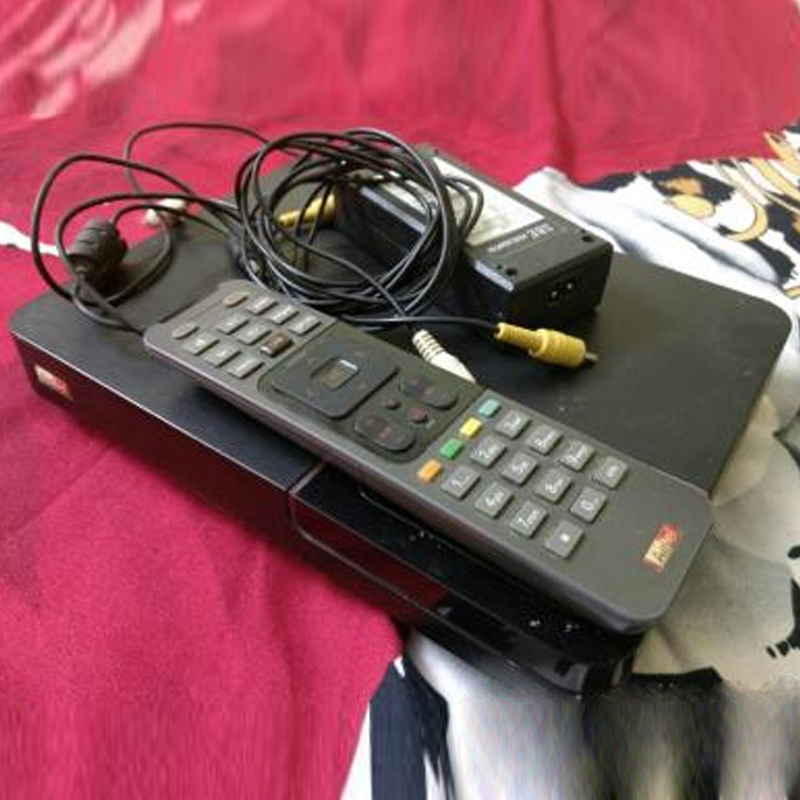
    Airtel ‘Internet TV’ comes with inbuilt-Wi-Fi receiver, Bluetooth based remote control and is integrated with Google voice search feature. Customers can discover their favourite content by simply speaking into the remote and choose from a variety of content sources.

    Airtel ‘Internet TV’ STB enables live TV shows to be paused, recorded or even rewind on connected USB-drive (external HDD). Internet TV supports many digital output ports for consumers to enjoy Dolby ATMOS experience. Inbuilt Bluetooth allows users to connect their speakers or Bluetooth headsets for best-in-class experience.

    Airtel Internet TV requires a broadband or a 4G hotspot connection with a minimum recommended speed of 4 Mbps. Airtel Internet TV customers can also get additional 25GB with their Airtel Broadband plans via MyAirtel App.

  • TRAI tariff: AIDCF impleads in Tata Sky, Airtel Digital pleas

    NEW DELHI: The Delhi High Court today allowed the All India Dgital Cable Federation to get impleaded in the direct-to-home platforms TataSky and Airtel Digital challenge to the Tariff and the Reference Interconnect Orderregulations.by the Telecom Regulatory Authority of India.

    A bench headed by Chief Justice Gita Mittal listed the matter for 16 August 2017 as the Regulations come into force from 2 September 2017. The bench permitted AIDCF to make legal submissions.

    Although the cases were listed separately, the bench had on 12 May 2017 decided to hear the matters together since similar grounds had been raised and had issued notice to TRAI.

    The Court had also issued notice on an application by the two platforms seeking a stay of the tariff order.

    The petitions are seeking an order not only for setting aside these regulations, but also some sub-sections of Section 11 of the TRAI Act 1997 as being violative of the Constitution.

    The respondents are both TRAI and Union of India.

    Indiantelevision.com had earlier reported that the primary problem arises from the fact that all stakeholders will have to abide by the rates fixed by the broadcaster according to the new tariff order.

    The DTH players are agitated not only with the fact that they pay over 85 per cent of the service tax and entertainment tax in the digitised universe, but the fact that their liberty to make their own bouquets may be taken away with the broadcasters having the say in fixing rates for individual channels.

    Apart from the Tariff order which had originally been issued on 10 October last year, the regulator also issued the DAS Interconnect Regulations which had been issued on 14 October last year, and the Standards of Quality of Service and Consumer Protection (Digital Addressable Systems) Regulations which had been issued on 10 October last year.

    TRAI had first come out with a draft tariff order in October 2016 but later issued the orders on 3 March after getting the green signal from the apex court even as a Star India and Vijay TV case was pending in the Madras High Court. The broadcasters have challenged the regulations under the Copyright Act on the ground that content does not come in the ambit of TRAI.

    The Supreme Court on 8 May stayed the operation of the regulations but asked the High Court to dispose of the casewithin four weeks. The High Court has since heard arguments by all parties and has sought written submissions on 27 July 2017.

    Also Read:

    Tata Sky-Airtel case: HC asks TRAI to file reply before 25 July 

  • Republic TV insists it’s FTA, DTH platforms to charge subscribers for viewing?

    NEW DELHI/MUMBAI: Republic TV continues to make news even as it reports views and news. Touted as the country’s truly free-to-air (FTA) news channel, however, what is surprising is that some DTH platforms have put a price on the channel and started charging subscribers accordingly a little over a fortnight after its launch.

    It all started last weekend when a gentleman posted on Facebook “Dus ka dum. #RepublicTV  starts charging Rs 10 pm (Power of 10. Republic TV starts charging Rs. 10 per month).” A flurry of posts — some of them sarcastic — for and against this move followed. We at at Indiantelevision.com decided to go back to  industry to get the real picture.

    In a nutshell this is the scenario: some of the DTH platforms in the country have decided to charge subscribers for Republic TV from a price ranging between Rs 10 and Rs 3 per month per sub; MSOs, at least the big ones, are still keeping the new kid on the block free for viewing, while on popular OTT platform Hotstar, one can sign in with a personalized email or one’s FB account to watch Republic TV for free.

    But, the news channel in question maintained it is still FTA.

    Tata Sky MD & CEO Harit Nagpal, while confirming his company has put a price on Republic TV for subscribers, told indiantelevision.com all DTH platforms are permitted to charge a minimal pre-decided rate for even FTA channels.

    While pointing out rates for FTA channels were fixed by the platform and placed on the website, Nagpal explained such a move (like that involving Republic TV) was permitted under the relevant tariff orders issued by the Telecom Regulatory Authority of India. Though he did not dwell on the actual pricing, some subscribers have reported that Tata Sky is charging Rs 10 per month from its subscribers for Republic TV on ala carte basis.

    According to Videocond2h’s spokesperson, by definition FTA channels are supposed to be free, but there’s a cost that a distribution platform incurs on distributing a TV channel and which has to be recovered.

    Pointing out that there was “no compulsion” to give a FTA channel `free’ to subscribers, spokesperson explained, “The ala-carte price is Rs 3 for Republic TV. Pricing is a matter of continuous discussion on marketing feedback, fine tuning and how competition was doing. The channel might be free, but there is a cost to carry the channel on my platform. If I don’t get any revenue from the channel, how will I recover the (satellite) rental.”

    Though officially it could not be confirmed, but Airtel Digital TV too is charging Rs 3 per month per month from subscribers for Republic TV. As far as the Essel group’s Dish TV is concerned, a scroll from time to time is being run on channel number 771, Republic TV, highlighting that it channel will be available till  the first week of June as part of a free preview scheme, which makes it clear that the platform also may start charging subscribers sooner or later.

    When Indiantelevision.com got across to Republic TV for clarifications, a senior executive insisted on Monday that the news channel was FTA and had no plans to become a pay channel. The executive added that the company would reach out to DTH ops trying to “persuade (them) not to charge for Republic TV and to place it in the FTA package.”

    ALSO READ:

    Republic TV has 51.9% viewership in debut  week: BARC gives data to paid subs despite NBA’s request

    Indian English news channels boycott BARC’s viewership monitoring

    Republic TV, TRAI, NBA and the case of multiple LCNs

    BARC-NBA face-off: Experts feel ad agencies, TV channels will take individual call; resolution best option

  • Tata Sky-Airtel case: HC asks TRAI to file reply before 25 July

    NEW DELHI: The Delhi High Court today issued notice to the Telecom Regulatory Authority of India on two different petitions by direct-to-home platforms TataSky and Airtel Digital challenging the Tariff and the Reference Interconnect Order regulations.

    A bench headed by Chief Justice Gita Mittal listed the matter for 25 July 2017 and directed the respondents to file their affidavits and the petitioners to file counter-affidavits if any before that date.

    Although the cases were listed separately, the bench decided to hear the matters together since similar grounds had been raised.

    The Court also issued notice on an application by the two platforms seeking a stay of the tariff order. (In another matter pending before the Madras High Court, the Supreme Court on 8 May stayed the operation of the regulations till completion of the case in the High Court.)  

    The petitions seeks an order not only for setting aside these regulations, but also some sub-sections of Section 11 of the TRAI Act 1997 as being violative of the Constitution.

    The TataSky petition has been on behalf of the platform and Mr S Ganesan, Chief Financial Officer. The respondents are both TRAI and Union of India.

    Indiantelevision.com had earlier reported that the primary problem arises from the fact that all stakeholders will have to abide by the rates fixed by the broadcaster according to the new tariff order.

    The DTH players are agitated not only with the fact that they pay over 85% of the service tax and entertainment tax in the digitised universe, but the fact that their liberty to make their own bouquets may be taken away with the broadcasters having the say in fixing rates for individual channels.

    Tata Sky CEO Harit Nagpal had earlier confirmed to indiantelevision.com that the platform was moving the Delhi High Court against TRAI on the tariff order. As it is one of the largest among the six private DTH operators, the approximately Rs 50-billion Tata Sky may be joined by other players.

    TRAI had first come out with a draft tariff order in October 2016 but was embroiled in the case in Madras High Court which had initially directed status quo. Later, TRAI had issued the orders on 3 March after getting the green signal from the apex court even as the broadcasters’ case was pending in the High Court.

    Apart from the Tariff order which had originally been issued on 10 October last year, the regulator also issued the DAS Interconnect Regulations which had been issued on 14 October last year, and the Standards of Quality of Service and Consumer Protection (Digital Addressable Systems) Regulations which had been issued on 10 October last year.

    Meanwhile in another matter pending before the Madras High Court where Star India and Vijay TV have challenged the regulations under the Copyright Act on the ground that content does not come in the ambit of TRAI, the Supreme Court on 8 May stayed the operation of the regulations but asked the High Court to dispose of the case within four weeks.

    Also read:

    SC stays new TRAI tariff, asks Madras HC to complete hearing in four weeks

    Tata Sky & Airtel DTH pleas against TRAI tariff in Delhi HC on Friday