Tag: airlines

  • Tata Sons onboards Campbell Wilson as CEO and MD of Air India

    Tata Sons onboards Campbell Wilson as CEO and MD of Air India

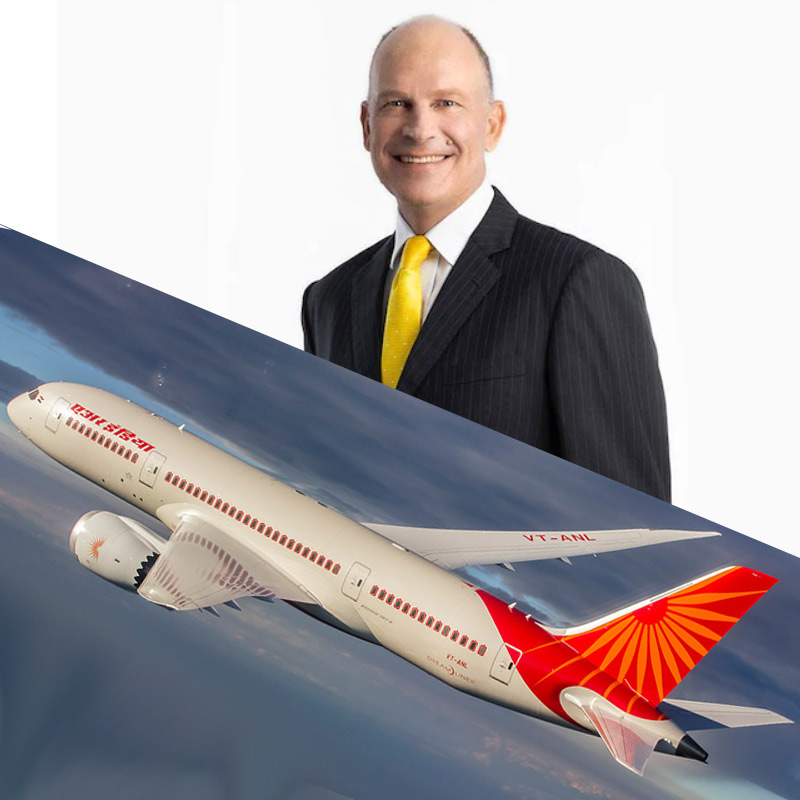
    Mumbai: Tata Sons on Thursday appointed Campbell Wilson as CEO and managing director of Air India. Wilson headed Singapore Airlines’ budget carrier Scoot prior to joining the Indian carrier.

    The Air India board approved the appointment subject to requisite regulatory approvals, the group said in a statement.

    Commenting on the appointment, Air India chairman N Chandrasekaran said, “I am delighted to welcome Campbell to Air India. He is an industry veteran having worked in key global markets cutting across multiple functions. Further, Air India would benefit from his added experience of having built an airline brand in Asia. I look forward to working with him in building a world-class airline.”

    Wilson has 26 years of aviation industry expertise across both full service and low-cost airlines. Having started off as a management trainee with Singapore Airlines (SIA) in New Zealand in 1996, Wilson then worked for SIA in Canada, Hong Kong and Japan before returning to Singapore in 2011 as the founding CEO of Scoot, which he led until 2016.

    He further served as the senior vice president sales and marketing of the airline, before returning for a second stint as the CEO of Scoot in April 2020.  Wilson holds a master of commerce degree in business administration from the University of Canterbury in New Zealand.

    Speaking on his appointment, Wilson said, “It is an honour to be selected to lead the iconic Air India and be a part of the highly respected Tata Group. Air India is at the cusp of an exciting journey to become one of the best airlines in the world, offering world-class products and services with a distinct customer experience that reflects Indian warmth and hospitality. I am excited to join Air India and Tata colleagues in the mission of realising that ambition.”

    Earlier in March this year, Tata Sons had announced the appointment of former chairman of Turkish Airlines Ilker Ayci for the same post. However, Ayci had declined the post amid controversies over his political views pertaining to the Indian sub-continent.

    The Tata Group took back the management and control of Air India in January this year, after completing the beleaguered airline’s purchase back from the government of India. In a homecoming for the homegrown airline, Air India was handed back to its founders which began operations as Tata Air Services in 1932, before being nationalised.


  • Star Plus takes a leap in storytelling with ‘Badtameez Dil’

    Star Plus takes a leap in storytelling with ‘Badtameez Dil’

    MUMBAI: The country’s numero uno general entertainment channel (GEC) Star Plus is definitely keeping pace with the changing taste of viewers. Star Plus, over the years, has changed the way GECs told stories and made the characters a household name.


    A year back, with shows like VeeraPyaar Ka Dard Hai Meetha Meetha Pyaara Pyaara,Yeh Hai MohabbateinEk Hassena ThiIndia’s Raw StarAirlinesNisha Aur Uske Cousins and Everest – the channel had moved its programming strategy towards youngsters.


    Star Plus general manager Gaurav Banerjee once stated that with consumer’s taste evolving, the channel, which entertains the youngest democracy in the world, needs to change as well. And more recently with Tu Mera Hero, Tere Shehar Mein and Dosti, Yaariyan, Manmarziyan, it has touched the hearts of the youth.


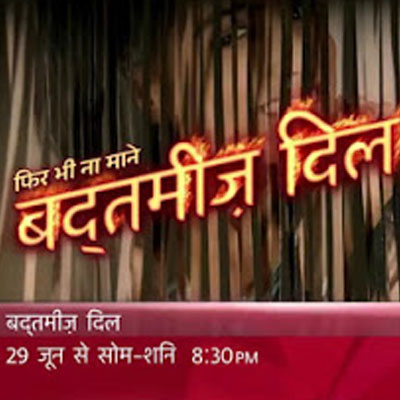
    Taking another leap in storytelling, the channel has launched Phir Bhi Na Maane… Badtameez Dil, a love story between a VJ and a business head. Produced by Tequila Shot Productions’ Saurabh Tewary, it will air from 29 June from Monday to Saturday at 8.30 pm.


    On the title of the show, Tewary believes that it is very important to name the show, which is clutter breaking. “In today’s scenario, the first communication that happens is the name and we wanted it to be little different at every level. Today, if anyone is discussing the name of the show for 30 seconds or a minute, I think the job is done,” he states.


    The story is about two characters who get separated because of their misunderstandings and the manipulations of others only to meet again after seven years to resolve the unsettled issues and misunderstandings.


    Tewary reveals that the narrative of the show is very different and because the narrative is different, it wanted to name the show slightly hatke. The characters are slightly edgy and over-the-top, but the production house has managed to keep it within the family space making it a hardcore family show.


    Abeer Malhotra, played by Pearl V Puri is a VJ with Groove Music channel who leads a charming and luxurious life. Whereas Asmita Sood, who plays the character of Meher Purohit, is a practical and dedicated woman who is the business head of the same music channel and has reached this pinnacle of life with a lot of hard work.


    For the first time on Indian television, a daily soap will have an album of five songs recorded exclusively for it, which is sung by Darshan Rawal, the runner up of the singing reality show, India’s Raw Star.


    Finite Love Story


    Tewary reveals that he plans to make it a finite show and thus has decided to create only 300-350 episodes. “It is impossible to narrate a love story for ages and ages. Love stories are always finite shows and cannot be kept running for a longer period otherwise the show will lose its relevance and visibility,” he reasons.


    Challenging to produce content for six days a week


    Tewary feels that producing a daily fiction for six days a week is a challenging job and becomes far more difficult when it is a love story. “In a love story there are not multiple tracks and it is generally around two characters and one has to write episodes and scenes around those two characters. And the moment you shift the gear from those two characters to the other, your show starts falling and at the same time you are creating content for six days a week which is little tough to crack,” he said.


    He explained that it puts a lot of pressure on writers and the entire crew and team. “But I guess, this is the kind of madness one needs to deal with when you know that the outcome has to be good,” he said.


    Tewary has written the episodic story. However, apart from him there are another six writers onboard. As of now, the production house has canned 12 episodes and by the time the show goes on-air, it will have another six-seven episodes ready to go.


    Demanding Time Slot


    The show will be competing with other shows like Jamai Raja on Zee TV, Taarak Mehta Ka Ooltah Chashmah on Sab, Udaan on Colors, Muh Boli Shaadi on Sony Entertainment Television (SET) and Kalash…Ek Vishwaas on Life OK.


    Tewary believes that all these are different shows, from family drama to social based to a family entertainer and he wants to cater to all the audiences, which these shows in today’s scenario absorb. “That is why we have kept the base like that and designed the story in that particular manner. We want to cater to the larger audience base starting from 16 years to 30 years old,” he concluded.

  • Hindi GECs 2014: The year of experimentation

    Hindi GECs 2014: The year of experimentation

    MUMBAI:  Experimentation, experimentation and experimentation. 2014 was the year when India’s Hindi general entertainment channels (GECs) went to the lab and tested out many new programming concoctions for the Indian viewer.

    Whether it was in the form of new channels or new programmes or new time slots or episode budgets, channel and creative heads played the quintessential scientist.

    Three new channels emerged in the specialised Hindi GEC space: Sony Pal, Zindagi and Epic TV. They had yet to make a mark on Indian viewing habits, though Zindagi was the only one that got the thumbs up from TV critics. 

    Star Plus continued to lord it over all in the ratings space for most of the year, but the second, third, and fourth spots witnessed a see-saw battle between Zee TV, Life OK and Colors. Sony, which once ranked second amongst GECs sank to a lowly sixth position during 2014 even as it’s flanking laughter channel Sab, stayed steady through 2014 at the fifth spot.  The year also saw the near demise of what was once the No. 4 GEC – Sahara from the troubled Subrata Roy-run Sahara Group.

    Star Plus: The year started on a good note for Hindi GEC market leader, Star Plus.  An extra dose of fiction entertainment was on offer to the audiences. It made a strategic move of extending its prime-time (6 pm – 11.30 pm) weekday fiction band to Saturdays too. The move worked wonders for the channel and helped further to maintain its Numero Uno position on the ratings chart.

    Taking a cue from the runaway success that Colors’ Comedy Nights with Kapil had raked in, the channel launched Mad in India, placing it head to head with it. But sadly, Gutthi (Sunil Grover) failed to connect with the audiences. 

    In a bid to attract the younger Indian demographic to the channel, it decided to focus on real urban stories, rather than melodrama based on the heartlands. It took the big budget, limited episode route, streamlined its programming and made the channel look peppy.

    On offer for traditional Star Plus viewers was the YoYo Honey Singh- backed India’s Raw Star (IRS), the more current and urban-based Airlines and film-maker Ashutosh Gowariker’s Everest – a story about a girl wanting to clamber on to the world’s largest peak and the city-focused Nisha Aur Uske Cousins.

    Just as 2014 was ending, it unveiled, the spell-binding Private Investigator (PI) and Tu Mera Hero.

    Aamir Khan’s much talked-about Satyamev Jayate (SMJ) made a comeback in two seasonal parts in keeping with CEO Uday Shankar’s commitment to do socially-relevant programming. Estimates are that while IRS entailed an investment of Rs 55 – 60 crore, SMJ cost Rs 4 crore an episode and Everest about Rs 50 lakh an episode. These are the budgets that TV producers have been dreaming of.                                                                                                                                                                                       The heavy investment was worth it as the network’s sales folks managed to make advertisers fork out Rs 3.5 – 4 lakh per 10 seconds spot and Rs 6 – 12 crore per sponsor for SMJ (Airtel was the presenting sponsor with Aquaguard being the co-sponsor and Coca-Cola, Johnson & Johnson, Skoda Auto, Axis Bank, Berger Paints and Dixcy Scott, the associate sponsors) and Rs 3.3 – 4 lakh per 10 second spot for IRS. Almost all the inventory for the shows was sold out, making it a win-win year for Star Plus.

    With many launches to its kitty, the channel executives had to bring the curtains down on some earlier shows: finite mythological series Mahabharat and drama Saraswatrichandra.  The former helped Star Plus get a tremendous connect with mythological show lovers, and its producer Swastik Productions walked away with many awards.

    The Sanjay Leela Bhansali produced Saraswatrichandra, which was handed over to the Sanjoy Wadhwa run Sphere Origins, too ran its course and was shut down in 2014.

    On the other hand, existing fiction shows have always been great contributors to Star Plus’ ratings. To connect with the youth a lot more, storylines changed to have a progressive outlook. Diya Aur Baati Hum continued to grab eyeballs as it turned out to be the highest-rated No. 1 fiction show across all channels, followed by series like Yeh Hai Mohabbatein and Yeh Rishta Kya Kehlata Hai. Shows like Veera and Saath Nibhana Saathiya too continued to win over audiences this year.

    Colors: The year saw a tug of war between Colors and Zee TV for the second position. Colors finally won the battle and stood steadfast at No. 2. What created the magic for the Channel in 2014?

    Colors this year created a league of its own with its strong non-fiction portfolio. From the fifth edition of Fear Factor: Khatron Ke Khiladi with the tagline ‘Dar Ka Blockbuster’ to India’s Got Talent, from Jhalak Dikhlaja to Bigg Boss 8, it has kept viewers on the edge of their seats and given them a dose of entertainment 365 days of the year. Comedy Nights with Kapil too contiued to make people laugh and stood strong at the ratings chart.

    The fact of the matter is that advertisers have never shied away from investing in these brand properties. For Jhalak, the channel had increased its ad rates by 15 – 18 per cent over last year whereas for Bigg Boss it hiked them by a whopping 30 per cent.

    Apart from a different theme, the 2014 season of Bigg Boss observed a lot of brand integrations on the show. To go beyond the 10 sec to 30 sec TVC, it had brands from TVS Scooty Zest to Britannia; from Garnier Men’s Products posters to using Oppo Smartphones for any task.

    Another highlight was that after five long years, the channel changed its title sponsor with Vodafone dropping out and Snapdeal coming in.

    Further strengthening its non-fiction band, for the very first time the channel launched a celebrity talk show – The Anupam Kher Show Kuchch Bhi Ho Sakta Hai. The finite series was hosted by actor-producer Anupam Kher.

    On the fiction front, with new shows failing to deliver good numbers, old programmes continued to shine and the longest-running series Balika Vadhu is a case in point. Madhubala too won the hearts of many until mid-year and sadly had to end its three-year sojourn with the channel.

    To encourage appointment viewing, it got on-board new and riveting shows like Udaan, Shastri Sisters and Meri Aashiqui Tumse Hi.

    Star Plus’ loss was Colors gain as it went about cherry picking most of the prime events:  Sansui Colors Stardust Awards; from the sixth edition of Mirchi Music Awards to Indian Television Academy Awards, to the 13th Indian Telly Awards.

    It also announced its association with RFS Entertainment to captivate Indian audiences with Got Talent World Stage Live. Hosted by the badshaah of Bollywood, Shah Rukh Khan, it is a first-of-its-kind global on-ground extension of Simon Cowell’s Got Talent franchise.

    Zee TV: It was a year of back-to-back launches for Zee TV. The channel which takes pride in creating original non-fiction formats has had many firsts to its name.  Be it Sa Re Ga Ma Pa, Dance India Dance (DID) or Antakshari, it has consistently tasted success with its non-fiction originals in a market dominated by internationally-acquired formats like Bigg Boss and Kaun Banega Crorepati (KBC).

    Zee’s first attempt with Cinestars ki Khoj, an acting-based reality show in 2004, did not work out. After almost a decade, this year it was miraculously brought back which in its first edition gave recognition to actors like Ankita Lokhande (Archana Deshmukh on Zee TV’s Pavitra Rishta). But once again it did not really set the ratings chart on fire.

    After a year of non-fiction shows on weekends, Zee TV decided to give DID a break. With an aim to strengthen its weekend slot with fresh content, the channel got on-board for the first time a superhero trilogy called Maharakshak Aryan simply to engage with the family a lot more. 

    The channel felt that an original superhero series was a fresh theme. From its slick production values to innovative visual effects and ingenious cinematography, the show has definitely raised the bar for action thrillers and the fantasy genre on Indian television. To further strengthen its weekend slot, it also launched a light-hearted show titled – Neeli Chhatri Wale.

    For Zee TV, India’s first private Hindi GEC channel, launching a number of new shows in a year is nothing new. What is noteworthy is the fact that the channel has produced the top four weekday fiction launches of 2014. That’s quite an achievement.

    If one takes a look at the opening week averages of all the fiction launches across GECs for the year, it is very clear from the numbers as to who has ruled the ratings charts.

    Jamai Raja leads the pack with 5,488 TVTs, Satrangi Sasural that opened in week 49 with 4,970 TVTs, stands at number two,  Bandhan with 4,366 TVTs and Aur Pyar Ho Gaya with 4,044 TVTs followed at number three and four respectively.

    Its other prize property, Kumkum Bhagya, too has done well. After a six-year stint, the channel’s longest running and most popular series – Pavitra Rishta sadly had wound up.

    On 23 June, the Zee TV network launched Zindagi to break free from the stereotype framework and melodrama with shows never before seen on the Indian small screen. True to its philosophy and tagline Vasudhaiva Kutumbakam, shows like Humsafar, Maat, Kitni Gir hain Baaki Hain were handpicked from across the border.

    Life OK: The channel, which is not your run-of-the-mill type catering to the entire family, has played a different game in 2014. This year’s highlights include its first big-ticket Bollywood event, The 20th Annual Life OK Screen Awards. The show registered a whopping 9 million TVTs, three per cent more than the 6.9 million TVTs (ratings provided by Life OK itself) garnered by Colors from its last year’s edition.

    Riding high on the success of Screen Awards, the channel decided to get more Bollywood stars on-board and launched Life OK Now Awards which celebrates excellence in the field of film, television and music every month.  The popcorn generation was its target over a successful three-months run.

    Its belief was in narrating a variety of stories from different walks of life. It thus launched an action-packed serial – Pukaar – Call for the Hero. With a different perspective, Pukaar had men as the main protagonists. Based on a story with an army background, it saw well-known film producer-director Vipul A Shah making his debut on television. Close to Rs 13 lakh has been spent per episode on production.

    Life OK too took the comedy route with Comedy Classes – but the show quickly fizzled out.

    Not only did big film producers make their way to the network, but the channel attracted a lot of film celebrities too. To make the content line-up bolder and stronger, it got an action reality series – Dare 2 Dance with celebrity Akshay Kumar as its host.

    On the fiction front, viewers saw gorgeous actress Sonali Bendre making her debut on television with the series christened – Ajeeb Daastan Hai Yeh. Actress Bhagyashree too made her debut on television with a gutsy series – Laut Aao Trisha.

    Moreover, after a successful three-year run, the channel’s flagship property Mahadev saw its shutters come down and this paved the way for a new show Mahakumbh- Ek Rahasya, EkKahani. The channel’s crime properties – Savdhaan India and Shapath continued to fly high on the ratings chart.

    Sab TV: This family channel from the Multi Screen Media (MSM) stable, can be credited for the rise in the comedy genre with its popular shows Tarak Mehta Ka Ooltah Chashmah, Lapataganj and Chidiya Ghar, by experimenting with a new format based on live audience participation titled Tu Mere Agal Bagal Hai.

    The sitcom was like no other. The cast acted in front of a live audience which the channel believed was the USP of the show. Launched as a daily soap, it was penned as a finite one. Again, a first of its kind, the channel launched India’s only alien comedy TV serial – Badi Door Se Aaye Hai.

    Tarak Mehta Ka Ooltah Chashmah continues to win the hearts of many and is the chart leader. Not only that, but the team was also invited by our country’s PM Narendra Modi to help him with Swachh Bharat Abhiyan campaign.

    F.I.R continued to be very gripping. In between for a month (July – August), the show tried a stint of stand-up comedy with live audience but failed to capture viewers.

    Sony Entertainment Television (SET): It was a year of struggle for Sony and it ended the year at the bottom rung of the TAM TV ratings ladder. This despite the fact that it experimented with concepts, shows, formats and even programme and marketing spends.

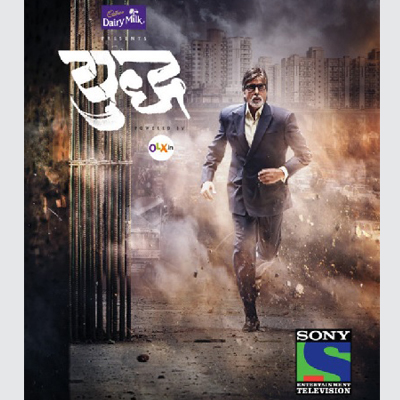
    The channel’s hopes were riding high on Amitabh Bachchan’s fiction debut Yudh, but the dark content was unpalatable. The 20-episode drama launched in July dashed all hopes as it only made around 1,199 TVTs in its opening week. The buzz generated around Big B failed to translate into ratings.

    What clicked this year was its only famous property – Kaun Banega Crorepati 8, giving some respectable numbers to the channel to barely survive. This time around, it moved out of its comfort zone, set in Film City with the launch and mid-season episode being shot like events in Surat and Raipur with live audiences. It also went on a big bang 360 degree promotional exercise with 100 on-ground events. The channel spent an outrageous 30 per cent of the total budget on marketing.

    Sony is pinning its hopes high on yet another launch, another high-investment property – Box Cricket League (BCL), a sports reality show. Played with a soft ball and filmed in a studio it will have 19 matches with around 120 celebrities playing the game.

    Fiction turned out to be a near disaster for the channel. Its biggest fiction launch of the year – Itna Karo Na Mujhe Pyaar with Ronit Roy, did not do as well as it was expected. But both, Balaji Telefilms, the producer and the channel’s management think it will build on its viewers over time.

    Other fiction series like Humsafars, Hum Hai Na and Tum Aise Hi Rehna have only a glimmer of hope. The only silver linings are the channel’s crime and investigation properties – CID, Crime Patrol and Adalat and the historical Maharana Pratap.

    MSM launched a new channel – Sony Pal on 1 September aimed at women and housewives with stories about the fairer sex and family. With the ‘Yeh Pal Hamara Hai’ tagline, it was meant to compliment its sister channels Sony Entertainment and Sab. It launched with nine new shows and Juhi Chawla as its face. Pal like the network’s other GEC initiatives did not make much headway with viewers.

    As the year came to a close, another big experiment saw the light of day with the launch of Epic TV. After a wait of almost a year or more. Headed by former Disney executive Mahesh Samat, Epic is India’s first genre-specific Hindi entertainment channel.

    Covering genres ranging from action, drama, comedy to narrative non-fiction, it seeks to celebrate India’s heritage by creating unique and original content within Indian history, folklore and mythology, using a contemporary story-telling format.

    Discovery Communications India too entered the Hindi enertianment space, with the launch of its Investigation Discovery (ID) channel.

    Hopefully, India’s demanding TV viewers will lap it up. And hopefully, India’s GEC executives will continue to experiment in 2015 and possibly continue with their efforts to redefine India TV audience’s entertainment tastes.

  • Star Plus set to change Sunday viewing with ‘Airlines’

    Star Plus set to change Sunday viewing with ‘Airlines’

    NEW DELHI: With an aim to strengthen its Sunday prime time band, Star Plus is treading a different path yet again. After making Sunday morning’s special for viewers by bringing home uncomfortable realities with Satyamev Jayate, the Hindi general entertainment channel is now looking at filling its prime time slots as well, but with differential programming.  

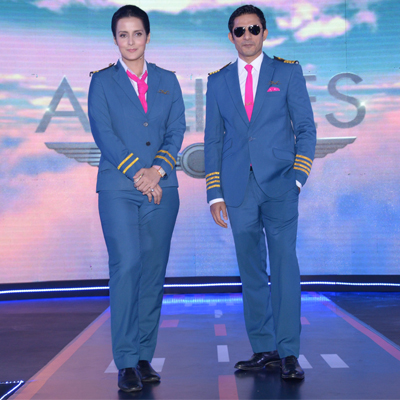
    Initially, when weekends meant only dominance of reality shows, the channel wanted to explore more in that space. And now after exploring various genres including saas-bahu syndrome and mythology with Mahabharat, it is ready to take to the skies with Airlines – Har Udaan Ek Toofan but with variations.

    Come 24 August and every Sunday 9pm, viewers will witness a story of a woman who dares to join the airline industry as first officer initially and ultimately becoming a pilot. Produced by Miditech, the series is penned for 26 episodes as of now and could see an increase in the number of episodes depending on the response from the audience.

    The channel has roped in Fortune cooking oil as the title sponsor, Havell’s as co-title sponsor and Ariel, the co-sponsor for the show. The associate sponsors are askmebazaar.com, Colgate Visible White, Maybelline, Parachute Advanced and Sofy Bodyfit.

    According to Star Plus SVP – marketing Nikhil Madhok, the series with title sponsor in Fortune cooking oil for standard definition (SD) feed and Forest Essentials for the HD feed is already profitable as it has been pre-sold.

    The programme marks the TV debut of Tulip Joshi who plays Ananya and VJ turned actor Yudishthir aka Yudi who will be seen essaying the role of Captain Akash. It has been penned by Advaita Kala, who also authored the movie Kahaani.

    Kala said that the concept is based on her own experiences of the way the modern urban woman is changing. Through the story, she wanted to show how a woman who has already entered a male-dominated world copes with it.

    Set in Delhi, the show features the journey of first officer Ananya Rawat who navigates through a world of gender discrimination and regressive attitudes embedded in the modern and glamorous aviation industry. In her quest to establish her identity, Ananya realises that there is more to this industry than just battling male attitudes as she comes across many hindrances that eventually make her a stronger person.

    Madhok believes that after delivering hits like Satyamev Jayate and Mahabharat, the channel with the new programme will be breaking the saas-bahu mould, showcasing a clear shift from the normal programming aired on all channels. The focus for the channel was on the role of a female in a male-dominated profession.

    The series is the first to have received permission to shoot inside the Indira Gandhi International Airport’s Terminal-3. From roping real pilots for tutoring actors to shooting at existing terminals, the makers and channel has put in their best to retain authenticity of the situations and incidents covered in the show. Since most of the sequences required the setting to be inside an aircraft, a special set modeled on Boeing 370 has been created.

    Miditech has also collaborated with Pixion to help recreate the world in the skies with its unparalleled proficiency in computer graphics and visual effects.

    But why make it into a once-a-week show? Answers Madhok, “It is because of the huge work involved in creating each episode.” According to industry sources, while a normal Hindi daily soap production cost ranges anywhere between 6-8 lakh per episode, a series like this could cost around three times more than what a daily does.

    On the marketing front, the promos are already doing the rounds on 25 television channels. To attract the younger audiences, social media will be used in a big way to promote the property with integrations also with YouTube, Yahoo and MSN.

  • Does ‘finite’ spell death for long sagas?

    Does ‘finite’ spell death for long sagas?

    MUMBAI: Once upon a time, there was only Doordarshan and viewers lapped up whatever it served without complaint. Then came the satellite and cable TV explosion, giving DD a run for its TRPs. That’s when daily soaps like Kyunki Saas Bhi Kabhi Bahu Thi and Kahani Ghar Ghar Ki and KumKum became popular, carrying on for years at a stretch, without audiences, especially women, tiring of them.


    However, viewers today are an altogether different breed and broadcasters cannot engage them in the same manner, given their restlessness and constant need for new, fresh content.


    A common tactic fast gaining traction among broadcasters is opting for limited episodes not just in non-fiction but also in the fiction space. Does this mean death for the long sagas of yore? Indiantelevision.com spoke to a cross-section of industry to find out.


    Given that Star India is all set to launch three finite shows Airlines, Hospital and Everest next month, we asked Star India senior vice president programming Ashish Golwalkar whether finite shows had already become a trend?


    “Trends are formed on the basis of consumers. Our consumers are our viewers. It is not yet a trend, because people have to come and see success. By the nature of content, non-fiction always had limited episode series, but in fiction, that wasn’t happening and we thought if we could offer something fresh and different. Currently, we all are experimenting,” he replied. “At Star Plus, we constantly endeavour to give something fresh to our viewers. In order to do that, we think there is a set of talent that works for television.”


    Recalling the good old DD days when legends like Shyam Benegal penned finite series for the channel, Golwalkar said, “Legends used to work for television and all of a sudden, they all disappeared. And we realised that television is very tiring. To produce for six days a week is very tough, but we are happy that we have cracked it and there is where the numbers are coming.”


    Stressing that there was a need for people who could bring a fresh new perspective to storytelling, he said, “But all those creative people and creative talent, they will never be able to do a show that will last for two to three or five years. The other reason is that while there are shows which keep going on and on, there are other shows which just have a finite story.”


    Speaking of Channel V which believes in doing bi-weeklies and has been fairly successful at that, Golwalkar said, “When we at Channel V select those stories, we realize that at the end of the day, our selection has to be based on the story and not on our convenience. We do not want to unnecessarily stretch shows. If there is a show which can go beyond 10 years, let it be. But if there is a show which needs to close in 25 episodes, then let that be.”


    “When you know it is a finite show, the net of story selection widens. So now, you have more number of stories to tell. Technically, in a traditional conventional way, we wouldn’t select those stories, here we can,” Golwalkar added.


    He expressed the view that if the shows being launched in the coming months get a good response, they would definitely introduce more finite series in future. “Because of the change in the content of ecosystem, if we can get fresher and different talent and different stories which are limited in nature and if viewers respond well to it, maybe later on, we will think of doing all our shows like that,” he said.


    Shows like 24 on Colors and Encounter on Sony demonstrated the rise of finite in the non-fiction space. At the same time, Sony Entertainment Television’s big bet with Amitabh Bachchan’s Yudh saw the rise of finite fiction as well.


    Sudhir Sharma of Sunshine Productions said broadcasters and viewers were becoming more quality- and content- conscious day by day and keeping that in mind, limited episode series were definitely coming in a big way. “Almost all broadcasters are doing this. The reason behind this is better control on content and it’s very sharp and worked out content so your quality definitely goes up,” he said.


    With this move however, the challenge would be to attract viewership in a big way. “Now, the task for broadcasters is how to attract new viewers, because viewership is getting stale from the last two to three years and the numbers are dipping day-by-day for all Hindi GECs. However, it doesn’t mean that daily soaps will vanish. They are here to stay because there is a large number of viewers and their staple TV diet continues to be soaps,” Sharma said.


    Beyond Dreams producer Yash Patnaik said that finite fiction was not a new trend but a trend that had made a comeback recently. “The advantages of finite series are you can pack the story, you know the beginning till the end. So, drama can be created at a different level,” he said.


    According to Patnaik, thrillers would work best in the finite fiction space. “It is another variety of entertainment where you don’t need a commitment to watch for a longer time… particularly in a finite series, a thriller falls into this category better… because you can’t drag a thriller for long.”


    Patnaik said finite series would do well for broadcasters and would have their own set of audiences. “It all depends on the slots the channels are planning to put and the kind of audience they want to create for finite series. They will have their own set of viewership and good finite series on a good platform will definitely work,” he concluded.

  • Star Plus goes for finite fiction on Sundays

    Star Plus goes for finite fiction on Sundays

    MUMBAI: With an overkill of reality shows during weekends on most television channels, Star Plus is taking the road less travelled. The popular GEC will air its existing fiction shows from Monday to Saturday and if sources are to be believed, starting end June or beginning July, it will launch three finite fiction shows to be telecast exclusively on Sundays every week.

    The trio is expected to fill up vacant slots left after Mad in India was pulled off air after it failed to live up to audience and channel’s expectations.

    “Star Plus is known to create content which is different from other offerings. At a time when other channels are focusing on non-fiction properties, we at Star have decided to take a completely different route with finite fiction shows,” a source told this website.

    It is learnt that of the three new shows, the first, produced by Miditech India, revolves round the aviation industry and is tentatively titled Airlines.

    Host of The Great Indian Love Challenge on NDTV Good Times, VJ Yudhishtir aka Yudi, will play the male lead while Mere Yaar Ki Shaadi Hai fame Tulip Joshi, who made her Bollywood debut as Sanjana will be cast as the female lead. Shooting is already said to have started in the capital.

    A la Anil Kapoor’s Hindi version of American series 24 on Colors, Star Plus’ second show will be the desi adaptation of Shonda Rhimes’ hit series Grey’s Anatomy starring Ellen Pompeo, Sandra Oh and Patrick Dempsey. Tentatively titled Hospital, the series will be produced by Endemol.

    The third is Ashutosh Gowariker’s much-hyped show Everest which tells the story of a young girl who wants to prove her mettle to her father by living his dream of scaling the Mount Everest. The shoot took place not so long ago at the Nehru Institute of Mountaineering (NIM). Everest stars Rohan Gandotra who is seen in the new Dermicool ad and Shamata Anchan who appears in the Garnier commercial. The 25 to 30 episode show will have a finite beginning and a finite end, according to the same source.

    In addition to these three shows, rapper-actor Yo Yo Honey Singh of Blue hai paani paani fame will make his small screen debut with a music reality show called India’s Raw Star which aims at tapping raw talent from all corners of India.

    Singh will be seen as judge cum mentor on the show. The promos are already out on the digital platform and feature Singh egging on young singers to think out of the box to get an entry into the show.

    At the time of penning this article, the video uploaded on YouTube had already got more than 55,000 views. The auditions too will be only through digital where contestants will have to shoot their music videos and upload the same on the show’s official website. India’s Raw Star is likely to go on air by end July and will mostly be telecast on Saturday and Sunday.

    Participants can log on to www.starplus.in/indiasrawstar via web or mobile. Alternatively, one can           download the India’s Raw Star mobile app and submit his/her audition video along with the requested details.

    A media planner expressed the view that having finite shows over the weekend is advantageous. “I think this different approach will do well for the channel. Understanding the nature of the audience and their requirement, I think it’s the right step taken by the channel, where others are ruling in the dancing and comedy space. But only worry is the content. It should have a strong reason for making people switch to another channel when they are used to watching dancing and comedy,” he said.

    Click here to watch the promo

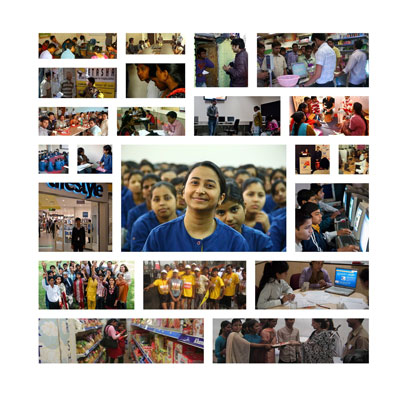
  • Vocational training Generating Employable India

    Vocational training Generating Employable India

    NEW DELHI : Around 38-40 per cent of Indian population, between the age group of 14 and 25, who are on the verge of entering different skill level jobs do not possess marketable skills which are an impediment in getting decent employment and improving their economic condition. To counter this challenge, they require tailored short-term courses which directly lead to employment. This need is boosting the vocational education sector and opening numerous investment opportunities to investors as well.

    The major segments in vocational education and training businesses in India include the various trades related to restaurant, retail, IT training, airlines, and so on. Vocational education in India aims to develop skilled manpower through diversified courses to meet the requirements of mainly the unorganised sector. Also, the education aims to impart selfemployment skills in people through a large number of self-employment oriented courses.

    Gaurav Marya, Chairman, Franchise India, “The role of vocational education in facilitating social and economic development has long been recognized by the Indian government. Vocational education improves functional and analytical skills and, in turn, opens up opportunities for persons to achieve greater access in the industry.”

    There are various educational institutes participating at India Franchise Show 2013 to expand further franchisees at bigger platform. Few of them are Jaipuria, Aisect, Gras academy, Learning place and many more.

    The vocational education market in India is anticipated to grow at a CAGR of around 25 per cent during 2011-2015. The current market size is of USD 4.8 billion and is forecasted to scale up to USD 7.3 billion by the end of 2015.