Tag: Aircel

  • Twitter executive Arvinder Gujral moves on after eight years

    Twitter executive Arvinder Gujral moves on after eight years

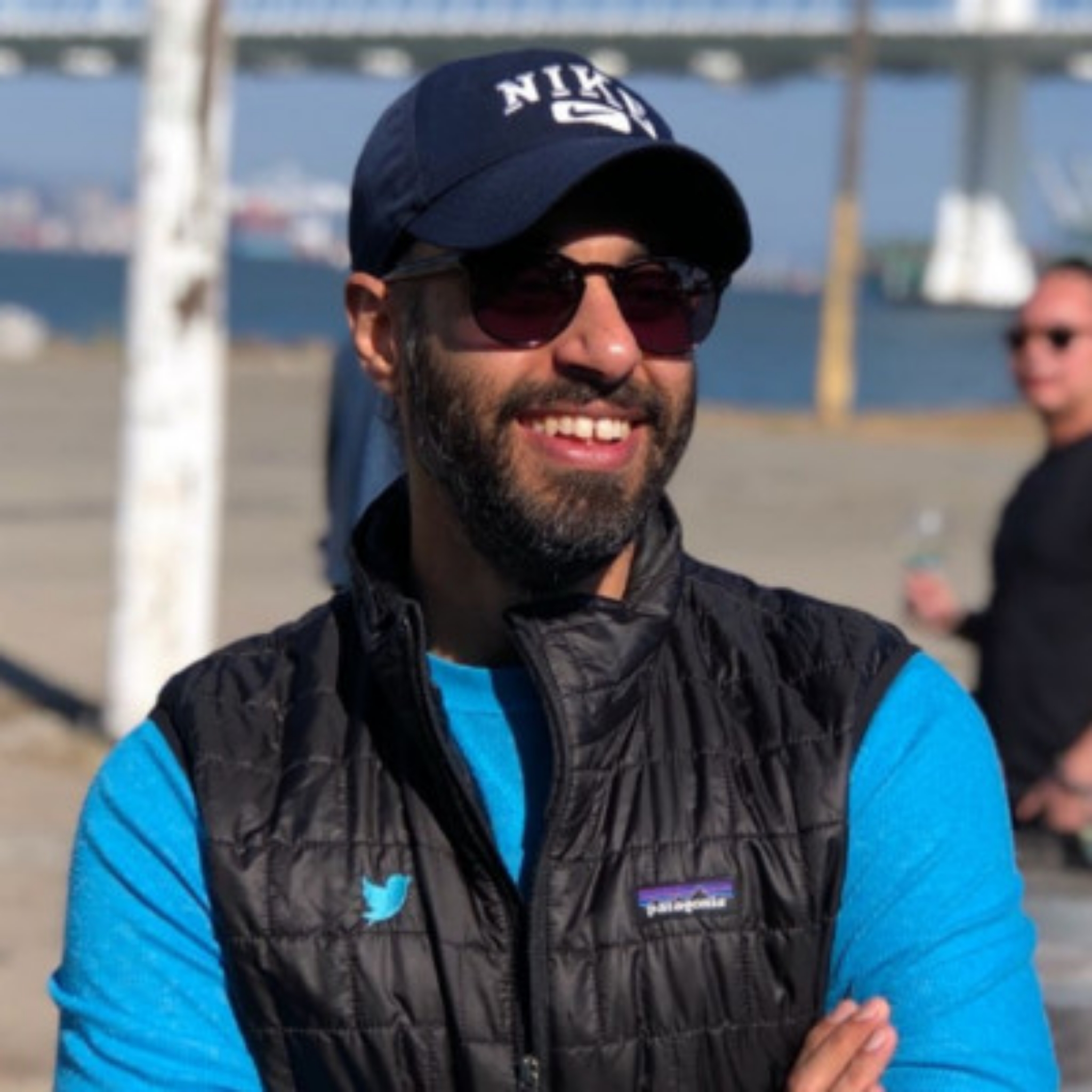
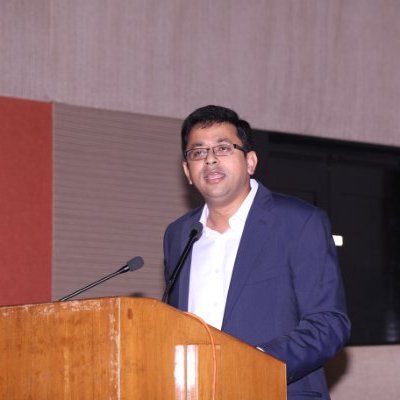
    Mumbai: Twitter managing director, SE Asia, and senior director-business development, APAC, Arvinder Gujral has quit the company after an eight-year stint.

    “After eight years it’s time to say goodbye to the Blue Bird. From helping set up Twitter India in 2013 and running APAC BD to pivoting the SEA team to become one of the fastest growing revenue and audience markets for Twitter globally it’s been an incredible ride,” Gujral said in a LinkedIn post.

    Gujral had joined the micro-blogging platform in 2013 as senior director-business development Asia Pacific. He was given the additional responsibility of leading SEA as MD in 2017. He launched the service in new markets in SEA besides expanding partnerships in the region with media companies, governments, agencies, and clients. He was also the founding member of Twitter India in 2013 where he helped set up India operations which today has three offices.

    Gujral is an executive leader commanding over 22 years of experience in internet, media, telecom, tech consulting, and advertising. Prior to Twitter, he was at Aircel where he launched the brand nationally. Gujral was previously associated with companies like Infosys, FCB Ulka and iGATE. His next move is still unknown. 

  • SPNI ropes in Rohan Jain as marketing head for English channels

    SPNI ropes in Rohan Jain as marketing head for English channels

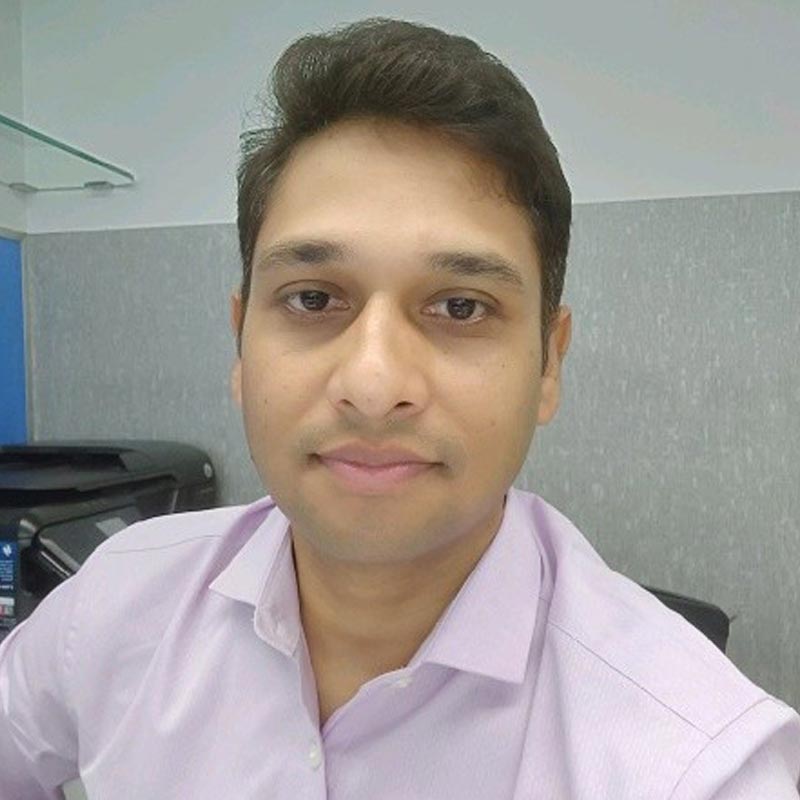
    MUMBAI: Sony Pictures Network India (SPNI) has hired Rohan Jain as head of marketing – English channels, a source close to the development informed Indiantelevision.com. Prior to joining the broadcaster, Jain was the head of marketing at Vodafone-Idea.

    Jain will report into EVP and business head of English channels Tushar Shah.

    The responsibilities of Jain’s current role were earlier helmed by Neville Bastawalla. The latter is now in charge of marketing for SPNI’s sports cluster.

    Jain’s experience spans over 14 years as a marketing professional with expertise in product management, brand management, customer segmentation, and lifecycle management.

    Before the merger of Vodafone Idea, he worked with Idea cellular for almost eight long years. He has also had stints at other telecom majors like Bharti Airtel and Aircel.

  • Star India moves Basant Dhawan from sports to entertainment biz

    Star India moves Basant Dhawan from sports to entertainment biz

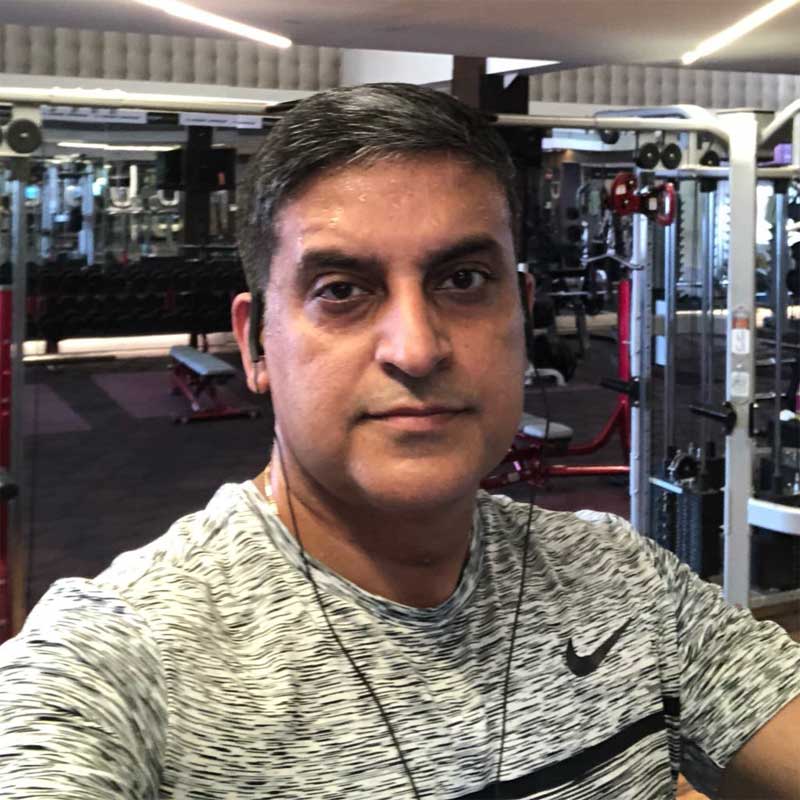
    MUMBAI: Star Sports senior VP, brand solutions and sponsorships Basant Dhawan has been shifted to entertainment business by the group. He will be working as national agency head, which will contribute to the growth of the entertainment ad sales business.

    His earlier role included product and revenue strategy and sales functions. He was responsible for creating pricing and revenue assets, product packages along with sales for all new sports leagues that Star has been associated with, including Pro Kabaddi League (PKL), football leagues and Premier Badminton League (PBL). 

    Prior to Star India, Dhawan was the general manager-media in Vodafone India services. He has worked with auto, telecom, media and entertainment industries in his career.

    With over 25 years of experience, Dhawan is a result oriented marketing and business professional. His expertise lies in direct sales, distribution, product management, brand marketing media planning and buying to name a few.

    He started his career with Escotel as manager marketing and then moved to Airtel’s Landline business, Touchtel as corporate sales manager after 4 years. He has also worked with Reliance communication, Reliance Infocomm, Bharti Aitel and Aircel.

    In 2018, Star India launched two channels expanding its sports cluster named Star Sports 3 and Star Sports 1 Telugu. Star Sports 1 Kannada is also being tested and will launch before New Year.

    Under the new tariff order, Star Sports 1 Kannada (30 December) and Star Sports 1 Telugu (7 December) have been priced at Rs 19 for TV consumers.

  • Airtel, Jio have bid for assets of Aircel

    Airtel, Jio have bid for assets of Aircel

    MUMBAI: Leading telecom players Bharti Airtel and Reliance Jio both have bid to separately purchase assets of bankrupt telecom operator Aircel. According to a Mint report, lenders to Aircel are keener on a lump sum sale to a single party which could get better value of the assets.
    The telecom operator Aircel Cellular Ltd and Dishnet Wireless Ltd, together known as Aircel, owe about Rs 50,000 crore to creditors which includes Rs15,545 crore debt to financial creditors and about Rs 35,000 crore to operational creditors.
    Several factors worked as the catalyst to the telecom operator’s downfall. At a time when it was already trying to take a breath in the highly competitive sector after entry of Reliance Jio, the latter called off its plan to merge its wireless business with Aircel, citing legal and regulatory uncertainties. The move made the situation worse.
    According to the report, Airtel is the sole bidder for Aircel’s spectrum assets and Jio is the sole bidder for the telecom towers. Jio is also in the race for Aircel’s fibre assets, along with Sterlite Industries, private equity firm I Squared Capital, and distressed asset fund Aion Capital.
    Deloitte is reportedly happy with the outcome. Four weeks will be taken to know the final result while bids for the asset closed on Monday.

  • Four telcos will emerge from India consolidation, predicts CCS Insight

    MUMBAI: On 27 June, global analyst firm CCS Insight announced the launch of its new report focused on the development of the Indian telecom industry.

    The report – India: Halcyon Days Ahead in a Four-Operator Market – highlights the history, dynamism and consolidation of the Indian telecom market, revealing that:

    A total of 68 per cent of leading telecoms executives surveyed predict that India will consolidate to a four-operator market

    Just over half of respondents to a CCS Insight survey think that Vodafone will still be operational in India in five years’ time
    Market consolidation will be a positive outcome for network operators, consumers and manufacturers of infrastructure and handsets
    India’s population of more than 1.25 billion people represents an enormous market for mobile communications. It has attracted billions of dollars of investment from domestic and international companies over the past 20 years and, with the consolidation process in India now moving at a rapid pace, it has the potential to bring an end to two decades of market chaos.

    The report is written by CCS Insight senior adviser Tony Worthington, the former Global Head of Telecoms, Media and Technology at Standard Chartered Bank. Tony has been involved in the Indian telecoms industry for over 20 years.

    He notes that “the consolidation process in India is now well under way, and the main uncertainty seems to be whether the Ambani brothers — one of whom owns Reliance Communications, and one of whom owns Jio – will be able to live with a merger between the two companies. Most of the survey sample seems to think that, ultimately, they would”.

    CCS Insight CEO Shaun Collins adds, “This report provides some interesting thoughts for consumers, handset providers and mobile operators in India. Consolidation is a reality for operators across the globe and there’s a history of instability in the Indian market, so we’re excited to see the growth and evolution of this sector. CCS Insight looks forward to working with its valued clients in considering the future implications of consolidation in India, fuelled by the mergers of Vodafone and Idea Cellular, Reliance Communications and Aircel and by the ambitions of Jio”.

  • Aircel lucky customers to get up to 20 times more recharge value

    MUMBAI: Tapping the increasing trend of customers choosing to recharge their phones online or through apps, Aircel, one of the leading innovative telecom brands in India, has launched an incredible talk time offer for its customers today. The offer provides an opportunity to a customer to win 20 times the recharge value through a simple recharge on Aircel Website/Msiteor through the App.

    Aircel prepaid customers who recharge for Rs 100 on any online platform (website or app) will be eligible to participate. The reward will be reflected in the form of additional balance in customer’s account.

    Commenting on the launch of this unique online offer, Aircel CMO Anupam Vasudev said, “At Aircel, we always strive to take new measures to engage with our customers and understand their needs. We feel that such offers add a new excitement and thrill in a customer’s mind before a recharge. Through this initiative, we aim to increase engagement on the online platforms and provide customers with an opportunity to win 20 times their recharge value.”

    Valid till July 7, 2017 the offer will witness only one lucky customer from the participating segment.

  • Maxis in trouble as SC summons its chief

    Maxis in trouble as SC summons its chief

    MUMBAI: The Supreme Court of India has restrained the transfer of 2G licences from the Malaysian company Maxis which were allotted to Aircel originally. Chief Justice J S Khehar also proposed to restrain earning of any revenue by using the 2G spectrum licences. Maxis had allotted its licence to Aircel in 2006.

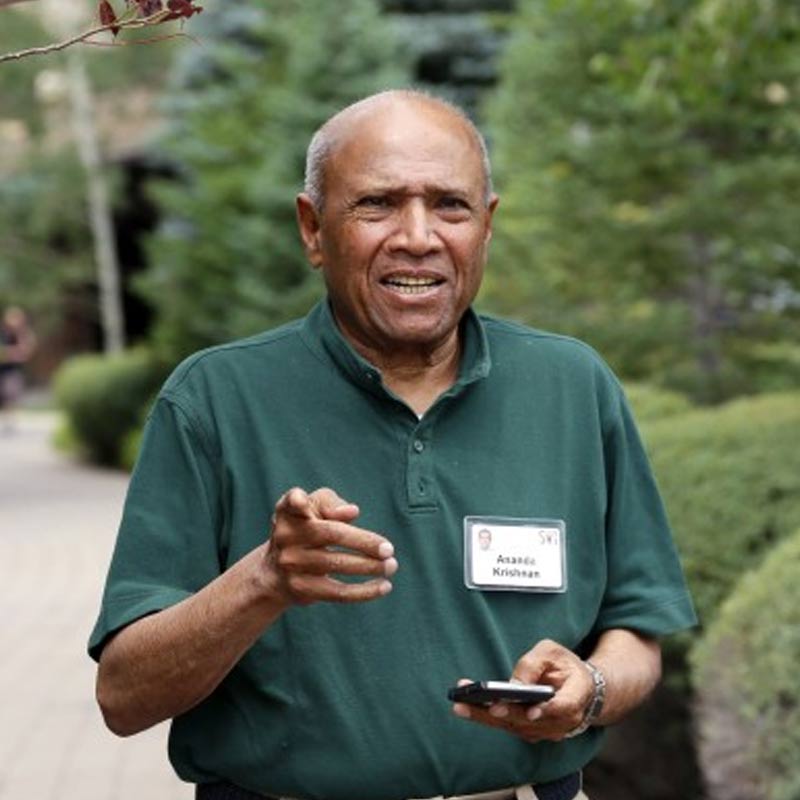
    The bench said that the instant order was issued to bring to the notice of Malaysian business T Ananda Krishnan – the owner of Maxis group and to ensure he makes his appearance in the apex court. The bench also comprised of Justices N V Ramana and D Y Chandrachud.

    The apex court also declared that the 2G licences shall be seized if Krishnan and another Maxis executive Ralph Marshall fail to appear on 27 January. The bench has also asked the telecom ministry to devise ways to prevent adverse impact which can take place if the 2G licences are provided to the other service providers and not Aircel.

    Krishnan added that they cannot tolerate a person using the national resource such as spectrum of India and not honouring the court notice. The court has also directed the government of India to publish the order instantly in two leading Malaysian newspapers. The court specified that, if the proposed order is passed, it would not be open to any of the accused to raise the issue of monetary losses.

    BJP leader Subramaniam Swamy had alleged that FIPB clearance to Aircel-Maxis was granted illegally. Special 2G prosecutor Anand Grover said that hearing on framing of charges in the trial court is scheduled for 9 January. The bench has also added that the material for further hearing on 27 January and other charges made by the BJP spokesperson will be dealt at a later stage.

    Also Read:    Aircel-Maxis case: 2G court seeks to speed trial against Marans

  • Maxis in trouble as SC summons its chief

    Maxis in trouble as SC summons its chief

    MUMBAI: The Supreme Court of India has restrained the transfer of 2G licences from the Malaysian company Maxis which were allotted to Aircel originally. Chief Justice J S Khehar also proposed to restrain earning of any revenue by using the 2G spectrum licences. Maxis had allotted its licence to Aircel in 2006.

    The bench said that the instant order was issued to bring to the notice of Malaysian business T Ananda Krishnan – the owner of Maxis group and to ensure he makes his appearance in the apex court. The bench also comprised of Justices N V Ramana and D Y Chandrachud.

    The apex court also declared that the 2G licences shall be seized if Krishnan and another Maxis executive Ralph Marshall fail to appear on 27 January. The bench has also asked the telecom ministry to devise ways to prevent adverse impact which can take place if the 2G licences are provided to the other service providers and not Aircel.

    Krishnan added that they cannot tolerate a person using the national resource such as spectrum of India and not honouring the court notice. The court has also directed the government of India to publish the order instantly in two leading Malaysian newspapers. The court specified that, if the proposed order is passed, it would not be open to any of the accused to raise the issue of monetary losses.

    BJP leader Subramaniam Swamy had alleged that FIPB clearance to Aircel-Maxis was granted illegally. Special 2G prosecutor Anand Grover said that hearing on framing of charges in the trial court is scheduled for 9 January. The bench has also added that the material for further hearing on 27 January and other charges made by the BJP spokesperson will be dealt at a later stage.

    Also Read:    Aircel-Maxis case: 2G court seeks to speed trial against Marans

  • Consumers may get 60-day notice from unprofessional telcos

    Consumers may get 60-day notice from unprofessional telcos

    MUMBAI: The latest consultation paper of the Telecom Regulatory Authority of India (TRAI) is about issues related to closure of mobile phone services. TRAI seeks to extend the time mobile users get to change their service-provider if a particular company is shutting shop or selling its spectrum.

    The paper titled ‘Closure of Access Service” will seek feedback from telecom eco-system stakeholders to set up a framework to give an extended time and more options to users facing termination of services. A licence coming to fruition or failure of the service provider to bag spectrum or spectrum trading are normally the reasons behind an entity shutting shop.

    TRAI took note of three significant instances. Reliance Communications stopped CDMA services and migrated to LTE. Airtel acquired spectrum from Aircel and Videocon through trading deals. In some cases, operators do not renew the spectrum and stop offering services in a particular area. Tata Docomo has lost subscribers due to such non-renewal.

    The paper follows complaints from the subscribers who said they did not receive adequate notice or communication from their service-provider and their mobile number was disconnected. If TRAI has its way, cell-phone users will get more time to change their company in such a case.

    A mobile user currently gets 30 days to change its service-provider but this has been found to be far less than expected. The law requires the company to give the department of telecommunications (DoT) a 60-day notice in such a scenario.

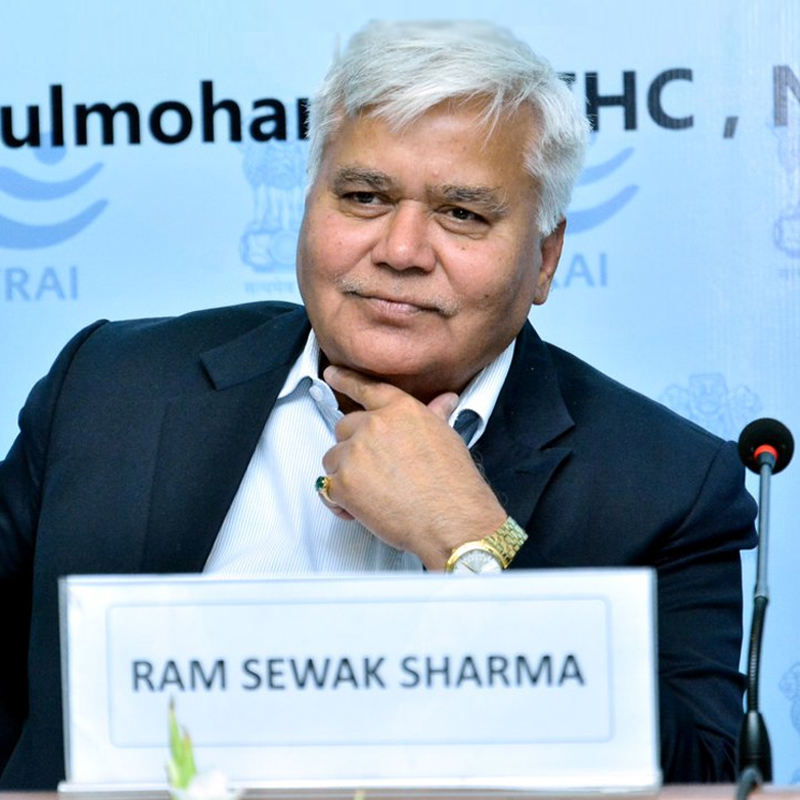
    India’s low broadband penetration is a matter of concern and the government needs to do a lot more work in the field to go up in the global ladder, TRAI chairperson RS Sharma said.

    Addressing Assocham summit, Sharma said that, according to an ITU paper, the penetration in India was only 7%. He said the report stated that India was even behind countries such as Singapore, Thailand and Malaysia.

    TRAI has recommended to the government on using cable television network for broadband delivery. In developed US and in Europe, around 50-60 per cent broadband comes from Digital Cable TV, he added.

    Foreign direct investment (FDI) attracted by the telecom sector in India meanwhile has jumped to more than US$10 billion in the first eight months of 2016-17 registering a 6-7 fold increase as compared to 2014-15 and 2015-16, telecom secretary JS Deepak said at the summit.

    Considering about 97% of population was covered by the 2G telecom network provided mostly by private telecom operators, there was a need to both popularise and simplify USSD (unstructured supplementary service data), he added. There was a need to work on a push USSD rather than a pull USSD, merchants should be able to push in a message to feature phone users where-in one just has to okay it for a transaction, he said.

  • Consumers may get 60-day notice from unprofessional telcos

    Consumers may get 60-day notice from unprofessional telcos

    MUMBAI: The latest consultation paper of the Telecom Regulatory Authority of India (TRAI) is about issues related to closure of mobile phone services. TRAI seeks to extend the time mobile users get to change their service-provider if a particular company is shutting shop or selling its spectrum.

    The paper titled ‘Closure of Access Service” will seek feedback from telecom eco-system stakeholders to set up a framework to give an extended time and more options to users facing termination of services. A licence coming to fruition or failure of the service provider to bag spectrum or spectrum trading are normally the reasons behind an entity shutting shop.

    TRAI took note of three significant instances. Reliance Communications stopped CDMA services and migrated to LTE. Airtel acquired spectrum from Aircel and Videocon through trading deals. In some cases, operators do not renew the spectrum and stop offering services in a particular area. Tata Docomo has lost subscribers due to such non-renewal.

    The paper follows complaints from the subscribers who said they did not receive adequate notice or communication from their service-provider and their mobile number was disconnected. If TRAI has its way, cell-phone users will get more time to change their company in such a case.

    A mobile user currently gets 30 days to change its service-provider but this has been found to be far less than expected. The law requires the company to give the department of telecommunications (DoT) a 60-day notice in such a scenario.

    India’s low broadband penetration is a matter of concern and the government needs to do a lot more work in the field to go up in the global ladder, TRAI chairperson RS Sharma said.

    Addressing Assocham summit, Sharma said that, according to an ITU paper, the penetration in India was only 7%. He said the report stated that India was even behind countries such as Singapore, Thailand and Malaysia.

    TRAI has recommended to the government on using cable television network for broadband delivery. In developed US and in Europe, around 50-60 per cent broadband comes from Digital Cable TV, he added.

    Foreign direct investment (FDI) attracted by the telecom sector in India meanwhile has jumped to more than US$10 billion in the first eight months of 2016-17 registering a 6-7 fold increase as compared to 2014-15 and 2015-16, telecom secretary JS Deepak said at the summit.

    Considering about 97% of population was covered by the 2G telecom network provided mostly by private telecom operators, there was a need to both popularise and simplify USSD (unstructured supplementary service data), he added. There was a need to work on a push USSD rather than a pull USSD, merchants should be able to push in a message to feature phone users where-in one just has to okay it for a transaction, he said.