Tag: AIR

  • PM Modi lauds Zee News for reportage of programme on solar energy to spread awarness in monthly Mann ki Baat

    PM Modi lauds Zee News for reportage of programme on solar energy to spread awarness in monthly Mann ki Baat

    NEW DELHI:  While policy announcements were avoided in view of the ongoing Parliament session, Zee  News came in for praise in Prime Minister Narendra Modi’s monthly Mann ki Baat for its coverage of advantages of solar energy.


    Modi’s reference was to a link he received of a news report from Kanpur where a woman is using solar energy to spread awareness and also educate the people/


    The broadcast, which comes on the last Sunday of every month at 11 .00 am, was streamed live on the internet apart from being broadcast by both All India Radio and Doordarshan.


    The regional language translations of the broadcast were beamed last night at 8.00 pmby different kendras of AIR.


    The Prime Minister had invited people to share their messages for this edition of Mann Ki baat on mygov.in and used some of these views and played recordings by individuals received on1800 3000 7800. 


    Unlike some previous broadcasts, there was no theme for his talk tomorrow. Modi’s earlier themes have included rural sanitation, swachhta or other programmes of the government. 


    Even as no survey has so far been conducted on the listenership or viewership of Mann ki Baat, private television channels have been reproducing some portions considered newsy by them.


    Modi also received several suggestions on  his Twitter handle and on pmindia.gov.in.

  • Government plans to increase funds for M&E industry: CII

    Government plans to increase funds for M&E industry: CII

    MUMBAI: Minister of State for Information & Broadcasting (I&B) Rajyavardhan Singh Rathore assured the media and entertainment (M&E) industry that the government policies would be supportive and calibrated to enhance the modernisation and monetisation of the sector.


    Addressing the fourth edition of the CII Big Picture Summit 2015 in New Delhi, Rathore said, “In phase II of the auction of the frequencies for the radio, there was no provision for broadcasting news. This was changed during the phase III auction, when private radio was allowed to broadcast the news of the All India Radio (AIR) for a specified time.”


    Rathore mentioned that a lot of initiatives were being taken by the government to support the M&E industry in the country, such as channelising more advertisements to the digital media like YouTube, outsourcing some of the creative works of Doordarshan and AIR to the industry. More such steps would be taken in due course.


    In this regard, plans are underway to revamp the terrestrial broadcast of DD to couple it with internet and DTH so that there would be opportunities for making local programs based on events happening in smaller towns and rural areas. This would also give a boost to creation of contents, which have local flavour and relevance. 


    Acknowledging the industry demand that the monetisation of the M&E segment had not kept pace with the requirements, Rathore disclosed that the government had proposed to set up a university to develop soft skills needed for the industry.


    This university would specialise in providing skills to students in areas like gaming, animation and other avenues of creative pursuits relevant to the industry. He wanted industry to take a lead in this endeavour and create centers of excellence, which would enable the M&E industry to reach $100 billion by 2025. He also said that industry support was imperative to improve the content and appeal of the programs and for training media professionals.


    Responding to a suggestion made by the industry to bring down high incidence of tax levied on the M&E industry, the Minister said that the Good and Services Tax (GST), which the Government wanted to enact would have subsumed various taxes incidental on the industry. He hoped that the bill would be passed soon in the interest of the nation.


    Rathore observed that the Government was keen to create a single window clearance for shooting films in India, which could enhance the monetisation and profitability of the industry. He wanted CII to come out with a plan for creating a dynamic eco system for the film industry to flourish. At the same time, he said that inadequate number of cinema halls in India as compared to countries like the US and China could be more to do with real estate prices.


    Ministry of I&B special secretary J S Mathur said, “The process of digitisation in the M&E sector was at a higher pace and would show results in the coming years. He was of the opinion that smart phones, which could carry large quantum of data including films, news bulletins etc. would redefine the digital space in India.”


    He also mentioned that the Government was in the process of finalising the draft of the Intellectual Property Rights (IPR), which would enable more and more people to invest in India in various segments like content creation, production, animation, and gaming. 


    Prasar Bharati CEO Jawhar Sircar opined that a consortium approach should be followed by the industry and the Government to promote the convergence in the M&E industry to realise its potentials. He suggested that a shared approach should be there among the players to make use of the vast infrastructure of the government through innovative schemes that would put to use smart phones as carriers of innovative contents.


    CII National Committee on Media and Entertainment and Group CEO, Viacom 18 Group CEO and CII National Committee on Media and Entertainment chairman Sudhanshu Vats pitched for easing of doing business and greater application of convergence of technology to tap the potentials of the industry. Monetisation of the industry can be enhanced through proper government support to the industry.


    Narrating the problems being faced by the M&E sector, Star India COO Sanjay Gupta said that bandwidth problems, high cost, high taxes etc were adversely affecting the growth of M&E industry. He wanted a supportive policy regime to help the industry reach $100 billion mark by 2025.

  • AIR appoints releaseMyAd as its first virtual agency

    AIR appoints releaseMyAd as its first virtual agency

    MUMBAI: All India Radio (AIR) has joined hands with releaseMyAd as its first ever virtual advertising agency, which is authorised to accept and process radio advertisement bookings for its network of stations.


    AIR’s stations include Akashvani, Vividh Bharati, FM Rainbow and FM Gold.

    As one of the country’s foremost welfare awareness medium, AIR’s reach surpasses that of any other private FM station.


    To reinforce its presence in the virtual world, releaseMyAd.com will meet AIR’s twin objectives of optimum inventory utilisation as well as revenue augmentation.


    The facility allows advertisers to book ads online across all channels of AIR with a mouse-click. As an online media option, releaseMyAd makes mass media advertising options accessible to all by effectively matchmaking between media owners and advertisers.


    Talking about the initiative, AIR additional director general Amitabh Shukla said, “This initiative, a part of AIR’s ambitious web-enabled services for its patrons will not only assist us in adequate utilisation of last minute inventory that goes wasted if not put to use but will also fetch us valuable extra revenues.”

    “AIR is an extensive government owned network that has exclusive rights over communications by every ministry. Be it the Parliamentary talk, World Cup commentary or the Prime Minister’s monthly address, this is the only platform that gives access to these. We want to help advertisers to capitalise on AIR’s monopoly on content that is news, sports or common welfare driven. It has such wonderful properties and scope to offer. We shall now play a significant part in communicating its vision and enabling whatever opportunities it has to offer,” added releaseMyAd founder Sharad Lunia.


    AIR has complete national reach from the main urban centres to the tier 3 cities and even the most far flung rural sections of the country with its three tier broadcasting system. With its concept of local radio constituting the third tier of broadcasting, there are stations in all district headquarter towns.


    However, accessing businesses in the farthest corners who could utilise the radio for advertisements becomes very difficult for AIR. Moreover, given their location, the business owners too don’t end up reaching out to the relevant sources for the purpose.


    “Even seasoned advertisers who want to advertise on AIR are not too sure about how to reach out to them. It is not possible for Prasar Bharati to set up offices in every nook and corner of its broadcast boundaries. ReleaseMyAd will now do the needful to bridge this huge gap between businessmen and their remotely situated target groups,” Lunia added.


    At a time when the country is riding a huge startup tide that is slowly transforming the landscape, this move on the AIR’s part will help the new wave of enterprises effectively reach out to audiences in every nook and corner of India.

  • AIR to broadcast special to mark one year of ‘Mann Ki Baat’

    AIR to broadcast special to mark one year of ‘Mann Ki Baat’

    NEW DELHI: All India Radio (AIR) will broadcast Mann Ki Baat: Ek Saal Jan Judao Ka to mark the completion of one year of the monthly radio broadcasts by Prime Minister Narendra Modi.


    The hour-long programme will be aired at 9.30 pm on 5 October by all capital AIR stations, all multi-channel stations, all FM Gold & FM Rainbow channels and Local Stations.


    The show will be also available via live streaming on allindiaradio.gov.in and it can be also heard by downloading AIR’s mobile app available for Windows, Android or iOS platform.


    The first broadcast of Mann Ki Baat was on 3 October last year.


    The programme has been conceptualised by AIR Delhi as a platform for myriad voices, ranging from the remotest outpost of the country to the heart of its capital to a diaspora viewpoint.


    It is scheduled under the National Programme of Talks (Hindi), a weekly programme of talks and discussions on the National Channel.


    An AIR spokesman told Indiantelevision.com, “We are hopeful of presenting a bouquet of authentic voices from the rustic farmer in this attempt to reflect with authenticity what the public really expects from its Prime Minister. The aim is to cull out the areas that people want the Prime Minister to focus on. This programme will have elements of various radio formats such as Phone-in, Radio-Bridge, Vox populi etc. to showcase a participatory audio asset.”


    The broadcast of the programme will be followed by a survey to be carried out by 46 units of Audience Research Units of AIR located at different places to cover varied linguistic and geographical zones of India. This, AIR hopes, will accurately gauge the impact of one year of continuous personal contact of the Prime Minister with his people through various modes of dissemination.


    Mann Ki Baat has once again connected people with the radio and made them realise its importance for such a vast country that resides not only in metros and cities but in remote corners of the villages and tribal areas, where satellite television channels are yet to reach. 


    In its endeavour to maximise the reach of the programme, AIR relays it in all regional languages apart from Hindi, Urdu and also in large number of dialects spoken in remote parts of India.


    Mann Ki Baat thus has the vastest disseminated broadcast and reaches over 99 per cent of India’s population through multifarious avenues as DTH, live streaming, mobile applications, terrestrial as well as satellite channels.


    In addition to the programme slated for tonight, AIR broadcast Mann Ki Baat: Aatmiya Samvaad Ka Ek Varsh, which was a special edition of its much acclaimed programme Post Box 111, which is based on the unprecedented inflow of letters/mails from listeners to AIR as part of the first anniversary. The special programme was a recap of all episodes of both Mann Ki Baat and Post Box 111.


    Post Box 111 is broadcast every Sunday at 11 am on FM Rainbow Network and the medium wave national hook-up.

  • Akashvani to air English feature ‘Lest We Forget’ on war hero

    Akashvani to air English feature ‘Lest We Forget’ on war hero

    NEW DELHI: On 25 September, All India Radio (AIR) will broadcast an English feature on 1965 war hero Company Quarter Master Havildar Abdul Hamid, PVC, of the Indian Army who made the ultimate sacrifice.


    The feature titled Lest We Forget will be broadcast at 10 pm on Rajdhani Channel, AIR Delhi and AIR FM Rainbow network.


    The feature can also be enjoyed through live streaming available on allindiaradio.gov.in by downloading the web applications for either for Android, iOS or Windows. 


    To commemorate 50 years of 1965 Indo-Pak War, AIR is continuously broadcasting talks and features both in English and Hindi.


    This particular National Programme of Features (English) intends to retell the story of one such brave son of India, soldier no. 239885, who played a pivotal role during a bloody encounter in Khemkaran, which was the site of a major tank battle in 1965.


    The 1965 Indo-Pakistani War witnessed the largest tank battle in military history since World War II. Khemkaran is, till today, known as the graveyard of tanks, the area where Pakistani Patton tanks crashed and burnt as they met the solid iron wall of mother India’s sons. This was one of the first instances in modern warfare when an armoured division was beaten back by an infantry regiment. And this was the point where the tide turned towards India.


    This programme will attempt to travel back in time to Khemkaran of 1965 to recreate the day when amidst blazing guns and war-cries, Company Quarter Master Havildar Abdul Hamid, PVC, of the Indian Army who made the ultimate sacrifice.

  • Bihar Elections: AIR & DD fix time schedules for poll broadcast

    Bihar Elections: AIR & DD fix time schedules for poll broadcast

    NEW DELHI: All India Radio (AIR) and Doordarshan (DD), which provide a platform for political parties to make poll broadcasts before every election, will also organise a maximum of two panel discussions and/or debates on the Kendras/Stations for the forthcoming elections to the state assembly of Bihar.


    The polling begins in five phases on 12 October with the last day of polling being 5 November.


    Each eligible party can nominate one representative to such a programme, but the Election Commission of India will approve the names of coordinators for such panel discussions and debates in consultation with the Prasar Bharati Corporation.


    The Commission has, as in previous years, worked out a schedule for the time to be given for poll broadcasts to different parties.


    The facilities of use of broadcast time and telecast time will be available only to ‘National Parties’ and ‘Recognised State Parties’ in Bihar.


    A base time of 45 minutes will be given to each National Party and recognised State Party (recognised in Bihar) uniformly on the regional Kendras of DD and AIR network in the State. The additional time to be allotted to the parties has been decided on the basis of the poll performance of the parties in the last assembly election.


    The facilities will be available from the Regional Kendra of AIR and DD in the states and then relayed by other stations within the state.


    In a single session of broadcast, no party will be allocated more than 15 minutes.


    The period of broadcast and telecast will be between the last date of filing the nominations and will end two days before the date of poll. However, there will be no telecast or broadcast during the 48 hours preceding the close of polls as per specific provisions of the Representation of People Act, 1951.


    Prasar Bharati, in consultation with the Commission, will decide the actual date and time for broadcast and telecast. This will be subject to the broad technical constraints governing the actual time of transmission available with the DD and AIR.


    The guidelines prescribed by the Commission for telecast and broadcast will be strictly followed. The parties will be required to submit transcripts and recording in advance. The parties can get this recorded at their own cost in studios, which meet the technical standards prescribed by Prasar Bharati or at the Doordarshan/All India Radio Kendras.


    They can, in the alternative, have these recorded in the studios of DD and AIR by advance requests. In such cases, the recordings may be done at the State Capital and at timings indicated by DD/AIR in advance.


    The broadcasts cannot have criticism of other countries; attack on religions or communities; anything obscene or defamatory; incitement of violence; anything amounting to contempt of court; aspersion against the integrity of the President and Judiciary; anything affecting the unity, sovereignty and integrity of the Nation and any criticism by name of any person.


    Time Vouchers will be available in the denomination of five minutes with one voucher having time allotment from one to four minutes and the parties will be free to combine them suitably.


    Introduced for the first time for the Lok Sabha elections in 1998, the scheme of free broadcasts was extended by the Commission to the State Assemblies held after 1998 and General Elections to the Lok Sabha from 1999 onwards.


    With the amendments to the Representation of People Act 1951 through “Election and Other Related Laws (Amendment) Act, 2003” and the rules notified thereunder, equitable time sharing for campaigning by recognized political parties on electronic media now has statutory basis.


    In exercise of the powers conferred by clause (a) of the Explanation below section 39A of the Representation of People Act, 1951, the Central Government has notified all such broadcasting media which are owned or controlled or financed wholly or substantially by funds provided to them by the Central Government as the electronic media for the purposes of that section. Therefore, the Commission has decided to extend the said scheme of equitable time sharing on electronic media through Prasar Bharati Corporation to the ensuing General Elections in Bihar.

  • Doordarshan turns 56: Time to celebrate or introspect?

    Doordarshan turns 56: Time to celebrate or introspect?

    NEW DELHI: 15 September, 2015 marks 56 years to the day when Indian public broadcaster Doordarshan (DD) was first launched with an experimental telecast starting in Delhi in 1959 with a small transmitter and a make shift studio.


    The regular daily transmission started in 1965 as a part of All India Radio (AIR) and that’s when DD too began a five-minute news bulletin. The television service was extended to Bombay (now Mumbai) and Amritsar in 1972. Up to 1975, only seven Indian cities had a television service and Doordarshan remained the sole provider of television in India. Krishi Darshan was the first program telecast on Doordarshan. It commenced on 26 January, 1967 and is one of the longest running programs on Indian television.


    Television services were separated from radio on 1 April, 1976. Each office of AIR and DD were placed under the management of two separate director generals (DG) in New Delhi.


    Finally, in 1982, DD came into being as a National Broadcaster. National telecasts were introduced in 1982. In the same year, colour TV was introduced in the Indian market with the live telecast of the Independence Day speech by the then Prime Minister Indira Gandhi on 15 August, 1982, followed by the 1982 Asian Games, which were held in Delhi.


    Since then, DD has seen growth in many ways. Today, DD broadcasts in 17 languages including DD Urdu, and has the country’s only free-to-air (FTA) sports channel. DD Bharati has kept alive the decades-old archives of broadcasting in the country, DD India reaches almost the entire world and is watched by the diaspora, and it also recently launched DD Kisan, which is a dedicated channel for farmers. In addition, DD News – barring a few aberrations – remains one of the most dependable news channels in the country.


    More than five decades down the line, while the numbers have changed with greater reach, little else has and the pubcaster is struggling for viewership. Though it is claimed that DD has the largest viewership in the country since it is a terrestrial network, the fact remains that viewers in the metros and the larger cities generally tend to stay away from Doordarshan, which despite the so-called autonomy is perceived a propagandist channel.


    Today, Doordarshan’s terrestrial coverage is estimated to be available to about 92 per cent of population spread over 81 per cent area of the country. There are 1416 TV transmitters of varying power in the country. However, by the government’s own admission, the percentage of rural viewers who are accessing Doordarshan through its terrestrial network is a mere seven – eight per cent of 170 million TV households.


    The areas uncovered by terrestrial transmitters along with rest of the country have been provided with multichannel TV coverage through Doordarshan’s free to air DTH service FreeDish. Pertinent to note here is that despite claims that its capacity would be raised to accommodate over 100 channels, FreeDish today has a total of 56 channels, of which a majority are DD’s own channels.


    As far as the clause for all platforms to mandatorily show DD channels in the prime band is concerned, very few are doing so and in any case viewers do not bother since they feel attracted to the juicer sagas that most channels put out.


    Even though it has been in the eye of constant criticism, DD has still not been able to ensure that private DTH players or even its own FreeDish carries the name of the programme and a basic summary – something which DTH players do for all the major private broadcasters.


    The British Broadcasting Corporation (BBC) – arguably having the most diverse, exciting and long history – keeps examining and re-examining its role as a pubcaster and independently takes its decisions about changes it wishes to make to reach out to more and more viewers in an era of increasing competition from private broadcasters.


    The BBC, which will be marking its centenary in 2022, has come out with a Green Paper, which examines whether it is failing audiences, whether it should be advertisement-funded or take licence fee as it has been doing, and even whether it should be putting on-air certain shows that have drawn the ire of the general public. Not only that, the document has been made public for viewers to react as it would help decide the pubcaster’s future course.


    In comparison, Doordarshan has failed to make any in-depth study into why it has failed to make a dent in the hearts of the viewers despite its largest geographical reach. Its own Audience Research Unit exists only in name, and with a sample of only 900 homes, TAM does not cover DD adequately. Now that BARC India and TAM have formed a JV to form a meter management company, what DD’s representation in that will be, remains to be seen.


    If BBC has issued a Green Paper, there have been endless reports before Doordarshan became part of the pubcaster Prasar Bharati through an act of Parliament of 1990, which was only half-heartedly notified in 1997. And it had taken the country around 20 years to – at least on paper – notify an autonomous body since the first report on such a body came in the form of the BG Verghese Committee report in 1978, the aftermath of the manner in which the electronic media was controlled by then Prime Minister Indira Gandhi during the National Emergency.


    Sadly, there has been just one report after the pubcaster was operationalised: the Sam Pitroda Committee Report.


    Unfortunately, this report came out with nothing new that was not already being done by the pubcaster or had not been said by the Parliamentary Standing Committee in report after report, year after year.


    The pubcaster’s real test would have been to implement the recommendations given by the Sam Pitroda Committee but that is not the case. This is because the biggest stumbling block to the pubcaster moving ahead is the government, which does not leave it free to move on its own and instead believes in the general principal of he who pays the piper plays the tune.


    If there has been any movement within Prasar Bharati – like the recent appointment of a large number of fresh talent to fill the huge number of vacancies – it has been due to the individual action of the different chief executive officers or chairmen of the Board at different times. 


    What Prasar Bharati needs to do is to take a serious look at the Sam Pitroda Committee recommendations to find out why these were not implemented when they were under consideration much before the Committee came on the scene, and also to radically examine the relationship of Prasar Bharati with the Government or the ruling party.


    However, that is easier said than done, since the pubcaster and particularly Doordarshan continues to be a valuable tool for the government in power.

  • STB shortage, lack of awareness continue to plague DAS implementation, DD & AIR to help in publicity

    STB shortage, lack of awareness continue to plague DAS implementation, DD & AIR to help in publicity

    NEW DELHI: With the third phase of digital addressable system (DAS) expected to be implemented by 1 January 2016, the single biggest challenge facing the government and stakeholders is the dire shortage of set top boxes (STBs).


    A senior Information and Broadcasting Ministry source told Indiantelevision.com that the main hurdle was that very few manufacturers were coming forward with proposals despite the government support to the Make in India programme.


    This issue and the problem of adequate publicity about the benefits of DAS perplexed those who attended the tenth Task Force meeting on DAS held on 17 August under the chairmanship of Additional Secretary J S Mathur.


    Meanwhile, Joint Secretary (Broadcasting) R Jaya said Regional Units were being established at twelve places and these would start operating from September to monitor and report the progress of digitisation in each State/UT. 


    While Consumer Electronics and Appliances Manufacturers Association (CEAMA) complained that no major orders were being placed with it by multi system operators (MSOs). A representative of the CEAMA said, “This is the time to place orders if they want the STBs, which are required to be delivered before the cut-off date.”


    A Telecom Regulatory Authority of India (TRAI) representative said under the regulations, MSOs and LCOs have to offer STBs to consumers on rent, installment, outright purchase or any other scheme according to the standard tariff package prescribed by it. Any complaint on this issue should be addressed to TRAI. 


    A representative of the Uttarakhand Government said adequate number of STBs are not provided by MSOs in the State, resulting in slow progress of digitisation. 


    A representative of Maharashtra Cable Operators’ Federation (MCOF) said there are 5000 head-end owners, which are MSOs or LMOs. But many of them had not applied for registration. He apprehended that it may result in some dark areas once the deadline is over. 


    Jaya said MSO registrations were still on and any one can apply. She said 349 MSO registrations had been granted till mid-August including 126 provisional ones. Referring to apprehension of dark areas, she said these will be identified through State nodal officers and broadcasters. 

    Meanwhile, there was a lengthy discussion about publicity about DAS. ASSOCHAM with some broadcasters had planned a Chetna Yatra from next month covering 450 cities/towns/villages in the country. 

    Representatives of direct-to-home (DTH) platforms said they were ready to give free publicity regarding cable TV digitisation if asked. 


    A representative of the News Broadcasters Association (NBA) said there are financial constraints facing broadcasters. However, they will carry advertisement spots and would be preparing these.


    The TRAI representative said it had placed an advertisement on mandatory digitisation on its website. It had also planned to come out with a quarter-page print advertisement in newspapers very soon. 


    TRAI is holding five consumer outreach programmes per quarter in each region. From its perspective, awareness about digitisation is happening. The TRAI representative said the advertisement could be shared with MSOs for publicity by them. 


    All India Radio (AIR) and Doordarshan (DD) have been carrying advertisements on mandatory digitisation for several months. It was suggested that Doordarshan may also give video advertisements on cable digitisation in local languages on their popular regional channels in prime time. The Doordarshan representative agreed to get this done. 


    A representative of the Gujarat MSO GTPL said they have been carrying out a publicity campaign through scrolls on their local channels and public gatherings. 


    A representative of Indusind-Media said a team of about 300 persons had been deployed on this job to carry the campaign.


    On the other hand, a representative of an LCO association from West Bengal said they were unaware of the consumer outreach programme arranged by TRAI. It was suggested that members should regularly check the websites of MIB and TRAI for all such information regarding cable digitisation. 


    According to Jaya, four regional workshops were held by the Ministry with the State nodal officers of some of the States/UTs to sensitise them about their role and responsibilities in implementing cable TV digitisation in their States. Registered MSOs permitted to operate in these States were also invited in these workshops. 


    She said it was heartening to know from these workshops that State Governments are also gearing up to meet the challenge of cable digitisation in their States. The MSOs participating in these workshops said they were carrying publicity awareness campaign on digitisation on their local channels and through pamphlets being distributed by them. 


    She added that seven more regional workshops have been planned by the Ministry in 45 days at different places. Another workshop has since been held with the nodal officers from the states in the North East and the registered MSOs operating there on 21 August at Shillong.


    A representative of an LCO association from Assam said broadcasters were not providing content to them and they were being forced to come to Delhi for filing cases in TDSAT. The TRAI representative said this was a matter of dispute and TDSAT was the only appropriate forum. But for issues related to regulations, the TRAI regional office in Kolkata could be approached. 


    On signing of interconnect agreements, the IMCL representative said it was working on delivery through headend in the sky (HITS) platform besides cable. It was now in the final stage of negotiations with broadcasters. The TRAI representative said all MSOs who had not received any response to their requests for interconnect agreements from broadcasters had been asked to inform TRAI by 24 August and a meeting had been slated with broadcasters on 28 August. 


    A representative of the Indian Broadcasting Foundation (IBF) said deals are happening and parallel negotiations are taking place.

  • I&B asks TV channels to carry DD’s sign language interpretation of I-Day celebrations

    I&B asks TV channels to carry DD’s sign language interpretation of I-Day celebrations

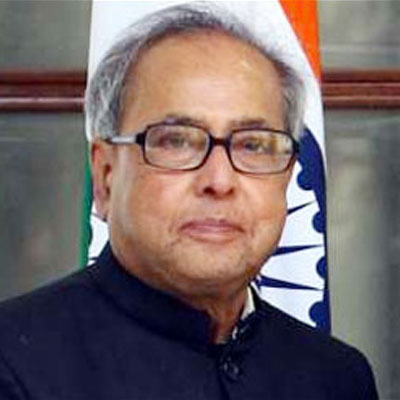
    NEW DELHI: President Pranab Mukherjee will address the nation tomorrow (14 August) at 7 pm on the eve of Independence Day.


    The broadcast will be carried live on all major channels of Doordarshan including DD National, DD News; and regional channels; and all major channels of All India Radio in the national hook-up including Indraprastha and its FM channels.


    This will be followed both on DD and AIR by Hindi translations and later the regional language translations from respective regional channels.


    The broadcast of Prime Minister Narendra Modi’s address to the nation from the ramparts of Red Fort on 15 August will commence at 7.05 am both on DD channels and All India Radio.


    Later, DD will also telecast the report of celebrations in other parts of the country. DD News will carry an analysis of the announcements made by Modi.


    Meanwhile, Information and Broadcasting Ministry has asked all television channels carrying reports of the Independence Day celebrations to access free of cost the simultaneous commentary through sign language for the hearing impaired being carried by Doordarshan.


    The Ministry said it had been getting requests from members of the civil society to facilitate access to people with hearing impairment to the telecast of the Independence Day Ceremony and commentary accompanied with sign language interpretation on TV channels so that such people can be part of the ceremony.


    The advisory said all TV channels interested in carrying the live telecast of the Independence Day ceremony and commentary may carry the signals of DD News with sign language interpretation so that people with hearing impairment can also enjoy the telecast of Indian Independence Day celebrations.

  • Agri graduates hired by AIR, no plans for recruitments for Kisan TV: Jaitley

    Agri graduates hired by AIR, no plans for recruitments for Kisan TV: Jaitley

    NEW DELHI: All India Radio has appointed 26 agricultural graduates as Farm and Home/Farm Radio reporters for its programmes aimed at the farming community.


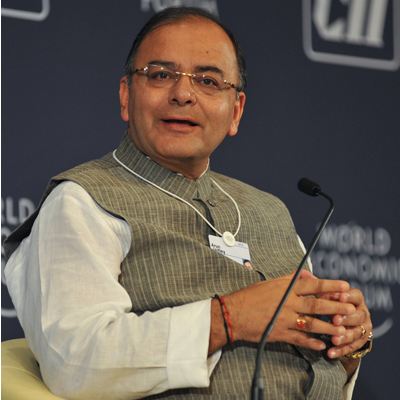
    The Parliament was informed by Information and Broadcasting Minister Arun Jaitley that these appointees are from the recently concluded recruitment for the post of Transmission Executive. 


    Meanwhile, he said Prasar Bharati has ‘no proposal as of now’ to recruit agricultural graduates for Kisan TV channel. 


    He said Kisan TV was being run by the in-house staff of Doordarshan and by engagement of casual staff according to the requirement of the channel. 


    Experts from the agricultural field are consulted from time to time as required, he added in reply to a question.