Tag: AIR

  • Why NetxGenTV is not the panacea for Indian TV broadcasting

    Why NetxGenTV is not the panacea for Indian TV broadcasting

    Mumbai: A new transmission technology, direct-to-mobile (D2M) broadcasting or NextGenTV, despite enjoying coverage in media platforms such as this one, is struggling to gain TV industry traction. D2M transmits audio-visual content on a terrestrial (earth-based) spectrum and any device with a receiver can access it, just like FM radio transmits audio content. Prasar Bharati and IIT-Kharagpur conducted limited trials of the technology last year, and reports suggest that the Telecommunications Engineering Centre may issue a technical report. It is worth exploring why D2M has almost no takers.

    The first time Indians saw audio-visual content on TV, it was a science experiment to test the capabilities of satellite-based communications. The Satellite Instructional Television Experiment (Site), jointly designed by the National Aeronautics & Space Administration (Nasa) and India’s Department of Atomic Energy demonstrated the potential to disseminate audio-visual content via satellites in 1975. 2,400 villages spread across 20 districts received educational and instructional content that the All India Radio (AIR) had prepared.

    Later in 1991, strong demand for coverage of the Gulf War pushed satellite and TV dish manufacturers and cable operators to work overtime to create infrastructure for TV distribution. Market-led shifts from analog to digital transmission and the evolution of newer transmission technologies like direct-to-home (DTH) and Headend in the Sky (Hits), led the way and created new value and supply chains. In the case of D2M, no supply chain participant – content services, device makers and infrastructure providers – wants a hard mandate for adoption. At least at the time of writing.

    Content Services

    First, it is unclear if D2M can offer better content to consumers. The shift to digital broadcasting enabled more content to flow through the same frequency channels and made more content available. D2M offers no such efficiency. Prasar Bharati, India’s public broadcaster transmits a few Doordarshan channels in 16 cities in India through digital terrestrial transmission technology. Presumably, content made available on D2M would be the public broadcaster’s content.

    D2M is not lucrative for private broadcasters because they are likely to face monetisation challenges. For instance, D2M fragments the existing ad market for free-to-air TV channels, diminishing the value of TV advertising real estate. A TV channel would need to invest in packaging content for D2M distribution without any assurance of new eyeballs. PayTV providers are apprehensive of content protection standards as they may lose out on subscription revenues because of last-mile signal piracy. Anyone with a D2M receiver can view pay TV content and the transmission technology does not account for strong access controls.

    There is also an apprehension that the ministry of information &  broadcasting (MIB) may use anti-siphoning frameworks to source content for D2M. Prasar Bharati receives the live feed of expensive IP rights acquisitions like the Cricket World Cup for free as a result of the Sports Broadcasting Signals (Mandatory Sharing with Prasar Bharati) Act, 2007. If the public broadcaster makes this content available for free on D2M, rights holders cannot monetise their IP and recoup their investment. Consequently, the value proposition of investment in sports broadcasting diminishes and it will have an adverse impact on the sports ecosystem.

    Device Makers

    Second, the device ecosystem is neither prepared nor incentivised for D2M adoption. Like the shift to digital-required set-top-boxes (STBs) and DTH-required satellite dishes, D2M adoption requires transmission and receiver equipment. Saankhya Labs, the government’s partner in D2M trials, produces transmitters but India does not indigenously produce receiver equipment.

    If the government mandates original equipment manufacturers (OEMs) to install D2M receiver equipment they will resist on account of cost concerns. OEMs highlighted a similar challenge when the ministry of electronics & information technology (MeitY) issued an advisory and asked mobile phone manufacturers to include FM radio receiver functions in April 2023.

    Conversely, if consumers buy receiver equipment at their own cost, it is likely that cheaper products from jurisdictions like China will flood the market. This leads to privacy and security concerns and exacerbates underreporting and signal piracy. A D2M receiver in border areas can receive content and possibly communicate data on the mobile handset across the border.

    Distribution

    The Prasar Bharati-led trials proved the technology can work, but it does not speak to its feasibility and impact on the distribution ecosystem. D2M receivers received transmissions in a controlled environment in metro cities Delhi and Bengaluru. But, does that prove that it can work anywhere in the country? And can it coexist with other use cases?

    Spectrum is a scarce resource and many communication technologies need the resource to operate. Allocation of a spectrum for new technology requires a comparison of deploying D2M in this frequency range with competing use cases or assessed potential interference with existing services. D2M broadcasting uses spectrum in UHF frequency bands 526 – 582 MHz. Eventually, the 470 – 698 MHz would be key for D2M adoption. Telecom operators require the same band for 5G deployment, and accommodating D2M will reduce bandwidth. Further, radio microphones, in-ear monitors, wireless cameras, talkback systems used during live events, content production, political rallies, news broadcasts, and press conferences also use the 526 – 582 MHz frequency range.

    D2M will compete with audio-visual transmitted via data services of telecom and internet service providers. Airtel reported a 27 per cent increase in its revenue from mobile services in the first quarter of FY23, attributing it to growing consumption of mobile data.  Reliance Jio also reported similar growth in June 2022, with total data traffic in the quarter growing by 27.2 per cent. D2M does not offer a value proposition for telcos to diversify their offerings and build infrastructure for D2M broadcasting.  

    Where and when to use D2M

    D2M will not herald a new era of content dissemination or transform broadcast distribution as many claim it will for the reasons stated above. However, it can serve a public interest objective like the Site experiment did in 1975, that is, to disseminate educational and informative content. D2M also has the unique ability to disseminate locally which can be utilised for localised content dissemination, like community radio stations that broadcast audio content within a local range. In terms of content, D2M can provide an additional avenue to disseminate public interest content and spread awareness through localised transmissions in disaster situations. The government would still need to address device ecosystem and spectrum concerns before it can rollout and scale the technology.

    D2M holds potential for a revamp of public broadcasting in India, but it is unlikely to find any takers in the private sector. D2M’s unique proposition is its ability to localise transmission which Prasar Bharati can utilise for dissemination of content on themes of national importance and emergency transmissions during disaster events.

    Varun Ramdas is manager Koan Advisory Group. The views expressed in this article are entirely his own and Indiantelevision.com neither endorses nor supports them in any way.

  • Celebrating National Broadcasting Day 2022 on 23 July

    Celebrating National Broadcasting Day 2022 on 23 July

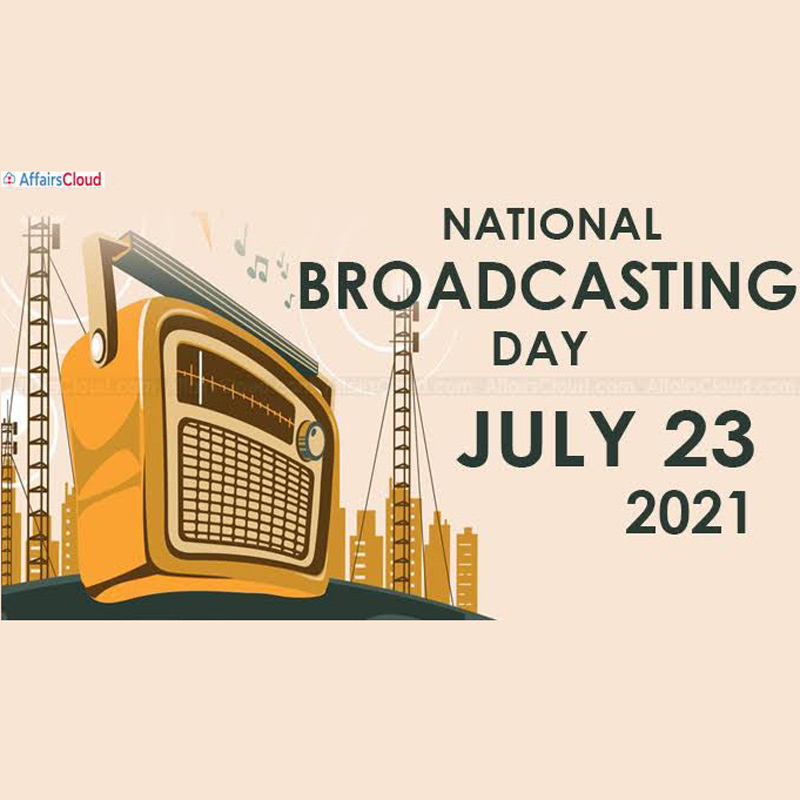
    Mumbai: National Broadcasting Day is celebrated in India on 23 July to make people aware of the importance of radio. On this day, the journey of All India Radio started in the year 1927.

    Why do we celebrate National Broadcasting Day? Let us dig into the details!

    This was the day when India got its first radio broadcasting company. A private company named Indian Broadcasting Company Limited (IBC) started its journey as India’s broadcasting company. The Indian broadcasting company started broadcasting radio from Mumbai’s station.

    History of National Broadcasting Day

    The history of broadcasting in India goes back almost thirteen years to the beginning of All India Radio (AIR). In June 1923, the Radio Club of Bombay in the British Raj broadcast for the first time in the country. Five months later, the Calcutta Radio Club was established but the Indian Broadcasting Company (IBC) came into existence on 23 July, 1927.

    All India Radio launched

    All India Radio has come a long way in India. But broadcasting started in 1927 with just two privately owned transmitters in Bombay and Kolkata. In 1930, the government took these transmitters under its control and started running it under the name of Indian Broadcasting Service. In April 1930, the Indian Broadcasting Service under the Department of Labor and Industrial started its operations on an experimental basis. In May 1935, a private radio station was set up in All India Radio, Mysore.

    On 8 June 1936, the Indian State Broadcasting Service known as All India Radio (AIR) was established. In 1956, it was called by the name Akashvani. In 1957, the Vividh Bharati service was started, which created a stir among film and music lovers & became very popular among the public.

    What is AIR?

    All India Radio or All India Radio (AIR) is India’s domestic national radio broadcasting service reaching millions of homes across the country. AIR is a division of Prasar Bharati which was earlier under government control but is now an autonomous body, established by an Act of Parliament.

    India’s public service broadcaster, Prasar Bharati is one of the largest broadcasting organizations in the world. Prasar Bharati has four hundred seventy broadcasting centers across the country, covering about 92 per cent of the country’s area and 99.19 per cent of the total population. It has a reach across 150 countries through medium and short wave services. All India Radio originally broadcasts programs in twenty-three languages and one hundred seventy-nine dialects. As digital takes a lead, the oldest radio broadcaster has turned no stones unturned to stay relevant even in today’s world. It has its online and digital applications too. Prasar Bharati’s NewsonAIR mobile app has more than one million subscribers.

  • Prasar Bharati has seen a big change in its revenue in the last five years, says former CEO Shashi Shekhar Vempati

    Prasar Bharati has seen a big change in its revenue in the last five years, says former CEO Shashi Shekhar Vempati

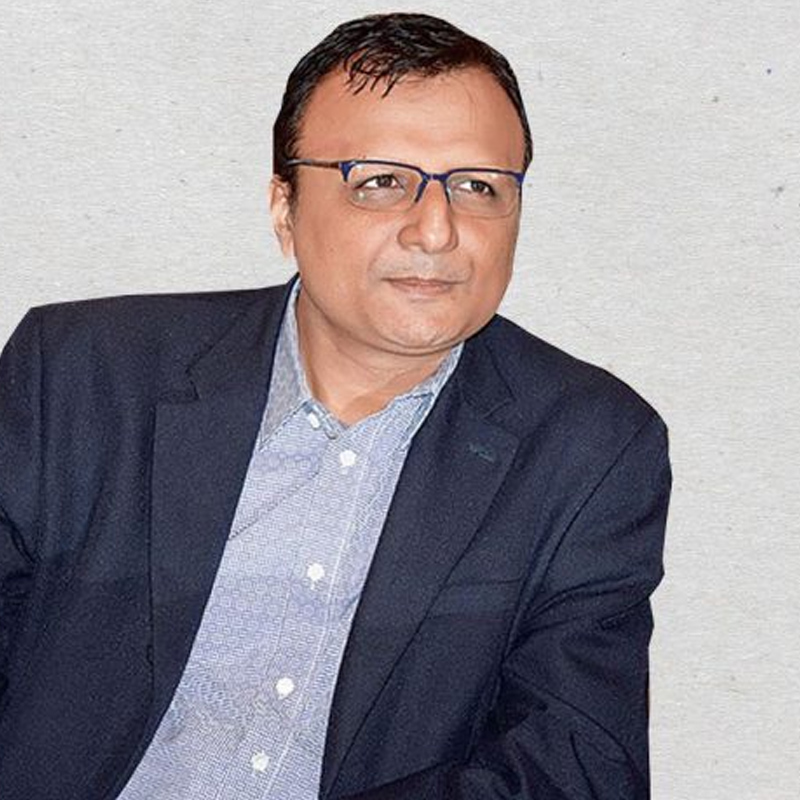
    Mumbai: Former Prasar Bharati CEO Shashi Shekhar Vempati joined broadcast journalist and host of ‘Media Dialogues’ on CNBCTV18 Anuradha Sengupta in conversation about his tenure at the public broadcaster recently.

    India’s public broadcaster Prasar Bharati is one of the largest broadcasting organisations in the world that runs a vast terrestrial network in addition to the satellite. During the interview, Vempati noted the changes brought during his tenure including phasing out obsolete technologies, figuring out the manpower roadmap for digital technology, and growing Prasar Bharati’s own media platforms like Free Dish and NewsOnAir app.

    The biggest change at Prasar Bharati

    Vempati highlighted that in the last five years the biggest change at the public broadcaster was the change in its revenue mix. In FY22, the public entity reported that commercial revenues were up by 13 per cent. Historically, the government was the primary source of revenue for the broadcaster via advertising & sponsored content. “What has changed in the last five years is how non-traditional sources of revenue have reduced dependence of government sources of revenue on DD and AIR,” said Vempati.

    “A big component of this reduced dependence is because of DD Free Dish. When I joined as CEO, Free Dish revenue used to be about Rs 270 crore and in the last financial year and this year it has crossed Rs 700 crore and touched Rs 750 crore,” he stated.

    Further adding, “There were hardly any digital revenues five years ago and now digital revenues amount to several crores and are growing fast at almost 30-40 per cent a year.”

    “We also have assets like TV towers that are leased out to private FM broadcasters and telecom operators which generates another Rs 100 crore in terms of revenue,” said Vempati.

    “The revenue growth that you’re seeing is largely contributed by these non-traditional sources of revenue. Interestingly, our radio revenues also saw recovery during Covid so that also contributed to overall growth,” he explained.

    Journey of DD Free Dish

    The public broadcaster’s free-to-air DTH (direct-to-home) platform reaches 43 million homes in India, as per EY (Ernst & Young) estimates and up to 50 million homes, as per Vempati’s personal views. This makes it the largest DTH service provider in the country, more than twice the size of any private DTH player in the country.

    Vempati praised the foresight of the late NDA government under Atal Bihari Vajpayee that they envisioned a platform of this nature. The cabinet gave its approval in 2003-04 with the stipulation that the platform should be self-sustaining and not be a recurring liability to the public broadcaster. It was important to bring private players onto the platform so that it pays for itself.  

    Initially, the placement of private channels happened through a committee process until 2010 when there was a need to make the process more transparent. A Telecom Disputes Settlement and Appellate Tribunal (TDSAT) ruling directed the public broadcaster in 2010 to frame a policy regarding terms and conditions for the broadcast of private channels via its DTH platform.

    The public broadcaster introduced an auction process where private channels had to bid for slots on the Free Dish platform. Over the years, the policy evolved from offering one base price for all broadcasters to offering a differentiated base price based on genre and language of the channel. This move resulted in immense value creation for Prasar Bharati and unlocked the potential of the DD Free Dish platform.

    Free Dish impact on private broadcasters

    There exists a love-hate relationship between private broadcasters and the free DTH platform as they gain access to immense reach, especially in the Hindi heartland, but the trade-off is the subscription revenues from this massive customer base.

    Vempati stated, “The DD Free Dish is only growing especially during the lockdown. The educational channels that were made available on the platform were a huge draw for audiences. The dealers who sell these set-top-boxes (STBs) also reported to us that it is impossible to keep up with the demand.”

    “Now, as we add more languages, the viewership of DD Free Dish is growing beyond the Hindi heartland. The promised 200 educational channels means that Free Dish still has an enormous headroom for growth,” claimed Vempati.

    Vempati observed that DD Free Dish has given rise to competitiveness in the TV broadcast industry where younger channels have been able to challenge the dominance of incumbents. He said, “If you see the Hindi genre, when I look at the ratings, there are several Free Dish channels in the top ten in terms of viewership. Ultimately, the public broadcasters’ purpose is to enable more choice to the consumer.”

    Vempati commented on private broadcasters pulling their flagship channels from DD Free Dish. He said, “This was a consequence of the new tariff order (NTO) regime which had an unintended impact on DD Free Dish. I see it as a transient phenomenon. The big players have other channels and have not completely exited the platform. It is a change that the media sector is going through and I’m hoping that we come out of it and get back on track.”

    Policy framework

    The trends in media consumption have shifted its dominance from traditional devices such as TV and radio to devices such as smartphones & smart TVs. While Vempati was not supportive of regulations in terms of pricing, he said regulations do have a role to play and supported the creation of a media regulatory framework not just for the broadcast sector but all media.

    During Vempati’s tenure, the public broadcaster signed a memorandum of understanding (MoU) with IIT Kanpur to develop direct-to-mobile broadcasting capabilities to reach more than 800 million mobile internet users in the country.

    He said, despite being the largest market for mobile phones, there’s very little standardisation in India. “Look at the emphasis China has put on creating standards. India is making an effort for the first time with 5Gi telecom technology standards. And with direct-to-mobile broadcasting, we have the opportunity to take a leadership position.”  

    Vempati’s run-in with TV ratings

    Another initiative taken by the public broadcaster was to air footage of Ramanand Sagar’s Ramayan on DD Free Dish during the lockdown.

    “When the lockdown was announced we debated on what to do, and I must compliment the PM and Prakash Javadekar (former union minister of information and broadcasting) to come up with the idea that we should air these epics,” recalls Vempati. “They insisted that it should be Ramayan that is aired first as it appeals to such a broad section of society.”

    The oddity was that Doordarshan’s popular shows were not the property of the public broadcaster but sponsored programmes. So, Prasar Bharati reached out to the Sagar family that owned the rights to the programme, the tapes were retrieved and special permission was granted to air the archival footage.

    “I feel this is the first time that the entirety of India has watched Ramayan because the first time it was aired only on the terrestrial network that was available only to a limited part of the country,” said Vempati. “All of India truly watched Ramayan during the lockdown which saw spectacular numbers and for the first time, Doordarshan’s rates were in the lakh plus range. When I look at global numbers apart from the finale of American sitcom M.A.S.H, Ramayan beat the charts!”

    Vempati was also part of the committee instituted by the ministry of information and broadcasting in 2020 tasked with looking into the rigging of TRPs and strengthening the overall ratings measurement system. Speaking about the TV ratings framework, Vempati noted that it was an interesting challenge for the committee and especially since the public broadcaster Prasar Bharati was also a client of Broadcast Audience Research Council (Barc). Addressing the lingering question of whether ratings are robust and credible, Vempati stated, “The important thing to remember is that Barc ratings are sample-based and not objective reality. When you start to infer viewership estimates by Barc as an objective reality that’s when you get into trouble.”

    While the committee made several recommendations to Barc on its corporate governance, technology and processes, ultimately Vempati believes that it is a question of business practices. “In a competitive environment, unless all players respect and adhere to certain business practices, you’ll always question the rating framework. Then it is a question of business culture and competition and ratings cannot solve that problem.”

    “The news genre has very erratic viewing patterns and there was a need to smoothen the fluctuations in the ratings which is why we rolled out the four-week rolling average,” said Vempati. “But business practices such as landing pages are beyond the ability of algorithms to solve. It is a business issue. My advice is that the industry should come to a consensus on how landing page data should be measured or there should be regulatory intervention. For example, a regulatory stipulation that only platform services can be on landing pages.”

    Vempati said that he was proud of being part of phasing out analogue terrestrial TV at the public broadcaster which he believes was one of the biggest reforms during his tenure. This freed up resources for digital and Free Dish and enabled Prasar Bharati to invest in the future.

    An outsider in the bureaucratic environment of Delhi, Vempati noted that his time at Prasar Bharati helped him understand the difficulty and complexity of the challenges in the public sector. He said, “The microcosm of small reforms that we tried to do gave me a sense of the complexity and challenges & better appreciate the job of the PM,” He concluded that the public sector would benefit greatly from having private-sector talent and professionals come in.

  • Presidential Fleet Review ’22: DD deploys multi-camera setup on land & sea

    Presidential Fleet Review ’22: DD deploys multi-camera setup on land & sea

    Mumbai: Doordarshan came up with several innovations to undertake the coverage of the Presidential Fleet Review of the Indian Navy this year. President Ram Nath Kovind reviewed the Indian Navy’s fleet at a ceremonial event at Visakhapatnam on Monday. 

    The event witnessed the participation of nearly 60 vessels of the navy, including ships from the Indian Coast Guard and Indian Merchant Marine, aircraft from the Navy and the Coast Guard. The Review also commemorated the 75th year of Independence with the theme ‘Indian Navy – 75 years in Service of the Nation.’

    Doordarshan’s coverage of the event this year included a vast array of multi-camera set up on land and water with at least 30 cameras in place. Drones with special lenses were used to streamline the broadcast from land and sea while ensuring seamless connectivity. Various elements of the Fleet Review consist of anchorage, a steam past in a mobile column, a flypast and parade of sails, different formations of large columns of vessels etc. All of this was captured by DD cameras deployed on land and sea.

    Doordarshan and All India Radio had been preparing for this mega coverage since October 2021. Teams did extensive site surveys and carried out recce around the venue prior to final deployment on land and sea.

    Multi-camera setup included special vantage points on the hills, high-rise buildings and near the shorelines of Visakhapatnam. DD crew was positioned at five such critical points to provide Live visuals. The entire coverage was done in HD format.

    Grappling with the challenging environment at the sea, the team of DD Engineers by identifying multiple and critical camera positions brought to life the Indian Navy’s full might and prowess. DD crew was deployed on five ships to provide live shots of the president’s yacht during the ceremony. Drones, backpacks, wireless, signal streaming, and satellite uplinks were done at the sea to ensure a seamless live broadcast of the event.

    HD camcorders and PTZ cameras were deployed on the President’s yacht. To enhance viewers’ experience, specialised lenses and state-of-the-art high-resolution PTZ cameras were installed.

    The grandstand master control room was set up at All India Radio Visakhapatnam to receive all the camera sources from the land and sea using RF, backpacks, data links and satellite down-linking.

    The high-definition visuals were made more engaging through graphics and a battery of professional commentators who elaborated upon every detail in Hindi and English as the event unfolded, from the AIR control room.

    Uninterrupted live coverage running for almost three hours was broadcast on DD National, DD News, DD India and multiple regional channels of DD, starting from 8.30 a.m on 21 February till the end of the events. The entire coverage is also available through live-streaming on DD’s YouTube platforms.

  • DD channels reached over 680 million viewers in 2021: MIB

    DD channels reached over 680 million viewers in 2021: MIB

    Mumbai: Prasar Bharati, through its twin network of Doordarshan and All India Radio has reached millions of viewers in India and worldwide in 2021, according to a statement issued by the ministry of information and broadcasting (MIB) on Friday. Reaching more than 190 countries and 790 cities across the globe, Prasar Bharati’s NewsOnAir app clocked a listenership of over 214 million, it said.

    In the year gone by, DD channels across the country together clocked a viewership of more than six billion, reaching over 680 million viewers to deliver content in various regional languages and dialects.

    With audiences spanning across 190+ countries, more than 185 YouTube channels of Doordarshan and All India Radio together registered more than a billion views in 2021. Their watch time for the entire year was 94 million hours, said the statement.

    [[{“fid”:”1054319″,”view_mode”:”default”,”fields”:{“format”:”default”,”alignment”:””,”field_file_image_alt_text[und][0][value]”:false,”field_file_image_title_text[und][0][value]”:false},”link_text”:null,”type”:”media”,”field_deltas”:{“2”:{“format”:”default”,”alignment”:””,”field_file_image_alt_text[und][0][value]”:false,”field_file_image_title_text[und][0][value]”:false}},”attributes”:{“height”:351,”width”:624,”class”:”media-element file-default”,”data-delta”:”2″}}]]

    [[{“fid”:”1054329″,”view_mode”:”default”,”fields”:{“format”:”default”,”alignment”:””,”field_file_image_alt_text[und][0][value]”:false,”field_file_image_title_text[und][0][value]”:false},”link_text”:null,”type”:”media”,”field_deltas”:{“3”:{“format”:”default”,”alignment”:””,”field_file_image_alt_text[und][0][value]”:false,”field_file_image_title_text[und][0][value]”:false}},”attributes”:{“height”:351,”width”:624,”class”:”media-element file-default”,”data-delta”:”3″}}]]

    [[{“fid”:”1054339″,”view_mode”:”default”,”fields”:{“format”:”default”,”alignment”:””,”field_file_image_alt_text[und][0][value]”:false,”field_file_image_title_text[und][0][value]”:false},”link_text”:null,”type”:”media”,”field_deltas”:{“4”:{“format”:”default”,”alignment”:””,”field_file_image_alt_text[und][0][value]”:false,”field_file_image_title_text[und][0][value]”:false}},”attributes”:{“height”:351,”width”:624,”class”:”media-element file-default”,”data-delta”:”4″}}]]

    [[{“fid”:”1054349″,”view_mode”:”default”,”fields”:{“format”:”default”,”alignment”:””,”field_file_image_alt_text[und][0][value]”:false,”field_file_image_title_text[und][0][value]”:false},”link_text”:null,”type”:”media”,”field_deltas”:{“5”:{“format”:”default”,”alignment”:””,”field_file_image_alt_text[und][0][value]”:false,”field_file_image_title_text[und][0][value]”:false}},”attributes”:{“height”:228,”width”:829,”class”:”media-element file-default”,”data-delta”:”5″}}]]

    Other than general entertainment and news, the public broadcaster also delivered on its mandate of ensuring that Covid-19 awareness messages, free consultation with doctors, and important government guidelines reach every person in the remotest corners of the country.


  • Prasar Bharati not closing any Akashvani radio station in India: Anurag Thakur

    Prasar Bharati not closing any Akashvani radio station in India: Anurag Thakur

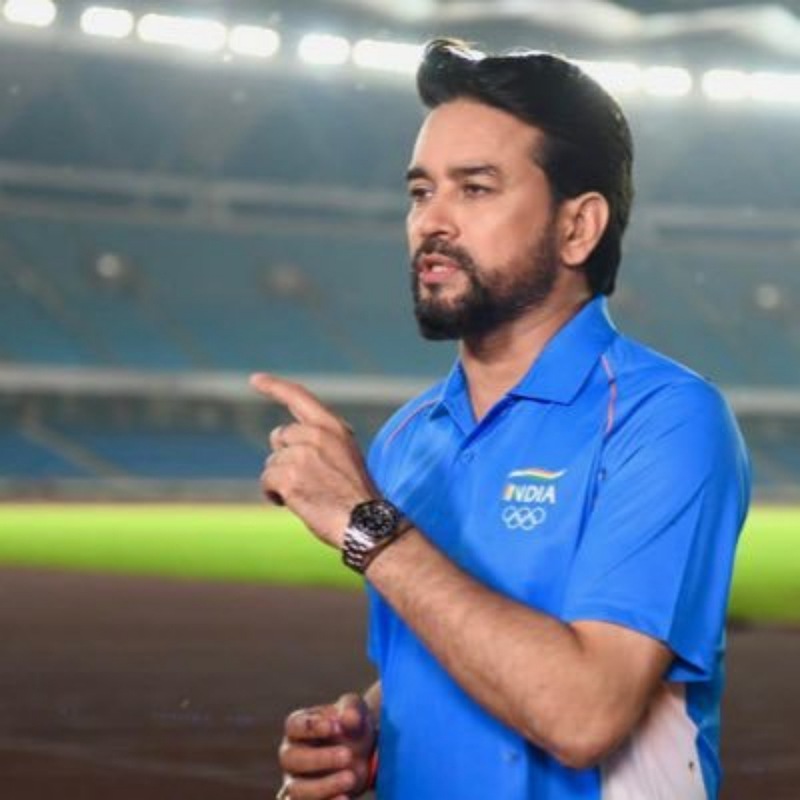
    Mumbai: Prasar Bharati is not closing any Akashvani radio station in India, the minister of information and broadcasting Anurag Thakur told the Parliament on Tuesday. Thakur was responding to concerns regarding the closure of radio stations across different parts of the country that have been in the news for the last couple of years.

    Prasar Bharati has issued a clarification on false reporting and fake news claiming closure of AIR stations on several occasions earlier. Speaking in the Parliament, Thakur once again elaborated that “obsolete analog transmitters are phased out from time to time with the availability of alternate transmission technologies such as FM, satellite radio through DTH and internet streaming.”

    “Further, content reforms are undertaken from time to time to ensure that the national, regional and local services of Akashvani serve diversity of content, while optimally leveraging the scarce resources, giving opportunity to local talent and improving quality without duplication of content. The operational expenditure of these services is being met through the Internal and Extra Budgetary Resources (IEBR) of Prasar Bharati,” he stated.

    Thakur also told the Parliament that the government has approved schemes for setting up of Frequency Modulation (FM) transmitters in Sashastra Seema Bal (SSB) premises at seven locations along the Indo-Nepal Border including SSB premises at Narkatiaganj in West Champaran District in the State of Bihar.

    On FM stations and community radio stations, Thakur further said that Prasar Bharati has 523 FM transmitters located at 483 All India Radio (AIR) stations across the country. Under the policy guidelines on the expansion of FM radio broadcasting service through private agencies (phase-III), MIB grants FM radio license to private companies registered in India under the Companies Act, 2013.

    The private FM radio phase-III policy being city-centric provides for setting up of FM radio stations in all cities having a population above one lakh unless it is getting covered from an adjacent city. Further 11 cities in border areas of UT of Jammu & Kashmir, UT of Ladakh and the North East states having a population less than one lakh have also been approved for setting up FM radio stations.

    Under FM phase-III, the government has approved to the auction of 683 channels in 236 cities.

  • DD, AIR go paperless with 100% adoption of e-Office

    New Delhi: Use of technology has turned the operations at Prasar Bharati around. It’s no more business as usual, as in less than two years, 577 Centers and 22,348 employees of Doordarshan (DD) and All India Radio (AIR) have embraced e-Office operations. The initiative has helped the public broadcaster to cut down its expenditure on paper by almost 45 per cent in the last two years.

    “Kudos to all 500+ field units of Prasar Bharti across DD and AIR as we cross a significant milestone with 100 per cent adoption of e-office. For an organisation which was 100 per cent paper-based till three years ago, it is a remarkable transformation,” tweeted Prasar Bharti CEO Shashi Shekhar Vempati.

    According to the public broadcaster, the IT enablement of routine office functions through e-Office on the Cloud came as a blessing during the pandemic with the flexibility to work remotely, keeping operational decision making going and reducing the need for unnecessary physical movement of files.

    Prasar Bharti had introduced e-Office in August 2019 a year before the pandemic spread across the world. The idea was to make operations more efficient and paperless. Of total 577 Prasar Bharati centers across the country, 10 per cent adopted e-Office in 2019 (Aug – Dec), 74 per cent in 2020 and the remaining 16 per cent have joined by 18 June, it said in a recent statement.

    The transformation has not only brought speed and transparency in the working of the organisation, but led to creation of more than 50,000 e-Files with the status of every file available online. Internally, concerned departments can trace their files, whether it is in movement or parked or closed.

    “On an average, the complete process of clearing one physical file used to take almost a week. Through e-Office, this has been drastically reduced to 24 hours on an average, sometimes even a couple of hours,” said the public broadcaster. As a result, the figures on total volume of cleared files over almost the last two years and average number of files cleared every month during the same period have jumped significantly, the statement added.

    Apart from reducing Carbon footprint, paperless work also enhanced the COVID safety during the pandemic through remote working, work from home, etc, thus reducing the chances of infections.

  • Doordarshan to hire creative head; installs video walls for Rs 10.75 cr

    Doordarshan to hire creative head; installs video walls for Rs 10.75 cr

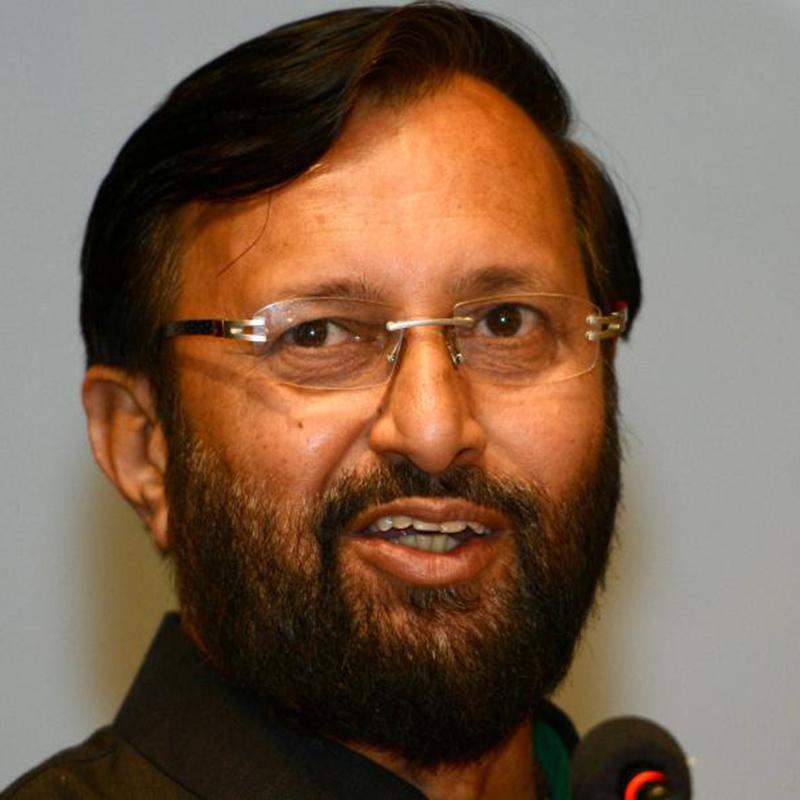
    MUMBAI: Information and Broadcasting Minister Prakash Javadekar inaugurated Video Walls in all eight Doordarshan Studios and Earth Station at DD Kendra, Delhi on Thursday.

    Speaking on the occasion,  Javadekar highlighted the significance of the video walls in enhancing viewer experience. He said that under the three year Action Plan of the Ministry of Information and Broadcasting, support has been given to Doordarshan to modernise its infrastructure.  Addition of state of art video walls and spectrum efficient satellite equipment, is a step in the direction of revamping the Public Service Broadcaster.

    Appreciating the role of Doordarshan, he stated that the channel is synonymous with credibility. He asked the officials present to work towards expanding the spread of DD Free Dish from the current 3.25 crore households to 5 crore households. On this occasion, he also announced that a creative head will soon be brought in for DD to give a further boost to programming and high quality content creation.

    Ministry of Information and Broadcasting secretary Amit Khare said that the government is committed to support Doordarshan and All India Radio in every possible way to ensure that the public service broadcaster is able to provide services of contemporary industry standards, reaching out to every nook and corner of India.

    Prasar Bharati chairman A Surya Prakash lauded the efforts of Doordarshan and highlighted that in the recent past a number of impactful and meaningful programmes have been created, which have taken the flagship schemes of the government to the door steps of people.

    The state-of-art video walls, installed at a cost of Rs 10.75 crore under the three year Action Plan of the Ministry of Information and Broadcasting, are at par with those in studio centres of leading international broadcasters. The induction of video walls will save a lot of time in physical erection of sets. Further, it will give greater flexibility through dynamic change of  backdrop by introducing live/recorded videos, graphics etc. in studio sets as per program requirement.

    The Earth Station, which is based on spectrum efficient technology, will result in increasing capacity to almost double the number of channels in the same bandwidth. The new Earth Station is HD capable and can give all the national channels of DD in HD. This state of art Earth Station will enable DD to save cost on teleport of DD channels and also allow inclusion of new channels in DD bouquet.

    The satellite uplink facility of 9 channels of DDK Delhi, also called as Earth Station was commissioned in 2007. The technology available those days was not spectrum efficient and the compression technique used earlier was MPEG-2 in DVB-S format which resulted in spectrum utilisation of approx. 4 MHz per channel.

    In order to replace the old outdated and obsolete equipment and also save precious spectrum, the compression chain of the Earth Station is now replaced with state of art new equipment which uses MPEG-4 compression and DVBS-2 standards resulting into reducing bandwidth requirement per channel to half i.e. 2 MHz per channel.This spectrum efficient technology will result in increasing capacity of the Earth Station to almost double the number of channels in the same bandwidth.

  • Doordarshan’s future roadmap hinges on new tech, content development & monetisation

    Doordarshan’s future roadmap hinges on new tech, content development & monetisation

    MUMBAI: Public broadcaster Prasar Bharati is waking up from its slumber. With technology redesigning the media industry, the pubcaster has to quickly adapt to upgradations like ultra-high definition (UHD) along with focusing on over-the-top reach and tapping the huge digital base.

    Several recommendations to boost DD were discussed in the first ever India International Broadcast Conclave 2019 held at Hyderabad in March under the aegis of the Ministry of Information and Broadcasting (MIB). Experts across the media value chain shared their insights for further growth of DD and the industry.

    One of the important recommendations was the participation of DD and AIR in international forums like MIPCOM and other international festivals.  While PB has a huge repository of archival content, monetisation of this asset is the need of the hour. Along with helping in revenue augmentation, it would also ensure a wider reach of rich content to enthusiasts.

    DD also needs to quickly adopt HD and UHD technologies for better picture quality. It has also been suggested that DD should prepare a roadmap for moving towards HD completely. On the other hand, DD needs to tap the huge digital base of consumers nationally as well as globally and take necessary steps for digitising of content and infrastructure. While all the traditional broadcasters are taking the over-the-top (OTT) road, DD can either create its own platform or collaborate with third parties in a revenue sharing agreement.

    Technology is not only important for distribution but also needs to be implemented as a part of overall programming such as augmented reality and virtual reality (AR and VR) in order to innovate and present content tactically. The need to have a separate cell in DD for data analytics for better insights on content has been allowed.

    “DD needs to adopt a professional outsourcing model for content development and acquisition in view of a large number of vacancies of production staff and ageing manpower. DD needs to revamp its tariff rates, put in place a robust sales and marketing teams and monetisation of content to stay ahead in the competition,” the report read.

    To make the changes smoother, there should be a focus also on capacity-building initiatives. At the time of rapid changes, a well-designed skill upgradation programme is the need of the hour. Moreover, collaboration with private agencies to provide training on contemporary skills in areas covering the entire value chain has been suggested. 

    “Commercial activity of broadcast to be efficient to pay for the public service activity. Onus is to be self-sustaining so that it can sustain the organisation. DD Freedish is a good example of public service mandate and achieving commercial sustainability,” PB CEO Shashi Shekhar Vempati highlighted in his ‘Master Class’.

  • Prasar Bharati survey to gauge demand for sporting events coverage soon

    Prasar Bharati survey to gauge demand for sporting events coverage soon

    MUMBAI: Prasar Bharati CEO Shashi Shekhar Vempati has revealed that a survey will soon be conducted to assess the demand for sports coverage on the public broadcaster’s platforms like Doordarshan (DD) and All India Radio (AIR). Vempati, however, pointed out that sports coverage by a public broadcaster is determined by factors like rights and monetisation opportunities.

    “Coverage of sports by the public broadcaster within its limited means depends on several factors including but not limited to availability of rights, monetisation potential etc. We will be conducting survey shortly to assess demand,” he said.

    The ongoing Indian Premier League is being covered by the BBC for its radio listeners. Not only is AIR not covering the IPL, but it also hasn’t been associated with a bilateral cricket series in India since 2014. Responding to a question on the same, Vempati pointed a finger at the Indian board.

    “At this time there is no proposal from BCCI regarding IPL on radio. Question best answered by BCCI on why IPL radio rights have not been offered in India while internationally they have been made available,” he remarked.

    However, Vempati was optimistic about agreeing to a deal with the Indian cricket board ahead of the next bilateral series at home.

    “As far as bilateral series in India goes, coverage on radio will commence once BCCI and All India Radio finalise MoU on the same. I am optimistic we will be able to narrow the gaps soon and before the next bilateral series happens in India” he said.

    Last year, the Ministry of Information and Broadcasting (MIB) proposed to amend rules relating to mandatory sharing of feeds of sports of national importance with not only the pubcaster but with other distribution platforms. Reason for proposed changes: people with less purchasing power should not lose out on sporting excitement.

    The MIB said in a notice issued on 17 October 2018, adding that public comments were invited within a month (later extended) on the changes proposed in the relevant regulation relating to sharing by rights-holding private TV channels of broadcasting feed with the pubcaster.