Tag: AIDCF

  • SC keeps TRAI request on tariff pending till Madras HC completes hearing

    NEW DELHI: The Supreme Court today refused to step in to allow TRAI to issue final broadcast tariff regulations, saying it would wait for the final outcome of a case in Madras High Court on a similar matter. The case in the apex court now has been listed for late March.

    TRAI had filed a special leave petition in SC requesting quashing of a Madras HC order stopping it from issuing tariff guidelines till it disposed of a petition filed by Star TV and Vijay TV relating to whether TRAI can frame rules relating to tariff and copyright laws, both   Indian and international.

    About 10 days back TRAI, as directed by the SC earlier, had submitted in a sealed envelope its final broadcast tariff guidelines seeking permission to notify the same.

    The apex court, while directing TRAI that it could continue with its regulation-framing exercise and also argue the matter in the Madras High Court had directed that before mandating any fresh rules, the broadcast and telecoms regulator should seek its permission.

    The Madras HC high court had asked TRAI to maintain status quo on tariff guidelines till full hearing of the case filed by Star India and Vijay TV. The court would later this month also hear the case of Indian MSOs’ industry organisation, AIDCF, which had requested to be impleaded in the Star TV and Vijay TV vs. TRAI case and be heard.

    Also Read:

    MSOs join issues with TRAI tariff plea at Madras HC

    Tariff order: Don’t notify without SC nod, TRAI told; Madras HC case to continue

    DAS Phase IV pace slack; MIB to meet Indian STB makers

    TRAI jurisdiction: IBF plea dismissed, AIDCF impleadment decision on 22 Feb

  • TRAI jurisdiction: IBF plea dismissed, AIDCF impleadment decision on 22 Feb

    MUMBAI: Cable operators body may become interveners in the Item 7 case heard last Friday between television broadcasters and TRAI over tariff issues vis-a-vis international and Indian copyright laws in the Madras High Court. Indian Broadcasting Foundation’s plea to be heard in the case was however dismissed with leave to file fresh writ petition, if required. 

    After Star India and Vijay TV had moved the high court appealing against TRAI’s jurisdiction to draw guidelines over tariff and commercial matters where copyrights was involved relating to content, the regulator had moved the Supreme Court seeking succour.

    As far as AIDCF’s impleadment application and that of D2H are concerned, while the judges were convinced that the All India Digital Cable Federation, India’s apex body for digital multi-system operators, could be interveners, whether or not they could be impleaded will be heard in next hearing as, due to paucity of time, their submissions could not be completed. AIDCF president TS Panesar could not be reached.

    “There is no speaking order on AIDCF’s intervention yet,” STAR India’s senior VP – legal and regulatory Pulak Bagchi told www.indiantelevision.com. After Supreme Court hears the case on 20 February, it will come up in the Madras High Court, which will decide if AIDCF could implead or intervene, Bagchi said.

    The Madras High Court case has now been adjourned to 22 February for further arguments in the impleadment application. The judges also verbally indicated that their writ petition would be heard, and that, if impleaded, counters would need to be filed by AIDCF by 7 March. “We undertook to do so if impleaded,” an AIDCF representative told www.indiantelevision.com.

    As reported by www.indiantelevision.com on 1 February, 2017, MSOs had joined issue requesting the Madras High Court to hear their views too. AIDCF has sought to be impleaded in the case and urged the high court — hearing the Star India-Vijay TV case against TRAI over draft tariff guidelines — that, while disposing of the case, it’s viewpoints should also be heard and taken into account.

    Sources had indicated that the MSOs had moved the court as they apprehended the viewpoints of  distribution platforms of TV services in India, notably the MSOs, may not be heard; especially when they have views that don’t converge with those of the petitioners on all aspects of the petition.

    Industry observers had explained that the presence of distributors in the court made the case interesting as the IBF too had urged to be heard. The application of IBF however was yesterday dismissed by the high court with leave to file fresh writ petition, if required. www.indiantelevision.com could not reach IBF for comment and next strategy.

    However the apex court, while  directing TRAI that it could continue with its regulation-framing exercise and seek its nod before mandating guidelines, observed that the regulatory body should argue its case before the Madras High Court, declining to stay proceedings in the high court.

    The high court had asked TRAI to maintain status quo on tariff guidelines till full hearing of the case filed by Star India and Vijay TV. 

    With regard to the impleadment applications, Ar. L Sundaresan appeared on behalf AIDCF, Vijay Narayan appeared on behalf of D2H and A l Somayaji appeared on behalf of IBF. A counter-affidavit was filed by Vijay TV to AIDCF’s impleadment application. 

    Sundaresan made submissions in AIDCF’s impleadment application to which Chidambaram objected. The other senior counsel also made submissions in support of their respective impleadment applications which was also objected to. 

    P. Chidambaram appeared on behalf of one of the petitioners and P.S. Raman appeared for the other. They did not mention in which WP they were appearing in. And, P. Wilson appeared on behalf of the regulator TRAI. 

    Also Read:
    MSOs join issues with TRAI tariff plea at Madras HC

    Tariff order: Don’t notify without SC nod, TRAI told; Madras HC case to continue

    DAS Phase IV pace slack; MIB to meet Indian STB makers
  • Budget 2017 Wish-list: MSOs demand industry status, rationalisation of entertainment & services taxes

    Budget 2017 Wish-list: MSOs demand industry status, rationalisation of entertainment & services taxes

    NEW DELHI: Annually various sectors of the Indian industry draw wish-list and hope that the government will grant them some relief during the presentation of the annual Budget of the country. MSOs are no exception and the All India Digital Cable Federation (AIDCF) has not only demanded an industry status, which will give it related financial incentives, but also rationalisation of various other taxes, including service and entertainment taxes.

    “Grant us infrastructure status for the (distribution) industry and remove the 8 per cent AGR applicable for MSOs offering broadband via cable,” said AIDCF Secretary-general Saharsh Damani when asked by indiantelevision.com about what the organisation would like Finance Minister Arun Jaitley to announce during his Budget presentation on February 1, 2017.

    AIDCF has also exhorted the government to grant them parity with manufacturing sector vis-a-vis u/s 2A as a disparity between the service and the manufacturing sectors is “adversely affecting” the growth and consolidation of service sector of which the MSOs are part of.

    “The tax benefits under Section 72A of the Income-tax Act, 1961 in respect of amalgamation or demerger (carry forward and set off of accumulated loss and unabsorbed depreciation allowances) are currently limited to industrial undertakings or a ship, hotel, aircraft or banking. The definition of industrial undertaking should be widened to include service industry, broadcasters and content production companies,” Damani said.

    The AIDCF, which is said to be a new and digital avatar of MSO Alliance, would also like removal of dual applicability of service and entertainment taxes on the cable TV.

    According to the apex body of MSOs, till the time GST (Goods and Services Tax) comes in place, entertainment tax paid to a state government may also be made creditable against the service tax liability of the cable TV sector. What does it mean? When a cable TV network, for example, pays an entertainment tax of Rs 100, then it should be able to adjust the same against the service tax payable and get a credit there on, AIDCF said.

    “This will be a short term measure, but will give higher declaration of entertainment tax and will bring in sufficient numbers to ensure that (overall revenue) collection of the government on service tax does not drop,” AIDCF’s Damani explained.

    Originally GST was supposed to have rolled out from April 1, 2017, but because of political wrangling and some states raising doubts on their share of the tax collected under a GST regime, Finance Minister Jaitley, according to media reports, has opined the new tax regime could be rolled out some time middle of 2017.

    Apart from that, AIDCF has also urged the government to rationalise indirect taxes like import duties on network equipment. Further, the organisation has suggested allowing use of USO (Universal Service Obligation) Funds for broadband infrastructure expansion would greatly benefit the industry.

    Also Read:

    Broadcasters bat for parity with print medium under GST

    India, US should resolve IPR issues at earliest: IACC

  • Budget 2017 Wish-list: MSOs demand industry status, rationalisation of entertainment & services taxes

    Budget 2017 Wish-list: MSOs demand industry status, rationalisation of entertainment & services taxes

    NEW DELHI: Annually various sectors of the Indian industry draw wish-list and hope that the government will grant them some relief during the presentation of the annual Budget of the country. MSOs are no exception and the All India Digital Cable Federation (AIDCF) has not only demanded an industry status, which will give it related financial incentives, but also rationalisation of various other taxes, including service and entertainment taxes.

    “Grant us infrastructure status for the (distribution) industry and remove the 8 per cent AGR applicable for MSOs offering broadband via cable,” said AIDCF Secretary-general Saharsh Damani when asked by indiantelevision.com about what the organisation would like Finance Minister Arun Jaitley to announce during his Budget presentation on February 1, 2017.

    AIDCF has also exhorted the government to grant them parity with manufacturing sector vis-a-vis u/s 2A as a disparity between the service and the manufacturing sectors is “adversely affecting” the growth and consolidation of service sector of which the MSOs are part of.

    “The tax benefits under Section 72A of the Income-tax Act, 1961 in respect of amalgamation or demerger (carry forward and set off of accumulated loss and unabsorbed depreciation allowances) are currently limited to industrial undertakings or a ship, hotel, aircraft or banking. The definition of industrial undertaking should be widened to include service industry, broadcasters and content production companies,” Damani said.

    The AIDCF, which is said to be a new and digital avatar of MSO Alliance, would also like removal of dual applicability of service and entertainment taxes on the cable TV.

    According to the apex body of MSOs, till the time GST (Goods and Services Tax) comes in place, entertainment tax paid to a state government may also be made creditable against the service tax liability of the cable TV sector. What does it mean? When a cable TV network, for example, pays an entertainment tax of Rs 100, then it should be able to adjust the same against the service tax payable and get a credit there on, AIDCF said.

    “This will be a short term measure, but will give higher declaration of entertainment tax and will bring in sufficient numbers to ensure that (overall revenue) collection of the government on service tax does not drop,” AIDCF’s Damani explained.

    Originally GST was supposed to have rolled out from April 1, 2017, but because of political wrangling and some states raising doubts on their share of the tax collected under a GST regime, Finance Minister Jaitley, according to media reports, has opined the new tax regime could be rolled out some time middle of 2017.

    Apart from that, AIDCF has also urged the government to rationalise indirect taxes like import duties on network equipment. Further, the organisation has suggested allowing use of USO (Universal Service Obligation) Funds for broadband infrastructure expansion would greatly benefit the industry.

    Also Read:

    Broadcasters bat for parity with print medium under GST

    India, US should resolve IPR issues at earliest: IACC

  • Hathway’s Panesar succeeds Wadhwa as AIDCF head

    Hathway’s Panesar succeeds Wadhwa as AIDCF head

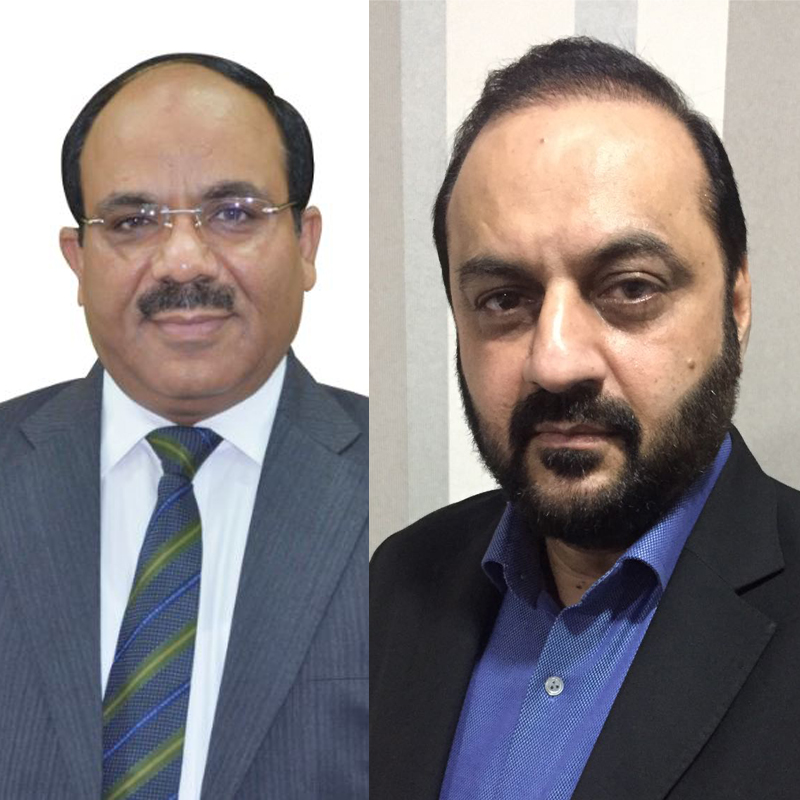
    MUMBAI/NEW DELHI: Hathway Cable & Datacom’s Video Business CEO T S Panesar has taken over as the new president of the All-India Digital Cable Federation (AIDCF), the apex body of digital cable television players.

    Panesar was unanimously elected at AIDCF’s 11th governing council meeting held in New Delhi. He succeeds SITI Networks ED and CEO V D Wadhwa who completed his two-year term as the founder-president of the Federation.

    Panesar has over 20 years of experience in media and entertainment industry, both on the broadcasting and distribution side.
    The governing council also appointed SITI Networks COO Anil Malhotra as he vice-president and Fastway Transmissions Private Ltd CEO Peeush Mahajan as the treasurer of the Federation.

    AIDCF placed on record its appreciation for the immense contribution made by Wadhwa as the founder and first president of the Federation over two years ago. Under his aegis, the federation earned its stripes with MIB, TRAI, DoT, Ministry of Finance and all the other industry bodies i.e. IBF, DTH Federation, CII, FICCI, ASSOCHAM etc in the media & entertainment Sector.

    The Federation has played key role in bringing all the major players of the industry controlling over 70 per cent of the business under one umbrella and have taken up the issues concerning the cable industry by liaising with the concerned government department/ministry as well as with the other industry bodies of the broadcasters and DTH operators besides playing key role in resolving the deadlock in implementation of phase III of digitization.

    On giving over the baton to Panesar, Wadhwa said, “A solid foundation has been laid for addressing all the concerns of the industry and I am confident that under the leadership of Panesar and active participation by all the members, the federation would further gain strength and shall be able to create an environment for the profitable growth of the cable industry.”

    Commenting on his appointment as the AIDCF president, Panesar said, “I am deeply honored and privileged to be appointed to lead the federation. It’s a big challenge and responsibility entrusted upon me and I look forward to working closely with all members to bring further changes in the environment. Having seen the evolution of the cable & broadcasting industry from the analogue to the digital regime, we are now at the cusp of a another major shift in light of the new regulation which is aimed at improving transparency, empowering customers to exercise choice and ensuring orderly growth of all stakeholders in the eco-system. We strongly believe that technology should be leveraged to address the changing needs of the industry. Together, we will strive towards strengthening our bond with all stakeholders to deliver a world class service to the consumers and improve customer satisfaction levels.”

    AIDCF secretary -general Saharsh Damani said, “With digitisation entering into last phase and focus on wired broadband gaining traction for all the members, I am sure that, under Panesar’s leadership, the digital cable industry will enter into the next orbit of momentum and growth.”

  • Hathway’s Panesar succeeds Wadhwa as AIDCF head

    Hathway’s Panesar succeeds Wadhwa as AIDCF head

    MUMBAI/NEW DELHI: Hathway Cable & Datacom’s Video Business CEO T S Panesar has taken over as the new president of the All-India Digital Cable Federation (AIDCF), the apex body of digital cable television players.

    Panesar was unanimously elected at AIDCF’s 11th governing council meeting held in New Delhi. He succeeds SITI Networks ED and CEO V D Wadhwa who completed his two-year term as the founder-president of the Federation.

    Panesar has over 20 years of experience in media and entertainment industry, both on the broadcasting and distribution side.
    The governing council also appointed SITI Networks COO Anil Malhotra as he vice-president and Fastway Transmissions Private Ltd CEO Peeush Mahajan as the treasurer of the Federation.

    AIDCF placed on record its appreciation for the immense contribution made by Wadhwa as the founder and first president of the Federation over two years ago. Under his aegis, the federation earned its stripes with MIB, TRAI, DoT, Ministry of Finance and all the other industry bodies i.e. IBF, DTH Federation, CII, FICCI, ASSOCHAM etc in the media & entertainment Sector.

    The Federation has played key role in bringing all the major players of the industry controlling over 70 per cent of the business under one umbrella and have taken up the issues concerning the cable industry by liaising with the concerned government department/ministry as well as with the other industry bodies of the broadcasters and DTH operators besides playing key role in resolving the deadlock in implementation of phase III of digitization.

    On giving over the baton to Panesar, Wadhwa said, “A solid foundation has been laid for addressing all the concerns of the industry and I am confident that under the leadership of Panesar and active participation by all the members, the federation would further gain strength and shall be able to create an environment for the profitable growth of the cable industry.”

    Commenting on his appointment as the AIDCF president, Panesar said, “I am deeply honored and privileged to be appointed to lead the federation. It’s a big challenge and responsibility entrusted upon me and I look forward to working closely with all members to bring further changes in the environment. Having seen the evolution of the cable & broadcasting industry from the analogue to the digital regime, we are now at the cusp of a another major shift in light of the new regulation which is aimed at improving transparency, empowering customers to exercise choice and ensuring orderly growth of all stakeholders in the eco-system. We strongly believe that technology should be leveraged to address the changing needs of the industry. Together, we will strive towards strengthening our bond with all stakeholders to deliver a world class service to the consumers and improve customer satisfaction levels.”

    AIDCF secretary -general Saharsh Damani said, “With digitisation entering into last phase and focus on wired broadband gaining traction for all the members, I am sure that, under Panesar’s leadership, the digital cable industry will enter into the next orbit of momentum and growth.”

  • TRAI may moot MRP for bouquet TV channels; no price cap on unbundled premium products

    TRAI may moot MRP for bouquet TV channels; no price cap on unbundled premium products

    MUMBAI: Broadcast carriage regulator Telecom Regulatory Authority of India (TRAI) has lined up a slew of draft guidelines relating to tariff, quality of service and interconnections, including proposing maximum retail price (MRP) for channels being bundled in genre-wise bouquets, freeing unbundled premium channels of  price caps and reining in the last mile cable operator (LCO) from breaching revenue-gravy trail.

    The draft recommendations, outcome of several consultation papers issued by TRAI over the last 12 months, could be discussed in a meeting that the regulator likely to have on Wednesday with stakeholders. Representatives of organisations like All-India Digital Cable Federation (AIDCF), Indian Broadcasting Foundation (IBF) and Ministry of Information and Broadcasting (MIB) are likely to be part of the meeting.

    Other topics for discussion at this meeting may revolve aroundanalogue tariffs to be levied in phase III and phase IV areas until sunset dates.

    Sources in TRAI indicated the regulator is in favour of introducing MRP for TV channels that broadcasters offer in a bouquet to MSOs so the prices could be conveyed to a consumer in a transparent manner for him to make an empowered choice.

    Though broadcasting companies do submit annually a-la-carte rates of their respective channels to TRAI, the regulator is of the opinion that a consumer doesn’t ultimately get to choose the channel of his choice transparently.

    How will the MRP be fixed? TRAI feels that the broadcasters should convey the price themselves as they were the best judge of their products and the same would be conveyed to the consumer. Or, the regulator could moot a formula for fixing the MRP.

    Fully aware that such measures could be termed restrictive and intrusive by industry players, TRAI is likely to dangle sops and suggest that broadcasters were free to price a premium channel at any level, but such channels cannot be part of any bouquet or bundling.

    The draft proposals, being fine-tuned by TRAI officials, are likely to be put out in public domain over the next 7-10 days. As these guidelines pertain to carriage services, the regulator can notify them itself. The likely date from which they would come into effect is April 2017. Unless, of course, somebody moves the court challenging the guidelines.

    Apart from these, TRAI is also toying with the idea of introducing an app with the help of which a consumer can get a TV channel from his distribution platform operator (DPO) after furnishing details like area of residence and area service provider’s name. The details will be get forwarded to the DPO concerned for further action.

    TRAI feels that with over 90 per cent of the areas in Phase 1, II and III already receiving digitised TV services, there would be no dearth of opportunities even if the sunset date of December 2016 for Phase IV or complete digitisation gets pushed by few months into 2017.

    In its consultation paper, issued in January 2016, TRAI had stated broadcast industry in India had been driven largely by satellite TV distribution business and unorganized growth of cable TV. During the early days, broadcasters were directly dealing with the cable operators who aggregated and carried broadcast TV services to end users. The distribution model was, according to the regulator, heavily skewed towards advertisement-driven revenues due to difficulties in maintaining transparency in the flow of subscription revenues across the analog value chain, which have become more transparent with the rollout of digital services or digitisation pushed by MIB andTRAI.

    Though TRAI had mandated a-la-carte availability of broadcast TV channels across the value chain, including subscribers, the a-la-carte tariff is presently structured in such a manner that makes it devoid of value proposition vis-à-vis bundled offerings,TRAI highlighted in its January paper (available at http://www.trai.gov.in/WriteReadData/ConsultationPaper/Document/CP_Tariff_issues_29_Jan_2016_final.pdf ), adding consumer was the “ultimate sufferer” ending up receiving hundreds of TV channels many of which remain confined to his STB and never viewed.

    ALSO READ: TRAI releases consultation paper on tariff issues for TV services

    ALSO READ: TRAI allows more time for reactions on QoS methodology under DAS

  • TRAI may moot MRP for bouquet TV channels; no price cap on unbundled premium products

    TRAI may moot MRP for bouquet TV channels; no price cap on unbundled premium products

    MUMBAI: Broadcast carriage regulator Telecom Regulatory Authority of India (TRAI) has lined up a slew of draft guidelines relating to tariff, quality of service and interconnections, including proposing maximum retail price (MRP) for channels being bundled in genre-wise bouquets, freeing unbundled premium channels of  price caps and reining in the last mile cable operator (LCO) from breaching revenue-gravy trail.

    The draft recommendations, outcome of several consultation papers issued by TRAI over the last 12 months, could be discussed in a meeting that the regulator likely to have on Wednesday with stakeholders. Representatives of organisations like All-India Digital Cable Federation (AIDCF), Indian Broadcasting Foundation (IBF) and Ministry of Information and Broadcasting (MIB) are likely to be part of the meeting.

    Other topics for discussion at this meeting may revolve aroundanalogue tariffs to be levied in phase III and phase IV areas until sunset dates.

    Sources in TRAI indicated the regulator is in favour of introducing MRP for TV channels that broadcasters offer in a bouquet to MSOs so the prices could be conveyed to a consumer in a transparent manner for him to make an empowered choice.

    Though broadcasting companies do submit annually a-la-carte rates of their respective channels to TRAI, the regulator is of the opinion that a consumer doesn’t ultimately get to choose the channel of his choice transparently.

    How will the MRP be fixed? TRAI feels that the broadcasters should convey the price themselves as they were the best judge of their products and the same would be conveyed to the consumer. Or, the regulator could moot a formula for fixing the MRP.

    Fully aware that such measures could be termed restrictive and intrusive by industry players, TRAI is likely to dangle sops and suggest that broadcasters were free to price a premium channel at any level, but such channels cannot be part of any bouquet or bundling.

    The draft proposals, being fine-tuned by TRAI officials, are likely to be put out in public domain over the next 7-10 days. As these guidelines pertain to carriage services, the regulator can notify them itself. The likely date from which they would come into effect is April 2017. Unless, of course, somebody moves the court challenging the guidelines.

    Apart from these, TRAI is also toying with the idea of introducing an app with the help of which a consumer can get a TV channel from his distribution platform operator (DPO) after furnishing details like area of residence and area service provider’s name. The details will be get forwarded to the DPO concerned for further action.

    TRAI feels that with over 90 per cent of the areas in Phase 1, II and III already receiving digitised TV services, there would be no dearth of opportunities even if the sunset date of December 2016 for Phase IV or complete digitisation gets pushed by few months into 2017.

    In its consultation paper, issued in January 2016, TRAI had stated broadcast industry in India had been driven largely by satellite TV distribution business and unorganized growth of cable TV. During the early days, broadcasters were directly dealing with the cable operators who aggregated and carried broadcast TV services to end users. The distribution model was, according to the regulator, heavily skewed towards advertisement-driven revenues due to difficulties in maintaining transparency in the flow of subscription revenues across the analog value chain, which have become more transparent with the rollout of digital services or digitisation pushed by MIB andTRAI.

    Though TRAI had mandated a-la-carte availability of broadcast TV channels across the value chain, including subscribers, the a-la-carte tariff is presently structured in such a manner that makes it devoid of value proposition vis-à-vis bundled offerings,TRAI highlighted in its January paper (available at http://www.trai.gov.in/WriteReadData/ConsultationPaper/Document/CP_Tariff_issues_29_Jan_2016_final.pdf ), adding consumer was the “ultimate sufferer” ending up receiving hundreds of TV channels many of which remain confined to his STB and never viewed.

    ALSO READ: TRAI releases consultation paper on tariff issues for TV services

    ALSO READ: TRAI allows more time for reactions on QoS methodology under DAS

  • AIDCF asks b’casters to create level playing field for OTT & cable TV

    AIDCF asks b’casters to create level playing field for OTT & cable TV

    MUMBAI: The All India Digital Cable Federation (AIDCF) is on a roll. The multi system operator (MSO) association, which first submitted its recommendations to the Information & Broadcasting (I&B) Ministry and then to the GST Committee, has now written to broadcasters with Over the Top (OTT) platforms.


    The Association has written a letter to Star India, Multi Screen Media and IndiaCast Media Distribution. In the letter, AIDCF has stressed on how the broadcaster is giving content free of cost to its OTT platforms, while charging MSOs for the same content.


    Giving an example of Star India’s OTT platform hotstar, a source close to the development tells Indiantelevision.com, “Star India, on one hand offers simulcast or immediate transmission of fresh popular content completely free of cost to its OTT subscribers on hotstar and on the flip-side, it charges the MSOs huge sum for the same set of content.”


    AIDCF’s letter to broadcasters, a copy of which is with this website, reads:


    1) The cable industry is contributing huge subscription revenue to 

    broadcasters for the same set of content and programme.


    2) It contributes to a large viewership for the channels the network has.


    3) Also helps the broadcaster in gaining higher TRPs, which in turn leads to a better ad rate for the portfolio of channels thus increasing the advertisement revenue.


    The letter points out that this scenario of offering simulcast/immediate transmission of fresh content completely free of cost to OTT subscribers is not favourable for the Cable TV industry and its relationship with broadcasters, considering the growth in the subscriber base for the broadcasters’ OTT application.


    According to AIDCF, this is a threat to the pay TV cable business model, which defeats the purpose of paying huge license fees to broadcasters. “Some of our subscribers have started complaining saying, ‘Why should we pay you for the content, which is available free of cost via say hotstar or Sony Liv,’” informs the source.


    Giving free of cost content to OTT platforms is affecting the average revenue per user (ARPU) of the cable TV industry, subsequently hampering the growth of business at large.


    AIDCF in its letter has asked broadcasters to create a level playing field amongst respective distribution platforms. “We have requested the broadcaster to make content available on their OTT platform a paid service with a subscription fees. Alternatively, the same content should also be made available free of cost to other distribution platform,” the source reaffirms.

  • AIDCF appoints Saharsh Damani as secretary general

    AIDCF appoints Saharsh Damani as secretary general

    MUMBAI: The All India Digital Cable Federation (AIDCF) has appointed Saharsh Damani as its secretary general.


    With a career spanning over a decade in various analytical and strategic roles, Damani will pilot the federation’s work and support the president and the federation in seeking solutions on industry issues. Damani will also endeavour to build a strong and sustainable MSO sector in India.


    AIDCF president V D Wadhwa said, “Saharsh’s wide experience in dealing into research, planning and strategic issues will be of immense help to the Federation. I take this opportunity to join my fellow members in welcoming Saharsh to AIDCF.”


    Prior to joining AIDCF, Damani led research at the Indian Broadcasting Foundation, the preeminent body of television broadcasters’ in India. He has worked in various industries such as Information Technology, Building Materials, Life Sciences and Media on strategy, M&A and research related areas.