Tag: AIDCF

  • MSOs move Madras HC seeking relief on inter-connect pacts

    MSOs move Madras HC seeking relief on inter-connect pacts

    MUMBAI: The All India Digital Cable Federation (AIDCF) had filed a petition in the Madras High Court few days back pleading a directive to broadcasters to maintain a status quo on renegotiating agreements between TV channels and MSOs till a final judicial call was taken on TRAI’s new tariff regime announced in 2016.

    The tariff order, along with guidelines on quality of services, was stayed by the Supreme Court pending a final directive from the Madras High Court.

    Pleading that renegotiating inter-connect agreements on expiry at this point of time could lead to losses to the MSOs and subscribers, in general, the apex body of digital MSOs in India has sought judicial relief.

    Telecoms and broadcast regulator TRAI, Star India and its affiliate Vijay TV have been made respondents in the case that, according to industry sources, has not yet been listed for an initial hearing at Tamil Nadu’s top court.

    Madras HC, which was hearing a case pertaining to TRAI’s validity to have jurisdiction over matters relating to copyrights, is yet to announce its final verdict. The petition was filed by Star India and Vijay TV in late 2016, which effectively put a stop to the implementation of a new tariff regime announced by TRAI in October 2016 for the broadcast sector and distribution platforms.

    Apart from the tariff order, originally issued on 10 October 2016, the regulator had also issued the DAS interconnect regulations and the standards of quality of service and consumer protection regulations. These guidelines, after being debated and allowed by Chennai and Delhi courts initially were finally stayed by the Supreme Court earlier this year till Madras High Court disposed off the Star India-Vijay TV case questioning TRAI’s jurisdiction over certain matters relating to copyrights and freedom to carry on business.

    ALSO READ:

    http://www.indiantelevision.com/regulators/high-court/orders-reserved-by-madras-hc-on-trai-jurisdiction-case-170731

    http://www.indiantelevision.com/regulators/trai/star-vijay-tv-amend-plea-trai-asked-by-madras-hc-to-file-response-170317

    http://www.indiantelevision.com/regulators/trai/trai-qos-implementation-stayed-by-delhi-hc-awaiting-madras-hc-verdict-170830

    http://www.indiantelevision.com/regulators/trai/star-trai-case-hearing-in-madras-high-court-starts-170627

  • TRAI landing page norms stayed till 22 December 2017

    TRAI landing page norms stayed till 22 December 2017

    NEW DELHI: The direction on landing page norms issued by the Telecom Regulatory Authority (TRAI) of India has been stayed till 22 December 2017 following an appeal in the Telecom Disputes Settlement and Appellate Tribunal (TDSAT).

    Even as the tribunal admitted the petitions for hearing, it said: “Since there is a prayer for stay of the impugned direction dated 8 November 2017 issued by TRAI, let the matter be listed on 22 December 2017 under the head “for orders” to consider that prayer in light of the reply of the respondent.”

    “Till then, the impugned direction shall not be given effect to,” it added further.

    Chairman Shiva Keerti Singh and members B B Srivastava and A K Bhargava gave TRAI two weeks’ time for filing the reply. Further time of two weeks is granted to the appellants to file the rejoinder.

    On November 8, TRAI had issued a direction to all broadcasters and distributors of television channels to not place any registered satellite television channel. TRAI had said the orders would be implemented within 15 days.

    The direction was challenged in TDSAT by Bennett Coleman and Company Limited (BCCL), Den Networks Limited (Den), All India Digital Cable Federation (AIDCF), Fastway Transmission Private Limited, and Satellite Channels Private Limited.

    Den has appealed that the “impugned direction issued by the respondent, Telecom Regulatory Authority of India, are beyond the jurisdiction of the authority as given to it under TRAI Act.” It further said that the TRAI direction was curtailing the “freedom of the distributor of TV channels to position the channels over their network”.

    TRAI had said in its November 8 direction that it had been repeatedly brought to the authority’s attention by various stakeholders that satellite TV channels are placed on the landing page and this practise was influencing the television audience measurements/television ratings.

    TRAI in its direction had also concluded that “this practice may affect the orderly growth of the sector and is against the spirit of the policy guidelines for TV rating agencies.”

    Also read:

    TRAI tightens landing-page norms

  • Broadcasters, DPOs to crack down on piracy, analogue transmission

    Broadcasters, DPOs to crack down on piracy, analogue transmission

    NEW DELHI: There is general agreement among broadcasters and delivery platform operators including direct to home (DTH) as well as digital cable operators that a joint industry task force should be set up to check and report cases of piracy in the third and fourth phases of digital addressable system (DAS).

    There was general consensus that certain states – particularly Andhra Pradesh and Telengana – had high levels of pirated material on local television channels.

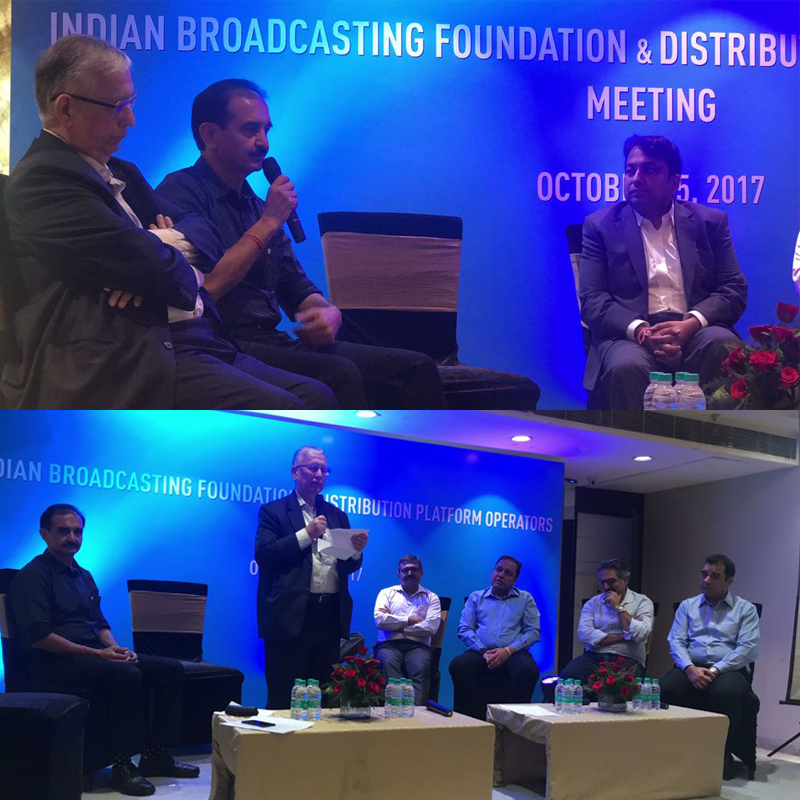
    Such were the thorny issues being discussed in a meeting held between the All India Digital Cable Operators Federation and the DTH Operators with the Indian Broadcasting Foundation (IBF) on Wednesday.

    As senior AIDCF member Ashok Mansukhani said that it was more appropriate for the stakeholders to meet in this manner than in courts of law.

    Among others, the meeting was addressed by IBF President Punit Goenka, Jawahar Goel of Dish TV, AIDCF President Rajan Gupta and senior office-bearer S N Sharma.

    Goel said there was an attempt by Punjab and other states to bring back what he termed as the ‘inspector raj’ by imposition of local taxes. Furthermore, he said broadcasters were free to give content to OTT or YouTube, but this should not be live as it would directly hit the DPOs like the DTH players and digital cable operators.

    The larger multi-system operators (MSO) said the inefficient handling of piracy by broadcasters was the cause of their suffering. Broadcasters neglect to take actiom against operators carrying analogue signal. There are small MSOs who do not have CAS & SMS system and do not follow TRAI QoS guidelines so broadcasters should refrain from giving content to them. Hence a joint industry task force should be made to raid such operators / MSOs and initiate legal action against those operators. The News Broadcasters Association should also be made part of this.

    Issues were also raised relating to OTT, Doordarshan’s FreeDish, and Reliance Jio and the DPOs alleged that providing signals to these entities led to huge losses to the digital cable and DPOs.

    Answering various question in a presentation, Goenka said OTT rights and digital cable rights were two different issues and should not be confused. OTT was an interactive and on-demand platform and in any case was never free being part of a subscription bandwidth. Thus this should not be compared with other platforms.

    YouTube content are only the ones that have already been broadcast and therefore, there was no conflict of interest. He denied any concessions to Reliance Jio and said it was in fact paying more than digital cable.

    He expressed concern by the Jio announcement that its mobile phone could receive the signals of not only new LCD/LED television sets but also the old sets. AIDCF said that this would bring Jio under TRAI’s regulations.

    Goenka said he will advise IBF members to take up the issue with OTT providers, especially Reliance Jio. In any case, he said the present contracts forbid such activity.

    He said broadcasters are not offering OTT content on television screen by connecting Reliance Jio phone through a cable and they prohibit such an activity. But agreeing with the concern of the AIDCF, he said this would be rigorously monitored and action will be taken in case there is any violation.

    Referring to the AIDCF charge that pay channels were being given as Free to Air (FTA) to Doordarshan’s FreeDish after paying huge carriage fees, Goenka said that broadcasters like Star and Sony are offering paid live content free on Freedish but with a time lag of one year. He agreed that this should be implemented across all genres and it should be completely free to all platforms.

    He said that in any case digital cable had more channels than FreeDish which primarily comprised FTA channels and so it was unreasonable to compare the two especially as the content was also being provided to digital cable operators.

    The speakers from AIDCF said MSOs have invested around Rs 200 billion in digitisation and are yet to get the return on their investment. This is primarily on account of the growth in rates that the broadcasters demand every year. Hence it was now the question of viability and survival of the MSOs that broadcasters should come out with their MRP based pricing.


  • Digital cable federation AIDCF secy-gen Saharsh Damani quits

    Digital cable federation AIDCF secy-gen Saharsh Damani quits

    NEW DELHI: Saharsh Damani has decided to move on and put in his papers as the founder secretary-general of the All-India Digital Cable Welfare Federation. However, his resignation will be effective by October-end.

    During his tenure, Damani played a crucial role in steering negotiations with the government and TRAI and on the cable tariff case in Tamil Nadu where AIDCF was intervener.

    No reason has been given but industry sources said Damani may move out of media and entertainment industry. Prior to joining AIDCF in July 2015, Damani had worked with the Indian Broadcasting Foundation.

    Damani is a professional with around 15 experience in business strategy, strategy consulting, operations, business development, mergers and acquisitions, qualitative / quantitative research, corporate and financial research, competitive intelligence and crisis management. 

    He has expertise in financial planning, innovation and strategic development, business brokerage with wealthy and influential market segment and market intelligence. He is also skilled in designing and implementing strategic plans, project management, new business development, sales and marketing and financial planning.

    Damani has hands-on experience in brand positioning and research from acquisition to exit strategy, directing numerous product introductions, managing business units and creating project teams. He is efficient in developing new markets, reinvent and revitalise operations, and turnarounds using creative approaches. 

    With excellent communications skills with strong analytical, problem solving and organisational abilities, he has a sound exposure of using a large variety of databases.

    Also Read:

    Arasu DAS licence: Stakeholders fear flurry of similar requests & permissions

    DAS: Even official figures show cable TV digitisation is incomplete

  • Dish TV shoots off letter to IBF; alleges discrimination by b’casters, OTT platforms

    Dish TV shoots off letter to IBF; alleges discrimination by b’casters, OTT platforms

    NEW DELHI: In a move that’s certain to set the cat amongst the pigeons, Dish TV, one of India’s biggest satellite platform in terms of subscribers, has not only accused broadcasters of  “discrimination” relating to making available content to various pay distribution platforms vis-à-vis likes of OTT, but also “creating huge disparity” in the market.

    “Broadcasters, on one hand, keep on charging huge subscription fee from us and, on the other hand, provide the same content/channel to the OTT platforms at highly subsidized rates, thereby not only creating a non-level field, but also causing huge detriment to the subscribers of Dish TV. Availability of same content/channel on alternate distribution platform on much cheaper rate vis-a-vis DTH has started resulting into migration to the alternate distribution platforms,” Dish TV has said in a letter to the Indian Broadcasting Foundation, an apex body of TV channels or broadcasting companies operating in India.

    The Dish TV letter dated 11 August 2017, reviewed by Indiantelevision.com, goes on to highlight why the move of TV channels to turn FTA, join Doordarshan’s free-to-air DTH platform DD FreeDish after paying a carriage fee, and making available content at highly subsided rates to OTT platforms like YouTube and that being proposed by Reliance Jio slides the Indian television market’s business model to be largely advertising driven.

    “It is a common industry knowledge that the broadcasters have provided their channels to the OTT platforms at a highly discounted rates, which is totally prejudicial and discriminatory to the DTH platforms,” the Dish TV letter stated, which has also been sent to the DTH Association of India and the All India Digital Cable Federation, a body of digitally-able MSOs.

    The letter from Dish TV, written by the satellite platform’s managing director Jawahar Goel, is addressed to IBF president Punit Goenka, who also is Zee Entertainment Enterprises Limited MD and CEO, and a nephew of Goel. Goenka’s father and media baron Subhash Chandra is a member of India’s Upper House or Rajya Sabha.

     According to people familiar with the development, IBF’s member-companies have been asked to give their feedback on the content of the letter, which could be put to vote some time mid-September.

    “The IBF constitutes of seven major members, viz. Star, Zee, Sony, IndiaCast, Sun (TV group), Discovery and Times, which not only control the IBF but also are the major players collecting the subscription and advertisement revenue— collecting more than 99 per cent of the subscription and advertisement revenue of the Indian broadcasting industry,” the letter stated, adding that actions of the broadcasters “clearly indicate” the focus was shifting towards increasing the advertising revenue against subscription revenue.

    Raising the issue of sector regulator TRAI and disputes tribunal TDSAT’s emphasis on “fairness, reasonability and non-discrimination” as far as making available content to distribution platforms,  Dish TV pointed out that strategies employed by broadcasters were “deterrent to the pay TV market.”

    Pointing out that certain actions of the broadcasters could amount to breach of cross-media restrictions too, the letter exhorted the IBF members to discuss “whether the emphasis has to be on pay model (where the broadcasters can collect subscription) or an FTA model (where the broadcasters can get the advertisement revenue)”.

    Till the time of writing this report, Indiantelevision.com could not get across to IBF for a reaction.

    “Availability of same content/channel on alternate distribution platform on much cheaper rate vis-a-vis DTH rate has started resulting in(to) migration to the alternate distribution platforms,” the letter highlighted, adding that big broadcasters’ own OTT platforms (like Star’s Hotstar, Viacom18’s Voot, Sony Pictures Entertainment’s SonyLIV and Zee’s dittoTV, for example) also contributed to compounding the problem.

    The letter added: “It will be critical for your (IBF) members to spell out the strategy to hold/grow the pay TV market, which has been contributing to around 35-40 per cent of the total revenue of the pay broadcasters.”

    However, it seems that the present slew of letters from Dish TV and accusations will again rock the approximately Rs 558  billion Indian media and entertainment industry, which had thought corporate skirmishes of mid 1990s to mid 2000s had been buried in favour of overall growth of the broadcast and cable sectors and the media and entertainment industry, in general.

    ALSO READ:

    Jawahar Goel raises alarm of emerging Star cricket monopoly


  • Orders reserved by Madras HC on TRAI jurisdiction case

    Orders reserved by Madras HC on TRAI jurisdiction case

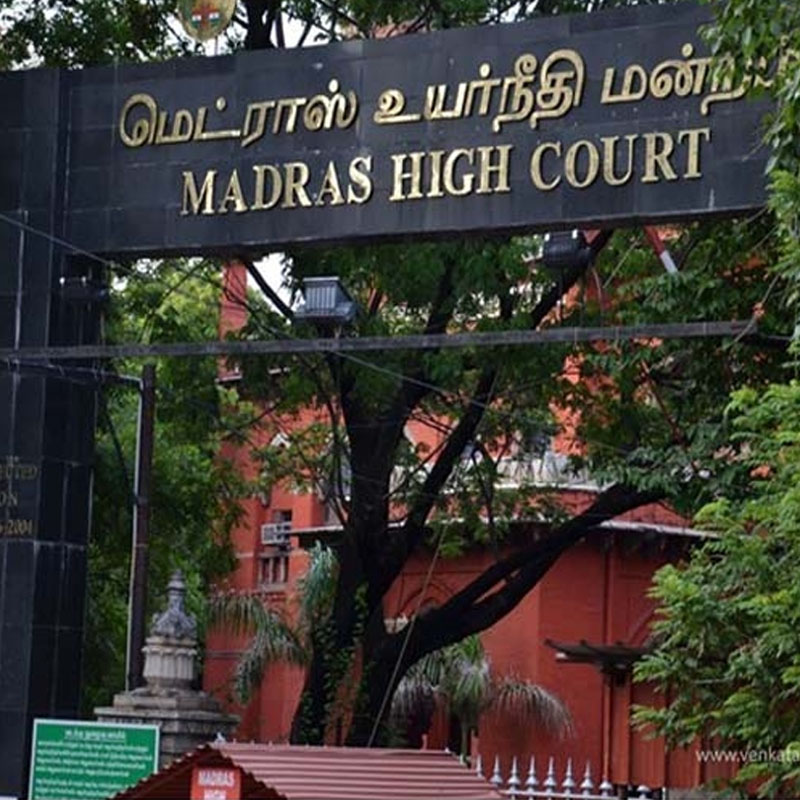
    NEW DELHI: The Madras High Court today reserved orders on the Star India-Vijay TV challenge to the jurisdiction of the Telecom Regulatory Authority of India to issue tariff orders.

    The court received a compliance report from its registry that all parties had filed their written submissions.

    Earlier last week, the Authority had said it would file its written submissions only after scrutinizing those of the broadcasters, after which the broadcasters had been directed to serve their submissions to TRAI the same day (27 July) .

    Thus submissions have been filed by the petitioners Star India and Vijay TV, respondent TRAI, and intervenors All India Digital Cable Federation (AIDCF) and Videocon d2h.

    Arguments on the hearing which commenced late last month had concluded on 19 July and all parties had been asked to file written submissions.

    Star India and Vijay TV’s challenge to the jurisdiction of TRAI to issue tariff orders is on the ground that content comes under the Copyright Act.

    In the hearing on 19 July 2017, the Court had refused to accept an affidavit by the Indian Broadcasting Foundation  (IBF).

    Although the Supreme Court had in early May while staying the tariff order directed the Madras High Court to complete hearing within four weeks, the High Court had commenced hearing only in the last week of June.

    Meanwhile, TRAI TV reference interconnect offer (RIO) and Quality of service order (QoS) came into effect from 2 May following the order of the High Court. (However, the Tariff order comes into effect only from 2 September 2017.)

    Apart from the Tariff order which had originally been issued on 10 October last year, the regulator also issued the DAS Interconnect Regulations which had been issued on 14 October last year, and the Standards of Quality of Service and Consumer Protection (Digital Addressable Systems) Regulations which had been issued on 10 October last year.

    The orders can be seen at:

    http://trai.gov.in/sites/default/files/Tariff_Order_English_3%20March_2017.pdf
    http://www.trai.gov.in/sites/default/files/QOS_Regulation_03_03_2017.pdf
    http://www.trai.gov.in/sites/default/files/Interconnection_Regulation_03_mar_2917.pdf 

    Also Read:

    Decks cleared for TRAI tariff order implementation as HC declines stay (updated)

    TRAI jurisdiction case listed for 31 July to peruse compliance report

  • TRAI tariff: AIDCF impleads in Tata Sky, Airtel Digital pleas

    NEW DELHI: The Delhi High Court today allowed the All India Dgital Cable Federation to get impleaded in the direct-to-home platforms TataSky and Airtel Digital challenge to the Tariff and the Reference Interconnect Orderregulations.by the Telecom Regulatory Authority of India.

    A bench headed by Chief Justice Gita Mittal listed the matter for 16 August 2017 as the Regulations come into force from 2 September 2017. The bench permitted AIDCF to make legal submissions.

    Although the cases were listed separately, the bench had on 12 May 2017 decided to hear the matters together since similar grounds had been raised and had issued notice to TRAI.

    The Court had also issued notice on an application by the two platforms seeking a stay of the tariff order.

    The petitions are seeking an order not only for setting aside these regulations, but also some sub-sections of Section 11 of the TRAI Act 1997 as being violative of the Constitution.

    The respondents are both TRAI and Union of India.

    Indiantelevision.com had earlier reported that the primary problem arises from the fact that all stakeholders will have to abide by the rates fixed by the broadcaster according to the new tariff order.

    The DTH players are agitated not only with the fact that they pay over 85 per cent of the service tax and entertainment tax in the digitised universe, but the fact that their liberty to make their own bouquets may be taken away with the broadcasters having the say in fixing rates for individual channels.

    Apart from the Tariff order which had originally been issued on 10 October last year, the regulator also issued the DAS Interconnect Regulations which had been issued on 14 October last year, and the Standards of Quality of Service and Consumer Protection (Digital Addressable Systems) Regulations which had been issued on 10 October last year.

    TRAI had first come out with a draft tariff order in October 2016 but later issued the orders on 3 March after getting the green signal from the apex court even as a Star India and Vijay TV case was pending in the Madras High Court. The broadcasters have challenged the regulations under the Copyright Act on the ground that content does not come in the ambit of TRAI.

    The Supreme Court on 8 May stayed the operation of the regulations but asked the High Court to dispose of the casewithin four weeks. The High Court has since heard arguments by all parties and has sought written submissions on 27 July 2017.

    Also Read:

    Tata Sky-Airtel case: HC asks TRAI to file reply before 25 July 

  • Rajan Gupta replaces T S Panesar as new AIDCF President

    NEW DELHI: Hathway Cable & Datacom Limited MD and chairman & non-ED of GTPL Hathway Limited Rajan Gupta has been appointed president of the All India Digital Cable Federation (AIDCF), the apex body of digital cable television companies..

    This change has been made as Hathway Digital Pvt. Ltd CEO video business TS Panesar, the former AIDCF president, resigned from his post at Hathway some time back.

    While giving his exit statement, Panesar said, “I am resigning from the board and president’s role at AIDCF as I have put in my papers at Hathway. During my short stint at AIDCF, the federation has added new members, all of whom are regional leaders in their respective markets. Their presence will certainly help the federation in raising regional issues. I also hope that TRAI’s new regulations will become a reality soon.”

    Gupta, in a statement, said, “I am delighted to accept the president’s role at AIDCF. Digitalization journey for cable TV is almost over and focus will now shift to monetizing STBs seeded in the last few years. The Next phase of growth in the cable TV industry will come through convergence and innovative value-added services. I look forward to collaborating with all national and regional MSOs for maximizing industry revenue and profitability.”

    AIDCF secretary-general Saharsh Damani said, “With digitization almost over, I am certain that under Mr Gupta’s leadership AIDCF members will chalk-out a robust path in giving dual and triple play services to the end consumers.”

    Gupta, an engineering graduate and an MBA from IIM Bangalore, has 20 years of diverse experience across various aspects of management, sales, marketing, P&L management, revenue growth management, go-to-market strategy, business turn around and manufacturing operations across different regions of India.

    Prior to joining Hathway, he has held various leadership positions with Tata Teleservices, Hindustan Coca Cola and Asian Paints.

    ALSO READ:
    http://www.indiantelevision.com/cable-tv/multi-system-operators/hathaways-outgoing-exec-panesar-yet-to-firm-up-future-plan-170630

  • TRAI can only regulate transmission, not broadcast material: Star tells Mds HC

    NEW DELHI: The Telecom Regulatory Authority of India can only regulate the means of transmission and not take any decisions like pricing about the content, Star India contended today.

    In his rejoinder in the petition by Star India and Vijay TV challenging the jurisdiction of TRAI to issue tariff orders on the ground that content came under the Copyright Act, Star India counsel P Chidambaram said TRAI was free to regulate the carriage side of broadcasting right up to the consumer.

    Chidambaram was speaking after the arguments by TRAI counsel Saket Singh, and intervenors All India Digital Cable Federation counsel A R L Sundaresan and Videocon d2h counsel Vijay Raman.

    Chidambaram said that in theory, TRAI could not price even the movie channels.

    He said that the petitioners were not licencees under Section 2(1)(e) if the TRAI Act.

    Responding to points made by TRAI, he said the reliance to the 2004 judgment pf the Delhi High Court in the Star India vs TRAI case was misplaced. This was because the principles of res judicata estoppel and acquiescence do not apply to the present case since the present petition is challenging the jurisdiction of TRAI itself. Even that judgement had only directed TRAI to freeze and not to fix prices, he contended.  

    He also said that TRAI was fixing prices genre-wise in the new tariff order and not channel wise.

    While Chidambaram referred to the tariff orders of 2004 and 2007, he refrained from speaking about the tariff orders of 2012 and 2014.

    He contended that once uplinked, broadcasting was complete and TRAI did not come into the picture in broadcast re-production rights.

    Following the completion of his rejoinder, senior counsel Abhishek Manu Singhvi will present his rejoinder on behalf of Vijay TV. It is expected that the judges may reserve orders tomorrow.

    Although the Supreme Court had in early May while staying the tariff order directed the Madras High Court to complete hearing within four weeks, the High Court had commenced the in the last week of June.

    Meanwhile, TRAI TV reference interconnect offer (RIO) and Quality of service order (QoS) came into effect from 2 May following the order of the High Court.

    Apart from the Tariff order which had originally been issued on 10 October last year, the regulator also issued the DAS Interconnect Regulations which had been issued on 14 October last year, and the Standards of Quality of Service and Consumer Protection (Digital Addressable Systems) Regulations which had been issued on 10 October last year.

    The orders can be seen at:

    http://trai.gov.in/sites/default/files/Tariff_Order_English_3%20March_20…

    http://www.trai.gov.in/sites/default/files/QOS_Regulation_03_03_2017.pdf

    http://www.trai.gov.in/sites/default/files/Interconnection_Regulation_03…

    Also Read: Decks cleared for TRAI tariff order implementation as HC declines stay (updated)

    Star India case questioning TRAI jurisdiction over content postponed


  • Madras HC to hear Star India’s rejoinder in TRAI challenge today

    NEW DELHI: Following the completion of arguments of the All-India Digital Cable Federation and Videocon d2h, the Madras High Court will today commence hearing a rejoinder by the petitioners — Star India and Vijay TV.

    Concluding his arguments in the petition by Star India and Vijay TV challenging the jurisdiction of TRAI to issue tariff orders on the ground that the subject of content fell under the Copyright Act, counsel for AIDCF A R L Sundaresan explained how the Telecom Regulatory and Copyright Law do not infringe upon each other. AIDCF had intervened in the matter.

    AIDCF also explained the flow of revenue and the breakup, and what is carriage, network capacity fee, distribution fee etc. It told the court how the money would be divided amongst different stakeholders including broadcasters under the new tariff regulations. The concept of carriage fee, distribution fee and network capacity fees were explained with help of charts.

    Videoco d2h counsel Vijay Raman said the petition militates against the right of stakeholders to do business as guaranteed in Article 19 (1) of the Constitution. The new tariff order had asked broadcasters to declare their minimum retail price per channel to consumers and give ‘a la carte’ price for pay channels. This would give greater choice to the consumer.

    Earlier last week, TRAI counsel Saket Singh had said that, prior to the tariff order, the broadcaster would sell distribution right to the multi-system operators at wholesale price level, and MSOs would accordingly sell to the consumers. Thus, the consumer had no direct link with the pricing.

    The new tariff had taken away the power of distributors in terms of pricing and that has been given to the broadcaster. Hence, they are the master of their channel and can price the consumer, accordingly. The consumer also got the right to refuse to pay for channels he did not watch. Singh also explained the concept of carriage fee.

    Although the Supreme Court had, in early May, while staying the tariff order directed the Madras High Court to complete hearing within four weeks, the high court had commenced the hearing in the last week of June. The hearing had commenced with the pleadings of counsel for the petitioners.

    Meanwhile, TRAI TV reference interconnect offer (RIO) and Quality of service order (QoS) came into effect from 2 May following the order of the High Court.

    In the hearing in April-end, it had said Section 3 of the Tariff order and all other consequences of such implementation/enforcement would be subject to the outcome of the main petition.

    Apart from the Tariff order which had originally been issued on 10 October last year, the regulator also issued the DAS Interconnect Regulations which had been issued on 14 October last year, and the Standards of Quality of Service and Consumer Protection (Digital Addressable Systems) Regulations which had been issued on 10 October last year.

    The orders can be seen at:
    http://trai.gov.in/sites/default/files/Tariff_Order_English_3%20March_20…
    http://www.trai.gov.in/sites/default/files/QOS_Regulation_03_03_2017.pdf
    http://www.trai.gov.in/sites/default/files/Interconnection_Regulation_03…

    Also Read :Decks cleared for TRAI tariff order implementation as HC declines stay (updated)

    Star India case questioning TRAI jurisdiction over content postponed