Tag: AI

  • 2024 the year that was – Peter Watling & the art of getting your AI right in 2025

    2024 the year that was – Peter Watling & the art of getting your AI right in 2025

    MUMBAI: The buzzword dominating the industry in 2024 is undoubtedly artificial intelligence (AI). Whether or not it’s being fully adopted across the board remains a topic of debate, but one thing is clear: AI’s potential to revolutionise workflows and deliver efficiencies is captivating business leaders everywhere.

    But amidst the excitement, are we overlooking something essential? 

    Sure, AI might one day butter our toast and tie our shoelaces, but before we dive headfirst into complex AI models and cutting-edge algorithms, we should step back and consider whether the core infrastructure of our businesses is ready to support these advancements as we move into 2025. 

    The Distinction Between automation and AI

    Because of the hype around AI and generative AI in 2024 and the bizarre valuations  and market capitalisation that companies are getting just by mentioning  AI in their mission statement, it’s important to clarify  now as we are moving into 2025 what we mean when we talk about AI. 

    Much of what is often labeled AI is really advanced automation—technology that eliminates repetitive, manual tasks and introduces efficiency to workflows. Take, for example, the ability to automatically extract and organise metadata from content files, making them searchable without manual data entry.

    True AI, on the other hand, ventures into areas like object recognition, natural language understanding, and predictive analytics. While these capabilities are impressive, they often require significant investment in training and fine-tuning to produce meaningful results. Even then, they may not deliver the expected benefits if the system is working with incomplete or poorly organised data.
     

    Peter Watlling

    The archive: a neglected core asset; pay heed to it in 2025

    Here’s the crux of the matter: no AI model, no matter how intelligent, can be effective without a solid foundation. That foundation is your archive.

    All too often, businesses rely on outdated or fragmented storage solutions—an array of drives, legacy systems, or LTO tape setups that were never designed to handle the demands of today’s workflows. Even those who’ve embraced cloud solutions may find themselves hindered by unexpected costs, such as prohibitive fees for accessing and retrieving data during AI-driven searches.
    Without an effective archive platform, the very content you want to leverage may be disorganised, inaccessible, or prohibitively expensive to use.

    Investing in the right foundations; 2025 is the year to begin

    To truly harness the potential of AI—or even simpler workflow automation—organisations need to prioritise modernising their storage and archive platforms. This doesn’t mean discarding everything and starting over; rather, it’s about adopting solutions that integrate with existing systems while offering the scalability and efficiency required for future growth.

    A modern archive platform serves as an active repository, enabling seamless access to your media and providing the tools to:
    * Automate workflows.
    * Quickly locate and retrieve content.
    * Share assets effortlessly with partners and clients.

    Such platforms aren’t just about storage—they unlock the potential for monetisation, turning your archive from a static cost center into a dynamic business asset.

    Overcoming challenges to change; back to the drawing board in the new year

    The two greatest obstacles to modernising archives are budget and mindset. While technology providers have become increasingly flexible in their pricing models—offering cost-effective, private-cloud solutions that organisations can host and control—resistance to change often proves harder to overcome.

    Rethinking long-established workflows and processes can be uncomfortable but standing still in a fast-evolving industry risks falling behind. Adopting modern storage solutions isn’t just about saving money; it’s about enabling greater efficiency and creating new revenue opportunities.

    Building for the future; not just for 2025

    In the rush to embrace AI and other advanced technologies, let’s not forget the importance of laying a strong foundation as we move into 2025. An optimised archive platform isn’t just a storage solution—it’s the backbone of your operations, enabling you to take full advantage of innovations like AI when the time is right. That means being ready with your tech stack which is upgradable and scalable in future. 

    So, before we sprint into the AI-driven future, let’s ensure we’ve built the solid infrastructure we need to thrive. After all, there’s no point decorating the house if the foundation isn’t sound. 

    By focusing on the basics—organising, protecting, and making your content accessible—you’ll not only prepare your business for the next wave of innovation but ensure you’re maximising the value of your assets today.

    Peter Watling is  Perifery senior sales director – EMEA    .

  • Steep Climbs, Little Foothold: The Challenges of Indian Indie Game Developers

    Steep Climbs, Little Foothold: The Challenges of Indian Indie Game Developers

    In his Independence Day speech this year, PM Modi hoped that Indian game developers can make a mark on the global scene. This was not without reason. Indian gaming offers a unique landscape. From media choices to playing durations, from game formats to variations, this uniqueness offers a ripe Make in India opportunity. Be it playing rummy on a popular rummy app or shuffling their favourite cricket players in a fantasy league game, there is Indianness to gaming here.

    But has the average indie game developer managed to capitalise on this opportunity? Global gaming giants like Xbox are keen to harness the potential of these indie developers. Its India Lead for global expansion, Arjun Varma, has even hinted at including more Indian games in their Xbox Game Pass.

    However, the road to recognition for the Indian indie game developer is not without challenges.

    High on Skill, Low on Resource

    Independent businesses in any industry have to operate within their limited resources. This is a major challenge in a vocation like game development. Games developed with cutting-edge technology and high-quality sound and graphics have a better chance of success. However, it requires a budget that only big gaming studios can afford.

    Developing a game can cost you anything between ₹50 lakhs to ₹3 crores. Games remain in the development stage for one to three years. High cost and high gestation period are paid off when the game is selected by a streaming platform like Sony or Steam. If the game makes it, it can command a subscription fee of ₹500 to ₹1500. If not, the struggle continues as the game relies on effective marketing.

    Crowded with Competition

    In India, Hyderabad has a growing indie game scene, with around 20 to 30 firms engaged in the development of independent games. Across the country, there are more than 1,500 developers and more than 300 companies, many of whom are into indie games. Making a breakthrough product can be a challenge amidst the competition. Making things difficult is the sweeping popularity of the global AAA gaming titles.

    If an indie game doesn’t end up on a streaming platform, its struggles will continue for a longer spell. An indie game developer may not have access to the marketing resources and teams that big studios have. They rely on gaming forums, social media and online venues and events to reach out to the gamers and gather a fan following.

    Indie game developers must note that getting into a streaming platform is not the end of challenges either. It is a crowded marketplace with thousands of players vying for gamer’s attention. For instance, on Steam, there are over 13,000 gaming titles, out of which nearly 99% are indie games. They share the spoils out of the 48% of the revenue generated in the platform. AA and AAA games, on the other hand, command 52% revenue despite representing a little over 1% of the games present on the platform.

    Balancing Skill and Timeline

    While India is home to hundreds of skilled game developers, developing a game requires a fine balance. High skill can lead to good quality, but adhering to the timeline is just as important. While big studios can afford a delay in the game development, it can lead to dire financial consequences for indie developers.

    With finances as a looming backdrop, indie game developers in India decide on feasible game mechanics, the size of the development team, and the extent of trial and error they can afford. And then conclude the initial debugging and optimisation within the project timeline. All of these call for a meticulously planned game development lifecycle.

    Indie Infrastructure and Efforts in India

    The skill development and infrastructural initiatives undertaken by the Indian government stand to benefit the Indian gaming industry as well. Initiatives like the AVGC (Animation, Visual Effects, Gaming, and Comics) policies are expected to empower aspiring Indian AAA game developers as well as indie developers.

    Regional initiatives like the “IMAGE”, a centre of entrepreneurship for gaming, animation, VFX, computer vision, and AI startups, have also helped indie gamers. IMAGE has confirmed that it has more than 40 indie game startups operating under the centre. Besides, initiatives like the Krafton India Gaming Incubator have shown that impressive Indian indie games like Spice Secrets and Sojourn Past can be given a platform to excel.

    Going back to the uniqueness of the Indian gaming market, the success of certain real money games is an indication of the scope available to indie developers. The preference of Indian gamers for games like rummy has led to the success of apps like RummyCulture and many other real money gaming platforms.

    Continued Optimism

    Industry watchers maintain their optimism when it comes to the potential of Indian indie game developers and studios. Success stories like Asura and Raji, the rise of crowdfunding in gaming and the cultural relevance of indie games can push Indian indie games to higher ground.   
     

  • How flexible workspaces are redefining the new normal: Incuspaze’s Ekta Dewan

    How flexible workspaces are redefining the new normal: Incuspaze’s Ekta Dewan

    MUMBAI: The pandemic was more than a global upheaval—it was a reset button on how we live, work, and connect. For some, Covid-19 was a storm that shattered routines and brought grief, but for others, it sparked a quiet revolution. Office commutes dissolved into hazy memories of traffic jams, replaced by a patchwork of Zoom calls, barking dogs, and the aroma of freshly brewed coffee wafting through home offices.

    It wasn’t just a change; it was an awakening.

    But in the chaos of reimagined workflows, a counterintuitive trend began to surface. As people left traditional offices behind, they didn’t just disappear into isolation. They sought something new—something that fused the independence of remote work with the camaraderie of a shared environment.

    Enter the coworking space: an ecosystem where flexibility meets creativity, and the hum of innovation drowns out the humdrum.

    In India, a land of endless reinvention, coworking spaces have taken root as more than just a trend—they’re a movement. With the market poised to explode from $761.9 million in 2023 to a staggering $2,842.2 million by 2030, as per reports from NMSC.

    Amid this transformative wave, Incuspaze’s Ekta Dewan steps into the spotlight, offering a candid perspective on why coworking spaces are not just a fleeting response but the future of work itself. In an exclusive conversation with Indian Television’s Sreeyom Sil, she lays bare the art and science of creating environments where ideas thrive, where walls don’t confine, and where the pulse of collaboration beats strongest.

    Welcome to the office renaissance—one desk, one conversation, and one bold vision at a time.

    Edited excerpts

    On the difference between co-working spaces and managed office spaces.

    Co-working spaces are shared environments ideal for startups, freelancers, and small businesses. They offer flexibility in membership options, such as hot desks, dedicated desks, and private offices, alongside amenities like high-speed internet and communal areas. However, they often have limitations in terms of privacy and customisation.

    Managed office spaces, on the other hand, are fully private and tailored to the specific needs of a business. These offices provide more control over layout, branding, and design, making them suitable for medium to large teams. They also offer a professional environment with privacy, stability, and essential services like maintenance and security, all managed by the provider.

    At Incuspaze, we cater to diverse needs by offering both options, ensuring businesses can scale and adapt seamlessly.

    On  an innovative digital sales strategy that has worked for Incuspaze.

    Digital strategies have been pivotal in converting inquiries into memberships. One of our most effective campaigns was the #ThinkIncuspaze initiative, launched in Bangalore. Rather than merely advertising office spaces, we positioned our offerings as a lifestyle—highlighting flexibility, creativity, and community.

    This people-driven campaign resonated deeply, generating significant traction on social media and ground-level engagements. By connecting emotionally with our audience, we turned leads into loyal members.

    On how  Incuspaze is leveraging AI and predictive analytics in its operations.

    AI and predictive analytics are game changers. By studying customer behaviour and demand patterns, we forecast occupancy and optimise revenue streams. We’ve also partnered with customer communities to harness ideas and create growth opportunities.

    The IT industry’s shift from traditional analytics to a blend of data, voice, and video analytics further informs our strategies. These investments allow us to revolutionise customer lifecycle management and enhance user experiences.

    On the key metrics  used to measure the success of digital ad campaigns.

    We focus on metrics like lead conversion rates, customer engagement, and ROI. Our campaigns are designed to create a strong brand recall. For example, we emphasise our unique selling propositions (USPs) in every campaign, whether it’s flexibility, innovation, or community-driven workspaces.

    Optimising ROI involves refining these campaigns based on analytics and continuously building trust with our audience.

    On the role of festive campaigns in fostering long-term member retention.

    Festive promotions do generate initial interest, but our focus lies in converting that interest into loyalty. We achieve this by providing seamless onboarding and personalised services.

    During festive seasons, we highlight our vibrant culture and collaborative environment, offering potential members a glimpse into the Incuspaze experience. Our campaigns emphasise value beyond aesthetics, ensuring we foster lasting relationships.

    On a campaign that reflects your storytelling evolution.

    The #ThinkOfficespaceThinkIncuspaze campaign exemplifies our evolved approach. We moved beyond highlighting physical attributes and focused on telling stories about collaboration, community, and growth.

    This campaign particularly resonated in Bangalore, connecting deeply with entrepreneurs and startups. By showcasing our spaces as hubs of innovation and lifestyle, we built a narrative that distinguishes us in the crowded marketplace.

    On the trends  that are shaping the flexible workspace industry in 2024.

    Several trends are shaping the industry. The hybrid work model has increased demand for scalable solutions like hot desks and private offices. Wellness-focused amenities, such as ergonomic furniture and air purification systems, are now essential.

    Technology integration, like IoT-enabled smart offices and seamless video conferencing, is transforming user experiences. Sustainability is also crucial, with eco-friendly designs and energy-efficient systems gaining traction.

    Bangalore, with its robust tech-driven economy, has emerged as a leader in this segment, accounting for over 17 per cent of seat leasing in Q1 2024. Large corporations, especially GCCs and tech firms, are driving this growth by opting for agile, cost-effective office solutions.


  • Global digital agency Dept brings in David Neal as CFO

    Global digital agency Dept brings in David Neal as CFO

    MUMBAI: He is getting on board to get to the depth of finance in tech and marketing services agency Dept.  Former global CFO for Dentsu Creative and Tag, David Neal has joined the close-to-30-year old digital agency as its new global chief financial officer (CFO). In this role, David Neal will bring together the global finance and operations team at Dept, driving innovation and streamlining processes by positioning finance as a strategic partner to the business.

    “During my conversations with the leadership team and colleagues, I was invigorated by the energy and ambition within Dept,” said Neal. “I realised this is a place where we can do things differently. I hope to transform finance into a true strategic partner, providing insights, analysis, and driving commercial growth.”

    David brings substantial experience as a chief financial officer, with a proven track record in the marketing and advertising sectors across south and southeast Asia and global leadership positions.

    In his new role, David will  be based in London. He will leverage his extensive background to redefine the finance department as a strategic ally within Dept, enhancing collaboration with other business units—especially operations, and people & culture. Neal has been mandated to  harness the potential of AI to transform financial processes, fostering a culture of relentless curiosity and innovation.

    “At Dept,  we’re all about keeping innovation at the core of everything we do. By bringing our finance and operations teams closer together, we are merging two key business areas to drive strategic growth. David will help us unlock new opportunities and ensure that innovation remains at the heart of everything we do,” says Dept global CEO Dimi Albers.

    Neal is stepping into the role as Mickey Kalifa moves on after two years with the company. 

    In the past two years, the company has welcomed seven agencies and achieved remarkable growth, with revenues increasing by over 200 per cent. This impressive performance is heavily supported by its AI services; currently, 50 per cent of its global revenue is AI-enabled. Dept continues to set industry standards as a B-corp-certified agency. It works with top-tier brands like Google, KFC, Philips, Audi, Twitch, Patagonia, and eBay, has offices in 30 countries and employs close to 4,000 digital specialists.

  • dentsu’s global ad spend report predicts 6.8 per cent growth for 2024

    dentsu’s global ad spend report predicts 6.8 per cent growth for 2024

    MUMBAI: Advertisers, marketers and media establishments around the globe can bring out the bubbly. dentsu’s latest Global Ad Spend Forecasts has revealed a projected buoyant 6.8 per cent growth in global advertising spend for 2024, reaching $772.4 billion. This growth projection has been revised upwards following the return to double-digit growth (+10.7 per cent) of digital ad spend, the impact of sporting, political events and improved outlooks across the US, UK, Brazil & France. 
     
    Ad spend growth is forecast to continue at 5.9 per cent in 2025. The American region is expected to lead in 2025 with 6.3 per cent growth, driven by rich US and Brazilian markets where digital and streaming see sustained investments. The Asia-Pacific market is forecast to increase by 5.8 per cent, with AI-driven ad placements contributing to the increase in digital ad spend in markets like India. Lastly EMEA (Europe, the Middle East and Africa) has projected growth of five per cent, with strong digital performance in key markets including the UK. As the industry enters what dentsu identifies as the algorithmic era, data-enabled advertising will increasingly shape media strategies, with algorithmically enabled ad spend forecast to reach 79 per cent of total ad spend by 2027. 

    Artificial intelligence (AI) is no longer confined to experimental phases. It has become an integral tool for creating personalised, one-to-one consumer experiences. Generative AI applications like OpenAI’s GPT models are embedding themselves in everyday services, from Duolingo’s AI-driven tutor to Spotify’s personalised AI DJ. These advancements mark a new era of micro-moments that enhance user engagement by delivering tailored interactions at scale.

    As algorithms increasingly gatekeep content visibility, brands are tapping into niche communities and fandoms to drive meaningful connections. Influencers, from content creators like Mr Beast to hyper-localised niche experts, are key to cutting through the digital noise. Additionally, connected television’s growing reach provides fertile ground for cross-platform storytelling, combining scale with intimacy. Paid social is forecast to grow by 8.7 per cent in 2025 (7.8 per cent three-year CAGR to 2027), supported by an integrated ecosystem that blends shopping, video, search, and gaming capabilities. This channel remains critical for engaging younger audiences, with 79.7 per cent of gen Z using Instagram monthly and 42 per cent of CMOs planning to boost influencer marketing investments. Paid search is expected to increase by 6.7 per cent (6.5 per cent three-year CAGR 2027), driven by continuous advancements in AI-powered features that sustain relevance amid the rise of social and retail search.

    Retailers are stepping beyond traditional advertising, transforming their platforms into data-rich media ecosystems. Amazon leads this charge with a $50 billion ad revenue engine, while others like Walmart and TikTok are innovating through acquisitions and self-serve advertising solutions. This convergence is reshaping how brands measure success and optimize campaigns, fostering a holistic view of the consumer journey. From a media channel standpoint, the report highlighted that digital is expected to remain the fastest-growing channel, with a projected increase of 9.2 per cent in 2025 (8.8 per cent three-year CAGR to 2027) to reach $513.0 billion and capture 62.7 per cent of global ad spend. Significant growth is anticipated across key digital segments, with retail media leading the way at +21.9 per cent year-over-year (19.7 per cent three-year CAGR to 2027) as advertisers capitalise on the high value of retailer consumer data and increasingly invest in offsite advertising, including connected TV. 

    In a world flooded with content, quality emerges as a non-negotiable factor. Advertisers are increasingly prioritising transparent, sustainable programmatic supply chains and investing in impactful creatives to capture attention in crowded digital environments. 

    Attention metrics, such as “attentive seconds,” are now as critical as traditional ROI measurements, signaling a shift towards more meaningful audience engagement. Online video advertising is projected to rise by 8.0 per cent as advertisers continue to seek out high attention and trusted environments. Programmatic advertising is set to grow by 11.1 per cent and will account for more than 70 per cent of digital ad spend, with sustained momentum (10.9 per cent three-year CAGR to 2027). 

    Television ad spend growth is forecast to show marginal growth of 0.6 per cent in 2025, with connected television rapidly increasing (+18.4 per cent) thanks to ad-supported streaming, and broadcast television declining (-2.5 per cent). Meanwhile, print media continues to contract, while cinema and out-of-home (OOH) advertising continue to grow by 3.2 per cent and 3.9 per cent, respectively. 
     
    Significant ad spend increases are anticipated in finance (+6.4 per cent), pharmaceutical (+5.8 per cent), and travel and transport (+5.5 per cent) as these sectors adapt to meet evolving consumer needs. 

    Says dentsu’s global practice president- media Will Swayne: “Our 2025 forecast underscores the pivotal role of media in today’s economy. Data-driven and digital-first media investment strategies continue to reshape how brands connect with consumers. The surge in algorithmic media capabilities will drive fresh opportunities for brands to engage meaningfully and effectively with existing and new customers.Media investment strategy is key to transformation and growth as brands keep pace with evolving consumer behaviors.

    “As digital channels continue to lead the way, the global advertising landscape is entering a new phase of growth and innovation. The projected 9.2 per cent increase in digital ad spend for 2025, driven by segments like retail media and connected TV, underscores the immense value of data-driven strategies. As algorithmic media capabilities take center stage, brands have an unprecedented opportunity to connect with consumers in more personalised and meaningful ways. The future of advertising is not just digital – it’s deeply connected, data-empowered, and poised for transformative growth,” added dentsu chief executive officer – media South Asia Anita Kotwani.

    Despite technology’s global proliferation, access remains uneven. From regulatory hurdles to the high costs of advanced AI features, digital divides are becoming more pronounced. Brands must adopt nuanced, locally informed strategies to ensure inclusivity while navigating fragmented markets.

    The algorithmic era promises opportunities for innovation in media and marketing. However, success will hinge on a brand’s ability to adapt to evolving consumer behaviors, leverage cutting-edge AI tools, and balance global aspirations with local sensitivities.

    This year of impact calls for brands to be bold, innovative, and deeply attuned to the digital zeitgeist. The possibilities are infinite, but the imperative is clear: in 2025, making an impact is not optional—it’s the only way forward.

    (Picture generated using Dall-E 3 generative AI tool)

  • From data to delight: How AI is powering the next wave of customer engagement

    From data to delight: How AI is powering the next wave of customer engagement

    Mumbai: Artificial intelligence (AI) is rapidly reshaping the marketing landscape, becoming a key tool for brands looking to deliver smarter, faster, and more personalised experiences. For digital marketing agencies and brands, AI is moving beyond hype and becoming an essential part of how they connect with their audience. Whether through automation, personalisation, or predictive insights, AI is driving significant changes in marketing strategies.

    Personalisation at scale: A game-changer for marketers

    Personalisation has been a core goal for marketers for years, but scaling it has always been challenging. AI allows brands to analyse massive amounts of customer data in real time, providing valuable insights into individual preferences and behaviours. This enables brands to deliver highly personalised content, offers, and recommendations to consumers at scale.

    For example, many e-commerce platforms use AI algorithms to recommend products based on a customer’s browsing and purchase history. This type of hyper-personalization has been shown to boost engagement and conversions. According to a 2023 McKinsey report, companies using AI to power personalisation have seen a 10-20 per cent increase in conversion rates. This makes AI an invaluable tool for digital marketing agencies striving to deliver unique, targeted experiences to each customer without the need for excessive manual intervention.

    One major advantage of AI is its ability to constantly learn and adapt. As customers interact with a brand, AI-driven systems can fine-tune recommendations, content, and offers to reflect evolving preferences. This dynamic capability allows brands to stay relevant and responsive, offering a level of personalisation that was previously unattainable.

    Predictive analytics: Anticipating what customers want

    Predictive analytics is another area where AI is making a profound impact. Instead of relying on historical data alone, AI-driven tools are now helping brands predict future customer behaviours and preferences. By analysing past interactions, purchase history, and external factors like trends or seasonality, AI can forecast what products or services a customer may be interested in next.

    This proactive approach allows brands to tailor their marketing strategies, accordingly, delivering offers or recommendations before the customer even realises their need. For instance, streaming platforms like Netflix use AI to recommend content based on user viewing patterns, significantly improving customer retention and satisfaction. A 2024 study by Deloitte highlights that companies using AI for predictive analytics are 1.5 times more likely to retain customers compared to those using traditional approaches.

    Efficiency through automation: Scaling marketing efforts

    While personalisation and predictive analytics are driving enhanced customer experiences, AI’s power in automating routine marketing tasks is equally transformative. AI tools are increasingly being used to automate processes like email marketing, social media management, and even ad buying, allowing brands to operate more efficiently.

    One of the biggest benefits of AI-driven automation is that it enables digital marketing agencies to focus on higher-value tasks such as strategy, content creation, and relationship building. For instance, AI can optimise email marketing campaigns by determining the best time to send emails, selecting relevant content, and analysing recipient responses. This kind of automation not only increases engagement but also saves marketers significant time and effort.

    AI is also optimizing digital advertising. Through programmatic advertising, AI tools analyze real-time data to adjust bids for ad placements automatically, ensuring that budgets are spent efficiently while reaching the right audiences at the right time. This automated approach to digital marketing can dramatically improve ROI and reduce wasted ad spend.

    Conclusion

    AI is fundamentally transforming marketing, enabling brands to deliver more personalised, predictive, and efficient customer experiences. As AI continues to evolve, its role in marketing will only grow, making it essential for brands to adopt these technologies to stay competitive. The future of marketing lies in embracing AI-driven strategies that not only enhance customer experiences but also streamline operations, offering a significant advantage in an increasingly complex digital landscape. The future is clear: AI is not just enhancing marketing—it’s revolutionising it.

    This article has been authored by VUI Live co-founder and business head Akash Manchanda 

  • Anju Chaudhary joins Innominds as VP – artificial intelligence business

    Anju Chaudhary joins Innominds as VP – artificial intelligence business

    MUMBAI: She is one lady who can’t get enough of all things tech. Anju Chaudhary – a B. Tech in computer science from Kurukshetra university – spent the early part of her career in Dell Computers, before moving on to a banking job at Stanchart and then onto GE Capital. She then tried her hand at a human capital opportunities website as a founding member for three years before moving into cloud platform C-Zentrix Cloud as vice-president cloud in 2016.

    Whilst she was there, she had to define the strategy for the global partner ecosystem, build out a cross-functional team, create critical relationships with C-level partner executives, and showcase the company’s  innovation and technology solutions to potential customers.

    Then she moved on to Builder.ai ( previously known as Engineer.ai )  arguably world’s first AI powered platform trying to solve the  massive issue of idea to code. The solution eould build, run and scale almost anything that could be thought of. Her mandate as head of APAC and Mena was to build business as well as manage clients.

    The latest move she has made is once again in the area of artificial intelligence. She has joined Innominds as vice-president of AI business, taking charge of markets, leveraging the research and development company into developing cutting-edge capabilities in artificial intelligence, machine learning, and digital transformation.

    Said she: “Our focus at Innominds  spans critical domains like hitech, healthcare and life sciences, automotive, fintech and manufacturing, where we’re pioneering generative AI, intelligent automation, and cognitive computing technologies.  With a commitment to bridging technological innovation and business needs, I’m looking forward to expanding our AI capabilities globally and helping organisations unlock unprecedented value through intelligent digital solutions.” 

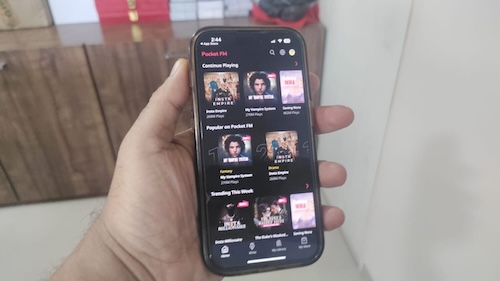
  • Pocket FM’s Rs 1,000 crore revenue milestone: Growth soars 500 per cent YoY

    Pocket FM’s Rs 1,000 crore revenue milestone: Growth soars 500 per cent YoY

    Mumbai: Imagine a world where your favorite stories come alive—not on screens, but in your ears, whispering adventures and drama as you multitask through life. When binge-watching wasn’t an option, Pocket FM became your storytelling savior, transforming mundane chores and long commutes into thrilling escapades. Today, the platform that brought you gripping audio series at the tap of a finger is basking in the spotlight, shattering records with its meteoric rise.

    In an extraordinary leap, Pocket FM has surged past the Rs 1,000 crore revenue milestone in FY 2024, marking an awe-inspiring 496 per cent year-on-year growth from Rs 176.36 crore in FY 2023. This groundbreaking success cements the company’s status as a trailblazer, combining innovative storytelling, microtransactions, and global ambition to rewrite the rules of entertainment. As it inches closer to profitability, Pocket FM’s journey serves as an inspiring masterclass in turning sound waves into success stories.

    Pocket FM reported a global revenue of Rs 1,051.97 crore, bolstered by significant growth in subscription and advertising revenue. This rapid expansion comes alongside a 21 per cent reduction in global losses, from Rs 208 crore in FY 2023 to Rs 165 crore in FY 2024, highlighting its strategic push towards operational efficiency.

    Financial highlights: A year of remarkable transformation

    Subscription Revenue Growth:
    The platform’s subscription revenue skyrocketed, increasing nearly sixfold from Rs 160.05 crore in FY 2023 to Rs 934.73 crore in FY 2024. This growth reflects the platform’s ability to build a thriving community of paid users, largely driven by its innovative microtransaction model.

    Advertising Revenue Expansion:
    Advertising revenue increased over seven times, from Rs 12.5 crore to Rs 89.34 crore, underscoring the platform’s growing attractiveness for advertisers.

    Enhanced Operational Efficiency:
    Pocket FM’s expense-to-earnings ratio improved significantly, from 2.18 in FY 2023 to 1.16 in FY 2024, illustrating the company’s disciplined approach to cost optimisation.

    Loss Reduction:
    Losses decreased by Rs 43 crore, down from Rs 208 crore in FY 2023 to Rs 165 crore in FY 2024, reinforcing the company’s commitment to profitability.

    Pocket FM

    Pocket FM has reshaped entertainment through its serialised audio storytelling model. Over 30 audio series have each surpassed the Rs 10 crore revenue milestone, with seven series crossing Rs 100 crore—a testament to the platform’s robust content pipeline. Additionally, the platform leveraged artificial intelligence (AI) to produce over 40,000 audio series, contributing Rs 25 crore to its revenue.

    With over 100 billion minutes of streaming powered by its 200-million-strong listener community, the platform has also recorded 45 million transactions through its microtransactions model.

    While India remains a core market, Pocket FM is making aggressive strides in global markets like the United States, Europe, and Latin America. The company’s investments in localised content, advanced technology, and strategic user acquisition have bolstered its international footprint, positioning it as a global leader in entertainment innovation.

    “This growth reflects our relentless efforts to redefine the entertainment landscape. With a sharp focus on leveraging AI, we are not only enhancing operational efficiency but also creating smarter processes that optimise content delivery and monetisation. Our vision remains clear: to establish Pocket FM as a global entertainment platform that consistently pushes the boundaries of content experiences.” said Pocket FM, CFO, Anurag Sharma.

    Anurag sharma

    Pocket FM’s success is an inspiring example of a tech-driven company prioritising scalability while staying on the path to profitability. As it continues to redefine the entertainment landscape, the company’s disciplined growth strategy, innovative storytelling approach, and global ambitions place it on an upward trajectory in the ever-evolving world of digital content.

  • Collective Artists Network imbibes Galleri5’s AI solutions

    Collective Artists Network imbibes Galleri5’s AI solutions

    MUMBAI: One plus one sometimes equals two and a half, and not just two. That’s something that entertainment and martech outfit Collective Artists Network and its offshoot martech outfit Galleri5 are banking on.

    The former has got together with the latter to introduce its AI-powered suite, which they hope will  revolutionise brand marketing. This platform combines advanced technology with cultural intelligence to streamline content creation, uncover emerging trends, and deliver real-time insights, enabling brands to connect with their audiences more effectively than ever.

    At the core of Galleri5’s offering is its ability to generate hyper-realistic catalogue visuals without the need for traditional photoshoots. By transforming basic product images into ad-ready visuals, brands can reduce production time by (a claimed) up to 70 per cent while significantly cutting costs. This capability  can prove to be a game-changer for digital-first marketers seeking faster, more efficient ways to produce engaging content.

    Galleri5 also claims to provide a robust social Intelligence module that analyses audience sentiment and  campaign performance. These insights allow marketers to go beyond surface-level metrics, enabling smarter, data-driven decisions. Meanwhile, its advanced trend discovery tool scours millions of social media posts and media articles to identify emerging topics, helping brands stay ahead of the curve and even drive trends rather than react to them.

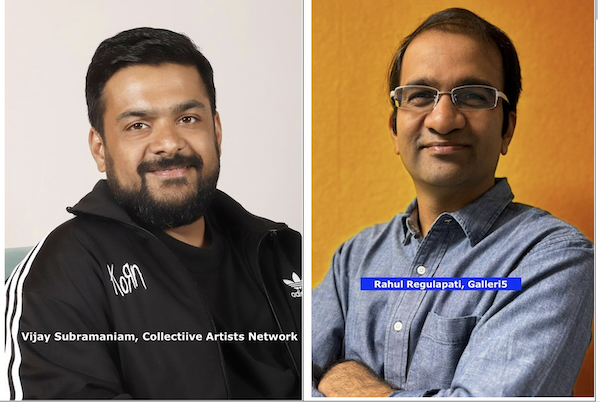
    “Galleri5’s tools are not just about enhancing workflows—they represent a new era of brand storytelling where creativity and data merge seamlessly,” said Collective Artists Network  founder &  Group CEO Vijay Subramaniam. “This suite is empowerng brands with the tools to shift from manual processes to precision-driven strategies. This goes beyond optimising efficiency—it’s about reimagining what’s possible in brand media.”

    Galleri5 founder & CEO Rahul Regulapati added: “At Galleri5, we’re shaping the future of brand content—fusing AI-powered catalogue imaging, social intelligence, and trend-driven insights. We enable brands to create personalized, trend-first content that resonates and leads the conversation—faster, smarter, and at scale. The future of media isn’t about keeping up; it’s about defining what comes next.”

    What sets Galleri5 apart is its  integration with the Collective universe. This synergy ensures that the platform’s AI tools are not only technologically advanced but also deeply rooted in pop culture, enabling brands to scale their content creation while maintaining cultural relevance.

    Galleri5’s suite is already trusted by over 50 leading brands and supported by partnerships with top social platforms. By combining advanced AI, creativity, and a powerful media network, Galleri5 is poised to redefine how brands craft and execute their marketing strategies.

  • Ad film maker Rohit Reddy and his magical AI series Mahabharat

    Ad film maker Rohit Reddy and his magical AI series Mahabharat

    MUMBAI: We all know of him as the husband of Anita Hassanandani, the actress who tends to spew venom as the negative lead in many an Ekta Kapoor show. As well as her dance partner some years ago on Nach Baliye and a part time actor-model. But EiPI Media founder & CEO Rohit Reddy has a lot more to his credit. Apart from having a long-running corporate career which he gave up to turn entrepreneur and offer branded solutions from the time he set up his agency along with his wife in 2018.

    EiPi Media  has been working on adding that additional layer of gee whiz CG imagery, VFX, and mixed reality  to make TV commercials and social media campaigns stand out.  This apart it has been working with several influencers to create influencer marketing videos.  Among the influencers it has been working with feature: Varun Dhawan, Soha Ali Khan, Shakti Mohan, Neeti Mohan, Kareena Kapoor Khan, Konkana Sen Sharma, Sanaya irani, Barun Sobti, Alanan Panday, Sanya Malhotra, Shivam Dube, Arjun Kapoor, Parineeti Chopra, Tiger Shroff, Varun Sharma – the list could go on. 

    Among the ads and vertical videos that Rohit and team EiPi have worked on include:  Adidas and the reveal of the blue team jersey, Too Yum with Varun Dhawan,  TruNativ and Kareena Kapoor Khan, Euro Pratik with Hrithik Roshan, LensKart kids glasses , Fossil, BBlunt – and scores of other campaigns.

    MAHABHARAT THE ETERNAL WAR

    But what has sent Linkedin on fire  in the past two  days is Rohit’s recent post of a teaser for a series we are all so familiar with – the epic Mahabharat. What makes the trailer special, says Rohit, that it has been totally generated using generative artificial intelligence. Seven generative AI tools have been used to produce the sizzle reel in which the characters look so real it makes some of the earlier productions which have come on television with actual  human actors  look rather primitive. It even has a feel of the DI heavy film 300.

    Rohit has not revealed much about the project excepting to say that it is coming soon, labelling it as an EiPi Media project. The reel ends with the caption: “Mahabharat. An Eternal War.”

    The post has been viralised on linkedin, generating numerous likes, comments and reposts. 
    We, at indiantelevision.com,  tried to reach out to Rohit, but could not get a hold of him at the time of writing. However, you can continue watching this space when we do.

    In the meantime, to get a dekko of the teaser click here: Mahabharat