Tag: AI

  • Clevertap earns spot in Gartner Quadrant for AI-powered personalisation

    Clevertap earns spot in Gartner Quadrant for AI-powered personalisation

    MUMBAI : Clevertap, the all-in-one customer engagement platform, has earned a spot in the latest Gartner Magic Quadrant for personalisation engines as a niche player. Recognised for its completeness of vision and ability to execute, the company continues to push boundaries in AI-driven personalisation, helping brands craft more meaningful and data-driven customer experiences.

    Clevertap’s personalisation suite offers an AI-powered approach to customer engagement, integrating a customer data platform (CDP), analytics, experimentation, and orchestration across key digital touchpoints. The company claims its solutions improve conversion rates by up to seven times, allowing brands across industries such as finance, retail, and entertainment—to deliver meaningful, tailored experiences.

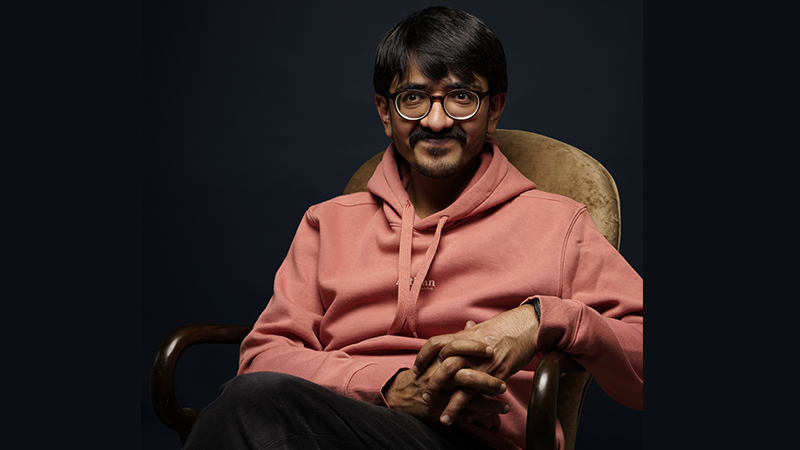
    Clevertap co-founder & chief product officer Anand Jain commented, “Being included in the Gartner Magic Quadrant for personalisation engines is a proud milestone. We believe this recognition validates our commitment to innovation, particularly through our AI-powered features like auto-routing journeys (IntelliNode) and emotionally intelligent messaging (Scribe). Our mission remains to help brands scale engagement across channels while driving measurable growth.”

    The Magic Quadrant evaluates industry providers across four categories: Leaders, challengers, visionaries, and niche players, offering insights into a rapidly evolving market.  

  • India’s ad spend set to hit Rs 1.64 trillion in 2025, growing by 7 per cent

    India’s ad spend set to hit Rs 1.64 trillion in 2025, growing by 7 per cent

    MUMBAI: India’s advertising industry isn’t just growing; it’s strutting down the marketing runway like a star-studded campaign launch. The media investment giant under WPP, GroupM has unveiled its latest This Year, Next Year (TYNY) report, forecasting a seven per cent boost in India’s ad market, pumping total spend up to Rs 1,64,137 crore in 2025. That’s a jaw-dropping Rs 10,730 crore more—now that’s what we call an ROI worth bragging about!

    Digital is the undisputed king, now commanding a hefty 60 per cent of ad revenues. As brands compete for attention, they are diving deep into AI-driven marketing, immersive content, and hyper-personalised engagement to stay ahead.

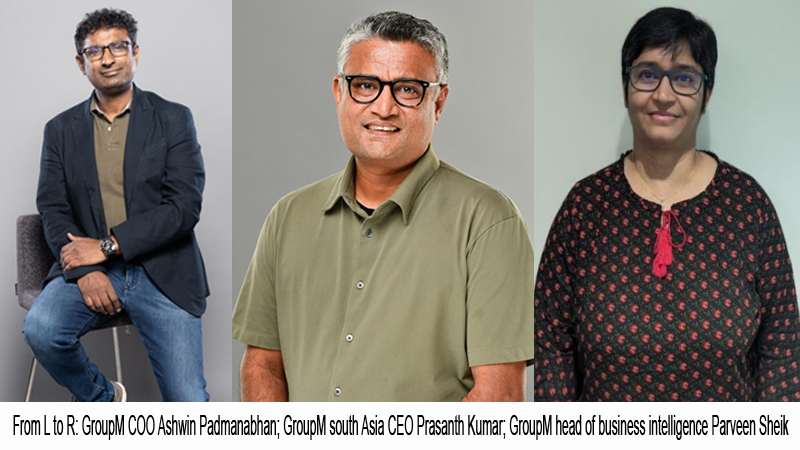
    GroupM south Asia CEO Prasanth Kumar stated, “India is at the forefront of a marketing revolution driven by AI and data privacy. As global ad spend surpasses $1 trillion, India emerges as a top 4 growth market, with digital now accounting for over 60 per cent of ad spend. With a shift to personalised engagement, commerce-driven marketing, and responsible innovation, mixed reality and immersive tech fuel experiential content. While TV remains vital, AI agents are transforming customer interactions, and emerging formats like programmatic CTV and AI-driven retail media are redefining brand-audience connections. All of this positions India for unprecedented innovation and impact in the modern marketing era.”

    TV and digital together are the powerhouses of India’s ad industry, contributing a colossal 86 per cent of total ad spend. Streaming TV is no longer an afterthought either, now making up 12.6 per cent of total TV ad revenue.

    “India’s advertising ecosystem is being reshaped by digital dominance and shifting consumer behaviours,” said GroupM COO Ashwin Padmanabhan. “Key sectors like SMEs, real estate, education, BFSI, and tech/telco—contributing 60 per cent of total advertising—are set to grow at around 10 per cent, further accelerating market expansion. Additionally, rising investments from EVs, fintech, and gaming are fuelling the market’s momentum.”

    Despite economic fluctuations across the globe, India’s GDP is projected to expand by 6.5 per cent in 2025, keeping its advertising sector resilient and strong. GroupM head of business intelligence Parveen Sheik highlighted, “With India’s GDP projected to grow by 6.5 per cent in 2025, its advertising market remains strong, ranking 9th globally. Digital ad spend is now close to Rs 1 lakh crore, driven by AI, commerce, retail media, and hyper-personalisation marketing. As the economy grows, brands must embrace agility, data intelligence, and sustainable strategies to maximise impact in this dynamic landscape.”

    Trends shaping 2025: What’s hot in advertising?

    GroupM’s TYNY report reveals a host of transformative trends set to redefine India’s advertising scene in 2025. Here’s what brands should keep an eye on:

    ●   AI agents take over: Marketing campaigns are being revolutionised with AI-driven customer interactions.

    ●   Immersive experiences explode: Mixed reality, immersive tech, and smartphones are fuelling India’s surge in experiential content.

    ●   Privacy takes centre stage: Data clean rooms are shaping India’s privacy-first marketing landscape.

    ●   Retail media booms: Omnichannel strategies are redefining India’s e-commerce future.

    ●   Quick commerce accelerates: The e-commerce sector is shifting gears with lightning-fast commerce solutions.

    ●   Generative AI rules search: Traditional search and SEO are evolving as AI takes the lead.

    ●   AI influencers rise: Forget traditional celebrities; AI-driven brand storytelling is taking centre stage.

    ●   Chief prompt officers arrive: India’s content marketers are leading a global transformation in AI-driven campaigns.

    ●   CTV goes big: Streaming TV’s rise is ushering in an era of hyper-personalisation and programmatic ads.

    ●   Data privacy & AI converge: New integrated measurement frameworks are addressing fragmentation and privacy concerns.

    With AI shaping every facet of marketing, India’s advertising industry is on an unstoppable trajectory—like a viral ad campaign that refuses to be skipped. Brands that embrace this digital-first, AI-powered landscape will thrive, riding the Rs 1.64 trillion wave of opportunity. Those that don’t? Well, they’ll be the advertising equivalent of a banner ad—ignored, blocked, and eventually forgotten. 

  • Sundar Pichai talks Google and Alphabet financial performance with analysts for Q4 meet

    Sundar Pichai talks Google and Alphabet financial performance with analysts for Q4 meet

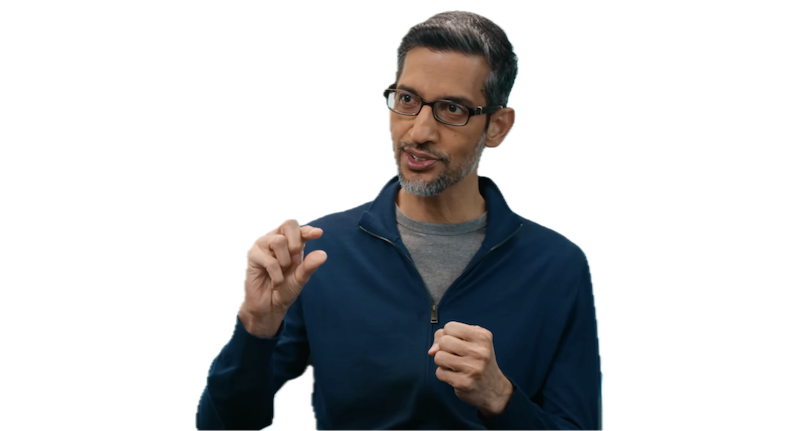
    MUMBAI: Alphabet & Google CEO  Sundar Pichai addressed investors and analysts, highlighting a strong performance in Q4, largely attributed to the company’s advancements in artificial intelligence (AI) and a unique full-stack approach.

    “Q4 showcased our rapid progress in computing capabilities and efficiencies,” Pichai said. He noted significant improvements in product utilisation, consumer engagement, and revenue growth as a result of innovations in AI, including the launch of AI Overviews in over 100 countries and Circle to Search on more than 200 million android devices.

    Notably, Pichai announced that Google cloud and YouTube reached a combined annual revenue run rate of $110 billion at the close of 2024, exceeding their target of $100 billion.

    Focusing on AI, Pichai outlined three key areas of innovation: leading AI infrastructure, world-class research, and product integration. The company has invested in eleven new cloud regions and seven subsea cable projects aimed at enhancing global connectivity. Pichai revealed the launch of the Gemini 2.0 AI model, designed to improve user interactions and drive a more multifaceted search experience.

    In addition, YouTube continues to thrive, maintaining its position as the leading platform for streaming watchtime in the US with over 45 million viewers engaging with election-related content on a single day. The recent integration of podcasts has proved successful, further solidifying its dominant market position.

    Moving to financials, Alphabet’s revenue surged to $350 billion in 2024, a 14 per cent increase year-on-year. Expenditures increased, primarily due to content acquisition costs associated with YouTube and depreciation related to technical investments. Despite rising costs, operating income rose 31 per cent to $31 billion.

    With an optimistic outlook, Pichai stated, “We are well-positioned for continued growth in 2025,” as plans to enhance AI capabilities and expand cloud services take shape. 

    Following Pichai, Philipp Schindler, SVP  and CBO, highlighted the strong performance across Google services, with revenues reaching $84 billion, driven by a significant increase in advertising revenue. 

    Anat Ashkenazi, SVP and CFO, reaffirmed the positive momentum, indicating that the company is prepared for ongoing growth amid anticipated challenges. 

    The market did not believe their posturing totally as Alphabet shares crashed by seven per cent on Wednesday. Investors reacted badly to Pichai’s  plans to spend $75 billion on capital expenditures over  2025 and $16-18 billion in the first quarter  as it builds out its AI offerings and races against megacap rivals to build out data centers and new infrastructure. 

  • ElevenLabs secures $180 million to make AI voices the gold standard of digital speech

    ElevenLabs secures $180 million to make AI voices the gold standard of digital speech

    MUMBAI: The future of digital interaction just got a whole lot smoother—and way less robotic! AI audio pioneer ElevenLabs has secured a blockbuster $180 million in Series C funding, proving once again that the future of communication isn’t just about typing but talking.

    Co-founded in 2022 by childhood friends Piotr Dąbkowski and Mati Staniszewski, this Poland-born startup is on a mission to make AI voices sound less like a dull GPS and more like your most charismatic friend spilling the latest gossip. With its tech already powering AI assistants, media giants, and even voice actors, ElevenLabs is set to redefine how the world hears AI.

    The funding round was co-led by a16z and Iconiq Growth, with fresh backing from NEA, World Innovation Lab (WiL), Valor, Endeavor Catalyst Fund, and Lunate. ElevenLabs’ existing heavy-hitter investors—Sequoia Capital, Salesforce Ventures, and Smash Capital—doubled down on their bets. Oh, and let’s not forget the industry giants joining the party, including Deutsche Telekom, LG Technology Ventures, HubSpot Ventures, and NTT DOCOMO Ventures. The latest round sends ElevenLabs’ valuation skyrocketing to $3.3 billion—triple what it was a year ago. Not bad for a company that launched just two years ago!

    ElevenLabs has come a long way since debuting in January 2023. The company has spent the past two years refining its AI models, releasing game-changing products, and making digital speech more expressive and lifelike. And the results? Users have already generated over 1,000 years’ worth of AI-generated audio—a number that speaks volumes (literally).

    Among its biggest innovations:

    . Conversational AI: No more robotic call centres—this tool powers real-time, natural speech for AI agents.

    .  Voice design: Need a custom AI voice? Generate one from text descriptions.

    .  Sound effects model: AI-generated sound effects bring immersive audio storytelling to the next level.

    .  ElevenReader app: Turns ebooks, PDFs, and articles into listenable content on-the-go.

    .  Flash model: The speed demon of AI voice tech, boasting an ultra-fast 75ms latency.

    .  Voice library payouts: A marketplace where voice actors and users have already earned $2M for their AI-generated voices.

    .  Dubbing studio: Supports 32 languages, making global content sound local while preserving original voices.

    Who’s using ElevenLabs? Pretty much everyone. From big-name tech firms to media giants, ElevenLabs is the industry’s AI voice darling. Its solutions are trusted by Nvidia, Perplexity, Synthesia, Espn, Aston Martin F1, The Washington Post, Chess.com, Time, and HarperCollins, to name a few. More impressively, over 60 per cent of Fortune 500 companies have employees using ElevenLabs tools. That’s some serious corporate clout.

    ElevenLabs isn’t just about high-tech innovation; it’s also changing lives. Through its ‘Impact Program’, the company has partnered with 80+ organisations to bring AI voices to individuals with speech impairments. The result? Over 1,000 people with ALS and other conditions have regained their voices. And in the cultural space, ElevenLabs has helped bring AI-generated plays to life at Centre Pompidou in Paris.

    The company is also going global—literally. ElevenLabs has expanded into Poland and India, setting up an R&D hub in Warsaw and investing in Indic language development. Expect an even stronger focus on regional accents, dialects, and personalised AI speech in the near future.

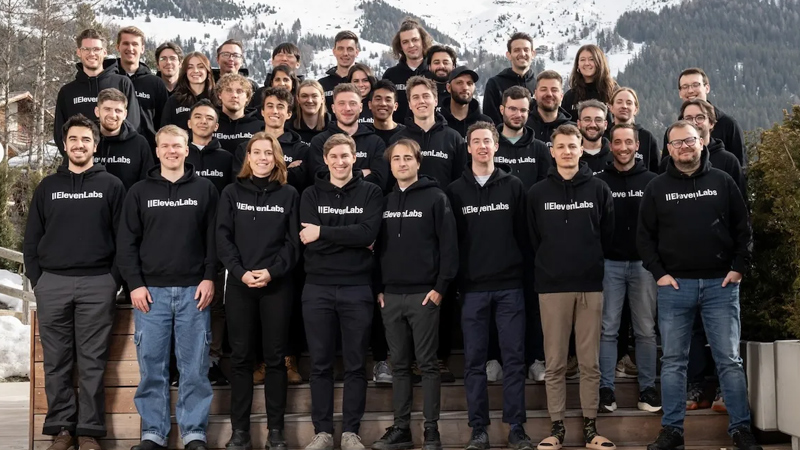
    The company isn’t stopping at just making AI voices sound human—it wants to fundamentally redefine digital speech. CTO Dąbkowski, recently named a Time Magazine AI Top 100 Innovator, is leading research to push AI-generated audio into new frontiers. With its team growing from 30 to 120 employees and hubs in London, New York, and Warsaw, ElevenLabs is set to build the most comprehensive AI audio platform in the world.

    The fresh $180 million investment will go towards:

    .  Expanding AI research into more expressive, nuanced, and controllable voice models.

    .   Developing new tools for businesses, creators, and developers.

    .  Strengthening AI safety, ensuring ethical and responsible deployment of AI-generated voices.

    .  Bringing AI voice tech to mobile, making audio AI more accessible.

    .   Supporting all languages, accents, and dialects—because AI should sound like everyone, not just an English-speaking robot.

    “Speech is how we naturally communicate. This funding moves us closer to a world where digital interactions happen by voice—fluid, natural, and as effortless as a conversation,” said CEO Staniszewski.

    “Voice is becoming a key part of how we interact with technology, and ElevenLabs is making it work at scale. We’re thrilled to continue to support their work in building the next generation of AI,” said a16z general partner & head of growth fund, David George.

    “We believe ElevenLabs is redefining the way we connect with digital environments, placing voice at the very heart of these transformative interactions. We are thrilled to partner with such an innovative team and contribute to their extraordinary journey to help reshape the future of voice technology,” said Iconiq Growth general partner Seth Pierrepont.

    As AI-generated speech continues to evolve, one thing is clear: the keyboard is no longer king—the mic is taking over. Thanks to ElevenLabs, digital conversations are stepping out of the uncanny valley and into a world where AI doesn’t just talk—it converses, charms, and maybe even tells better jokes than your best friend.
  • India leads in global app usage and downloads but trails in user spending

    India leads in global app usage and downloads but trails in user spending

    MUMBAI: When Mukesh Ambani unleashed Reliance Jio onto India like a storm on 5 September 2016, it wasn’t just a telecom revolution—it was the dawn of a digital obsession. Cheap data plans and free calls? Indians grabbed them faster than a free plate of samosas at a wedding. Apps, once exotic creatures of the tech-savvy elite, became everyone’s new best friends, spreading like wildfire across cities, towns, and even the smallest villages.

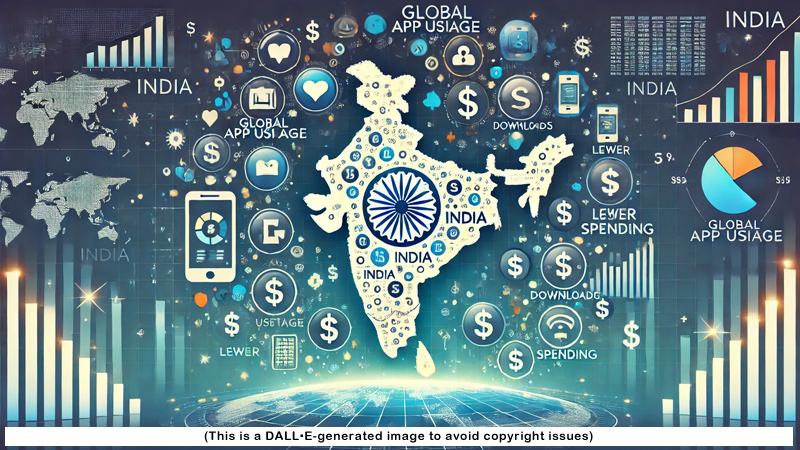
    Fast forward to 2024, and India isn’t just flirting with mobile apps—it’s a full-blown love affair. The country now holds the crown for the highest global app downloads and usage, clocking in a jaw-dropping 1.12 trillion hours glued to screens. But here’s the plot twist: while Indians swipe, scroll, and stream like pros, they aren’t exactly reaching for their wallets. In-app purchases? Still a shy, hesitant nod rather than a full embrace. Turns out, we’re better at clicking than cashing in.

    According to Sensor Tower’s State of Mobile 2025 report, India recorded 24.3 billion app downloads last year, down slightly from 25.6 billion in 2023. However, the time spent on apps climbed significantly from 991 billion hours in 2023 to 1.12 trillion hours in 2024—a staggering demonstration of just how glued to screens Indians truly are.

    Globally, in-app purchases surged 13 per cent year-on-year (YoY) to reach $150 billion, but India fell behind, failing to make the top 20 countries in IAP revenue. For context, the United States led the pack at $52 billion, followed by China at $25 billion.

    But India had its bright spots: IAP revenue in the media & entertainment (M&E) category (dating apps, specifically) jumped 25 per cent YoY to $55 million, with Bumble leading the charge. Similarly, IAP revenue in the social media category climbed 29 per cent YoY to $54 million, led by YouTube. The film & TV streaming segment saw the most significant growth, with IAP revenue skyrocketing 86 per cent to $45 million, dominated by Disney+ Hotstar.

    Social media and entertainment apps still rule

    Social media and entertainment apps continued to dominate user preferences, with Instagram and Jiocinema topping the charts. However, downloads in these categories slipped, with social media app downloads dropping 10 per cent to 1.19 billion and M&E app downloads dipping 8 per cent to 663 million.

    Despite this dip in downloads, Youtube and Whatsapp retained their positions as the undisputed leaders in user engagement, cementing their status as essential apps for entertainment and communication.

    Generative AI apps steal the spotlight

    Generative AI was the showstopper in 2024, with downloads soaring to 177 million—a jaw-dropping leap from 75 million in 2023. Revenue in this category also tripled, reaching $12 million, driven by the success of apps like Chatgpt and Gemini. Clearly, India’s appetite for AI-powered tools has grown, and it shows no signs of slowing.

    Gaming hits a speed bump

    India’s mobile gaming market, which generated $3.8 billion in revenue in 2024—a 22.6 per cent increase from 2023—has hit a roadblock as downloads fell by 11 per cent year-on-year to 8.5 billion in the same year.

    Despite gaming remaining a vital part of India’s app ecosystem, this drop in downloads suggests a possible shift in user behaviour or preferences. This trend raises questions about the sustainability of growth in the mobile gaming sector amidst evolving market dynamics.

    With 900 million internet users, India’s mobile app market continues to thrive, even as it grapples with challenges in monetisation. The data tells a compelling story:

    1    Total downloads in 2024: 24.3 billion
    2    Time spent on apps: 1.12 trillion hours
    3    IAP revenue in M&E (dating): $55 million (+25 per cent  YoY)
    4    IAP revenue in social media: $54 million (+29 per cent  YoY)
    5    IAP revenue in film & TV streaming: $45 million (+86 per cent  YoY)
    6    Generative AI app downloads: 177 million (+136 per cent )

    As India’s app-hungry users swipe, scroll, and binge their way through the digital universe, one thing is clear: the potential here isn’t just big—it’s mind-bogglingly massive. All that time spent on apps isn’t exactly translating into cash for developers yet. It’s like owning a cricket team full of star players who can’t find the boundary.

    The question now is, can 2025 be the year India’s digital ecosystem finally hits a six? With generative AI promising to spice up content and app developers scheming to turn downloads into dollars, the stage is set. The world’s watching, India’s clicking, and app creators are sweating it out like it’s the IPL finals.

    Who’ll crack the code to India’s app goldmine? Stay tuned, because this is one game where the ads might just be worth watching.

  • AiVanta inaugurates IMPACT to revolutionise business communication

    AiVanta inaugurates IMPACT to revolutionise business communication

    MUMBAI: Can communication tools really keep up with today’s fast-paced industries? AiVanta thinks so.

    At the Bharat Mobility Global Expo 2025 in Delhi, the AI powerhouse unveiled AiVanta IMPACT (Intelligent Media Platform for AI-driven Communication and Targeting), an innovative platform designed to deliver hyper-personalised AI video solutions across diverse sectors.

    From simplifying complex data to delivering hyper-targeted messaging, AiVanta IMPACT promises to bridge the gap between precision and scalability in communication. Whether you’re a manufacturing giant, a healthcare provider, or a financial leader, this platform offers tailor-made tools to engage audiences like never before.

    Imagine a world where AI-generated videos are crafted for specific audiences, multilingual smart bots provide real-time customer support, and interactive training modules that speak your language (literally). With AiVanta IMPACT, the days of one-size-fits-all communication are over.

    Commenting on this innovation, AiVanta co-founder & CEO Karan Ahuja said, “Traditional communication methods often lack the speed, personalisation, and scalability needed in today’s dynamic business environment. AiVanta IMPACT bridges this gap, providing businesses with AI-driven tools that are intuitive, adaptable, and IMPACTful. Our goal is to make communication not only efficient but also deeply meaningful, empowering organisations to achieve greater success.”

    Already trusted by ICICI Bank, Bajaj Allianz, Tata Mutual Funds, Ajax Engineering, and Aster Healthcare, AiVanta continues to prove its expertise in customised AI solutions. Now, with AiVanta IMPACT, the company is extending its capabilities to industries including Mobility, Automotive, Manufacturing, and Energy.

    Why stop there? AiVanta also showcased ‘ConcreteAI 2.0 Smart Bots’, developed for Ajax Engineering. Featuring natural voice interactions, multi-avatar support, and bilingual capabilities in Hindi and English, these bots streamline industrial workflows while keeping the user experience front and centre.

    From virtual product tours to compliance communication, AiVanta IMPACT is an all-in-one platform for businesses looking to simplify operations and boost engagement. Whether you’re facing operational bottlenecks or aiming to captivate your audience, this AI solution has the tools to make it happen.

    As industries evolve, the demand for dynamic and adaptable communication tools has never been higher. Will you embrace the future or stick with outdated methods? AiVanta’s AI-driven platform aims to redefine how businesses connect, communicate, and grow.

  • AI to transform marketing strategies, not its core – Vikram Sakhuja

    AI to transform marketing strategies, not its core – Vikram Sakhuja

    MUMBAI: Artificial intelligence (AI) has gone from being a buzzword to an indispensable tool, revolutionising industries across the globe.

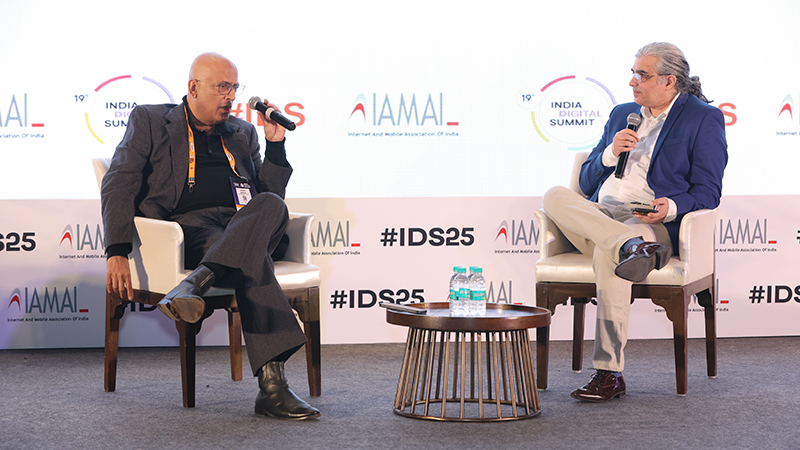
    At the 19 India Digital Summit, Madison Media & OOH at Madison World group CEO Vikram Sakhuja shared his views on how AI is transforming marketing strategies without disrupting its core principles. Spoiler alert: marketing fundamentals are safe, but the methods? They’re getting an AI upgrade!

    Sakhuja made it clear that while AI is rewriting the “how” of marketing, the “why” and “what” remain rooted in human understanding.  “The core principles of marketing will largely remain unchanged. What will evolve and transform are the methods of marketing,” he said during a thought-provoking session hosted by India Today Group consumer revenue group CMO & COO, Vivek Malhotra.

    Malhotra posed the billion-dollar question: Can publishers leverage AI-driven algorithms to help the ad industry scale to $1 trillion? Sakhuja’s reply was simple: AI’s learning thrives on data. “You can’t just write an algorithm; it’s the data fed into the system that enables learning and improvement over time,” he noted, adding that companies like Google are refining AI engines to optimise media spends through better data.

    Can AI foster human connection? The answer is a surprising yes.

    Are algorithms too mechanical to form meaningful consumer bonds? Not according to Sakhuja.  “AI can create a deep connection. For instance, when Meta launches a trailer, the number of shares it gets is a real-time pulse check,” he explained. AI helps broadcasters and advertisers bypass traditional targeting and focus on consumers who actually engage.

    And the examples don’t stop there. Think about Cadbury’s Diwali campaign, where Shah Rukh Khan’s virtual presence personalised messages for neighbourhood stores. That’s AI delivering local charm on a national scale.

    Sakhuja dismissed the notion that AI is the sole domain of new-age brands. “Of course, legacy brands can embrace AI,” he said. He highlighted how even routine tasks like food delivery via Swiggy or Zomato rely on AI, demonstrating its seamless integration into daily life.

    The takeaway? Age doesn’t matter if you’re willing to innovate.

    But wait, what about data validation? With great data comes great responsibility.
    Sakhuja cautioned about the dangers of bad data—what he called the “garbage in, garbage out” problem. Feeding unvalidated data into AI can lead to “hallucinations” (no, not the psychedelic kind) where outputs are wildly off-mark.

    The solution? “Validation checks are crucial to ensure accuracy and prevent biases. The key is balancing AI’s capabilities with human oversight,” Sakhuja advised, adding that ethical use and privacy concerns need to stay top of mind.

    Three ways AI supercharges marketing:

    1    Precision targeting: AI identifies who’s engaging and how, skipping old-school guesswork.

    2    Customised experiences: From localised campaigns to dynamic messaging, AI personalises at scale.

    3    Smart scaling: Brands like Cadbury use AI to connect with millions while keeping it personal.

    Final thought: Will AI replace humans? Not likely. Sakhuja pointed out that AI is a tool, not a replacement. “Human judgment remains critical. Over-reliance on AI could erode the creativity and ethics that define good marketing,” he concluded.

    So how will your brand embrace the AI wave without losing its human touch?

  • Infosys and Tennis Australia unveil AI innovations for Australian Open 2025

    Infosys and Tennis Australia unveil AI innovations for Australian Open 2025

    MUMBAI:  Are you watching the Australian Open on SonyLiv or one of the  Sony Sports channels in the wee hours of the morning?

    Pause, wait a minute – a  lot of what you are watching is courtesy of  an Indian  digital services and consulting company – Infosys.

    The firm has been mandated by Tennis Australia to unleash a cutting-edge suite of AI-driven features for the Australian Open (AO) 2025.

    This initiative marks a significant milestone in their seven-year collaboration, aimed at enhancing the immersive tennis experience through innovative technologies.


    getting ready to serve

    Central to these advancements is Infosys Topaz, an AI-first suite utilising generative AI technologies to revolutionise fan engagement, empower players and coaches, and expand digital interactivity in tennis. Key highlights include:

    Beyond Tennis: This pioneering offering is the world’s first generative AI-powered tennis league. Fans can interact with 16 AI-crafted virtual players across eight teams, training their teams and participating in AI-generated tournaments year-round. Dubbed The Slam That Never Stops, the league aims to captivate younger Gen Z audiences while ensuring a safe digital environment through a responsible AI framework.

    AI Commentary: The Infosys Match Centre will feature AI Commentary on AO digital properties, providing real-time insights during matches. Utilising advanced large language models, this tool will deliver concise, engaging updates at each match moment.

    VR AI Stadium: : At the Infosys Fan Zone in Melbourne Park, fans can explore a new VR AI Stadium, where they can create and play on imaginative virtual courts, including nature-inspired and themed designs.

    Wait, there’s more if you’re a tennis fan and also a technology geek.


    Infosys logo in the AO

    Infosys is empowering the Australian Open with video analytics and machine learning tools, providing players and coaches access to post-match reviews and pre-game video analysis. The AI Shot of the Day feature assists in rapid content creation for social media, highlighting remarkable on-court moments.

    The Infosys Fan Zone is climate-conscious, with a fully offset carbon footprint and recyclable structures. Additionally, the Future Leaders Program, powered by Infosys Springboard, offers participants digital learning and exposure to generative AI.

    Infosys executive vice president – Asia Pacific, Andrew Groth stated, “We continue to push the boundaries of technology to enhance fan engagement and player performance. Our latest generative AI innovations will redefine the experience for fans, players, and coaches.”

    Tennis Australia CEO  Craig Tiley added, “Infosys has consistently elevated our digital offerings. The AI advancements at AO 2025 will deliver new interactivity for fans and invaluable insights for players, showcasing the transformative impact of technology in tennis.”

  • Mad Influence launches Xley – a marketplace for creators and brands

    Mad Influence launches Xley – a marketplace for creators and brands

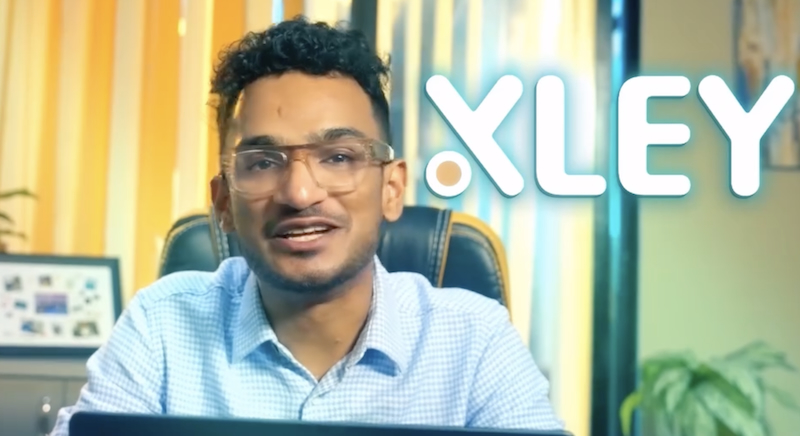
    MUMBAI: Another influencer marketplace which claims to simplify life for creators and advertisers has been announced. Called Xley (pronounced zilley) it’s coming from the Mad group, which is the parent company of influencer marketing agency Mad Infuence.  

    An invite only market place, it claims to use AI and ML to simplify, optimise and elevate brand creator collaborations. It has access to about 200 million creators across YouTube, Instagram and Tiktok, in more than 54 languages, 10,000 cities ad 150 countries.

    The platform is claimed to have three core pillars: advance audience insights, extensive creator discover tools, and comprehensive campaign management and performance tracking.

    Xley’s key features are claimed to include creator discovery, utilising over 25 advanced filters for demographics, language, niche, and audience interests; ML-powered insights for campaign analysis and performance tracking; an effortless management dashboard to plan, execute, and monitor campaigns; scalability to suit various campaign needs; and data-driven decisions through advanced analytics to maximise ROI and refine marketing strategies

    “Xley is more than just a marketplace; it’s a movement to empower creators,” Mad Influencer and Xley founder Gautam Madhavan, “It’s  a platform that reimagines the creator economy.”

    “Our vision was to create a platform that not only offers real-time analytics of social profiles but also simplifies and automates end-to-end campaign management in one cohesive space. As development progressed, it became evident that Xley’s capabilities extended far beyond initial expectations – enabling a broader user base, optimising efficiency, and empowering content creators with enhanced visibility and streamlined brand partnerships. By significantly reducing manual workloads, accelerating timelines, and improving ROI, Xley stands as a transformative solution, redefining how brands and creators collaborate globally,” added Xley head of strategy Aman Narula.

    For brands, Xley  automates manual processes like creator vetting and campaign tracking, improves ROI through data-driven insights, and extends global reach by connecting with creators across diverse languages and regions. Creators benefit from global visibility, access to aligned campaign opportunities, the ability to build long-term partnerships, a centralised hub for managing campaign-related activities, business analytics, revenue tracking, and effective campaign management with faster approvals and reduced downtime.

  • AI to AR: Key trends driving the next era of branding in India

    AI to AR: Key trends driving the next era of branding in India

    MUMBAI: In an era where digital transformation is reshaping every aspect of business, marketing, and branding are undergoing revolutionary changes. With India’s digital consumer base projected to reach 900 million by 2025, the convergence of technology, changing consumer behaviours, and evolving market dynamics are creating new paradigms that will define the future of how brands connect with their audiences.

    The rise of hyper-personalisation through AI

    Gone are the days when segmentation meant dividing consumers into broad demographic groups. Today’s marketing is moving towards individual-level personalisation, powered by sophisticated AI algorithms. According to recent studies, 76 per cent of consumers are more likely to purchase from brands that personalise their experiences.

    Indian success stories

    – Myntra’s “Style Squad” AI engine analyses over 15 million fashion products to provide personalised recommendations, resulting in a 25 per cent increase in customer engagement
    – HDFC Bank’s EVA AI assistant handles over 50,000 customer queries daily with a 95 per cent accuracy rate
    – Swiggy’s AI algorithm processes over 40 data points per customer to customise food recommendations, leading to a 30 per cent increase in order values

    Immersive technologies reshaping brand experiences

    The metaverse and augmented reality (AR) are no longer futuristic concepts but present-day marketing tools. The global AR market in retail is expected to reach $45 billion by 2025, with India showing one of the fastest adoption rates.

    Notable Indian implementations

    – CaratLane’s “Perfect Look” AR feature has increased online conversion rates by 40 per cent
    – Lenskart’s AR try-on technology serves over 10 million virtual trials monthly
    – IKEA’s AR app in India has reduced furniture returns by 35 per cent

    – Flipkart’s “Camera, Your Story” AR feature enables users to virtually place furniture in their homes, with 30 per cent of furniture buyers now using this feature

    Purpose-driven branding takes centre stage

    Modern consumers, particularly Gen Z and millennials, are increasingly aligning with brands that demonstrate genuine commitment to social and environmental causes. Research shows that 88 per cent of Indian consumers want brands to help them make a positive difference.

    Indian brand initiatives

    – Tata Tea’s “Jaago Re” campaign increased brand loyalty by 45 per cent while raising social awareness
    – Hindustan Unilever’s “Water Conservation Program” saved over 900 billion litres of water while strengthening brand trust
    – Patagonia India’s “Repair, Reuse, Recycle” initiative has led to a 60 per cent increase in brand advocacy among young consumers

    Emerging technologies transforming marketing

    Blockchain in marketing

    Supply chain transparency: ITC’s “Know Your Product” blockchain initiative allows customers to trace product origins
    Digital assets: Tata Motors’ NFT collection generated ₹5.2 crore in revenue while building brand engagement
    Loyalty programs: Mahindra’s blockchain-based rewards program has increased customer retention by 40 per cent

    Internet of things (IoT) integration

    Smart packaging: Dabur’s IoT-enabled packages track freshness and usage patterns
    Retail analytics: Reliance Retail’s IoT sensors analyse customer movement patterns, optimising store layouts
    Connected experiences: Asian Paints’ IoT-enabled colour visualisation system has increased conversion rates by 35 per cent

    Advanced data analytics and predictive marketing

    The future of marketing relies heavily on predictive analytics and real-time data processing. Indian brands are investing heavily in these technologies:

    Implementation examples

    – Marico’s predictive demand forecasting has reduced inventory costs by 25 per cent
    – BigBasket’s real-time analytics engine processes over 15 million data points daily to optimize delivery routes and inventory
    – PepsiCo India’s AI-driven market analysis has improved campaign ROI by 45 per cent

    Voice and visual search optimization

    Voice commerce in India is expected to reach $40 billion by 2025, with 82 per cent of smartphone users regularly using voice search features.

    Market leaders

    – Amazon India reports 3x growth in voice shopping queries in regional languages
    – Google Lens processes over 50 million visual searches daily in India
    – Flipkart’s visual search feature has improved product discovery by 50 per cent

    Sustainability and circular economy

    Environmental consciousness is driving major changes in brand strategies. Studies show that 79 per cent of Indian consumers prefer sustainable brands.

    Brand initiatives

    – Hindustan Unilever’s plastic waste collection program has recycled over 100,000 tons of plastic
    – Flipkart’s sustainable packaging initiative has reduced plastic usage by 50 per cent
    – Godrej’s circular economy program has created a new market for recycled products

    The integration of online and offline experiences

    Omnichannel presence is becoming crucial, with 74 per cent of Indian consumers using multiple channels before making a purchase.

    Success stories

    – Reliance Digital’s integrated shopping experience has increased cross-channel sales by 45 per cent
    – DMart’s hybrid model has shown 60 per cent higher customer retention compared to single-channel shoppers
    – Tata CLiQ’s phygital presence has reduced customer acquisition costs by 30 per cent

    Social commerce evolution

    Social commerce in India is projected to reach $70 billion by 2025, revolutionising how brands engage with consumers.

    Platform innovation

    – Meesho’s social commerce model has enabled over 15 million resellers
    – Instagram Shopping has seen a 120 per cent growth in Indian merchant adoption
    – WhatsApp Business’s shopping feature processes over 1 million orders daily

    The future of marketing and branding is being shaped by technological advancement, changing consumer values, and evolving market dynamics. India’s unique position as a rapidly digitalising economy with a strong traditional retail presence creates opportunities for innovative marketing approaches.

    For brands in India and globally, success lies in leveraging these trends while maintaining authentic connections with consumers. The most successful brands will be those that can:

    – Implement technology thoughtfully and purposefully
    – Maintain strong ethical and sustainable practices
    – Create seamless omnichannel experiences
    – Build genuine connections with their audience through personalization and purpose

    As we move forward, the key to success will be balancing innovation with authenticity, technology with human touch, and global trends with local relevance.

    (This article has been authored by Thinkin’ Birds CEO Bhavik Mehta. The views expressed here are his own and indiantelevision.com need not subscribe to them)