Tag: AI

  • TCS opens NYC design studio to reimagine digital experiences with AI

    TCS opens NYC design studio to reimagine digital experiences with AI

    MUMBAI: Big apple, bigger ideas. Tata Consultancy Services (TCS) has unwrapped its flagship ‘Interactive design studio’ in the heart of New York city, bringing a fresh wave of innovation to midtown Manhattan.

    Spread across 4,000 square feet, the state-of-the-art studio will help clients design seamless, human-like digital experiences by harnessing advanced multimodal AI, digital twin technology, and next-generation design practices.

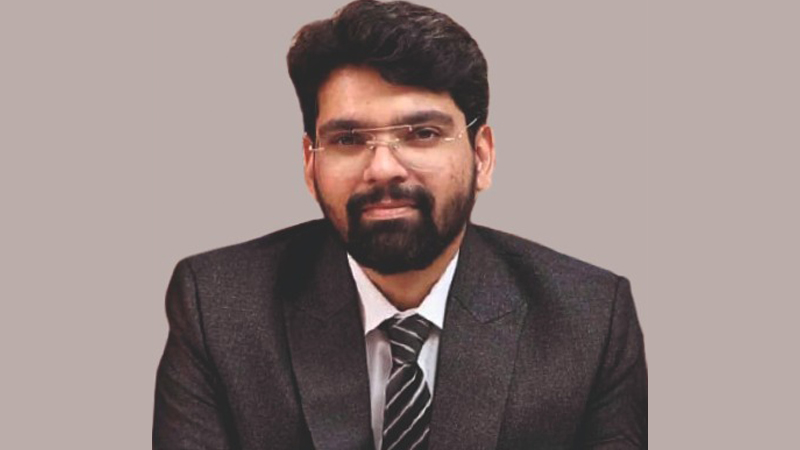
    “This marks the advent of a new era for design,” said TCS Interactive, president, Kamal Bhadada. “The studio will be a hub for co-creation, giving our designers and clients the tools to create iconic, enduring experiences.”

    The space will also showcase TCS’ cutting-edge work, including its ‘Future athlete project,’ which uses digital twins to monitor health and optimise performance.

    TCS north America, president, Amit Bajaj added “Technology is redefining the art of the possible in customer experience. By expanding in New York, one of the world’s most creative capitals, we aim to help clients reinvent how consumers interact with brands in this new AI-driven world.”

    TCS Interactive has a track record of delivering award-winning digital solutions, from mobile apps for major sporting events to reimagined omnichannel journeys for global brands. The new Manhattan hub builds on this expertise while reinforcing New York’s reputation as a tech and creative powerhouse.

    With over 46,000 associates already in north America and more than 50 years of presence in the region, TCS’ latest investment is both a nod to the city’s commercial resurgence and a commitment to shaping the future of digital experiences.

    Because when it comes to design, TCS is proving that the city that never sleeps just got a studio that never stops creating.

  • Pocket FM turns page with AI, unlocking new era of storytelling in India

    Pocket FM turns page with AI, unlocking new era of storytelling in India

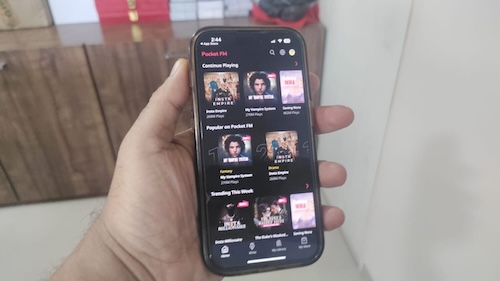
    MUMBAI: Once upon a time just got an upgrade. Pocket FM is putting the ‘AI’ into imagination, unlocking a new chapter in storytelling for Indian writers and listeners alike.

    The world’s largest audio series platform has flung open the studio doors, letting anyone with a tale to tell see their words transformed into a fully produced audio show within minutes. Already, more than 30,000 AI-powered series are live, a number set to double by the end of the year.

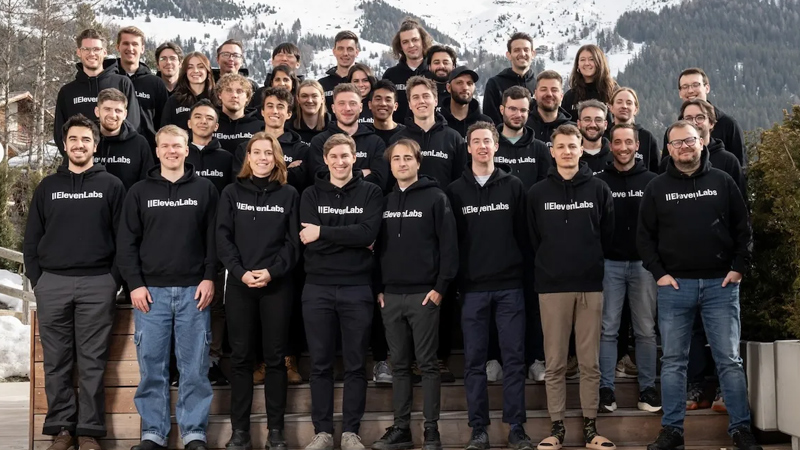
    At the heart of this revolution is Pocket FM’s AI creator suite, a tool that whisks text into audio magic at lightning speed. Built in collaboration with Elevenlabs, the AI voices can slip seamlessly between drama, comedy, fantasy and romance, no more scratchy robots, just finely tuned emotion. For writers, the impact is staggering: What once took weeks now takes hours, with stories delivered 10 times faster.

    “This is not just a content shift but the rise of a new writer economy,” said Pocket Entertainment, co-founder, Prateek Dixit. “When human imagination meets AI innovation, the possibilities multiply. Writers can now share their work instantly, globally, and sustainably.”

    And it’s not just career writers reaping the rewards. Every month, more than 33,000 Indian listeners-turned-authors are publishing their own series on Pocket FM. Some are even cashing in top creators who are projected to cross Rs 10 lakh in earnings this year. Smash hits such as King of Dragon, Darshi: A Rebirth Story and Divya Yoddha Daksh show the appetite for AI-driven storytelling.

    For Nitesh Kumar Dayama, writer of King of Dragon, the experience was life-changing. “I didn’t have the money for editors or publishers,” he said. “Suddenly, I had a production team in my pocket. My words became an audio series in hours, and when I saw millions listening… and that I could earn from it, it felt like a breakthrough.” His series has racked up over 200,000 plays in under a month.

    Pocket FM isn’t stopping there. With plans to roll out its creator suite in multiple Indian languages and 200,000 new AI audio series on the horizon, the platform is doubling down on contests, contracts, and cash prizes worth up to Rs 15 lakh to nurture the next wave of storytellers.

    For India’s aspiring authors, this could be the ultimate happily ever after.

  • Indiantelevision.com, mFilterIt co-host Bengaluru roundtable on AI-led app marketing

    Indiantelevision.com, mFilterIt co-host Bengaluru roundtable on AI-led app marketing

    BENGALURU: With India’s app economy mushrooming and companies locked in a race for clicks and engagement in an era of attention deficit, the question is no longer just about investing in app marketing, it’s about making every install count. To address this challenge, Indiantelevision.com Group and mFilterIt co-hosted a closed-door roundtable in Bengaluru on September 12, themed Build Winning App Acquisition & Engagement Strategy Using AI & Analytics.”

    “In an ecosystem, where installs alone no longer define success, it is critical to focus on cleaner traffic, sharper strategies, and genuine engagement. That’s why we are delighted to co-host this forum with mFilterIt—a partner whose expertise in AI and analytics has been pivotal in redefining transparency and trust in the digital ecosystem. By co-hosting this forum with mFilterIt, we aim to equip marketers with insights that go beyond the numbers and help shape sustainable, growth-focused approaches for the industry,” noted Indiantelevision.com, chief business officer, Soumitra Sahu.

    The invite-only forum brought together senior voices from leading brands to discuss sharper strategies for app marketers. The focus was not only on driving installs but also on ensuring genuine user engagement, maintaining cleaner traffic, and improving key efficiency measures such as cost per install (CPI) and cost per engagement (CPE). 

    The shifting ground of app acquisition

    With user acquisition campaigns increasingly driven by affiliates, India’s top brands are beginning to face blind spots in their frameworks. Attribution platforms may be able to measure installs, but optimisation and bot detection often fall outside their scope. This is where independent validators such as mfilterit have entered the picture, deploying AI-powered algorithms and layered checks that uncover wasted ad spend and fraud patterns usually missed by traditional systems. 

    A powerhouse panel

    The discussion was moderated by WPP Media, national head – performance marketing, Satheesh Kumar and featured senior leaders including Rohit Utmani of Phonepe’s Indus app store, Manas Prakash of Ajio, Pawandip Singh of Rapido, Akansha Kumari of Pocket FM, Utkarsh Garg of Jar, Satheesh Chinnappan of redbus, Saravanan G of Payrupik, Kirtiman Phadke of Stable Money, Rajat Srivastava of My Growth Club, Durgesh Rathore of mfilterit, and Jagmeet Singh of mfilterit. Together, they brought perspectives from diverse verticals of India’s booming app economy.

    Cracking the code

    The agenda stressed on some of the toughest questions in app marketing today. Among them was how brands can detect wasted ad spend and improve ROI, what critical metrics validate app ad traffic and highlight potential risks, and how incent walls distort campaign outcomes. A key theme: why marketers must challenge the data they receive from platforms and affiliates instead of taking it at face value. Fraud samples, like unusual CTIT patterns, installs from invalid OS versions, click hijacking, incent traffic, and even fake orders, further demonstrated how affiliate monitoring and real-time validation can uncover non-compliant activities and wasted spend. By highlighting these real-world patterns, the session demonstrated how independent checks bring more rigour, transparency, and efficiency to app marketing campaigns. 

    Why it matters

    By the end of the session, participants gained a clearer view of the blind spots in user acquisition and a sharper understanding of how AI and big data can improve campaign outcomes. They also walked away with a roadmap to elevate their strategies with real-time insights, helping ensure that every install delivers value rather than vanity. For Indiantelevision.com group, co-hosting the event reinforces its role as a knowledge partner to the industry. Together with mfilterit, it aims to provide marketers with a forward-looking agenda at a time when the quality of engagement, rather than sheer quantity, defines sustainable growth.

  • IBC 2025 brings the future of media to Amsterdam

    IBC 2025 brings the future of media to Amsterdam

    AMSTERDAM: Amsterdam’s RAI convention centre will become the global capital of media and technology from 12–15 September when IBC 2025 opens its doors to broadcasters, streamers, studios and tech firms from around the world.

    The show will run 10:30–18:00 on opening day, 09:30–18:00 across the weekend and close at 16:00 on Monday. Organisers have built the edition around the theme of innovation, with a newly minted Future Tech hub in Hall 14. Here visitors can test emerging tools such as artificial intelligence, cloud-native production workflows, augmented reality, virtual sets, immersive audio-visual formats and sustainability-driven hardware.

    A three-day conference, from 12–14 September, features more than 300 speakers drawn from major broadcasters, global streaming platforms, technology vendors and creative studios. Panels will probe platform evolution, revenue models, AI integration and the next wave of interactive storytelling. JioStar’s Prashant Khanna is one of the headlined speakers being featured at IBC this year. 

    Elsewhere, the IBC Innovation Awards will celebrate cutting-edge deployments, while the Accelerator Media Innovation Programme offers collaborative trials of experimental tech. Free-to-attend theatres and showcase stages promise continual demos and debate on content delivery, rights management, talent development and the fast-changing business landscape.

    Beyond the exhibition floor, organisers are pitching IBC 2025 as a working laboratory: a place where engineers, producers and executives can handle new kit, swap ideas and chart the next phase of global media transformation.

  • TCS and CEA join forces to give robotics a ‘physical AI’ makeover

    TCS and CEA join forces to give robotics a ‘physical AI’ makeover

    MUMBAI: When brains meet brawn, the robots of tomorrow are born. Tata consultancy services (TCS) and french research giant CEA have struck a partnership to fast-track the rise of physical AI, a field that blends artificial intelligence with robotics to create machines that can see, sense, and interact with the real world.

    Announced on 9 September in Paris and Mumbai, the alliance promises to take AI out of the cloud and into the factory floor, warehouses, and even social spaces. From versatile robots that adapt to new tasks, to human-friendly cobots for safer shop floors, and assistive bots that provide personal support, the collaboration is setting out to make robots less science fiction and more industrial reality.

    “By connecting cutting-edge research with business needs, we can invent the intelligent systems of tomorrow,” said CEA-list, director, Alexandre Bounouh pointing to how physical AI could transform production chains and boost European competitiveness.

    The deal will see TCS bring its global scale and deep sector expertise together with CEA’s research muscle, including breakthroughs ranging from brain-controlled exoskeletons to AI for self-driving cars. Together, they plan to offer proof-of-concepts, training, and real-world deployments, with support anchored in the TCS pace port Paris innovation hub.

    TCS France, managing director, Rammohan Gourneni called the partnership a “key step” in helping industries embrace physical AI. “It combines the power of AI with the intelligence of physical systems, supporting our clients’ industrial transformation,” he said.

    For TCS, which has been in France since 1992 and works with 18 cac40 companies, the partnership underscores its long-term commitment to the French tech ecosystem. For CEA, it marks another leap in its leadership role on Europe’s robotics roadmap.

  • Outspark sparks ahead with 200,000 paid users and Rs 30 Crore ARR

    Outspark sparks ahead with 200,000 paid users and Rs 30 Crore ARR

    MUMBAI: When it comes to careers, Outspark is lighting a fire under the job market. The AI-powered career-tech platform has raced past 200,000 paid users and clocked an annual recurring revenue of Rs 30 crore, all within months of its debut. Even more dazzling, revenue has grown fourfold in just seven months, making it one of India’s fastest-growing names in career technology.

    In an age where resumes battle algorithms before reaching recruiters, Outspark is arming professionals with an AI toolkit that feels more Silicon Valley than CV valley. From auto-polished resumes and studio-grade Linkedin headshots to an AI co-pilot that suggests daily posts and networking prompts, the platform is designed to turn passive profiles into magnets for opportunity.

    The numbers are equally bold: more than two million resumes and profiles reviewed, over 300,000 resumes generated, and 20,000 Linkedin makeovers delivered. Half of the company’s revenue now comes from users levelling up to premium services, proving its appeal runs deep.

    “Hiring is evolving faster than ever with AI. While companies have powerful tools, job seekers have been left behind,” said Outspark, founder and ceo, Kumar Apoorv. “Outspark bridges that gap by giving professionals the same edge as recruiters.”

    With ambitions now stretching beyond India, Outspark is eyeing expansions into the US, Europe, and Southeast Asia. Future plans include hyper-personalised job alerts, a job search co-pilot to automate applications, and partnerships with global recruiters. The goal? To build the world’s largest AI-first talent pool and make job hunting less of a grind and more of a glide.

  • Pocket fm insights ’25: 86 per cent of listeners prefer audio dramas over podcasts

    Pocket fm insights ’25: 86 per cent of listeners prefer audio dramas over podcasts

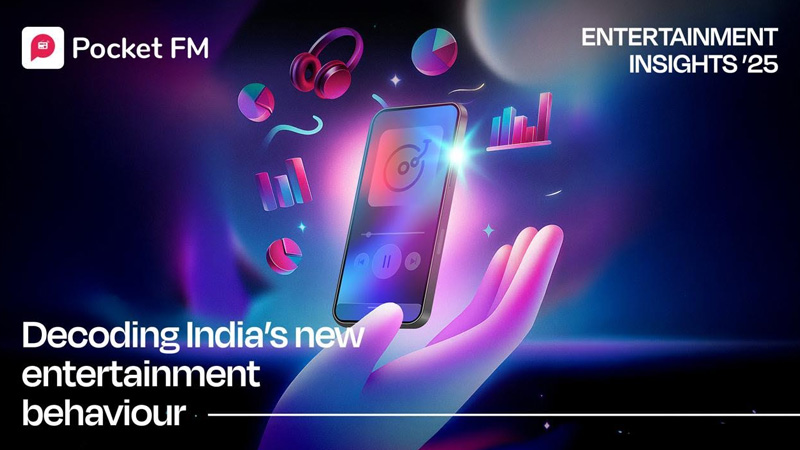
    MUMBAI:  For millions of Indians, screens are out and sound is in. Pocket fm’s entertainment insights ’25 report reveals how audio series have emerged as the country’s most intimate form of entertainment, redefining binge culture.

    Based on responses from 20,538 digital entertainment consumers, the survey reveals that audio dramas are now part of daily life, with 49 per cent listening to over 10 episodes a day, 50 per cent tuning in for more than 90 minutes (including 35 per cent who cross two hours), 60 per cent listening during leisure time, 48 per cent during commutes, and 86 per cent preferring episodic audio dramas over podcasts, audiobooks, or music.

    At the center of this shift is young India (18–24 years), treating audio series as both escape and habit. Genres such as drama (40 per cent), romance (37 per cent), sci-fi/fantasy (37 per cent), and thriller/horror (34 per cent) dominate, with Hindi leading at 53 per cent while regional languages rapidly gain ground.

    Monetisation patterns are equally unique: three in four prefer micro-payments over subscriptions, mirroring India’s wider digital payment culture.

    And the future? Surprisingly open to tech. 80 per cent of listeners say they are comfortable with AI-generated storytelling, so long as the narrative connects emotionally.

    “India has always been a storytelling nation, from epics to bollywood. What we are witnessing now is a generational pivot,” said Pocket entertainment, co-founder and ceo, Rohan Nayak. “People aren’t abandoning video; they’re choosing audio because it offers intimacy, imagination, and freedom. The future of pop culture will be defined as much by what we hear as by what we see.”


  • Reliance joins hands with Google Cloud to put India’s AI future on steroids

    Reliance joins hands with Google Cloud to put India’s AI future on steroids

    MUMBAI: Reliance Industries has never done things by halves. On 29 August, India’s largest private company unfurled its latest grand project: a sweeping expansion of its alliance with Google Cloud, centred on a new, dedicated AI-first cloud region in Jamnagar, Gujarat. The ambition is as audacious as it is familiar. Having once upended India’s telecoms industry with Reliance Jio and cheap data, Mukesh Ambani is now training his firepower on artificial intelligence, promising to democratise access to computing muscle for the world’s most populous country.

    The project is being pitched as India’s “AI leapfrog moment.” Reliance will design, build, and power state-of-the-art cloud facilities, all running on renewable energy and plugged into Jio’s sprawling fibre and digital network. Google will provide the brains: its AI hyper computer, a secure and integrated generative AI stack, and the know-how to run workloads of breath taking intensity. The facility, Reliance says, will meet global service-level standards and support the most demanding AI use cases—from training large models to building next-generation applications for consumers and enterprises.

    Why Jamnagar? The coastal city is already the beating heart of Reliance’s refining and petrochemicals empire. It is also becoming a symbol of the company’s reinvention: its green energy giga factory is rising there, and now the AI cloud campus will sit alongside it. Running on renewable power, the project ticks boxes for sustainability even as it scales to hyper speed. Jio, meanwhile, will string high-capacity fibre links connecting Jamnagar to metros like Mumbai and Delhi, effectively wiring India’s AI ambitions to its business and political capitals.

    Mukesh Ambani cast the partnership in almost civilisational terms: “Just as Jio and Google came together to democratise the internet for every Indian, we will now democratise intelligence for every Indian,” he declared. The subtext was clear: Reliance does not want to merely be a customer of AI; it wants to be the platform on which India builds its AI future.

    For Google, the tie-up is equally strategic. The American giant has long struggled to monetise India at scale, despite Android’s dominance. Its alliance with Reliance, first forged through a $4.5bn investment in Jio Platforms in 2020, has been its best bet. Sundar Pichai, Google’s boss, was almost wistful: “Our work together over the last decade has helped bring affordable internet access to millions. And now, we are building on this to help shape the next leap with AI. This is only the beginning.”

    The beginning it may be, but the context is fiercer. Microsoft has partnered with the Adani group to push Azure into Indian enterprises. Amazon Web Services (AWS) has invested heavily in local data centres. By anchoring Google Cloud in Reliance’s infrastructure, Ambani is offering it the biggest distribution muscle in the country—from India’s biggest retailer to its mightiest mobile operator.

    Reliance has always built moats around scale and integration. Hydrocarbons fed petrochemicals; petrochemicals funded telecoms; telecoms birthed digital platforms; retail wrapped around them. Now AI is being woven into every strand. Reliance’s retail arm, one of the world’s fastest-growing, will be powered by predictive analytics and AI-first services. Its digital platforms can churn out generative-AI-powered customer tools. Even its energy and refining business can tap AI for predictive maintenance, efficiency, and emissions management.

    The bet is as much about geopolitics as economics. AI compute has become a strategic resource, akin to oil in the 20th century. By hosting a dedicated, hyperscale AI cloud region in India, Reliance and Google are hedging against global bottlenecks in semiconductors and compute availability. They are also offering Indian enterprises and the government a “sovereign-flavoured” cloud alternative to relying wholly on Western or Chinese platforms.

    The entire project will be underpinned by Reliance’s push into renewable power. The AI data centres, notorious for their energy hunger, will be fed through Reliance’s green energy parks and hydrogen initiatives. Jio’s high-capacity fibre, spanning metros and regions, adds the digital sinew to match the green muscle. The combination allows Reliance to brand the initiative not merely as profitable, but as sustainable—a key card to play with regulators, policymakers, and global investors.

    For India, the stakes are towering. Domestic enterprises, startups, and public sector organisations often face prohibitive costs in accessing cutting-edge AI compute. By pooling Reliance’s infrastructure with Google’s stack, the hope is to lower barriers and accelerate adoption. Small businesses may soon have access to AI tools that were once the preserve of Silicon Valley. Universities and research institutes could run high-performance AI models without prohibitive cost. And the government could scale citizen-facing AI services in health, education, and agriculture.

    But challenges remain. Building AI facilities is one thing; ensuring India has the talent, regulation, and guardrails to use them responsibly is another. AI also raises thorny issues of bias, surveillance, and security. Reliance’s ambition to become India’s AI backbone will inevitably attract scrutiny—whether from privacy hawks, antitrust watchdogs, or foreign competitors.

    Yet, if history is a guide, Reliance has a knack for bending markets to its will. When Jio entered telecoms in 2016, it offered free calls and dirt-cheap data, triggering a brutal price war that wiped out rivals and left India with the world’s cheapest mobile internet. Now, Ambani appears ready to repeat the trick with AI: offer access at scale, bundle services across Reliance’s ecosystem, and set the floor so low that competitors struggle to keep up.

    The Jamnagar AI cloud, then, is not just about servers and software. It is about a new architecture of power: technological, economic, and political. If it works, Reliance and Google may indeed make India a global leader in artificial intelligence. If it fails, it could end up as another white elephant in the deserts of Jamnagar.
    For now, though, one thing is certain. India’s AI race has just been given a jolt of steroids—and Mukesh Ambani is holding the syringe.

    (The picture featured above is representational of two businessmen joining hands and there is no intention to insinuate that it  resembles either Mukesh Ambani or Sunder Pichai. It is an AI generated image)

  • Lowe Lintas & Google Gemini put AI to test in everyday moments

    Lowe Lintas & Google Gemini put AI to test in everyday moments

    MUMBAI: That’s the playful pitch behind a new campaign by Lowe Lintas for Google Gemini, designed to take artificial intelligence out of the lab coat and into everyday life. Instead of talking about algorithms and tech jargon, the series of short films makes AI look like the friend who helps you file your expenses, revise for exams, or even sharpen your sports game.

    The campaign spans nine snappy 20-second films, each capturing simple scenarios where Gemini comes to the rescue, whether you’re a student juggling assignments, a professional under pressure, or someone just trying to fix that stubborn office projector.

    By rooting AI in real-world quirks rather than sci-fi fantasy, Gemini is positioned as ‘Your Everyday AI Assistant’, a guide for students, a productivity hack for busy professionals, and a time-saver for anyone stuck in life’s little muddles.

    Sharing her thoughts on the campaign, Lowe Lintas, president (Creative),  Vasudha Misra said, “AI often feels like a big, complex idea, but we wanted to show just how simple it can be. With Google Gemini, all it takes is one press of a button on your Android phone. No complicated setups, no jargon, just real help in real moments, whether it’s fixing a projector that won’t connect or revising for an exam. Suddenly, AI isn’t abstract anymore, it’s an everyday ally, ready when you need it most.”

    The films carry a lightness of touch: relatable, quick, and quietly persuasive, encouraging viewers not just to admire the technology but to try it for themselves. The campaign is now live across digital and offline platforms. 

  • Reliance Animation and dubbing platform Rian ink MoU to bridge language gaps in entertainment

    Reliance Animation and dubbing platform Rian ink MoU to bridge language gaps in entertainment

    MUMBAI: Reliance Animation, one of India’s leading animation studios, has struck a global alliance with Rian, an AI-human multilingual dubbing and localisation platform, in a deal that could reshape the way stories travel across borders.

    The partnership brings together Reliance’s strength in creating original, culturally rooted content and Rian’s cutting-edge language technology. The tie-up promises to take Indian characters—such as Reliance’s popular Little Singham—to overseas markets while bringing international titles into India with linguistic and cultural precision.

    ““This is more than a partnership, it’s a cultural gateway,” said Anand Shiralkar, founder and chief executive of Rian. “ With Reliance Animation’s storytelling legacy and Rian’s multilingual dubbing capabilities, Indian IPs can now reach audiences in every corner of the globe, while international creators can instantly connect with Reliance’s massive 6 million strong viewer base in India. Together, we’re making stories travel further, faster, and more authentically than ever before.”

    Tejonidhi Bhandare, chief executive of Reliance Animation, said the venture would expand the reach of its “world-class content with an Indian soul”. He added, “ This is a win for creators, a win for audiences, and a bold step for the industry. ”

    The firms frame the alliance as more than a business play. By marrying storytelling with technology, they hope to foster a freer, more authentic flow of content between India and the world, laying the foundations for the next decade of global entertainment exchange.