Tag: AI

  • Connected Intelligence, AI and Voice will transform the media landscape in 2019

    Connected Intelligence, AI and Voice will transform the media landscape in 2019

    MUMBAI: Kantar, the world’s leading marketing insights and consulting company, today released its perspective of the major trends that will shape the media landscape for brand owners, agencies and media platforms in 2019. The predictions report outlines 12 key trends that will transform the next year in media. Exploring advances from augmented reality, through gender portrayal to vertical video the 12 predictions are:

    Advanced Analytics and Artificial Intelligence (AI) will resolve the integrated online/offline return on marketing investment dilemma.

    Voice technology will breakthrough in creative planning and the marketing mix.

    Chinese leadership in social media and social media analytics will be ‘fast-followed’ by the west. 

    The emergence of the ‘branded experience network’ will transform media management in to ‘internet of everything’ management.

    Brands will start to take the portrayal of women in advertising seriously.

    Amazon will emerge from the advertising world ‘shadows’ to make the duopoly an triopoly.

    Vertical video will lead the way in creativity.

    The big screen will make a comeback, bigger and better than before.

    Attitudinal insights combined with predictive modelling will make programmatic buying more agile and accurate.

    Influencer marketing strategies will pivot to prioritise credibility ahead of reach.

    GDPR compliance will drive more sophistication in brand data strategies.

    Augmented Reality (AR) will start to shape both the consumer journey and customer experience. 

    “Constant innovation and change in the media landscape continues, but I think the speed of adoption of technologies like artificial intelligence will be surprising. Connected intelligence in all its forms will start to dominate the narrative, as well as new opportunities like voice”, said Eric Salama, CEO, Kantar. “How we measure media and its effectiveness is evolving quickly, and the industry needs to work together so our clients can understand the impact of their investments. There has never been a more exciting time in marketing.”

  • Airtel, Jio turn to AI to improve customer service

    Airtel, Jio turn to AI to improve customer service

    MUMBAI: Every industry and player is adapting to Artificial Intelligence (AI) in today’s time and the Indian telecom industry isn’t far behind. In order to offer better customer service and experience, telcos like Bharti Airtel and Reliance Jio are turning to AI.

    Bharti Airtel has teamed up with technology company Google to remove the complexities from its customer service experience. It has integrated AI-powered Google Assistant which responds to voice commands. This modification is said to cut down costs. Airtel was already using AI and Machine Learning to enhance customer experience through its MyAirtel application and airtel.in

    Reliance Jio introduced the voice command feature on its MyJio application. In a recent report by Bank of America Merrill Lynch, it said that voice AI is a focus area for the Mukesh Ambani-led telco, and the AI-based voice command feature is working well for the telco.

    According to an Economic Times report, Jio is also taking steps to develop AI-based products and solutions in-house. Jio's director and Mukesh Ambani's son, Akash Ambani, is building a team of professionals on AI and its multiple use cases for the telecom firm.

    Speaking to ET, Greyhound Research founder, CEO and chief analyst Sanchit Vir Gogia said, “Efforts to automate customer service is already visible through apps. Airtel has already made sizeable efforts on this front and is seeing a good response on its MyAirtel app. It makes a lot of sense to adopt AI technology to automate given the cost of human interaction has increased 20-30 per cent.”

    He added that Indian telcos need to make their subscribers use these features. “Airtel's app for self-service is well received. Jio's user base is different and they may not use such a feature as aggressively,” he said.

  • Facebook planning smart STB for TVs with video calling support

    Facebook planning smart STB for TVs with video calling support

    MUMBAI: According to a United States news website, Cheddar, social networking company Facebook is working on smart set-top boxes for TV.

    And according to the sources, the set-top box will be camera equipped. It will also allow video calling along with entertainment services like Facebook’s YouTube competitor.

    Internally codenamed ‘Ripley’, the device uses Artificial Intelligence (AI) to automatically detect and follow people as they move around during a video call.

    Apart from opening the door for video chat feature, the new hardware would help Facebook compete in the TV market averse to Apple and Amazon.

    With concepts like Ripley, Facebook is attempting to build consumer hardware business outside of its virtual reality brand ‘Oculus’. Oculus VR is an American technology company acquired by Facebook in March 2014 for around $2 million.

  • India’s internet market is no longer male, metro, millennial: Rajan Anandan

    India’s internet market is no longer male, metro, millennial: Rajan Anandan

    MUMBAI: Lightning speed – that’s how India’s internet adoption can be described. With an abundance of growth opportunities, India’s rural areas are leading the way for every company wanting to make a mark in the digital space.
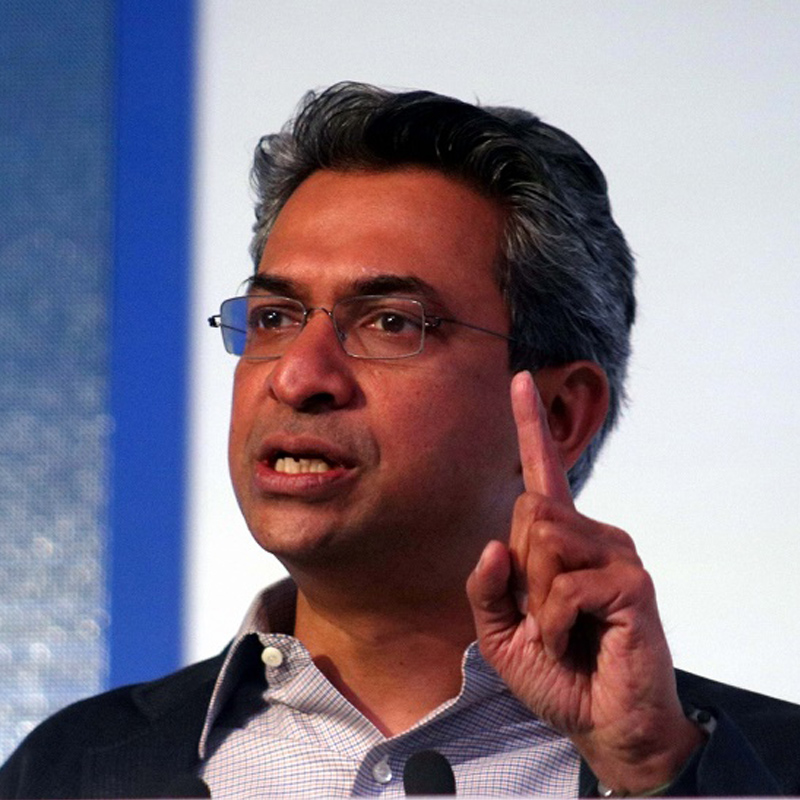
    When the online space is turning into more class agnostic nature, the gender divide is also abolishing. Google (http://www.indiantelevision.com/mam/marketing/brands/how-google-views-indias-internet-landscape-180531) vice president India and South Asia Rajan Anandan was speaking about new age internet users, notable trends and changes at the Subhash Ghosal Memorial Lecture recently. The veteran said that Indian internet users are no longer restricted to the metro, male, millennial phenomenon.
    Rajan highlights a gender disparity in internet usage that was prevalent in India three years ago, which wasn’t the case even in places like Africa or the Middle East. Just one in ten internet users was female. Several factors like lack of awareness and access worked in favour of the divide. Today, 37 per cent of India’s internet users are women which is expected to rise to 45 per cent by 2020.
    “If you go back even 8-10 months, you characterise India’s internet as male, metro and millennial. So millennial males in metro India was really what the internet was about. That has changed pretty dramatically. We see more women coming online. In fact, in terms of new internet users, there are many women than men actually and a lot of them are from rural India, small towns,” he commented.
    Speaking about megatrends in the Indian internet market, he said that voice, video, vernacular are grabbing high attention. Over the last 12-18 months, voice has shown the most surprising growth. There has been a 270 per cent growth in voice searches. “So, they (new users) are more comfortable speaking to internet than typing, tapping. India is going to be the world’s first voice driven internet market,” he said.
    Commenting on the vernacular(http://www.indiantelevision.com/iworld/social-media/google-assistant-becomes-bilingual-180901)growth, he said that almost 100 per cent of new Indian internet users access internet in local languages, not in English. The man with the statistics said over 200 million users access internet in regional languages. Moreover, there has been a 400 per cent growth in Hindi voice searches.

    Indian market went from a messaging first internet market to video first internet market over the time thanks to affordable data prices. “The journey of new age internet users has been pretty straightforward. They started with messaging, generally WhatsApp, then started using social networks, watched a little bit of video because data was expensive. That has actually changed. Almost every new internet user today actually starts his internet journey with video because they all understand video,” Anandan said. He also said 75 per cent of all traffic in mobile data in Indian internet actually comes from video, among which 95 per cent of total video consumption is happening in local languages.
    Indians are consuming higher amount of data, 8 GB per month, compared to developed markets like South Korea, the US and the UK. India is consuming more mobile data than the US and China combined. Even the smartphone quality has improved in India as 70 per cent of phones used here have a 2 GB RAM or more.
    The Google head said that the company is concerned with solving the problems of the common man. He said that the internet can even solve problems related to agriculture, financial institutions and health and education systems.

  • Australian Open, Infosys announce 3-year technology partnership

    Australian Open, Infosys announce 3-year technology partnership

    MUMBAI: Infosys, a global leader in consulting, technology and next-generation services announced a strategic three-year partnership with the Australian Open on 10 September 2018.

    The Australian Open, one of the world’s popular sports and entertainment events, has continued to evolve its digital experiences in recent years. 

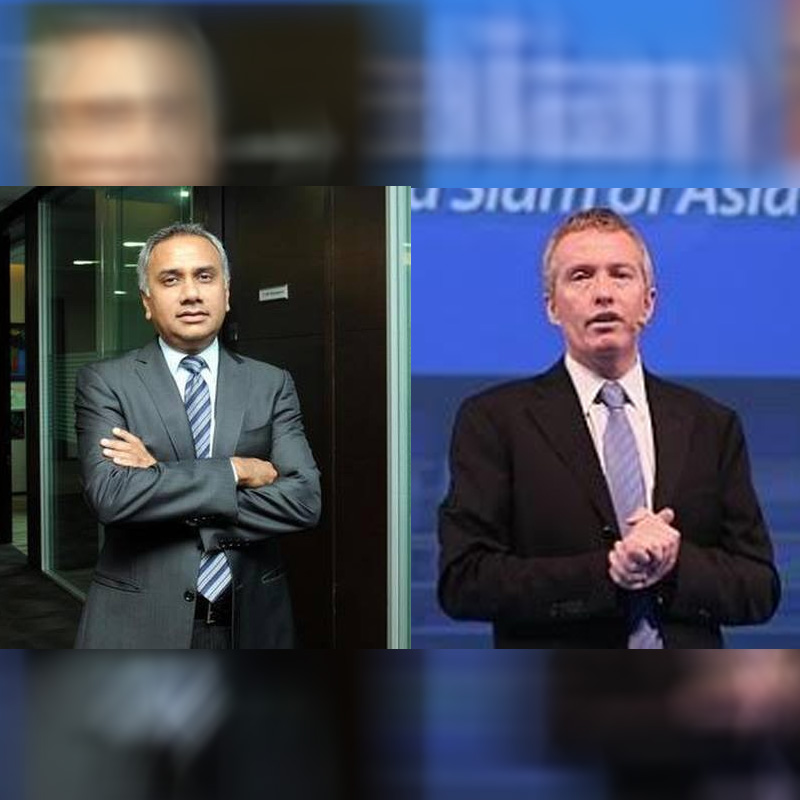
    Infosys CEO and MD Salil Parekh said, “This partnership is about creating new ways of experiencing the Australian Open. We’re really excited about the opportunity to showcase how digital technologies can enhance the boundaries of this tournament, to change the way the Australian Open is watched, analysed and played. This association with Tennis Australia also reaffirms our strategic commitment to the region where we partner with some of the leading enterprises in driving their digital transformation agenda.”

    Infosys, as the official digital innovation partner of the Australian Open, will leverage its expertise in emerging technologies like big data and analytics, Artificial Intelligence (AI) as well as Virtual and Augmented Reality (VR and AR), to provide unique, innovative and engaging experiences for fans. 

    Australian Open tournament director Craig Tiley said, “Partnering with Infosys is an exciting next step in our ongoing quest to innovate the Australian Open and engage new audiences across the world. We have long understood the importance of using data and insights to improve connections with our fans, players, coaches and the rest of the tennis community and we look forward to working with Infosys to change the way we all experience our great sport in the future.”

  • Reliance Jio makes a punt on tech start-ups

    Reliance Jio makes a punt on tech start-ups

    MUMBAI: After closing Saavn and Embibe deals, Reliance Jio, according to a report published by The Economic Times, is now looking to acquire Indian start-ups in the technology ecosystem.

    In a bid to take on its competition, Reliance Jio is now looking to invest more to create a comprehensive ecosystem of digital products and services around its core telecom service.

    To add more relevant entertainment and education content to its Jio platform, the company is looking to invest in or acquire start-ups operating in the content, healthcare, education technology, financial technology and transportation segments. It might also look at Jio aligning with product technology ventures, particularly those operating in artificial intelligence (AI) and machine learning (ML).

    In April, Reliance Jio Music and Saavn leveraged their synergies to jointly strengthen their foothold in the Indian music streaming market. The combined value of the companies has been pegged at $1 billion, out of which Jio Music’s implied valuation is $670 million leaving Saavn at a valuation of $330 million. With this, Reliance also acquired a partial stake in Saavn from its existing shareholders for $104 million.

    Also, soon after this, Reliance Industries Ltd (RIL) agreed to invest over $180 Mn into AI-based education platform, Embibe over the next three years. This will put RIL in a position to buy out around 72.69% stake from Embibe’s existing investors including Lightbox and Kalaari Capital.

    Leading Jio’s charge into the start-up ecosystem is Akash Ambani, the 27-year-old Brown University-educated older son of Mukesh Ambani. Akash Ambani, chief of strategy at the company, is believed to be deeply involved in the negotiations.

    Also Read :

    Jio Music, Saavn to merge; RIL to invest $100 mn in combined entity

    Jio shifts focus to wired broadband


  • Has advertising finally begun to embrace AI?

    Has advertising finally begun to embrace AI?

    MUMBAI: Artificial intelligence (AI), a tool that uses logic to mimic the human brain, has been the buzzword in the advertising industry for quite some time now. 

    AI was founded as an academic discipline in the year 1956, and in the years since, the technology has experienced several waves of optimism, followed by disappointment and the loss of funding (known as an AI winter), thereafter by new approaches and success.

    People often tend to use the term AI interchangeably with machine learning (ML), but they are completely different tools. While AI is the broad concept of teaching machines with data to do things in an efficient way, ML is the technique of using algorithms to process data, learn from insights and make predictions that train AI. As Wunderman AI’s global leader Robbee Minicola rightly says, “You can have machine learning without AI, but you can’t have AI without machine learning.”

    With the implementation of AI in advertising and marketing, brands can discover the price at which networks are willing to pay for an impression and identify the optimum times of data to serve an ad for target consumers.

    public://IKEA.jpg

    AI’s potential for improving campaign effectiveness is only just being unearthed with a limited understanding of impact. AI-driven elements like image and voice recognition on smartphones, algorithm-based viewing suggestions for Netflix and Google’s real language analysis in search are now gaining mainstream status. It is believed that AI will soon become indispensable in advertising. 

    The concept of ‘technological singularity’, in which machines become better at developing themselves, is a reality but human intervention will always be required. Isobar executive vice president Gopa Kumar doesn’t believe in giving everything to automation and AI as it is an indispensable part of the future media ecosystem.

    According to Adobe’s 2018 Digital Trends report, top-performing companies globally are more than twice as likely to be using AI for marketing (28 per cent vs 12 per cent). The report also found that less than one in five global respondents said their companies are pushing forward with AI and nearly half of respondents said their organisation has inconsistent integration between technologies.

    Although advanced and matured markets like the US, UK, China and Japan have been early adopters of the technology, India is catching up at a fast pace because of its risk-taking ability. Programmatic platforms and advertising are the first kind of AI intervention in advertising and is increasingly becoming more and more pervasive. 

    It is still early days for AI in India as compared to the western world in understanding and implanting these technologies. Havas Media Group India MD Mohit Joshi believes that the adoption of technologies is already happening, however, reaching the US level of adoption will require the clients to be equally convinced and more importantly give them some ‘use case’ success stories. 

    Programmatic advertising will contribute to more than 60 per cent of advertising in the next two years in India which is the currently world average.

    Isobar India EVP Gopa Kumar thinks that AI in India is still at a very nascent stage and in media it is just being initiated. He adds that though it will take a while to be the prime choice, but once it does, its adoption will be widespread and then the usage of AI in advertising will be across platforms and mediums. 

    In India, sectors like BFSI, e-commerce and FMCG have been able to make the most of artificial intelligence, big data analysis and machine learning to have better connect with consumers and enhanced consumer experience. But there’s a lot to learn from the daddies like IKEA and Alibaba.

    public://alss.jpg

    Since AI is an expensive tool and hiring an agency for it is often expensive, advertisers today are looking at building their own in-house AI capacities. With benefits including improved consumer engagement through personalisation, leaner marketing operations and cost savings on ad serving, the return on investment (RoI) prospects are rather appealing for advertisers. What it does require is a heavy initial investment in hardware and software for data collection and processing and acquiring the right talent.

    Dentsu Aegis Network chief data officer Gautam Mehra admits that AI is not a magic sauce and it will not change the brand’s RoI overnight and clients (brands) need to understand their business challenges before they plan on investing in these technologies. “The primary challenge for any advertiser is how do you know which data to go after and how do you bring that data into your warehouse (cloud or physical) and maintain that data warehouse to give data insights. Brands need to trust data and have a data driven culture in the organisation,” he adds. 

    Not all advertisers may understand the technicality of AI and the automation of basic data processes and the implementation of integrated analytics. This is precisely where advertising agencies can help their clients, both as trusted advisers and execution partners.

    The lack of good media infrastructure is a barrier to better implementation of AI in India. Our challenge is how do we make AI actionable because our other mediums are not evolved enough and we don’t have programmatic OOH or digital OOH except at airports. Mehra asks how do we bring about a real time change in media when our media itself is not programmatic? While India’s radio is still terrestrial, a majority of set-top boxes for television are not trackable and, therefore, there is reliance on BARC data. 

    India is still a data-starved market and AI works only on data. Joshi concludes that the biggest challenge for India will be getting the right talent, as we need great data scientists and the best of them ignore the media space.

    While India is on its way to becoming AI-ready, some major players including Vodafone, Myntra, Flipkart, HSBC Bank and SBI Bank have started putting in the effort to adopt the technology.

    Also Read :

    The Glitch to leverage GroupM data to reach rural India

    2017 – The year of long-format ads

    How iProspect’s Vivek Bhargava foresaw a digital future two decades ago

    Talent retention is key, says Mindshare’s Prasanth Kumar

  • 55% marketers make better decisions with machine learning: iProspect report

    55% marketers make better decisions with machine learning: iProspect report

    MUMBAI: Digital agency iProspect has released its third annual Future Focus whitepaper geared to examine how machines and technology are impacting marketing and advertising in the year ahead. The paper takes a look at how brands can make the most of machines in 2018, from facilitating seamless consumer experiences to delivering greater efficiencies.

    iProspect interviewed 250 of its global clients, including FTSE 100 and Fortune 500 companies, and used real-time feedback to outline key insights and priorities necessary for businesses to thrive in our fast-moving, high expectation digital economy.

    Feedback shows that the transformative impact of voice, artificial intelligence (AI) and machine learning (ML) is being felt across the entire business landscape with 55 per cent of marketers surveyed agreeing that ML will allow them to make better decisions in 2018. 56 per cent of the marketers surveyed highlighted effective management of large data sets to deliver personalisation and relevant one-to-one experience as their main priority in 2018.

    The 2018 Future Focus whitepaper discusses some new machine rules. Brands enhanced customer experience by closing the gap between consumer expectation and brand reality. While 2017 was about understanding how best to connect data to understand consumers better, 2018 will be the year where marketers put consumers firmly at the centre of communications.

    The concept of ‘consumer moments’ will become widespread in 2018, encouraging marketers to seek out data signals that help them understand not just who their customers really are, but what are the moments that matter most as those consumers interact with brands at different stages of the purchase journey.

    Digital assistants have become the new gatekeepers and are set to fundamentally change the relationship between brands and consumers. According to market intelligence company Tractica, more than 700 million people use some form of digital assistant today, be it Siri on their mobile phone, or Amazon’s Alexa via a home device. With word error rate now at parity with humans, digital assistants can understand us better than ever, and usage of assistants is expected to soar to almost two billion by 2021. Within the next five years, most of the developed world will be using a digital assistant in one form or another to automate and manage many aspects of their daily lives.

    And it’s not just millennials who are early adopters of this technology. Forrester estimates that while 66 per cent of 18-24 year olds are using digital assistants, almost 40 per cent of the 70+ age group are also engaged. For marketers, this represents a new challenge in 2018 and beyond on learning how to market not to the consumer, but to the machine.

    AI & ML have transformed marketing and it is time for brands to get ahead of the intelligence curve. Simply put, AI aims to emulate human cognitive capabilities through artificial systems. One of the specialities of AI is machine learning, which enables computers to solve a problem by themselves, learning through examples, rather than being programmed especially to solve a distinct problem. If AI and ML capabilities are sought-after by tech companies, it’s because those companies understand the benefits for customer experience (eg., personalised recommendations on Netflix), security (eg., fraud detection on Paypal transactions), or product development (eg., autonomous cars for Uber).

    In 2018, we can expect mainstream brands to truly start testing the potential of AI and ML in advertising, taking marketing efforts to the next level. ML has the power to improve efficiency, help scale personalisation, and predict consumer behaviour with greater accuracy. As a result, 2018 will bring greater investment and experimentation in this area.

    VR will take commerce to new horizons and the distance between inspiration and conversion is now smaller than ever. Global e-commerce sales reached nearly $1.9 trillion in 2016, and are forecasted to grow to $3.9 trillion in 2020. As consumers expect to be able to buy everything, everywhere and at any time, this staggering growth will be increasingly supported by ecosystems which weren’t designed to be transaction first, but are now developing commerce features.

    There will be a rise of Amazon, the ‘everything store’. There can be little doubt that 2017 was a significant year for Amazon, as its seemingly irresistible expansion broke new ground across some of the biggest categories in the world. Amazon’s enormous capital power and evident knack for winning in any division it turns its attention to means it truly is becoming the oft-quoted ‘everything store’, apparently achieving the impossible — major, simultaneous expansion without sacrifice of either product or profit.

    Yet the company remains highly secretive, rarely announcing its intent or offering strategic insight. This means that as Amazon claims not only more net shoppers, but also creates new shopper behaviours, the onus is on today’s marketers to be proactive, rather than reactive, in developing their understanding of it. The good news is that there’s no more opportune time to learn than now. As Amazon finally turns its attention to the long dormant opportunity in ads by outlining plans for it to become a major income stream, marketers should seize the opportunity to get in at ground zero and start including it on media plans today.

    iProspect global chief strategy officer Shenda Loughnane says, “Advances in ML will allow for greater effectiveness and efficiency in marketing communications, freeing both marketers and agencies to focus on adding strategic value. Brands will need to understand how to balance the human versus machine elements of their business in order to leverage the full value of both.”

    iProspect India CEO Rubeena Singh adds, “In an increasingly complex digital economy, ML is set to play a pivotal role in our ecosystem. In India, we are already feeling these forces of change are driving better data understanding, enabling personalised conversation at scale and delivering greater efficiencies. We are at an inflection point where brands need to learn how to marry human capital and machines in order to succeed in the transformation that lies ahead.”

    Advances in ML will allow for greater effectiveness and efficiency in marketing communications, allowing both marketers and agencies to focus on adding strategic value, whilst allowing machines to take on more of the more complex administrative tasks associated with digital optimisation.


  • Taproot springs a design Myntra

    Taproot springs a design Myntra

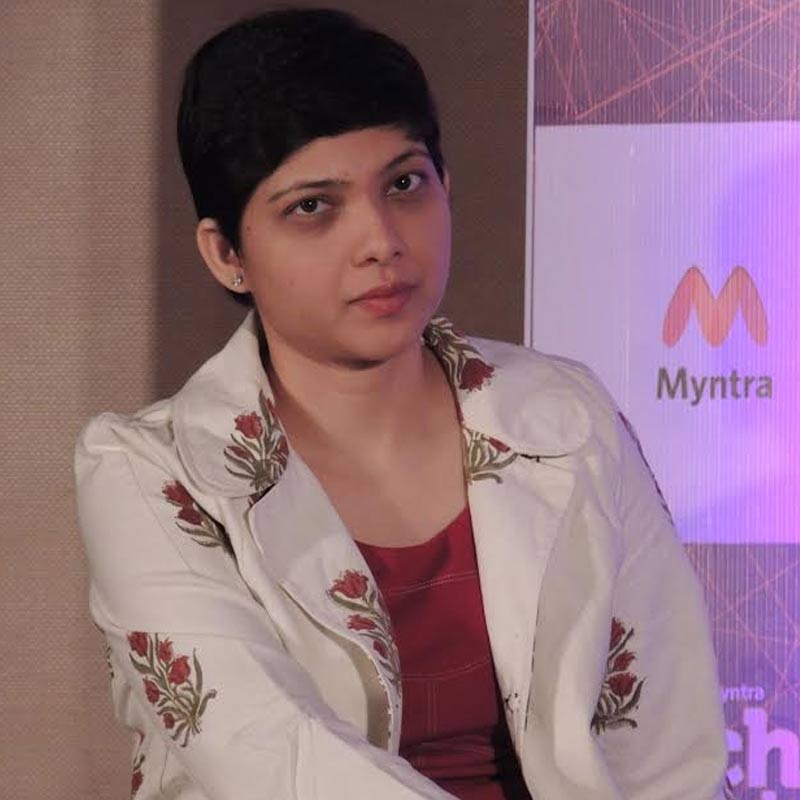
    BENGALURU: Myntra, India’s leading platform for mass premium fashion will be launching a multi-media campaign by the end of this week, revealed Myntra Fashion chief marketing manager Gunjan Soni.

    Soni spoke with www.indiantelevision.com during an event today when Myntra announced that it has witnessed 80 per cent year-on-year growth with an industry leading revenue run rate of US$ 1 billion. The acquisition and turnaround of Jabong and the recently concluded festive season have contributed to this growth and strengthened Myntra’s position on its path to profitability says the company.

    Speaking about the soon-to-be-launched campaign, Soni said, “We are launching our campaign this Saturday about how we have become category leaders in various areas, so this particular campaign is about sports. I think a lot of people are surprised when we say fashion and sports. About 30 per cent of our business is sportswear including sports shoes. We are picking sports as a category and we are launching a specific sports destination on Myntra. To Support that, we are driving a mega 360 degree communication around it – that includes TV, outdoor, digital, radio, we are covering it all. Taproot is the creative agency and Maxus the media buying agency.”

    “When brands talk about sports, they usually use mega sports stars and they always portray very high profiles. We need to be more related. Our story is that a normal person wanting to lead a fit life and the message we want to convey is that no matter which sport you want to play to stay healthy, Myntra is the destination to get the gear. We are looking at Rs 10 to 15 crore kind of spends for this campaign that will run for about a month,” further revealed Soni.

    On Myntra’s and Jabong’s achievements, Myntra and Jabong CEO Ananth Narayanan said, “We are at the forefront of fashion in India today with over 18 million (1.8 crore) monthly active users. Our unique approach to leverage technology to decode fashion has helped us become the fastest growing online fashion platform. Myntra, Jabong and Flipkart together have 70 per cent market share in the country today and will continue to grow this by empowering brands and customers. We are on track to achieve scalable and sustainable growth and will be EBITA positive in FY-18.”

    In this phase of growth, Myntra says that it is using technology to empower its customers and brands. For customers it is leveraging Artificial Intelligence (AI) and Machine Learning for a personalised shopping experience, better product discovery and assisted buying. The company has introduced several features to enhance customer experience resulting in Myntra being 20 points ahead on NPS than the industry. To its brand partners, Myntra provides brand performance and analytics support, customer insights to develop a loyal fan base and enable engagement. In line with this, it has launched a new portal which will provide brands with customised insights and competitive intelligence reports to manage their performance on the platform.

    The company will also launch iconic global fashion labels Hugo Boss and Hackett which will be available on the platform.

  • Taproot springs a design Myntra

    Taproot springs a design Myntra

    BENGALURU: Myntra, India’s leading platform for mass premium fashion will be launching a multi-media campaign by the end of this week, revealed Myntra Fashion chief marketing manager Gunjan Soni.

    Soni spoke with www.indiantelevision.com during an event today when Myntra announced that it has witnessed 80 per cent year-on-year growth with an industry leading revenue run rate of US$ 1 billion. The acquisition and turnaround of Jabong and the recently concluded festive season have contributed to this growth and strengthened Myntra’s position on its path to profitability says the company.

    Speaking about the soon-to-be-launched campaign, Soni said, “We are launching our campaign this Saturday about how we have become category leaders in various areas, so this particular campaign is about sports. I think a lot of people are surprised when we say fashion and sports. About 30 per cent of our business is sportswear including sports shoes. We are picking sports as a category and we are launching a specific sports destination on Myntra. To Support that, we are driving a mega 360 degree communication around it – that includes TV, outdoor, digital, radio, we are covering it all. Taproot is the creative agency and Maxus the media buying agency.”

    “When brands talk about sports, they usually use mega sports stars and they always portray very high profiles. We need to be more related. Our story is that a normal person wanting to lead a fit life and the message we want to convey is that no matter which sport you want to play to stay healthy, Myntra is the destination to get the gear. We are looking at Rs 10 to 15 crore kind of spends for this campaign that will run for about a month,” further revealed Soni.

    On Myntra’s and Jabong’s achievements, Myntra and Jabong CEO Ananth Narayanan said, “We are at the forefront of fashion in India today with over 18 million (1.8 crore) monthly active users. Our unique approach to leverage technology to decode fashion has helped us become the fastest growing online fashion platform. Myntra, Jabong and Flipkart together have 70 per cent market share in the country today and will continue to grow this by empowering brands and customers. We are on track to achieve scalable and sustainable growth and will be EBITA positive in FY-18.”

    In this phase of growth, Myntra says that it is using technology to empower its customers and brands. For customers it is leveraging Artificial Intelligence (AI) and Machine Learning for a personalised shopping experience, better product discovery and assisted buying. The company has introduced several features to enhance customer experience resulting in Myntra being 20 points ahead on NPS than the industry. To its brand partners, Myntra provides brand performance and analytics support, customer insights to develop a loyal fan base and enable engagement. In line with this, it has launched a new portal which will provide brands with customised insights and competitive intelligence reports to manage their performance on the platform.

    The company will also launch iconic global fashion labels Hugo Boss and Hackett which will be available on the platform.