Tag: AI

  • Partha Sinha & the art of monetisation at The ToI

    Partha Sinha & the art of monetisation at The ToI

    NEW DELHI: As the government imposed strict lockdown restrictions for close to three months, the print industry was one of the worst-hit. If various reports are to be believed, they lost around 60-80 per cent of their revenues. A lot of them shut down editions, most of them let go of their employees, shaved salaries, and almost all of them dealt with a painful period where their resources just bled.

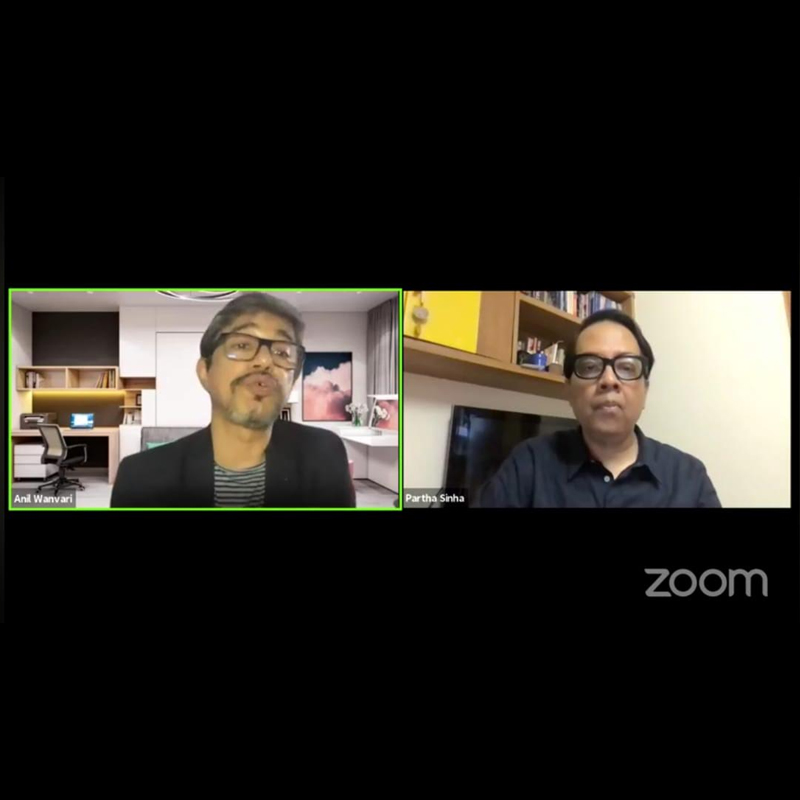
    However, as the world starts getting back to normal and a new world order sets in, the print industry is looking forward to a better tomorrow, lined up with new opportunities and relevancy, Bennet Coleman & Co Ltd (BCCL)  president–responses Partha Sinha shared in a virtual fireside chat with Indiantelevision.com founder, CEO, and editor-in-chief Anil Wanvari. On Monday evening, the duo sat across screens to discuss the impact of Covid2019 on print and the way ahead for the industry. 

    Sinha noted that the print industry has already reached a 70 per cent recovery in terms of the number of copies being delivered. “I think in some markets it has gone up to 90 per cent because, in the south or states like Kolkata, there was never a massive problem of circulation. Cities like Delhi, Mumbai, and a few more in the north were hit badly and I guess it has revived now, not just for us but for all the players.”

    He indicated that it is a good sign for the industry and debugs the myth that print will shut down. “For three to four months, our main concern was consumer demand that was severely impacted. But coming out of it so quickly is absolutely brilliant.”

    So, was it a knee-jerk reaction on the part of the industry to shut down some of the editions and let go of a number of employees, or as some of the unions say, an excuse, Wanvari questioned. 

    “I don’t think it was a knee-jerk reaction or an excuse. Even it was not for Covid2019 and something else would have happened, you would have got a consultant like McKinsey or BCG and asked them to optimise, right? This optimisation tells you if there is any cost reduction required and how can you improve profitability. Honestly speaking, as much as it's being talked about but it's quite a routine activity. Every organisation has optimised; when you find a new revenue opportunity, you hire people and if you find a revenue opportunity drying up, you optimise. I think this is a regular organization life cycle,” Sinha cleared the air. 

    So, what does the future of print seems like to him as digital and other mediums take centre stage? 

    Sinha insisted that there can’t be any substitute for the content that print generates and therefore the medium will stay here, but it might take just a slightly different role going ahead.  

    “I want to debug the myth that digital can replace or surpass print, or TV is a challenge to print. What is happening with both these mediums is that they are creating fragmented opinions, which lack credibility for the source and even for the brands. The news on television is so polarised, that it is sickening now. And obviously, if fake news becomes the business model, the credibility is hampered. Therefore, no amount of user-generated content or no amount of hair pulling on the camera will be able to substitute the credibility that print offers. Journalism will always remain about how deep you go, how sincere you are  and whether you are you're taking all the points of views,” Sinha elaborated. 

    He added that the role of print, going ahead, will move on from being a medium of discovery of product to being involved in its purchase by the customer too because of the credibility associated with the medium. He cited the instance of a real estate developer Casa Gold out of Chennai. It sold 120 apartments during the peak of Covid over four days. The Times of India Chennai response team managed everything from the webinar, to virtual expo, to get the potential buyers to take part in the virtual display of the advertisements to front page jackets of the physical newspapers.

    Sinha revealed that print media plays a big role in cultural marketing. "Cultural marketing works by creating truth and opinion and rallying people around the truth and opinion or finding emergent truth and opinion in society and making it bigger,” he explained. “Many branded efforts have almost become culture: Lead India, Teach India, Lead India led to Anna Hazare and the birth of AAP. Print can create a better narrative than any other medium. Another example is organ donation which has been driven by the Times of India.. The Times of India is the only way to create a culture with the affluent.

    “With so much fragmentation, there is a lack of credibility in the domain now. Due to fake news being so prevalent, print has started playing a significant role in building credibility and a path to purchase. The advantage of the printed word is it doesn't come with a picture. Therefore, you are forced to use your brain, you're forced to use your opinion. And that's how culture gets created. The beauty of culture creation is that eventually  brands will pay a premium to be closer to culture. Everything else is just a matter of discount because that's why the most popular method of advertising on the internet is programmatic led,” he shared. 

    He highlighted that cultural authority is the biggest asset a brand can ever own, because with that comes credibility. “These are the things that print media have to start thinking about, some like the New York Times has already done so,” he pointed out.

    Further, to help the brands gain the maximum out of the exposure and credibility that print offers Bennet and Coleman has come up with a pricing engine, which is based on artificial intelligence and machine learning. It can make an umpteen number of parameters and churn out a very specific notation for the time, helping the brands understand the right channels and the right strategy to advertise. “We are backing culture creation with data and analytics and have huge amount of data analysis,” he revealed.

    Sinha highlighted that all the assets of the Times of India group are brought into play while offering solutions to clients, whether its digital or TV or print or the social handles of these. “Thanks to the fact that we have all these assets, we can bring in 20 of our group assets or 30 of them,” he disclosed. “Let me also tell you we are open to look at assets outside the group to provide solutions to clients.”

    Times have indeed changed things at The Times. As many clients and marketers say, the change has happened for the better. 

  • ONMOBILE takes 25% equity in AI-powered visual retention firm ROB0

    ONMOBILE takes 25% equity in AI-powered visual retention firm ROB0

    MUMBAI: Mobile entertainment company OnMobile Global Ltd has acquired 25 per cent equity stake in rob0, through its subsidiary Onmobile Global Solutions Canada Ltd, in exchange for an investment of CAD 1000,000.

    Bangalore-based OnMobile offers a wide array of products such as videos, tones, games and contests. It has an addressable base of more than 1.68 billion mobile users and over 100 million active subscribers across several geographies. rob0 is an AI-powered visual retention analytics service created by and for video game developers. This innovative Plug&play SaaS shows precisely when and why players leave from day 1.

    This transaction will allow rob0 to accelerate its growth as the most innovative AI-powered visual retention analytics solution for video game developers.

    This investment reaffirms the importance of OnMobile's strategy to become a leader in the mobile gaming market. In addition to its current subscription-based offering of premium games and kids apps, available to more than 50 carriers in over 30 countries, this transaction sets the table for OnMobile to soon introduce a one-of-a-kind gaming offering. Amongst the various synergies, OnMobile will be able to leverage the vast gaming knowhow of the rob0 team, which brings several years of experience in the industry, having played key roles for some of the most prominent games behemoths like Electronic Arts, Gameloft and Twitch.

    With its Plug & Play SaaS, rob0 is a pioneer in the gaming industry. Its AI-powered visual retention technology allows game developers to detect the exact moment in gameplay where users stop playing, saving them hundreds of hours of observation time and minimizing significantly their go-to-market risks.

    “We are very excited about this strategic investment. The combination of OnMobile and rob0 will provide immediate business value and will be the springboard to our enriched mobile gaming offering. Furthermore, it will bring tremendous value to game developers wanting to make their games highly engaging to end-users.”, said OnMobile Global chairman-CEO François-Charles Sirois.

    “We couldn't have hoped for a better partner than OnMobile to help rob0 embody its vision and become an essential solution for game developers. We are thrilled to bring our expertise and participate in the success of OnMobile's new gaming offer,” said Technologies rob0 Inc co-Founder and CEO Richard Rispoli. 

  • Tonic Worldwide launches TWIP – a video programming division

    Tonic Worldwide launches TWIP – a video programming division

    MUMBAI: Tonic Worldwide, an independent digital agency has announced the launch of (TWIP) Tonic Worldwide Intuitive Programming, an exclusive data driven video programming division which will enable brands leverage data better for creating snackable video content.

    This follows the launch of Gipsi in 2019, the AI and HI driven research division at Tonic. TWIP is a video content practice which will be powered by Gipsi’s data driven dashboards and insights.

    With more than thousands of pieces of content being discovered by a user across platforms on a daily basis, brands are struggling to get noticed and engaged. With the launch of TWIP, brands will be able to produce intent based content, which means content that consumers are looking for, rather than the other way around and content that will resonate with the TG.

    Tonic Worldwide chief business officer Sudish Balan said, “These are rapidly changing times with video taking up most of the content in digital media. Campaign bursts by brands will have to be supplemented with a more consistent approach to get discovered when consumers are looking for the content and publish these videos almost on a daily and weekly basis. With TWIP, we intend to power brands with a consistent and continuous video led programming approach, which will be less expensive and generate more effective leads.”

  • AI powered conversational analytics platform, Scoop to help brands glean unique insights from all customer conversations across voice, video, and, text

    AI powered conversational analytics platform, Scoop to help brands glean unique insights from all customer conversations across voice, video, and, text

    MUMBAI: In a recent development that highlights how rep-customer interactions can be leveraged to gain market intelligence. Scoop, a Mumbai based startup, has developed an AI-powered conversational analytics platform designed to help Inside Sales teams to maximize sales conversion optimization.

    Scoop leverages machine learning to mine insights from customer conversations across voice, video, and text sources to discover sales opportunities. The insights gleaned by the AI can be utilized to coach sales representatives, helping them win more deals with more efficient conversations over time.

    Conversations between a sales representative and a customer are a storehouse of valuable information that usually lies untapped.These conversations usually happen across channels and mediums. Scoop ensures that all the conversations are transcribed and searchable, which are then mined by ML algorithms to uncover unique market insights.

     The platform provides a clear and timely view of customer intent, while revealing the gaps and strengths of the representatives. This information can thus be analyzed to prepare a personalized coaching plan, shared with each representative, to unravel the mystery of why deals are won or lost. Scoop aims to enable enterprises to leverage conversational analytics, understand the key problems and eventually skyrocket their conversions.

    VeerChand Bothra, Co-founder of Scoop said, “Although enterprises have CRMs to address multiple customer problems, there is a need to go beyond that. Rep-customer conversations comprise a barrage of hidden details, which CRMs fail to cover. Analyzing this information is critical for an enterprise to win customers. Our latest product, Scoop leverages ML algorithms to decode conversations and perform conversational analytics for generating effective marketing leads, helping digital sales teams close a deal during customer interactions. We foresee this product emerging as a game-changing tool for enterprises, helping them identify areas of improvement, and achieve large-scale success in the long run.”

    Several enterprises are already leveraging new-age tools like chatbots, live chat, natural language processing, and automated speech recognition, among others to decipher conversations and help sales teams maximize conversions.

    Scoop is an expansion of SalesTech that goes beyond CRM and is intricately designed to help enterprises secure more customers in the future.

  • Media HR Summit deep dives into emerging trends, work culture & HR tech

    Media HR Summit deep dives into emerging trends, work culture & HR tech

    MUMBAI: Indiantelevision.com hosted the first-ever Media HR Summit in partnership with ZEE in Mumbai on 26 June at The Westin. The day-long conference concluded with some insightful discussions around how corporate and HR leaders are steering media companies into the future on the back of good teams, HR analytics, diversity and inclusivity at the workplace.

    The conference was divided into four sessions, three fireside chats and three presentations related to work culture, emerging trends in HR, employee engagement models, future-focused people strategies, changing nature of employment amid the rapid changes in the media and entertainment industry.

    Indiantelevision.com founder, CEO and editor-in-chief Anil Wanvari set the tone for the day with his welcome note. He argued that the media and entertainment industry has never been full of so many opportunities. At the same time, he added that it is facing challenges in terms of talent acquisition and retention. Wanvari pointed out that the human resources department has never been given the due it deserves, highlighting the key reason behind the summit.

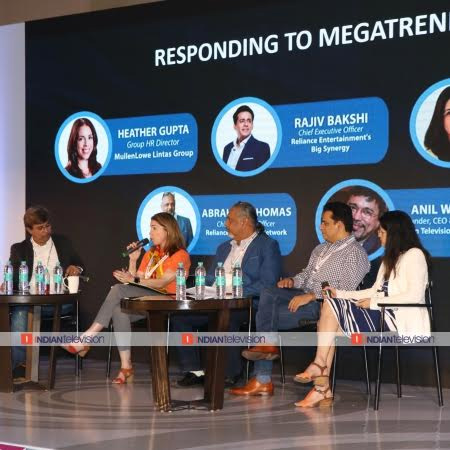
    Following the welcome address, Indiantelevision.com CEO moderated a session titled “Responding to megatrends”. MullenLowe Lintas group HR director Heather Saville Gupta, Reliance Entertainment’s Big Synergy CEO Rajiv Bakshi, Madison World executive director Lara Balsara Vajifdar, Reliance Broadcast Network Ltd CEO Abraham Thomas participated in the panel discussion.

    During the hour-long panel discussion, the point about the media industry getting younger emerged as a key theme. All the panellists agreed that companies need personalised communication for millennial employees. However, as older generations also work at these companies, making a value proposition for all the age groups was deduced as a challenge. Moreover, speakers stated that. with the rapid change, HR has moved beyond a soft skill or a backend process. On the other hand, digital transformation is also affecting the sector and data is becoming more important day by day.

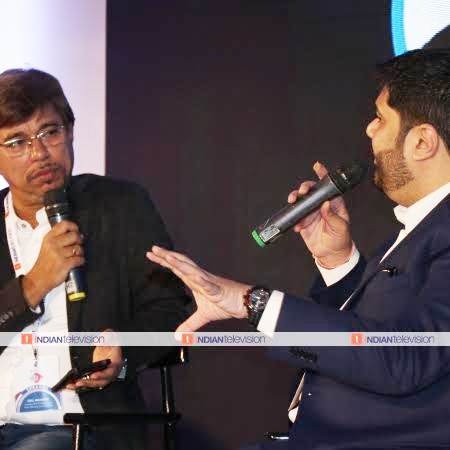
    The next item on the agenda was a fireside between Shemaroo Entertainment Ltd director Jai Maroo and Wanvari. Shemaroo has been an excellent example of evolving over the years with new entrepreneurial ideas. While the company is going through a rigorous change, Maroo mentioned key winning traits every company needs to follow – putting people first including employee, vendor, clients; the ability to reinvent when needed; seeing where the company is standing at the ecosystem, value chain. While it has unleashed a 5x transformation plan, getting the HR team aligned with that is a key challenge.

    That was followed by another interesting fireside chat between Discovery Communications India South Asia managing director Megha Tata and Wanvari. Tata who has been one of the few women leaders in the media and entertainment industry outlined the reasons as to why women find it hard to shatter the glass ceiling. She noted that the ecosystem may not have been supportive of women who are rising through the ranks. The veteran media executive added that women also give up halfway through their journey due to various reasons.

    Moderated by KPMG India people and change associate director Ajay Venkatesh, the next session revolved around a very compelling topic – building a great team. ABC Consultants FMCG, Internet, Media, and Development Sector director Deepika Ramani, Balaji Telefilms Ltd group head HR Ashish Pinto, Jagran Group head HR Sagorika Kantharia, VATS Consulting founder Vikas Vats, and Saregama India Ltd general manager HR Sonalika Johri took part in the discussion.

    The speakers articulated how different strokes should be used for different folks while hiring. All the experts also agreed that agility and an analytical bent are having a big impact on business. However, companies also need to look at how they use the analytics, the panel said. While digital transformation is already happening, cross-scaling talent is also important, concluded by the speakers.

    The conference further continued with a presentation by Publicis head HR Nikhil Natekar on “Future focused people strategies”. He spoke about cultural evolution, diversity inclusion, skill-based hiring and growth path for Gen Y who are going to be future leaders. He then sat down for a chat with She means Business content creator and workshop facilitator Dipika Singh.

    VATS Consulting’s Vikas Vats presented his thoughts on 'Future of Indian HR in the Digital Age'. He highlighted that there are times when HRs need to work like CEOs. He also added that while using technology is important, focusing on people is more important.

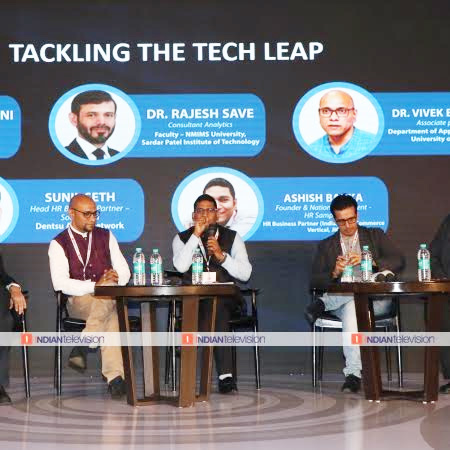
    The events of the day progressed with the session “Tackling the tech leap” moderated by HR Sampark founder and national president Ashish Banka. Reinova Biz director HR Shubham Tripathi, Dentsu Aegis Network South Asia head HR business partner Sunil Seth, Associate Professor at Department of Applied Psychology, University of Mumbai Vivek Belhekar, Consultant Analytics Rajesh Save participated in the panel. The panelists agreed that adopting and adapting technologies is very important. While HR was late to join the party of analytics, now both AI and ML have emerged as key requirements for the HR industry too. AI is now taking an active role in both hiring and firing. Belhekar and Save then gave a presentation on Artificial Intelligence in Human Resources.

    The day ended with a compelling session on “Diversity, equity, and inclusion”. Part of the panel were Voices of Inclusion author Deepa Shankar, Mondelez International diversity and inclusion lead (independent consultant) Priyadarshini Gupta, NeoSeven Solutions global HR expert Monika Navandar, with D&I evangelist and founder and MD–Vividhataa, diversity hiring consultants Ratanprabha Sable moderating the session. While diversity is not a big issue in the media industry, inclusion is a big piece that is being worked around, the speakers said. The experts agreed that the media industry needs to be inclusive at little things. Moreover, the industry should also look at creating job opportunities for disabled people, acid attack victims, and mental health patients was an important point that was voiced during the session that kept the audience hooked on till the very end.

  • Silverpush launches operations in hong kong, expands apac operations

    Silverpush launches operations in hong kong, expands apac operations

    MUMBAI: SilverPush, the AI based marketing-technology platform powered by artificial intelligence (AI), today announced that it has opened its first office in Hong Kong, as part of its expansion plans across Asia to raise its service offerings in one of the company’s fastest growing markets.

    Founded in 2012 by Hitesh Chawla and headquartered in India, SilverPush is a leading digital advertisement platform which helps brands to maximise their audience engagement via real-time TV tracking and TV-to-digital sync solutions. SilverPush’s patented video fingerprinting and content recognition technology helps brands engage with multi screening audiences.

    According to Kartik Mehta, Chief Revenue Officer, SilverPush, “With one of the world’s highest internet and mobile penetration rates, in addition to brands’ investment on TV in the region, the Asian market has become our biggest priority. The aim of SiverPush’s further expansion into Hong Kong is to help more brands operating there to reach their multiscreen customers more effectively via their real-time platform.”

    Kartik further added, “Conventionally, TV has been the dominant medium for advertisers in Asia. However, the gap between TV and smartphone ownership has narrowed, meaning that more people are obtaining and engaging content via their mobile devices – requiring brands to raise their audience engagement across multiple platforms. SilverPush addresses these trends by allowing brands operating in Hong Kong and within Southeast Asia to reach out to customers across platforms in real time.”

    Across Asia, Silverpush currently works with global brands such as Unilever, Nestle, Coca-Cola, Samsung, Johnson & Johnson, and many others.

    The company’s latest product, Mirrors, was launched in late 2018 to help contextualise ads when people are viewing content on their devices – therefore aiming to tackle the US$170 billion global problem of misplaced online advertising. Using AI with computer vision, Mirrors detects context in video content that aligns with an advertiser’s core communications objectives, allowing them to effectively target their ads in a world already cluttered with advertisements. This contextual approach to marketing seeks to revolutionise the way that brands engage with their audience.

    SilverPush currently serves clients in eight Asian markets including India, Indonesia, Thailand, Malaysia, the Philippines, Vietnam and now, Hong Kong. In addition, SilverPush is also present in South Africa, Tanzania, Egypt and the United Arab Emirates. The company recently raised US$ 5 million in Series B funding led by FreakOut Holdings, Inc., a global marketing technology company and plans to expand into the United States as well as other emerging markets in South Asia, Africa and the Middle East.

  • Facebook hosts AI for social good summit, announces key initiatives

    Facebook hosts AI for social good summit, announces key initiatives

    MUMBAI: Facebook has announced a host of initiatives dedicated to delivering social and inclusive growth by harnessing the power of emerging technologies led by Artificial Intelligence (AI). The announcements were made at Facebook's inaugural AI for India Summit held in Bengaluru that focused on AI for Social Good. The summit was attended by AI thought-leaders, start-ups, NGOs, and the developer community. 

    Kicking-off the day long summit, Ajit Mohan, Vice President and Managing Director, Facebook India, said, “At Facebook, we are developing and leveraging cutting-edge technologies for products we develop around the world. From developing a tool to swiftly connect blood banks and hospitals with blood donors to utilizing Disaster Maps to aid the relief work during the 2018 Kerala Floods, we have always sought opportunities to deploy the best of our expertise in the service of India. We are an ally for India's economic growth and social development and this summit is our effort to understand how we can contribute to the development of deep tech in India, as well as corral resources to use these technologies to develop impactful solutions for tough and persistent problems.”

    Talking about AI for Social Good, Facebook spoke about its Blood Donation tool, which helps connect blood banks and hospitals to blood donors who have registered themselves on the platform. Facebook said that to date, more than 35 million people have signed up to be donors globally. In order to understand its impact, Facebook partnered with blood banks in India and Brazil to conduct in-person surveys and found that one in five people said that Facebook influenced their decision to donate blood. 

    Facebook also spoke about how AI can play a crucial role in times of crisis, and cited its efforts during the 2018 Kerala Floods when in partnership with SEEDS India, an NGO, it quickly prepared disaster maps for the state. The maps use aggregated and de-identified Facebook data to track people’s movement and were able to demarcate between the flood-hit and safe zones. This information helped SEEDS and other humanitarian organizations appropriately time their early recovery and relief operations. 

    “At Facebook we are also committed to growing the local AI ecosystem, which can be achieved by providing support to start-ups, to the student community, and by ensuring diversity within the ecosystem itself. That's the thought behind our key announcements today around AI for India Accelerator, trainings and scholarships for students and developers, and 'Women in AI' hackathons,”  added Mohan.

    India Innovation Accelerator: Facebook announced the India Innovation Accelerator program with a focus on AI for Social Good. Under this program Facebook will extend mentorship and support to promising startups that are leveraging AI to address gaps within the high social impact areas of women safety, agriculture, education, healthcare, climate change, and resilient cities, among many others.

    100 Scholarships for students and developers: Facebook also announced 100 scholarships for students and developers focused on nurturing their ideas for utilizing AI for social good. The scholarships will enable the students to gain access to advanced courses on Deep Learning. 

    'Women in AI' Hackathons: Determined to encourage diversity within the ecosystem, Facebook has announced AI Hackathons that are aimed at encouraging women developers and women-led start-ups focused on AI. The winners will be provided courses on AI and ML by professors of Indian Institute of Technology (IIT), Madras.

    AI Trainings: Under Facebook's recently announced, Facebook Hubs program, it will conduct extensive, application-based AI trainings with a host of startups across 20 locations in India. Aimed at helping startups and entrepreneurs scale their businesses, Facebook Hubs will extend support for the community by hosting mentor hours and conducting training and workshops.

    Ragavan Srinivasan, Product Director, Facebook AI said, “The AI for India Summit is our first step in what we hope to be a fruitful journey of applying AI to solve India specific needs. We've raised awareness for Facebook's AI vision and strategy. More importantly, we've listened and learned from the local think-tanks, NGOs, and developers. We're excited about advancing AI in a responsible and inclusive manner to build products and experiences tailored for India."

    The day-long summit held on March 26th saw discussions on how AI could be utilized to make advancements in healthcare, education, agriculture, and crisis/disaster mitigation in line with the National Strategy for Artificial Intelligence that was outlined by NITI Aayog last year. The summit was attended by Amitabh Kant, CEO of NITI Aayog, and members from academia, leading think-tanks, NGOs, students, and developer community.

  • Isobar launches AI-powered mobile campaign for Bobbi Brown’s Primer Plus collection

    Isobar launches AI-powered mobile campaign for Bobbi Brown’s Primer Plus collection

    MUMBAI: Isobar India, a digital agency from the Dentsu Aegis Network stable, has collaborated with Bobbi Brown to launch its Primer Plus collection that focuses on weather-related skin concerns.

    As shared in a press statement, targeting a group of consumers with specific skin concerns caused by adverse weather conditions was identified as an opportunity to conduct personalised marketing in a deliberate manner to boost sales.

    Isobar deployed dynamic HTML5 banners, which captured critical weather data from device level sensors available on smartphones of in-market consumers.  Using a real-time weather API, this data was then cross-stitched with the dynamic content that is consumed by women who exhibit high affinity towards beauty, luxury shopping, fashion, etc. With the help of a custom-made machine-learning algorithm, Isobar mapped various combinations of weather and skin conditions to the right primer. The banners, thus, showcased the apt primer for a specific skin type and weather condition, helping users to choose the right product even before buying it from a store.

    “The campaign garnered an impressive view rate of 32 per cent – twice the industry average. This initiative contributed to over 54 per cent of the overall sales via store walk-ins (the call to action to the dynamic campaign). Overall, the promotion push lead to 8X times sales uplift compared to the previous month,” read the statement.

    Speaking on the launch of the campaign Isobar India senior director – mobile Priyanka Shah stated, “Relevance and personalisation is the all-time marketing mantra. Consumers appreciate ads that are tailored to address their interests and shopping habits. In addition, personalized ads also have the potential to lift sales and increase campaign ROI. This is particularly true in campaigns that leverage individual-level data.”

    Speaking on the success of the campaign, Bobbi Brown India marketing manager Rishabh Kachchhy said, “Using insights of the core features and benefits from the product, the team identified an opportunity to connect our new Primer Plus Collection with a direct benefit link with the weather. The real-time marketing campaign they developed tied in very well with generic skin concerns every Indian woman faces linked to weather conditions. The unique communication angle they executed linked directly to hero benefits and helped drive our key challenges with the product – awareness, education and of course amazing sales!”

  • Regional representation in creative teams can help reduce blind spots: Karthik Srinivasan

    Regional representation in creative teams can help reduce blind spots: Karthik Srinivasan

    MUMBAI: If you’re not in tune with the intricacies of a different language, you’re going to land yourself in a soup. Just like Google’s voice assistant Alexa a few months ago when it had censored the word “chhod” (meaning ‘leave’ in English) from a number of popular Hindi songs, as it confused it with an expletive that is spelt the same way when written in English.

    While the world is currently moving in an inner spiral with people and cultures merging, the vernacular is extending outwards. And in an assorted country like India, this trend only deepens. As lucrative as it sounds, advertisers are still struggling to extract the most from this.

    Case in point is the latest ‘Tinda Moments’ campaign by Uber Eats, as highlighted by communications consultant on digital/social media marketing and PR Karthik Srinivasan in a LinkedIn post. Srinivasan, who has earlier worked with companies like Ogilvy, Flipkart, and Edelman, noted that a Tamilian or Malayali might not be able to get the reference of Hindi word ‘Tinda’. He asked an important question, “Is it too much to expect the brand to customise/localise the ad for the regions it is advertising in? Or is it ok in these multi-lingual metro-centric days where having your ad understood by those who can (and if it is assumed to be a sizeable number) is good enough?”

    Indiantelevision.com got in touch with Srinivasan to discuss more on the subject of the need of regional content in the advertising sphere and he shared some interesting insights with us. Edited excerpts follow:

    The need for vernacular content in advertising is rising steadily, especially after the boom of digital media. Most of the marketers are talking about it. But do you think the brands understand this requirement?

    First of all, I would like to note that the term vernacular might not be the best one to describe regional languages. The origin of the word goes back to the varna system in India – it is literally 'language spoken by different coloured people' according to the British. I believe that ‘regional language’ should be used in fact.

    On your question, I'd say that the local brands understand this better than the national brands. Those brands that have a strong regional-decision making team for marketing get this really well. If the decisions are made for all of India, in say a Mumbai or a Delhi, unless the teams have adequate representation from the regions or good, sensible counsel from the agencies, they could miss this aspect. It's hardly ever intentional but more of a blind spot.

    Isn’t it going to cost the brands more if they create the same ad in various languages? How can this progression towards personalised content be made more cost-effective?

    Brands (at least the ones that are national) already do this. Even regional brands, when they go national, do this quite effectively. For example, Manappuram had 8 versions and 8 brand ambassadors, one for each region (Mohanlal, Vikram, Venkatesh, Puneet Rajkumar, Utham Mohanty, Mithun Chakraborty and Sachin Khadekar). I'd not see it as a cost imperative. This is more targetting and effectiveness imperative. Having a nationally known brand ambassador is easy – there are enough Hindi film stars or sports stars, who can be recognised across the country. Having them talk in various regional languages is also a good deal and already happens. But, if you want to reach the heart of a region and not just its eyes, you need to contextualise its communication to appeal to its specific sensibilities. That's not just locally known brand ambassadors, but also locally nuanced content.

    How are programmatic advertising and artificial intelligence contributing to the growth of regional content in advertising space?

    To the best of my knowledge, AI hasn't really caught up with the nuances of Indian regional languages. There are broad efforts to get the basics right, like Google Maps translating names of areas in all Indian languages. But understanding and translating with context to local nuances is quite some time away. Programmatic does help in micro-targeting. There is better awareness in building a pool of localised content and let the right one be used for the right region. But even here, it is the intent that is the starting point. The marketing team should realise the need for localisation first.

    Can you think of any brand that is using regional content to its benefit smartly?

    For instance, take Muthoot's campaign featuring Vidya Balan. The choice of Vidya Balan as a brand ambassador is a good move, given her almost pan-Indian appeal and familiarity. But beyond that, it is very interesting that they use 'Blue' (an English word) as connecting glue for the campaign tagline. 'Blue' is the term for smart entrepreneurs (who get some help from Muthoot Finance, of course). The end tagline, 'Blue hai आत्मविश्वास' (Atmavishwas, meaning confidence) translates to 'நம்பிக்கையின் (Nambikkayin meaning confidence in Tamil) niram blue', for instance. The word blue is not translated and is retained as a common factor to connect across multiple regional languages. If blue was translated too, then the statement may seem different in each language. You can argue that 'neel' in Hindi or 'neelam' in Tamil or similar variants is the most common translation for blue in many Indian languages, but that may not be uniform in all languages. The effort in understanding local nuances and working accordingly shows. Another was an effort by ET Money last year in its “Upar Ki Kamayi” campaign, which was printed in seven different languages for different areas on the same day.

    What can be the key strategies of a brand to design and implement the right form of multi-linguistic content?

    The first, and most basic, is the intent. It is simply recognising the need that regional language content if you have a substantial target audience in that region, will simply work far better in reaching them. It is the humility in accepting that I don't know everything and I can do better by asking around and learning other kinds of effective communication.

    Then you have the strategies and processes. Ad agencies and brands simply need to look for inspiration from the dubbing and subtitling industries in India. If you switch on cable TV and look at any Hindi movie channel during non-peak hours (sometimes even during peak hours), they only play Hindi-dubbed South Indian movies. And that dubbing is done brilliantly, placing the location to Northern regions and even using local Northern dialects and nuances.

    The subtitling industry is also doing some stellar work since that's a basic requirement for films to be shown in OTT platforms. So, much of the subtitles are done professionally, understanding the context within films and not just transliterated. If the film industry can pull it off, there's no reason a far more professional and educated bunch of people in marketing and advertising cannot. It all boils down to the intent and getting the right people.

    How do you see the growth of regional content industry in general?

    I'd say it is the next big frontier. Most large brands like Google, Facebook and Twitter are trying to crack that in order to reach Indians better with better context. Even in the OTT space, there's a profusion of regional language content. From a user interface/user experience perspective too, most of the mobile wallets that are from startups have a multi-lingual interface, while those from larger, legacy banks still lack this feature and use English as default.

    To a large extent, the bigger technology brands are leapfrogging the complexities of written regional language by taking the voice input route. Google and Amazon's smart speakers already recognise and respond to a few Indian regional languages well and are improving.

    Any special pointers you want to share with the brands and marketers regarding the topic?

    The most important one is again on intent. We Indians seldom venture beyond our comfort zone when it comes to languages. For instance, our choice of music or movies is usually in English + our mother tongue. It is only now that subtitles have opened up the audience for all kinds of languages but they remain small. With music, is a classic case – if I ask a Hindi speaking person for his/her favourite Tamil or Telugu songs, the standard reaction would be to name a song from Baahubali (pan-India) and say they don't understand the language so they don't listen. But remember, music was supposed to be universal, and we gladly listen to Latin and Spanish hits from the US, like Despacito! The point is, if your target audience is in Karnataka, get to know the local nuances first and not assume that mere Hindi and English would do. They would, no doubt because most people have been conditioned to learn English and perhaps know functional Hindi too for day-to-day survival in cities, but when they see or hear something in their mother-tongue, the appeal goes straight to the heart. It’s much like you being in another part of India and seeing a car with a number plate from your state!

  • Expectations from the brand and marketing industry in 2019

    Expectations from the brand and marketing industry in 2019

    MUMBAI: The world of marketing is perpetually changing with constant innovative practices in the field of social media and automated ad tech. As broad-brush marketing techniques have dwindled, brands are battling to maintain their originality and meet customer expectations in an ever-evolving technologically advanced world. From multimedia content creation to influencer marketing, 2018 saw some excellent marketing trends adapted by brands across various verticals.

    The next big leap is the application of artificial intelligence and voice search for personalised advertisements and better data analytics. AI and voice searches have grown from niche to buzzword to mainstream and brands are entailed to incorporate them in their marketing strategies.

    With numerous emerging trends, the B2B marketing landscape has become more competitive. From email marketing to landing pages and content recommendations, personalisation isn't limited for B2C brands anymore. What a brand stands for has become very relevant for B2B organisations as well. Companies working in B2B space now understand how content outreach and online advertising can help them strengthen their customer base and create brand awareness. However, they are still in transit to use more digital tactics to drive ROI and growth. Marketers are continuously looking for more exciting ways of story-telling and more innovative content formats to lure their B2B prospects.

    Advertisements are no longer the pool for the same kind of talent. Brands have gotten smarter about the content they publish on various platforms. They know that to allure a better reaction from the audiences, they need to give an experience tailored according to consumers' dialect.  Everything brands do, need to help them achieve their goal, target their ideal audience and get the most out of the content as possible.

    Ephemeral content and stories have soared in popularity as they display quick content with different features such as polls, GIFS, boomerangs, etc. Viewership of digital videos, both on over-the-top and social platforms, continues to be more captivating than television. Besides, with brands investing in influencer marketing, Instagram and Snapchat are increasingly gaining ground. Mobile spending across all the sectors has increased because it provides more targeted ad campaigns.

    With new marketing trends continuing to evolve, the pressure on marketers for optimising the digital strategies has increased. Advertisers want to engage consumers with more relevant content and thus, are spending on platforms providing a direct and real-time connection with the consumers. Communicating with customers on a one-to-one basis encourages them to engage more with a brand's product or service.

    Team Pumpkin has grown well and healthy in terms of revenue and bagging new clients in 2018. The New Year is looking more promising. I believe that we need to connect deeply with other people, not just within our agencies, but with the people who are going to buy what we are selling. We aim to provide integrated communication solutions to maximize our client base and expand our footprint nationally.

    (The author is co-founder and CBO, Team Pumpkin. The views expressed here are her own and Indiantelevision.com may not subscribe to them)