Tag: AI

  • ML & AI to play a key role for marketers in the third connected age: Rishad Tobaccowala

    ML & AI to play a key role for marketers in the third connected age: Rishad Tobaccowala

    MUMBAI: The world is now entering the third connected age and it is going to have a huge impact on various areas of advertising and marketing. Shifts are happening including data connecting to data, which is machine learning. Artificial Intelligence is fuelling everything including marketing, advertising services, and biotech.

    Advisor, speaker, and educator Rishad Tobaccowala who is also an author spoke at the MMA India seminar called ‘Impact India: The Future of Modern Marketing’ recently. While addressing at the event, he noted that the first shift going on in the third connected age is machine learning. The second shift going on in the third connected age besides machine learning is that there are much faster ways of connecting like Jio which has had a massive impact. “In the next few years, India will move faster and faster to 5G. It is very resilient and one can download a high definition movie in seven seconds or less. It will open up more things,” added Tobaccowala during his talks at the event.

    He also highlighted that mobility will not just be about the mobile device. It could be things like glasses, and headphones because the third shift will be about new ways of connecting. He gives the example of ‘Voice’ and this will continue as devices become smaller and more powerful. Also, augmented reality technology will become important. Virtual reality will also happen though it is in its early days. It will have a big impact on areas like gaming which is already bigger than movies and gambling. The fourth shift will be new trust currencies emerging and blockchain will be the key factor. This third connected age will build on the first and second connected ages and will change the way the world of marketing exists.

    He noted that 1993 was the first connected age with the world wide web where people connected to interact. That gave birth to businesses like search and e-commerce and to companies like Google and Amazon. In 2007 there was the second connected age which was about being connected all the time and it gave rise to mobile, and social media. Today, most traffic in the US comes from mobile and unlikely from the desktop. These three ages build on each other and they will not replace each other.

    He noted that Audience, Brands, Content, Data and Enterprise are now significantly shifting. Every marketer recognises that they do not just send messages to audiences. Increasingly, customers are becoming active rather than passive.

    He also spoke about the move towards re-aggregated rather than segmented marketing. In the latter, you take large audiences and make them smaller audiences like TV, newspapers including others. In the former, you are able to thrive in the digital age.  You start with an audience of one and re-aggregate him/her through things like decision engines.

    He mentioned three trends that will grow when one talks about brands. The first is that brands will increasingly become experiences. That is important as a great experience will result in people speaking about it and becoming loyal. Second, the brand’s purpose will become important. What does a company stand for? The third new trend is branding as employees. In the future, no company will survive without its employees and suppliers. “The most important advocate for brands even more than happy customers is happy employees,” he added.

    In terms of content, he noted that it is impossible to put content into a bucket. He gave the example of seeing an ad on Tiktok while travelling in a car resulting in him buying a product at a store. Is it ATL or BTL? Is it offline or online? Is it mobile e-commerce or social? Is it analogue or digital? It was all those. Content is morphing and so is marketing. Also, new content creators are changing pretty dramatically.

    He mentions the fact that more views and interactions are happening for Instagram, and Youtube creators than those who watch the Superbowl. New kinds of content will emerge. In terms of data, he said marketers must recognise that data alone is not the way brands are built. It is about how you extract meaning from data, and how you tell stories utilising data. The big mistake people make is thinking that data by itself is the differentiator. Connecting data to other things in a company is what will make the difference. Less than half a dozen companies have special data. So, it is how you use, and leverage data to tell stories. That is important because human beings choose with their hearts to make purchases. Then they use data to justify what they just did. That is what happens 7 out of 10 times.

    The future is about data-driven storytelling, not data-driven marketing. Marketers cannot be only driven by data numbers otherwise they will be out of a job, he warned.

    He stressed that marketing is about stories & insights and not just about data and algorithms. Pure numbers are not the answer.

    Enterprise, he said, is rethinking the way an organisation is set up for the future. The future, he cautions cannot fit into the containers of the past. The best marketing companies, he said, revolve around people speaking up freely and challenging each other. That is how ideas are born. Also, the best companies constantly reinvent themselves.

    So, how does one do this? First, constantly learn, he said and added that if marketers do not then they will fake it and will become irrelevant as individuals, marketers and businesspersons. Marketers must set aside an hour a day to learn new things.

    Also, marketers must build a case for the exact opposite of what they believe. That will strengthen an argument. Third, learn new technologies by doing things. “Learn, do, build the case for the opposite” he concluded.


  • CAMM Summit 2022: Experts highlight the advantage of AI for marketers

    CAMM Summit 2022: Experts highlight the advantage of AI for marketers

    Mumbai: Artificial intelligence (AI)  has been a buzzword for a long time now! From content creation to customer support, AI is now everywhere. Interestingly, AI has also touched down the marketing industry. And to discuss the importance of AI and data in the marketing sector, the second day of IndianTelevision.com’s CAMM Summit and Exhibition 2022 witnessed an insightful panel discussion on the topic: ‘AI & Data – Your Tools for Better Efficiency.’

    Moderated by Pixis chief executive officer (Europe & APAC) Neel Pandya, the panel had marketing leaders including WATConsult managing partner Sahil Shah, Ferns N Petals chief technology officer Vasanth Kamatgi, Timex Group head of marketing & e-commerce Ajay Dhyani, and BFSI global technology leader Suresh A Shaan.

    Experts believe that AI can be very helpful in improving the data analysing speed and also to increase the efficiency of marketing campaigns. To begin with, Pandya explained his idea of AI. He feels AI is everywhere.

    How marketers look upto artificial intelligence?

    Taking the discussion further, he asked Dhyani if the Timex Group has ever integrated artificial intelligence approaches in their marketing campaigns?

    To which, Dhyani said that Timex Group has not used artificial intelligence in its marketing campaigns so far but they have come across various case studies and reports on how artificial intelligence is emerging and how companies across the sectors are using it.

    “We are excited to see the efficient use of artificial intelligence and are clearly looking to integrate it in our marketing campaigns,” he highlighted.

    Adding to it, Ferns N Petals’ Kamatgi said, “AI is a very powerful tool and it will change everything, from the way we live to the way we operate our business.”

    He further stated that Ferns N Petals started using AI back in 2018 for better product recommendation.

    Sharing the outcomes of using AI as a tool, he said, “we experienced mixed results, right now we need to work a lot to get better results because efficient use of AI requires smart applications and filtration of data and we are working in this direction.”

    He also told that Ferns N Petals recently concluded its annual business plan and artificial intelligence is going to be the biggest investment of the company. “We have a pipeline of 28 news cases that are supposed to go live in coming times. However, we have not decided the estimated time yet but we are working on it,” Kamatgi asserted.

    Explaining how they will integrate artificial intelligence in their marketing plan, he further said, “we will be applying AI for efficient product recommendations, classification of products, better search, product sequencing, multi-labeling and so on.”

    After listening from the marketers how they are using and planning to use artificial intelligence, Pandya highlighted how artificial intelligence has been helping the marketers. He said, “artificial intelligence is largely doing three simple things- automating the bidden budget which is currently planned manually, better customer targeting and creating more and more personalisation for the potential customers.”

    Metaverse – The next big thing in adtech world

    Shifting the conversation to the vision for the next step in the internet’s evolution – metaverse, Pandya asked WATConsult’s Shah, “Is metaverse or meta just a buzzword or are marketers really trying to do something which will help them and the industry?”

    “Metaverse is a fad to me,” Shah noted. “I am not sure if the metaverse is going to be there for a long time or not. We will get to know it with time.”

    He also said that after talking to a lot of gaming experts he realised that the term has suddenly become so popular after Facebook named its parent company as Meta. Otherwise the gaming industry has been operating in the metaverse for a long time.

    Furthermore, he shared how marketers are using metaverse. He said, “If we look from the marketing perspective, a lot of companies are now investing in metaverse. For example Nike opened a store which is just amazing. But the question is how many people are going to use it? And what is the return on investment in metaverse?”

    “The only concern here is the critical masses and consumers are not headed towards metaverse as of now,” he highlighted.

    How will marketers cope up with the cookie-less world?

    In the next part of the conversation, Pandya moved towards the most critical concern of marketers that is the removal of cookies. There’s been a lot of talk around how this announcement by Google will make it difficult for marketers to do audience profiling and reach out to the right audience at the right time.

    Throwing the next question to BFSI global technology leader Suresh A Shaan, Padnya asked, “how do you think a cookieless world is going to affect the ad and marketing world and how marketers will cope-up with the change?”

    Shaan answered, “now marketers need to switch to personalisation to a greater extent. People easily connect when the campaign is derived from an emotional perspective. Hence personalisation will emerge as a helpful tool for marketers.”

    Other panelists also agreed to him and shared how they are adopting personalisation. Sharing how marketers are going hyper personalised Shaan highlighted a few campaigns from Flipkart where the e-commerce company hired regional celebrities to go personalised for their consumers.

    Will artificial intelligence lead to job cuts?

    Concluding the session, Pandya asked one quick question to panelists, “Will artificial intelligence take away human jobs in the coming time..?”

    While Shah and Dhyani think that artificial intelligence will not take away jobs, Kamatgi thinks that it will definitely take away a few jobs. “I think in urban areas it will lead to a job cut but in rural areas it will not,” Shaan opined.

    “Well! I also think that artificial intelligence will not take away human jobs; rather it will add more power and liberty to manpower,” Pandya commented.

  • Haptik appoints Praful Krishna as chief product officer

    Haptik appoints Praful Krishna as chief product officer

    Mumbai: Jio Haptik Technologies, a conversational AI company and subsidiary of Reliance Jio Platforms has appointed Praful Krishna as its chief product officer (CPO). 

    In his new role at Haptik, Krishna will drive the transition of businesses from web to the conversation economy, resulting in significantly improved customer experience. “Krishna will spearhead Haptik’s strategic vision and be the driving force behind building the brand’s suite of products. He will also oversee product requirements, design, messaging, pricing, reliability, and customer engagement,” said the statement.

    “In addition to being an ex-entrepreneur, Praful has a proven record of success in both startups and large companies and his arrival marks a critical moment in Haptik’s growth journey,” said Haptik CEO and co-founder Aakrit Vaish. “I am confident that under his leadership, the product will be making even further strides in solving customers’ biggest pain points across the conversational commerce journey; and accelerate our journey towards becoming a global leader in the conversational AI economy.”

    Krishna comes with 20+ years of cross-functional experience in developing, digitising, marketing, and investing in AI and NLP-driven products at startups and Fortune 500s. He was previously founder & CEO at Coseer, a company helping data science teams in enterprises with intelligent process automation tools. Before entering the world of AI and products, he was at a hedge fund and a consultant with McKinsey & Company. 

    “I truly believe Haptik is poised to be a global leader in enabling conversational commerce for brands by meeting the user wherever they are – from metaverses to phone lines – and helping them throughout their journey – from acquisition to advocacy. It has already seen incredible momentum: not everyone can boast 500+ million users served with billions of interactions,” remarked Krishna.

    Krishna is an alumnus of IIT Bombay and Harvard Business School. Currently, he lives in San Francisco.

  • GUEST COLUMN: AI-powered influencer marketing redefining the landscape in 2022

    GUEST COLUMN: AI-powered influencer marketing redefining the landscape in 2022

    Mumbai: From Facebook recasting itself into a metaverse to marketers executing new lines of thought for sailing through yet another year amidst the pandemic, 2021 was indeed a roller coaster year for the digital marketing industry. However, one phenomenon which flourished all through was influencer marketing.

    The thriving influencer marketing arena in India is expected to grow at a compound annual growth rate (CAGR) of 25 per cent till 2025 to reach a size of Rs 2,200 crore (Source: GroupM INCA’s India Influencer Marketing Report). Globally, the industry is set to increase by approximately $13.8 billion by 2022 end (Source: 2021 State of Influencer Marketing Benchmark Report). What’s more, the induction of AI into influencer marketing is going to completely change the dynamics of decisions & ROI from it.

    With a plethora of types of influencer relationships and ongoing campaigns, supervising it the right way will be pertinent to a brand’s success.

    Data and analytics are now at the centerstage with marketers focusing on when and where to run campaigns, what kind of influencers, and how many influencers to engage with. By measuring the impact and performance of influencer campaigns, Data-driven influencer marketing is not only helping marketers calculate the ROI, further optimise the campaigns but is also helping them identify new opportunities and shortlist key influencers for future collaborations- while keeping a close eye on consumer preferences.

    As tools, artificial intelligence (AI), machine learning (ML), and natural language processing (NLP) are redefining the way brands conceptualise and execute influencer marketing by integrating quantitative and qualitative metrics in a relevant way. Such AI-driven influencer marketing campaigns will improve quality audience check and success measurements. Let’s deep dive into this…

    The right Influencer: In the recent influencer campaign meetings ‘The right influencer’ term is being used by brands on a continuous basis and they need a more detailed understanding of the selection. This process is going to be governed by AI technology by the end of this year since it’s all based on the data & if we are able to process those calculations in microseconds instead of minutes then this hunt will certainly get more interesting.

    With a few common filters we can easily narrow down the list but if we actually want to go in-depth for any decent-sized campaign, it consumes a lot of time and effort which can be easily tackled with AI-based tools. AI-based influencer marketing systems are steadily being leveraged to analyze the minutest of data from an influencer’s social media profile including every content piece posted by them.

    Marketers are looking to partner with those influencers whose online persona and style resonates with their brand’s image- to ensure that those influencers’ audiences are more likely to engage with their brand. AI-powered influencer marketing is helping brands analyse the performance of multiple influencers across various social media platforms irrespective of the language being used. Such scalability will further expand this year as marketers analyse diverse metrics including the reach and engagement metrics of individual posts.

    The Game of Fake Audience: While it can become really tricky to analyse the authenticity of the audience manually, AI is changing this game altogether. With the right algorithmic factors and by considering the step-by-step evolution of ML in this process, brands and agencies can make the right decision without too much time allocation.

    Reporting: ML & AI can assist marketers by generating very insightful analysis. The industry stakeholders are seeking to understand the reach and impact of influencer campaigns on multiple levels, even when the campaign is not huge in scale. AI will definitely help in exploring the influencer marketing insights on a level that the market hasn’t explored before and hence add many layers to what brands and agencies are doing so far.

    2022 will be a game-changing year when it comes to AI’s influence in the world of influencer marketing. It will play a crucial role in tracking sentiment to shortlisting influencers of all sizes and influencing brands in the way they define their goals and prioritise authenticity. The growing market of D2C brands in India is steadily increasing their budgets and now also want to control their data and creator relationships with the help of AI tools. 2022 will further raise the excitement with new influencer marketing trends unfolding for D2C brands, e-commerce companies, digital marketing, and advertising agencies.

    This year will see an escalation of influencer marketing growth as digital marketers will combine innovative strategies with data-driven marketing. 

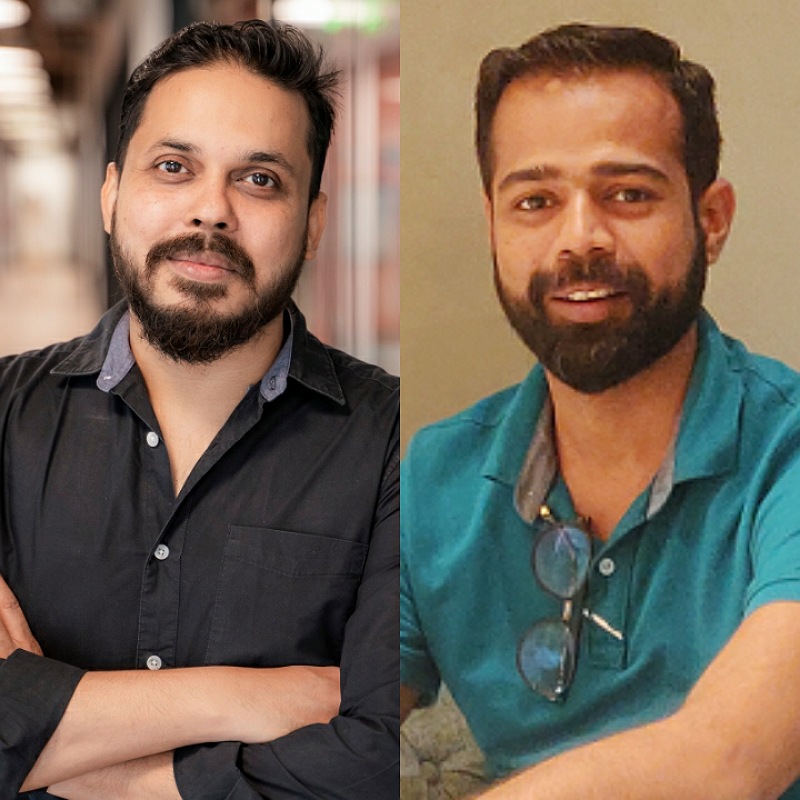
    (About the Authors: Shreyansh Bhandari is the Lyxel&Flamingo co-founder and COO; Veda Bashishtha is the LYRKL co-founder and CEO)

  • Jio invests $15 million in deep tech startup Two Platforms

    Jio invests $15 million in deep tech startup Two Platforms

    Mumbai: Jio Platforms Ltd on Friday announced an investment of $15 million in Two Platforms Inc, a Silicon Valley-based deep tech startup founded by Pranav Mistry, for a 25 per cent equity stake on a fully diluted basis.

    Two will work collaboratively with Jio to fast-track the adoption of new technologies and build disruptive technologies such as AI, metaverse, and mixed realities, said the statement.

    Two is an artificial reality company with focus on building interactive and immersional AI experiences. After text and voice, it believes the next chapter of AI is visual and interactive. Two’s artificial reality platform enables real-time AI voice and video calls, digital humans, immersive spaces and lifelike gaming. The company plans to bring its interactive AI technologies first to consumer applications, followed by entertainment and gaming, as well as enterprise solutions including retail, services, education, health and wellness.

    The founding team at Two has several years of leadership experience in research, design and operations with leading global technology companies.

    Speaking on the investment, Jio director Akash Ambani said, “We are impressed with the strong experience and capabilities of the founding team at Two in the areas of AI/ ML, AR, metaverse and Web 3.0. We look forward to working together with Two to help expedite development of new products in the areas of interactive AI, immersive gaming and metaverse.”

    “Jio is foundational to India’s digital transformation. We at TWO are excited to partner with it to push the boundaries of AI and introduce applications of artificial reality to consumers and businesses at scale,” added Two CEO Pranav Mistry.

  • GUEST COLUMN: Top marketing trends brands may need to adopt in 2022

    GUEST COLUMN: Top marketing trends brands may need to adopt in 2022

    Mumbai: With the rising internet and smartphone penetration and social media usage, especially in tier-II and tier-III cities, the way brands engage with their clients has irrevocably changed. Digital adoption has been the primary focus for marketers in 2021, with a myriad of trends appearing in the marketing industry, including growing online shopping, technology-integrated operations, and so on. With this backdrop in mind, here are some of the most essential marketing trends to watch in 2022.

    Influencer marketing

    Once known as an additional leg to a brand campaign to gain social media visibility, influencers have expanded their audiences and now are driving the communication strategy for many brands. Millennials and Gen Z customers religiously follow influencers on social media, considering them to be highly relatable in terms of content they share. Various brands are already banking on this trend, collaborating with influencers to promote their products and services. The coming months will see more marketers and advertisers follow suit increase brand exposure and garner fans from the influencer’s audience. In fact, several businesses are developing technologies that will enable influencers to create their D2C brands, resulting in creating a micro-entrepreneur ecosystem.

    First-party data will become relevant

    Until recently, most marketing platforms have relied on third-party cookies to collect consumer data. These insights help them understand the evolving shopping patterns of customers and accordingly modify their ongoing marketing activities. However, with rising privacy concerns, the new legislation has initiated restricting the use of third-party consumer data sources. Given this, first-party data will become more relevant than ever. As a result, organisations should enhance their existing data practices and partner with platforms that have extensive first-party data. Doing so will not only give them access to quantitative insights but also help them craft innovative marketing campaigns that are tailored to the intent of consumers.

    AI-powered conversational marketing

    As technological advancements continue to evolve, consumer behavior, interests, and expectations will keep changing at an accelerated pace. Today’s consumers aren’t satisfied with simply appealing websites or products. They are always looking for something new, desiring more personalised, engaging, and immersive shopping experiences. Brands must therefore modify their customer interaction strategies to generate interest, engage buyers, and convert demand to flow in sync with the new customer journey.

    Many brands are implementing conversational AI technologies such as chatbots and voice assistants that can understand and speak vernacular to provide an enhanced experience and strengthen brand-customer relationships.

    Short-form content

    Long-form videos make consumers reluctant to watch and consume content about the brand and its products, pushing them away rather than attracting and retaining them. But fitting well with the fast-paced attention spans of Millennials and Gen Z consumers across several demographics, short videos have gained substantial traction, contributing to an overall increase in e-commerce. As a result, major e-commerce platforms are shifting their focus to short-form content to create more engaging purchasing experiences.

    Mobile-friendly digital experiences

    With over 600 million internet users in India, it’s no wonder that people are spending more time on their smartphones and tablets. And, as millennials and Gen Z audiences, who like to explore and buy across a range of devices, increase their purchasing power, the problem of providing a & seamless experience across all devices — particularly on mobile — will get more complicated. So, it is pivotal for marketers to recognize that mobile-friendly digital experiences are more important to consider, and accordingly create meaningful user experiences to drive brand awareness.

    Conclusion

    The Covid-induced quarantine and consequent isolation have redefined the consumer expectations and how they interact with brands. Improving customer satisfaction is the most accessible approach to distinguish yourself from the increasing e-commerce crowd. And catalysed by the pandemic, the aforementioned trends will continue to thrive in 2022, which is why you should start experimenting with different advertising strategies to keep customers happy and delighted at every point possible.

    (Vijay Kumar Mikkilineni is TCL India marketing head. The views expressed in the column are personal, and Indiantelevision.com may not subscribe to them.)

  • FlexC appoints Anantha Krishnan as chief talent solutions officer

    FlexC appoints Anantha Krishnan as chief talent solutions officer

    Mumbai: AI-Powered talent marketplace FlexC has appointed Anantha Krishnan as its new chief talent solutions officer. In this role, he will be looking after talent solutions and end-to-end mobilising of resources.  

    Previously, Krishnan was associated with Larsen & Toubro Infotech (LTI) as an associate director, where he was leading the people supply chain (PSC) with various business and technology units. He has more than two decades of rich and versatile experience in operating talent solutions, having worked with companies like Samsung and Deccanet.

    During his stint in LTI, Krishnan also took up the additional role of revenue partner for the consumer, media & entertainment and technology vertical, contributing to threefold revenue growth of the unit in a span of about three years, said the company in a statement. 

    Before this, he led the product of Integrated Automated Test Engine for Samsung’s Soft switch lab and launched the verification utility for SKT (South Korea Telecom) network.

    Commenting on the new leadership, FlexC founder and CEO  Girsh Kukreja said, “Anantha’s People Supply Chain prowess, Talent Solutions experience , product engineering background and operating at scale will accelerate FlexC’s talent supply and process to be client’s partner of choice . Going further, the talent fulfillment quality and expanding Recruiters network will continue to fortify FlexC’s ability to capitalise on the remarkable market opportunity right up-front.”

    In his long-spanning career, he also played the role of defect analyst and led the vendor management team for Google and Ericsson platforms for Sony Ericsson Mobile Communication in Japan. 

    “I am excited to be part of the core team at FlexC. The start-up has built an AI-Driven Talent Marketplace that allows companies to access, engage and manage hybrid workforce efficiently, at a fractional cost from anywhere in the world. I am thrilled to be a part of the organisation and look forward to disrupting the talent marketplace in India,” Krishnan said on his appointment.

  • Affine redefines its positioning with a new brand identity

    Affine redefines its positioning with a new brand identity

    New Delhi: AI and data engineering consulting and solutions firm Affine has unveiled its new brand identity, which captures its decade-long journey as a catalyst for business transformation for global and Indian enterprises.

    According to the firm, the new brand image manifests Affine’s commitment to bring forward insights, intelligence, and recommendations through AI, data engineering, and cloud. The new positioning is aimed at enterprises, conglomerates, and GCC’s seeking ‘game-changers’ to transform their businesses and accelerate the enterprise decision-making process.

    Affine’s co-founder and CEO Manas Agrawal said the new identity resonates with today’s business demand. “We are witnessing an exponential technologies era driven by creativity and innovation. Businesses are in urgent need of transformation to stay relevant and remain competitive and we are at the forefront of this revolution. We are thrilled to be part of this journey and will continue to drive innovation and impact-driven insights for our clients.”

    According to the firm, the identity also reaffirms its commitment to investing in strategizing and building deep solutions relevant to the business needs of the enterprises.

    “Innovation has always been a part of the Affine DNA and driving force behind client success. With AI and digital transformation becoming the number one priority for CXOs across the industries, we are well equipped to solve the next-gen business problems. Our new logo embodies our strong beliefs in innovation, readiness, and ultimately client success”, said Affine’s co-founder and head of solutions and AI practice, Vineet Kumar.

    With a decade’s experience in delivering several AI-driven solutions for business transformation, Affine’s industry expertise lies in assisting businesses with end-to-end solutions through – AI transformation consulting, cloud advisory and assessment, data engineering design, and development advanced analytics, AI and ML solutions deployment, and architecture design. The firm has partnered with several premier academic institutions in the past including IIT Bhubaneswar and IIT Kharagpur.

    “The new brand identity and positioning is a continuation of our core belief that we need to be at the forefront of building new capabilities and competencies to be able to offer best in class solutions to our customers,” said co-founder Abhishek Anand.

  • Samsung introduces latest innovations at Consumer Electronics Show 2021

    Samsung introduces latest innovations at Consumer Electronics Show 2021

    NEW DELHI: Samsung opened the Consumer Electronics Show 2021 with a crisp, 30-minute keynote, sharing its vision for the future and introducing a slew of new products at the virtual press conference. Among fresh launches is its new range of bespoke refrigerators that you can mix, match and combine into different configurations. Samsung has also launched its first MicroLED TV, which will be commercially available in a couple of months in a whopping, 110-inch avatar. 

    The South Korean electronics conglomerate also detailed its AI ecosystem and smart home software, as well as its sustainability efforts. Alongside the catchy demos of its smart home gizmos, two of Samsung's sustainability efforts caught the eye. The first is its shift to its DRAMs and SSDs in its data centres and servers, which can apparently make a 7TWh (Tera-Watt-hour) difference in energy consumption. The second is its proposed software updates to older Galaxy range of smartphones, which can turn them into specific use-case devices such as baby monitors or long-range remotes for appliances.

    Samsung Electronics president and head of Samsung Research Sebastian Seung said, “Our world looks different, and many of you have been faced with a new reality–one where, among other things, your home has taken on a greater significance. Our innovations are designed to provide more personal and more intuitive experiences that express your personality. We’re hard at work to bring you next-generation innovation, with AI as the core enabler, for your better tomorrow.”

    Here are a few highlights and launches at the Samsung event:

        Samsung Bespoke 4-Door Flex: The latest version of the Bespoke refrigerator features changeable panels that come with a choice of colours and materials that made the original a success, allowing consumers to adjust their fridge for form and function. The new four-door model will be available in North America this spring.

        110-inch MicroLED: This new screen features self-lit inorganic LED with a slim and nearly bezel-less Infinity Screen design that seamlessly blends into the living space. The result is a spectacularly immersive viewing experience with astounding picture quality. The 110-inch MicroLED also adds “4Vue” (Quad View), a four-way viewing option—so you can keep up with multiple sports at once, or stream a tutorial while playing a video game. Also, for US consumers, more than 160 free channels1 are available through Samsung TV Plus. MICRO LED will be rolled out globally beginning this spring.

        Lifestyle TV: Samsung’s cutting-edge lifestyle TV lineup includes The Serif, The Frame, The Sero and The Terrace—a recently launched 4K QLED outdoor TV—as well as Samsung The Premiere, a cinema-like quality 4K laser projector.

        SmartThings Cooking: A new service from Samsung SmartThings is designed to make your culinary journey seamless. An automatic Meal Planner powered by Whisk’s Food AI recommends meals for the whole week, makes shopping lists with the ingredients you need, and connects to grocery retailers for one-stop shopping straight from the Family Hub refrigerator or your mobile screen. Recipe instructions can be sent directly to synced Samsung cooking devices to minimize hassles and mistakes.

        Samsung Health Smart Trainer on Samsung 2021 TVs: Samsung Health seamlessly transforms the home into a personal gym, and the new Smart Trainer4 feature tracks and analyses posture in real time, just like a personal trainer. During and post-workout, Smart Trainer provides feedback on form, helps you count your reps, and estimates calories burned. Also includes video and interactive training via Bixby-enabled voice control.

         JetBot 90 AI+: Coming to the US 1H 2021, this new vacuum cleaner uses object recognition technology to identify and classify objects to decide the best cleaning path. LiDAR and 3D sensors allow JetBot 90 AI+ to avoid cables and small objects, while still cleaning hard-to-reach corners in your home. Also outfitted with a camera, JetBot 90 AI+ is integrated with the SmartThings app to assist you with home monitoring.

        Samsung Bot Care: Designed to use AI to recognise and respond to your behaviour. It will be able to act as both a robotic assistant and companion, helping to take care of the details in your life. It will also learn your schedule and habits and send you reminders to help guide you throughout your busy day.

        Samsung Bot Handy: Will rely on advanced AI to recognize and pick up objects of varying sizes, shapes and weights, becoming an extension of you and helping you with work around the house. Samsung Bot Handy will be able to tell the difference between the material composition of various objects, utilising the appropriate amount of force to grab and move around household items and objects, working as your trusted partner to help with house chores like cleaning up messy rooms or sorting out the dishes after a meal.

    Samsung is continuing to build on its Samsung Bot Retail, which would guide users outside the home in retail environments, and GEMS, its health-focused exoskeleton as mobility aide. These innovations allow robots and robotic devices to co-exist with humans, enhancing their lives and catering to a variety of lifestyles and different environments.

  • This Diwali, Cadbury creates India’s first AI based hyperlocal ad to support local retailers

    This Diwali, Cadbury creates India’s first AI based hyperlocal ad to support local retailers

    NEW DELHI: The markets are beginning to recover, especially during the festive season, as the customers are now keen to make purchases that have been pending for a long time. At this point, it becomes extremely important for everyone to support the local retailer that forms the back bone of the economy.

    Cadbury India took a cue from this thought and launched a campaign ‘Iss Diwali Aap #KiseKhushKarenge?’ The idea is to turn this Diwali into the sweetest celebration of all times.

    The company will further add sparkle to the festivities, with eCommerce-exclusive premium pack, Oreo Moments and Cadbury Cocoa’s #TheSweetestDiwali activation.

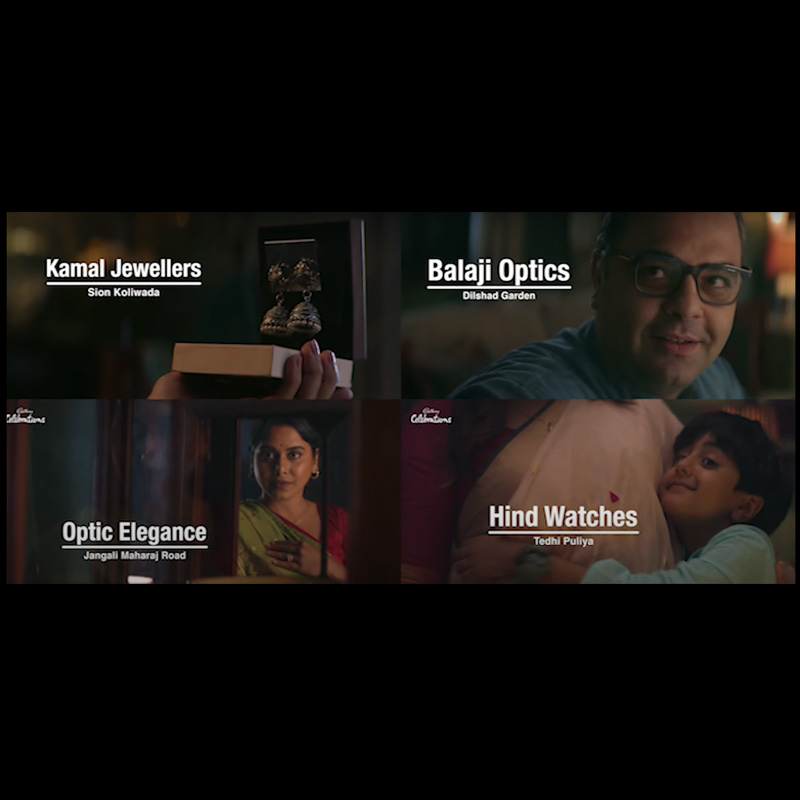
    Continuing the legacy of ‘Kuch Achha Ho Jaye, Kuch Meetha Ho Jaye’, Mondelez India is taking a step further and leading by example by creating the most generous ad ever by reaching out to 1800+ local retailers, across 260+ pin codes, whose businesses are promoted locally through the latest Cadbury Celebrations ad and manifest the message of ‘Iss Diwali Aap #KiseKhushKarenge?

    The ad leverages technology and AI to create India’s first hyper-personalised ad wherein during this ad, these stores will be featured against the product category for specific pin codes in Mumbai, Delhi, Pune, Indore, Ahmedabad and Lucknow. The ad beautifully captures this by showcasing an Indian family rejoicing the occasion of Diwali wherein the woman of the house gifts something to every member of the family which is bought from the local stores. The film ends on a celebratory note and a thought-provoking message – ‘When all of us support our local stores, all of us can have a Happy Diwali’, thus, putting the spotlight on the act of generosity.

    Mondelez India  senior director marketing (chocolates) – insights and analytics Anil Viswanathan  said, “Throughout festivities exchanging gifts and sweets holds a significant emotional value and embarks the beginning of a new era, and it makes us extremely proud about the fact that we humbly found a place in this small, yet important tradition. Moreover, this year, than any other warrants for acts that signify new beginnings and the potential of goodness in an imperfect world, and our recent Cadbury Celebrations campaign infuses this thought at the back of evoking generosity. Banking on the proposition of ‘Iss Diwali Aap #KiseKhushKarenge’, we are putting our best foot forward to inspire people to do what’s right this time by acknowledging people who helped us in difficult times. Whether it is weaving in ‘Mithaas’ into special occasions or adding a shimmer of cheerfulness to the joyous festivities, our much-loved snacking products have become an intrinsic part of every celebration and therefore, this year we’re furthering this effort by expanding our eCommerce premium portfolio to provide more choice to our consumers, along with many exciting initiatives across our brands, beyond just chocolates.”

    The ad film definitely follows the PM Modi’s call to support the local artisans and retailers and move towards being #Atmanirbhar.

    Someone watching in Golf Course Road, Gurgaon will receive and see this ad: 

    Someone watching in Mahalakshmi will see this ad: 

    Someone watching in Powai will see this: 

    This message is further being seeded through Cadbury Cocoa which is encouraging consumers to return the favour of goodness to their family members, who have always made their festivities more exuberant, with a ‘special mithai’ created using Cadbury Cocoa.

    Renowned personalities like Arjun Kapoor and Yuvraj Singh will be seen depicting the act of home-baking a  special recipe for their special someone to encourage people to walk an extra mile, be extra thoughtful and for a change, make the ones around you smile and turning it into #TheSweetestDiwali.

    With safety becoming a non-negotiable priority for consumers, e-commerce is playing greater role in implementing contactless shopping. Cdbury India is creating more digital shopping opportunities to continue redefining the joy of gifting. The seasonal offerings under the Cadbury Gifting portfolio will be available across multiple channels like e-grocers, marketplaces, e-commerce websites, hyper-local and omnichannel retailers and the company’s own direct-to-consumer website – CadburyGifting.in, so that people can partake in celebrations, unhindered.

    This festive season, the world’s favourite cookie brand – OREO, will continue to add more playful moments, through its special festive edition – Oreo Moments. The Oreo Moments gifting range has received great response over the last two years and the company has planned to scale up this year’s portfolio, in addition to launching an all new pack in the premium gifting segment under Oreo Cadbury Dipped Moments.