Tag: AI innovation

  • Infosys introduces open-source AI toolkit to boost trust and transparency

    Infosys introduces open-source AI toolkit to boost trust and transparency

    MUMBAI: Infosys is taking a crucial step toward making artificial intelligence safer, fairer, and more transparent. The global leader in digital services and consulting has officially launched the open-source Responsible AI Toolkit, a core component of the Infosys Topaz Responsible AI Suite. Designed to help enterprises innovate responsibly, the toolkit tackles AI ethics, security risks, and biases head-on.

    The Infosys Responsible AI Toolkit builds on the company’s AI3S framework (scan, shield, and steer), providing enterprises with cutting-edge safeguards. It comes packed with specialised AI models and shielding algorithms that detect and mitigate threats such as privacy breaches, security vulnerabilities, biased outputs, deepfakes, hallucinations, and copyright violations. It also enhances AI model transparency, offering deeper insights into how AI-generated decisions are made—all without compromising performance or user experience.

    By making the toolkit open-source, Infosys aims to foster collaboration and accelerate AI safety innovations across industries. The toolkit is fully customisable, supports various AI models and agentic systems, and integrates seamlessly across cloud and on-premise environments.

    Infosys EVP, global services head, AI and industry verticals, Balakrishna D. R. (Bali) underscored the significance of this initiative, “As AI becomes central to driving enterprise growth, its ethical adoption is no longer optional. The Infosys Responsible AI Toolkit ensures that businesses remain resilient and trustworthy while navigating the AI revolution. By making the toolkit open source, we are fostering a collaborative ecosystem that addresses the complex challenges of AI bias, opacity, and security. It’s a testament to our commitment to making AI safe, reliable, and ethical for all.”

    British High Commission head of science, technology and innovation Joshua Bamford highlighted the global significance of this initiative, “Infosys’ commitment to becoming an AI-first business and establishing the Responsible AI Office reflects bold innovation and ethical leadership. By going open source, Infosys is empowering enterprises, startups, and SMEs to leverage AI for groundbreaking advancements. Their Responsible AI Toolkit is a benchmark for technological excellence and when paired with a commitment to responsible practices and global sustainability can be an inspiring model for companies worldwide.”

    Meanwhile, Meta public policy director – data economy and emerging tech, Sunil Abraham praised Infosys for driving open AI innovation, “We congratulate Infosys on launching an openly available Responsible AI Toolkit, which will contribute to advancing safe and responsible AI through open innovation. Open-source code and open datasets are essential to empower a broad spectrum of AI innovators, builders, and adopters with the information and tools needed to harness the advancements in ways that prioritise safety, diversity, economic opportunity, and benefits to all.”

    The Indian government also lauded Infosys’ initiative, with government of India Ministry of Electronics and Information Technology (MeitY) additional secretary Abhishek Singh stating, “I am very happy to learn that Infosys has decided to open source their Responsible AI Toolkit. This will go a long way in making tools available for enhancing Security, Privacy, Safety, Explainability and Fairness in AI-based solutions and also help in mitigating bias in AI algorithms and models. This is critical for developing safe, trusted and responsible AI solutions. I am sure, startups and AI developers will greatly benefit from this Responsible AI Toolkit.”

    With the Infosys Responsible AI Toolkit, enterprises can take a proactive approach to AI governance, ensuring that AI-driven systems remain ethical, fair, and secure. By going open-source, Infosys has set a new benchmark for corporate AI responsibility, encouraging organisations worldwide to collaborate, innovate, and drive AI adoption with trust.


  • Google developing AI to control computers, aims for seamless automation

    Google developing AI to control computers, aims for seamless automation

    Mumbai: In a bold leap towards the future of technology, Google is developing an artificial intelligence system capable of fully taking over and operating computers. The tech giant’s latest AI initiative aims to push the boundaries of automation by allowing AI to perform tasks traditionally handled by humans, such as managing applications, executing commands, and even troubleshooting issues. This development was first reported by ‘The Information’ and has since stirred a wave of anticipation and concern within the tech community.

    The project, dubbed ‘Project Tailwind’, seeks to automate computer operations, potentially transforming the way people interact with technology. Google’s approach involves training the AI to execute tasks across various software applications, thereby reducing the need for human intervention. The AI system could streamline tasks ranging from data entry and document formatting to more complex activities like coding and data analysis.

    Google’s ambitious project could redefine automation, particularly in business environments where repetitive tasks dominate. With AI capable of running computers autonomously, organisations might see increased productivity and cost savings. Additionally, this technology could pave the way for new AI-driven solutions across various industries, from customer service to software development.

    However, the initiative has also raised questions about privacy and security. Experts caution that an AI with the ability to control computers may present risks if not properly regulated. There is a growing need to establish guidelines on how such AI systems will be deployed and monitored to ensure they operate within ethical boundaries.

    As AI continues to evolve, its impact on the workforce is a topic of debate. With Project Tailwind, Google could be ushering in a new era where AI becomes an integral part of daily operations, potentially reshaping the future of work. The development is expected to bring significant changes in the way businesses and individuals approach routine tasks, driving greater efficiency.

  • ITU Kaleidoscope 2024 kicks off showcasing global tech innovations

    ITU Kaleidoscope 2024 kicks off showcasing global tech innovations

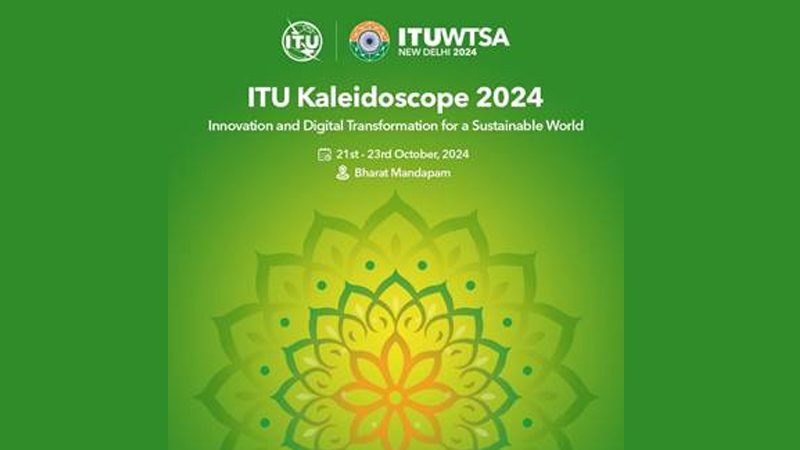
    Mumbai: The 15th ITU Kaleidoscope Academic Conference, themed ‘Innovation and Digital Transformation for a Sustainable World’, has commenced today at Bharat Mandapam, New Delhi, spotlighting India’s role in shaping the global digital landscape. Organised by the International Telecommunication Union (ITU), the event will run from 21-23 October 2024, featuring discussions on 5G, AI, IoT, quantum communications, and other groundbreaking technologies, with more than 140 record-breaking paper submissions highlighting the world’s growing interest in digital infrastructure and telecommunications standards.  

    The top three selected papers will each be awarded CHF 2000 in recognition of their contributions to advancing the field of telecommunications. These winning papers, chosen by an expert panel, cover pivotal topics including quantum communication, network security, and 5G applications.  

    In a move to foster the next generation of researchers, ITU will recognise young authors from the selected papers with certificates of excellence, reaffirming its commitment to encouraging fresh talent in the field of telecommunications research.  

    The conference will feature numerous technical sessions and panel discussions covering diverse topics such as 6G network architectures, AI in healthcare, IoT for smart cities, and quantum cryptography. Key stakeholders and industry leaders will tackle the challenges and opportunities presented by emerging technologies, providing thought leadership on the future of telecommunications.  

    As part of the World Telecommunication Standardisation Assembly (WTSA-24), the event will emphasise the need for international collaboration in setting global standards for next-generation technologies. Kaleidoscope 2024 aims to ensure these technologies are developed inclusively, securely, and sustainably.  

    On 23 October, two important panel discussions will take place. The first will address connecting the remaining 3 billion, while the second will explore the role of youth in global standards development, focusing on enhancing participation in telecommunications and technology standards.  

    By hosting Kaleidoscope 2024, India continues to assert its leadership in the global digital ecosystem. With initiatives like ‘Digital India’ and ‘Make in India’, the country positions itself as a hub for innovation in digital infrastructure, highlighting advancements in 5G deployment and the development of indigenous technologies for global markets.  

  • GrowthJockey appoints former google exec Mrinal Kumar as VP of technology

    GrowthJockey appoints former google exec Mrinal Kumar as VP of technology

    Mumbai: GrowthJockey, India’s first full-stack venture architect company, appoints Mrinal Kumar as its vice president of Technology, bringing over 14 years of experience in leading global tech innovations. A former Google and Misys executive, Kumar’s expertise in scalable AI-driven solutions will bolster GrowthJockey’s mission to empower large enterprises with cutting-edge digital transformations and venture incubation.

    Kumar’s career includes nearly a decade at Google, where he led strategic tech projects, and leadership roles at Misys and Johnson Controls, managing global engineering teams and spearheading agile development strategies. At GrowthJockey, Mrinal will guide the company’s technology strategy, focusing on developing AI-powered platforms that help businesses capitalise on disruptive market trends.

    “Mrinal’s extensive experience in leading complex global projects and his focus on AI and scalable solutions will enable GrowthJockey to deliver world-class digital transformations and incubate high-value corporate ventures,” said GrowthJockey’s CTO, Aresh Mishra. “We are excited to have him lead the next chapter of our growth as we continue to empower businesses through innovative technology and venture incubation.”

    Expressing excitement about his new role, Kumar said, “I am excited to be part of GrowthJockey at such a crucial time in the industry. The pace of technological innovation is creating new opportunities, and GrowthJockey is uniquely positioned to lead this charge. I look forward to working with the team to drive our vision of creating bold and innovative ventures that impact businesses across industries.”

    GrowthJockey’s CEO, Ashutosh Kumar added, “We are excited to have Mrinal join our leadership team. His wealth of experience and leadership in technology will be invaluable as we continue to scale and innovate in the venture architecture space. Mrinal’s ability to blend strategic vision with execution will undoubtedly help us accelerate the pace at which we deliver transformative solutions for our clients.”

  • Industry leaders chart a course for AI innovation and digital trust

    Industry leaders chart a course for AI innovation and digital trust

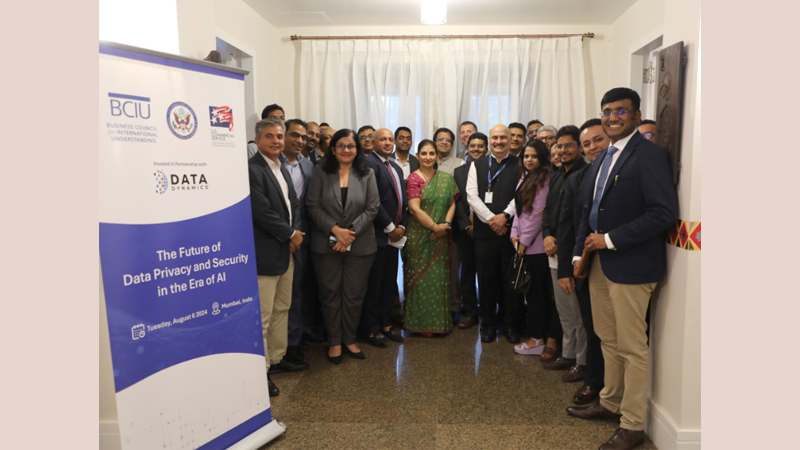
    Mumbai: As India emerges as a global AI frontrunner, the intricate interplay between data innovation, data sovereignty and robust privacy safeguards has become a paramount concern, especially given the rise of AI. To address this critical challenge, Data Dynamics and the Consulate General of the United States in Mumbai convened a high-level roundtable on “The Future of Data Privacy and Security in the Era of AI”.

    Hosted by Consul General Mike Hankey, the event brought together a distinguished gathering of government officials and industry leaders. Home secretary of Maharashtra Sujata Saunik and Maharashtra Cyber’s special inspector general of police Yashasvi Yadav lent their expertise to the discussions.

    Key decision-makers from India’s corporate landscape, including top-tier CISOs, CIOs, and CTOs from BSE, LIC, HSBC, Citi Bank, HDFC Life Insurance, CAMS, ICICI Lombard, Glenmark Pharmaceuticals, Apollo Hospitals, Alkem Laboratories, Kenvue, L&T Technology Services, and Hitachi Vantara, participated for in-depth discussions on data privacy for AI, data sovereignty, consumer trust, the evolving regulatory landscape, and the practical implications for businesses.

    US Consul general Mike Hankey delivered the keynote address stating, “As AI technology rapidly advances, safeguarding data privacy and security becomes increasingly crucial. The roundtable highlighted the need for robust frameworks that foster innovation while ensuring the ethical development and deployment of AI solutions. Through international cooperation and adherence to ethical standards, we can empower societies and economies to fully leverage AI’s potential while protecting individual rights and freedoms.”

    “Ensuring digital trust is foundational to our nation’s digital aspirations. This is defined by a commitment to data privacy, ethical AI, data sovereignty and security while complying with social and environmental regulations. It is imperative that we build a data ecosystem that is not just secure but also equitable and inclusive. This requires a collaborative effort between the government, industry, and civil society to establish India as a global leader in data governance and innovation while safeguarding the interests of its citizens. India has the potential to be a global data powerhouse, but realizing this potential requires a delicate balance between fostering innovation and protecting individual privacy rights,” said Data Dynamics CEO Piyush Mehta.

    The roundtable delved into the complexities of navigating India’s data landscape, where the potential to harness data for economic growth is immense. Based on an Ericsson Mobility Report, India is set to become the world’s largest mobile data consumer by 2028, surpassing even developed nations. With average monthly data consumption projected to reach 62GB per user, India’s appetite for data will outpace those of the US, Western Europe, South Korea, and China. This surge is fuelled by exceptionally low data costs, rapid 5G expansion, and increasing smartphone affordability.

    Additionally, a Nasscom-BCG report has stated that India’s AI market is expected to touch $17 billion by 2027. This creates an urgency for enterprises to strike a balance between data innovation, usage, accessibility, and privacy while ensuring regulatory adherence and digital trust. However, a key challenge lies in the management of this very data—given that 80 per cent of enterprise data today is unstructured (Gartner)—which will continue to grow due to the advent of AI.

    The roundtable discussion called for a comprehensive national data strategy that addresses data privacy, security, and sovereignty. While emphasizing the need for industry-wide adoption of best practices and standards for data management, critical topics discussed included:

    1    Navigating the complexities of data privacy in the world of AI

    The rapid advancement of AI has introduced new challenges and opportunities for data privacy. The roundtable delved into the implications of AI-driven data processing and emphasized the importance of responsible AI development and deployment, underscored by robust data governance frameworks.

    2    Emphasising consent management with the Digital Personal Data Protection (DPDP) Act:

    The Digital Personal Data Protection (DPDP) Act was a central theme of the discussions. Industry leaders explored the potential impact of the legislation on businesses, consumers, and the overall digital economy. While acknowledging the importance of data protection, participants also highlighted the need for a regulatory environment that fosters innovation.

    3    Building a trust-based digital ecosystem:

    To ensure the successful implementation of data protection measures, the roundtable emphasized the importance of collaboration between the government, industry, and academia. A key focus was on the role of cybersecurity in protecting data from emerging threats such as ransomware and supply chain attacks.

    4    Data sovereignty and localisation:

    The roundtable underscored the critical role of data sovereignty in India’s digital future. Participants emphasized the need for a strategic approach to data localization that balances national security with fostering a vibrant data economy, one that adheres to the DPDP Act’s guidelines. By establishing clear and predictable data governance policies, India can position itself as a global leader in data management while safeguarding its digital autonomy.

    The roundtable closed with a renewed resolve to foster open dialogue and collaboration, laying the groundwork for a robust data ecosystem in India. With a shared commitment to responsible data management and privacy, India is poised to emerge as a global leader in the AI era.

    Data Dynamics remains dedicated to empowering organisations with data-driven insights while upholding the highest standards of privacy and security. With a proven track record of serving over 300 enterprises—including 28 Fortune 100 companies—for the past 12 years, Data Dynamics has established itself as a trusted partner in driving data democratisation and digital trust.