Tag: AI in advertising

  • From AI to identity: Goafest day two opens with punchy panels and purpose-driven ideas

    From AI to identity: Goafest day two opens with punchy panels and purpose-driven ideas

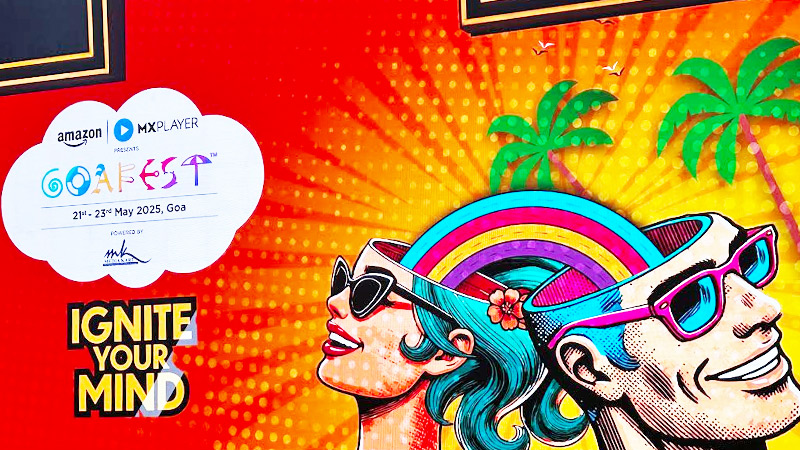
    MUMBAI: Day two of Goafest 2025 opened on a high note—literally—with Indian musician Raghav Sachar delivering a live performance titled Ignite Hungama, presented by Sharechat, Moj, and Truecaller. As the crowd swayed, the festival shifted gears into strategy mode with conversations that touched tech, gender, identity, creativity, and commerce.

    The morning’s keynote panel, ‘From Code to Commerce: Growth in the AI Age’, brought together Arjun Choudhary (Swiggy), Sanket Prakash Tulangekar (MakeMyTrip), Tejas Apte (HUL), and Pragya Bijalwan (Voltas), moderated by journalist Anuradha SenGupta. Presented by Meta and Saptharushi under the Ignite Growth theme, the discussion centred on how generative AI is upending business operations, creativity and consumer journeys.

    Choudhary described AI as “as fundamental as math”, citing how non-tech teams now use it for demos, dashboards and decision-making. Bijalwan called AI an enabler of “personalisation and predictive maintenance”, adding that it “humanises technology in consumer products”. Hul’s Apte showcased tools like Shikhar and internal GenAI platforms for R&D, while Tulangekar introduced Myra, Makemytrip’s AI-powered assistant built on multi-agent orchestration. Each panellist agreed: AI is a skill, not a threat—and reskilling is the need of the hour.

    At the Gyaan Podium, Warc and Andersen Consulting India unveiled the Pace Principles report. Biprorshee Das and Sujeet Kulkarni called for a balanced media strategy: 50 per cent on long-term brand-building and 50 per cent on performance marketing. “It’s not ‘brand plus performance’, it’s ‘brand-time-performance’”, Kulkarni said. Das urged marketers to stop isolating equity work, calling the ‘multiply effect’ a winning integration model.

    At the Makemytrip Presents AdAsia Macau Road Show, AFAA chairman Srinivasan Swamy confirmed the 39 edition of AdAsia will be held in Macau on 27 August. Swamy called for over 100 Indian delegates and assured attendees of familiar comforts: “Indian food and hospitality will be arranged”.

    Back at the Knowledge Partner – ASCI panel, “Mardon Wali Baat: A Discussion on Masculinity in Advertising” brought together Karthi Marshan and Nisha Singhania, moderated by Manisha Kapoor. Singhania tore into the trope of men as ‘fixable’ through marriage. “India is changing, and so are its men”, she said. Marshan added, “Disruption grabs attention, and attention drives engagement—regardless of who you target”. The panel called for a more honest portrayal of modern masculinity.

    Under the Ignite The Shift banner, the panel “Merging Boundaries: From Placement to Partnership”, powered by Hindustan Times and Amar Ujala, featured Satya Raghavan (Google), Rathi Gangappa (Starcom), Ajit Varghese (JioStar), and Shubhranshu Singh (Tata CVs). Moderator Kartik Sharma led the conversation through themes of integration, consumer insight, and operational scalability. Gangappa summed it up: “It’s no longer about placements; it’s about building cohesive narratives”.

    Another panel, “Beyond Pink and Blue”, presented by IAA, featured Darshana Shah (Aditya Birla Capital), Rubeena Singh (Neil Patel Digital), and P.G. Aditiya (Talented), moderated by Megha Tata. Shah called out early-life bias and systemic exclusion. Singh championed gen z’s gender-fluid mindset and called for progressive narratives. Aditiya urged leaders to act from belief, not tokenism. “Don’t just fix the old”, he said. “Build new stories with inclusion at the core”.

    Goafest also took a green turn with a tree plantation ceremony hosted in collaboration with Earthday.org. Attended by industry veterans including Sam Balsara, Anupriya Acharya and Raj Nayak, the initiative underscored a collective commitment to sustainability.

    Meanwhile, at the Bioscope – Cinema Room, Ashish Khazanchi (Enormous) reminded creatives that “self-expression, not awards”, should drive campaigns. The first half of day two also featured a host of masterclasses, offering deep dives into AI, storytelling and strategic branding.

    Lunch was presented by Sync Media.

  • Lemma disrupts DOOH CMS with AI-powered free platform ‘Lemma Phi’

    Lemma disrupts DOOH CMS with AI-powered free platform ‘Lemma Phi’

    MUMBAI: The digital out-of-home (DOOH) advertising landscape is about to experience a shake-up as Lemma, a pioneer in omnichannel digital advertising, unveils ‘Lemma Phi’, an advanced, AI-powered free content management system (CMS). With this revolutionary platform, DOOH screen owners can ditch hefty CMS costs and reinvest those savings into growing their businesses while seamlessly connecting to global programmatic demand.

    With AI at its core, Lemma Phi doesn’t just manage screens—it transforms them into smarter, revenue-generating assets. It automatically classifies OOH media based on location, audience demographics, and seasonal footfall variations, ensuring that advertisers find the perfect screen for their campaigns without breaking a sweat.

    Packed with AI-driven tools, it takes the grunt work out of DOOH management, making operations simpler, smarter, and more efficient. Key features include:

    1    AI-powered discovery tool: This automated matchmaking genius connects global brands with the most suitable DOOH inventory based on real-time data.

    2    Auto categorisation of screens & creatives: Say goodbye to manual tagging—Lemma Phi automatically sorts screens by type (indoor, outdoor, transit, etc.), making onboarding seamless.

    3    AI-powered floor rate recommendations: Stop guessing—Lemma Phi suggests optimal floor rates based on live market data, ensuring competitive pricing.

    4    Energy-saving AI brightness control: The system adjusts screen brightness dynamically based on light conditions, cutting operational costs and championing sustainability.

    “Why pay for something that should be readily available and easy to manage from anywhere?” questioned Lemma founder & CEO Gulab Patil. “With Lemma Phi, we are making access to powerful DOOH CMS technology free, enabling screen owners of all sizes to maximise inventory value and drive revenue growth.”

    He added, “This mobile-first platform, combined with an expanded feature suite, is not just a CMS; it’s a catalyst for innovation and revenue generation in the DOOH ecosystem.”

    Lemma Phi doesn’t just stop at AI-powered tools—it’s designed for effortless and scalable management:

    1    User-friendly interface: Whether you’re a tech wizard or a total newbie, Lemma Phi makes content management intuitive and accessible.

    2    Scalability & reliability: Handles networks of all sizes, from small indoor displays to massive 100-foot billboards.

    3    Smart screen grouping & scheduling: Effortlessly organise screens and sync content with precision.

    4    Remote control & monitoring: Adjust screen power, brightness, and content playback—from anywhere.

    5    Real-time dashboard & alerts: Stay in control with live reports on screen status, content performance, and analytics.

    Lemma Phi ensures that screen owners stay ahead of the game with cutting-edge automation, eliminating inefficiencies while boosting revenue potential. With AI doing the heavy lifting, screen operators can focus on expanding their networks and driving business growth.

    So, if you’re in the DOOH business, stop paying for CMS and start growing your network with Lemma’s new brainchild.

  • “AI-powered influencers are reshaping brand engagement” – Vinit Karnik

    “AI-powered influencers are reshaping brand engagement” – Vinit Karnik

    MUMBAI: The advertising landscape in India is on the brink of its most transformative year yet. With AI taking over marketing workflows, quick commerce redefining e-commerce, and connected TV (CTV) gaining an unprecedented foothold, brands are scrambling to stay ahead. The latest forecast from GroupM’s TYNY report outlines the trends that will shape 2025, and let’s just say, if you’re not innovating, you’re falling behind.

    AI agents take the wheel

    The machines are here, and they’re not just running ads—they’re planning, activating, and measuring entire campaigns. The rise of sophisticated AI agents will automate scheduling, reporting, and even basic content creation, freeing up human marketers to focus on strategy. By late 2025, expect AI-powered agents to handle customer service, hyper-personalised advertising, real-time campaign optimisation, and even vernacular content creation at scale.

    GroupM south Asia CSO Parthasarathy Mandayam (Maps) stated, “As consumer behaviour grows more complex, marketing measurement is rapidly evolving. With data privacy driving change, traditional analytical models are integrating AI and real-time analytics for better accuracy. Brands are adopting unified measurement frameworks to make smarter decisions. In 2025 we also see a rapid adoption of AI agents, going beyond automation and productivity enhancement to transform areas like customer service, vernacular engagement and real-time campaign optimisation.”

    GroupM south Asia CSO Parthasarathy Mandayam

    Quick commerce rewrites the e-commerce playbook

    E-commerce in India is growing at breakneck speed, and quick commerce (Q-commerce) is its turbocharged engine. The online digital commerce market is projected to touch Rs 167,000 crore by 2028, making up 9-11 per cent of total retail GMV. India’s advertising industry is keeping up, with ad revenue expected to reach Rs 1,64,137 crore in 2025, growing by 7 per cent. Digital media alone will account for 60 per cent of all advertising, an 11.5 per cent jump from last year.

    GroupM India president – data, performance, and digital products, Atique Kazi explained, “The convergence of brand and retail media is rapidly shaping a unified ‘One Commerce’ ecosystem. Marketers are quickly pivoting to connected commerce outlook bridging multi-channel commerce approach and how media investments in one channel influence or cannibalise the other. As quick commerce promises instant delivery and purchase gratification, it has also pushed the marketers and agencies to be quicker, agile, nimble, and war-footed.”

    GroupM India president – data, performance, and digital products, Atique Kazi

    Q-commerce brands are also experimenting with time-based advertising. Morning ads for dairy, late-night campaigns for desserts, and weekend promotions for snacks are becoming the new norm. As for marketing costs? “CPMs on Q-commerce can rival IPL rates,” the report notes, urging brands to negotiate smarter and automate their ad buys.

    CTV’s big leap

    India’s CTV (Connected TV) market is exploding. By 2025, over 65 million households—or 30 per cent of India’s TV viewers—will be watching content via CTV, making it a goldmine for hyper-personalised and programmatic advertising.

    “CTV has got the eyeballs; however, advertising spends haven’t matched the viewership in comparison to the audience reach it holds. Live sports have been an exception. The unlock for 2025 is not to get caught in measurement; blending strategies that are device-agnostic is key,” said Kazi.

    Advertisers are also getting smarter with CTV ads. From leveraging advanced ACR (automatic content recognition) data to hyper-target users based on past viewing habits, to innovating with interactive ad formats, CTV is redefining TV advertising. However, measurement remains a pain point. “A dual measurement approach is necessary until we get a unified industry standard,” experts suggest.

    Data privacy

    With India’s Digital Personal Data Protection Act coming into play, data clean rooms are becoming indispensable. These secure environments allow brands to collaborate on audience insights without directly sharing data. By integrating tools like Google’s audience data hub and Amazon marketing cloud, brands can now measure campaign effectiveness while keeping consumer privacy intact. Digital is expected to drive 60 per cent of India’s ad growth in 2025, accounting for Rs 10,225 crore of incremental advertising.

    GroupM Nexus president Priti Murthy highlighted, “With the rise of data clean rooms, marketers are now unlocking deeper audience insights while maintaining consumer trust—transforming data collaboration in a way we’ve never seen before. From enriched audience data and targeting to advanced analytics opportunities, we see DCR transforming marketing.”

    GroupM Nexus president Priti Murthy

    AI disrupts search

    Google searches as we know them are changing, thanks to generative AI. Instead of clicking through multiple links, users are getting AI-generated answers directly in search results. This is a game-changer for SEO, forcing brands to focus on structured content, semantic SEO, and featured snippets to stay visible.

    “Performance marketing will no longer be about driving clicks but about owning conversations, influencing AI-driven content discovery, and ensuring brands remain top of mind in a world where traditional SEO is being rewritten,” added Murthy.

    Influencers, but make them AI

    The influencer marketing game is getting a digital facelift. AI-powered influencers are gaining traction, offering consistent brand messaging, 24/7 availability, and endless scalability. Unlike human influencers, they don’t age, don’t demand higher pay, and don’t get involved in scandals (at least not yet).

    GroupM south Asia head of sports, esports, and live entertainment, Vinit Karnik noted, “The rise of AI-powered influencers is revolutionising how brands engage with audiences, blending technology and creativity to drive authentic, scalable interactions. As India’s 750 million smartphone users consume more immersive content, AR-driven campaigns are already delivering up to three times higher conversions for brands.”

    GroupM south Asia head of sports, esports, and live entertainment, Vinit Karnik

    With these seismic shifts in advertising, brands must embrace AI, double down on data privacy, and rethink their media strategies. The future belongs to those who can balance automation with creativity, scale personalisation without breaching privacy, and engage consumers across multiple channels.