Tag: AI Governance

  • Infosys introduces open-source AI toolkit to boost trust and transparency

    Infosys introduces open-source AI toolkit to boost trust and transparency

    MUMBAI: Infosys is taking a crucial step toward making artificial intelligence safer, fairer, and more transparent. The global leader in digital services and consulting has officially launched the open-source Responsible AI Toolkit, a core component of the Infosys Topaz Responsible AI Suite. Designed to help enterprises innovate responsibly, the toolkit tackles AI ethics, security risks, and biases head-on.

    The Infosys Responsible AI Toolkit builds on the company’s AI3S framework (scan, shield, and steer), providing enterprises with cutting-edge safeguards. It comes packed with specialised AI models and shielding algorithms that detect and mitigate threats such as privacy breaches, security vulnerabilities, biased outputs, deepfakes, hallucinations, and copyright violations. It also enhances AI model transparency, offering deeper insights into how AI-generated decisions are made—all without compromising performance or user experience.

    By making the toolkit open-source, Infosys aims to foster collaboration and accelerate AI safety innovations across industries. The toolkit is fully customisable, supports various AI models and agentic systems, and integrates seamlessly across cloud and on-premise environments.

    Infosys EVP, global services head, AI and industry verticals, Balakrishna D. R. (Bali) underscored the significance of this initiative, “As AI becomes central to driving enterprise growth, its ethical adoption is no longer optional. The Infosys Responsible AI Toolkit ensures that businesses remain resilient and trustworthy while navigating the AI revolution. By making the toolkit open source, we are fostering a collaborative ecosystem that addresses the complex challenges of AI bias, opacity, and security. It’s a testament to our commitment to making AI safe, reliable, and ethical for all.”

    British High Commission head of science, technology and innovation Joshua Bamford highlighted the global significance of this initiative, “Infosys’ commitment to becoming an AI-first business and establishing the Responsible AI Office reflects bold innovation and ethical leadership. By going open source, Infosys is empowering enterprises, startups, and SMEs to leverage AI for groundbreaking advancements. Their Responsible AI Toolkit is a benchmark for technological excellence and when paired with a commitment to responsible practices and global sustainability can be an inspiring model for companies worldwide.”

    Meanwhile, Meta public policy director – data economy and emerging tech, Sunil Abraham praised Infosys for driving open AI innovation, “We congratulate Infosys on launching an openly available Responsible AI Toolkit, which will contribute to advancing safe and responsible AI through open innovation. Open-source code and open datasets are essential to empower a broad spectrum of AI innovators, builders, and adopters with the information and tools needed to harness the advancements in ways that prioritise safety, diversity, economic opportunity, and benefits to all.”

    The Indian government also lauded Infosys’ initiative, with government of India Ministry of Electronics and Information Technology (MeitY) additional secretary Abhishek Singh stating, “I am very happy to learn that Infosys has decided to open source their Responsible AI Toolkit. This will go a long way in making tools available for enhancing Security, Privacy, Safety, Explainability and Fairness in AI-based solutions and also help in mitigating bias in AI algorithms and models. This is critical for developing safe, trusted and responsible AI solutions. I am sure, startups and AI developers will greatly benefit from this Responsible AI Toolkit.”

    With the Infosys Responsible AI Toolkit, enterprises can take a proactive approach to AI governance, ensuring that AI-driven systems remain ethical, fair, and secure. By going open-source, Infosys has set a new benchmark for corporate AI responsibility, encouraging organisations worldwide to collaborate, innovate, and drive AI adoption with trust.


  • Global Standards Symposium 2024 concludes, paving way for digital progress

    Global Standards Symposium 2024 concludes, paving way for digital progress

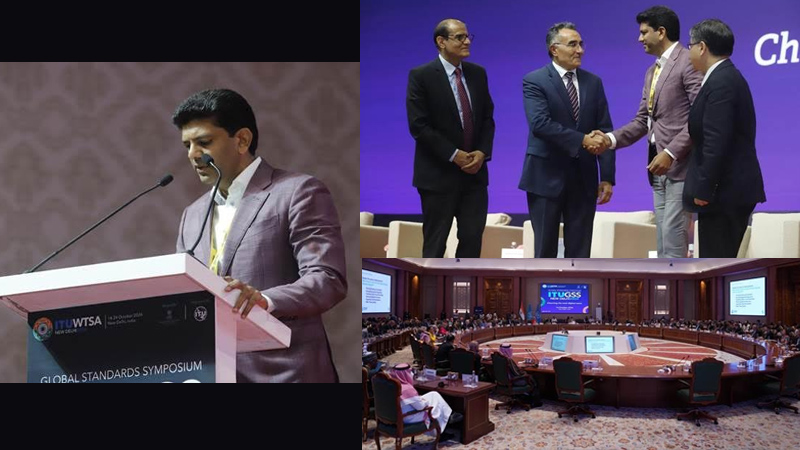
    Mumbai: The fifth Global Standards Symposium (GSS-24) wraps up in New Delhi, making history as the first time the event has been held in the Asia-Pacific region. Organised by the International Telecommunication Union (ITU) and hosted by the Department of Telecommunications, Government of India, GSS-24 gathers a record 1,500 policymakers, innovators, and experts to chart the future of digital transformation. The event emphasises the critical role of international standards in enabling emerging technologies to drive sustainable global development.  

    Minister of state for communications and rural development, Chandra Sekhar Pemmasani delivers a closing address lauding India’s transformation under prime minister Narendra Modi’s leadership. “The standards we establish are more than just technical standards, but they are moral compasses, guiding us towards a future of shared global progress. India is ready to take this journey not alone, but with all of you as partners,” Pemmasani states, advocating for an inclusive, democratic approach to international standards.  

    The symposium’s theme, “Charting the Next Digital Wave: Emerging Technologies, Innovation, and International Standards,” highlights the need for cohesive, forward-looking governance and standardisation in digital technologies. It serves as a platform for high-level dialogues on crucial issues like AI governance, open-source technologies, blockchain-based authentication, and the impact of AI and the Metaverse on public services.  

    Union minister Jyotiraditya M. Scindia underscores India’s role as a global telecommunications and digital innovation hub. He describes India as “a land of science, innovation, and rules aiding in the prosperity of the world.”  

    The key discussions focus on bridging the standards gap between developed and developing countries, emphasising equitable access to technology for all. The AI Standards Summit, held as part of GSS-24, illustrates how consensus-based standards can ignite innovation across multiple sectors, driving technological advancements.  

    Centre for Development of Telematics (C-DoT), CEO, Rajkumar Upadhyay chairs the symposium, marking India’s first time leading the event. The symposium’s outcome document lays the groundwork for discussions at the World Telecommunication Standardisation Assembly (WTSA-24), taking place from 15-24 October 2024, in New Delhi.