Tag: aggregators

  • PayTM’s Vijay Shekhar Sharma to chair IAMAI Payments Banks Group

    PayTM’s Vijay Shekhar Sharma to chair IAMAI Payments Banks Group

    Mumbai: PayTM founder Vijay Shekhar Sharma will chair the newly formed Payments Banks Group at the Internet and Mobile Association of India (IAMAI) while Vodafone India business head (M-Pesa) Suresh Sethi will be the vice-chairman of the group.

    Commenting on the development, Sharma said, “Payments Banks is an innovative model of bringing unbanked population into the formal banking fold. PayTM along with other license holders, would make financial services accessible for every Indian through this innovative route.”

    Currently, 6 out of the 10 payments banks’ primary licensees are IAMAI members. According to President Subho Ray, “the other 4 primary licensees have in principal agreed to join when they are in operation.”

    In addition, IAMAI has more than 50 companies representing PPIs, Wallets, Aggregators, Business Correspondents, and PoS Operators among others as members.


  • PayTM’s Vijay Shekhar Sharma to chair IAMAI Payments Banks Group

    PayTM’s Vijay Shekhar Sharma to chair IAMAI Payments Banks Group

    Mumbai: PayTM founder Vijay Shekhar Sharma will chair the newly formed Payments Banks Group at the Internet and Mobile Association of India (IAMAI) while Vodafone India business head (M-Pesa) Suresh Sethi will be the vice-chairman of the group.

    Commenting on the development, Sharma said, “Payments Banks is an innovative model of bringing unbanked population into the formal banking fold. PayTM along with other license holders, would make financial services accessible for every Indian through this innovative route.”

    Currently, 6 out of the 10 payments banks’ primary licensees are IAMAI members. According to President Subho Ray, “the other 4 primary licensees have in principal agreed to join when they are in operation.”

    In addition, IAMAI has more than 50 companies representing PPIs, Wallets, Aggregators, Business Correspondents, and PoS Operators among others as members.


  • Neo Sports decides to break away from The One Alliance

    Neo Sports decides to break away from The One Alliance

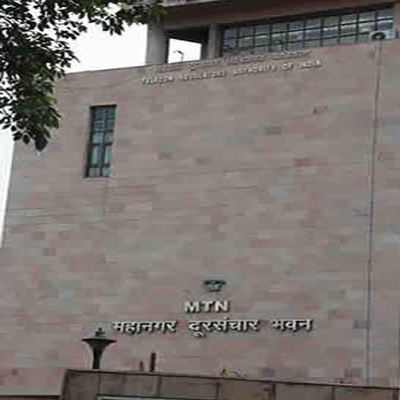
    MUMBAI: Three weeks after the Telecom Regulatory Authority of India (TRAI) issued its television content aggregation regulation, Neo Sports Broadcast has decided to break away from its distributor The One Alliance.


    A statement from the company states that the broadcaster has decided not to renew its agreement with The One Alliance that expires on 31 March. From 1 April, the sportscaster will be distributing its channels Neo Sports and Neo Prime through an in-house distribution team.


    When contacted by Indiantelevision.com, The One Alliance president Rajesh Kaul says, “The contract was coming to an end on 31 March and we were contemplating of not renewing the contract because they have lost all the sporting properties from the network. With MSM investing heavily on Sony Six and with IPL and FIFA, it is a formidable sports channel and so we did not want anything else in the bouquet.”


    Apart from Neo Sports, The One Alliance currently distributes television channels of Multi Screen Media, Discovery, Times Television Network and TV Today.


    Neo Sports believes that it can on its own strength build a robust relationship with cable operators, DTH operators and HITS companies. Even when its channels were being distributed by the aggregator to cable platforms, it was handling distribution through DTH on its own.


    According to Neo Sports, standalone channels with good content mix at affordable prices can be good and effective business cases in a digital environment.


    Says Neo Sports Broadcast EVP distribution platforms, Dilip Sharan, “The suggestive regulatory approach combined with digitisation clearly points that future distribution deals will be dictated by the relevant content that is made available to various audiences and the ability to work with the platforms keeping in mind the business issues and not entirely on the strength of the channels size in the bouquet, a prevalent practice in the analogue era.  Our cable distribution deal with MSMD made better commercial sense in the analogue environment.”


    TRAI’s regulation has barred aggregation of television channels from different broadcaster groups and allowed the aggregators six months of transition period.


    Neo Sports believes that there is a lot more scope to monetise from digitisation. The analogue era didn’t allow many channels due to bandwidth limitation. “The new regulation is indicative of how things are likely to pan out in the future. We were waiting for TRAI’s view on it to take this step at the opportune time,” adds Sharan.


    One of the major concerns of various broadcasters is that an aggregator might be bias against the smaller networks. Although Sharan doesn’t agree, he does feel it is very natural for an aggregator to give preferential treatment to its own channels.


    Most aggregators are aligned with several broadcasters.


    Will some other broadcasters also follow suit? “I won’t be surprised if others also do the same,” says Sharan.


    Neo Prime and Neo Sports channels are currently available on DTH platforms such as Dish TV, Videocon D2H, Airtel Digital TV, Reliance DTH and Sun Direct. The Neo channels are available on cable channels across all the leading networks.

  • A wrong to correct a wrong

    A wrong to correct a wrong

    MUMBAI: If you look back a few years it was the MSOs who were arm twisting the Broadcasters and carriage subsidies shot up to an estimate of about 1800-2000 crores so it was but obvious that the broadcasters had to resort to some countervailing power and adopted the age old saying of ‘in unity there is strength’ to fight back. Hence, the mergers and partnerships to create the Aggregator now termed the Aggressor!


    But the battle here is not between the MSO and the Broadcaster. Unfortunately, both have been caught in a situation and a created one at that. Both are responsible for this situation. The Broadcaster wanted distribution beyond available bandwidth, the MSO but naturally driven by common supply – demand market dynamics fleeced exorbitant carriage fees. To demand higher shares of which he started grabbing more territory. For doing so he gave significant concessions towards the subscription collections. Soon it reached a stage that they began to subsist on this easy money and forgot about the upward flow of subscriptions. So, the broadcasters were giving and getting back their own monies and plus or minus a little depending on the so called legacy of the channels rather than any rationale of popularity. That is where the business model started floundering. It’s not that the subscriber was getting a free view. Sure 20,000 + crore was getting collected and of course most of it in cash.


    So, where did all this money go? And why are both the Broadcasters and MSOs bleeding. One has to examine the value chain and leakages in the upward flow. The interface to the customer is the LCO/LMO the one who is making the collections. A reasonable share of this will need to flow upward to the broadcasters. Content too with all the competition is only getting more expensive especially with international formats and Bollywood hosts.


    How much should be a fair share is secondary. First, one needs to ensure that there actually is a streamlined reverse flow. The bottlenecks and leakages lie in the value chain and systems created by both the MSO and the broadcasters. In addition to the MSO in the middle between the LCO/LMO at one end and the Broadcaster at the other end, there are at least three more middlemen in the current system that prevails. The agent aggregator, their dealers and the distributor/JV partner of the MSOs. The money the consumer pays goes through five hands before what’s left will eventually reach the broadcaster. Obviously there are not one but two too many middlemen and this is where the ecosystem needs change.


    Now in all of this, how’s the consumer or subscriber faring? We are the cheapest cable market in the world and honestly without an iota of debate our consumers have been spoilt. For three to five dollars a month subscription, we get the most premium of content. (Given the way our rupee is depreciating we’ll soon be down to $2 subscriptions!) And for that an abundance of choice with half a dozen channels per genre. Live sports of pretty much every event around the world and movies within two months of theatrical release.


    Wow! Even if the Govt. is floundering in providing Roti, Kapda aur Makaan nobody is complaining about the 4th essential – Entertainment. Sure everyone’s complaining about the cost of electricity and fuel and multiple taxes but no one’s saying cut off my cable!


    Fortunately, we are also the 2nd largest cable and satellite market in the world and so can provide affordable entertainment and the best there is to offer. There’s enough to go around for legitimate stake holders we just need to get the business model right. Imbalances will correct themselves over time.


    As to the regulator and regulation, digital addressable system (DAS) is great, but for now let’s just focus on getting the boxes. Let it just be an exercise in technological evolution. Enjoy the digital experience and abundance of choice. We are a privileged lot. Trying to introduce addressability and ‘pay for what you want’ is only going to increase the consumer’s monthly outflow or severely restrict choice. When DAS gets to that stage of choosing and billing, it is not going to be a populist regulation.


    So Mr Khullar Sir, the aggregator has been disarmed (agent regulation), the MSO reigned in (max 50 per cent of state control) and the broadcaster chastised (12-minute ad cap). The LCO is still trying to figure out how by merely putting a box, the MSO claims the home whereas he’s the guy who has been upgrading the cables and amplifiers for over two decades. Let’s not add a confused customer to this. He’s happy leave him alone for now. Let the market dynamics come into play and let it all settle for a while. Average Revenue Per User (ARPUs) will increase but not at the cost of denying the consumer what he is already used to. Niche content, value added services and TV on the go are new revenue streams and customers will be willing to pay more for these. Affordable internet access is the key to this next phase of growth wherein traditional media and what we call new media need to converge. What will certainly be interesting is to see who will be the players here to emerge.


    (The author is a media observor and consultant, and the views expressed are his own.)

  • TRAI’s toothless content aggregator regulations

    TRAI’s toothless content aggregator regulations

    The Telecom Regulaotry Auhtority of India  (TRAI) was right in both identifying and bringing in new regulation in an attempt to curb content aggregator aggression (read: broadcaster aggression). However, the restrictions are very minimal and on the face of it, they don’t seem to have too much teeth. Aggregators can get renamed as Agents but will TRAI’s effort at redoing and notifying regulations for them really act as an agent of change?


    There is no restriction on the ownership of agent companies or how many broadcasters they can represent. (Will need to be addressed in issue of cross media.) Broadcasters belonging to the same group can bundle channels. For the immediate future it is more likely to lead to a futile exercise in splitting existing contracts and  and overtime and consulting fees for the guys in black suits (read: lawyers).


    Already agreed terms including carrying weak channels and desired packages are the tradeoffs by which the DPOs negotiate to their advantage, so contrary to TRAI’s belief that they add to unwanted costs, they actually subsidize the DPOs costs – whether for carriage, packaging or for a preferred LCN.


    Restricting multi-broadcaster packages is not important. What is important are the DPO’s packages which are what subscribers eventually subscribe to. As mentioned, these are negotiation tradeoffs.


    In any case most of the channel pricing and bouquets evolved arbitrarily at a time when there were already existing TRAI restrictions on a-la-carte, bouquets, price freeze on existing channels etc and very often broadcasters introduced highly priced new channels to offset the freeze on existing channels pricing. Even internal allocations between various broadcasters within an aggregator skewed rationale on pricing.


    The new regulations have not addressed many potent issues which have been plaguing the business and continue to beg solutions. For starters, let us understand that the entity signing the RIO is of little consequence to the consumer.  Where are the guidelines for DPOs to price to consumers? Should the retail pricing be determined by the DPO or Broadcaster and who should communicate this to the consumer?  Same goes for the packages. Is the DPO the real content aggregator buying in wholesale and then retailing to consumers or is he merely offering his delivery infrastructure and payment gateway for a commission?  What is the business model TRAI envisages? Is it going to continue as a B2B or should there be complete transparency to consumer in a B2C approach? 


    Third party channels within aggregator/agent will be most likely impacted. The Stars and Zees are big enough bouquets by themselves, same goes for the TV18/Viacom18 group channels. (Presuming 50 per cent ownership qualifies to label a broadcaster a Group Company!). Yes, Sony and Discovery channels on paper need to be split but their distribution venture has survived many long years and they can resolve any internal issues without upsetting present equations.


    The onus is now on the various DPOs – whether DTH or MSO – to leverage the only real advantage and actually negotiate separately for each of the various broadcasters’ bouquets. Some positive effect of this is likely but it would take a while for the dynamics of negotiations to change. For now it will more likely be just a paper tiger.


    All of this makes sense only if the end objective of DAS is achieved: which is individual consumer choice and billing. For now it seems to be stuck in a farcical CAF exercise. No one has really asked the consumer if he is happy paying his 150-200 bucks (ARPU) and wants to continue having his unlimited thali and buffet! And if one were to do the maths on this basis for current pay TV homes and allocate say 40 per cent to content- well, everyone’s happy!


    (The author is a media observor and consultant, and the views expressed are his own.)

  • TRAI Open House: Aggregators given another week to respond

    TRAI Open House: Aggregators given another week to respond

    NEW DELHI: Television aggregators were today given a period of one week to give any recommendations they may have on the regulations relating to them issued earlier by the Telecom Regulatory Authority of India (TRAI).

    At an Open House that was well-attended, TRAI Chairman Rahul Khullar said any stakeholder wanting to give views in writing may do so within a week.

    Around 200 persons representing all stakeholders were present at the meeting, and put forth their views. While a majority said there was need for regulations, many felt that TRAI needed to fine-tune the regulations. MediaPro CEO Arun Kapoor, Dish TV’s Jawahar Goel, legal representatives of Airtel, Reliance, IndiaCast, apart from cable operators such as Vicki Choudhary, Roop Sharma, Money Oberoi were present at the open house.

    Khullar had TRAI Advisers N Parameswaran and Wasim Ahmed and other senior officials also present in the house.

    According to TRAI spokespersons, the discussions were frank and free and a final view would be taken after written representations are received.

    An aggregator attendee at the open house said that it was apparent from Khullar’s body language that he was not too happy with the state of affairs in the aggregation business today.

    Says he: “Khullar made three or four very important observations. The first is that aggregated bouquets of channels owned by rival bouquets creates a monopoly situation which is not a healthy one and needs to be addressed. Second: he recognised that the networks like Star, Zee, Sun, Network18 own channels across several corporate entities as licence holders and this needs to be considered. Third: smaller broadcasters and networks could face problems in distribution across the vast Indian cable TV landscape and this also should be borne in mind. Finally, he acknowledged that aggregation can help keep prices in check on account of bulk discounting”

    Adds another attendee: “Change is something that Khullar wants to bring in. We expect some change; the clout that aggregators enjoy is not something that the regulator wants to see continuing. He clearly wants aggregators to be brought under control. We are reading the writing on the wall, and we are readying for the change. How we manage this change is something we have to deal with.”

  • Newspaper industry shrinks 43% since 2000 due to digital invasion

    Newspaper industry shrinks 43% since 2000 due to digital invasion

    MUMBAI: Newspapers need to develop revenue models for the digital era as they face massive erosion in ad revenues due to migration of advertisers to new media as they target youth audiences. However, they can learn from an encouraging trend: traditional news brands are finding outlets in mobile technology.

    A mounting body of evidence finds that the spread of mobile technology is adding to news consumption, strengthening the appeal of traditional news brands and even boosting reading of long-form journalism.

    But the evidence also shows that technology companies are strengthening their grip on who profits, according to the 2012 State of the News Media report by Pew Research Center’s Project for Excellence in Journalism.

    The study finds that rather than replacing media consumption on digital devices, people who go mobile are getting news on all their devices. They also appear to be getting it more often, and reading for longer periods of time.

    For example, about a third (34 per cent) of desktop/laptop news consumers now also get news on a smartphone. About a quarter (27 per cent) of smartphone news consumers also get news on a tablet.

    These digital news consumers are also a large percentage of the smart phone/tablet population and most of those individuals (78%) still get news on the desktop or laptop as well.

    A PEJ survey of more than 3,000 adults also finds that the reputation or brand of a news organisation, a very traditional idea, is the most important factor in determining where consumers go for news, and that is even truer on mobile devices than on laptops or desktops.

    Despite the explosion in social media use through the likes of Facebook and Twitter, recommendations from friends are not a major factor yet in steering news consumption, the report says.

    The report also notes that there are already signs of closer financial ties between technology giants and news. A case in point is YouTube’s plans to become a producer of original television content by funding Reuters to produce original news shows.

    Yahoo recently signed a content partnership with ABC News for the network to be its near sole provider of news video. AOL, after seeing less than stellar success with its attempts to produce its own original content.

    With the launch of its Social Reader, Facebook has created partnerships with The Washington Post, The Wall Street Journal, The Guardian and others. In March 2012 Facebook co-founder Chris Hughes purchased the 98-year-old New Republic magazine.

    In 2011, traditional news operations also took new steps to monetise the web in their own right. The Associated Press launched a partnership with more than two dozen news companies to license news content and collect royalties from aggregators.

    About a tenth of surviving U.S. dailies have launched some sort of digital subscription plan or pay wall. However, the research finds that these efforts are still limited and that few news companies have made much progress in some key new digital areas.

    The problems of newspapers also became more acute in 2011 as losses in print advertising dollars outpaced gains in digital revenue by a factor of roughly 10 to 1, a ratio even worse than in 2010. When circulation and advertising revenue are combined, the newspaper industry has shrunk 43 per cent since 2000.

    In sum, the news industry is not much closer to a new revenue model than a year earlier and has lost more ground to rivals in the technology industry. But growing evidence also suggests that news is becoming a more important and pervasive part of people’s lives. That, in the end, could prove a saving factor for the future of journalism, the study concluded.