Tag: Agency

  • BBDO ropes in Atin Wahal as EVP Mumbai

    BBDO ropes in Atin Wahal as EVP Mumbai

    MUMBAI: Former Publicis SVP Atin Wahal has joined advertising agency BBDO as the new executive vice president. Wahal will head the Mumbai office. 

    BBDO Asia chairman and CEO Jean-Paul Burge says, “This is a key role in a key market for a key office. India and BBDO India are booming and I have no doubt Atin will make a great success of taking our Mumbai office to greater heights. We have a fantastic team there and a tremendous culture which I am certain he will bring an exciting new dimension to.”

    Wahal adds, “I have always considered myself being in the business of storytelling for brands and I am thrilled to be a part of the team who is the best in the business not only in India but the world. What got my attention when meeting Josy, Ajai and JP is how simplistic but thorough the approach is towards their brands which lends itself to the philosophy of ‘acts, not ads’. In the last 10 years, BBDO India has been the most effective and creative agency in the world and I look forward to making the agency and its clients shine even brighter.”    

    BBDO India chairman and chief creative officer Josy Paul mentions, “Atin is a hands-on advertising and brand management champion with a strong business acumen. He is a believer and partitioner of our ‘Acts Not Ads’ mantra and a keen follower of social movements led by brands–including our work on Gillette, Ariel, Whisper, Mirinda, Quaker, Visa, SC Johnsons, All Out and Aviva Life Insurance. We are thrilled to have him on our side. Spiritually, he is already one of us.”

  • Britannia cakes wants us to unleash the kid within

    Britannia cakes wants us to unleash the kid within

    MUMBAI: Advertising agency Grey Group Bangalore has launched a quirky new TVC for Britannia Cakes.

    Most of us have fond memories of doing some kind of mischief as kids. Playing pranks on friends, siblings or elders are a part of childhood. And because Britannia Cakes has always been about bringing out the mischievous side of us, this monsoon it has an offer that pranksters will not be able to resist. The new commercial features a naughty boy and his grandfather.

    The commercial tells the story of a youngster who is bored at home and discovers the sticky toy in his pack of Britannia cake. As he looks around for a way to make things interesting, he finds his target – dadaji – taking his afternoon nap. Sneakily, he shoots the sticky toy at his dadaji, and instantly, dadaji comes to life and seems to be possessed by the toy. What ensues is a whacky dance performance that takes everyone by surprise. The ad then signs off with a cheeky warning about the use of the toy.

    Grey Bangalore senior creative director Gautam Bhasin says, “The brief was to show how one can have fun with a sticky toy that comes free with a Britannia Cake. So, we got a kid to experiment that on his grandfather who ends up dancing like the toy itself.”

    Grey Bangalore senior VP and branch head Vishal Ahluwalia adds, “We thank our friends and partners at Britannia for being bold enough to go with a mother of all prank script. It was pure joy to watch Dadu add magic to the dancing daddu! This film took us to our childhood, wanting to prank everyone out and we hope the kids can have fun eating the cake and pranking with their favourite sticky toy.”

    The TVC has been released in 8 languages across India and created by QED Films.

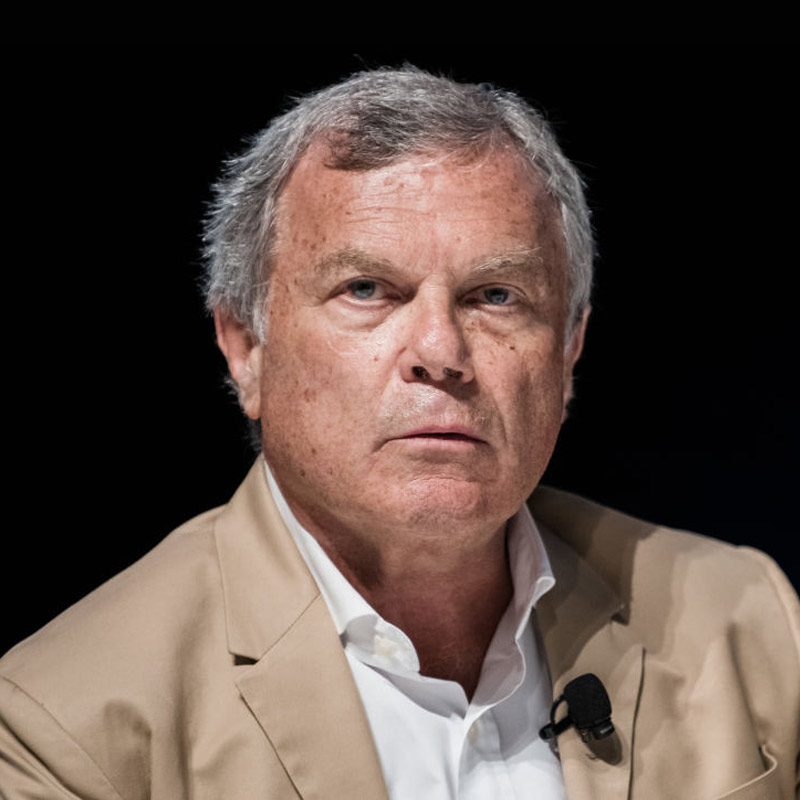
  • WPP learns to live without Martin Sorrell

    WPP learns to live without Martin Sorrell

    MUMBAI: British multinational advertising and public relations company WPP has decided to review its policies and codes of conduct and how these can be improved upon. The agency’s chief operating officer Mark Read in a staff memo said that the review will be conducted by leadership teams throughout the group. 

    He did not respond to allegations in reports in the Financial Times and the Wall Street Journal which stated that its former CEO Martin Sorrell resigned in the midst of investigations of having paid company money (some 300 pounds)  for services to a sex worker in a Mayfair brothel. Additionally, there were allegations in the reports that Sir Martin had a bullying nature towards junior employees and was curt with them. 

    Instead Read  stated in the memo that “Although we can’t comment on specific allegations, I feel we should remind ourselves of and reinforce the kind of values we want and need to have within every part of our business: values of fairness, tolerance, kindness and respect.”

    He added: “It should hardly need saying that all WPP working environments must be places where people feel safe and supported. They must also be places where people are able to raise concerns if they want to, and where those concerns are dealt with when they need to be.”

    The memo also mentioned about WPP’s helpline, Right to Speak. Read mentioned that the service was available for everyone across the group that allows them to raise issues without fear of reprisal. The Right to Speak service is independently operated and protects the identity of anyone who would rather not speak directly to their respective line manager or senior official about their concerns. 

    The company also had its annual general meeting with its shareholders on Wednesday, during the course of which a section of shareholders protested against the appointment of WPP chairman Roberto Quarta, the handling of the Sorrell exit and the payouts being planned for him in the form of share awards, as well as the fact that he was not  asked to sign a non-compete agreement when he departed from the agency last month, amidst controversy. 

    WPP chairman Roberto Quarta said that there was no basis to cancel Sorrell’s share awards as the company did not have any proof of misconduct. “The contract required Martin to be treated as having retired unless a definition of gross misconduct would be satisfied, which it could not, and on which the board had clear legal advice.”

    As far as the non-compete clause and the payout were concerned, Quarta stated that the conditions of Sir Martin’s employment contract predated the current board. This despite, it  managed to get him to take cuts in pay and benefits at a time when the agency had put up a stellar performance in 2015. 

    Quarta has also started an investigation within the organisation on how information about allegations against Sorrell leaked into the media.

    Read who is tipped to take over CEO was quoted by the BBC as saying that “Martin was a hard-working and hard-driving chief executive. I don’t recognise the bullying nature of some of the allegations.”

    Sorrell  has denied the allegations which have appeared in the media but decline to say anything more.

    Read meanwhile said he has spent time with group agencies and clients over the last eight weeks, reassuring them of WPP’s health today and going forward. Disclosed he in the note: “There is tremendous positivity and confidence about the future of the business. Let’s stay focused on that, and continuing to build a company we are all proud of.  We all want WPP and its agencies to continue to be home to the world’s best talent, which means creating a positive, supportive and inclusive culture in every office. More importantly, it’s the right thing to do.”

  • Sudeep Gohil moves on from Publicis India

    Sudeep Gohil moves on from Publicis India

    MUMBAI: Sudeep Gohil, chief strategy officer and managing partner of Publicis India has announced that he is moving on from the agency. 

    Sudeep will be moving on after serving his notice period at the agency.

    The move follows the end to his 18-month contract, which will end in August 2018. He is contemplating his next career move, which he will announce very soon. 

    Sudeep Gohil joined the agency in March 2017 and was the planning head for a number of brands under Publicis India. He, along with his team of planners across Delhi and Mumbai, provided strategic direction and solutions for brands like Nestle, HDFC MF, Heineken, Citibank, Garnier, Twitter and others. Agency aside, he even espoused the role as an industry advocate with great fervour as he re-launched the Account Planning Group (APG) in India with much success. His efforts saw the coming together of planning heads from all major agencies to further the cause of the profession in India.

    Publicis Communications CEO Saurabh Varma says, “He was instrumental in shaping up the future of a number of brands with his dynamic ideas and out-of-the-box solutions. Under him, the planning function was established as a well-oiled unit resulting in the agency winning multiple accounts over the past year or so. We will miss his dedication and passion that he bought to work every day but I am sure he will excel in whatever next he does. I wish him the very best for his venture.”

    Additionally, Publicis India managing director Srija Chatterjee adds, “The past 16 months have been almost the same for Sudeep and me as we embarked on our journey at the agency around the same time. His mandate was to bring in finesse and ambition in the ideas that came out of the agency, and I am glad to say that he lived up to the promise to its fullest. Under him, the agency was able to throw up some fascinating and purpose-led work, which created quite an impact in the marketplace.”

    Sharing his views on leaving the agency, Sudeep Gohil says, “My tenure with the Publicis India team has been amazing. The energy, enthusiasm and passion is genuinely infectious, but all good things come to an end. I’m looking forward to seeing what more the crew achieves in my absence.”

    Sudeep Gohil has a vast repertoire of experience, and has worked across some of the world’s biggest agencies. He consulted on the agency’s Asia-Pacific plans in addition to leading the Adidas business globally. He has played key roles in agencies like BBH London, and Wieden+Kennedy Portland. Sudeep set up Droga5 in Australia and later became its CEO.

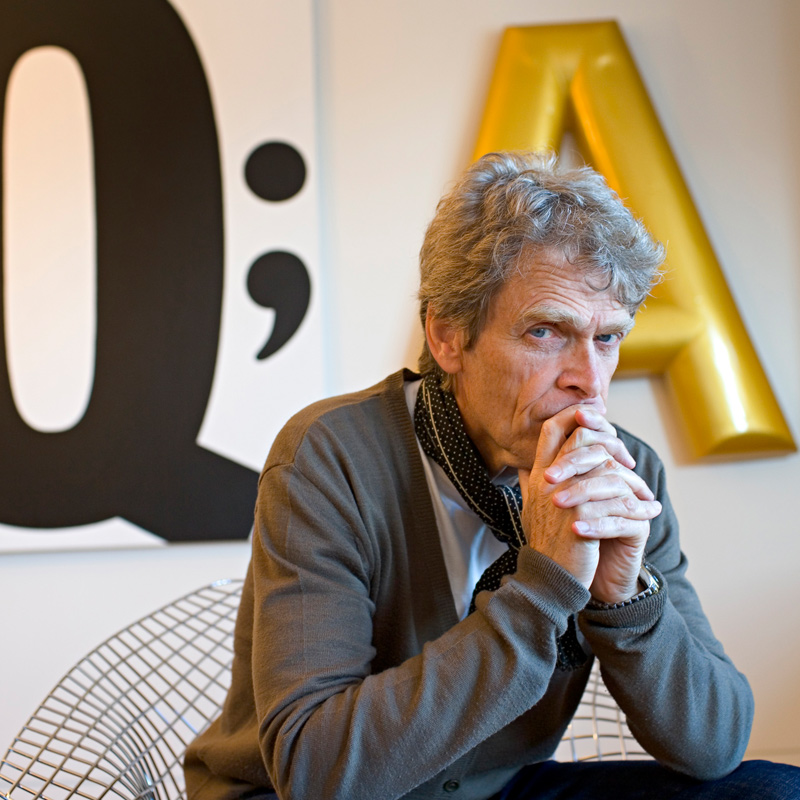
  • Sorrell’s exit could lead to a breakup of the large agency structure says John Hegarty

    Sorrell’s exit could lead to a breakup of the large agency structure says John Hegarty

    MUMBAI: He’s seen it all – print, radio, TV and now digital. With over six decades of advertising industry under his belt, John Hegarty has had the privilege of being knighted by the UK for his services. With early days at Saatchi and Saatchi (then called Cramer Saatchi) to co-founding global media agency, Bartle Bogle Hegarty (BBH), the septuagenarian is still as youthful and optimistic as he was in the 1960s.

    After co-founding TBWA, he teamed up with partners John Bartle and Nigel Bogle to launch Bartle Bogle Hegarty in 1982. The agency swiftly became one of the most talked about and awarded advertising agencies in the world.

    The advertising mogul was in Mumbai, India recently where he spoke his heart out about creativity and advertising industry at large. The creator of acclaimed campaigns for brands such as Levi’s, Audi, BA and Johnnie Walker, Hegarty thinks that brainstorming as a concept at the modern workplace can kill creativity. According to him, just 10 per cent of the creativity today is good and advertisers inflict that tiny amount on the audience. For him, the advertising industry has a great responsibility to shoulder.

    He first came to India 25 years ago to meet Piyush Pandey. Admitting that he isn’t a hardcore follower of Indian advertising, he still believes that Indian creativity is far better than other parts of the world. 

    Hegarty warned of the danger of globalisation that has led to a bland advertising world where ad execs and brand managers from one part of the country want to target the entire world with global campaigns rather than creating local campaigns. One reason they resort to this mass targeting is their constant search for cost-effectiveness. But they don’t realise that they lose out on communication efficiency. Instead, all ad work should be more representative or reflective of the local culture. 

    Hegarty’s response to nineteenth century Philadelphia retailer John Wanamaker’s famous oft-stated quip – ‘Half the money I spend on advertising is wasted; the trouble is I don’t know which half’ –  is that those who exclaim this don’t know what they’re doing. “Brands need to go out and converse with people. Advertising is all about conversations,” he said.

    “A brand is made not just by the people who buy it but also for the people who know about it.  Agencies today have forgotten that brands need to persuade the consumer and not promote the product. We have confused persuasion and promotion, persuasion will yield long-term results whereas promotion will only last for a short term,” he said.

    While the world lauds the power of digital, Hegarty thinks that brands and agencies are still in the dark about the best way to approach the medium. Light heartedly cracking a joke at his age, Hegarty said that he won’t be around long to watch machines take over man, referring to artificial intelligence increasingly being used to help take advertising and creative decisions. “Machine-made ideas are easy to recognise and it can’t get the nuances correct all the time.”

    A writer from BBH London recently publicly accused sports television channels group Sky Sports and its agency, Sky Creative, of ripping off a recruitment video. Hegarty was not disturbed by this theft and responded by stating that plagiarism will always happen in the industry where an artist is inspired by another and has happened forever and will continue to take place ad infintum. He added, “Everything gets plagiarised today and I don’t think we need a body to regulate it.”

    He rubbished the concept of the word ‘content’ calling content marketing a boring topic. “What exactly is content? My garbage bin is full of content. I wonder who invents these words! They are completely meaningless. I think content should only be informative and useful,” he said.

    A recent major shakeup in ad world was the departure of ad mogul Sir Martin Sorrell from WPP. Hegarty said that the legend’s eviction could be a harbinger of a fission of WPP and other ad behemoths.

    “With his exit, the talk is that the company will now be broken up and the groups are now also under threat because of the value they are giving clients. It could be a serious problem for them unless they get back to basics and the core of the advertising profession: focus on creativity.”

    Well said John!

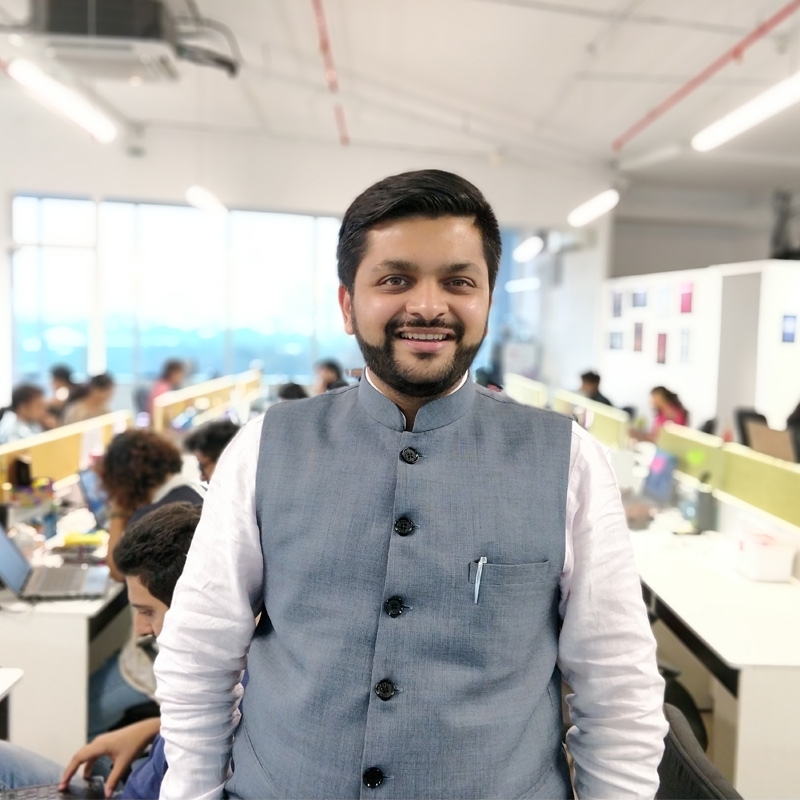
  • Video content will be the game changer in 2019: Shrenik Gandhi, White Rivers Media

    Video content will be the game changer in 2019: Shrenik Gandhi, White Rivers Media

    MUMBAI: A young professional just graduated from an MBA college would be thrilled to join a reputed company like Future Group. But Shrenik Gandhi’s entrepreneur blood wouldn’t allow him to work under someone else.

    Within a year, he quit and started his own digital marketing agency White Rivers Media and propitiously the agency’s first client was Future Group who handed over the signing amount cheque during Gandhi’s exit interview at the company.

    Gandhi began his entrepreneurial journey in 2012 with his MBA batchmate Mitesh Kothari, who was then working for another digital agency WATConsult. What started off as a two-man operation today has a team size of over 75 people in its HQ in Mumbai. With the new office in DLF Cyber City, White Rivers Media is looking to localise all the digital, video and AI-driven e-commerce solutions for its NCR-based clients and more.

    With a strong hand over national and international clients from more than eight countries, it has worked with some of the top-valued brands in the country, executing many of their flagship campaigns and grabbing eyeballs internationally. The agency has worked across a range of industries and verticals, including brands like OnePlus, Viacom18, TATA Cliq, Zivame amongst others.

    Indiantelevision.com caught up with White Rivers Media CEO and co-founder Shrenik Gandhi to discuss the company’s initial struggles, progress and how things are panning out today.

    Excerpts:

    What was your initial capital like when you started off White Rivers Media?

    Our initial capital was just a laptop and our collective brains and I think that is the good and bad thing about digital that there is zero inventory/investment. Today, anyone with a good laptop and internet connection and some brain can start a digital company. 

    How was the opening year for you? Was it hard for you to recover money from clients since you were a new agency?

    Yes, it was difficult to recover money but, luckily, acquiring clients was never a challenge for us because we made sure that the effort and passion we put in was 100 per cent. Our numbers grew only because of word of mouth. We hired a professional business development team only eight months back which only shows that our work spoke about the company for nearly four years. Today, we have 100 per cent growth year-on-year in terms of revenue. 

    Who were your initial clients? And do you think your clients have evolved over the time?

    Our first five clients are still with us. In the first year, we had less than 10 clients but today, we have on board 50+ clients. Most of our business comes from retainer clients and 60 per cent of our clients are retainers. Our clients have also evolved with us and gone are the days when people said that digital is the future. Digital is not the future. The future is now! Most of our clients have accepted that and give us the required freedom to come up with the best possible campaign for them. 

    You recently expanded your reach and opened an office in Delhi. What’s your team size there and was this the right time to expand?

    In Delhi, we currently have a team of four people but we are actively recruiting people to expand the team. Delhi is a big market and it only made sense to scale up and cater to our clients there, by physically being present.

    So is Bangalore the next step for you?

    Possibly!

    You are traditionally a digital marketing agency, but today agencies are looking at expanding their reach and getting more clients to have a diverse portfolio. Will you also be looking at doing traditional medium anytime soon or are you only going to focus on digital marketing?

    To be honest, going forward, I don’t see any offline campaign which will not be supported by digital. It will just not make sense. Yes, a newspaper article is very important but how do we measure it? The campaigns in future will have to be more integrated and digital by itself will not be always enough. As for us, we will do traditional stuff but the core will always be digital. If the offline campaign augments to digital we will definitely do it. 

    Will you be open to getting acquired at any time if a larger network approaches you?

    It is a difficult question to answer, but if it makes return on investment (ROI), we will but only if the ROI makes sense today, after a year and five years down the line. Being a part of something bigger will only make sense when whoever we talk to makes strategic sense and the acquisition helps us in getting a seat next to bigger brands to pitch better with the agency’s larger network. 

    Is it safe to say that India has become digitally evolved with the advent of Jio, free data and cheaper mobile phones?

    People in rural areas today are also using voice search, Google maps and internet. Kids as young as 10-12 years have their own YouTube channel. The younger generation has skipped the laptop and they have gone straight to using mobile phones.  If we look at the data, India consumed roughly 25 crore GB of data per month before Jio was launched. Just after six months of launch, data consumption has grown up to 6X. With over 125 crore GB data consumption in India, we are today the highest data consuming nation in the world. 

    Every brand today wants to be present on digital as that seems to be the latest trend. Do you think digital investment will go up in future?

    It will have to increase because brands will eventually realise that the amount they are putting in on hoardings is not yielding them with enough revenue. Clients might want to cut on the cost of two hoardings to invest on digital. Even if they see the same revenue coming in for the company, it is an ROI for them. You will see a lot of budget being shifted to digital. A lot of campaigns being devised for digital first. Gone are the days when people would say that lets create a digital strategy but the world today has become digital and agencies will have to create strategies which will ultimately be digital. 

    Which category do you think will make the most of digital for advertising?

    I think FMCG and automobile will invest majorly on digital. FMCGs have traditionally been pathbreakers in the use of digital and they will continue to bet big on the medium. Smaller brands, however, will have to scale up and divide their advertising budget accordingly. 

    On a parting note, what do you foresee to be the game changer next year (2019)?

    Without a second thought, it has to be videos. The video consumption in India has gone up rapidly. The consumption of short format six-second, 10-second and15-second videos is increasing. The micro video content consumption has become crazy because people have a lot of free data. Today, four out of 10 posts on your Facebook newsfeed will be videos. One would wonder what is the benefit for the social network in this? Well, it would result in better stickiness on the app and more chances of having videos with free data and better revenue for the social platform.

  • HSBC’s global media business moves to Omnicom’s PHD from WPP

    HSBC’s global media business moves to Omnicom’s PHD from WPP

    MUMBAI In a major blow to WPP, HSBC Bank has handed over its global media business to Omnicom’s PHD. The agency won the business following a review which began in January along with Mindshare and Dentsu.

    In a press statement, HSBC said, “We have selected PHD as our preferred media planning and buying supplier as they demonstrated strong strategic skills and advanced digital transformation capabilities. In a complex media and communications marketplace, PHD’s overall approach stood out as being forward thinking, yet straightforward and pragmatic.”

    Earlier this year, HSBC appointed Publicis-owned Saatchi & Saatchi to replace WPP’s JWT to lead its global advertising business.

    With this, WPP has lost another major client from its kitty as the HSBC account has billing of around $400 million and was worth over $20 million in annual revenue to WPP. The HSBC account was at WPP’s Mindshare, whose American Express business is also up for review. WPP is trying to hold its relationship with Ford Motor, also in review.

    Mindshare held HSBC’s business for over 13 years. Another account loss comes as a blow to Mindshare, where the network is still reeling from the sudden exit of WPP’s chief executive Sir Martin Sorrell while struggling to retain or win some of the estimated $10 billion worth of media business that went under review at the beginning of the year.

    Global media giant, WPP has recently lost several pitches including Campbell, Marriott, Amgen, AT&T, Volkswagen among others.

    Also Read :

    WPP board begins investigation of its CEO Sir Martin Sorrel, says WSJ

    Sameer Singh joins GroupM as South Asia CEO

    Sir Martin Sorrell says ta-ta to WPP, Roberto Quarta becomes exec chairman

    Has advertising finally begun to embrace AI?