Tag: Agency

  • Five agencies to pitch for Dabur’s Rs 350-400 crore media AOR

    Five agencies to pitch for Dabur’s Rs 350-400 crore media AOR

    MUMBAI: As many as five top media agencies are gearing up to pitch for Dabur India’s beefy media account, which is pegged in the range of Rs 350-400 crore.


    According to highly placed industry sources, media giants like Dentsu, Starcom, Lodestar and Maxus are speculated to be a part of this multi-agency pitch.


    Top level executives from two agencies that are going to take part in the pitch, confirmed the news to Indiantelevision.com.


    Dabur India is looking at consolidating its media duties under one agency. Currently, Maxus and Starcom Mediavest handle the brand’s media planning duties, whereas media buying is handled by Dabur’s in-house agency Adbur.


    The Rs 350-400 crore media business has opened up for a pitch across all categories of Dabur India and is expected to close in about a month or two.

  • MEC India appoints Premnath Unnikrishnan as digital head

    MEC India appoints Premnath Unnikrishnan as digital head

    MUMBAI: MEC India has appointed Premnath Unnikrishnan as south head – digital.


    Based out of Bangalore, Unnikrishnan will report to the agency’s India digital leader Vishal Chinchankar.


    Chinchankar said, “It is great to have Prem as part of the MEC’s digital team. He is a seasoned professional and come with a plethora of skills and expertise. He has a proven ability to create strategic simplicity, drive innovation, ensure systematic execution, and deliver results. We wish him the very best in his new role.”


    Unnikrishnan, a thorough digital professional with over 10 years of experience, comes with in-depth knowledge of performance based campaigns. Prior to joining MEC, he was with Interactive Avenues where he managed accounts like Wipro, TTK, ING Vysya Bank, World Vision amongst others.


    Unnikrishnan said, “It’s an absolute honour to be part of this leading organisation. This opportunity has provided me a great platform to further showcase and enhance client service levels. From developing digital strategies to implementing digital technologies and running digital processes, these responsibilities will serve as a great learning opportunity. I am eager and look forward to learning from the pool of talented people present here at MEC.”

  • Brands piggyback the selfie

    Brands piggyback the selfie

    MUMBAI: When Oscars 2014 host Ellen DeGeneres posted a selfie co-starring some of Hollywood’s finest stars, it went on to crash the record hitherto held by President Barrack Obama. At the end of the awards’ ceremony, DeGeneres’ “Best photo ever” stood at 2,070,132 retweets and counting; a milestone in social media history. More importantly, the fact that Degeneres had clicked the iconic selfie using a Samsung Galaxy Note 3 (given to her by the brand itself) wasn’t lost on the teeming tweeple. In fact, various international reports stated that 37 million people worldwide tuned in to the broadcast to view DeGeneres’ tweet while 43 million tuned in just to view the Samsung snap.

    Taking a cue from Samsung and other such international brands, home-grown brands too are increasingly tapping into the marketing potential of the selfie, allegations of narcissism notwithstanding. For instance, Dove and Ponds from the house of HUL are running a large-scale social media contest incorporating the selfie element even as we speak. When contacted, company officials refrained from sharing any details. However, it is learnt that along with cross promotions, these products are creating a lot of noise across social media platforms.

    Click here to watch the video

    At least a dozen Indian brands are putting the selfie to good use. ”Selfies are the latest fad and something that would instantly connect with our customers. From celebrities to teenagers to even middle-aged people, everyone today is suddenly using their phone cameras to not only click their surroundings but themselves,” said Lenskart CEO & founder, Peyush Bansal. Recently, Lenskart rolled out a social media campaign, asking for selfies from its fan base. “The idea was to see how involved our customers are in our products. We wanted to engage the online customers in a fun Lenskart selfie contest by asking them to take a selfie, share it on our and their social media pages by linking and tagging Lenskart through all platforms and using the hashtag – #mylenskartselfie. They had to ask all their friends to ‘like’, ‘favourite’ their selfies and the ones with the maximum number of likes won the contest,” said Bansal.

    Force-fitting selfie-ness

    Using selfies to market products is fine but the general perception is that all brands, from beauty to surrogate, are looking to engage social media by calling for selfies. We spoke to a few social media experts for their views.

    “Not every brand can pull off a selfie stunt and hope to make it an instant social media hit. It needs to connect with the audiences; it should come across as something natural or on the spur of the moment and not staged. Unless one makes no bones about it but does it in style,” said Grey Digital executive creative director Navin Kansal.

    On the other hand, Digital Quotient COO Vinish Kathuria, expressed the view that curated content really works for brands these days. “It is interesting to see that various brands are thinking in terms of crowd sourcing techniques while rolling out contests on social media,” he said.  

    Whether the continued use of selfies will work for brands or it will reach a point of saturation, only time will tell.

  • An ‘Infectious’ association

    An ‘Infectious’ association

    MUMBAI: For colleagues at the then Saatchi & Saatchi who saw them fighting with each other, it came as a surprise when Ramanuj Shastry and Nisha Singhania quit within days of each other, to start an enterprise of their own.

    Singhania makes no bones about it. “We still have a lot of fights. Of course, it’s all related to work, but we aren’t the kinds who will just nod our heads to what the other person has to say,” she admits. How do they resolve these conflicts? “We try and convince the other. At the end of the day, it is all about logic and creativity,” she answers.

    What began as an association when the duo first met in Rediffusion Y&R blossomed into an up-and-coming agency christened ‘Infectious’. Ask them why such a title and Singhania says it has to do with their belief that their work should be infectious. “We wanted to solve clients’ business problems, rather than focus only on creating communication like large agencies. Our work is to engage people and for that to happen, the work had to be communicable. We wanted to start an epidemic of good with ideas that spread,” she adds.

    The freedom to do the kind of work the two of them wanted to was the mainstay of this self-funded agency. “We wanted to ‘do’ as well as ‘say’. For instance, when Camlin asked us to create a print ad for Children’s Day, we ‘did’ an activity instead. We created a ‘join the dots’ ad, which kids had to colour and parents were urged to upload on their Facebook page. It was a very successful engagement and within 24 hours, took the likes on the Kokuyo Camlin FB page from 150 to 15,000,” says Shastry.  The activity went on to be nominated by Facebook Studio for best use of the social networking website by any brand.

    According to Singhania and Shastry, what sets their agency apart is the quality of ideas, lesser turnaround time, and personal involvement in every business. The client list is a mixed bag of biggies like HCL, DNA and Camlin and start-ups like Pied Piper and Braces & Smiles. For some clients, the agency handles all their marketing requirements while for others, it looks after specific projects.

    For an organic set up, Infectious was lucky to have bagged two clients even before it launched. However, Singhania and Shastry are candid about the fact that clients are usually more comfortable giving business to larger agencies. Besides, it did take them a while before winning the confidence of heavyweights like HCL and DNA.

    Infectious is headquartered out of Mumbai with a presence in Chennai, Delhi and Kolkata and has a young, energetic, hand-picked team of 15 running it. “We have worked in various agencies, so when people heard that we were starting something of our own; we got a lot of calls, especially from the youngsters. And since we have worked with them, so we knew what we could expect from them. We are blessed to have hand-picked talent,” says Singhania.

    In addition to having a young team, the agency saw no harm in advertising itself. “Very few advertising agencies ever advertise about themselves. What is the harm in doing so? The logo adaption is our way of having fun. Digitally, one can do so much to engage with people, let alone clients,” says Shastry. Though he quickly adds that at its core, the business is still about ideas and digital is only a medium. Speaking of elections, he says that most political parties engaged and optimized their reach via the digital medium. Even Infectious created a special campaign along with DNA to urge people to go out and vote.

    What do the next five years look like for Infectious? “Five years is a very long time. We are a ‘work in progress’ agency, with plans for the next 100 days,” say Shastry and Singhania at once.

    What about network agencies snapping up independent agencies? The duo feels that in most cases, it is a win-win situation where network agencies bring in resources and scale while independent agencies bring in local expertise.

    And with Goafest coming up, the agency which is all for awards as long as they are for real work, the future holds only great promises.

    One wouldn’t be wrong in saying that like Monday mornings and coffee (chai, in some cases), Singhania and Shastry are a perfect combo.

  • Why bigger agencies net smaller fish?

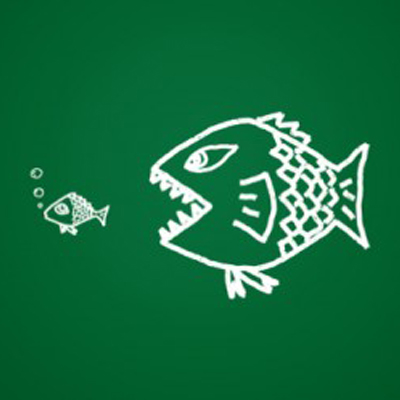
    Why bigger agencies net smaller fish?

    MUMBAI: Passion drives creative minds to set up independent agencies. In a majority of cases however, after the initial burst, resources become a constraint and growth avenues out of reach.


    While being able to do what you want, pitch to the client of your choice or leverage the tools of your choice continue to be the perks of going solo, at some point, the smaller independent agency is forced to reflect on how long it can continue to stand alone successfully.


    This is probably when selling out to a larger entity seems like the best option. In the past couple of years, there have been several instances of big networks snapping up smaller, independent agencies; the most recent being DDB Mudra’s acquisition of Bangalore-based 22feet. Indiantelevision.com spoke to a cross-section of the advertising industry in a bid to understand what really drives network agencies to invest in independents or conversely, independents to sell out or as in some cases, hold on to their freedom.


    Vineet Gupta of 22feet, who will soon take charge as MD of the new entity, 22feet Tribal Worldwide, says mergers and acquisitions (M&A) aren’t necessarily about losing independence. “We have always wanted to outperform and be ahead in the market. And in Tribal, we found a partner which had the same vision like us and hence, we went ahead by joining hands,” he explains.


    Praveen Kenneth of Law & Kenneth – at the time Law & Kenneth was integrated with Saatchi & Saatchi – had famously said that Law & Kenneth was born out of passion and had always focussed on adding value to client brands and to the lives of the people it touched every day. The story of Law & Kenneth was an example of the Saatchi & Saatchi spirit of ‘Nothing is Impossible’, and the combination of Law & Kenneth’s stability, proven success and experience in India’s dynamic market place and Saatchi & Saatchi’s iconic status and mystique had resulted in a creative powerhouse called L&K Saatchi & Saatchi.


    WebChutney, a digital agency founded in 1999, became part of Dentsu India Group when the network agency acquired 80 per cent stake in it in 2013. How has it benefitted the independent agency? Says, the agency’s co-founder Sidharth Rao, “Our unique chutney culture is the same but yes, being part of a global network has helped in terms of new alliances & smarter processes. One of the best parts is that we have access to global learnings which we think will be a big advantage going forward in our journey.”


    For Naresh Gupta, CSO and managing partner of Bang in the Middle, the iYogi in-house creative agency that went independent in 2012, the best marriage is when creative and cultural freedom isn’t taken away and bigger agencies only provide support through finance and sources to scale up. “There has to be a cultural match before any formal arrangement is made because a group which has invested too much money in acquiring one doesn’t want it to fall. It will only want it to grow as it wants back the money it had invested in it,” says he.


    Publicis’ South Asia CEO Nakul Chopra believes that while cultural and operational differences between the two agencies would never cease to exist, it depends on how well they make the marriage work. “If the home-work has been done well before the acquisition is made and the two are culturally close at the core, there are not many difficulties between them. We at Publicis have a well-oiled and tested process that allows us to achieve that goal,” he says, adding that the acquisition is also about ‘strategic fit’. “Ideally and normally, we would want to acquire an agency when it fulfils multiples of strategic goals. In parallel, we also look closely at the culture of that agency and how well it fits into the culture of our network. Only after this, do we decide on acquiring any agency.” Chopra insists that acquisitions are not like buying a shirt and either the agency is in talks with someone or someone approaches the agency. What matters is how transparent and deeply connected the two agencies feel before shaking hands.


    Dentsu India group executive chairman Rohit Ohri echoes similar sentiments. “Network agencies are always on the lookout for a holistic view. There are some or the other gaps which need to be filled-up so network agencies look for agencies which can do so. The fundamental law of any acquisition is that the two parties work closely in the pre-acquisition period to get to know each other’s culture and get a sense of partnership. There has to be a chemistry match otherwise it can lead to a fallout past acquisition or the smaller agency can collapse. There has to be a meeting of minds,” he explains.


    On the bigger agency trying to impose its culture on the smaller one, he gives the example of Dentsu’s Taproot acquisition close to two years ago. “The merger has worked well for both of us. Dentsu has been able to work on major accounts (Congress being the latest client) that were won after the merger. Taproot has been a leading light in the creative field and has a strong reputation. So we follow what they set out to achieve. It is the other way round for us. We at Dentsu are trying to assimilate that,” he says.


    And not all mergers end on a good note. Remember what happened to Enterprise Nexus? The agency was created in 1996 when Enterprise (born out of the partnership between Mohammad Khan and Rajiv Agarwal in 1983) and Nexus (founded two years later when Agarwal left the agency to launch his own along with Arun Kale) joined hands.


    However, what started off great, fizzed out soon when Agarwal and Kale, gave up their shares to Khan, making him the majority shareholder in Enterprise Nexus. The agency was later acquired by WPP and merged with Bates India.

    With a few mergers ending on a bitter note, it hasn’t stopped the majority of firms from acquiring others or launching new ones. So does the buck stop at M&A?


    According to Anil Kakar, founder of Gasoline, a lean agency structure based on a collaborative model where both like-minded creative talent and projects have been cherry-picked to ensure faster and more cost-effective solutions, “A lean agency structure ensures a greater investment of time and thought into a campaign, a greater control over the creative output, customised solutions, faster turnaround times and access to some of the best brains in the business.”


    “Obviously it helps in terms of getting access to a larger client base as well as in leveraging the media strengths of the network. The network consists of a unique bunch of agencies each with their own particular strength which is very useful when pitching to global brands,” adds Rao.


    Gupta offers a different perspective altogether. “Acquisitions work both way; most independent agencies don’t want to remain small and want to add muscle and that can be only added either by becoming a network agency or becoming a part of a network agency. Also, it is very difficult for an independent Indian guy to go international and become a network,” he says. 


    However, agencies that are “okay with what they have” may choose to remain independent. Otherwise, the question “Can I make the business grow?” is bound to crop up from time to time. “Our country is a very competitive one and it is a price-sensitive market. Clients don’t pay agencies for the amount of work they do for them,” he adds.


    In sum, you need to tread on M&A with caution: while it is necessary for further consolidation and growth, it can’t be achieved at the altar of the agencies’ DNA.

  • OgilvyOne wins 5 metals at DMA Echo

    OgilvyOne wins 5 metals at DMA Echo

    Mumbai: OgilvyOne Mumbai helped India achieve its best ever year at the DMA Echo awards which were held in Chicago on 15 October.


    Of the total haul of nine metals, OgilvyOne bagged five at the DMA Echo awards which is ranked among the oldest and most revered effectiveness awards on the calendar.


     Elevated Ogilvy South Asia executive chairman & creative director Piyush Pandey said excitedly, “I am delighted with yet another stellar performance by OgilvyOne at the worldwide Echo awards. This reinforces our digital leadership, not just in India but at an international level.”


    Adding on to it, OgilvyOne Worldwide president & country head Vikram Menon commented on agency’s performance, “Never before has an Indian agency won five ECHO Awards in a single year. This is a huge triumph for OgilvyOne India and a significant win for Ogilvy & Mather Asia Pacific. This clearly endorses OgilvyOne’s leadership position and stature in this industry.”


    The digital agency had earlier dominated the DMA Echo India awards by bagging several awards including Agency of the Year and the Grand Prix.


    Speaking on the occasion, OgilvyOne, Mumbai senior creative director Burzin Mehta said, “These awards mean a lot because they are awarded by an international jury comprising clients, planners and creative people. If anyone needed proof that great work works great, I suppose this is it. This award belongs to lots of people, so congratulations to everyone!”