Tag: agencies

  • “Think mobile as ad dollars are heading there”: CVL Srinivas

    “Think mobile as ad dollars are heading there”: CVL Srinivas

    MUMBAI: Several market forecasts that we have seen in the past couple of months project digital advertising and marketing growing by leaps and bounds this year. The historical galloping growth rates have led marketers and planners to consider the possibility that the medium will overtake television spends in the near future.
     

    Brand custodians are no longer investing in digital as an added benefit but are thinking about investments on that front from the get-go. So is digital gnawing away at television’s share of ad spends or is its growth coming courtesy a new breed of brand builders?


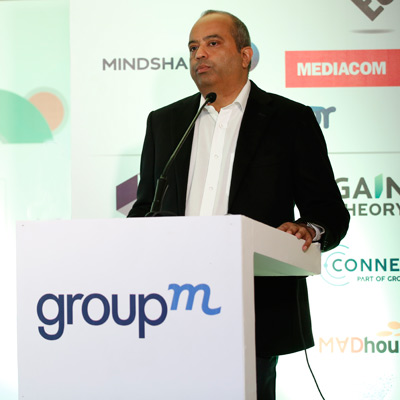
    Group M South Asia CEO CVL Srinivas does not think that TV is losing its edge. “Television is riding the digital wave, and smartly so”, says the veteran waving off any worries of television ad revenues seeing a dip this year. Not denying the obvious growth one sees in the digital space, Srinivas gives indiantelevison.com a complete breakdown of  how the digital growth works in favor of broadcasters and content providers, while also touching upon the key trends in the market, the changing role of media agencies and his take on the currently mushrooming of several digital agencies in the market. Excerpts from an interview with indiantelevision.coms Papri Das. 


    Here it is:


    How was 2015 for GroupM as a whole? What were the agency’s benchmark developments?


    2015 was a great year for us in GroupM. All our agencies performed well, especially when it comes to client retention which I consider most important. On the client acquisition front as well, we grew our business with several new accounts.


    Last year has also been kind to us when it came to awards. The GroupM Office of Year award, which is given out by GroupM APAC, was given to us last year. That’s something I consider as another high for us.


    For me, 2015 would be the year when we truly broke out of the mould of pure play media agency and delivered a range of different services to our clients to help them keep ahead of the curve. Over the years we have made investments in data, analytics and experiential marketing, cinema advertising and rural marketing and so on. All of that delivered excellent value to our clients last year. That has helped us diversify our offerings and in turn win us new and interesting mandates as well. Apart from that we have actively involved ourselves in the Mobile Marketing Association to help set standards and get some measurements going.


    Out of the four agencies under GroupM in India, which one do you think performed the best?


    I think all of them did exceptionally well and I say this with confidence based on each of the agency’s client retention and the newer arenas that they ventured successfully into.


    How was the year for the industry at large? Did you notice any changes that majorly impacted the industry?


    Last year we projected 12.7 per cent growth in ad expenditure and I must say we erred on the conservative side at the start of the year and we ended up with 14.2 per cent, but no one’s complaining!


    Several factors led to this development. The FMCG sector despite all the pressure it is facing continues to invest big money behind brands. You also saw huge growth coming in through e-commerce and there were quite a few brands that continued to invest throughout the year.


    What key trends do you see emerging in the market in 2016?


    Very clearly, our clients and brands in general are adapting to mobile as a medium. Till few years ago we hardly had ten or twenty clients, today the count is around 150. Advertisers are actively investing in campaign after campaign, month after month, by experimenting with new formats and following the measurements.  That is something I see taking off in a major way this year as several enablers are supposed to come into place in 2016.


    E commerce is emerging as a platform for advertisers in 2016 which can give an interesting spin to ecosystem.


    Apart from this we see several interesting initiatives happening in the content space, especially in the video and branded content space. This can give a further push to mobile advertising. The real big headline for me is mobile driving digital growth and in turn driving ad growth in India, and getting all traditional medium owners – be it broadcasters or be it print publication – to think mobile fast and think mobile first, because that’s where most of the advertising dollars are gonna flow to.


    What do you think will dictate how marketers spend this year?


    Right now we observe that marketers are a bit circumspect on where and when to invest. We are not yet seeing any major budget cuts otherwise our numbers in the GroupM This Year Next Year report for 2016 wouldn’t have looked so good.  But there is definitely an amount of cautiousness creeping in amongst advertisers.


    I think this year they are going to look at a lot more Return On Investment (ROI) and accountability across different media platforms. I also think they will wait and watch the market before deploying any of their long term campaigns and investments across media channels. Unless a property is tried and tested it will go through intense scrutiny before marketers decide to invest. Tracking of ROI and tracking of what the marketing spends are doing to the overall business will be key drivers for brands this year.


    Brands are increasingly seen as the sum of all customer touch points and this in turn increases the scope of marketing. In this context, how is the role of agencies changing?


    We think we are becoming even more relevant in the current scenario and important at the end of the day given the way the marketing and the media landscapes are shaping. Today consumers have multiple choices when it comes to brands and media consumption channels. In the same way advertisers and marketers also have multiple options to invest in. It can become highly confusing for the clients. That’s where GroupM  went ahead of the curve and started investing in multiple media investment management  services so that our clients can have a holistic marketing strategy and solution.


    What percentage of your business is “traditional” or core media now?


    I can’t share the break up but if you look at the market split, and the fact that we are future focused we tend to concentrate on wherever the marketing is moving to step ahead of it.


    A lot has been said about digital advertising overtaking television as the primary medium. What’s the ground reality?


    If you look at the trends in the last few years, not just in India but across markets we see a lot of synergy between television and digital. Looking at it from a consumer’s lens, you and I watch television and also consumer media on our second screen be it mobile or laptop. There is some amount of interplay happening between the screens.


    Looking at it from a broadcaster or content providers angle, most major broadcasters today have their own digital arms. And hence, I say television is actually riding the digital wave. Broadcasters are doing it very smartly, unlike other media which are getting swamped by digital. We see that trend continuing. Inf act if you look at our forecast figures, TV and digital account for close to 60 per cent of the market share of the total ad expenditure, and we see that number move to 70 to 80 per cent in near future.


    Is India truly ready for mobile marketing? Do we have a road map for it?


    There are several developments that have happened in the recent past. I have been personally involved in setting up the Mobile Marketing Association (MMA). Despite India being one of the top markets globally for mobile, we did not did not earlier have a body that monitors the digital marketing space. Therefore we needed this body where all stakeholders can come and ideate and put in place systems and structures for the medium. A lot of useful discussions have happened in the recent past be it on measurement and advertising standards and MMA as a body has done phenomenal work across the market. That is one of such several initiatives that will show its effect in 2016.


    What impact did BARC rural inclusive data have on the TV industry and on advertisers?


    I think it’s still early days to comment on BARC’s rural ratings. It’s only few weeks that they have come out. It is a very positive development. Rural India’s viewership accounts for a sizable chunk of our market. It’s a very aspirational class and important segment for many products and categories. To have data for this segment is a very good development.


    Though we will have to wait on watch how the data impacts the market, it is sure that advertisers are going to look at rural markets a lot more seriously especially in terms of media investment deployment across TV and other media options. Similarly content creators are also going to look at that space a lot more seriously today and come up with relevant products and offerings.


    And over all it is good for the economy and the country because we are finally becoming a lot more inclusive.


    How will the advertising landscape change with the completion of cable television digitization in India?


    Funny thing about India is that nothing ever happens sequentially…..everything happens together….somehow amalgamating. This actually makes our job fun because on the one hand you have the whole cable TV digitization playing out and DAS phase III being rolled out, and a lot of DTH players have gotten very active. On the other hand you have the 4 G launch that will open up a lot more bandwidth and infrastructure in digital and you have mobile crossing 1 billion connections.


    For marketers and advertisers what this means is to be aware of the developments, keep a close eye on them and see what are the opportunities they can capitalize on in short term and where is it that they need to invest, test and learn so that they can start capitalizing on them in the long term.


    The big lesson for us and specially me has been that we need to be constantly in a state of beta. What do we keep testing and learning today which could become a big thing tomorrow. Staying dynamic is the way to go.


    2015 also saw several well-known creatives and executives setting up their own startups, resulting in a mushrooming of several branded content and digital agencies. What is your take on this development?


    I think it is a good thing that bright young individuals are setting up companies on their own.  In fact some of us wouldn’t have jobs if this wasn’t done earlier. It also shows that today there are so many different areas that are emerging, and with the way the industry is being revolutionized there are many different expertise and special skill sets that the marketers need. I believe all of us can co-exist as one happy family because of the way the whole pie is getting fragmented. A lot of them are my dear friends and I wish them all the best.

     

  • Publicis’ Levy gets bullish on India

    Publicis’ Levy gets bullish on India

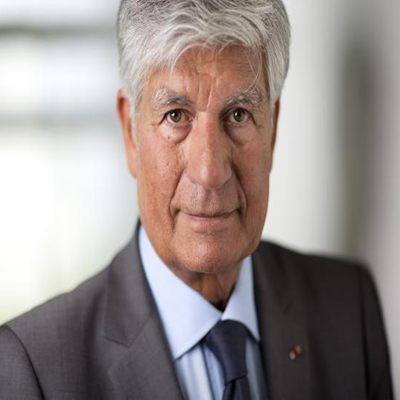
    MUMBAI: If the chairman and CEO of a multinational advertising and public relations company comes to India, then canards are definitely going to gain currency.

    And that CEO happens to be Publicis Groupe’s Maurice Levy, who signed the deal with the Omnicom Group to create a $35 billion mega-agency, journos would not be faulted for wondering why. To everyone’s dismay, Levy told a select group of the media that his current trip to India falls in the category of a “regular visit”.

    “I was here last in 2011 and thought it’s high time I visited again. I have always said that India is a major market for us and we want to build the group here,” said Levy.

    Industry has been speculating whether that “building” includes possibly picking up equity in the fiercely independent Sam Balsara run Madison World who has recently stated that his agency is open to collaborations. Levy very intelligently deflected this question by saying that that the group has made investments in the country and will continue to do so as there is a cesspool of talent here.”

    Among the agencies Publicis runs in India include: Publicis India, Leo Burnett, Saatchi & Saatchi, Starcom, ZenithOptimedia, Razorfish and Digitas.

    Levy further elaborated that “according to the World Bank, India will have the largest number of middle class income group members by 2030, surpassing even China. Hence, we have to strategically make moves. India is a very strategic country for us.”

    He believes that since the country has a great deal of knowledge in IT and digital, it should take advantage of that skillset rather than just become an ‘outsourcing’ nation.

    When asked about the importance of digital media today and in the future, Levy quipped, “Publicis was the first group to invest in the sector. In 2006, we had said how digital is going to be one of the most important pillars of the emerging markets and started investing in it.”

    He pointed out that a large share of Publicis’ revenue comes courtesy the digital space and that the firm is heavily invested in it already. “In 2011, there were 100 people working in the digital sector in India and now there are around 1500 people. Globally, there are over 20,000 people devoted to the sector.”

    He also highlighted that “emerging markets contributed roughly 25 per cent” to the group’s turnover and his aim is to bring it to “35 per cent by 2017.”

    As everyone waits for the Publicis-Ominicom merger to get the official nod from the EU, the US and China, Levy too has big dreams and expectations from it. Without revealing too much on how progress the fusion process has made and who will head the combined entity in India, Levy said that it will only benefit the clients of both the companies.

    “The law doesn’t allow me to speak about it unless and until all procedures are done. And till then we will work as competitors but the future will be all about offering a wide range of platforms to the client. For me, it has always been how can I make it more valuable for the client. And it will continue to be so.”

    When asked if there have been any ‘disagreements’ with Ominicoms’s president and CEO John Wren, Levy laughingly responded by saying, “Yes of course. He’s American and I’m French.”

    He further added, “A French poet has written that boredom comes from uniformity and it will be true for me as well. Over and again, I have always said that collaborations is the way forward though they can be challenging. When we acquired Saatchi & Saatchi, all we had to do was cross the channel but it turned out to be a major challenge because of our differences. Such things are bound to happen but there is no fun if there aren’t such challenges.”

    However, the group’s number one competitor WPP CEO Sir Martin Sorrell has been very vocal about the merger and even gone on to call it the merger of ‘unequals’ and that it won’t last a long time. On it Levy responded that he only comments on what he knows best and that’s his company and work. “From the way he (Sorrell) has been speaking about it, it seems like it has become a part of his job!” he added wittily.

  • EFFIES 2013 achieves an all time high, with 419 entries

    EFFIES 2013 achieves an all time high, with 419 entries

    MUMBAI: The EFFIE 2013 awards in its 13 year history, has received the highest number of entries ever this year.

    Last year the Ad Club received 357 entries – the highest then. This year it has surpassed the tally with an impressive figure of 419.

    On the escalation, EFFIE 2013 committee chairman Ajay Kakar said: “A growth of about 20 per cent in the number of entries and participation of over 50 agencies shows the growing importance of ‘effectiveness’ of a marketing campaign and its direct impact on a business. In recent years, this has also been one of the key requirements of businesses from marketers and agencies. I am sure that this year we will witness a wide range of ideas that has created a lasting impact on brands across diverse categories.”

    The award showcases the most effective in marketing and advertising and it’s the only award which celebrates the success of not only the agencies but also the clients.

    From 2011, the Ad Club has conducted the judging of EFFIEs and EMVIEs in Delhi, in addition to Mumbai. This has helped the Ad Club to engage with a large marketing fraternity from Delhi also.

    This year Colors is the presenting sponsor and Zee Media Corporation Limited is the associate sponsor. Lenovo has also come on board as the technology sponsor.
    The ceremony is scheduled for 15 January 2014 at the Royal Western India Turf Club, Enclosure II, Mahalaxmi in Mumbai at 6:30 pm.

  • Google teams up with US, UK govt. agencies to bring internet to the common man

    Google teams up with US, UK govt. agencies to bring internet to the common man

    NEW DELHI: Government agencies in the UK and US along with Google have announced a joint venture by the name of “Alliance for Affordable Internet” to bring internet to the population of billions on planet earth.

    The initiative is a joint venture by Google, US agency for International Development and its British Counterpart and philanthropic company run by eBay Founder Omidyar, Omidyar Network.

    Other helping firms include Yahoo, Microsoft, Intel, Cisco, Ericsson and African ISP MainOne. Alliance is going to work to pursue the governments to regulate and policy formation for better internet access.

    “A4AI has a specific goal in mind: to reach the UN Broadband Commission target of entry-level broadband access priced at less than five per cent of monthly income worldwide,” said Jennifer Haroon, Principal Executive of Google’s access programme, in a blog post.
    Group is working to contact 10 countries till 2015 to negotiate on easing of import of technology and resources to kick start the internet revolution in those countries. This envisaged goal can have far reaching impact not only in those countries but on whole global scenario. It can help reshape the social, corporate and political outlook which is visible by the part played by Social Media in Arab spring.

  • Media agencies go ‘deewana’ with Max

    Media agencies go ‘deewana’ with Max

    MUMBAI: Is busy schedules, hectic targets and meetings all you can picture while imagining a media agency? Well! At least for a change, you can shed that image as the agencies are gearing up for Sony Max’s No Talkies.

    The media agencies that are busy brushing up on their knowledge of movies and not brands for the dumb charades are now also discovering a bit of deewangi in one another.

    As reported earlier by indiantelevision.com, the game which is spread over three rounds will be held in Delhi, Bengaluru and Mumbai. The registrations for the competition began 3 September and continued for two weeks on the microsite http://notalkies.sonymax.tv/.

    The list of agencies who have already registered for the fun-zone are Madison, Group M, Maxus, Starcom, Lodestar, MPG, Zenith Optimedia and OMD.
    Excited, Platinum Media (Madison media) CEO Basab Dutta Chowdhry exults: “I think it’s a great initiative taken by Max. It sounds great and fun for agencies. Generally people are so busy and caught up with work and life; this is a new niche initiative where everybody can participate. There are very few initiatives like these- ‘Max-No Talkies’ which gives a chance to everyone to participate.”

    The agencies are all kicked about this competition, which is more of nostalgia for a lot of them.  To top it all, they see it as a good opportunity to meet and interact with new people. Vivaki Exchange CEO Mona Jain agreeing on this says: “No Talkies is a good and interesting initiative. It’s a first time initiative, unlike the regular parties. It also goes back to the DNA of the channel. The industry was very small earlier and people knew each other well, but the scenario is different now, the industry has expanded, so it will be a good opportunity to meet and interact with new people.”

    “It is not going to be a typical game of dumb charades,” says Sony Max VP marketing Vaishali Sharma. She further goes on to say that the channel is bringing loads of innovations to ensure engagement and an exciting evening for those who are participating.  The finale will have a Bollywood theme with different rounds, all with a twist. To amplify all the fun and frolic, the finale will be hosted by the witty and charismatic VJ, actor and presenter Gaurav Kapoor.

    Lintas Media Group vice-president Ramachandran Venkatasubramanian states: “The initiative is very interesting and this kind of activity has never been done before. No Talkies is supposed to be an interactive game and I am waiting for it. Normally bonding with people happens differently, with a game like dumb charades the bonding will happen uniquely. The game itself is very engaging and people interact with each other through it, also dumb charades is all about movies and it gets back to the genre of Max.”

    The city rounds of the activity will take place in Delhi on 18 September, followed by Bengaluru on 19 September and will close with Mumbai on 25 September. A total of five shortlisted teams – two from Delhi, one from Bengaluru and two from Mumbai will battle it out in the finale scheduled in Mumbai on 1 October at Blue Frog.
    So for agencies, it’s ready, steady, Po!

  • Evaluation of RFPs for BARC to be held from 14 August

    Evaluation of RFPs for BARC to be held from 14 August

    NEW DELHI: The Evaluation Panel of the Technical Committee of the Broadcast Audience Research Council (BARC) will meet from 14 to 17 August in the hill station of Lonavla (close to Mumbai) to evaluate the responses to the Requests for Proposal (RFPs) received from 27 organisations. BARC had earlier received a total of 32 requests from different technology and research organisations for joining the process of television viewership monitoring. The committee has accepted 27 of these. Two of them – one technical and the other research – will make it to the finishing line.


    “Some parties may have responded to both RFPs. Some may have sent in only the technical or research RFP,” says BARC principal provocateur/advisor Paritosh Joshi.


    Joshi, who represents the broadcasters’ interests in the 12-member technical committee in BARC adds that “The entire evaluation process would be completed by November and the names of the two parties would be made public by December.”


    BARC hopes to commence sending out television viewing audience research reports by the summer of next year. “We expect that in the first phase, the number of households will go up from the present 10,000 to 20,000, ensuring a proper balance of rural and urban areas,” he adds.


    The present intention of the committee is to develop studies every six months. “But this can vary with time,” he informs.


    BARC as part of its endeavour to share the latest updates with all constituents hosted its open house today in New Delhi. This was the second of the series of interactions that BARC plans to hold. Approximately 70 people representing the broadcasters, advertisers and agencies attended the meet.


    Addressing the meet, Joshi stressed that BARC would not be a research body but a development organisation, He also updated the participants on the work done so far, the work planned, and a wish list of things that BARC hopes to achieve in the future.


    BARC has claimed that this was one of the largest tender ever floated for audience measurement anywhere in the world. The tender terms state that each vendor has to work with whomsoever BARC wants it to work with. This is to ensure system integration, keeping in mind the involvement of multiple vendors.


    “We are attempting to move from active metering where individuals are given people’s meters to passive metering where technologies like apps or even cameras inbuilt in TV sets and other devices will be used. Technology will now play a major part since television viewing is no longer confined to TV sets but to tablets, computers, fablets, mobiles and so on,” informs Joshi.


    BARC has made it clear in its RFPs’ that it wanted a screen and technology agnostic measurement. “BARC wants to minimise human intervention in processing data,” reveals Joshi.


    While the attempt is to report audience research on a weekly basis, BARC has recognised that there are some channels that could not be reported on a weekly basis, and so these channels can be reported quarterly. “BARC will give unduplicated quarterly reach since there is no other number available for these channels,” he informs.


    Currently an establishment study is underway which covers 2.4 lakh households. For this, BARC has used the census of India and electoral rolls, since there was no other database available.


    Clarifying the role of the technical committee, Joshi said, “Besides evaluation of the proposals for the new audience measurement system, the BARC technical committee will carry out due-diligence exercises on a regular basis once data starts flowing. Since audience measurement research is not stationary, it is evolving continuously; the technical committee will drive the evolution.”


    The technical committee is autonomous of the BARC board. “The technical committee decides what the research needs. For the board to override a decision that the technical committee has made requires it to have a 75 per cent majority,” he says.


    Referring to his wish list, Joshi hopes that the studies are cloud-based with broadcast data available on apps.

  • Esha Media Q1 net profit swells to Rs 62.14 lakhs on revenue rise from web-monitoring solutions

    Esha Media Q1 net profit swells to Rs 62.14 lakhs on revenue rise from web-monitoring solutions

    MUMBAI: India’s premier media monitoring agency – Esha Media Research Ltd has posted a robust rise in Apr-June net profit to Rs 62.14 lakhs, up over 4 times from the corresponding quarter last year and over seven times from the immediate preceding quarter of Jan-Mar.

    The profit for the first quarter was driven by 142% rise year-on-year and 18.7% rise quarter-on-quarter in net sales to Rs 702.39 lakhs, aided by the positive impact of the web-media solutions launched during the quarter under review.

    Total expenditure for the quarter grew by 134% year-on-year and 9.6% on quarter to Rs 640.25 lakhs.

    Commenting on the quarter performance, Esha Media Research, Managing Director, RS Iyer said, “The launch of the web monitoring solution of TV content has received a phenomenal response from the corporate world as well as media agencies leading to an increase in revenue during the quarter. The web-based solution has been a win-win situation as it brought down the per unit cost for the subscriber as volume increased for a fixed price while Esha Media was assured of revenue subscription.”

    Going forward, we are hopeful that more corporates and agencies would subscribe to our web-based services and the trend set in the first quarter is expected to continue in the subsequent quarters, Iyer said.

    Esha Media is also in the process of expanding the ambit of its coverage by increasing the number of television channels monitored by it, he added.

  • ‘Commercial Break’ trains spotlight on Delhi Agencies

    Advertising agencies in Delhi are now on the radar of the producers of “Commercial Break”, the show on JANMAT that re-discovers the advertising world for television.


    “Commercial Break” talks of the creative process, the highs and lows of the advertising world and the people who mould words and images to make us laugh, cry and think. The show on JANMAT is on every Saturday on 7.30p.m., with a repeat at 11 a.m. on Sunday. In a half hourly format, ‘Commercial Break’ covers one leading Ad Agency every week. On show are the agency’s memorable works, awards won and ad creatives that made the grade or fell by the wayside.


    In forthcoming weeks, prepare to watch fascinating episodes that zero in on leading lights in New Delhi from Dentsu, JWT, Lowe and Grey Worldwide. Chief Creative Officer at Dentsu, Gullu Sen was categorical when he said that “A bigger budget does not automatically mean better advertising”. At Dentsu, having a dream was the basis of future success!


    Senior VP and GM at JWT, Delhi, Rohit Ohri admitted of competition among JWT branches countrywide but that it was healthy and constructive! His take on celebrities endorsing products was cautious: “Using celebrities is a gamble,” he said. Pepsi reigns over his mind: “When you hold Pepsi in your hand, its much more than just a drink!


    “If you see from our point of view, we are the No.1 agency,” is what Executive Vice President of Lowe, Mohit Beotra believes. He backs his belief with his client list adding that the only parameter of success is the success of the brands that you manage. Lowe’s USP is finding surprising solutions that engage customers and help business grow.


    Prataph Suthan, National Creative Director of Grey Worldwide staked his confidence upfront: “We are an extremely aggressive and very fierce agency and India Shining was one of our most successful campaigns despite the political fallout.” He reiterated his confidence in India by saying companies who want to grow must do business in India.


    Commercial Break departs from the current industry norms of having a very formal or structured interview format. Instead it also introduces segments on old Indian commercials that have entered Indian marketing lore – for example the 40-year old Hamam ad campaign was recently showcased. There are segments on international ad campaigns, a Vox Pop for the common man and focus on the top three ads of the week.


    Positioned as India’s first Views Channel, JANMAT has brought a fresh breeze in the country’s TV viewing landscape. JANMAT is a 24-hour current affairs channel targeted towards the discerning Indian audience. Through its innovative positioning and its interactive programming JANMAT is breaking old stereotypes.
    Catch COMMERCIAL BREAK on Saturday on 7.30p.m., with a repeat at 11 a.m. on Sunday.

  • ICC starts meetings with broadcasters, agencies

    ICC starts meetings with broadcasters, agencies

    MUMBAI: The International Cricket Council (ICC) today began meetings with broadcasters and agencies in Dubai, marking the latest stage of its sale of media and sponsorship rights for ICC Events from late 2007 to 2015.

    Included in the eight-year period under discussion are 18 ICC tournaments with two ICC Cricket World Cups, in Asia (2011) and Australasia (2015), and a minimum of three ICC Champions Trophy tournaments. Also included are the first two ICC Twenty20 World Championships, in South Africa (2007) and England (2009), the latter taking place in the ICC’s centenary year.

    And there are Cricket World Cup qualifiers, four ICC U/19 Cricket World Cups, and for the first time, the Women’s Cricket World Cup, with two tournaments scheduled for 2009 (Australia) and 2013 (India) in the eight-year time frame.

    Potential commercial partners that meet the ICC’s criteria for bidding have been invited separately to Dubai.

    The ICC’s team of negotiators include former President Ehsan Mani, who played a key role in securing the current agreement with the News Corp owned Global Cricket Corporation (GCC) through News International Limited.

    Further details and updates of the sales process will be announced in due course.]