Tag: agencies

  • Kraftshala’s 2024 digital marketing hiring trends: skilled entry level jobs in demand

    Kraftshala’s 2024 digital marketing hiring trends: skilled entry level jobs in demand

    MUMBAI: It’s back to offices for most digital marketing companies, remote working is passe at the entry level – maybe hybrid working is ok –  according to a trends report released by edtech platform for  marketing jobs   Kraftshala. 

    Entitled the Digital Marketing Trends Report 2024, it highlighted the surging demand for skilled entry-level digital marketers despite news of hiring slowdowns across the year in other sectors. The report provides a detailed analysis of 765 roles floated during Kraftshala’s placement processes for three programs: marketing launchpad, marketing launchpad (emerging talent – hinglish), and content and social media launchpad.

    Key findings revealed a steady increase in entry-level hiring in 2024, driven by agencies and large brands actively seeking skilled professionals. Agencies accounted for 60 per cent of these roles, underscoring their reliance on fresh talent for growth. Bangalore, Mumbai, and Delhi-NCR emerged as dominant hiring hubs, contributing to 67 per cent of the roles. Interestingly, cities like Pune, Hyderabad, Jaipur, Chennai, Kolkata are also growing in prominence in India’s digital marketing landscape.

    Kraftshala DataBangalore remains the top choice for competitive compensation, with 28 per cent  of roles in the city offering higher cost to company (CTCs). Interestingly, cities like Chennai and Noida, despite their smaller market size, are also offering premium compensation for niche skills, demonstrating the growing importance of regional hubs in the hiring landscape.

    The workplace trends revealed by the report are equally compelling. 93 per cent  of the roles floated in 2024 were either in-office or hybrid, and only 7 per cent were fully remote. Employers emphasised collaboration and on-the-ground problem-solving, which explains the limited adoption of fully remote positions. For candidates, this shift underscores the need to be adaptable to workplace expectations while demonstrating the ability to thrive in team environments.

    Fluency in English remains a key factor for success, with over 80 per cent of marketing roles requiring understanding and a certain level of fluency in the language. While this does not preclude candidates with lesser fluency from securing opportunities, it does emphasize the advantage of strong communication skills during early hiring stages. 

    The perennial debate of skills versus degrees is also uncovered in this report where it’s clear that more and more recruiters are now open to non-linear career trajectories, valuing practical skills over conventional resumes. Examples of hires with non-traditional backgrounds, including those with career gaps or unrelated degrees or in fact no graduation degrees, illustrate the industry’s openness to diverse talent profiles.

    Said  Kraftshala founder & CEO Varun Satia: “The digital marketing industry is at a fascinating crossroads, with immense opportunities for those willing to upskill and adapt to the changing landscape. Recruiters are not just looking for candidates with certificates but those who can bring real value through their problem-solving abilities and technical knowledge. This report underscores the importance of building practical, hands-on expertise to stand out in today’s competitive job market.”

    “What we’re seeing now is a clear departure from traditional hiring practices. Employers are willing to pay premium salaries even for entry-level roles, provided the candidates can demonstrate their ability to think critically and adapt to emerging technologies. This is a wake-up call for students to not just focus on collecting certificates but actually focus on skill building.”Varun Satia

    Recruiters are shifting their focus away from traditional hiring processes like aptitude and psychometric tests, instead prioritizing tasks that gauge problem-solving abilities and encourage candidates to apply themselves. This change aligns with the decline of basic roles, which are increasingly being automated or redefined. In parallel, recruiters are demonstrating a willingness to pay higher salaries for skilled candidates, even if it means extending the hiring timeline to secure the right talent. “

    The report also underscores the challenge of ensuring quality among a growing pool of applicants. An example in the report notes how an emerging company sifted through 7,000 applications over five months to fill a single digital marketing role, highlighting the critical importance of demonstrated skills over superficial qualifications.
    Kraftshala’s findings also shed light on the growing importance of technical specialisations. Roles in programmatic advertising and e-commerce are experiencing rapid growth, reflecting the industry’s adoption of cutting-edge technologies and emerging trends. 

    (The main picture of this story was generated using Microsoft Image generator. No copyright infringement is intended.)

  • We are expanding our verticals in terms of strength and products with future in-demand tech: Mobavenue’s Tejas Rathod

    We are expanding our verticals in terms of strength and products with future in-demand tech: Mobavenue’s Tejas Rathod

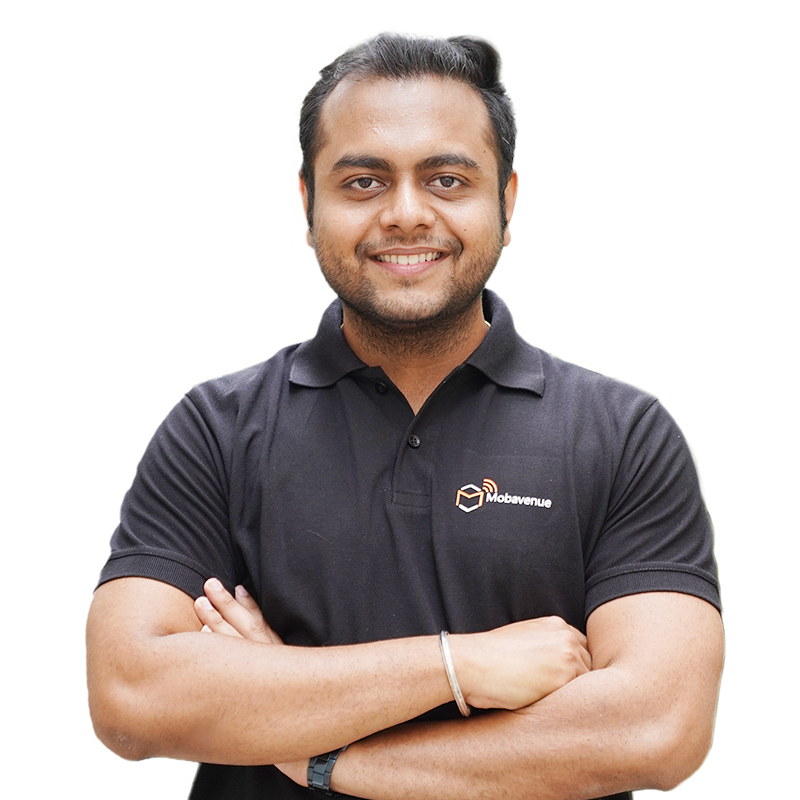
    Mumbai: Mobavenue Media is a 360° growth and tech platform dedicated to empowering brands, agencies, and media publishers with mobile-first solutions to drive growth, engagement, and monetisation. Their product suite is custom-tailored to design a more valuable experience for the user by creating real connections and driving performance. They help brands with acquisitions, retargeting, growth management, and monetisation in India, Southeast Asia, Latin America, Europe, and Australia. Their various proprietary in-house platforms optimise towards end business goals and growth paths using predictive media solutions to run brand performance-driven campaigns for their partners. Mobavenue’s team is based in eight locations: Delhi, Mumbai, Singapore, Jakarta, Dubai, Sydney, Moscow, and London.

    Indiantelevision.com caught up with Mobavenue Media co-founder & chief operating officer Tejas Rathod to find out more. He has more than eight years of experience in the tech industry. Back in 2014, he was associated with Chillofy LLP as co-founder & chief operating officer. His one-stop solution is to deliver end-to-end advertising solutions, helping brands, app developers, digital marketers, and companies to execute performance-driven campaigns in India and across Southeast Asia. Rathod has been part of events such as AW, iGB Affiliate, ICE London and a few others.

    He has always been an outgoing person with a zeal for travel and exploring new ideas through natural exposure. He can always be found working in and around communities. To keep himself highly productive, he regularly attends business events, networking with potential clients and talent. Rathod strongly believes that millennials have all it takes to create a better world full of opportunities and elevated living.

    He loves staying up to date with the latest digital trends. When he finds time to himself, Rathod likes playing classic strategic board games and watching documentaries about business, leadership, and anything interesting with loads of insights.

    Excerpts:

    On the market gap that Mobavenue saw when it was launched in 2017

    There was a significant market gap between advertisers and publishers in acquiring high-quality users and monetizing their assets efficiently. To meet their end goals, brands required holistic KPI-oriented data-driven technology that maximised ROI while improving user acquisition, growth, engagement, and monetization. We have been successfully bridging that gap since our inception and have seen the market size upscale, building a standalone platform for brands and partners, creating a win-win position for all parties.

    On the company’s USP

    Our USPs are rooted in audience, acquisition, growth, and re-market with a stronghold in audience segmentation and performance-driven campaigns. Our in-house proprietary solutions optimise towards end-business goals and growth paths using predictive buying and supply-side modelling. User behaviour and acquisition through precise targeting is the focus of AI audience segmentation. We ensure brand and fraud safety while focusing on placing relevant content using relevant contextual ads.

    On how covid impacted the business

    The pandemic impacted many industries. We witnessed the world shift towards a digital-first approach. Online shopping was the new norm during the pandemic. As a result of this, people in general, as well as companies, pivoted to an online approach. There was a surge in terms of online activities and purchases. Since the majority of people were indoors, a surge in ad consumption and viewership took place in the online purchasing funnel. We did quite well during the pandemic as most of our customers are digital-first from different sectors such as banks and non-banking financial companies (NBFCs), fintech, OTT, fashion and lifestyle, leisure and entertainment, gaming, e-commerce, apparel, D2C, retailers, and more.

    On the goals set for 2022 and the game plan to get there

    We are expanding our verticals in terms of company strength and new products with future in-demand technologies. We are transitioning and integrating with the advent of newer forms of technology. We aim to evolve and drive growth in different sectors. We are spearheading martech and adtech solutions.

    On how Mobavenue helps D2C businesses be more cost-efficient

    We have worked with numerous D2C brands to meet their objectives while focusing on cost-effectiveness with our in-house products in programmatic acquisition, re-targeting, and growth management. Our unique marketing solutions help D2C businesses with in-app advertising strategies.

    On Mobavenue’s products like DSP, partners, etc.

    We are a tech-driven platform focusing on acquiring relevant users with our product offering, which includes: DSP, programmatic, premium partner, and OEM solutions; display ads; publisher-first SSP; re-target and re-market AI, DMP, mobile SDK, and exchange to reach high-quality global audiences.

    On some of the work that Mobavenue does with clients

    We work with 150+ brands. Mobavenue has successfully provided unique programming strategies to numerous banks and NBFCs like ICICI Bank, IndusInd Bank, Kotak Mahindra Bank, KreditBee, Freecharge, Navi Finserv, Nira Finance, Fi Money, Unicard, OneCard, and Policy Bazaar by implementing dynamic creatives and other efficient in-house media tools. Their cutting-edge, advanced mobile advertising solutions have optimised the ROI of banks and NBFCs and helped them achieve promotional brand exposure, faster conversions, improved user acquisition, and customer retention.

    Mobavenue has generated good traction in leading D2C companies with the help of its in-house products in programmatic acquisition, retargeting, and growth management. Tier II, III, and IV cities are primarily responsible for D2C growth because they have wealthy but brand-deprived consumers who are willing to try new items. With the help of regional and vernacular publishers, in addition to premium listings, Mobavenue was able to scale to these markets and reach new consumers.

    On how Mobavenue helps OTT platforms boost subscription levels

    Using programmatic user acquisition and unique targeting methods, we have helped OTT brands drive paid subscriptions, views, and retention. The OTT market has a set of unique challenges, which require unique solutions too. Our expertise and partnered technologies leverage OTT platforms with a full-funnel approach such as acquisition, retargeting, monetisation, and promotion.

    On the factors needed for an SVoD platform to succeed in a price sensitive market

    Subscription video on demand (SVoD) platforms are highly competitive markets, resulting in customers being more price-sensitive than ever. The availability of faster mobile internet has increased the number of overall users. To succeed in this competitive market, platforms need to consider a pricing model that offers a value proposition and customer satisfaction. Providing customers with multiple options regarding tiered pricing, trails, and discounts will help attract new audiences.

    On the work done by Mobavenue for the gaming industry

    We have executed CPA models for different gaming apps, which have helped them achieve their business goals. Our well-planned and structured marketing tactics have leveraged gaming brands to reach new audiences and increase app downloads compared to their competitors.

    On the role that AI is playing in media planning and buying

    Media buying can be a rigorous task. AI plays a developed role in aggregating data between traditional and digital channels. Sales operations can be further monitored and raise alerts with potential risks. AI can also learn and adapt to changing situations, making it much easier to optimise before closing deals.

  • Disney+ Hotstar launches LEAP program for agencies

    Disney+ Hotstar launches LEAP program for agencies

    Mumbai: Disney+ Hotstar has announced the launch of LEAP – An educational program for agency planners on advertising solutions and online video marketing on Disney+ Hotstar.

    Through this program, agencies will gain in-depth knowledge and expertise in planning and executing strategic digital campaigns. The first session of LEAP goes live on 25 November with team Dentsu India.

    From media to measurement, the two-day program will cover various aspects for agency planners on digital advertising and media planning and help them to understand how to leverage Disney+ Hotstar’s advertising solutions to maximise brand visibility, said the platform in a statement.

    “At Disney+ Hotstar, our constant endeavour is to equip advertisers and agencies with solutions that bring them closer to their customers and help them stand out in the industry,” said Star and Disney India head – ad sales Nitin Bawankule. “With the digital world evolving rapidly and online video marketing platforms playing an extremely important role in consumers’ lives, it is imperative to comprehensively understand the potential these platforms offer. Through LEAP, we aim to further strengthen our commitment towards the digital advertising ecosystem by equipping them with insights and knowledge that will help them maximise outcomes.”

  • How Covid2019 impacted ad rates & consumption of news genre

    How Covid2019 impacted ad rates & consumption of news genre

    NEW DELHI: Covid2019 impacted every category of the television business. In the news genre, ad volumes, as well as ad rates, were hit initially, but have since regained momentum. There was a massive surge in viewership, which is now beginning to stabilise. And with more and more people getting onto the digital platform, the news consumption pattern has witnessed a slight change.

    In a session titled – ‘Advertising on News’ at Indiantelevision.com’s News Television Summit, co-powered by TVU Networks, eminent advertisers and agency heads discussed how stakeholders in this business are analysing the rapid changes and adjusting their strategies to it. The panellists included FBB, Future Group CMO Prachi Mohapatra, Policy Bazaar head of brand marketing Samir Sethi, Wavemaker CEO – south Asia Ajay Gupte, Essence SVP & MD – India Anand Chakravarthy, ITV group CEO Varun Kohli. It was moderated by E&Y partner M&E Ashish Pherwani.

    Pherwani began by asking Kohli how he sees the ad rates at news channels in the current scenario. Kohli mentioned that Covid2019 had hit everyone adversely big time. “The FMCG brands that were operating on the other genre started coming to the news genre because the latter was growing. All other genres were lacking fresh content, except movies where the channels just played their libraries. Overall, the news genre was impacted for the first two months of the financial year but then it regained,” added Kohli.

    He elaborated that in the post-Covid scenario, especially during the festive season and election times, the frequency news channels will be able to get their old rates back. “So maybe the leaders might not have gained it yet but the frequency channels have started getting their rates back in some order because they are making a lot of sense to the agencies and advertisers in terms of CPRP mix.”

    Adding to this Gupte from Wavemaker shared that Covid was a big blessing for the news genre. “GEC was not launching fresh content and newspapers also suffered during that time, which led to news on television doing really well. During that time, there was a high viewership throughout the day and the viewership among women also went up. Interestingly, we are also seeing a lot of appointment viewing coming into play, which was not there earlier. Previously, the news channels sold on the basis of TRPs or day parts, but now it’s also selling some shows that command a premium,” explained Gupte.

    He went on to add that during this time a lot of extended family viewed news channels, so it will be interesting for the latter to think about creating content that works for other family members too.

    Pherwani then touched upon changes in consumption of news on the digital front, especially more after the Covid period, to which Chakravarthy from Essence responded that people are fast moving towards digital consumption.

    “I think with English news genre, building a product which is completely differentiated and is able to add value over and above what a digital platform to my mind will determine how long this genre will exist. If we do not change the nature of how English news channels position themselves and their content and what they offer, I fear that they may be over indexed today and will start witnessing a decline in ad revenue before it starts moving to digital very quickly – especially in a country like India, which is rapidly becoming digital. On the other hand, in the language news sector, the content and consumption of news is picking up slowly. It is happening but there is a possibility of a longer run,” he outlined.

    Seeking a marketers point of view, Pherwani called upon Mohapatra, who mentioned that the digital consumption has rapidly increased especially from the start of the lockdown. However, her mantra regarding spends on digital news is that she seeks a brand-safe environment to operate and a clear RoI on it.

    On the other hand, Sethi from PolicyBazaar stated that his brand continues to stay bullish on TV as it is extremely RoI focussed. Moreover, television offers the consumer freedom to surf the internet. He mentioned that whenever a PolicyBazaar spot runs on television, a simultaneous surge within 10 seconds is observed by the brand while it is mapping the data. People can watch the spot and engage with the brand on the website but when a similar set of audience is watching news on OTT, they hold back from exploring the internet.

  • Brands should focus on creating content that fits their space

    Brands should focus on creating content that fits their space

    MUMBAI: Every individual during the lockdown is trying to master one or the other skill.  But they are not realising that it is okay to ignore the pressure of productivity. Apparently, productivity is not a synonym for safety, health or sanity. This point was raised by Oaktree founder Gaurav Kapur during a webinar discussing the business of content in a post-Covid world, hosted by The Advertising Club Bangalore.

    Kapoor said: “I just want to tell people that it is not a productivity contest which people initially taught it is. It is the race for survival. During the first thirty days people though it is a party, but slowly people are realising that the situation is quite dire. And now there is a shift in the mood and behaviour of people. I have a team of 25 people at Oaktree. It is not just about generating revenue but also have some things that keep the team motivated; we are trying to keep busy by generating content”

    The other panellists in the virtual discussion included Pocket Aces founder Ashwin Suresh, Duroflex VP marketing Smita Murarka, Nodwin Gaming MD Akshat Rathee, Wavemaker VP and Kishan Kumar MS. The panel was moderated by Wavemaker chief content officer Karthik Nagarajan.

    Explaining the measures taken at Pocket Aces, Suresh added, “In the initial week of lockdown we realised the repercussions. So, accordingly we made the arrangements by moving the system to people’s houses. Post that, we started working on forward content; we were planning a lot of shoots that could be done during lockdown. We started researching about what is happening in the countries where lockdowns happened before India. Our HR team started preparing scenarios if it is going to be 20 day or 30 day but now it is almost 70 days. So we in a way had a capability to move into the productive mode.”

    According to experts, it is time for motivating people as well as focusing ways on generating revenue systems.

    There are two kinds of advertisers: those who spend a lot of money on advertising and those playing it safe. And others who are seeing this period as a great opportunity and are being more aggressive when it comes to content.

    “Before Covid2019 we were educating clients about the importance of sleep but according to Indian mentality burning the midnight oil is great. For Duroflex as a brand the situation has come very positively and organically where we say that sleep builds immunity. We were able to take this conversation out in the world through digital and TV medium in a much stronger way than we could have done earlier,” says Smita Murarka.

    According to Murarka, posting the right content that fits today's environment has helped them a lot. There was an increase in the traffic on the site by 4x times. She also highlights that it is important for other brands to see if the occasion relates to you and how much connection you can draw from it organically. It is not a performance contest or a competition. Brands should see if the content is in their space and strengthen that further to help people.

    Gaming industry is one of the few sectors that has seen growth or is faring better than other industries.

    Elaborating on the same, Nodwin Gaming MD Akshat Rathee said that working from home for a sector like gaming and e-sports is easy. “We already knew that PUBG mobile was doing well before it became popular. My servers are melting down because people are playing too much and watching too much. On the other side platforms like Netflix are very passive because when you watch too much it creates an urge of doing something live. E-sports comes at the top tier of gaming.”

    This year was very challenging in terms of ad spends. Currently, live entertainment has come to a standstill. Major sports events like IPL and Olympics are not happening.  Considering this scenario Nagarajan pointed a question towards Kishan Kumar on how it will impact a market like India.

    “As agencies we are consultants. So, basically consultancy is based on past knowledge and here we don’t have any rule book on issues like this. As an industry we work on passion points, whether it is cricket or live game or entertainment. So, when you are in a situation where a large aspect of the industry is taken away is very difficult. As long as brands and advertisers stick on to a passion point to engage with consumers that passion point translates into different ways of expression. This pandemic has also taught us to go back and rediscover our fundamentals,” added Kishan Kumar.

  • Agencies should add news genre to regular planning: Network18’s Karan Abhishek Singh

    Agencies should add news genre to regular planning: Network18’s Karan Abhishek Singh

    MUMBAI: The news genre should be included by agencies for its impact as a full planning platform and not just an add-on. This was the view echoed by News18 Network CEO-languages Karan Abhishek Singh at Tele-Wise Tamil 2019 organised by Indiantelevision.com on 6 August 2019.

    At the event, Singh spoke on the relevance of the news genre in the Tamil Nadu market which is dominated by GECs and movies. He said that news as a genre has grown fastest in the past one year.

    Mapping the growth of regional news channel in the state, Singh urged advertising agencies to add the news genre to their regular planning. He explained that in the last one year the peaks in news are significantly higher from the demise of Tamil Nadu former CM M Karunanidhi to cyclone Gaja to the national election to Article 370. The peak has been breached around 18 to 19 times. “These are the big event days which create an impact on the viewers and the advertisers. Two or three impacts in a month is an opportunity for the advertisers,” he said.

    The top categories on news channels are largely retail outlets. Apart from male-targeted products, news genre is delivering to response-driven categories like retail, film, real estate etc. and these categories have been using the genre consistently. The genre also has the potential to drive long term brand imagery for brands- auto, travel and tourism and insurance.

    He also mentioned that auto categories have started advertising on regional channels. Travel and tourism has also become a critical mass category on news. “So the news genre on its own needs to be looked at very differently and not just a frequency builder as part of an advertising campaign because it is the platform that delivers impact consistently month after month,” he said.

    Singh believes that news is the fastest growing genre in the country and a large part of this is because of regional news channels. “The genre is growing largely across regional channels and partly in Hindi but not so much in English which was the traditional forte of news consumption,” he said.

    “In regional space, the south market is extremely news intensive. When it comes to news consumption, Tamil Nadu out-consumes some of the states by as much as 2:1 ratio,” he said.

    Within the South, the interesting part is that Tamil Nadu has very unique pattern of consuming news. The Tamil Nadu audience watches more news in the early morning. About 55-56 per cent of the day’s viewership comes from the time band of 6 am to 2 pm. “Tamil Nadu news has given a completely new definition to news primetime. There is no other market which has this kind of pattern,” opined Singh.

    Singh also said, “At overall TV level, Tamil Nadu is one of the largest viewership markets in the country based on the component of early morning and mid-day news viewership and traditional primetime viewership on GECs and movies. And with every spike in the news cycle, the overall TV viewership increases. News is consistently among the top three genres in the state and continuously reducing the gap with the second genre i.e. movies.”

    Singh concluded, “A few years ago, the reach of news was 52 – 53 per cent and today news reaches 70 per cent of the viewership on a weekly basis. The news genre is rapidly growing in Tamil Nadu because of its sticky content. Regional news channels have the opportunities to build and by this I don’t mean by sensationalising the news but going deeper into what matters in that particular region. We need to engineer the revise brain drain from the larger national platform into the regional platform.”

  • WATConsult celebrates 11 yrs with unique board game

    WATConsult celebrates 11 yrs with unique board game

    MUMBAI: WATConsult, the digital and social media agency from Dentsu Aegis Network, has launched PlayAgency, an innovative board-game, as part of its 11th anniversary celebration. To break the monotony of regular anniversary campaigns, the agency came up with something unique which caters to all advertising industry individuals. 

    Facebook

    The idea behind launching PlayAgency is that every agency in India, be it digital, creative, OOH or BTL is somewhere connected. They might be different in nature, but deep down they all are the same; every agency has diverse strengths, but one common aim. The approaches may differ at times, but the challenges connect them; they might be divided by experiences, but their spirit remains the same. 

    Taking this thought forward, the board-game has been made, which allows players to run an ad agency and experience all the highs and lows of it. Players will have to take tough decisions, win clients, acquire companies, manage pay-cheques, chart a vision for the company along with other similar tasks.

    Along with this, WATConsult ran a digital campaign called #EveryAgencyEver, which highlighted the daily challenges and joys which takes place in every agency, in terms of client approvals, campaign ideas, pitches and follow ups amongst others. The agency even launched its own Facebook party filter for everyone to join in the celebrations.

    WATConsult founder and CEO Rajiv Dingra says, “On the occasion of our 11th anniversary, I would take this opportunity to thank every single person who has been a part of the WAT journey. Our team, former teams, clients and our network; it wouldn’t have been the same without you.”

    Dentsu Aegis Network chairman and CEO South Asia Ashish Bhasin mentions, “I would like to congratulate WATConsult on their 11th anniversary and wish them many more successful years ahead. I had a great time playing PlayAgency with Rajiv. It’s interesting to actually play a game of something we all agency individuals live by every day.”

  • What agencies need to do for their clients

    What agencies need to do for their clients

    GOA: Often clients are in a quandary when it comes to partnering with an agency. A session at Goafest 2016 organized by AAAI and the Advertising Club attempted to shed light on some of the factors that a client needed to look at when it came to a business partnership with an advertising agency. The Industry Conclave presented by Discovery Channel discussed the key elements that needed to be focused on when it came to what clients as well as agencies needed to do.

    The topic of the day was ‘3 things the agency can do better’ with the speakers discussing client agency partnerships while highlighting some of the possible avenues where such partnerships could be strengthened by the agency.

    Setting the tone for the discussion was Mondelez India MD Chandramouli Venkatesan who spoke about what agencies could do to make strong partnerships. Underlining four factors that were important for a better client-agency relationship, Venkatesan said that they included providing complementary strengths in addition to shared purpose and passion, trust and friendship. Inspired by the partnership between the famous duo Jay and Veeru in the Bollywood blockbuster Sholay, Venkatesan said, “It takes effort to create a partnership like Jay and Veeru. A partnership is a two way street. You get back exactly what you put in it”.

    He further discussed the three key things that agencies could do for better partnerships. Outlining the importance of generating trust in this two way process was the main focus point which was the bedrock for honest and open communication.  “Trust enables cutting-edge work. Trust is actually what enables the brave decision making you so often want to make,” he further added.

    Citing examples of the risks that were taken by his company with three of its clients’ ads, namely, Cadbury Gorilla, Bournvita Taiyyari and Cadbury Dairy Milk Silk, Venkatesan said that his company believed that risks could be taken when there was trust in the relationship. The three main aspects required to earn trust were mainly through better decision making while keeping the client interest in mind; by being commercially responsible; and by not compromising on integrity.

    To win the talent battle, agencies had to disrupt their talent model and must attract the best talent. “Ideas are temporary, talent is permanent. Talent gives rise to new ideas. One of the most important things is to build brand stewardship. It’s about quality and longevity of talent”, he said. “Ideas can work great, but not build stewardship.”

    Another important thing that he stressed on was to build strong processes. Preparing for a strategic alignment at multiple levels, building project management capability and a strong team management was what the agencies need to invest in. “Process is a dreaded term in the agency world. Process is an enabler of creativity. Great partnerships always deliver outstanding results” concluded Venkatesan.

    While on the other hand, United Breweries Ltd SVP marketing Samar Singh Sheikhawat pointed out that the agency as well as the client needed to know the business. A major part of understanding the client, according to Sheikhawat, was understanding the consumer. “With multiple realities in India, we ourselves don’t understand the entire world as it changes every now and then. Different countries have different business problems and hence different solutions. We have to know our consumers”, asserted Sheikhawat.

    With the evolving medium of delivering messages, there was an observable explosion of content leading to multiplication of content and hence amplification of platforms to give out multiple content. Citing the example of how Kingfisher Buzz was launched he said, “With 99 per cent of males drinking beer, we noted that we have to also deliver something to the female population. The biggest challenge that we face is that our product does not deliver to a majority of the population”.

    Agreeing with the key points mentioned by Venkatesan, he further added that the agencies need to have creative solutions to the common problems faced by the clients.

    With key notes from FMCG and brewery companies, the next speaker on the row enlightened the audience about what an automobile client looked for in an agency. To maintain the status of the favourite hello and the hardest goodbye between the client and the agency, Volkswagen AG head of connections panning, media and international communications Oliver Maletz summed it up succinctly by saying that the agency should be the one entity that the client calls first and hangs up on last. He said, “Agencies need to focus more on thinking harder before becoming true business partners. They should know our business better than us”.

    With competitive analysis, industry analysis, suability benchmarks and situational assessment, an agency could identify opportunities and reach a successful goal. “There are more opportunities now than what we had in the past. I think the agencies should be open to take risks”, he added.

    He further advised that an agency should not innovate just for the sake of being innovative. It should deliver meaningful value to a meaningful number of people. With agencies approaching clients through a ‘selling’ perspective, Maletz pointed out that the agencies should stop selling their ideas, capabilities, companies, inventories, etc., to the clients. “Start helping us to sell our products and build a better brand. Be our business partner and stop selling yourself”, he added further. He concluded by saying, “Everything will follow with a good business partner”.
    The evening of the Industrial Conclave wrapped up with a short panel discussion where the audience was encouraged to pose their questions to the experts via the Goafest 2016 app which had been specially designed to facilitate the best digital experience for the attendees of the festival.

  • What agencies need to do for their clients

    What agencies need to do for their clients

    GOA: Often clients are in a quandary when it comes to partnering with an agency. A session at Goafest 2016 organized by AAAI and the Advertising Club attempted to shed light on some of the factors that a client needed to look at when it came to a business partnership with an advertising agency. The Industry Conclave presented by Discovery Channel discussed the key elements that needed to be focused on when it came to what clients as well as agencies needed to do.

    The topic of the day was ‘3 things the agency can do better’ with the speakers discussing client agency partnerships while highlighting some of the possible avenues where such partnerships could be strengthened by the agency.

    Setting the tone for the discussion was Mondelez India MD Chandramouli Venkatesan who spoke about what agencies could do to make strong partnerships. Underlining four factors that were important for a better client-agency relationship, Venkatesan said that they included providing complementary strengths in addition to shared purpose and passion, trust and friendship. Inspired by the partnership between the famous duo Jay and Veeru in the Bollywood blockbuster Sholay, Venkatesan said, “It takes effort to create a partnership like Jay and Veeru. A partnership is a two way street. You get back exactly what you put in it”.

    He further discussed the three key things that agencies could do for better partnerships. Outlining the importance of generating trust in this two way process was the main focus point which was the bedrock for honest and open communication.  “Trust enables cutting-edge work. Trust is actually what enables the brave decision making you so often want to make,” he further added.

    Citing examples of the risks that were taken by his company with three of its clients’ ads, namely, Cadbury Gorilla, Bournvita Taiyyari and Cadbury Dairy Milk Silk, Venkatesan said that his company believed that risks could be taken when there was trust in the relationship. The three main aspects required to earn trust were mainly through better decision making while keeping the client interest in mind; by being commercially responsible; and by not compromising on integrity.

    To win the talent battle, agencies had to disrupt their talent model and must attract the best talent. “Ideas are temporary, talent is permanent. Talent gives rise to new ideas. One of the most important things is to build brand stewardship. It’s about quality and longevity of talent”, he said. “Ideas can work great, but not build stewardship.”

    Another important thing that he stressed on was to build strong processes. Preparing for a strategic alignment at multiple levels, building project management capability and a strong team management was what the agencies need to invest in. “Process is a dreaded term in the agency world. Process is an enabler of creativity. Great partnerships always deliver outstanding results” concluded Venkatesan.

    While on the other hand, United Breweries Ltd SVP marketing Samar Singh Sheikhawat pointed out that the agency as well as the client needed to know the business. A major part of understanding the client, according to Sheikhawat, was understanding the consumer. “With multiple realities in India, we ourselves don’t understand the entire world as it changes every now and then. Different countries have different business problems and hence different solutions. We have to know our consumers”, asserted Sheikhawat.

    With the evolving medium of delivering messages, there was an observable explosion of content leading to multiplication of content and hence amplification of platforms to give out multiple content. Citing the example of how Kingfisher Buzz was launched he said, “With 99 per cent of males drinking beer, we noted that we have to also deliver something to the female population. The biggest challenge that we face is that our product does not deliver to a majority of the population”.

    Agreeing with the key points mentioned by Venkatesan, he further added that the agencies need to have creative solutions to the common problems faced by the clients.

    With key notes from FMCG and brewery companies, the next speaker on the row enlightened the audience about what an automobile client looked for in an agency. To maintain the status of the favourite hello and the hardest goodbye between the client and the agency, Volkswagen AG head of connections panning, media and international communications Oliver Maletz summed it up succinctly by saying that the agency should be the one entity that the client calls first and hangs up on last. He said, “Agencies need to focus more on thinking harder before becoming true business partners. They should know our business better than us”.

    With competitive analysis, industry analysis, suability benchmarks and situational assessment, an agency could identify opportunities and reach a successful goal. “There are more opportunities now than what we had in the past. I think the agencies should be open to take risks”, he added.

    He further advised that an agency should not innovate just for the sake of being innovative. It should deliver meaningful value to a meaningful number of people. With agencies approaching clients through a ‘selling’ perspective, Maletz pointed out that the agencies should stop selling their ideas, capabilities, companies, inventories, etc., to the clients. “Start helping us to sell our products and build a better brand. Be our business partner and stop selling yourself”, he added further. He concluded by saying, “Everything will follow with a good business partner”.
    The evening of the Industrial Conclave wrapped up with a short panel discussion where the audience was encouraged to pose their questions to the experts via the Goafest 2016 app which had been specially designed to facilitate the best digital experience for the attendees of the festival.

  • “Think mobile as ad dollars are heading there”: CVL Srinivas

    “Think mobile as ad dollars are heading there”: CVL Srinivas

    MUMBAI: Several market forecasts that we have seen in the past couple of months project digital advertising and marketing growing by leaps and bounds this year. The historical galloping growth rates have led marketers and planners to consider the possibility that the medium will overtake television spends in the near future.
     

    Brand custodians are no longer investing in digital as an added benefit but are thinking about investments on that front from the get-go. So is digital gnawing away at television’s share of ad spends or is its growth coming courtesy a new breed of brand builders?


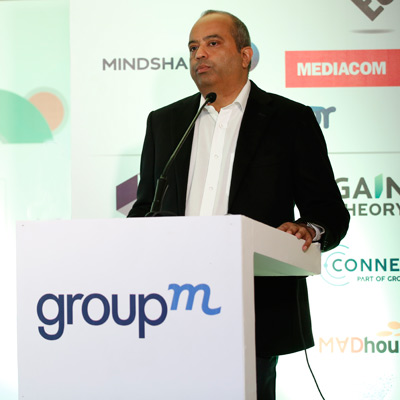
    Group M South Asia CEO CVL Srinivas does not think that TV is losing its edge. “Television is riding the digital wave, and smartly so”, says the veteran waving off any worries of television ad revenues seeing a dip this year. Not denying the obvious growth one sees in the digital space, Srinivas gives indiantelevison.com a complete breakdown of  how the digital growth works in favor of broadcasters and content providers, while also touching upon the key trends in the market, the changing role of media agencies and his take on the currently mushrooming of several digital agencies in the market. Excerpts from an interview with indiantelevision.coms Papri Das. 


    Here it is:


    How was 2015 for GroupM as a whole? What were the agency’s benchmark developments?


    2015 was a great year for us in GroupM. All our agencies performed well, especially when it comes to client retention which I consider most important. On the client acquisition front as well, we grew our business with several new accounts.


    Last year has also been kind to us when it came to awards. The GroupM Office of Year award, which is given out by GroupM APAC, was given to us last year. That’s something I consider as another high for us.


    For me, 2015 would be the year when we truly broke out of the mould of pure play media agency and delivered a range of different services to our clients to help them keep ahead of the curve. Over the years we have made investments in data, analytics and experiential marketing, cinema advertising and rural marketing and so on. All of that delivered excellent value to our clients last year. That has helped us diversify our offerings and in turn win us new and interesting mandates as well. Apart from that we have actively involved ourselves in the Mobile Marketing Association to help set standards and get some measurements going.


    Out of the four agencies under GroupM in India, which one do you think performed the best?


    I think all of them did exceptionally well and I say this with confidence based on each of the agency’s client retention and the newer arenas that they ventured successfully into.


    How was the year for the industry at large? Did you notice any changes that majorly impacted the industry?


    Last year we projected 12.7 per cent growth in ad expenditure and I must say we erred on the conservative side at the start of the year and we ended up with 14.2 per cent, but no one’s complaining!


    Several factors led to this development. The FMCG sector despite all the pressure it is facing continues to invest big money behind brands. You also saw huge growth coming in through e-commerce and there were quite a few brands that continued to invest throughout the year.


    What key trends do you see emerging in the market in 2016?


    Very clearly, our clients and brands in general are adapting to mobile as a medium. Till few years ago we hardly had ten or twenty clients, today the count is around 150. Advertisers are actively investing in campaign after campaign, month after month, by experimenting with new formats and following the measurements.  That is something I see taking off in a major way this year as several enablers are supposed to come into place in 2016.


    E commerce is emerging as a platform for advertisers in 2016 which can give an interesting spin to ecosystem.


    Apart from this we see several interesting initiatives happening in the content space, especially in the video and branded content space. This can give a further push to mobile advertising. The real big headline for me is mobile driving digital growth and in turn driving ad growth in India, and getting all traditional medium owners – be it broadcasters or be it print publication – to think mobile fast and think mobile first, because that’s where most of the advertising dollars are gonna flow to.


    What do you think will dictate how marketers spend this year?


    Right now we observe that marketers are a bit circumspect on where and when to invest. We are not yet seeing any major budget cuts otherwise our numbers in the GroupM This Year Next Year report for 2016 wouldn’t have looked so good.  But there is definitely an amount of cautiousness creeping in amongst advertisers.


    I think this year they are going to look at a lot more Return On Investment (ROI) and accountability across different media platforms. I also think they will wait and watch the market before deploying any of their long term campaigns and investments across media channels. Unless a property is tried and tested it will go through intense scrutiny before marketers decide to invest. Tracking of ROI and tracking of what the marketing spends are doing to the overall business will be key drivers for brands this year.


    Brands are increasingly seen as the sum of all customer touch points and this in turn increases the scope of marketing. In this context, how is the role of agencies changing?


    We think we are becoming even more relevant in the current scenario and important at the end of the day given the way the marketing and the media landscapes are shaping. Today consumers have multiple choices when it comes to brands and media consumption channels. In the same way advertisers and marketers also have multiple options to invest in. It can become highly confusing for the clients. That’s where GroupM  went ahead of the curve and started investing in multiple media investment management  services so that our clients can have a holistic marketing strategy and solution.


    What percentage of your business is “traditional” or core media now?


    I can’t share the break up but if you look at the market split, and the fact that we are future focused we tend to concentrate on wherever the marketing is moving to step ahead of it.


    A lot has been said about digital advertising overtaking television as the primary medium. What’s the ground reality?


    If you look at the trends in the last few years, not just in India but across markets we see a lot of synergy between television and digital. Looking at it from a consumer’s lens, you and I watch television and also consumer media on our second screen be it mobile or laptop. There is some amount of interplay happening between the screens.


    Looking at it from a broadcaster or content providers angle, most major broadcasters today have their own digital arms. And hence, I say television is actually riding the digital wave. Broadcasters are doing it very smartly, unlike other media which are getting swamped by digital. We see that trend continuing. Inf act if you look at our forecast figures, TV and digital account for close to 60 per cent of the market share of the total ad expenditure, and we see that number move to 70 to 80 per cent in near future.


    Is India truly ready for mobile marketing? Do we have a road map for it?


    There are several developments that have happened in the recent past. I have been personally involved in setting up the Mobile Marketing Association (MMA). Despite India being one of the top markets globally for mobile, we did not did not earlier have a body that monitors the digital marketing space. Therefore we needed this body where all stakeholders can come and ideate and put in place systems and structures for the medium. A lot of useful discussions have happened in the recent past be it on measurement and advertising standards and MMA as a body has done phenomenal work across the market. That is one of such several initiatives that will show its effect in 2016.


    What impact did BARC rural inclusive data have on the TV industry and on advertisers?


    I think it’s still early days to comment on BARC’s rural ratings. It’s only few weeks that they have come out. It is a very positive development. Rural India’s viewership accounts for a sizable chunk of our market. It’s a very aspirational class and important segment for many products and categories. To have data for this segment is a very good development.


    Though we will have to wait on watch how the data impacts the market, it is sure that advertisers are going to look at rural markets a lot more seriously especially in terms of media investment deployment across TV and other media options. Similarly content creators are also going to look at that space a lot more seriously today and come up with relevant products and offerings.


    And over all it is good for the economy and the country because we are finally becoming a lot more inclusive.


    How will the advertising landscape change with the completion of cable television digitization in India?


    Funny thing about India is that nothing ever happens sequentially…..everything happens together….somehow amalgamating. This actually makes our job fun because on the one hand you have the whole cable TV digitization playing out and DAS phase III being rolled out, and a lot of DTH players have gotten very active. On the other hand you have the 4 G launch that will open up a lot more bandwidth and infrastructure in digital and you have mobile crossing 1 billion connections.


    For marketers and advertisers what this means is to be aware of the developments, keep a close eye on them and see what are the opportunities they can capitalize on in short term and where is it that they need to invest, test and learn so that they can start capitalizing on them in the long term.


    The big lesson for us and specially me has been that we need to be constantly in a state of beta. What do we keep testing and learning today which could become a big thing tomorrow. Staying dynamic is the way to go.


    2015 also saw several well-known creatives and executives setting up their own startups, resulting in a mushrooming of several branded content and digital agencies. What is your take on this development?


    I think it is a good thing that bright young individuals are setting up companies on their own.  In fact some of us wouldn’t have jobs if this wasn’t done earlier. It also shows that today there are so many different areas that are emerging, and with the way the industry is being revolutionized there are many different expertise and special skill sets that the marketers need. I believe all of us can co-exist as one happy family because of the way the whole pie is getting fragmented. A lot of them are my dear friends and I wish them all the best.