MUMBAI: The American Film Institute (AFI) Awards 2012 Official Selections have just been announced.
AFI Award Honorees are selected based on works which best advance the art of the moving image, enhance the rich cultural heritage of America‘s art form, inspire audiences and artists alike, make a mark on American society and represent the year‘s most outstanding achievements in film and television. AFI is the only national organization that honors the creative ensembles as a whole, acknowledging the collaborative nature of the art form.
AFI president, CEO Bob Gazzale said, "AFI Awards celebrates America‘s storytellers as collaborators. We are honored to bring together artists as a community, without competition, to acknowledge the gifts they have given the world in 2012."
AFI Movies Of The Year
Argo
Beasts Of The Southern Wild
The Dark Knight Rises
Django Unchained
Les Miserables
Life Of Pi
Lincoln
Moonrise Kingdom
Silver Linings Playbook
Zero Dark Thirty
AFI TV Programmes Of The Year
American Horror Story: Asylum
Breaking Bad
Game Of Thrones
Girls
Homeland
Louie
Mad Men
Modern Family
The Walking Dead
‘Mad Men‘ now tops the list as the most recognized AFI Awards TV honoree, with 2012 marking its fifth appearance in the AFI almanac, followed closely by ‘Breaking Bad‘, ‘Everybody Loves Raymond‘, ‘Modern Family‘, ‘The Sopranos‘ and ;‘The Wire‘ each with four AFI Awards honours since 2001.
Tag: AFI
-
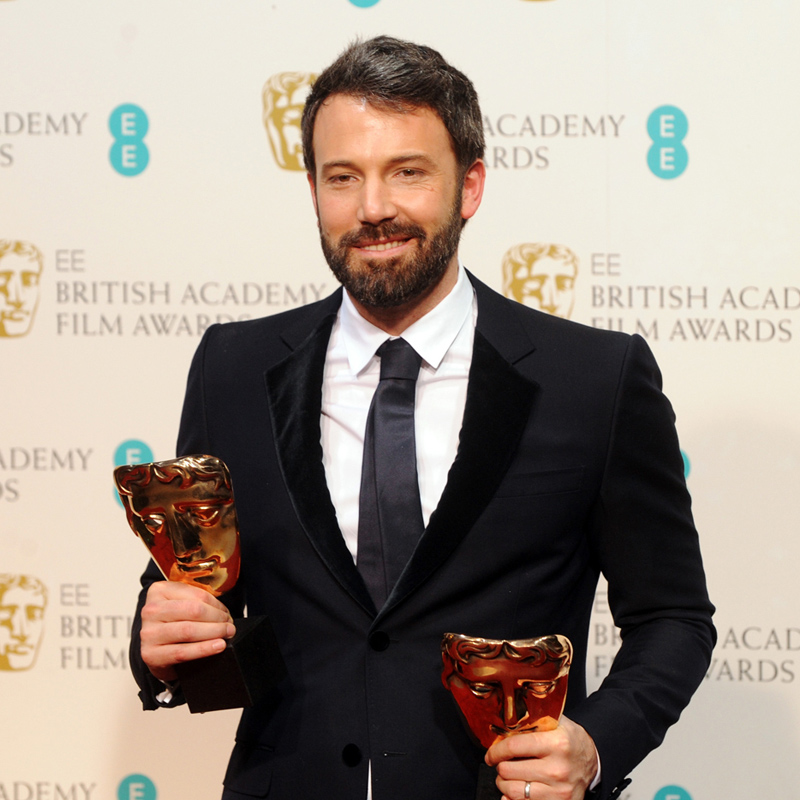
‘Argo’, ‘Lincoln’, ‘Zero Dark Thirty’ among AFI’s top 10
-

‘Our aim is to see that India is a top 5 market for us in 2 years’ : Sony chairman, CEO and president Sir Howard
Sony Corporation expects India to be among its top five markets by sales in the next two years.
Betting big on 3D, Sony chairman, CEO and president Sir Howard Stringer is targeting 30 per cent of its India sales to come from 3D products by 2012.
The first non-Japanese head of Sony feels that the company needs to improve its broadcasting business in India and build synergies across all its verticals.
Stringer was in Mumbai to inaugurate Sony Media Technology Centre (SMTC) in association with Whistling Woods International (WWI), Indiantelevision.com‘s Ashwin Pinto unravels Stringer‘s plans in India.
Excerpts:
India only forms three per cent of Sony‘s global sales of around $88 billion. How do you explain this, given the large consumer base here?
While this is true, our aim is to see that India is a top five market for us in the next two years. Year on year we have experienced a 50 per cent growth in turnover. Our commitment is to establish a strong brand here.We were not quick to come here with all the facets of our business. Twelve years back, India was not a focus market for us. You have to remember that our television sets have premium margins; they are expensive.
Now as India‘s economy has grown, Indian consumers are getting aspirational for our products. You can only be as big as the market is. We expect solid growth in the coming four years.
Is it fair to say then that India has become very important for Sony?
Yes! When it comes to entertainment, we love India. We are trying to cash in on our success. We are the No. 1 consumer electronics brand here.On the television front, we do the IPL. Our film studio has had great success here. Everything that we do works here. The size of the Indian film industry is why India is so important. We have a good relationship here.
A few years back, we started building infrastructure for 3D; digital cinema has helped us grow here and in other markets. Being in this industry is like no other. This is a wonderful business to be in.
Are you confident that 3D will penetrate here?
Yes! India will adopt 3D faster due to the size and scale of the film industry. People said that I should not tie my career in with 3D. However, I have never doubted this medium. 3D is not about special effects; it is about capturing the reality around us.Avatar focused a lot on special effects and the story was secondary. That is why I think that it lost the Best Picture Oscar.
However now what you are seeing is that the technology is being integrated with the storyline. On television, it will be a feature but not everything needs to be in 3D. For instance, you would not want to see Gadaffi in 3D. We have a channel 3D Net. Sony Pictures Imageworks made Alice In Wonderland. 3D is an art form. Sony is home to engineers and film directors working on this technology.
From a revenue standpoint, what difference is 3D making to Sony?
It is becoming an important avenue with home video sales declining. You can charge a premium on tickets. Of course, there are films that are not good and so 3D will not work there. However if the product is good, then it offers a premium.What content is coming from Sony in 3D?
The Smurfs is coming in 3D. Spiderman 4 is currently being shot. We are present across the spectrum of 3D. Last year, Hollywood made 40 films in 3D. By 2013, you will see 120 films using this technology. 3D is actually growing faster than HD.‘We were not quick to come to India with all the facets of our business. Now as India‘s economy has grown, Indian consumers are getting aspirational for our products. You can only be as big as the market is. We expect solid growth in the coming four years‘What is the size of the 3D market?
In India, we have a 60 per cent share of 3D related products. Sony‘s target is that 30 per cent of India sales will come from 3D products by 2012.We launched 3D LCDs last year in India. More 3D capable products will be launched by us, one after the other.
Globally, we are targeting sales of more than $12 billion for the current fiscal from 3D products. This includes consumer and professional products and games.
There has been criticism that the 3D experience at home is not good. Your views?
I do not agree. With high quality glasses, 3D becomes a riveting experience. We haven‘t had complaints about our products. The problem, though, is there is a lack of awareness about 3D.I have seen stores abroad where 3D TV sets are on display, but the glasses are not offered. So the picture is fuzzy and unclear. We test our 3D by seeing how many consumers can view it at a time. 3D is not a fad. At the moment you cannot view 3D glassless, but it will come in at some point in time.
How did the collaboration with Whistling Woods International come about?
Through the new initiative, we can learn from each other. This was not a hard choice. We have been impressed by their staff and use of technology.Whistling Woods International is a mirror of the American Film Institute (AFI), of which I am the chairman. We have a film studio and Whistling Woods International is a great school. We want to create a new world of Indian filmmaking.
The Sony Media Technology Centre (SMTC) is the result of an on-going conversation. It is one of just three facilities we have globally. The others are in Hollywood and in the UK.
The facility will provide a forum for us to offer our latest high definition and 3D technologies. We will be able to share Sony‘s expertise in 3D content creation with aspiring filmmakers and industry professionals. We aim to enhance and develop India‘s entertainment industry by popularising HD and 3D content creation.
SMTC continues an effort started a year back with the opening of the first Sony 3D Technology Centre in Los Angeles where over a 1000 industry professionals have visited and trained to date.
What is the investment being made here?
We are investing $4.5 million in this centre. Sony has installed HD and 3D content creation and digital cinema projection equipment in Whistling Woods International. Sony will also provide its knowhow in HD content creation from acquisition to post -production of content. The 3D market will grow and we know that creation of high quality 3D content is essential to this growth.As a filmmaker ,you have to know what you are doing all the time. That is because your work is out there for everybody to see. India produces more films than any country. Your films are seen in 80-90 countries globally. As you migrate towards the latest technologies and go digital, the Indian film industry will be able to go global. Digital allows you to be both national and international.
As a filmmaker ,you have to know what you are doing all the time. That is because your work is out there for everybody to see. India produces more films than any country. Your films are seen in 80-90 countries globally. As you migrate towards the latest technologies and go digital, the Indian film industry will be able to go global. Digital allows you to be both national and international.
SMTC continues an effort started a year back with the opening ofustry professionals have visited and trained to date.
What is the investment being made here?
We are investing $4.5 million in this centre. Sony has installed HD and 3D content creation and digital cinema projection equipment in Whistling Woods International. Sony will also provide its knowhow in HD content creation from acquisition to post -production of content. The 3D market will grow and we know that creation of high quality 3D content is essential to this growth.As a filmmaker ,you have to know what you are doing all the time. That is because your work is out there for everybody to see. India produces more films than any country. Your films are seen in 80-90 countries globally. As you migrate towards the latest technologies and go digital, the Indian film industry will be able to go global. Digital allows you to be both national and international.
-

WGA strike tops AFI’s list of significant moments
MUMBAI: The American Film Institute (AFI) has announced the year’s AFI Moments of Significance.These seven noteworthy events were determined to have had an impact on the world of the moving image during the year.
The first moment is the Writers Guild of America (WGA) strike. The ongoing digital revolution has upended conventional economic models, and uncertainty abounds when attempting to project how an audience will receive its storytelling in the years to come and how creators will be paid for their work.
On 5 November 2007, the 12,000-plus members of the WGA went on strike against the Alliance of Motion Picture and Television Producers. Though the strike is itself traumatic, it is but a part of a larger paradigm shift. At best, it may be a defining event in shaping the future.
AFI says that it looks forward to the day when a new business model will form, and an artist‘s work will rise above the numbers and continue to inform and inspire.
The second moment was the fact that Ingmar Bergman and Michelangelo Antonioni, two of the world‘s most influential filmmakers, passed away on 30 July.
Bergman directed more than 50 films in a career that spanned 40 years. Classics like The Seventh Seal, Wild Strawberries explore religion, death and existentialism with honesty and eloquence.
Antonioni’s career also spanned more than 40 years, with landmark films like La Notte and The Passenger, each marked by the director‘s innovative approach to narrative storytelling.
The third event was Apple‘s iPhone. Apple‘s unveiling of the iPhone sparked a cultural frenzy. In addition to operating as a phone, camera and computer, the user-friendly iPhone allows consumers to stream and download television programs and movies. Overnight, the iPhone became a symbol of a public that demands its content where they want it and when they want it.
The fourth event was a cultural spasm created by the war on terror. 2007 marked a year when American film artists responded to the war in an attempt to create order out of chaos. Though it was largely difficult to find an audience for their stories, filmmakers marched forward in a struggle to understand — to ask questions — to demand answers.
Films like In The Valley Of Elah, Lions For Lambs, Charlie Wilson‘s War and A Mighty Heart wrestled with the war directly. And this emotional quandary carried into the core of other films as well — the dark brutality of two of the best films of the year There Will Be Blood and No Country For Old Men, and the moral questions raised by Michael Clayton also reflect America‘s bruised and brooding times.
The AFI notes that no other American war has inspired this deep a cinematic expression while the conflict is still taking place. Films released during World War II were supportive of the war effort, but movies dealing with the emotional, psychological and societal impact of that war, and also Korea and Vietnam, weren‘t produced until years after they had ended.
Part of this new immediacy is due to the accessibility of information from the front line. Whether from an embedded journalist or an Iraqi citizen posting photos on the Internet, news about the war is plentiful, direct and personal, arriving virtually the same day it happens. Given these images and information, filmmakers are driven to make sense of it all here and now and project their stories across America and around the world.
On the TV side a major event was Discovery’s show Planet Earth which has been hailed as being a landmark show in high definition. The AFI says that this show illuminated the power of television as a unifying force in the global community.
Over five years in the making the show captured images from more than 60 countries and over 200 locations. From the forests of Eastern Russia to the Gomantong Caves in Borneo to a volcanic mountain chain at the bottom of the Atlantic Ocean, this epic visual document captured some of the world‘s most remote and awe-inspiring locations and brought them into the living room.
That the series came to life in high definition crystallised a moment in the public appreciation for this welcome and wondrous technology.
Another event was news getting more tabloid in nature. 2007 marked a year when traditional news became subsumed by coverage of material normally relegated to tabloid magazines.
Coverage of Paris, Nicole, Lindsay, Britney, O.J. and Anna Nicole often eclipsed news on the war, an economy in turmoil or topics of international scope or scale.
Websites like TMZ.com and PerezHilton.com attracted devoted audiences, with TMZ even spawning a half-hour television version of its Internet activity. These types of sites are fueled by the ubiquity of cell phone cameras and other recording devices that empower a “citizen paparazzi” who are aggressive and eager partners in helping to tear down pop idols.
America‘s cultural obsession with scandal is not a new trend, but in 2007 the tide turned, and the nation began to drown in a sea of celebrity.
-

‘Organising a fashion event is a question of management – order, discipline, logistics, delivery’ : Simon Lock – IMG Fashion Asia Pacific managing director
IMG Fashion Asia Pacific MD Simon P Lock, the man who thrust Australian fashion onto the world stage, is in town for the Lakme Fashion Week, which kicks off tomorrow in Mumbai and runs till 1 April 2006.
Lock, the founder and former CEO of Fashion Innovators (AFI), as too the region’s premier fashion event, Mercedes Australian Fashion Week, took over as head of IMG Fashion AsiaPac after his company was bought out by IMG in October 2005. The acquisition by IMG also included the management and production of the Mercedes-Benz Start Up program in Australia and New Zealand, the Mercedes-Benz Asia Fashion Award program that is currently held in six countries throughout Asia, the Singapore Fashion Festival and other fashion events around the Asia Pacific region in development, including events in India, China and Japan.
Indiantelevision.com’s Ashwin Pinto caught up with Lock to find out more about IMG Fashion and its plans.
How has IMG expanded its presence in the fashion world in the past five years?
Quite significantly! Here in the Asia Pacific they acquired my company in Australia AFI which produces the Mercedes Fashion Week in Sydney. It also produces the Singapore Fashion Festival. So that has become a part of IMG Fashion family. In India we have the Lakme Fashion Week. New fashion weeks have started in many cities including Los Angeles and Miami. IMG Fashion is also involved closely with a number of Fashion Weeks in Europe.
Anything else?
IMG Fashion also has IMG Models. I am involved with developing that sphere as well and we are doing a lot of work in the Asia Pacific region. IMG Models represents some of the leading models in the world. They include Kate Moss, Heidi Klum and Giselle Bundchen. My role is to look for opportunities for those girls in Asian markets. My job is also to spot new talent who can become a part of the IMG fold globally.
In what way has the business model evolved along with the industry?
The business model of IMG Fashion is primarily based on the ownership and the development of fashion events. They can be trade events for the industry or events for the public who are fans of fashion. The revenue model revolves around contributions fro m designers to participate in these events and also sponsorship to drive the events.
How difficult is it to find sponsorship?
It is always a challenge. You are competing with other parts of the marketing spend. This is the advertising spend, public relations spend. IMG has vast opportunities because it has such good significant properties around the world.
So if you are an international brand like Lakme or Olympus or Mercedes Benz and looking to create an association with the fashion industry and therefore reach consumers then IMG Fashion can be a valuable partner for you.
How has the takeover of the takeover of IMG by investment company Forstmann Little & Co impacted the company?
It has added value to both management and the operational structure. Forstmann has great vision which they have been able to transfer into the development of IMG Fashion. They are bringing in some new things like a focus on the internet and new media.
‘We are seeing designers images going up on the Internet straight away and retailers copying them. Many designers are considering pulling out of online galleries‘How is IMG Fashion looking to leverage the Internet and new media?
New York is the best example of what we are looking to do. Recently we created a partnership with Microsoft and Sprint to deliver fashion show content online.
This is the first time it has been done live anywhere in the world. It was successful. The site imgfashionworld.com started to rank alongside other great event sites around the world like Wimbledon, US Open. It is a win win value proposition and allows us another window to showcase our collection.
Is the mobile also an opportunity?
Definitely. We are in discussion with a lot of operators. With the advent of 3G and mobile, TV people are coming to grips with what the consumer wants. Do they want five minutes edited highlights of fashion shows? Do they want to be able to see what is happening backstage? Do they want critiques? Do I want to watch it while traveling on a bus or while I am at work?
As consumers we do not know what we want out of this new media. But IMG Fashion is well positioned to deliver the content in whatever manner it suits the consumer. It is a question how we apply content to the medium.
How important a market is India for IMG from the fashion side compared to other Asian countries?
It is significant and we have been here for six years already. India has a vibrant fashion industry that we are partners with. India has a huge growing consumer population. They are getting more involved with fashion.
Could you talk about some of the learnings from other countries that you have applied for the Indian market?
Lots! I have been running fashion Weeks for 10-12 years. We bring 20 years of running them and it benefits India. There is a lot of detail, procedure, information.
What are the ways in which IMG is leveraging the synergies between fashion and the worlds of music and entertainment?
We did an innovation recently in Singapore. This was a collaboration with MTV. We produced a special MTV Fashionably Loud. This the epitomy of live music rock concert married to a fashion show and developed into a brilliant television programme which will air across Asia, including India, on 9 April 2006.
It stars top designers like John Paul Gautier, Gucci, Prada. We have an indirect relationship with the film world. Many designers who participate in our fashion Weeks dress film celebrities.
‘The overall challenge is in fighting for the consumer dollar against different industries like cosmetics, entertainment, food etc‘What role do major events like the Oscar Awards play in increasing synergy between the world’s of entertainment and fashion?
The first hour of a major film programme, whether it is the Oscar Awards, the Golden Globes, the Baftas, focus on what people are wearing. On the red carpet the interviewers are more interested in the outfits than on the films. This is a huge opportunity for designers to get noticed in a way that otherwise would not be possible.
The downside is that some of the mystique is lost when viewers find out that the dress is being returned tomorrow along with the jewelry. This is something though that the industry has to learn to live with.
When you have a celebrity for a fashion event the danger is that he/she might have their own aims. This need not be promoting their designers. When the relationship works well in terms of the celebrity talking about the designer and vice versa. It needs to be balanced though. A personal connection helps when a celebrity likes to wear a particular designers clothes, as it looks good on them. It does not always happen though.
Could you talk about how IMG increases the brand equity of a fashion event through its expertise?
We have a series of production partners who help us produce events. We have contractors around the world. IMG Fashion also has experienced executives who help manage sponsorships, marketing and bringing in international buyers and producing events. It helps create better outcomes for the participants. Designers will sell more clothes and the media coverage for Lakme Fashion Week will grow exponentially.
So they know that the return on investment is strong. At the end of the day we bring measurable outcomes to participants. Without commercial outcomes we cannot commercially substantiate our involvement or their involvement.
Our aim is never to create a homogenous Fashion Week circuit. In New York it has its own style and personality of showcasing sports wear. Los Angeles, Mumbai, Sydney are also distinctive. The inherent nature of the industry allows each event to be different. Indian designers have a certain, style, feel and way of doing business. We have no intention of taking this spirit away. We want to embrace and enhance that spirit. Lakme fashion Week has sense of community and that is the spirit.
What is the main difference between organising a fashion event and a sports event?
The basic principles are the same. You need organisational skills for both. However, a specific expertise a required to run fashion events. This means that you have to understand the industry. Organising a fashion event is a question of management – order, discipline, logistics, delivery.
What are the ways in which IMG meets these challenges?
It is about having a plan that will offer a successful outcome. You need to be very structured and focussed. You need great creativity and logistical execution. You need to balance both.
There is no point in having a creative Fashion Week if the sets fall down. If it is not run on time or the media is not getting what is going on, then the event will be affected.
Are you satisfied with how television channels cover the fashion industry or do you feel that there is a need for greater in-depth coverage? What I am trying to get at is that the genuine understanding of the fashion business is very low in India among journalists in particular and the media in general.
It is a good point. Designers need to be more prepared to deal with the media. They need to be more educated. The media needs to understand the subject matter and then put it in an international context.
If an Indian designer comes out tomorrow on the catwalk with a Gucci rip off then the journalist must be able to spot it. That is your responsibility to the consumer.
To do that you have to take your journalism and research equity very seriously. We need to see more of that in India. What ultimately works is mutual respect between the two parties.
On its part what efforts is IMG taking to make its fashion events more TV friendly?
We have excellent lighting and sound. So the quality that we can get out of our events is good. We have great partnerships like with Zee here. We also did one with Microsoft in the US. IMG owns one of the largest television production companies in the world -TWI. So we have a lot of experience in this area.
In India one problem that the fashion industry commonly faces is charges of copying of designs. What in your view is the solution and is this problem faced in other countries?
This problem is faced everywhere. We are seeing it now with designers images going up on the Internet straight away and retailers copying them. Many designers are considering pulling out of online galleries. I am not sure of what the solution is to this problem.
The overall challenge is in fighting for the consumer dollar against different industries like cosmetics, entertainment, food etc. Hopefully we will get our fair share and this can be done by providing people with the right products.
Could you talk about IMG’s expansion plans globally on the fashion side?
We have development plans for new events across the Asia Pacific region. We can talk about this when the time is right.
What are the plans that IMG has for India going forward?
The way forward is to grow and develop the Lakme Fashion Week. You grow it by getting more buyers and more media to attend. They write for more orders, the designers get bigger. Both parties come back. It is cyclic.
The event has to be of a high quality so that designers want to participate. So content has to grow.
Then again there is no good having great content if you do not tell people about it. Our job is to tell people globally what is going on here.