Tag: Aegis

  • Dentsu weighs retreat from global stage after $5 billion gamble falters

    Dentsu weighs retreat from global stage after $5 billion gamble falters

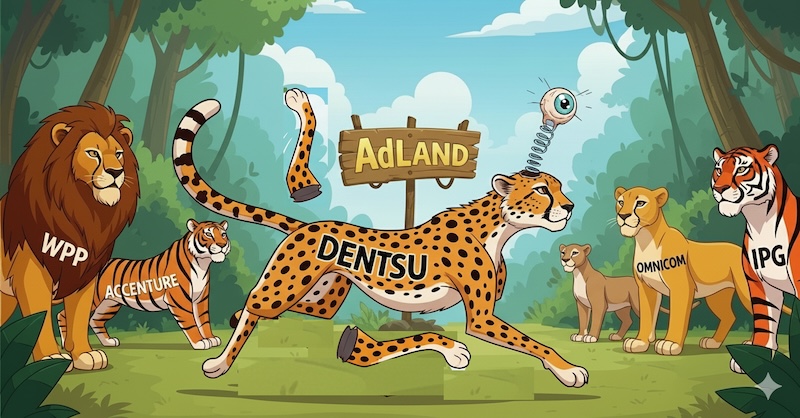
    TOKYO: It was once viewed as a cheetah making a smooth and speedy dash to the finish  tape as it went about muscling itself with acquisitions. But, hardly a decade later,  in 2025, Dentsu, Japan’s largest advertising group and one of the industry’s oldest names, is considering pulling the plug on its international ambitions after more than a decade of struggle abroad. The Tokyo-listed company has hired Mitsubishi UFJ Morgan Stanley and Nomura Securities to approach potential buyers for its overseas creative and media arm — a sprawling business that includes the former Aegis Group, US consultancy Merkle and digital production house Tag — according to a report in the Financial Times on Thursday.

    The move could culminate in a deal worth several billion dollars, insiders told the paper, and would mark a dramatic retreat for a group that only a decade ago sought to rival WPP, Publicis and Omnicom on the global stage. Options on the table range from the sale of a minority stake to an outright divestment of the entire overseas division, which generated $4.5bn in revenues last year but remains chronically underperforming.
    The potential sale underscores the failure of Dentsu’s boldest bet — the £3.2bn ($5bn) purchase of Aegis Group in 2012, then one of Britain’s largest media-buying companies. The deal was meant to be Dentsu’s passport to the global top tier. With Aegis, the Japanese powerhouse — already near-hegemonic at home — vaulted into the ranks of the world’s top five ad holding groups.

    But integration proved difficult. Dentsu’s Japanese arm remained culturally and operationally distinct from its international business. The London- and New York-led operations frequently clashed with Tokyo headquarters, leaving the business fragmented. Over time, larger rivals poached key clients, while the promise of scale failed to materialise.

    Even subsequent purchases, such as the $1.5 billion acquisition of US-based Merkle in 2016, could not reverse the trend. Instead, the group accumulated goodwill impairments and rising restructuring costs. Earlier this year Dentsu wrote down $1.38 billion on its American and EMEA units and earmarked $327 million for further restructuring, including IT upgrades and headcount cuts.

    The pressure has intensified this year. In February, Dentsu unveiled weak 2024 results and suspended dividends. In August, it reported a 0.2 per cent drop in organic revenues in the first half, cut 3,400 jobs — about 8 per cent of its global workforce — and downgraded full-year guidance from 1 per cent growth to flat. It now expects an operating loss of ¥3.5bn ($24 million) for the year, compared with a previous forecast of ¥66 billion profit.

    Hiroshi Igarashi, the group’s president and global chief executive, offered a rare public apology: “I deeply regret this situation and offer my sincere apologies on behalf of the company.” In a call with analysts, he admitted that the international unit “continues to face negative growth across all regions”. Japan, by contrast, delivered record revenues and profits.

    Industry analysts say the bifurcation of Dentsu’s fortunes reflects a deeper problem: a business structurally divided between a dominant home base and underperforming overseas assets.

    “Dentsu’s ownership of the international business was somewhat unusual because of the complete separation between it and the domestic business,” said a media observer. “Japan’s idiosyncratic isolation within the global agency industry meant the leadership in Tokyo was not plugged in to the rest of the world.”

    That disconnect became even clearer after Wendy Clark, then global CEO, quit in 2022, triggering an internal restructuring aimed at closer integration. Yet the changes failed to stem the tide.

    According to people close to the discussions, potential suitors include Accenture Song, large independent networks, and private equity funds that have circled the sector in recent years.

    IPG and Omnicom, however, are seen as unlikely contenders. The two American giants are preoccupied with completing their own merger — a blockbuster deal set to close by year-end, creating a North American behemoth. Meanwhile, Havas has been spun out of Vivendi into a standalone public company, and WPP has fended off repeated speculation about being a takeover target itself.

    That leaves Accenture — which has aggressively expanded into creative services — as perhaps the most credible buyer. Private equity funds could also be tempted by the chance to carve up the business, but the declining revenue outlook, heavy job cuts and uncertain future of traditional agency models may weigh on valuations.

    Any sale would also take place against the backdrop of an industry in flux. Artificial intelligence, once seen as a tool to aid campaign targeting, is now automating functions from media planning to creative production. Rivals such as WPP and Publicis are pouring hundreds of millions into AI platforms that promise cheaper, faster and more personalised ads.

    “Revenues are already shrinking,” one person familiar with the sale process told the FT. “It’s been bad and could get worse as no one knows what AI will do to the industry.” For Dentsu’s global unit, which has struggled even in the best of times, the disruption could prove 

    For Dentsu, a sale would be nothing short of a reset. At home, the company remains unrivalled, commanding more than 25 per cent of Japan’s advertising market. Its domestic operations continue to churn out record profits and steady growth. By contrast, its international adventure has been a costly distraction.

    Back in 2023, Igarashi insisted that selling was “totally not part of my mindset”. Today, facing mounting losses and a fragmenting industry, he has softened his stance, saying only that “strategic alternatives” are under review.

    A sale of the international arm — once Dentsu’s vehicle for global expansion — would symbolise a retreat from ambition to pragmatism. It would also leave the advertising world reshaped yet again, in a year already marked by consolidation, divestments and upheaval.

    Whether buyers emerge — and at what price — may be the truest test of how investors now value traditional ad agencies in an AI age.

  • Aegis Media India launches Carat Fresh Rural

    Aegis Media India launches Carat Fresh Rural

    MUMBAI: Aegis Media India has launched Carat Fresh Rural, a professionally run, international rural communications agency. Carat Fresh Rural, the rural division of Carat Fresh Integrated, will provide comprehensive rural marketing and communication solutions to clients, which include rural planning, implementing outreach campaigns in rural areas, route planning, monitoring, van operations, haat and mandi contact programs, wall paintings, melas and any other marketing communication activities that may be required in small towns and villages.

    Interestingly, it has already bagged assignments from clients like Mahindra & Mahindra, Godrej Consumer Products, Escorts, Godrej, GPI, SONY MAX, Pidilite, Force Motors, Bayer Crop Science, and others. Carat Fresh Rural will be starting with a team of 30 rural marketers and a network of 1500 operators, across seven offices and 20 operation bases, led by the famous rural expert, Keshav Chandorkar, who will report to Carat Fresh Integrated head, Ravi Shankar.

    Before launching, they have already carried out activities in over 18000 villages across 21 states.

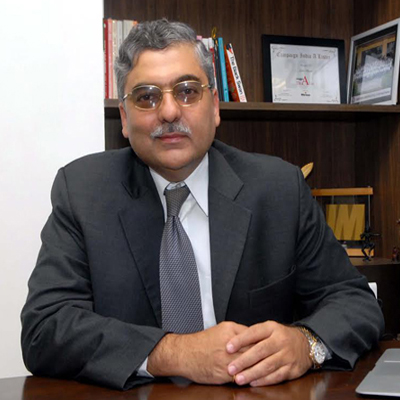
    “Rural Marketing Communications is the holy grail that no agency has successfully cracked in India, thus far. I believe that there is a universe at least equal to the size of the entire advertising industry available to agencies to explore in the rural marketing communications field. Carat Fresh Rural will, in many ways, pioneer that.  We are developing, for the first time in India, state-of-the-art rural management tools.  The Carat Fresh suite of Rural Tools will have the country’s only real time Rural Planning Tool, enabled by 3G connectivity and linked to a host of data sources including the rich census data, media data and 16 other sources of data. Since implementation in rural is key, every one of the Carat Fresh Rural operators will have an App on their GPS enabled trackers that will automatically monitor and relay data without human intervention. Several Tools and Apps are being developed to revolutionize rural communications in India” said, chairman India & CEO South East Asia Ashish Bhasin.

    Carat Fresh Rural aims to have a network of 10,000 people and 100 rural experts, across  26 states, by mid-2015. By 2015 Carat Fresh Rural expects to have covered over 100,000 villages throughout India.  In the second phase of expansion, which will span from 2016 t0 2018, it is anticipated that the network will grow to 20000 people, employees to 200+ and over 200,000 villages would have been covered.

  • Aegis Media appoints Alex Crowther to head General Motors’ biz

    Aegis Media appoints Alex Crowther to head General Motors’ biz

    BENGALURU: Aegis-owned media agency, Carat — a media communications specialist and a player in digital and diversified media solutions, has appointed Alex Crowther, former CEO of MediaCom Asia Pacific as Global Client President, effective immediately.

    Crowther, in this role, will be responsible for leading the General Motors business and continuing Carat’s track record of global success in managing the USD 300 crores global account.

    “Alex is the perfect person to lead the continued momentum and growth of General Motors’ global business for us,” said Aegis Media Americas & EMEA CEO Nigel Morris. “He’s a rare talent who brings extensive global experience and a proven track record working with major global brands across categories, but specifically with automotive. He has the entrepreneurial spirit and drive to find innovative ways to drive GM’s business forward in today’s convergent media landscape.”

    Crowther returns to Carat, where he once worked at Carat International, after a 19-year hiatus, and brings 26 years of global experience in the media industry. Prior to Carat, Alex was CEO Asia Pacific for the global media network MediaCom, part of WPP’s GroupM, sitting on the Asia Pacific board of GroupM and global board of MediaCom. During his first three years at MediaCom, Alex helped to double to size and scale of the business in Asia Pacific by winning multiple Proctor & Gamble country assignments, Coca-Cola in several territories and many other globally recognised brands.

    Morris continued, “Steven has been part of the Carat GM leadership team since the onset of our relationship, helping to open Carat’s office and global hub for the GM partnership in Detroit. He led the successful transition of Carat’s GM business across more than 70 markets and will move on to do more great things for other global and U.S. clients across our network.”

    Prior to MediaCom, Alex served as President/CEO Americas and Asia Pacific of integrated communications network Davinci, a part of Omnicom. Based in the US — much of it in Detroit, he was President/CEO Americas and Asia Pacific and as co-founder was instrumental in the company’s rapid growth from a standing start to a presence in more than 60 markets in seven years. During his time at Davinci, the agency managed the global media for Chrysler and Mercedes Benz as well as Mitsubishi Motors in North America.

    “Automotive has always been a passion of mine and a cornerstone in my career, so it only makes sense that I return to Detroit, especially to work at a global-leading media agency that is consistently ranked as the number 1 network by RECMA. Carat is the only network that truly understands convergence and is redefining the value of media to create better business value. I can’t wait to get started,” said Crowther.

    Crowther replaces Steven Feuling, who will be relocating to San Francisco and assuming a new role at Carat. During Feuling’s tenure as Global Client President for GM, Carat helped GM achieve significant gains from both a consumer and business perspective, including Interbrand naming Chevrolet as one the Top 100 Global Brands in 2013.

  • Carat Media Services appointed AOR of SCA Hygiene in India

    Carat Media Services appointed AOR of SCA Hygiene in India

    MUMBAI: Carat Media Services has bagged the media duties of SCA in India. The business will be handled by Carat’s Mumbai office.

    SCA is a leading global hygiene and forest product company that develops, produces and markets personal care products in categories such as baby diapers, incontinence care and feminine care, the world’s third largest suppliers of tissue, forest products and packaging solutions.
    SCA India VP consumer goods Cecilia Edebo

    The brands that SCA intends to launch on the Indian market in the coming months include Libero baby care, Tempo – for hand and face hygiene, TENA – the world leader in incontinence care, and Tork – the global leader in the away-from-home tissue segment.

    India being one of the emerging markets there would be under significant focus and investment towards fulfilling the needs of Indian customers and consumers in a spirit of innovation, through continuous efficiency enhancements and with a clear desire to contribute to sustainable development.

    On the launch, SCA India VP consumer goods Cecilia Edebo said: “SCA aims to grow organically and has extensive experience in the hygiene business, which should help to provide better hygiene for the Indian consumer. The large population and the low penetration of hygiene products provide the potential for SCA’s future growth. In this endeavor, we had a series of presentations and discussions to evaluate the strategic thinking capabilities of Carat to enable our differentiation at the market place, demonstration of tools and passion of the team. We are happy that Carat India’s team demonstrated great ability in strategic thinking capabilities backed by a solid integrated offering to support the Marcom. We are happy to have them as our media partner.”

    Carat India Sr. VP Himanka Das said: “We are delighted to extend our partnership with SCA in India, they have some great personal care and incontinence care brands in their portfolio to offer and we do look forward to partnering them in their India plans. We have been working with them for the last one year to firm up the launch strategies based on extensive media market analysis.”

    Carat is part of the Aegis Media Group. Other companies in the group include Vizeum, Posterscope the global OOH sector leader, Brandscope, Hyperspace (Retail), Carat Fresh Integrated (Activation), PSI (Airports), Doosra (Creative), Isobar, the global communications agency with digital at its heart and iProspect, the global leader in search and performance marketing.

  • Aegis Media acquires China’s Trio Digital

    Aegis Media acquires China’s Trio Digital

    MUMBAI: Aegis Media acquired Trio Digital Integrated, a full-service digital agency in China.

    The acquisition will see Trio rebranded as Trio Isobar and become part of the Isobar China group, which already includes wwwins Isobar and OMP.

    Chris Chen will continue as CEO and executive creative director of Trio Isobar, supported by general manager April Chang and deputy general manager Britney Pai.

    Commenting on the acquisition, Aegis Media Asia Pacific CEO Nick Waters said, “Trio is a top class digital marketing agency with high quality creative credentials. Bringing Trio into the group adds another dimension to our market leading digital capabilities in China. This is an exciting move and we welcome Chris and his team to the company.”

    Isobar Asia Pacific CEO and global chief strategy officer Jean Lin added, “Trio offers great credibility in China when it comes to integrated creative and digital innovation, not to mention the agency’s pioneering spirit and strength of talent – something Isobar is always on the lookout for around the world. The addition of Trio will make Isobar one of the largest digital marketing agency networks, with over 700 digital specialists in China, including wwwins Isobar and OMP.”

    “Isobar’s reputation is strong in China, so when the opportunity arose to join the Aegis Media network, it was an obvious decision and one that will grow our business exponentially,” Trio Isobar CEO and ECD Chris Chen said, adding, “Isobar’s full-service digital focus and scope also allows us to connect with clients across Aegis Media in China and provide increased capabilities across the network.”

  • Voltas awards media duties to Havas Media

    MUMBAI: Air conditioner company Voltas has roped in Havas Media as its media planning and buying responsibilities for its room AC and other unitary products business. The multi-agency pitch saw participation from GroupM, Madison, Aegis and IPG.

    Voltas chief operating officer – UBBG Pradeep Bakshi said, “During the multi-agency pitch we were impressed by their capability to look beyond seasonality and traditional media. Their understanding of the category from a regional perspective was also very accurate. We look forward to working closely with them in our next phase of growth in the coming years.”

    Havas Media India and South Asia CEO Anita Nayyar said, “It was a very tough but a ‘well-organized‘ pitch with practically all the leading agencies in the fray. I am delighted that we have been able to demonstrate our capabilities through our insights and category understanding. I believe our extremely focused and well integrated effort made us win the business. While it is a great brand to be associated with, more importantly, they are a wonderful client to work with. This prestigious win is yet another very important milestone in Havas Media India‘s ambitious growth plans.”

  • Aegis posts impressive H1 results ahead of Dentsu takeover

    MUMBAI: Global media conglomerate Aegis which is headquartered in London posted an organic revenue growth of 8.6 per cent for H1 2012, up by 0.8 per cent over year-ago.

    The billings for the H1 period of 2012 were ?596.8 million. In 2011, the Aegis group recorded billings worth ?519.1 million, registering a YoY increase of 15 per cent. Profits for the same period rose by 10.32 per cent from ?25.2 million in 2011 to ?27.8 million in 2012.

    Aegis Media APAC’s revenue increased by 17.3 per cent to ?115.8 million from ?98.7 million in 2011. China and Australia were the leading performers in the region for Aegis with other markets also doing reasonable well.

    The company’s revenue in the Americas region increased by 38 per cent to ?134.8 million as opposed to last year’s ? 97.7 million. Its North American business continued to improve its market position with the appointment of Carat US as General Motors Co’s global strategic media partner in January 2012.

    Geographically, the Europe, Middle East and Africa (EMEA) region revenue increased by 5.3 per cent (from 2011’s ? 290.7 million) to ?306.1 million with Russia, the UK, Turkey and across the Middle East and Africa delivering strong performances.

    In January 2012, the group acquired a further 41 per cent of the share in Norwegian agency Qualité Search taking its stake from 34 per cent to 75 per cent, thus obtaining control of Qualité which has joined the iProspect brand in Norway.

    In February 2012 Aegis fully acquired the holding company of Roundarch Inc, a digital agency which specialises in designing and building enterprise-class digital solutions for clients. Roundarch has been combined with Isobar, Aegis’s existing digital creative network in the US and renamed as RoundarchIsobar.

    In March 2012, Aegis acquired 70 per cent in the Hungarian out-of-home agency PPI Central Europe. PPI has been rebranded to become part of the Postercope EMEA division of Posterscope Worldwide.

    In May, the group fully acquired Beijing-based digital agency eLink Advertising, which is now a part of the Isobar network in China.

    Aegis Group chief executive officer Jerry Buhlmann said, “Successfully delivering our strategy in recent years has consolidated Aegis’s market-leading position and, in July, the Board recommended a ?3.16 billion cash offer from Dentsu. Once completed, this transaction will create one of the world’s most dynamic marketing services groups, the first truly global communications group born in the digital age, with the global reach to provide increased scale, capability and investment to support our clients. For our people, the combination offers continuity and the promise of working for one of the most exciting, high growth companies in our industry.”

  • China’s Madhouse comes to India

    China’s Madhouse comes to India

    MUMBAI: China’s mobile marketing company, Madhouse, announced the launch of its India operations on 14 February to capitalise on the demand for customised mobile marketing solutions.

    Madhouse currently works closely with over 120 clients like HP, Intel, Coke, KFC, Unilever, VW and agency groups such as GroupM, Aegis, OMG, Vivaki and their associated agencies in China.

    Madhouse India aims to leverage the opportunity of using mobile as a mass media device given that there are more than 850 million mobile connections in the country. Current barriers to mobile marketing are dearth of scaled solutions in data, voice and text, harmonizing the different operating systems with multiple stakeholders across mobile inventory and lack of established tools and systems which makes it difficult to answer the question of how this medium can be leveraged by advertisers to reach out to their consumers.

    Madhouse India hopes to address this through unique and innovative services. Clients can look forward to mobile solutions across the spectrum of paid, owned and earned media on feature phones, smart phones and tablets.

    Madhouse provides service across all operating systems with precise targeting by geography, user demographics and psychographics to ensure minimal media wastage.

    Madhouse India chief operating officer Vinod Thadani said at the launch, “Mobile advertising is beginning to transform the way brands communicate with their consumers. Madhouse will offer mobile marketing solutions created and carried out for advertisers by a team of experienced media professionals that understand this medium. On a technical level, mobile advertising can now achieve accurate intelligent targeting and can provide real-time reporting – a very convincing proposition for advertisers. The need of the hour is to unlock the potential and we are determined to change the face of the Indian Digital Media Landscape and grow the mobile media market from 125 to 1000 crores within the next three years.”

    Madhouse sees tremendous growth potential in India. Said Madhouse founder and CEO Joshua Maa, “We are fully committed to investing in this market. With the right local partners, we believe that our technology and operational expertise can be leveraged to serve the unique mobile marketing needs of clients. In China, we have been working with partners such as Rovio, EA, China Unicom’s app store, and ad agencies to grow our leadership position. Similarly in India we value our association with WPP to help develop and take leadership in this market as well.”

    WPP country manager Ranjan Kapur explained, “Digital Media is evolving and innovating at a very fast pace in India where especially Mobile and handheld devices are poised to play a larger role in marketing communications. Madhouse India will help us build a unique value for our clients where in-depth domain and brand understanding is coupled with the strength of Madhouse technologies. A synergy is also established as our local market expertise and talent pool is well equipped in the Indian marketplace which is similar in complexity to China.”

    One of the companies in business with Madhouse is Rovio Entertainment, the makers of the game Angry Birds.

  • Aegis continues targeted acquisitions

    Aegis continues targeted acquisitions

    MUMBAI: Aegis Group, which has just sold its Synovate research operations to Ipsos, said its organic revenues grew 7.8 per cent excluding Synovate for the first half of this year. Including Synovate, the company claimed organic revenues rose 7.3 per cent.

    The earnings show that media services have boosted Aegis‘ growth, and the company continues to be buyer, not a seller of media shops. It has announced a deal to buy Russia out-of-home media specialist Master Ad.

    Aegis said it has spent about $106.4 million on 11 acquisitions so far this year, but said it is mainly focused on “organic growth” and long-term margin improvement from its operations.

    “We have continued our focus on targeted acquisitions, extending our capabilities and positioning us in key geographies, all of which leave us well placed for future growth,” stated Aegis CEO Jerry Buhlmann, noting that the spin-off of Synovate represents the “largest structural change in the history” of the company.

    “Once the sale is completed, Aegis will become a more focused group, with the opportunity to accelerate further the delivery of sustainable, profitable growth, and increased financial flexibility to make targeted acquisitions,” he asserted, adding a cautionary “medium term” outlook due to “macro-economic uncertainties,” which were also reflected in a revised global ad spending forecast released this morning by Aegis‘ Carat unit.

  • Post Percept, Aegis eyes acquisitions in India

    Post Percept, Aegis eyes acquisitions in India

    MUMBAI: Close on the heels of the Aegis and Percept split, Aegis Group plc chief executive Robert Lerwill is drawing up expansion plans for the company in India which include acquisitions.

    Carat, a media buying company, will be looking at local acquisitions, preferably with 100 per cent stake. He is also open to joint ventures with local companies”if that is the way forward in India.” Aegis bought out Percept’s 27 per cent stake in Carat India.

    Aegis is also eyeing acquisitions in the digital space, Lerwill says. There is major growth potential in the digital media segment, which he believes is still underserved in India. Only 2-3 per cent of media usage lies in the digital space but this is likely to boom, he points out.

    With Percept buying out Aegis’ 51 per cent in Posterscope India, Lerwil says the effort will be to first tap the internal clients for out of home business and then spread out. Percept will have to return the Posterscope brand, he adds.