Tag: advisory

  • Central Bureau of Communication issues advisory for pvt TV channels

    Central Bureau of Communication issues advisory for pvt TV channels

    MUMBAI: The  days are being counted down for TV channels looking to get some revenue through the  Indian government’s ads and spots on television. 

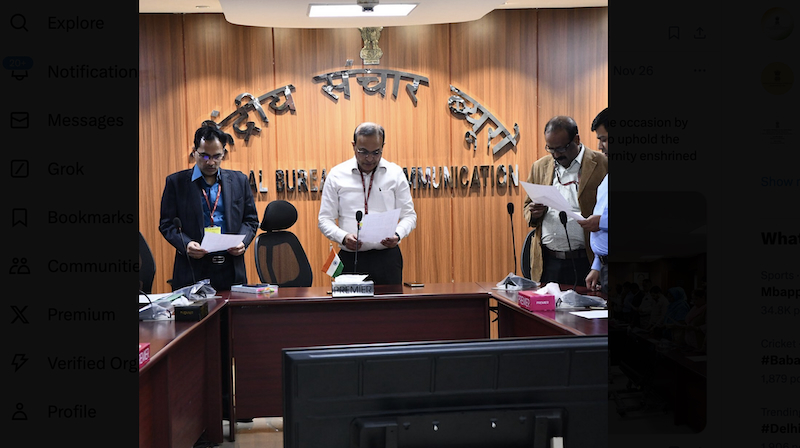
    According to the central bureau of communication (CBC)  wing of the ministry of information and broadcasting 552 channels had been empaneled with it three years ago  and as per its policy renewal guidelines the earlier empanelment is valid only till 31 December 2024.

    Last week, the CBC  once again sent out an advisory reminding private TV channels which had not re-registered themselves  to do so before the last date.

    Only TV channels empaneled with it will qualify to receive government advertising and its social development or messaging spots

    government of india spots

    .

    The CBC also clarified that 15 channels which had empaneled with it as of 1 January 2024 need not reapply for empanelment but they would need to update their documents.

    The last date for renewal of empanelment was actually 17 December but the CBC had given another extension to the private TV channels.
     

  • MIB condemns reporting of Russia-Ukraine conflict and Delhi demolition in advisory

    MIB condemns reporting of Russia-Ukraine conflict and Delhi demolition in advisory

    Mumbai: The ministry of information and broadcasting (MIB) has issued an advisory prohibiting satellite TV channels to transmit programming that is violative of the Programme Code under Cable Television Networks (Regulation) Act 1995. The ministry observed that the reporting of the Ukraine-Russia conflict and recent demolition incident in North-West Delhi are “misleading, sensationalist and have communal overtones.”

    Relating to the Ukraine-Russia conflict, the I&B ministry highlighted that TV channels have been making false claims and frequently misquoting international agencies/actors. That they have been using ‘scandalous headlines/taglines’ that are completely unrelated to the news item. And that many of the journalists and news anchors of these channels made fabricated and hyperbolic statements intending to incite the audiences.

    Similarly, the reporting for the incident in North-West Delhi “made use of provocative headlines and videos of violence that may incite communal hatred among the communities and disrupt peace and law and order,” according to the ministry. The coverage disrupted the ongoing investigation process by playing scandalous and unverified CCTV footage. By showing footage of a specific community thus aggravating the communal tensions and fabricated headlines sensationalising and giving communal colours to the actions of authority.

    The ministry also stated that in the news, “some of the channels broadcast debates having unparliamentary, provocative and socially unacceptable language, communal remarks and derogatory references which may have a negative psychological impact on viewers and may also incite communal disharmony and disturb the peace at large.”

    As per the provisions of the Programme Code, no programme should be carried in the cable service which (a) offends against good taste or decency (b) contains criticisms of friendly countries (c) contains attack on religions or communities or visuals or words contemptuous of religious groups or which promote communal attitudes (d) contains anything, obscene, defamatory, deliberate, false and suggestive innuendos and half-truths.

  • I&B ministry warns TV channels against airing content inciting violence

    I&B ministry warns TV channels against airing content inciting violence

    MUMBAI: In the wake of the ongoing CAA protests and Delhi riots, the ministry of information and broadcasting has issued an advisory to all private and satellite channels to be cautious with content which is likely to encourage or incite violence or contain anything against the maintenance of law and order or which promotes "anti-national attitudes".

    TV channels are also advised to be cautious about airing content which contains attacks on religions or communities or visuals or words contemptuous of religious groups or which promotes communal attitudes.

    The broadcaster must be careful before airing content which contains anything defamatory, deliberate, false or suggestive innuendos and half-truth.

    The ministry has asked channels to ensure strict compliance of code and also ensure that no content is telecast which violate the programming and  advertising code. 

    This is the second such advisory sent out by the ministry with the last one coming out in January. 

  • TV channels urged not to air live coverage of anti-terror ops

    TV channels urged not to air live coverage of anti-terror ops

    NEW DELHI: The Government has advised all television channels in public interest to safeguard innocent lives, to ensure that no operations-linked information reaches the terrorists and their handlers, and in the interest of national security, live coverage of counter-terrorism operation by the security forces should not be telecast.


    The advisory was placed on the site of the Information and Broadcasting Ministry.


    Earlier this month, Minister of State for I&B Rajyavardhan Rathore had told Parliament that the government was considering a proposal to prohibit live media coverage of counter terrorism operations by security forces and the Home Ministry wanted amendments in the extant laws in this regard.


    After the carnage in November 2008, the Ministry on 27 November, 2008, 3 December, 2008 and 20 November, 2009 had issued such advisories in public interest and in the interest of national security not to focus on or report the location, strength, movement, strategy and other related operations being followed by the Security forces engaging with the terrorists so as to avoid any adverse impact on rescue operations.


    The advisory was issued as the Ministry said it had come to its notice that some TV channels have covered live the ongoing anti-terrorist operations on 20 March, 2015.


    The advisory says that the media coverage may be restricted to periodic briefing by an earmarked official till the operation is concluded.


    Attention was drawn to clauses 5.9 and 8.1 of the Uplinking guidelines and Clauses 5.8 and 6.1 of the downlinking Guidelines as well as applicable provisions of the Cable TV Networks (Regulation) Act 1995 and Rules thereunder in this regard.


    The issue of coverage by television channels is presently part of the self-regulation guidelines drawn up by the News Broadcasting Standards Authority of the News Broadcasters Association. The Press Council of India had issued similar guidelines with regard to print media.


    These guidelines were drawn up after the 26 November, 2008 attacks in Mumbai. Following a controversy that live telecasts of the counter-terrorism operations were in all likelihood been seen by the masterminds in Pakistan who had planned the attacks.


    As far as Prasar Bharati is concerned, it is governed by the Programme and Advertising Code, which is also part of the 1995 Act and therefore equally applicable to private television channels. The Inter-Ministerial Committee examines complaints under the Act of 1995 and the Rules drawn up a year earlier in 1994.


  • MIB issues advisory to channels over depiction of rash driving scenes

    MIB issues advisory to channels over depiction of rash driving scenes

    MUMBAI: The death of minister of rural development Gopinath Munde a few days after him taking charge of the office shook not just the nation but the government as well. Taking note from the incident, the Information and Broadcasting Ministry (MIB) has issued an advisory to channels regarding depiction of rash, negligent or dangerous driving scenes/images.


    The Ministry of Road Transport and Highways (MRTH) has highlighted that depicting such incidences on programmes, news features and serials could be against public interest. Therefore, the MIB has advised TV channels that on the request of the MRTH such images or scenes may not be usually portrayed on TV channels.


    In the case where such a depiction becomes unavoidable, the scenes/images must be accompanied by messages such as ‘over speeding kills’ , ‘driving two-wheeler without helmet is dangerous and illegal’ and ‘driving four-wheeler without seat belt is dangerous and illegal’.


    The MIB urges all TV channels including Doordarshan to be extremely cautious with regard to such situations. Letters have been sent to the News Broadcasters Association, Broadcast Contents Complaints Council, The Advertising Standards council of lndia, All TV Channels and Doordarshan.


    The advisory is applicable to print publications as well.

  • Govt. defends advisory to TV news channels on PM’s Independence Day Speech

    Govt. defends advisory to TV news channels on PM’s Independence Day Speech

    NEW DELHI: Information and Broadcasting Minister Manish Tewari today staunchly defended the advisory issued by his Ministry asking news television channels to make a distinction between a speech delivered by the Prime Minister from the ramparts of Red Fort on Independence Day and speeches made by different political leaders.


    He said at a press meet here that the President’s address to the nation on the eve of Republic Day or the Prime Minister’s address on Independence Day were not speeches made as leaders of any party but as leaders of the nation. It was therefore wrong to draw parallels between these speeches and those made by leaders of different political parties.


    At the same time, he drew attention to the word ‘advisory’ and said the Ministry’s viewpoint was meant to be just that and not any dictat to the media.


    He said the present government had always stood for freedom of the media and would continue to do so.


    Referring to a question about a film on Sardar Patel, he said that the National Film Development Corporation would consider such a proposal if any filmmaker plans to do so.


    He reiterated that while the United Progressive Alliance had always given newspaper advertisements on the birth and death anniversaries of eminent leaders, but it was the previous National Democratic Alliance which had failed to do so, according to figures given by the Directorate of Advertising and Visual Publicity.


    Referring to the government’s view on opinion polls conducted by different media publications before the elections, he said that his party was not opposed to them but it could not be denied that such polls could be manipulated. He said the Congress party’s stand on this had been consistent. He said that the Central Election Commission had in fact sought the opinion of all political parties on this issue. While the stand of his party was consistent, the Bharatiya Janata Party had been opposed to opinion polls in 2004 but had supported these in its present view given to the Commission.

  • Advisory issued to TV channels on reporting communal matters with caution

    Advisory issued to TV channels on reporting communal matters with caution

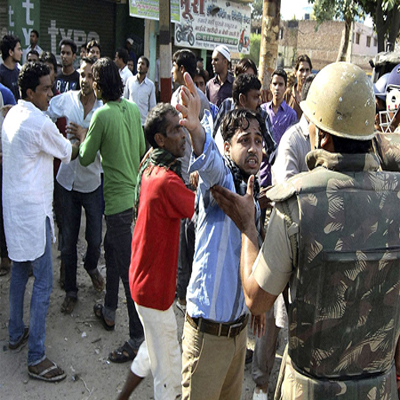
    NEW DELHI: In view of the manner in which the Muzaffarnagar communal riots were reported, the government has advised all television channels to adhere by the programme/advertising code to prevent attracting penal provisions in section 20 of the Cable TV Networks (Regulation) Act 1995.

    In a notification posted on its website, the Information and Broadcasting Ministry said that it was issuing this advisory in exercise of powers under the uplinking/downlinking guidelines issued by it, the terms of permission granted to the channel to uplink/downlink TV channels and under Section 20 of the 1995 Act.

    It noted that in the wake of the recent Muzaffarnagar communal riots, some TV channels had been telecasting inflammatory and provocative news/programmes in a sensational manner. Some TV channels had also been airing footage, video, interviews, etc. of leaders of diverse spectrum which could vitiate the situation in the entire area. These could further ignite communal tension, violence and create law and order problem not only in the riot affected area but elsewhere.

    The Ministry said a strong need is felt that TV channels should take all steps to avoid telecasting such inflammatory and sensitive material and should exercise maximum restraint and caution in reporting matters of this nature. News, views or comments relating to communal tension/clashes should be telecast only after proper verification of facts and presented with due caution and restraint in a manner which is in the public interest of maintaining communal harmony. No news/programme should be carried by TV channels which are likely to foment disharmony or enmity between religious groups.

    Section 5 of the 1995 Act read with Rule 6(1) (c), & (e) of the cable TV Networks Rules 1994 as amended from time to time are clear that ‘no programme can be transmitted/re-transmitted on any Cable Service which, inter-alia, promote communal attitudes; and is likely to encourage or incite violence or contains anything against maintenance of law and order or which promote anti-national attitudes.’

    The Ministry therefore advised all TV channels to follow the provisions of the Programme Code scrupulously and exercise restraint and sensitivity while reporting such incidents and refrain from telecasting any material which could ignite communal passions and create law and order problem.

    It also said any violation of the provisions of the programme/advertising code would attract penal provisions stipulated in section 20 of the Act and the terms and conditions of uplinking and
    downlinking guidelines.