Tag: advertising

  • Advertising sets heart racing: CNN Study

    Advertising sets heart racing: CNN Study

    MUMBAI: Brands who choose multimedia campaigns to communicate their advertising messages are more memorable to consumers and are likely to enhance perception of their brands, reveals a case study conducted by CNN International.

    The results carry weight for brands that place their advertising in an engaging environment, prompting an emotional response from the audience.

    The case study (Cross-platform Advertising Study on Effectiveness and Engagement) consisted of a two-stage approach. Stage one involved a multinational online study of cross-platform effectiveness in which consumers were exposed to diverse media experiences. Stage two measured attention and engagement through a variety of techniques including biometrics, eye tracking and in-depth interviews.

    Turner International Asia Pacific VP reserach Duncan Morris says, “We wanted to show that by complementing advertising on CNN TV with ads on CNN.com and CNN mobile, an advertiser can markedly increase campaign recall leading to positive shifts in brand attitudes. The fact that these respondents were not primed for an advertising study makes these results even more poignant.”

    Engagement and Biometrics : Body responses such as heart rate, motion, respiratory rate and galvanic skin response (sweating) were translated into measures of “attention” and “engagement” – the Holy Grail for advertisers. These were collected by using a lightweight ‘smart vest’ which respondents wore while watching CNN programming and advertising.

    Contrary to popular belief that viewers disengage once scheduled programming ends, the study results showed that engagement actually can increase during ad breaks, as much as 10 per cent.

    CNN International VP ad sales Asia Pacific William Hsu says, “This study shows it is content that provides the springboard for advertisers to secure meaningful connections with audiences. In conjunction with our recent PWC study, it provides valuable industry insight to help brands market smarter.”

    The level of attention an advertisement receives impacts the ability of respondents to remember the brand. When respondents viewed advertising online and on mobile, they were more attentive, increasing the likelihood of advertising being noticed and adding to the re-call of the overall campaign.

    The research also showed that despite the high cross-over between the audiences of all the CNN properties, the audience is in a different state of mind when online or using a mobile phone versus watching television. Generally audiences were more attentive (though not necessarily more engaged) when online or mobile than when watching television.
  • ‘The challenge in a high growth economy is shortage of talented, trained manpower’ : Arvind Sharma – Goafest Committee chairman and Leo Burnett chairman India sub-continent

    ‘The challenge in a high growth economy is shortage of talented, trained manpower’ : Arvind Sharma – Goafest Committee chairman and Leo Burnett chairman India sub-continent

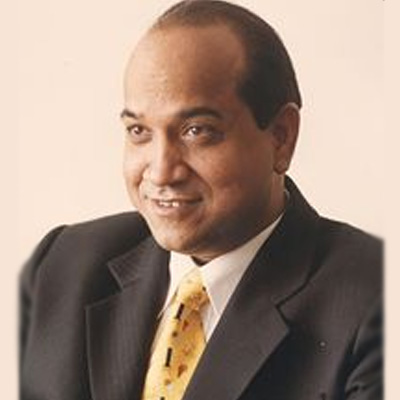
    As the sun and sands of Goa beckon the Indian advertising, media and marketing community for the AAAI organized ad festival Goafest from 19 – 21 April, apart from the celebration that lies in its wake, the event seeks to address more critical issues faced by the industry. Amidst all the hectic last minute schedules, Goafest Committee chairman and Leo Burnett chairman India subcontinent Arvind Sharma very co-operatively took time out to share his perspective on the current standing of the Indian advertising community, the progression towards growth and expansion and the pitfalls that need to be resolved.

    In an exclusive tete-a-tete with Indiantelevision.com’s Renelle Snelleksz, Sharma highlights the point that the fundamental objective for the festival is “to provide a platform for conversations, debates, ideas and celebrations between the rock stars and the aspirants.”

    Excerpts:

    What are the key proponents that necessitate AAAI’s endeavor to capture an untapped area of the Indian advertising fraternity through Goafest?
    As a member of the executive committee of AAAI, it was early last year that we decided to host a National Ad Festival. National because we recognized that epicenters have a way of moving and so different advertising capitals keep springing up across the country. At one point Kolkata was at the helm but today Delhi is huge, only 20 per cent smaller than Mumbai. Therefore AAAI endeavors to promote advertising work from across the country.

    Secondly, there is a fundamental difference between a one off award function and a festival. The former is largely focused on the work of the individual but we chose to go with a festival because it allows an opportunity to display the work and think of ways in which it can be bettered. Unlike award shows, the festival has been designed to not focus on the ‘agency of the year’ concept which selects one winner and a dozen losers. As an industry that is growing at 20 per cent we would rather have 1,000 winners and our attempt is to encourage and nurture those winners.

    By design, there will be no agency of the year but instead a Grand Prix award to recognize work that represents excellence. This will help develop the industry more rapidly. The fundamental objective for the festival is that it aims to provide a platform for conversations, debate, ideas and celebration.

    What are the key differentiators for Goafest as a festival, as compared to existing one off award functions?
    This takes shape in four ways – Firstly, the work that has been entered is displayed so that delegates have the opportunity to make their own judgment on the entries that have won and those that have not. The festival also brings successful International speakers and local jury members as well as aspiring youngsters to exchange their thoughts and ideas.

    Secondly, there are a host of formal seminars and thirdly, apart from the exchange between the aspirants and the rocks stars, the festival brings 2,000 people from various locations, specialist fields intermingling and sharing their experiences.

    Lastly, it brings the rising stars from across India to Goa. As is known, all industry functions like these are expensive and only the senior executives get to go, which ultimately makes development of the industry slower because the exposure is less. Thus we have provided a special package for 800 under 30 year-olds.

    While Goafest is an event of celebration, what are the larger underlying industry issues that the event is looking to address? How can these be remedied?
    The challenge for the advertising industry in a high growth economy is the shortage of talented trained manpower and this will be the primary focus at the event.

    The Ad Conclave that precedes the festival will get 150 leaders of the industry and much like town hall sessions, will get them thinking together. On an every day basis, the nature of competition exists, but this is a platform where we can all put our heads together to finds ways to cope with the existing issues.

    At an individual level, there will be competition but we need to work collectively on this front. The gurus of today spent their first 10 years in a pre-television environment with DD as the only means of TV. Youngsters on the other hand, are acquainted with the growing multimedia environment, though they may not know the craft. It is fundamental for us to listen and learn from them just as much as they learn from us.

    The industry faces a shortage of talent. It is believed that AAAI plans to unveil an ad campaign that would lure youngsters towards the profession. Is that still on the cards?
    Yes, it is still very much on the cards and will follow closely after Goafest.

    What is the growth that the industry has seen over 2006?
    Various sectors have grown differently – The creative agencies have grown at 15-20 per cent, the marketing services at about 30 per cent and the specialist’s media agencies at 25 – 30 per cent. So overall, the industry has grown by 20 -25 per cent and from a global point of view India features in the top five advertising industries. Although our base may be small, our growth rate is impressive.

    Creative agencies
    have grown
    15-20%, marketing services at about
    30% and the specialist’s media agencies
    at 25-30%

    In order to leap ahead in the next three to five years, as the Ad Conclave theme suggests, it would require the combined effort of the industry at large however; two mammoth agencies O&M and Lowe seem to stay aloof? What would be your advice to them?
    In any industry, one hopes for 100 per cent participation. But we have received enthusiastic support across centres and agencies. Sometimes people choose to wait and watch, but as and when they decide to join in we will welcome them. We will go forward with what we believe in, we will just have to give the others time.

    What is your opinion on a having a common Indian advertising body and a single credible award function, a proposition that many professionals have vouched for?
    Our belief is in an advertising festival and not just an award show that will include seminars and interactions. However, there will always be a second and third viewpoint.

    You mentioned earlier that an investment of Rs 50 million was being pumped into the event. You also have a big kitty of sponsors, what will be their contribution to making the event a success?
    Goafest is a non profit event and while no association has complete funding of its own, the whole industry has supported us directly through sponsorship money. We are extremely excited and grateful for their contribution.

    What are the logistics that have to be taken care of when planning an event on such a lavish scale? When did the planning commence and how long has it taken you to set up the agenda?
    The logistics are extensive as one has to get International speakers and coordinate dates that are convenient, to book hotel rooms and check availability. To accommodate and make arrangements for the 800 under 30 delegates as well as senior executives has been a real challenge. We started planning and preparation six month ago.

    With the inclusion of media awards and with a host of International experts and commentators – what are your expectations of the event this year?
    We are hoping to prove to ourselves and to the world that we are capable of hosting an advertising festival comparable to any in the world.

    What advice would you give to the 2,000 media, advertising and marketing professionals that are gearing up to come to Goafest this year?
    (Laughs) My only advice is to come and freely share your thoughts and ideas, as I believe this will finally help to catalyze the growth of the industry as a whole.

  • Maruti in $ 1 million sponsorship deal for cricket World Cup website

    Maruti in $ 1 million sponsorship deal for cricket World Cup website

    MUMBAI: ICC internet partner Indya.com kicked off its campaign for the globe’s biggest cricketing carnival with the official launch today of its World Cup dedicated website cricketworldcup.com.

    The launch coincided with the confirmation that car major Maruti had come on board the site as presenting sponsor for cricket’s headline event. In what is being termed as the biggest online advertising deal negotiated in India in recent times, Maruti has committed somewhere in the region of $ 1 million (Rs 450 million) for the privilege of owning “most of the real estate” on the site, sources close to the developments say.

    Ajay Vidyasagar, Star India executive vice-president content and communications, while refusing to offer any comment on the size of the deal, said: “Maruti has made a significant investment in partnering with us and this is the only engagement we are announcing for the present.”

    “Maruti has always been at the cutting edge of technology and have always been open to explore and experiment with new ideas,” NDTV Media CEO Raj Nayak, whose company has been given the mandate to sell advertising for Indya.com for the World Cup, said. “I think this is a testimony to the power of the worldwide web,” Nayak added.

    It may be recalled that earlier, the sponsorship packages on offer involved one presenting sponsor and four associate sponsors. This has all changed because the size of the deal Indya has negotiated with Maruti. There will now be far less inventory available for other potential sponsors than had been originally envisaged, Vidyasagar explained.

    Speaking about cricketworldcup.com, Vidyasagar said, “We are committed to provide the most comprehensive and definitive website of the game during the tournament and assure our users an online experience that they will find unparalleled.

  • Ofcom to phase out junk food ads targeted at children

    Ofcom to phase out junk food ads targeted at children

    MUMBAI: UK content regulator Ofcom is going ahead with its earlier announced intentions to restrict television advertising of “junk food” targeting children under 16.

    Television advertising that promote food and drinks high in fat, salt and sugar directed towards children will be phased out in a phsed manner from 1 April onwards.

    To start with the rules will apply to the under 10 year old category with effect from 1 April, while ads targeted at the under 16 year old segment will be implemented after 1 January 2008.

    The three phases will flow out as follows:

    – From 1 April 2007, HFSS advertisements will not be permitted in or around programmes made for children (including pre-school children), or in or around programmes that are likely to be of particular appeal to children aged 4-9;

    – From 1 January 2008, HFSS advertisements will not be permitted in or around programmes made for children (including pre-school children), or in or around programmes that are likely to be of particular appeal to children aged 4-15.

    – As set out in the November Statement, children’s channels will be allowed a graduated phase-in period, with full implementation required by the end of December 2008.

    Ofcom’s co-regulatory partners, the Broadcast Committee on Advertising Practice (BCAP) and the Advertising Standards Authority, are responsible for implementing the new scheduling and content rules and securing compliance respectively. The new rules will form part of the BCAP Television Advertising Standards Code.

    New content rules come into effect immediately for new advertising campaigns. Existing advertising campaigns or those in the final stages of creative execution can be broadcast until the end of June 2007. However, from 1 July 2007 all advertising campaigns must comply with the new content rules, adds the release.

  • Youtube is affecting TV viewing in the US

    Youtube is affecting TV viewing in the US

    MUMBAI: Few vehicles are as effective at reaching large segments of the population as television, a fact that has established it as the favored medium for advertisers in many product categories. For as long as that has been the case, however, TV networks and advertisers have been fearful of emerging competitors and technologies that threaten their route into consumers’ minds.

    From the remote control to the Digital Video Recorder (DVR), there have long been predictions that live TV and its embedded advertisements were going to be adversely affected by consumers’ ability to bypass commercials. More recently, a different kind of threat has emerged from social networking video site YouTube.

    Recent research by Harris Interactive uggests that this fear may indeed be warranted. Over four in 10 (42 per cent) online US adults say they have watched a video at YouTube, and 14 per cent say they visit the site frequently. Almost one in three (32 per cent) of these frequent YouTube users say that they are watching less TV as a result of the time they spend there.

    However, YouTube has its own set of challenges as it tries to monetise the viewer traffic it has amassed. If YouTube is considering airing ads before its videos, they may be advised to halt that thinking. 73 per cent of frequent YouTube users say that they would visit the site less if it started including short video ads before every clip.

    These are just some of the results of a recent Harris Poll of 2,309 US adults (ages 18 and older), of whom 363 are frequent YouTube viewers, conducted online by Harris Interactive from 12-18 December 2006.

    Of all frequent YouTube users, two-thirds (66 per cent) claim that they are sacrificing other activities when on YouTube. Although their visits to the site are most likely to have been at the expense of visiting other websites (36 per cent), time spent watching TV is next most likely to have taken a hit (32 per cent).

    YouTube also cuts into email and other online social networking (20 per cent), work/homework (19 per cent), playing video games (15 per cent), watching DVDs (12 per cent) and even spending time with friends and family in person (12 per cent).

    Further compounding the problem for the TV and advertising, YouTube usage is greatest among the group already hardest to reach through television advertising: young males. Over three-quarters (76 per cent) of 18 to 24 year old males say they have watched a video at YouTube, and 41 per cent visit YouTube frequently.

    Harris Interactive’s Media & Entertainment Practice senior research manager Aongus Burke says, “We know from some of our other data on teens that YouTube is just as popular with them as it is with young adults. It has really emerged as a major force in, and problem for, the traditional entertainment industry. Not only is YouTube using a lot of their own content to steal the eyeballs they want the most, the site has provided a launching pad to wholly new forms of user-generated video entertainment that are gaining popularity quickly.”

    However, YouTube faces challenges of its own as it tries to cash in on the house that it has built. When asked if the inclusion of short commercials before every clip would change how often they will visit YouTube, nearly three-quarters of adults who frequently visit the site say they would visit it a lot (31 per cent) or a little (42 per cent) less often as a result.

    Burke adds, “To be fair as far as we know, YouTube has never publicly said that they are considering including short commercials before the clips on their site. However, we wanted to see how much resistance there would be at that extreme. Apparently, there is a lot.”

    Indeed, in the last year, TV networks have successfully experimented with airing of TV episodes with commercials on their websites. Nearly as many online adults (41 per cent) say they have watched a video at a TV network website as they have at YouTube (42 per cent). It seems like TV networks can get away with advertising more easily.

    Burke further says, “Indeed, we have seen in previous data that consumers as a rule are not averse to watching commercials online in order to catch an episode of a TV show they would otherwise miss. Yet those who are accustomed to finding and watching everything for free at YouTube may have developed a very different set of expectations for the site.”
     

  • Tata Indicom launches an online store for mobile connections; builds on Vas offerings

    Tata Indicom launches an online store for mobile connections; builds on Vas offerings

    MUMBAI: Telecom service provider Tata Indicom has launched an online store I-choose for mobile connections. Customers can buy postpaid connections at the click of a mouse with a commitment of activation and delivery of the handset within three days. The store is located at www.ichoose.com and can be accessed from over 400 cities across the country.

    The store allows consumers to choose froma range of Tata Indicom handsets, tariff plans and value added services (Vas). Customers can compare and select the appropriate tariff plan. Tata Indicom CEO Darryl Green says that the aim is to break away from the clutter of mobile offers by empowering customers to make an informed decision.

    “We are committed to introducing services which are in line with the changing lifestyles and needs of our discerning customers. I-choose will ehlp us extend our reach across different segments. It will also allow us to create awareness about our Vas which we have expanded during the course of last year.”

    Tata Indicom offers a library of 50 video games for download. One of its latest offerings was a Krrishh themed game. It also offers 3D sports games like motor racing. The games cost between Rs. 20- Rs. 100 a month. One can also access email and the Internet using a phone.

    That is because the firm provides high wireless speeds for the net. Tata Indicom also has a voice station where the user can listen to film songs, devotional hymns etc. Right now around five per cent of its revenues come from Vas but this is expected top grow.

    In terms of promotional activities for the i-choose store the company will use a lot of Internet banner advertising as well as outdoor hoardings. It also sponsors high profile events like the recent broadband convergence conference in Delhi.

  • Info Edge debuts with 62% premium on BSE

    Info Edge debuts with 62% premium on BSE

    MUMBAI: DotCom days are here again. Info Edge (India), a provider of online recruitment, matrimonial classifieds and related services in India (through its Websites naukri.com, jeevansathi.com etc) made a very impressive debut with a 62.5 per cent premium at Rs 520 on BSE today against the offer price of Rs 320 per share of Rs 10 each.

    The price shot up to Rs 623.80 intraday before closing for the day at Rs 593.20, a hefty premium of 85 per cent with a volume of 7.8 million equity shares on BSE.

    The volume on NSE was higher at 11.6 million equity shares, taking the total volume on both the exchanges to 19.4 million equity shares on the very first day.

    The company would use issue proceeds to purchase or lease real estate for their office, to acquire companies and use alternative delivery models such as messages through mobiles, etc. ICICI Securities and Citigroup Global Markets India were the book running lead managers to the issue.

    The company entered the capital market on 30 October with an IPO of 5.32 million equity shares in the price band of Rs 290 to Rs 320 per equity share. The issue closed on 2 November. The issue constitutes 19.5 per cent of the fully diluted post issue paid-up equity capital of the company.

    Info Edge wants to maintain its position as the leading provider of online recruitment solutions in India and further enhance its position as one of the leading providers of internet based matrimonial services. In addition, it seeks to diversify into and establish a position of leadership in the diverse spectrum of the online classified market and also to create such markets in those segments, which are currently catered to by the print media only.

    In order to achieve these objectives, it will continue emphasis on innovation and customization of its products and services, enhance and diversify its advertising revenue streams, leverage offline relationships and diversify into providing online classified services in new market segments.

    Presently its business activities are limited to primarily providing information exchange services in the recruitment, matrimonial and real estate markets; and the activities are concentrated in India.

    Now the Company proposes to diversify into other segments of the online classifieds market such as automobile products, educational products and industrial products and expand its present business to the countries in the Middle East and in South Asia. It also intends to start several initiatives to enhance the features and qualities of its currently existing products and services.

  • News broadcasters look at innovative ad sales

    News broadcasters look at innovative ad sales

    Mumbai: Approximately Rs. 600-700 million news market in India may get radically stirred if a proposal being considered by the newly-formed News Broadcasters Association of India sees the light of day.

    According to the still-under-discussion proposal, hindi language news broadcasters with sizable market shares are looking at the pros and cons of offering a uniform advertising rate to clients.

    The proposal, reportedly mooted by a few news market leaders in India who are part of News Broadcasters Association of India, may initially exclude the english news channels from this proposed uniform approach to ad sales, which might be a stumbling block in it going through.

    Scepticism notwithstanding, one news channel head admitted that the proposal is being considered.

    “It’s (having common ad rates across hindi news channels) certainly on the agenda, but there are too many ifs and buts to be sorted out before any possibility of actual implementation,” the chief executive who did not want to be named said.

    The executive explained that the idea is to find common ground on various news broadcast-related issues, including infrastructure, distribution and, probably, ad sales too.

    Still, the revenue sharing formula being suggested too is debatable. As per an initial suggestion, after offering common ad rates, the revenue would be split amongst news channels as per respective market share in terms of viewership and ratings.

    For example, if Rs. 100 is generated through this common plank, then the bulk of it would go to the news channel boasting the largest market share and then split up as per market share percentage.

    However, another news channel head questioned the model suggested, saying the proposal may be “lofty, but the revenue share formula would throw up various questions.”

    Still, most news channels admit there’s no denying that having common approach to issues, including editorial, distribution and infrastructure, is worth exploring in the Indian market as certain expenses are spiraling.

    For instance, distribution and placement charges of news channels have increased manifold over the last two years with limited bandwidth of cable networks and mushrooming news channels.

    Presently, the major Indian news channels in hindi and English include Aaj Tak, Star News, Zee News, NDTV India, NDTV 24×7, Sahara’s eight-odd channels, India TV, CNBC TV18, Awaaz, CNN IBN and IBN7.

    The News Broadcasters Association of India is also in the process of finalizing content code for its member companies and exploring having an ombudsman on the lines of Editors’ Guild of India, which primarily oversees the print medium.

  • Multi-platform distribution strategy key to media success

    Multi-platform distribution strategy key to media success

    MUMBAI: In a report on the future of the global media industry Standard & Poor’s Equity Research Services says that traditional media companies will need to develop multiple content distribution platforms to exploit the growth of digital and wireless opportunities, as well as the growth of online advertising in order to grow their businesses.

    In the study Emerging Digital Strategies For Branded Entertainment Standard and Poor’s Media and Entertainment Equity Analyst, Tuna N. Amobi, explores the intersection of different digital growth strategies for traditional media companies. While in “Old Media and New Media-Friends, Not Foes,” Standard & Poor’s Internet Software and Services equity analyst Scott Kessler examines how traditional media companies could and should monetise their
    content via partnerships with online media firms.

    Amobi says, “If traditional media and content companies want to grow their businesses and maintain their relevance in the ever-changing entertainment landscape, they need to quickly devise and systematically execute new media strategies that are highly responsive to the digital entertainment revolution.

    “Regardless if it’s through acquisition, partnership or organic growth, these companies need to leverage the growth associated with online advertising and video, as well as the various paid content, wireless and video game channels or risk the perils of a continued audience fragmentation across these emerging platforms.”

    Kessler says, “Given the exciting opportunities and notable challenges constituted by this new Internet age, traditional media companies need to think big, and think differently. They will be best served by partnering with new media companies with specialised assets and competencies, rather than going it alone to monetise their content.”

  • CBS operating income up 4% to $646 million

    CBS operating income up 4% to $646 million

    MUMBAI: US media conglomerate CBS Corporation has reported results for the third quarter ended 30 September, 2006.

    CBS’ operating income rose by four per cent to $646 million led by television and outdoor. Net earnings from continuing operations went up by 26 per cent to $324 million.

    Revenues of $3.4 billion for the third quarter of 2006 were up slightly from the same quarter last year, as growth at outdoor and publishing was offset by a decline at radio, the shutdown of broadcaster and lower home entertainment revenues due to the switch from self-distribution in 2005 to third party distribution in 2006.

    For the nine months ended 30 September 30, 2006, revenues were $10.4 billion which marked an increase of one per cent from the same prior-year period, as growth at outdoor, television and publishing was partially offset by a decline at Radio. Results for the first nine months of 2006 reflected $24.0 million of expenses related to the UPN shutdown as well as the impact of stock-based compensation expense of $51.7 million versus $13.1 million for the nine months ended 30 September, 2005.

    For the quarter, television revenues of $2.2 billion decreased slightly from the prior year as growth in television license fee revenues and affiliate fees was more than offset by lower advertising and home entertainment revenues.

    Television license fees increased by seven per cent principally due to the domestic syndication sale of CSI: Miami and higher foreign syndication revenues. Affiliate fees increased six per cent due to rate increases and subscriber growth at Showtime and the inclusion of CSTV Networks since its acquisition in January 2006. Ad revenues decreased by three per cent primarily due to the shutdown of UPN in September of 2006 and the absence of the Primetime Emmy telecast in 2006, partially offset by strong political advertising sales at the television stations.

    Home entertainment revenues decreased by 35 per cent principally due to the switch from self-distribution in 2005 to third party distribution in 2006. The CW, a 50/50 per cent joint venture broadcast network with Warner Brothers Entertainment, was launched in September 2006 and has been accounted for as an equity investment in the third quarter of 2006.

    CBS executive chairman Sumner Redstone says, “CBS Corporation is right on track. “We remain committed to escalating shareholder value as we continue to drive our businesses forward. I am encouraged by the strategic vision Leslie and his team have put forth to capitalize upon the tremendous opportunities unfolding in the digital age.”

    CBS president, CEO Leslie Moonves says, “This was another strong quarter, posting solid profit increases in Television and Outdoor, generating significant free cash flow, and delivering the third of three dividend increases since the start of the year. In Radio, our plan to strategically reduce the number of markets in which we operate is well underway. We have signed agreements to sell 29 stations for a terrific value. We also believe that the growth we’re seeing in key formats such as Jack, Spanish and Talk bodes well for improved performance at Radio in 2007.

    ” Through innovative partnerships with YouTube, Yahoo, and many other key new media concerns, we’re aggressively pursuing opportunities that help us extend our world-class mass-appeal content to new digital platforms and channels and get paid for it. As a premier content company, we continue to be pleased with new technological developments that allow consumers to more easily enjoy our content, and extend our reach into the digital space.”

    The company expects to deliver low single-digit growth in revenues, mid single-digit growth in operating income and high single-digit growth in earnings per share.